Plitvice Lakes Day Trip — From Zagreb, Split or Zadar: Which Base is Best
Zagreb: Plitvice Lakes full-day guided tour
Which city is best for a Plitvice Lakes day trip?
Zadar is closest (1.5 h) and the best base for a comfortable Plitvice day. Zagreb (2–2.5 h) is the next closest and very practical. Split (2.5–3 h) is doable but long. If you are on the coast, Zadar gives the most relaxed timing. Plitvice is worth the drive from any of these bases.
What Plitvice Lakes actually is
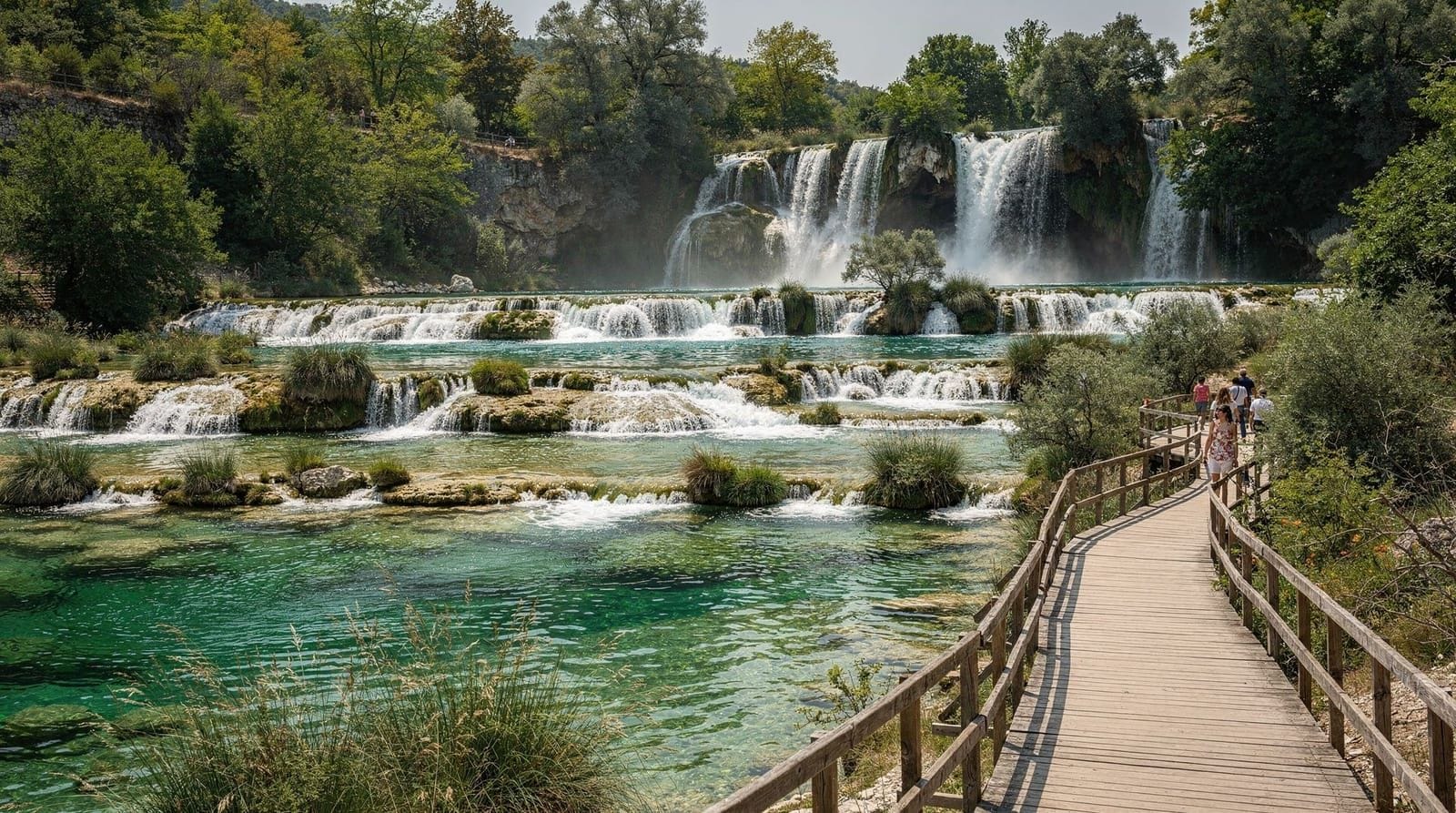
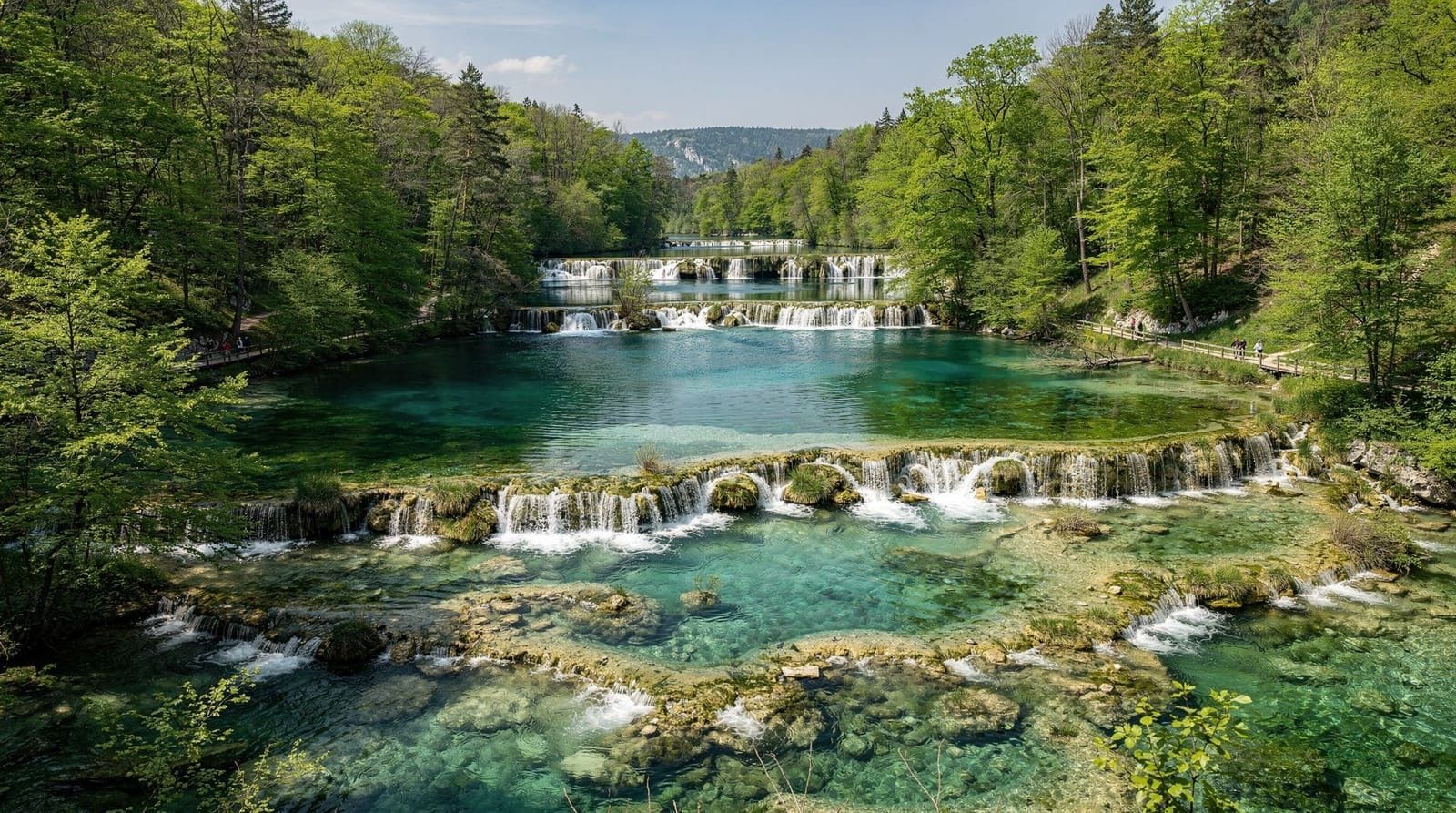
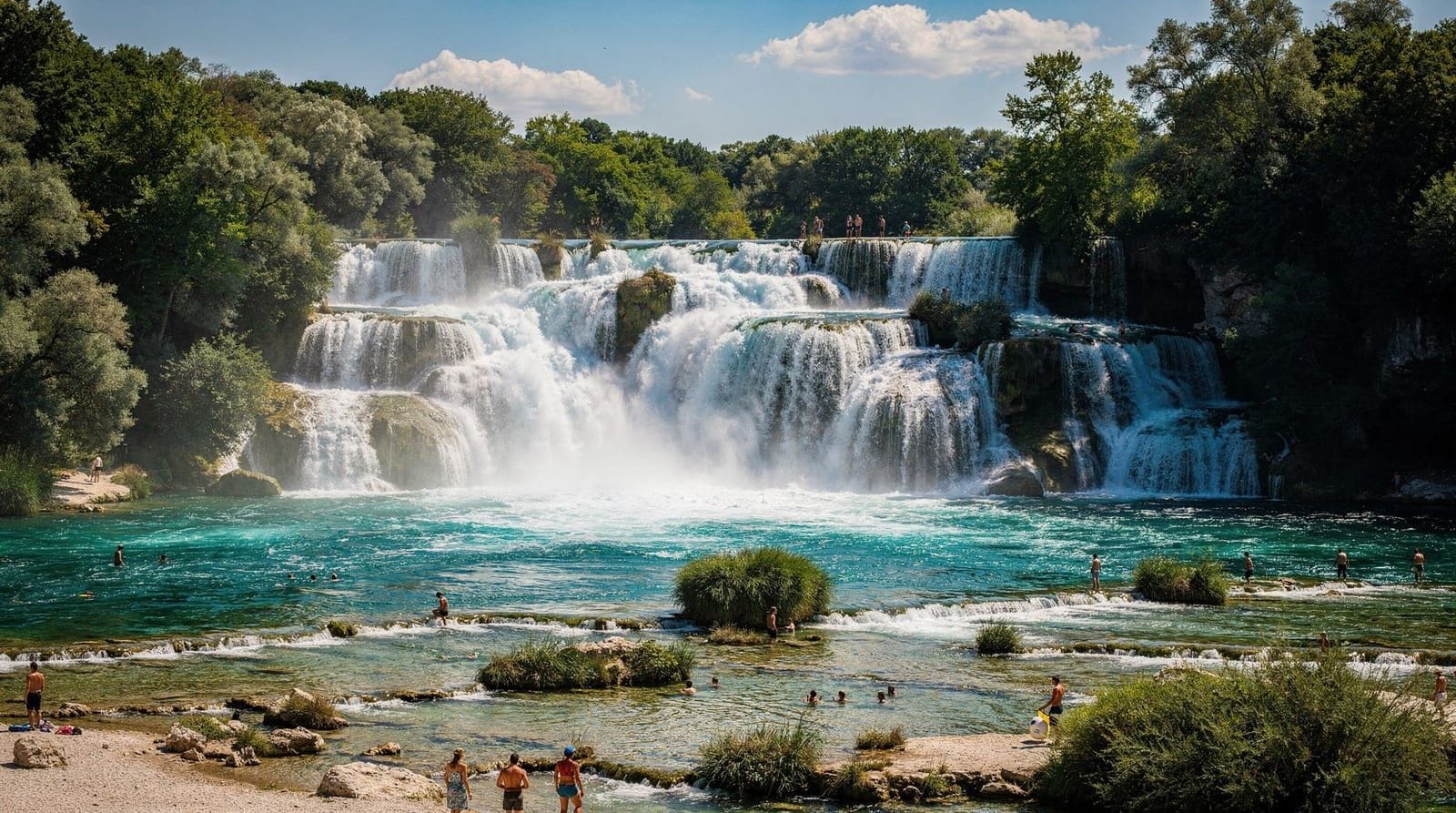
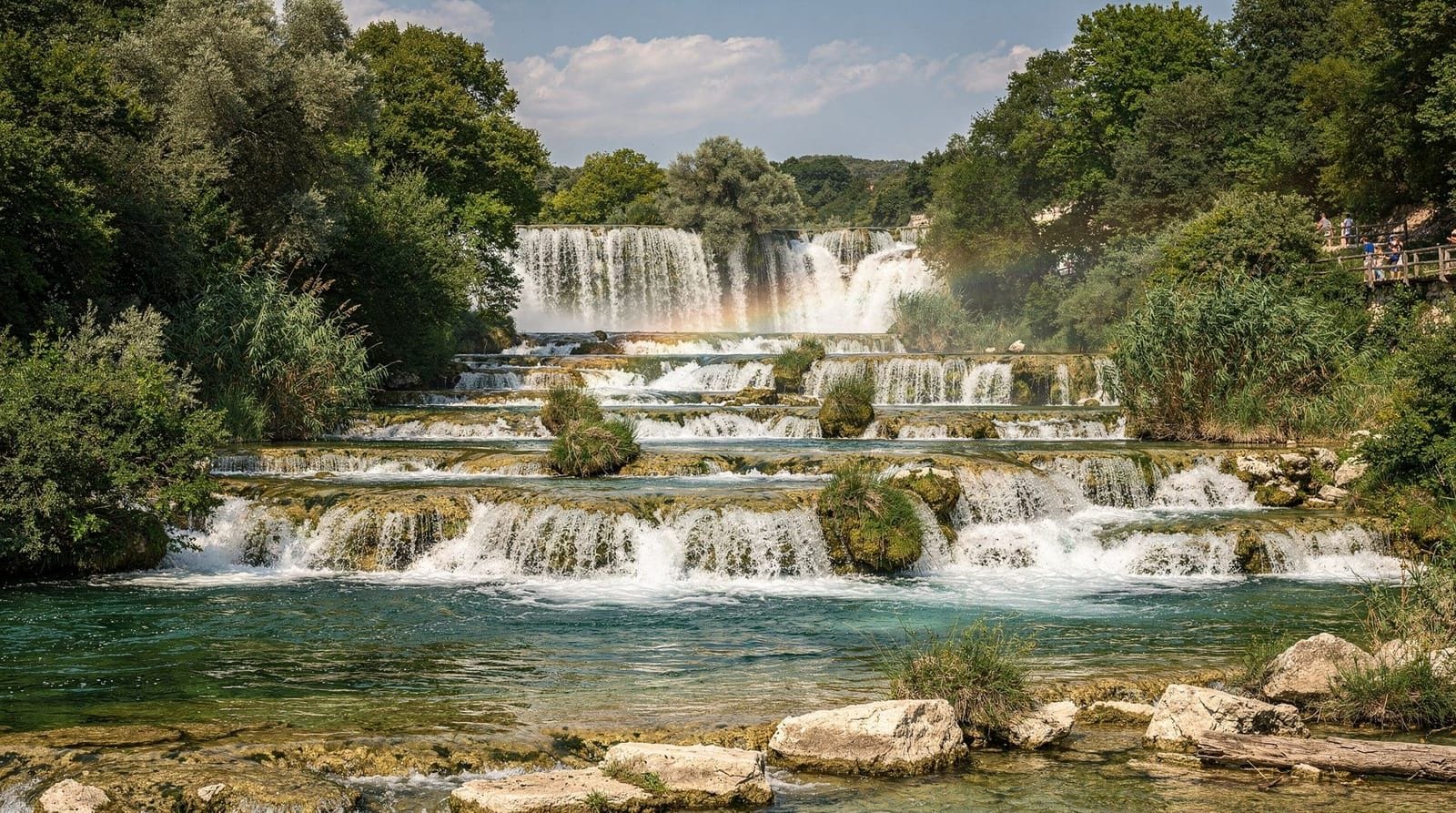
Plitvice Lakes National Park is Croatia’s most-visited natural site and a UNESCO World Heritage Site since 1979. Sixteen terraced lakes in shades of turquoise, green and blue, connected by 92 waterfalls, set in beech and fir forest. The water flows over formations of tufa — a porous limestone that builds up slowly from calcium carbonate deposits, creating constantly shifting barriers between lakes and new waterfall formations. The colour of the water — electric in certain lights, shifting with the sky — is not digital enhancement. It is real.
The boardwalks pass at water level through the middle of this landscape. In places you walk through the spray of a waterfall. In others the boardwalk floats a few centimetres above the lake surface and you can see directly into the emerald water beneath your feet.
It is, honestly, one of the more extraordinary natural places in Europe.
| Where | Lika region, inland Croatia, between Zagreb and Zadar |
| Cost | Around €15–35/person depending on season |
| Time needed | 3–4 hrs minimum, 5–6 hrs for the full circuit |
| Getting there | Self-drive, bus, or organised tour from Zagreb/Split/Zadar |
| Best time | May–June (water levels) or Sept–Oct (crowds, colour) |
Which Base Wins on Time
| From | Drive time | Round-trip day length | Verdict |
|---|---|---|---|
| Zadar | 1.5–2 hrs | ~10 hrs | Most comfortable |
| Zagreb | 2–2.5 hrs | ~12–13 hrs | Very workable |
| Split | 2.5–3 hrs | 14–15 hrs | Long but worth it; consider a one-way transfer instead |
Which base is best for a Plitvice day trip?
From Zadar — the optimal coast base (1.5–2 h)
Zadar is the closest major city on the Adriatic coast to Plitvice Lakes — about 140 km and 1.5–2 hours north. A 8 am departure gets you to the park by 9:30 am, before the busiest part of the day. You can spend 4 hours in the park (enough for the lower lakes and part of the upper) and still return to Zadar by 6 pm. This is a genuinely comfortable day trip.
From Zagreb — the inland base (2–2.5 h)
Zagreb is the natural base for anyone combining a capital city stay with a national park day. The drive south on the A1 motorway is fast until the Slunj exit, then 25 minutes on regional road. A 7:30 am departure is comfortable; earlier (7 am) is better for peak season. Return by 8–9 pm.
A variant worth knowing: some tours from Zagreb combine Plitvice with a stop at Rastoke — a village near Slunj where mills cluster around small waterfalls. It is beautiful and adds 45 minutes.
From Split — the long option (2.5–3 h)
Split to Plitvice is approximately 240 km — 2.5–3 hours on a mix of motorway and mountain road. Most tours from Split depart at 7 am and return by 9–10 pm. The day is 14–15 hours long. It is worth doing, but it is the most exhausting option. Consider whether you want to save Plitvice for an approach from Zadar or Zagreb instead — or use Plitvice as a transit stop on the way between Split and Zagreb (see below).
A smart compromise: use the Plitvice day trip as a one-way transfer from Split to Zagreb (or reverse) — stop at Plitvice in the middle of the drive, spend 4–5 hours in the park, then continue to Zagreb for the night. You cover the transit and see the park without a long return drive.
Park routes — what to do inside
Lower Lakes (Donja jezera) from Entrance 1:
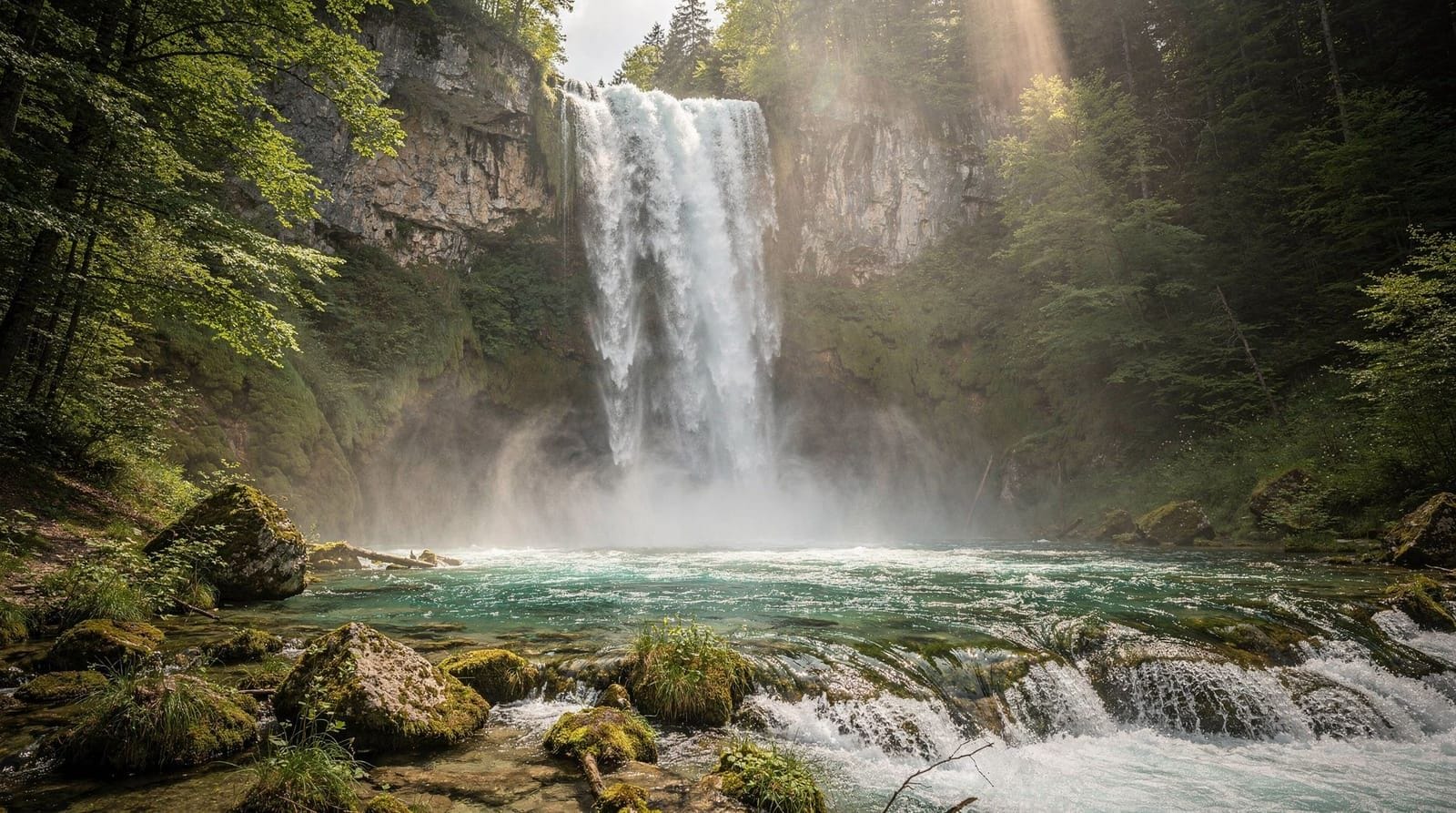
The main attraction. Trail B is the standard loop: descend from Entrance 1 via viewpoints to the boardwalk at the base of Veliki Slap (the 78-metre waterfall), follow the boardwalk through the lower lake cascade (Kaluđerovac, Gavanovac, Milanovac lakes), take the electric boat across Lake Kozjak to the upper lakes area, then return by panoramic train to the start. Takes 3–4 hours. This is what most day-trippers do and it covers the park’s best-known scenery.
Trail A is the shorter version: the lower lakes only, without the boat connection, returning on foot. Takes 2–3 hours. Suitable if your tour time is limited.
Upper Lakes (Gornja jezera) from Entrance 2:
The upper lakes are broader, calmer and less dramatic than the lower — more of a plateau lake system. The boat ride across Kozjak is pleasant. If you have only 3–4 hours in the park, prioritise the lower lakes. If you have 5–6 hours, the complete circuit is rewarding.
Entry fee (2026 approximate): €15–35 per person depending on season (lower in May and October, higher July–August). Includes boat and train within the park. Book online at np-plitvicka-jezera.hr.
Comparing Plitvice with Krka as a day trip
If your itinerary allows only one national park day and you’re weighing Plitvice against Krka, the honest answer depends on your base and your priorities. Plitvice has the more dramatic lake-and-waterfall system and the UNESCO status; Krka is closer to the coast (especially from Split or Šibenik) and historically allowed swimming, though that’s no longer the case. For most travellers building a longer route, the national parks and waterfalls itinerary treats both parks as complementary rather than either/or, and the Plitvice vs Krka guide breaks the comparison down point by point.
Tour vs self-drive for Plitvice
Organised tour advantages: Entry tickets included and pre-booked (critical in peak season), transport handled, a guide provides context on the geology and ecology of the tufa formations, and you don’t have to worry about parking (the car parks at both entrances fill by 9 am in high season).
Self-drive advantages: You set your own timing, can arrive at opening (7–8 am), choose your specific trail, and leave when you want. You can also add stops like Rastoke independently.
Bus: Public buses from Zagreb (NPS bus service, ~2.5 h), Zadar (2 h) and Split (3+ h) connect to both park entrances. Cheaper than a tour; less convenient, but entirely viable for independent travellers.
Practical tips
Arrive early. In July–August, the boardwalks become crowded by 10:30–11 am. Arriving at entrance opening (7–8 am, depending on season) means having sections of the lower lakes almost to yourself for the first hour. Evening (4–6 pm) is less effective as tours return.
Wear layers. The park is in a forested valley 367–1,279 metres above sea level — it is cooler than the coast even in summer. A light jacket is useful for the early morning.
Good shoes required. The boardwalks are sometimes wet from spray and can be slippery. Sandals are technically allowed but trail shoes or trainers are much more comfortable on the uneven surfaces.
No swimming, no feeding animals, no drones. The park is strict on these. Drones are particularly prohibited — the airspace is controlled to protect the ecosystem.
Food: The park’s restaurants are functional but mediocre. If you are self-driving, bring a packed lunch or stop in the village of Rakovica (5 km from Entrance 1) before or after the park.
Fitting Plitvice into a wider itinerary
If Plitvice is one stop among several rather than the whole day, our base-specific guides cover how it fits alongside other options: day trips from Zagreb, day trips from Split and day trips from Zadar all place Plitvice in context against closer, shorter alternatives. If you want the fuller standalone treatment of the park beyond just the day-trip logistics — history, full trail detail, seasonal photography tips — see the Plitvice Lakes guide. And if waterfalls generally are what draws you to Croatia, the Croatia waterfalls guide rounds up the other cascades worth knowing about beyond Plitvice and Krka.
Compare Plitvice with Krka: the Plitvice vs Krka guide gives a direct comparison. Also useful: the Croatia national parks overview and the national parks and waterfalls itinerary.
Frequently asked questions about Plitvice Lakes Day Trip
Can you do Plitvice Lakes as a day trip from Split?
Yes, but it is a 14+ hour day. Plitvice is 240 km from Split — 2.5–3 hours each way. Most tours depart Split at 7 am and return by 9–10 pm, with 3–4 hours in the park. It is entirely worth doing — the park is spectacular — but come prepared for a long travel day.How long should I spend at Plitvice Lakes?
Three to four hours is the practical minimum for a good experience. The classic lower lakes loop (Route A or B) takes 2–3 hours. Adding the upper lakes requires the boat connection and extends the visit to 4–6 hours. If you want both upper and lower lakes, allow 5 hours minimum. Most organised day trips allow 3.5–4 hours — enough for the lower lakes loop.Do I need to book Plitvice entry tickets in advance?
Yes, strongly recommended from May to September. The park caps daily visitors and entry tickets are sold online at np-plitvicka-jezera.hr. In July and August, slots fill up 1–2 weeks in advance. Arriving without a booking risks being turned away. Organised tours include entry tickets — one advantage of joining a tour in peak season.When is the best time to visit Plitvice Lakes?
May and June for the highest water levels and most dramatic waterfalls (snowmelt from the Velebit range). September and early October for autumn colour and significantly smaller crowds. July–August is the most crowded period, with queues at entrances and along the boardwalks. Winter (December–February) can be beautiful with ice formations but the park operates on a limited schedule and some trails are closed.What is the difference between Entrance 1 and Entrance 2 at Plitvice?
Entrance 1 (Donja jezera) accesses the lower lakes and is the most popular. It includes the viewpoint of Veliki Slap (78 m — Croatia's tallest waterfall) and the most photogenic boardwalk sections along the main waterfall cascade. Entrance 2 (Gornja jezera) accesses the upper lakes and includes a boat ride across the largest lake, Kozjak. A full circuit combining both uses the park's electric boat and scenic train to link them. If you only have time for one entrance, choose Entrance 1.Can I swim in Plitvice Lakes?
No — swimming has been prohibited in Plitvice since the 1990s to protect the delicate ecosystem of tufa (travertine limestone) that creates the lake beds and waterfall formations. The colour of the lakes is partly caused by specific algae and mineral interactions — any human contact disturbs this. Wading and swimming are not permitted and rangers enforce the rule. The boardwalks pass right at water level, which is more intimate than swimming anyway.Is Plitvice accessible without a car?
Yes. Direct buses from Zagreb, Split and Zadar stop at the park entrances. The journey from Zagreb takes 2–2.5 hours (NPS bus or regular bus line), from Split 3+ hours, from Zadar approximately 2 hours. Inside the park, the electric boat and panoramic train connect the two entrance areas without a car. An organised tour is easiest; an independent bus trip is entirely viable.
Top experiences
Bookable activities with verified prices and instant confirmation on GetYourGuide.
Zagreb: Plitvice Lakes full-day guided tour
Zagreb: Full-day Plitvice Lakes group tour
Zadar: Plitvice Lakes guided day tour with tickets
Zadar: Plitvice Lakes day trip with guide and boat tour
Split: Plitvice Lakes day tour
Split: Plitvice Lakes guided tour with entry tickets
Zadar: Plitvice Lakes day tour with boat and train ride
Top experiences
Best-rated activities across GetYourGuide and Viator.

Mostar and Herzegovina Tour with Kravica Waterfall from Split & Trogir
- Viator

Mostar & Kravice waterfalls full-day guided tour from Split
- Viator

Mostar and Kravica Waterfall Discovery Day Trip from Split or Trogir
- Viator

Taste of Bosnia: Private Trebinje Gastro & Wine Tour
- Viator

From Split/Trogir: Mostar and Medjugorje Tour with Wine Tasting
- Viator

Split to Dubrovnik Private Transfer with Mostar Town
- Viator