Croatia travel guide: everything you need to know
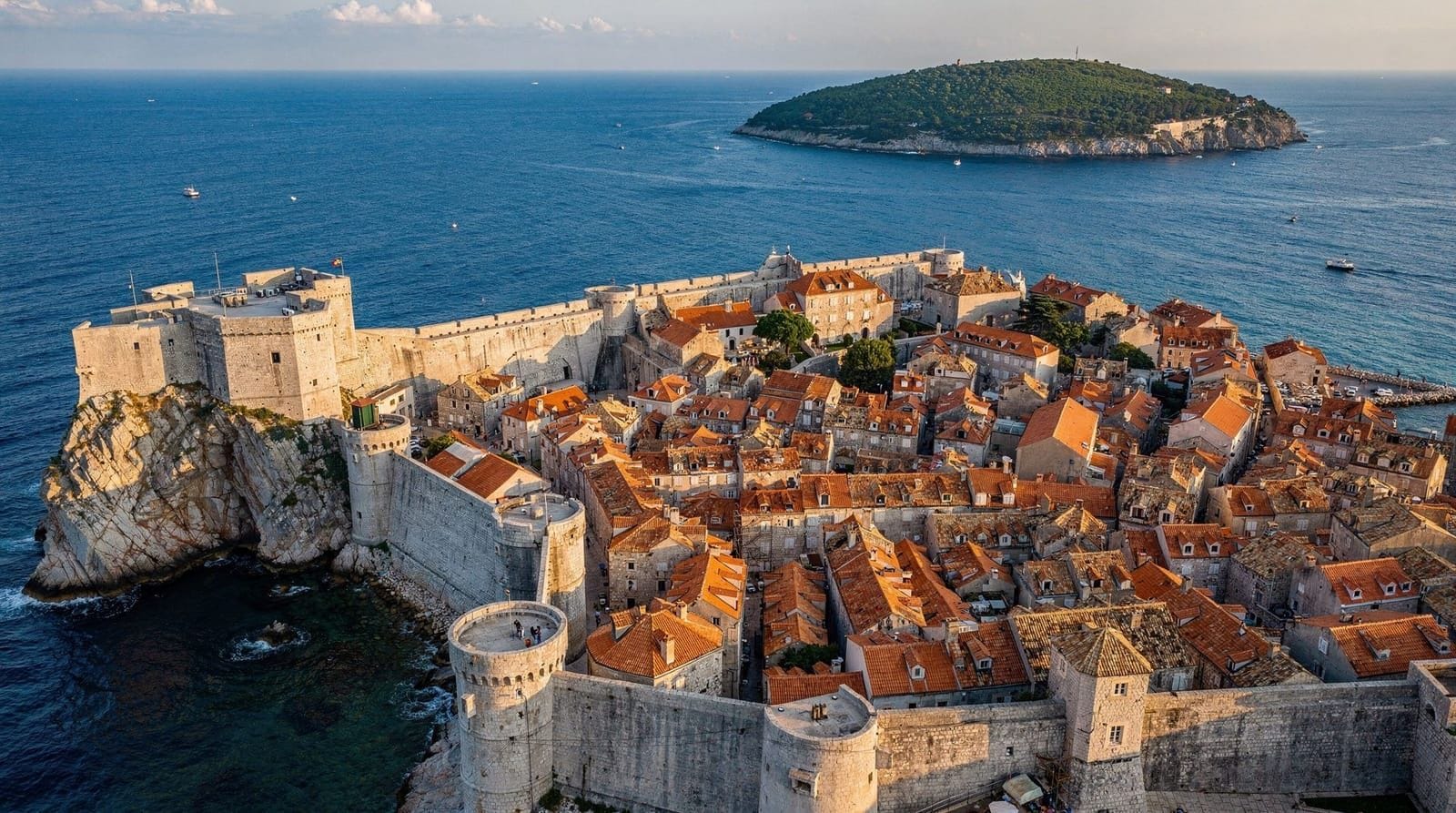
Dubrovnik: City walls walking tour
What is Croatia like to travel in?
Croatia is a diverse country of five distinct regions — Dalmatia, Istria, Kvarner, Zagreb and the national parks — all using the euro since 2023. Summer (July–August) is stunning but crowded and pricier; late May–June and September–October offer better value, thinner crowds and near-identical weather along the coast.
Croatia rewards travellers who slow down. This long, fragmented country — part coastline, part island archipelago, part forested interior — has a character that shifts markedly between regions. You can spend a week island-hopping the Dalmatian coast, another week driving the Istrian hills and still not scratch Zagreb or the great national parks. The following guide pulls together everything you need to plan a practical trip, from which region suits you to how ferries work and what things actually cost.
| Currency | Euro (EUR), since January 2023 |
| Best time to go | Late May–June, September–early October |
| Getting in | 5 airports: Dubrovnik, Split, Zagreb, Zadar, Pula |
| Getting around | Ferries, car, or long-distance bus |
| Language | Croatian; English widely spoken in tourist areas |
| Visa | Visa-free 90/180 days for US/UK/CA/AU |
Five regions, five entirely different trips
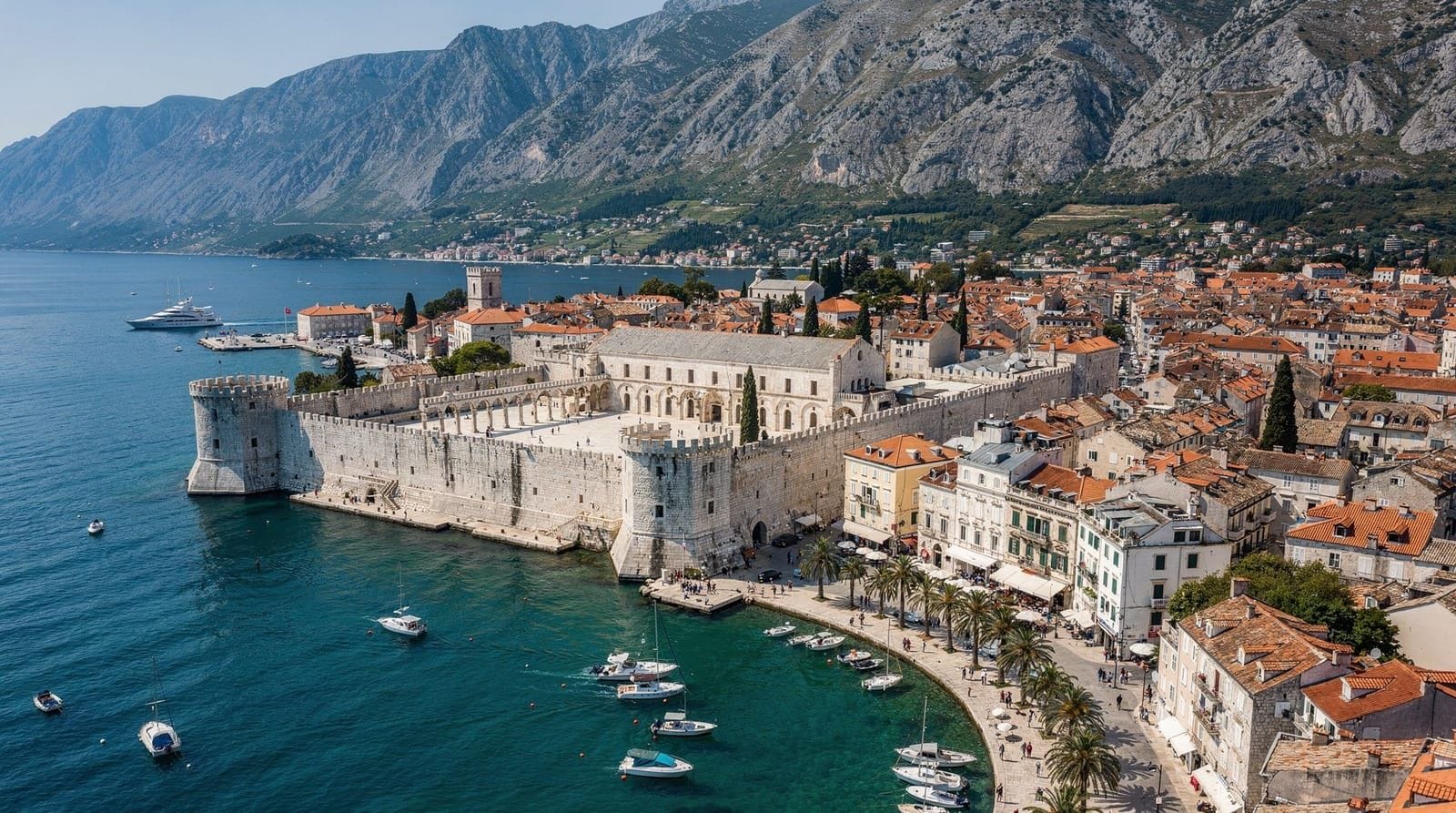
Dalmatia is what most visitors picture when they think of Croatia. Stretching from Zadar in the north to Dubrovnik in the south, it contains the country’s best-known destinations: Split, Hvar, Korčula, Vis and Dubrovnik itself. The coast is rocky, the sea an implausible shade of blue-green, and the towns are built of pale limestone that glows at dusk. Dalmatia is also the most expensive region in summer.
Istria is the triangular peninsula in the far northwest, historically Italian in culture and still partly bilingual. Towns like Rovinj, Poreč and Pula face the Adriatic, while the interior harbours medieval hilltop villages like Motovun, truffle country and excellent local wine. Istria tends to be slightly less crowded than Dalmatia and has strong Italian-style food culture.
Kvarner is the gulf between Istria and Dalmatia, dominated by islands — Krk, Lošinj, Rab — and the elegant old resort town of Opatija. Rijeka, Croatia’s third city, is the region’s hub and often skipped by tourists, which is partly why it still feels authentically Croatian.
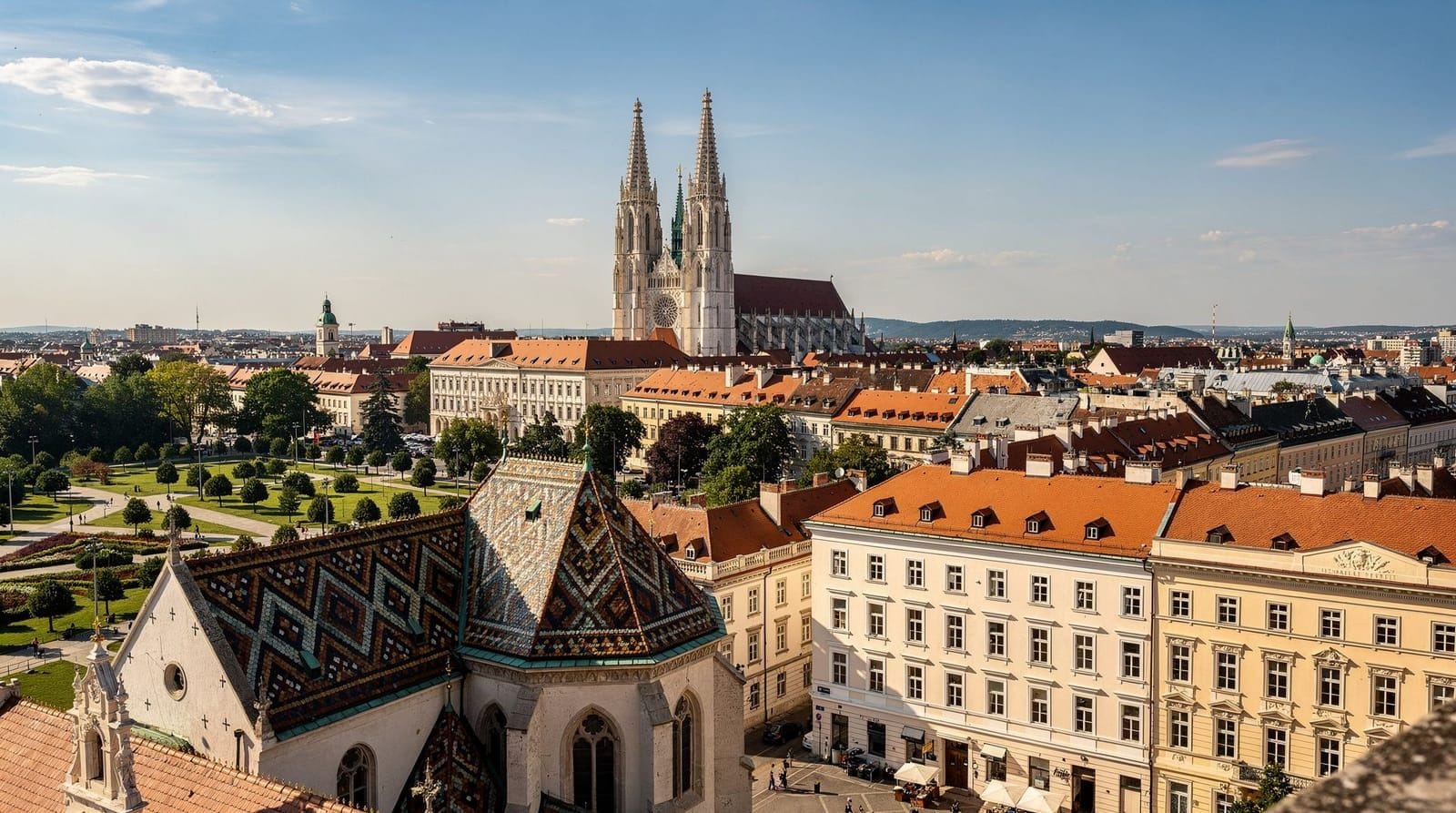
Zagreb and the interior deserve more credit than they get. The capital is a compact, walkable Central European city with excellent museums, a lively café culture and some of the country’s best restaurants. Day-trip territory from Zagreb includes the baroque castle landscapes of Zagorje and Trakošćan and the medieval town of Samobor.
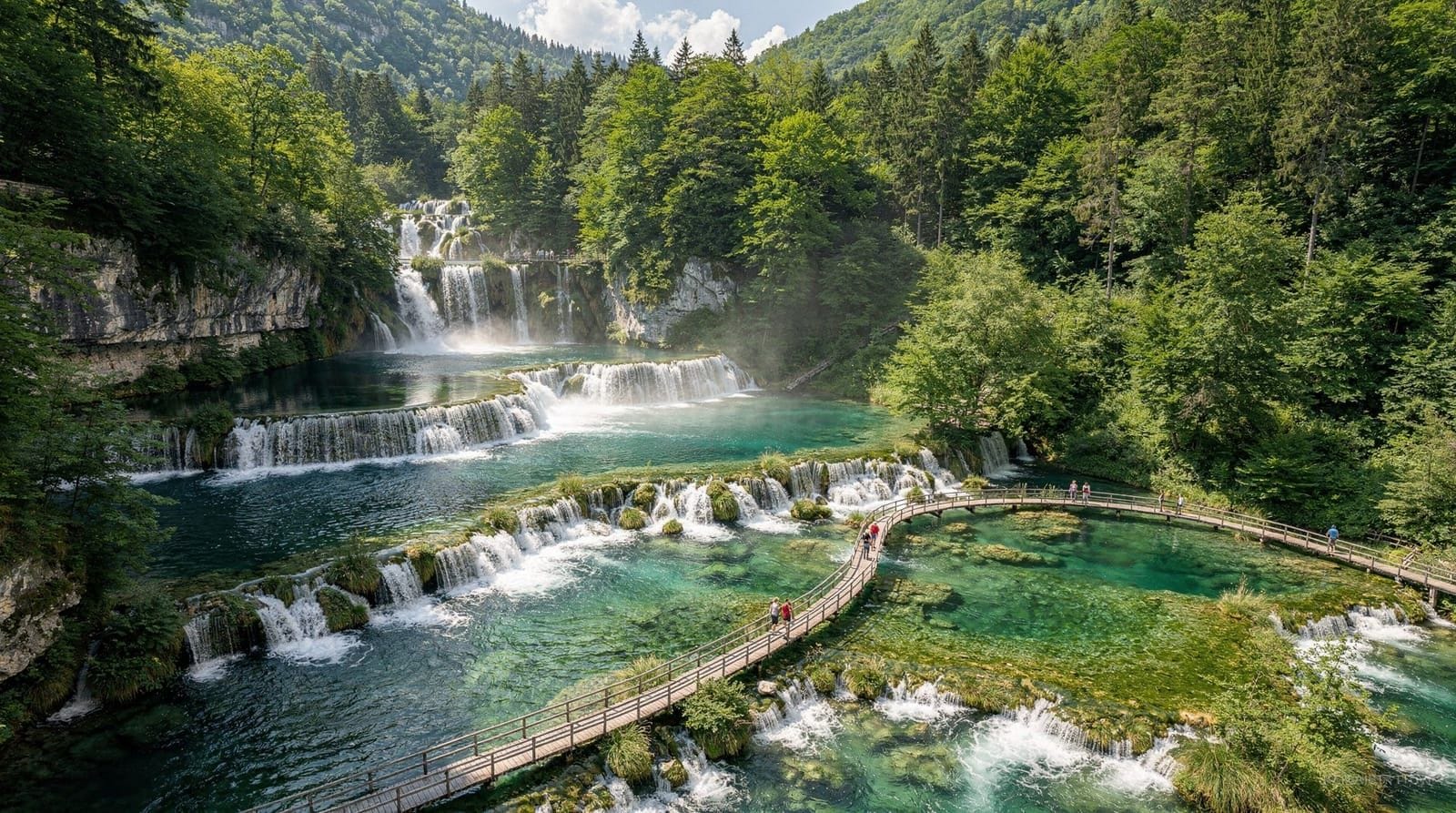
The national parks form a loose category of their own. Plitvice Lakes is the postcard image most people know — sixteen turquoise lakes connected by waterfalls — and sits in a karst valley inland from the coast. Krka National Park is easier to reach from Split and allows swimming near its waterfalls. Kornati is a labyrinth of 89 uninhabited islands in the middle Dalmatian sea, best seen by boat. Paklenica near Zadar is the hiking and rock-climbing destination.
When to go
Croatia has a classic Mediterranean climate along the coast — hot, dry summers; mild, wetter winters — while Zagreb and the interior are more Continental, with cold winters and warmer, thundery summers.
Late May and June offer the best overall balance: warm sea temperatures (18–22°C), long days, most businesses open and crowds that have not yet peaked. Prices are 20–30% below August levels.
July and August are unambiguously the peak. The coast is magnificent but Dubrovnik, Hvar and the ferry ports become genuinely congested. Book accommodation, ferries and popular tours weeks in advance. Expect to pay top prices for everything.
September and October are increasingly the savvy traveller’s choice. Sea temperatures stay high well into September (24–26°C), the olive harvest begins in October, and ferry and tour availability remains good into mid-October. Crowds thin noticeably after the first week of September.
November through April: the coast is quiet, many island businesses close entirely, and Dubrovnik drops to a fraction of its summer population. Zagreb, however, stays lively year-round and runs an atmospheric Christmas market in December.
Getting to Croatia
Croatia has five main international airports: Dubrovnik (DBV), Split (SPU), Zagreb (ZAG), Zadar (ZAD) and Pula (PUY). Most summer charter and low-cost flights land at DBV or SPU. Year-round scheduled routes connect Zagreb with most European hubs, and Split is well served from spring through autumn.
If you are arriving from elsewhere in Europe, the overnight train from Zagreb to Vienna or Budapest is a comfortable option worth considering for the westbound journey. Bus services connect Croatia to neighbouring countries and can be cost-effective, though journey times are long.
Car rental: Croatia’s main highways are toll roads in good condition. The Pelješac Bridge, opened in 2022, now connects Dubrovnik to the rest of the country without crossing through Bosnia-Herzegovina at Neum — a significant improvement for road travellers. See the renting a car in Croatia guide for specifics on insurance, green cards and which roads to avoid.
Getting around Croatia
Ferries and catamarans are the backbone of island travel. Jadrolinija is the national operator and runs car ferries and passenger lines. Krilo and KSC operate faster catamarans between Split, Hvar and the southern islands. The ferry guide covers routes, booking and season timetables in detail.
Car is the most practical option for reaching the national parks, Istria’s inland towns and anywhere off the main ferry routes. The coastal road (D8) between Split and Dubrovnik is scenic but can slow to a crawl in August.
Bus connects all major towns and is reliable for routes like Zagreb to Split or Zadar to Šibenik. Split to Dubrovnik by bus takes around four hours and is a perfectly reasonable option.
Local buses on islands vary widely in frequency. Hvar Town has reasonable connections to Stari Grad, but many smaller island roads are best explored by rented scooter or bicycle.
Money: EUR since 2023
Croatia adopted the euro in January 2023. You will not need to exchange kuna. Cards are widely accepted at hotels, restaurants and larger shops. Markets, small konobas (taverns) and some ferry kiosks still prefer cash.
ATM tips: use bank-branded ATMs (Privredna banka, Erste, Raiffeisen, ZABA). Avoid Euronet ATMs — their fees are high and their dynamic currency conversion (DCC) offer misleading. Always choose to be charged in EUR, not your home currency. See money in Croatia for a fuller breakdown of fees and best practices.
Entry requirements
Croatia joined the Schengen Area in January 2023. Citizens of the US, UK, Canada and Australia can enter visa-free for up to 90 days in any rolling 180-day period — this is a Schengen-wide count, not Croatia-specific. If you have already spent time in France, Germany or another Schengen country earlier in your trip, those days count.
Passport validity: must be valid for at least three months beyond your planned Schengen exit date, and issued within the last ten years.
EES (Entry/Exit System): the EU biometric border check system launched in October 2025. EU nationals are exempt. Non-EU travellers crossing into Schengen will have a biometric scan taken on first entry; this should become faster at subsequent entries. ETIAS (the European travel authorisation for visa-exempt nationalities) is expected to follow.
Full entry detail: Croatia entry requirements.
Safety and health
Croatia is a low-risk destination for most travellers. No vaccinations are required. The European Health Insurance Card (EHIC) covers EU nationals at public hospitals; everyone else — including UK and US citizens — should have comprehensive travel insurance. See Croatia travel insurance for what policies should cover.
Sea safety: sea urchins are common on rocky shores — wear water shoes when entering the sea off rocks. Jellyfish appear occasionally in late summer but are rarely dangerous. Strong afternoon sea breezes (bura, jugo) can pick up quickly; check conditions before renting kayaks or small boats.
Emergency number throughout Croatia: 112.
Food and drink
Croatian food divides broadly along regional lines, and understanding those divisions helps you eat well rather than defaulting to the generic tourist waterfront menu that appears in every coastal town.
The konoba: where you actually want to eat
The most important concept in Croatian dining is the konoba — a small, typically family-run restaurant that is often in a converted outbuilding, a stone-walled cellar or a garden terrace slightly removed from the main waterfront. Konobas serve local food at honest prices and are the backbone of Croatian food culture. The staff are frequently the owners; the menu changes with what is in season or what was caught that morning; and the pace is unhurried to the point of requiring patience.
The waterfront restaurant rows — Stradun in Dubrovnik, the harbour front in Hvar, the main promenade in Split — should be understood as tourist infrastructure rather than the local food scene. One street back from any of those rows, prices drop 30–40% and quality invariably improves. Locals know the difference. Ask your accommodation host where they eat; the answer is almost never the waterfront.
Identifying a good konoba: look for handwritten daily specials boards, a local clientele visible through the door, and a wine list featuring regional bottles rather than just international brands. Menus with laminated photographs of the dishes are a reliable indicator to keep walking.
Dalmatian coastal food
The Dalmatian kitchen is built on the Adriatic and the olive groves behind it. Grilled fish is the default centrepiece — sea bass (brancin), sea bream (orada), dentex (zubatac) and the excellent local mullet. Fish is almost always priced by weight on the menu (per kilogram), so confirm the size and total price before ordering to avoid surprises on the bill.
Octopus salad (salata od hobotnice) — cold, dressed with olive oil, lemon and parsley — appears at nearly every konoba on the coast and when done well is genuinely excellent. The octopus is typically boiled then chilled; freshness matters.
Peka is the slow-cooking method that defines inland and island Dalmatia: meat (veal, lamb or chicken) and vegetables placed under a heavy iron bell (peka) and buried under hot embers for two to three hours. The result is deeply tender and fragrant. Most konobas require you to order peka in advance — 2–4 hours ahead is standard. It is one of the best ways to eat in Croatia and worth the planning.
Black risotto (crni rižot) — risotto made with cuttlefish and coloured black by the cuttlefish ink — is a Dalmatian speciality that appears on almost every seafood menu. When well made, it is rich and savoury without being heavily fishy. It is a useful metric for judging a restaurant’s kitchen.
Ston oysters: Ston on the Pelješac Peninsula has been producing oysters since the 15th century in the clear, nutrient-rich waters of the Malostonski zaljev bay. Ston oysters are among the best in the Mediterranean — briny, clean and complex. If you are passing through Ston (on the route between Dubrovnik and Split or on a day trip from Dubrovnik), eating oysters pulled from the bay that morning is one of the most specific and memorable food experiences in Croatia.
Plavac Mali wine from the Pelješac Peninsula — particularly Dingač and Postup designations — is the local red wine of Dalmatia. Deep, tannic and warming, it pairs naturally with grilled fish and lamb. It also rewards chilling slightly in summer heat.
Istrian food
Istria occupies a different culinary world. The Venetian and Italian influence is visible in the food — pasta, risotto, prosciutto and a sophisticated approach to wine that has put Istrian producers on the European map.
Truffles (tartufi) are the defining ingredient. The forests around Motovun produce both white and black truffles, with white truffle season peaking in autumn (October–November). Truffle products — pasta with truffle shavings, truffle oil, truffle cheese — appear on menus throughout Istria year-round. The fresh truffle season in autumn is the best time to eat them, but preserved preparations are available all year.
Istrian prosciutto (pršut istarskog tipa) is cured differently from Dalmatian pršut — drier and sometimes more intensely flavoured. It appears on antipasto plates throughout the region.
Malvazija is the defining white wine of Istria — an aromatic, crisp white that ranges from unoaked and fresh to barrel-fermented and complex. The Istrian wine scene has developed considerably and several small producers (Kozlović, Coronica, Matošević) are worth seeking out. Teran is the local red — earthy, high-acid, and characteristic of the mineral red soil of the Istrian interior.
Fritaja (frittata with wild asparagus) is a spring seasonal dish that appears on Istrian menus in April and May — simple, hyper-local and genuinely good.
Zagreb and the interior
Inland Croatia draws on Central European and Pannonian traditions — the food is heartier, meat-focused and influenced by Hungary, Austria and Slavonia to the east.
Štrukli is the emblematic Zagreb dish — fresh pasta sheets filled with cottage cheese and cream, either baked (pečeni štrukli) or boiled (kuhani štrukli). Baked štrukli emerge slightly crisp and golden; boiled are softer and richer. They appear as a starter or a main course and are genuinely comfort food in the best sense. La Štruk in Zagreb is devoted entirely to them.
Peka appears in inland Croatia too, typically with veal (teletina ispod peke) — the same technique as on the coast but with different central ingredients.
Kulen is the spiced paprika sausage of Slavonia (eastern Croatia) — deeply flavoured, smoky and more complex than standard pork sausage. Kulen from the Baranja and Vinkovci regions carries protected origin designations.
Craft beer: Zagreb has a growing craft beer scene. Mali Medo and Medvedgrad are long-established Zagreb brewpubs. The Craft Room in Zagreb and several newer bars carry a wide range of domestic craft beers that go well beyond the ubiquitous Karlovačko and Ožujsko.
Practical eating tips
Avoid the tourist menu: Fixed-price tourist menus (€20–25 for two courses) on the waterfront represent neither good value nor interesting food. Skip them.
Fish pricing: Always confirm the weight and per-kilo price of fresh fish before ordering. A beautiful plate of grilled sea bass can be €15 or €40 depending on the size of the fish — the menu price is per kilogram, not per plate.
Lunch is the better deal: Many konobas offer better value at lunch than dinner. A two-course lunch with a glass of wine at a genuine konoba is often €18–25 per person. The same restaurant’s dinner service edges up.
Market shopping: Every Croatian town has a market (tržnica). In Split the Pazar market outside the eastern palace gate sells vegetables, cheese, local honey, smoked fish and fruit from local producers. Buying cheese, olives and bread for a beach picnic is both cheaper and more interesting than restaurant lunches every day.
For a full guide to what to eat and where, see the Croatian food guide.
Coffee culture is taken seriously. A morning espresso (kava) at a café with a view is not optional; it is the Croatian pace of life. Croatian coffee is typically an espresso served with a small glass of water. Sitting over one coffee for an hour is entirely normal and socially expected — cafés are social spaces, not caffeine delivery systems.
Accommodation
Hotels, private rooms (sobe) and apartments dominate in coastal towns. Book well ahead for July and August in Dubrovnik, Hvar and Split — accommodation shortages are real. Hostels are concentrated in Split and Zagreb and are good quality for the price. Campsites along the coast range from basic pitches to resort-scale operations.
For a full breakdown by budget and destination, see where to stay in Croatia.
Booking your first experiences
A guided walking tour is the most efficient way to orient yourself in a new city.
Walking the Dubrovnik city walls with a guide puts the Old Town’s layout in context immediately — and gets you onto the walls early, before the cruise ship crowds arrive.
In Split, the palace deserves more than a wander.
A small-group walking tour of Split’s Diocletian’s Palace unpacks 1,700 years of layered history that you would otherwise piece together slowly on your own.
If you are basing yourself on the coast and want to see Plitvice, the logistics of reaching the park from Zagreb are straightforward.
A full-day guided tour from Zagreb to Plitvice Lakes includes transport and entrance, which removes the main practical friction.
Connectivity and staying in touch
Croatia’s mobile coverage is good along the coast and on the main islands, patchier on smaller or more remote islands like Vis, Mljet and Kornati. EU and EEA residents can use their home data allowance under EU roaming rules; everyone else should plan for a local SIM or a travel eSIM, both widely available and inexpensive. See the Croatia SIM and eSIM guide for the full breakdown by nationality and provider. WiFi is reliably available at hotels, cafés and airports, which makes arriving without a data plan workable for the first few hours while you sort connectivity.
Traveling with specific needs
Solo travelers will find Croatia one of Europe’s easier solo destinations — safe, well-connected by ferries, and with a genuinely social hostel network in Split, Dubrovnik and Zagreb. See the solo travel guide for base recommendations and budgeting, including how to avoid the hotel single-supplement penalty.
Families should focus on destinations with easy beach access and manageable distances between activities — Split and Rovinj both work well as family bases. The Croatia family guide and family itinerary cover pacing and destination choices for different age groups.
Travelers with accessibility needs should note that many Croatian old towns are built on cobblestones and stairs — Diocletian’s Palace in Split and Dubrovnik’s Old Town both have uneven surfaces that require planning. The accessible Croatia guide covers which destinations and attractions are genuinely manageable, including which ferries have step-free boarding and which national park boardwalks are wheelchair-friendly.
Honeymooners gravitate toward Hvar, Dubrovnik and private island boat charters; the Croatia honeymoon guide has destination-specific recommendations.
Budget travelers should read the Croatia on a budget guide and the full trip cost breakdown before setting expectations — Croatia is no longer the bargain destination it was a decade ago, but real savings are still available by eating away from waterfronts, traveling in shoulder season and choosing Zadar or Šibenik over Dubrovnik as a base. The single biggest lever most budget travelers underuse is timing: the same itinerary in June or September instead of August can cut total costs by a fifth to a third with almost no loss of weather or experience quality.
First-time trip structures that work
If this is your first visit, the structural decision that matters most is how many bases you use. A common mistake is trying to see too much of the coast in too few days by constantly repacking.
One-week Dalmatian coast: 3 nights Split, 2 nights Hvar, 2 nights Dubrovnik via catamaran. This covers the classic highlights without excessive transit time. See the 7-day itinerary for a full day-by-day version.
Ten days, coast plus a park: Add a day trip to Plitvice or Krka to the week-long structure above, or extend Dubrovnik with a day trip to Mostar or Kotor. The 10-day itinerary covers this pacing.
Two weeks or more: Enough time to combine Dalmatia with either Istria or Zagreb and the interior, without the trip feeling rushed. The 14-day itinerary is built around exactly this combination.
First-timer specific advice: don’t try to combine Istria and Dubrovnik in one trip without a flight between them — driving the full length of the coast (roughly 8–9 hours) eats a full day. Most first-time visitors are better served picking either the north (Istria, Kvarner, Zagreb) or the south (Dalmatia) rather than attempting both in a single loop. The first-time Croatia guide and how many days in Croatia cover this decision in more depth.
Regional cost comparison
| Region | Daily mid-range budget | Character |
|---|---|---|
| Dalmatia (Dubrovnik, Hvar) | €120–200 | Iconic, most crowded, most expensive |
| Dalmatia (Split, Zadar, Šibenik) | €85–140 | Central, good value, well-connected |
| Istria | €80–130 | Food-and-wine focused, slightly quieter |
| Kvarner | €75–120 | Underrated, mild climate, less touristed |
| Zagreb and interior | €70–110 | City culture, cheapest overall |
Practical tips
- Book ferries ahead for July–August, especially car ferries to Hvar, Vis and Korčula.
- Arrive at ports early — walk-on passengers usually get on, but car spots fill before the official cut-off.
- Respect the siesta: many smaller shops close 13:00–17:00, particularly outside the main cities.
- Dress codes: bring a layer for evenings, even in summer — the coastal breeze drops temperatures significantly after sunset. Cover shoulders and knees when entering churches.
- Sunscreen and water: shade is scarce on ferries and the limestone coast reflects heat intensely. Two litres of water per person per day in July and August is not excessive.
- Photography: sunrise in Dubrovnik is both crowd-free and genuinely spectacular. Worth the 5am alarm.
Frequently asked questions about Croatia travel guide
Is Croatia easy to travel around independently?
Yes, though a car is the most flexible option for reaching smaller towns and national parks. Islands require ferry or catamaran connections, which you should book ahead in peak season.Do I need cash in Croatia?
Cards are widely accepted, but carry some euro cash for markets, smaller restaurants and ferry kiosks. Avoid Euronet ATMs and always pay in EUR, not your home currency (decline DCC).Is Croatia safe for tourists?
Croatia is one of the safer European destinations. Petty theft is the main concern in very crowded areas like Dubrovnik Old Town in high season. The emergency number is 112.What language do Croatians speak?
Croatian. English is widely spoken in tourist areas, hotels and restaurants. Italian is understood across much of Istria.Is tap water safe in Croatia?
Yes, tap water is safe to drink throughout Croatia. You can refill a reusable bottle at any tap, which keeps plastic waste down.When does Croatia get the most tourists?
July and August are peak season — Dubrovnik, Hvar and the Dalmatian coast receive the bulk of summer visitors then. Early June and September are increasingly popular as shoulder seasons.Do I need a visa for Croatia?
Citizens of the US, UK, Canada, Australia and EU countries can enter Croatia visa-free. Croatia joined Schengen in January 2023, so the 90-in-180-day rule now applies across the whole Schengen zone, not just Croatia.
Top experiences
Bookable activities with verified prices and instant confirmation on GetYourGuide.
Top experiences
Best-rated activities across GetYourGuide and Viator.

From Zadar: Plitvice Lakes with Boat Ride & Zadar Old town tour
- Viator

Mostar and Herzegovina Tour with Kravica Waterfall from Split & Trogir
- Viator

3Hour ALL-INCLUSIVE Sunset Dolphin Watching from Medulin onSandra
- Viator

Dolphin Watching & Sunset Boat Tour With Drinks & optional Dinner
- Viator

Fantastic DOLPHIN & SUNSET TOUR with dinner ( Pula-NP BRIJUNI )
- Viator

Medulin :All-Inclusive Pirate Boat Dolphin Watching Sunset Cruise
- Viator