Croatia Instagram spots: the real locations behind the famous photos
Dubrovnik: 3-hour morning sea kayaking and snorkeling tour
What are the most Instagrammed spots in Croatia?
The most-shared Croatian locations on social media are: Dubrovnik's city walls and Old Town rooftop views, Zlatni Rat beach on Brač from above, Plitvice Lakes boardwalks over the turquoise water, Rovinj harbour at sunrise, Stiniva Cove on Vis, and Hvar lavender fields in June. The Zadar sunset at the Sea Organ and the Kornati island archipelago from the water also generate significant engagement.
Instagram has done something useful for travellers in Croatia: it has created a searchable archive of the country’s most visually compelling locations, often with enough geographic information to find the exact spot. The less useful thing it has done is create enormous queues at those exact spots at exactly the wrong times of day.
This guide identifies the real locations behind Croatia’s most-shared images, explains the practical route to each one, and gives honest advice on timing that the Instagram post captions rarely include.
| Best light | 06:00–09:00 and last hour before sunset |
| Least crowded shots | Trogir, Kornati, Motovun |
| Most crowded shots | Dubrovnik walls, Zlatni Rat, Plitvice boardwalks |
| Best season for photography | June or September over July–August |
| Gear | a smartphone is enough for almost all of these |
Dubrovnik: the rooftop view
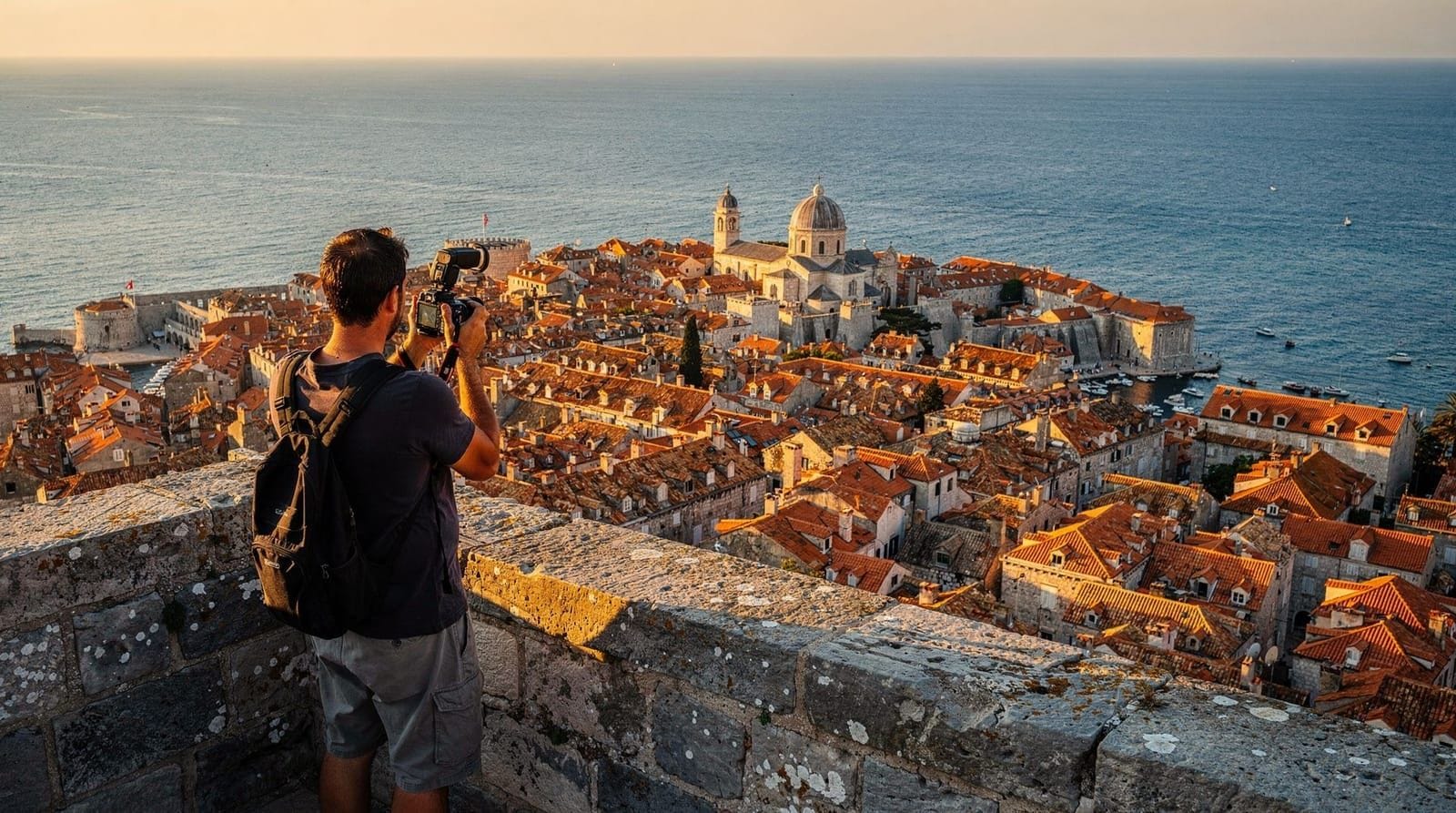
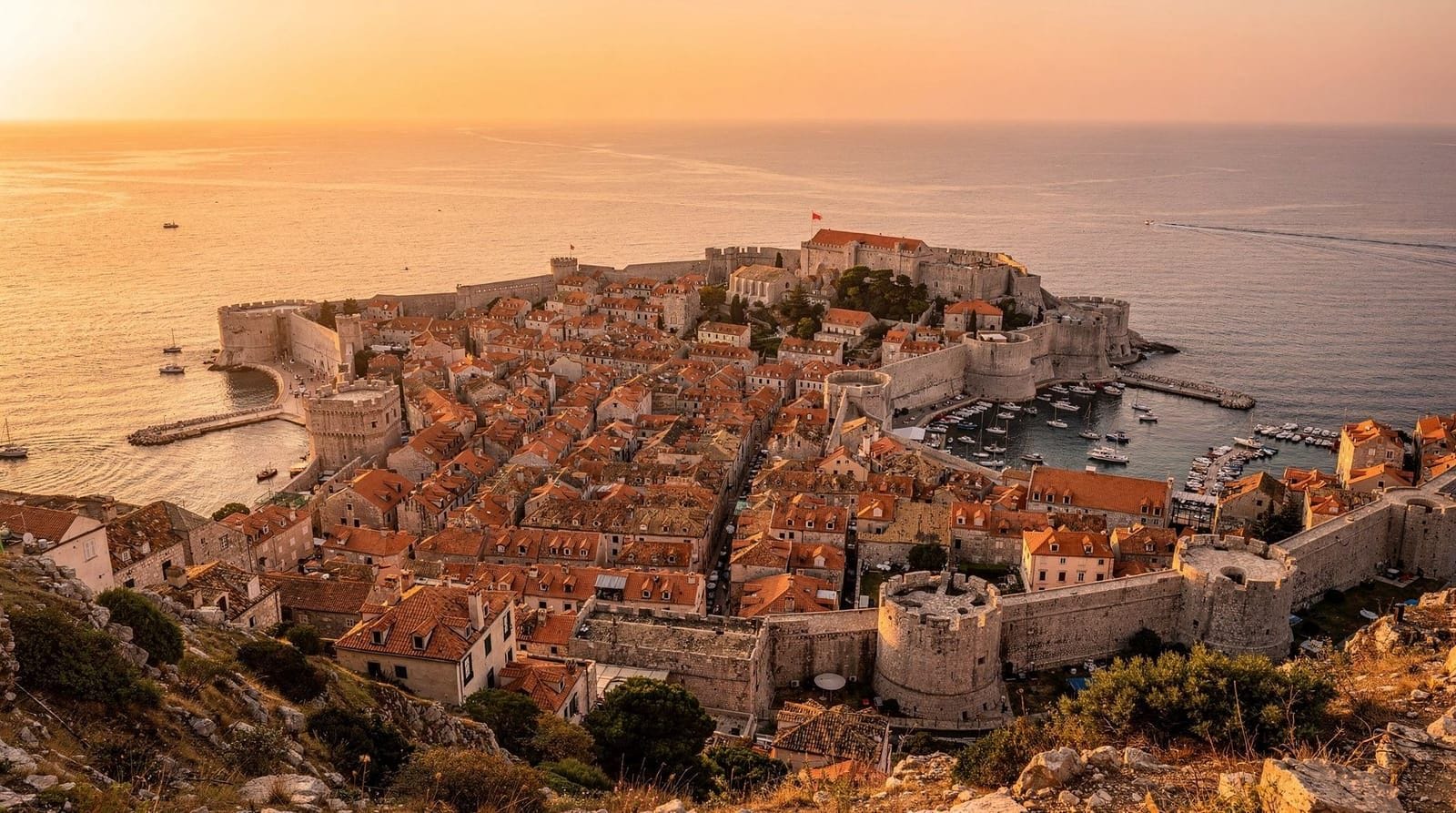
The most-shared Dubrovnik image — orange terracotta rooftops, pale stone walls, cathedral dome and a slice of deep blue sea — is taken from the northern section of the city walls circuit, looking south. The walls open at 08:00; this section is reached after walking counterclockwise from the Pile Gate for about 20–25 minutes.
How to find it: buy your city walls ticket at the Pile Gate (arrive at 07:55 for opening). Walk counterclockwise (the signs point you both ways; counterclockwise puts you on the higher sections first). The best viewpoint is where the northern wall reaches its highest point — you can see the Old Town below in its entirety, with the cathedral’s baroque dome prominent in the middle distance and the sea visible beyond.
Timing: 08:00–09:30 gives good light (morning sun coming from the east, illuminating the rooftops). By 10:30 the light flattens and the walls become crowded. Sunset from the walls is also excellent (17:00–19:00 in September, 19:00–20:30 in June) but requires being on the walls at closing time.
The honest reality: this view is genuinely extraordinary. The photographs of it are not misleading. What they don’t show is the queue at the Pile Gate ticket booth by 09:30, or the 50 other people standing at the same viewpoint by 10:00. The early morning timing advice is real — use it.
Zlatni Rat: the curved spit
Zlatni Rat beach on Brač island — the long curved pebble spit extending into the sea south of Bol — is Croatia’s single most-photographed beach. The famous bird’s-eye view of the curved tip against the turquoise water is almost exclusively an aerial image (drone or commercial aircraft).
Ground-level access: the beach is a 25-minute walk east from Bol town along the coastal path. It is free, always accessible and genuinely beautiful — the pebble surface, pine trees behind the beach and the clear water are exactly as photographed.
Elevated perspective: the wooded hillside east of the beach (behind the eastern half of the spit) provides a partial elevated view. It is not the full overhead angle, but it gives context that the beach-level view lacks. The path climbs from the eastern end of the beach into the pine forest.
Honest note: Zlatni Rat in July and August is extremely crowded. The isolated curves of the spit visible in photographs are shot early morning (before 08:00) or by commercial operators with aerial access. At 11:00 in August, the beach is covered with sunbeds and umbrellas to the waterline. June or September give you a significantly more realistic version of the photographed image.
Plitvice Lakes: the turquoise boardwalk
Plitvice Lakes photographs — boardwalks at water level over implausibly blue-green water, cascades visible in the background — are taken primarily in the lower lake section on Route C or D, accessible from Entrance 2 (the lower park entrance).
Best positions: at the lower end of the lower lake system, where the boardwalks extend over the shallowest water and the waterfall backdrop is most dramatic. The turquoise colour is produced by calcium carbonate and algae — it photographs most intensely in bright natural light at midday (unusually, one of the locations where high noon is genuinely good).
How to find it: the park map available at the entrance shows the route system clearly. Route C (starting from Entrance 2, the lower entrance) is typically less crowded in the morning than Route H (upper entrance). The most-photographed section is about 20–30 minutes of walking from Entrance 2.
Timing: arrive at park opening (07:00 in summer) for the minimum crowds. By 10:00 in July and August the boardwalks in the most-photographed section can be shoulder-to-shoulder. The park now operates timed entry tickets; purchase well in advance in summer.
Honest note: Plitvice is genuinely as beautiful as the photographs suggest — one of the relatively rare cases where the Instagram image matches reality. The challenge is purely crowds.
Rovinj: the fishing harbour
Rovinj’s harbour — coloured buildings rising behind the fishing boats, the Church of St Euphemia tower above — photographs best at sunrise (06:00–07:30 in summer) from the harbour waterfront.
Exact position: the north end of the main harbour promenade gives the widest view of the coloured facades and the boats. A slightly elevated position (walking up the steps of the Grisia gallery street about 10–15 metres) changes the angle to include more of the building layers stacking up the peninsula.
Evening alternative: the opposite end of the harbour (walking south from the main waterfront) gives a view back toward the peninsula from the south, with the church tower prominent. This position catches the last evening light from the west while the buildings facing you are side-lit.
Stiniva Cove, Vis
Vis island’s Stiniva Cove is one of Europe’s most photographed beaches — a narrow slit between vertical limestone cliffs opening into a perfect circular cove. The photograph is almost always taken from the water, looking back toward the cliff entrance.
By boat: water taxis from Vis town or Komiža run to Stiniva throughout the day in season (approximately 45–60 minutes from Komiža). The view from the sea looking at the entrance gap between the cliffs is the classic image. A boat allows you to photograph the cove from the sea as you approach — the angle unavailable from shore.
On foot: the hiking trail from the clifftop road descends steeply to the beach in 20–30 minutes. The trail passes through the narrow rock gap above the beach; the view from this gap looking down into the cove is excellent — a different angle from the sea-level photographs but equally dramatic.
Timing: Stiniva becomes very crowded by mid-morning in summer when the boat tours arrive. An early start (arriving by boat by 09:00 or hiking down before the main boat arrivals) gives significantly better conditions.
Hvar lavender: the purple fields
Hvar’s lavender fields are concentrated in the island’s interior, particularly around Brusje (a small village accessible by road from Hvar town), Malo Grablje and the karst plateau in the central part of the island.
When: lavender peaks in flowering in the second and third weeks of June, approximately. The exact timing varies by year — the fields are past peak by early July most years. Check Instagram or local tourism accounts in the weeks before your visit for current flowering status.
How to reach Brusje: the road from Hvar town climbs into the interior; Brusje is about 5 km by road. A scooter or bicycle makes reaching the fields practical. Walking from Hvar town is possible but takes 1.5–2 hours.
Photography: lavender photographs best in late afternoon when the western light is warm and the purple colour is most saturated. The fields are small compared to French Provence — compose tightly to fill the frame with colour rather than trying to show the full field width (which typically reveals the modest scale).
Zadar sunset: the Sea Organ
The Zadar sunset from the western promenade (Obala kralja Petra Krešimira IV) is frequently cited as exceptional. The promenade faces west into the Adriatic; the Sea Organ installation (a musical instrument carved into the stone steps of the seawall that plays tones created by wave movement) and the circular Greeting to the Sun (a solar-powered LED artwork) are the man-made elements that anchor the photographs.
Timing: arrive 30–45 minutes before sunset for position. The Greeting to the Sun installation begins its light display as natural light fades — the combination of sunset colours and the illuminated circle is the distinctive image.
Honesty about the Hitchcock claim: local marketing frequently cites Alfred Hitchcock saying Zadar has the world’s most beautiful sunset. There is no documented evidence of Hitchcock visiting Zadar. The sunset is genuinely beautiful; it does not require a celebrity endorsement to be worth visiting.
Dubrovnik from the sea — kayaking angle
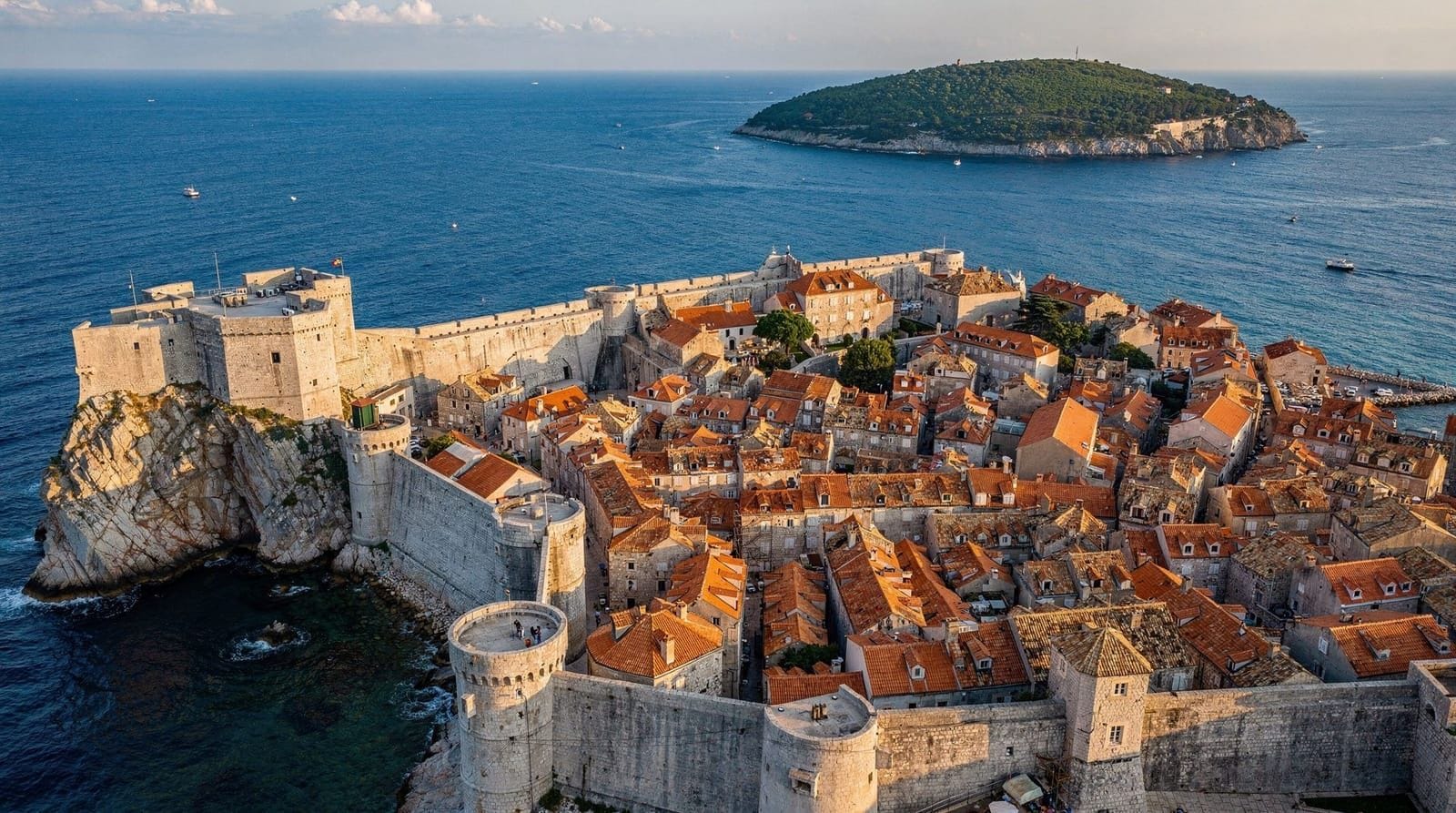
The view of Dubrovnik’s southern city walls from the water level — the sheer stone dropping into the Adriatic, the battlements above — is both spectacular and accessible by kayak.
Sea kayak tours from Dubrovnik’s beaches typically launch from the Banje Beach area east of the Old Town and paddle below the southern walls. The walls viewed from a kayak at water level are a genuinely different and dramatic perspective from the elevated views taken from the walls or from the mountain.
What to look for: the section below the Buža bar area — where the limestone walls plunge directly into the sea — is the most dramatic. The view from the kayak looking up at the Minceta Tower visible above is excellent context for the city’s scale.
Photography from a kayak: use a waterproof phone case or a waterproof action camera. Waves and spray are real even in calm conditions. Keep your primary camera in a dry bag.
Dubrovnik morning sea kayaking and snorkelling tourSplit: Diocletian’s Palace at dusk
Split’s Diocletian’s Palace produces a different kind of photograph from Dubrovnik’s — less a single iconic view, more a series of atmospheric street shots through a living Roman-era complex. The Peristyle, the palace’s central square ringed by ancient columns, photographs best in the hour after sunset when the floodlighting comes on and the space empties of day-trippers heading back to their cruise ships or apartments elsewhere. The narrow stone alleyways branching off the Peristyle — genuinely lived-in, with laundry lines and café tables — give Split’s photographs a texture Dubrovnik’s more manicured Old Town doesn’t have.
Exact position: stand at the southern end of the Peristyle, facing the cathedral bell tower, for the classic framing. Climbing the bell tower itself (a narrow, occasionally vertigo-inducing staircase) gives a rooftop view over the palace and the harbour beyond — Split’s equivalent of Dubrovnik’s wall view, with a fraction of the queue.
Timing: 19:00–21:00 in summer, once the floodlights are on but there’s still some blue in the sky, is the reliable window. Early morning (before 08:00) works too, before the cruise-ship crowds disembark.
Trogir old town at dawn
Trogir’s old town — a UNESCO World Heritage island connected to the mainland by bridges — is almost completely deserted before 08:00, even in the height of summer. The town’s cathedral, Cipiko Palace and waterfront cafés photograph beautifully in morning light with no crowds.
Exact position for the classic view: from the northern bridge (the mainland bridge), looking south toward the cathedral tower. The water on both sides of the old town island visible in the foreground, the tower in the middle distance. Best in the 30–45 minutes after sunrise when the light is warm and low.
Kornati: the archipelago from a boat
The Kornati National Park — 89 islands, islets and reefs in a 32 km stretch of middle Dalmatian sea — produces extraordinary photographs but requires a boat. The classic image is looking down the length of the archipelago with the pale limestone islands scattered against dark blue water.
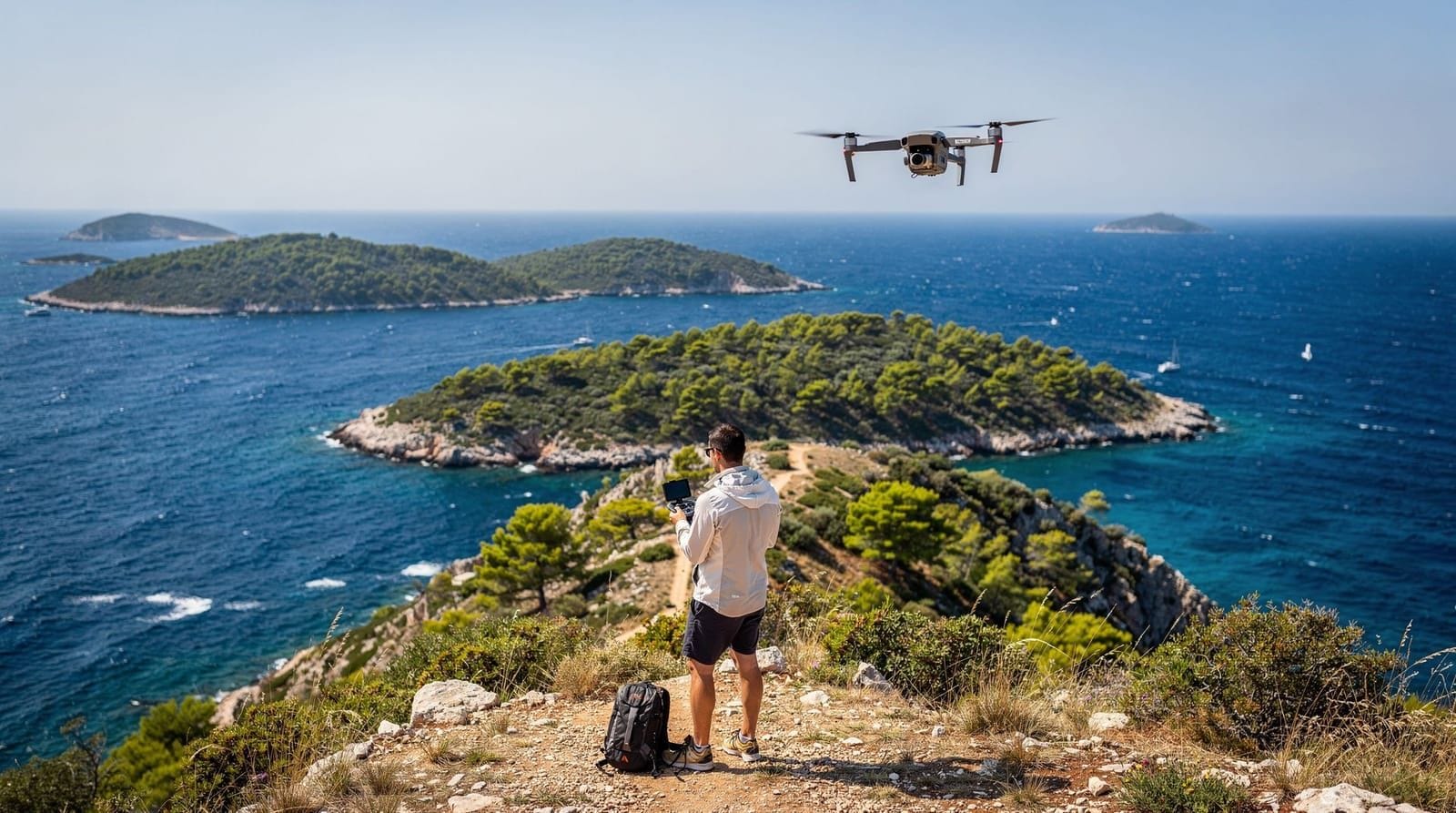
No drone is permitted in the national park. The photographs published of Kornati are taken from commercial vessels or from elevated positions on the larger islands within the park.
Access: day boat tours to Kornati run from Zadar, Šibenik and Murter. The boat journey itself passes through the archipelago at water level — dramatic photography from the deck. For the aerial-style view, some boats stop at specific island points with elevated terrain.
Kornati National Park day trip from ZadarMotovun and Istria’s hill towns
Istria’s inland hill towns produce some of Croatia’s least-crowded, most rewarding photographs. Motovun, perched on a conical hill above the Mirna valley, is famous for the morning mist that pools in the valley below while the hilltop town sits above it in clear light — a genuinely striking effect that happens most reliably in spring and autumn mornings, roughly 07:00–08:30. The classic shot is from the approach road looking up at the town walls rising out of the mist, or from the town’s own ramparts looking down over the fog-filled valley. Unlike almost every other location in this guide, you can arrive at 10am here in August and still find the streets close to empty.
Golden hour by season: a quick cheat sheet
| Season | Sunrise | Sunset | Best window for empty shots |
|---|---|---|---|
| June | ~05:15 | ~20:45 | Before 08:00 |
| September | ~06:30 | ~19:30 | Before 08:30 |
| December | ~07:15 | ~16:15 | Most of the day (low season) |
For exact times on your travel dates, check locally — Croatia’s daylight hours shift substantially between June and December, and the “arrive early” advice throughout this guide means different clock times depending on the month.
Krka waterfalls: the classic swimming shot
Krka National Park, north of Split near Šibenik, produces one of Croatia’s most-shared inland photographs: swimmers in the pool beneath the Skradinski Buk waterfall system, turquoise water cascading over multiple tiered falls in the background. Since swimming was restricted at the main falls in recent years, the classic in-water shot is less common than it once was — check current rules before planning around it, as they have shifted more than once.
Best positions: the wooden walkway network around Skradinski Buk gives multiple angles on the falls without needing to be in the water. The upper viewing platform, reached via a short uphill walk, gives the widest view of the full cascade system.
Timing: arrive at opening (varies seasonally, typically 08:00–09:00) for the clearest light and the fewest people on the walkways. Midday sun actually works reasonably well here, similar to Plitvice, because it lights the water from above rather than creating harsh shadows in the forest canopy.
Honest social media advice for Croatia
The “empty” photograph requires timing and commitment: virtually every Croatian Instagram photograph that appears to show an empty location was taken before 08:00 in summer. If you want those photographs, you need those early starts. There is no trick or lesser-known spot that gets you empty Dubrovnik walls at 11:00 in August.
Filters and editing: Croatia’s natural colours — turquoise water, warm limestone, deep Adriatic blue — are striking without heavy editing. Slight saturation of the water colour and minor adjustments to white balance (slightly cooler) improve most Croatian coastal photographs. Aggressive filters quickly produce an artificial look.
Season matters more than location: the same Croatian location in September looks significantly different from the same location in August — fewer people, warmer light angles, post-summer quality to the sea colour. Shoulder season photography consistently produces better results than peak season photography at the same spots.
The cable car is worth the queue: for Dubrovnik’s Mount Srđ sunset, the cable car queue in peak season is real. Book in advance, arrive at the station 15 minutes before your time slot. The view justifies the queue.
For detailed photography guidance by location, see Croatia photo spots. For Dubrovnik golden hour specifically, see golden hour Dubrovnik. For drone regulations that affect aerial photography, see drone rules Croatia.
Frequently asked questions about Croatia Instagram spots
How do photographers get the aerial view of Zlatni Rat beach?
Legitimate aerial images of Zlatni Rat are almost all taken commercially with permits, historically before current drone regulations, or from a specific hillside position on the eastern headland above Bol. Ground-based elevated shots from the wooded hill east of the beach (a 20-minute walk from Bol town) give a partial aerial perspective without drone equipment.What time produces the best light for Rovinj harbour photographs?
Sunrise — the earlier the better. Rovinj harbour faces east-southeast, meaning it catches the first light of day directly on the coloured building facades and the fishing boats returning to harbour. By 08:00 in summer the light is already too high and less dramatic. 06:00–07:00 is the sweet spot.Where is the specific viewpoint for Dubrovnik's rooftop photographs?
The most-shared Dubrovnik rooftop view is from the city walls circuit on the northern section, looking south over the terracotta rooftops toward the cathedral and the sea. Accessible on the city walls ticket (€35 adults in 2026). The Mount Srđ cable car provides a different elevated view from above the city rather than from within the walls.Is Stiniva Cove on Vis accessible without a boat?
Yes, via a steep hiking trail from the clifftop road above the cove. The trail descends to the pebble beach through a narrow rock gap. The hike is approximately 20–30 minutes from the road, steep and uneven. Most visitors arrive by boat from Vis town or Komiža (45–60 minutes by water taxi or tour boat), which also provides the best photographic angle.Where do I find the Plitvice Lakes boardwalk photograph?'
The boardwalk photographs with turquoise water visible below and cascades in the background are taken from Route C or D in the lower lakes section. The best combination of boardwalk and waterfall is at the lower end of the lower lakes, accessible from Entrance 2 (the lower park entrance). Early morning and late afternoon light hits the water at the best angle.Are the Dubrovnik Instagram photos taken with expensive camera gear?
No. Many of the most-shared Dubrovnik images are taken on recent smartphone cameras. The location and timing (early morning or golden hour) do more for image quality than equipment. A phone camera with a good computational photography processor handles the light conditions well.What is the least crowded Instagram-worthy spot in Croatia?
Stiniva Cove on Vis remains less visited than comparable locations despite being widely photographed. The Kornati archipelago from a boat is dramatic and rarely crowded. The hilltop views from Motovun in Istria are almost never crowded even in peak season. Trogir's old town at dawn is deserted.
Top experiences
Best-rated activities across GetYourGuide and Viator.

Blue cave, Mamma Mia and Hvar, 5 islands speedboat tour
- Viator

Blue Cave and Hvar Tour - 5 Islands Tour from Split and Trogir
- Viator

Blue cave, Mama Mia and Hvar, 5 Island Speedboat Tour from Trogir
- Viator

From Split: Plitvice Lakes National Park Guided Tour
- Viator

Krka Waterfalls Day Tour with Boat Ride from Split and Trogir
- Viator

Plitvice Lakes National Park Guided Day Tour from Split
- Viator