Best photo spots in Croatia: 20 locations worth the effort
Dubrovnik: Cable car and historic walking tour
What are the best photography spots in Croatia?
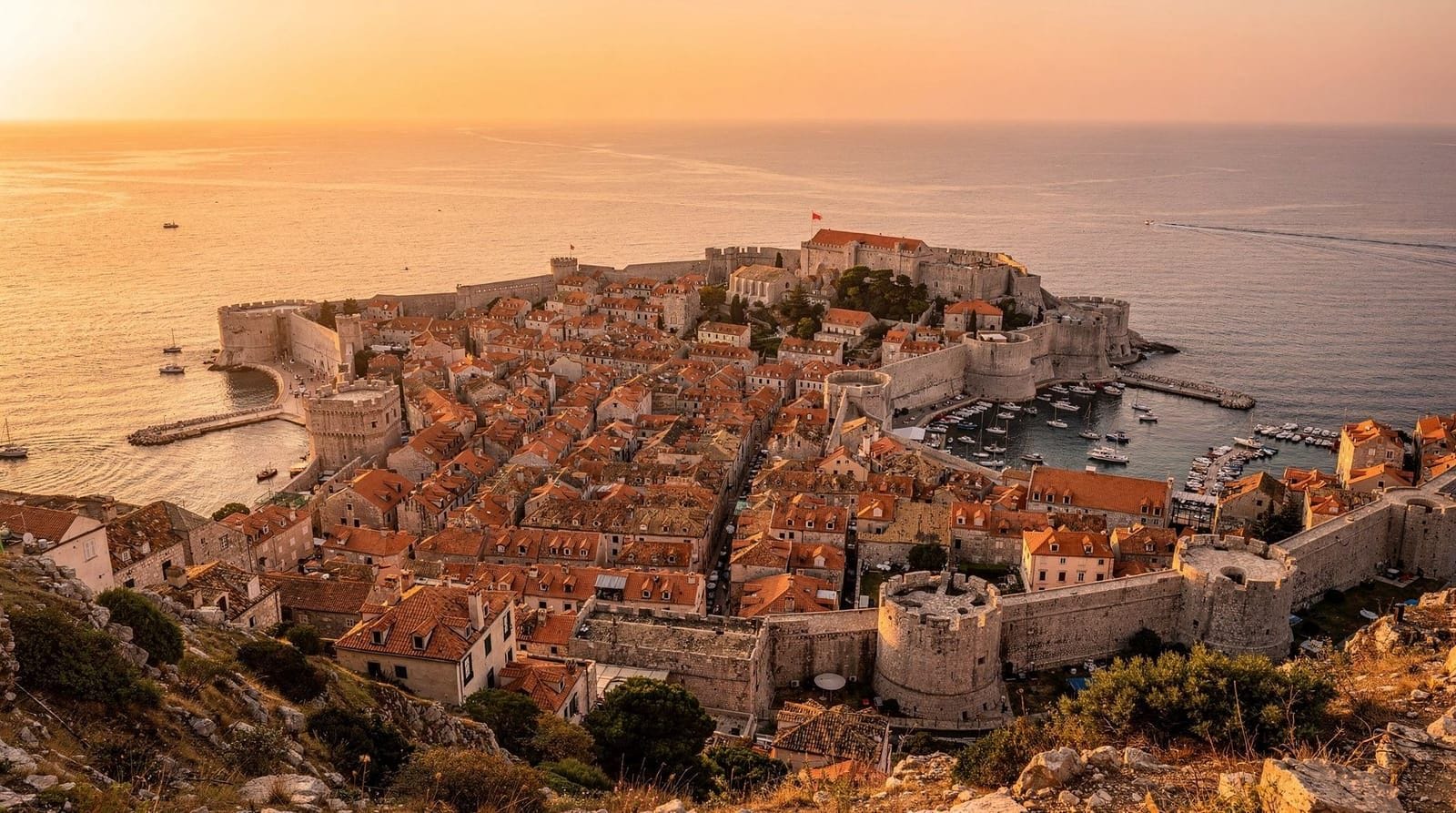
Croatia's top photo spots include Dubrovnik's city walls viewed from Mount Srđ at golden hour, Plitvice Lakes' turquoise cascades in spring, Rovinj's painted harbour at sunrise, Hvar's lavender fields in June and Zlatni Rat beach from above. Šibenik's cathedral frieze, Trogir's old town at dawn and Vis island's Stiniva cove round out the essential list.
| Best overall light | before 08:00 or the last hour before sunset |
| Least crowded region | Istria’s hill towns, Zagreb |
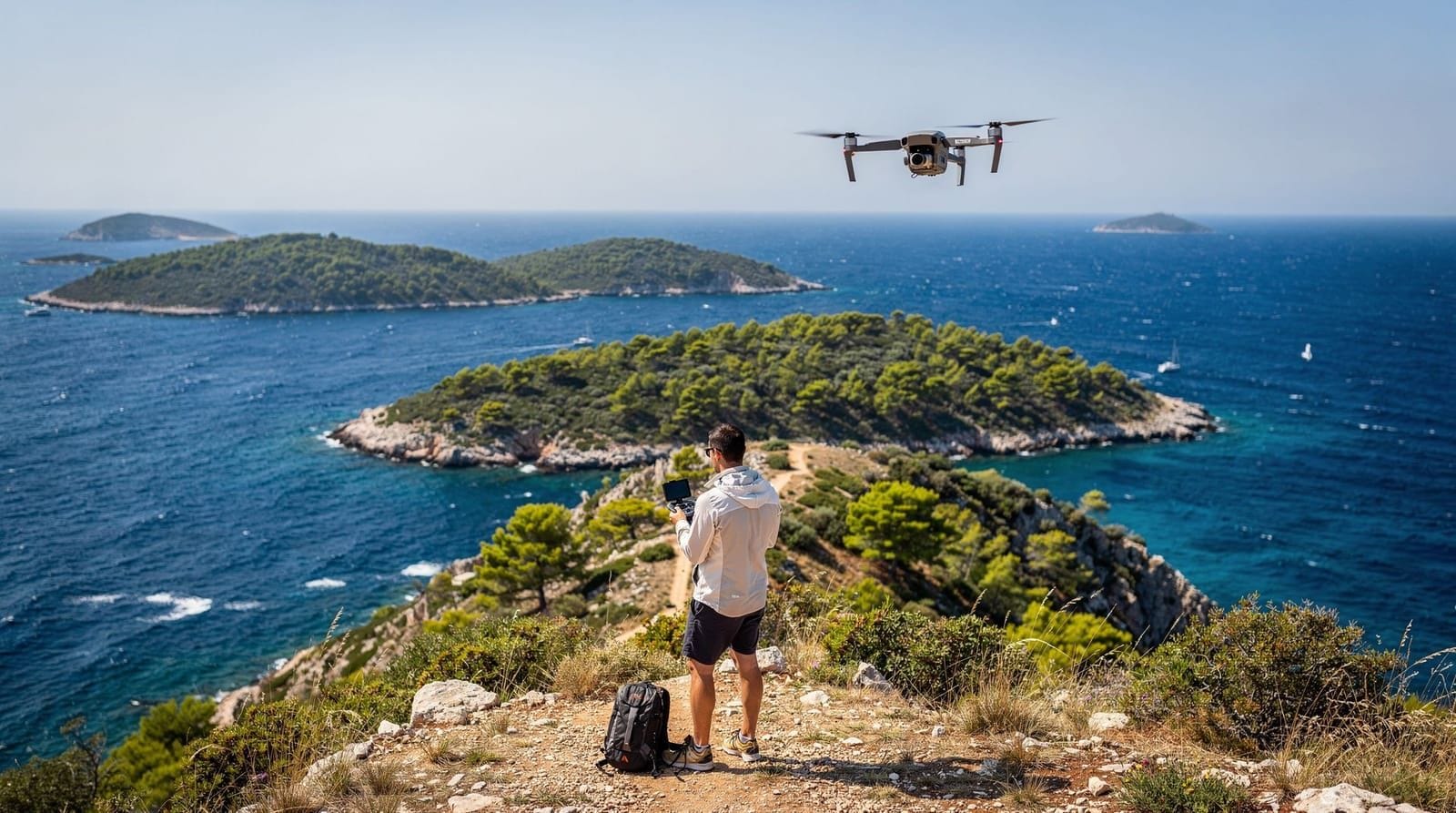
| Drone-friendly? | No — banned in national parks and Dubrovnik Old Town |
| Essential gear | wide-angle lens or phone; tripod optional |
| Best season | June or September over July–August |
Croatia’s visual quality is not accidental. The country’s combination of limestone architecture, turquoise Adriatic water, terracotta rooftops and extraordinary light — particularly along the Dalmatian coast in late spring and early autumn — produces photographs that require relatively little technical skill to make look good. The challenge is not quality but crowds: the best spots in Croatia are known, and managing timing is the primary skill a photographer needs in this country.
This guide covers 20 genuinely excellent photo spots, organised by region, with practical notes on timing, position and what to look for.
Dubrovnik and the south
1. Mount Srđ at golden hour
The mountain directly above Dubrovnik, accessible by cable car or a steep hiking trail, gives the definitive aerial view of the Old Town — terracotta rooftops, encircling walls, the blue-green Adriatic and Lokrum island as a backdrop. This view at golden hour (roughly 30 minutes before sunset) produces a quality of light that makes the city appear to glow from within.
Logistics: the cable car runs until late in summer (often until 24:00 in peak season). Take the second-to-last car up to catch the full sunset from the summit, then the last car down. Book cable car tickets at the station or online — the evening slots fill in summer.
Position: walk slightly north of the cable car terminus for the widest view. The rocky area with the Croatian war memorial gives a slightly different angle from the main terrace.
Dubrovnik cable car and historic walking tour2. City walls walk at sunrise
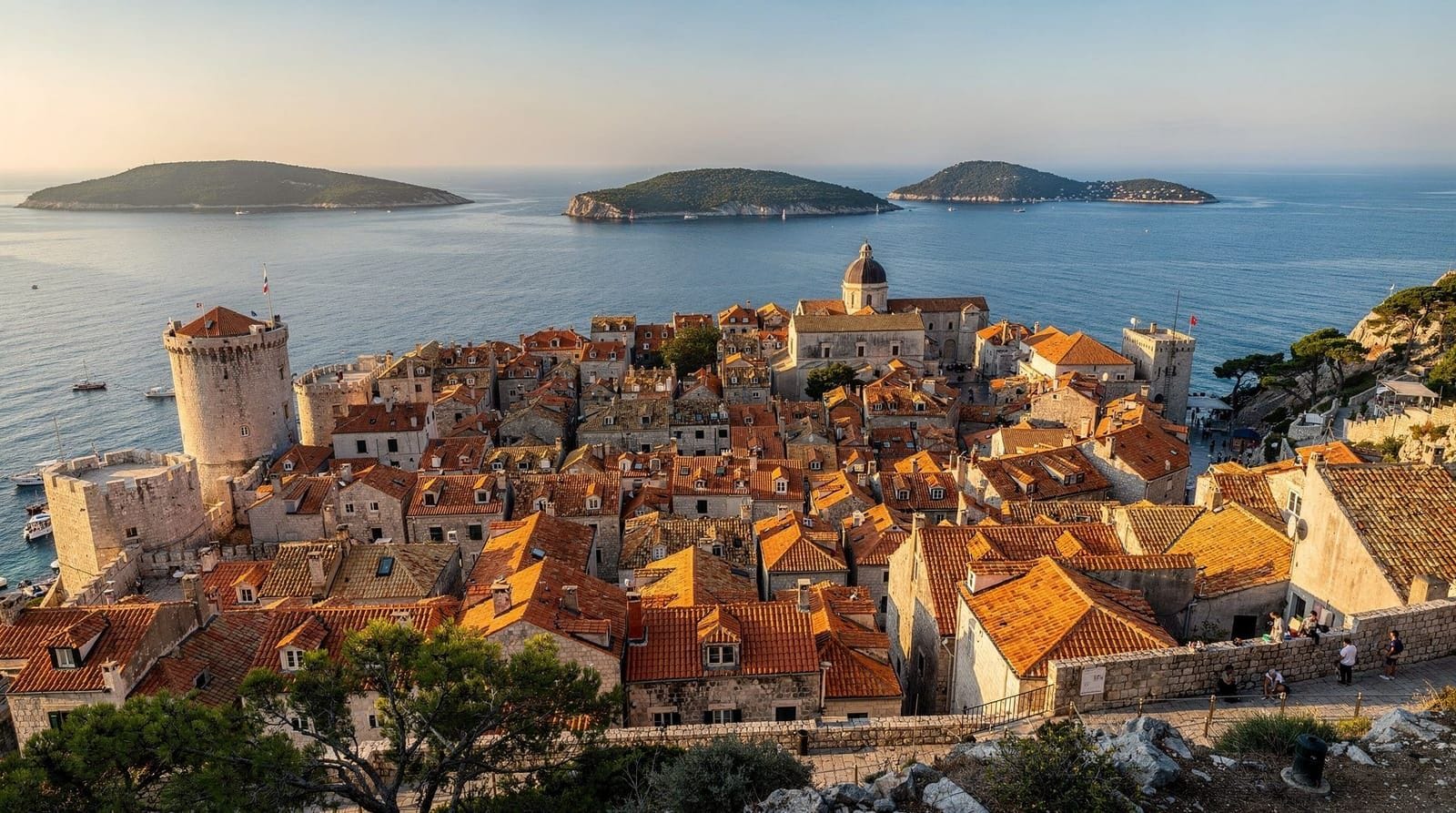
The city walls circuit starts at 08:00. Arrive at the Pile Gate at 07:55 in summer for the first slot. Walk counterclockwise (north and west first) to get the morning light behind you as you look south over the rooftops. The view from the northern high section above the cathedral rooftops is the classic image.
Position: on the southern walls section, look down at the small boat harbour for a strong foreground element. The Pile Gate and Fort Lovrijenac to the west make the best contextual wide shot.
3. Fort Lovrijenac from the sea wall
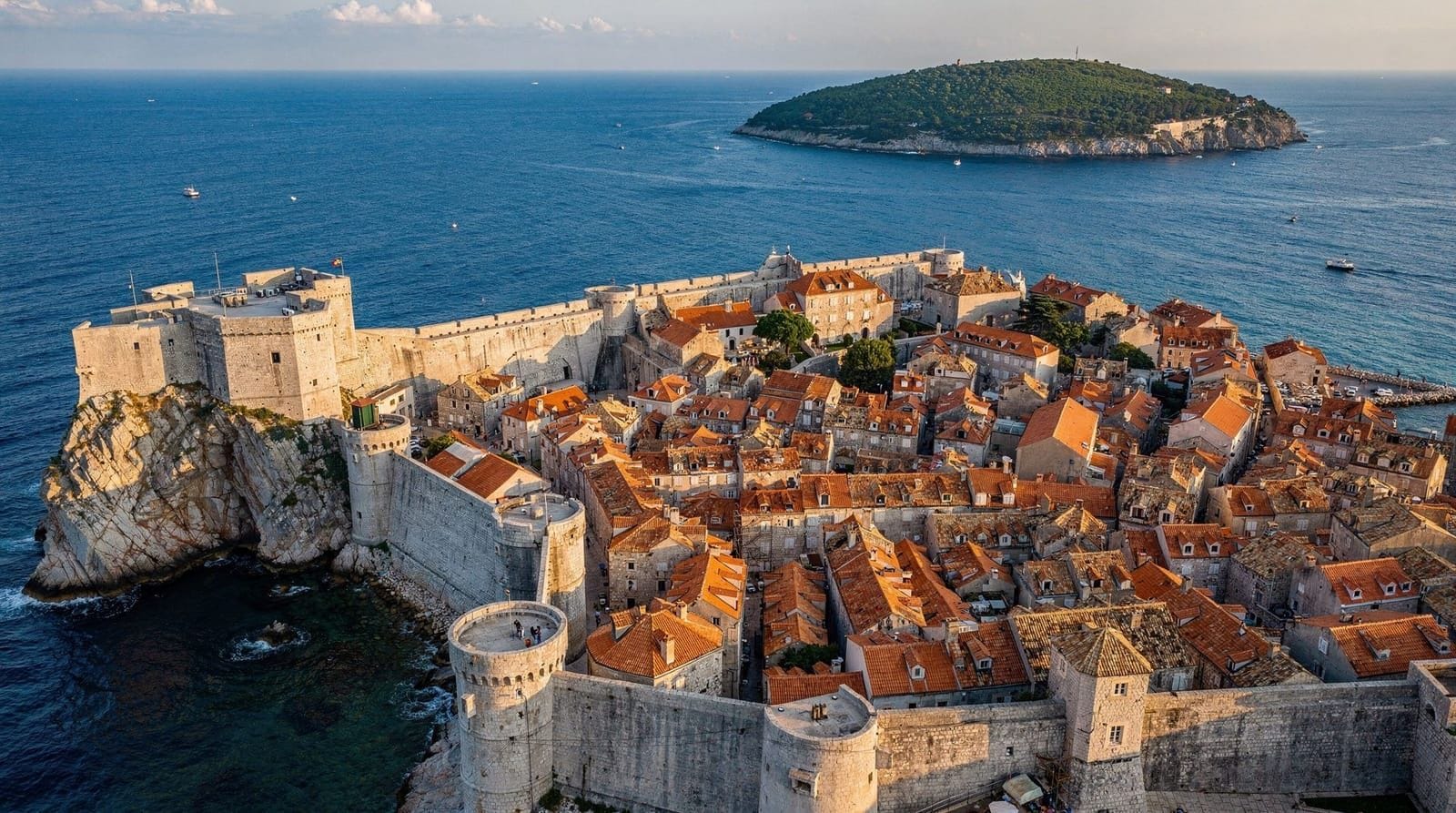
From the Bokar Tower (at the western end of the south walls, where they meet the western walls), the view of Fort Lovrijenac across the narrow channel is exceptional — the fort rising from its rocky promontory with the sea behind it. Morning light from the east illuminates the fort face directly.
4. Stradun before 08:00
The main thoroughfare is genuinely empty from about 06:30 to 08:00 in summer. The polished limestone pavement with its mirror-like surface reflects the sky and buildings — a distinctive low-angle shot with a wide lens captures this effect. The view from either end looking down the length of the street works equally well.
5. Lokrum island from the Old Town harbour
The view from the Old Town harbour entrance — with the city walls curving to the right and Lokrum island in the middle distance — is an underused angle compared to the ubiquitous rooftop views. Best in morning light with a telephoto lens to compress the water distance.
Split and central Dalmatia
6. Diocletian’s Palace Peristyle at dawn
The central square of Diocletian’s Palace — the Peristyle — is almost empty before 08:00. The columns and sphinx (an original Egyptian granite sphinx, 3,500 years old) photograph well in the low morning light. The view from the bell tower stairs looking down into the square captures the full architectural composition.
7. Trogir Old Town from the bridge
Trogir’s old town is an island connected to the mainland by bridges. The view from the northern bridge looking south toward the cathedral tower, with the stone buildings clustered around it and the water on both sides, is one of the most compact and visually coherent townscape shots in Croatia. Best at sunrise when the eastern light hits the stone directly.
8. Šibenik Cathedral apse frieze
The exterior apse of Šibenik’s Cathedral of St James carries a frieze of 71 sculpted portrait faces — real faces of 15th-century citizens of Šibenik, carved by Juraj Dalmatinac. A telephoto lens (100–200mm equivalent) isolates individual faces with strong expression. Early morning or overcast light avoids harsh shadows across the carved relief.
Islands
9. Zlatni Rat, Brač — from the hillside
Zlatni Rat — the curved pebble spit that extends into the sea south of Bol on Brač island — is one of the most photographed beaches in Croatia. The classic view is from above: the wooded hillside to the east of the beach allows a reasonably accessible elevated position. Early morning, before the beach fills, gives you the shape of the spit against the water without crowds.
10. Stiniva Cove, Vis
Vis island’s Stiniva Cove is accessible by boat or via a steep path from the clifftop. The cove entrance — a narrow gap between limestone cliffs opening into a perfect sheltered pebble beach — is best photographed from the water (take a boat from Vis town or Komiža) or from the clifftop position looking down. The boat angle is exceptional: the vertical cliffs framing the enclosed beach produce one of Croatia’s most dramatic coastal images.
11. Korčula old town from the sea
Korčula town on its narrow peninsula resembles a miniature Dubrovnik. The view from the sea — particularly from a boat or from the ferry approaching the harbour — gives the full profile of the town’s towers and walls against the hillside behind. The eastern tower of the old town photographs particularly well against a blue sky.
12. Hvar lavender in June
Hvar’s lavender fields are largely concentrated in the interior of the island, particularly around the villages of Brusje and Malo Grablje. June is the peak of flowering — typically the second and third weeks. The fields are small but intensely coloured; a late afternoon visit when the light comes from the west produces the most saturated purple tones.
13. Pakleni Islands from Hvar
The archipelago visible from Hvar town — the Pakleni Islands — provides excellent foreground interest for wide shots of Hvar harbour from the Spanjola Fortress. The fortress is a climb (30–40 minutes from the town) but the view at sunset justifies the effort: the Pakleni Islands scattered in the foreground, Hvar town below, the open Adriatic beyond.
Istria
14. Rovinj harbour at sunrise
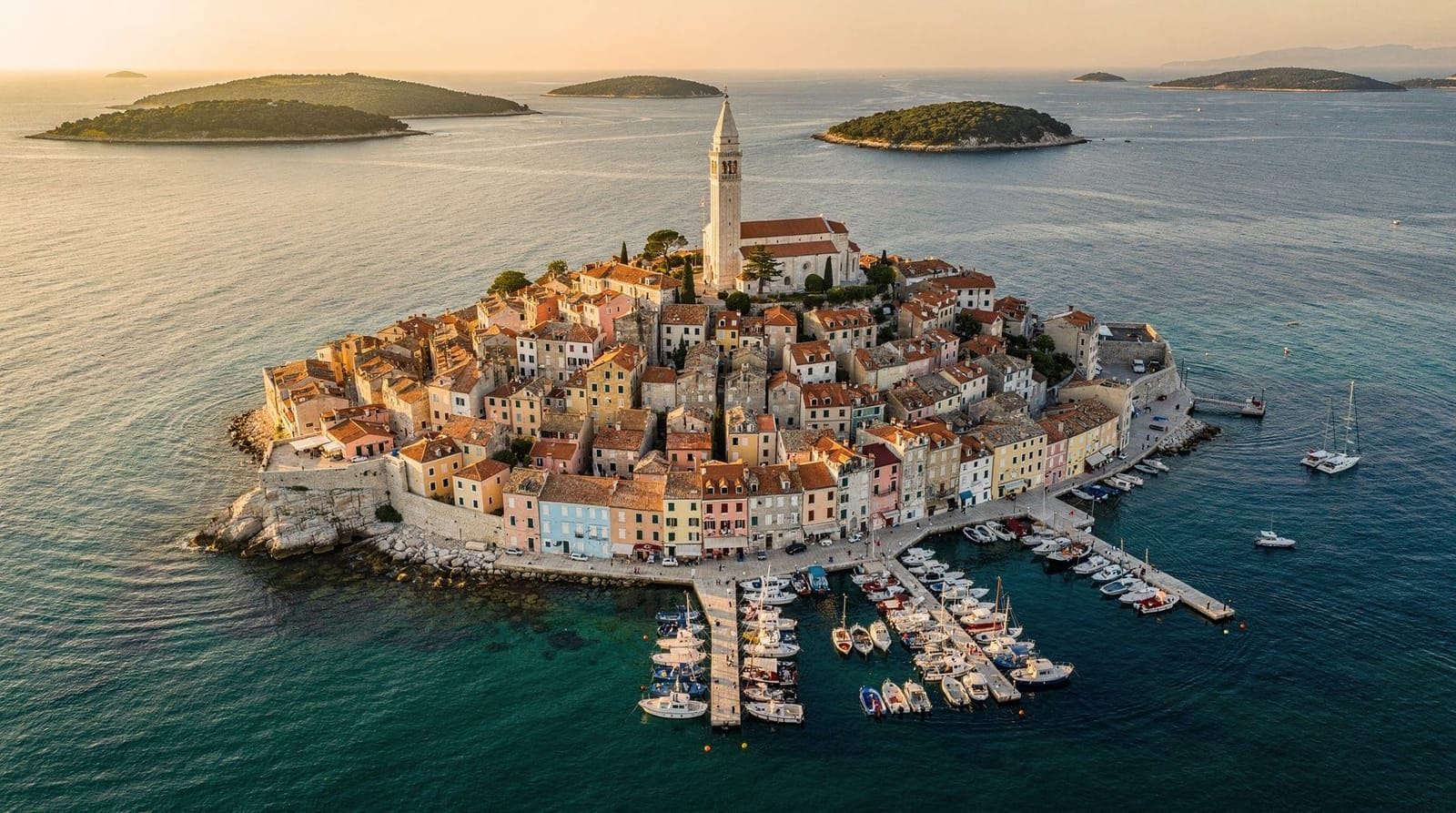
Rovinj is the most photogenic town in Istria. The old town rises on a peninsula from the harbour, its coloured buildings culminating in the Church of St Euphemia at the top. The harbour view — fishing boats in the foreground, the painted buildings and church tower behind — is the classic image. Arrive at 06:30 in summer for the best light and the fishing boats returning from the night catch.
Secondary angle: from the southern waterfront (walking south from the main harbour), the view back toward the peninsula with the church tower prominent is slightly less photographed and equally strong.
15. Motovun from the valley road
Motovun is a hilltop village in the Mirna river valley. The standard view — looking up at the village from the valley floor with the valley vineyards in the foreground — works best in morning light when mist sometimes lingers in the valley. The D500 road running through the valley below provides the classic low-angle shot.
National parks
16. Plitvice Lakes — Veliki Slap (Great Waterfall)
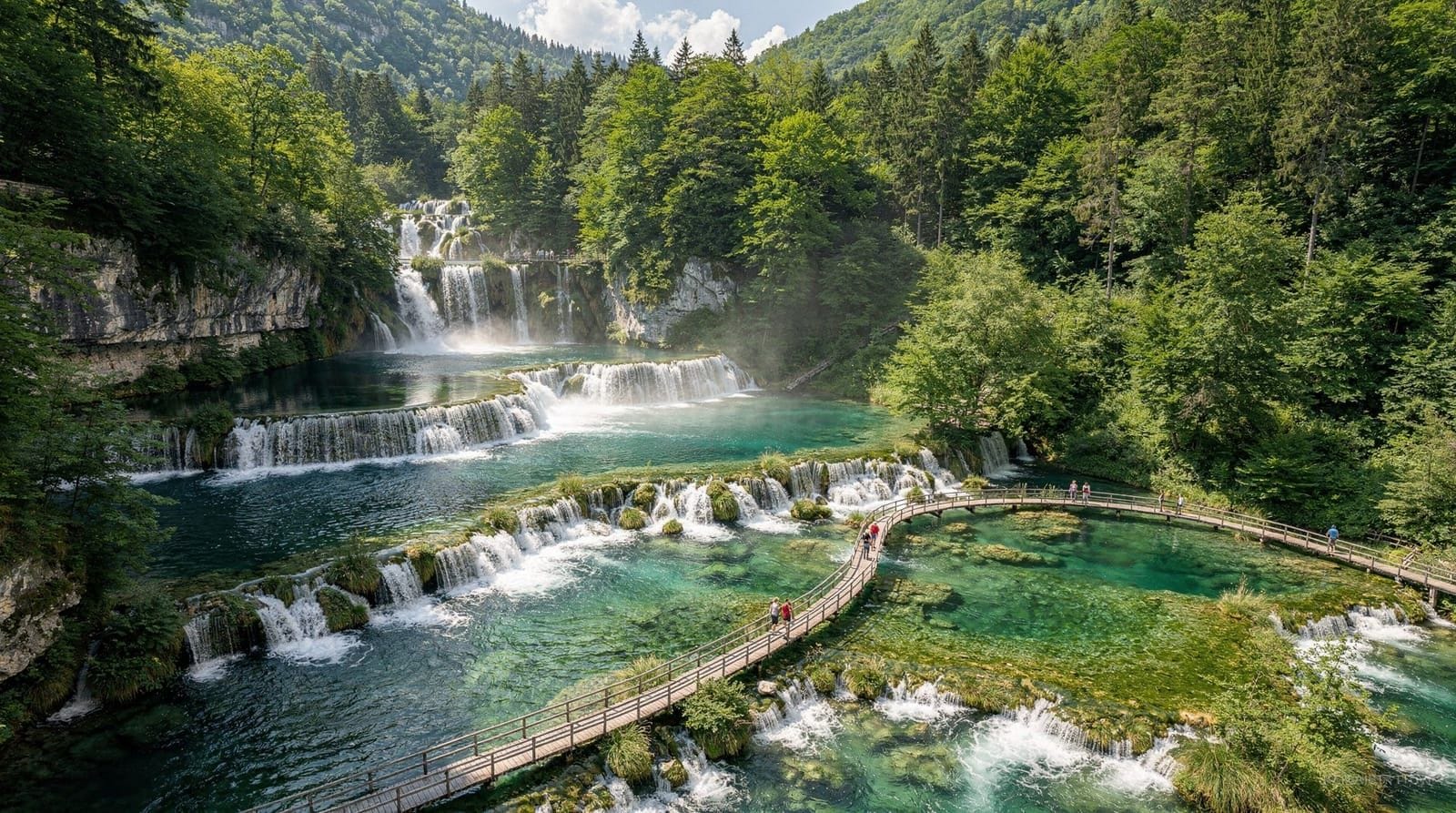
The Great Waterfall at Plitvice is the highest waterfall in Croatia (78 metres). The classic photograph is from the viewpoint across the river that gives a full-height view of the falls with the pool below. A slow shutter speed (1/4 to 1/2 second) softens the water movement. The falls are accessible on all park routes but best visited before 10:00 when the main crowds arrive.
17. Plitvice boardwalks over the lower lakes
The wooden boardwalks running at water level across the lower lake section allow photographs of the turquoise water, underwater plant life and cascades from almost no height above the surface. The colours of Plitvice’s water — produced by calcium carbonate and algae interaction — photograph best in bright midday light, which is one of the few occasions where high-noon sun is actually advantageous.
18. Krka Skradin falls from the river
Krka National Park’s Skradinski Buk — the travertine cascade system above the Visovac lake — is accessible by boat from Skradin. The boat ride itself gives excellent water-level views. From the park walkway above the falls, a telephoto lens isolates individual cascade layers.
Krka Waterfalls day tour from SplitKvarner and the north
Opatija seafront promenade
Opatija, the Habsburg-era resort town on the Kvarner coast, has a distinct architectural character from Dalmatia — belle époque villas, a long seafront promenade (Lungomare) and formal gardens. The waterfront at dawn, with the villas’ pastel facades catching the first light and Cres island visible across the bay, is an underused Croatian photograph that reads as more Central European than Mediterranean. The Maiden with the Seagull statue on its rocky point is the town’s most photographed single subject, best shot from the water side looking back at the promenade.
Pula’s Roman amphitheatre
Pula’s Roman arena — one of the best-preserved in the world, still hosting concerts today — photographs strongly from ground level looking up through the arches, and from the surrounding hillside looking down onto the full oval structure. Early morning avoids both crowds and the harsh shadow patterns that midday sun casts through the arcades.
Zagreb and the interior
19. Zagreb Upper Town rooftops
Zagreb’s Upper Town (Gornji Grad) has several locations for elevated rooftop views: the Lotrščak Tower (a small admission fee, stairs to the top) gives the best panorama over the Lower Town. The Strossmayer Promenade on the edge of the Upper Town — sometimes called the balcony of Zagreb — overlooks the Lower Town and the city stretching toward the Croatian plains.
20. Zadar sunset (Sea Organ and Greeting to the Sun)
Zadar has what Alfred Hitchcock famously described as the world’s most beautiful sunset (according to local tourist literature — the claim is unverifiable but enthusiastically repeated). The western harbour promenade, where the Sea Organ and the Greeting to the Sun installation are located, faces directly into the Adriatic sunset. The circular Greeting to the Sun installation — a large solar-powered LED artwork — begins to glow as the sun sets, providing an unusual man-made element in an otherwise natural sunset composition.
21. Kornati archipelago from a boat deck
The Kornati National Park’s 89 islands scattered across pale blue water is one of Croatia’s most distinctive landscapes, but it exists only for photographers who get on a boat — there’s no shore-based viewpoint that captures it. Day boat tours from Zadar, Šibenik or Murter pass through the archipelago at deck level; the classic shot looks down the length of the islands with the Krune cliffs catching side light in late afternoon. Drones are banned inside the park, so a telephoto lens from an elevated point on one of the larger islands is the closest thing to an aerial perspective available.
Planning a photography trip by season
| Season | Strength for photography | Weakness |
|---|---|---|
| Spring (Apr–May) | Wildflowers, green landscape, Plitvice at max flow | Sea too cold for water-based shots |
| Early summer (Jun) | Long light, lavender on Hvar, warm sea | Crowds building fast at headline spots |
| Late summer (Jul–Aug) | Warmest sea, festival energy | Worst crowds of the year everywhere |
| Autumn (Sep–Oct) | Warm light, thinning crowds, truffle season in Istria | Shorter days, earlier golden hour |
| Winter (Nov–Mar) | Empty famous spots, occasional snow at Plitvice | Short days, many boat-access spots closed |
Practical photography notes for Croatia
Morning versus golden hour: in Dubrovnik and the coastal towns, sunrise photography (beating the crowds) is often more practically valuable than sunset (golden hour is beautiful but everyone is there). A pre-dawn arrival at a key location, shooting through sunrise and morning, yields better crowd-free results than chasing sunset at known spots.
Water shoes: for any photography near the sea on rocky shores or in Krka National Park — the terrain is slippery and water shoes protect both you and your equipment.
Weather: overcast days in Croatia are not wasted photography days. The soft light removes harsh shadows from architectural photography and makes the water colour even more intense — the Adriatic turquoise appears most saturated on bright overcast days.
Editing: Croatia’s natural colours need only light editing — a slight boost to saturation on the water and a marginally cooler white balance tend to match what the eye actually saw. Heavy filters or aggressive HDR processing quickly make the images look artificial, especially on the turquoise water that is already close to its most saturated in-camera.
Local guides and permits: for anything beyond casual travel photography — drone use where permitted, access to restricted areas, or commercial shoots — check with the relevant park authority or city tourist board well ahead of your trip. Requirements vary significantly between Dubrovnik, Plitvice and the smaller sites, and permissions are rarely granted on short notice.
For drone photography regulations across Croatia, see the drone rules guide. For the specific golden hour locations in Dubrovnik with timing tables, see the golden hour Dubrovnik guide.
Frequently asked questions about Best photo spots in Croatia
When is the best time to photograph Dubrovnik?
Sunrise is the optimal time — before 07:00 in summer gives you the Old Town with very few people. The city walls open at 08:00; arriving at opening and walking the circuit counterclockwise puts you in the best morning light. Golden hour at sunset from Mount Srđ is exceptional but requires the cable car or a steep hike.Do I need a drone to photograph Croatia well?
No. Croatia's best photographs are achievable at ground level. Aerial shots of Zlatni Rat beach and Plitvice Lakes are genuinely impressive, but the drone regulations in Croatia are restrictive — national parks ban drones entirely, and Dubrovnik Old Town is a no-fly zone. Excellent photography is fully achievable without aerial equipment.What camera gear is best for Croatia?
A wide-angle lens (16–24mm equivalent) captures old town architecture and coastal panoramas. A telephoto (70–200mm equivalent) is useful for isolating details on city walls and compressing coastal scenery. A phone camera with good low-light capability handles interiors and evening light surprisingly well.Are there photography tours available in Croatia?
Photography-specific guided tours are less common than general tours but available, particularly in Dubrovnik. Several guides offer early-morning photography walks specifically timed for golden hour and minimal crowds. These are worth considering if you want local knowledge about secondary locations and optimal positions.What is the best spot to photograph Plitvice Lakes?
The viewpoints above the upper lakes — accessible from Route H (the upper park entry route) — give the widest perspective over the lake chain. The boardwalks at the level of the lower falls allow dramatic close-up shots with mist and moving water. Early morning (the park opens at 07:00 in summer) gives the best light and fewest people.How do I photograph Rovinj without crowds?
Rovinj is best photographed from the harbour before 08:00 in summer, when the fishing boats are returning and the painted buildings on the peninsula are lit from the east. The view from the Grisia stone stairway looking toward the sea is classic; the waterfront looking back toward the church tower from the southern end of the harbour is equally strong.Is a tripod useful in Croatia?
For long-exposure night shots of Dubrovnik or Plitvice Lakes waterfalls at low shutter speeds, yes. For general travel photography, the additional weight and hassle is often not worth it — modern cameras and phone cameras handle low light well, and Croatia's strong summer light rarely requires extended exposures.
Top experiences
Best-rated activities across GetYourGuide and Viator.

Blue cave, Mamma Mia and Hvar, 5 islands speedboat tour
- Viator

Blue Cave and Hvar Tour - 5 Islands Tour from Split and Trogir
- Viator

Blue cave, Mama Mia and Hvar, 5 Island Speedboat Tour from Trogir
- Viator

From Split: Plitvice Lakes National Park Guided Tour
- Viator

Krka Waterfalls Day Tour with Boat Ride from Split and Trogir
- Viator

Plitvice Lakes National Park Guided Day Tour from Split
- Viator