Dubrovnik City Walls: the honest visitor guide
Dubrovnik: City walls walking tour
How much does it cost to walk the Dubrovnik city walls?
The walls cost €35 per adult (2026), which includes entry to the Lovrijenac Fortress. Children under 7 are free. The ticket is valid for the day of issue and can be purchased online or at the three entry points: Pile Gate, Ploče Gate and St. Luke's Tower. Book online in summer to avoid queues.
The walls that never fell
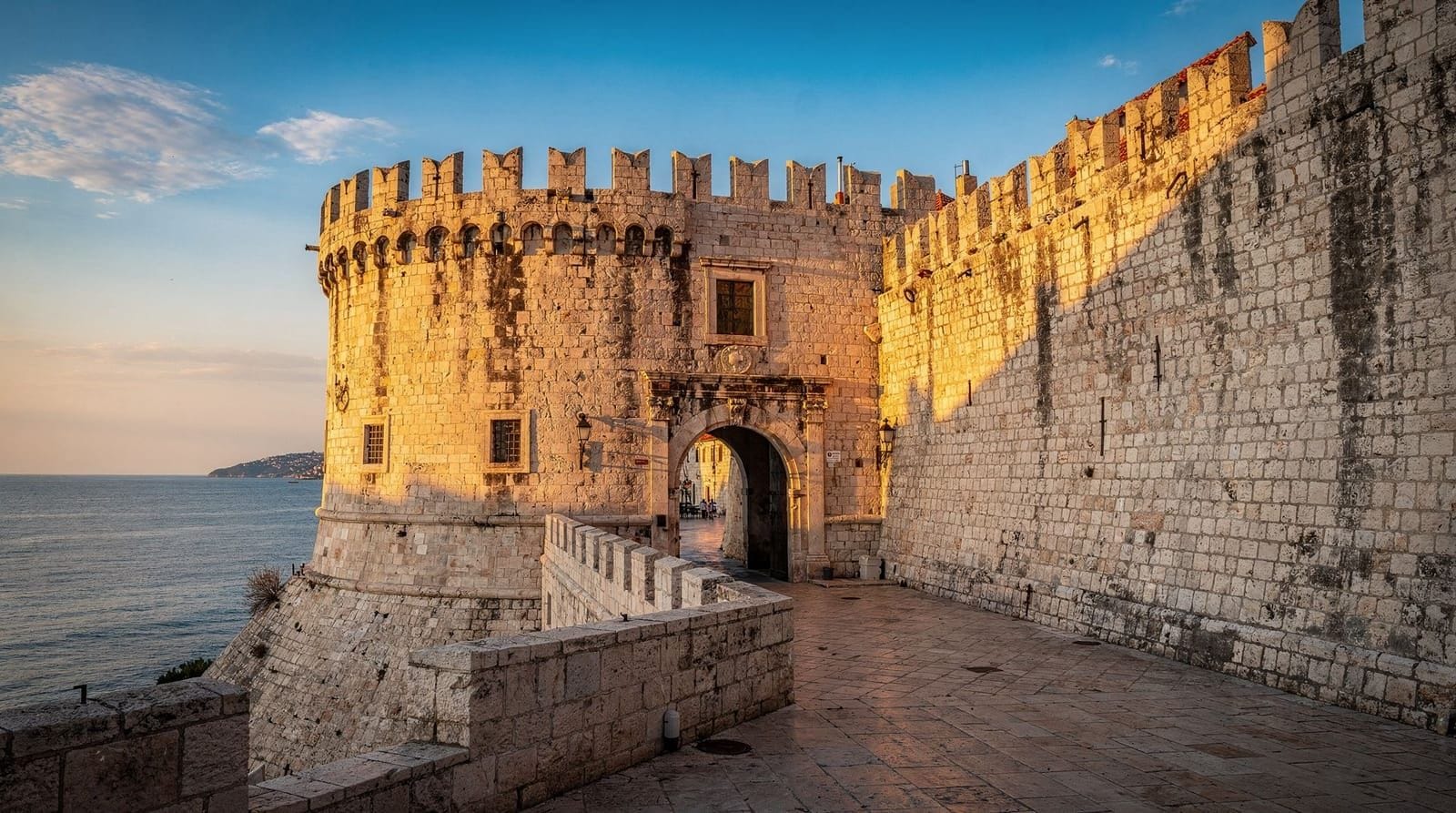
For over five centuries the walls of Ragusa — the independent republic that eventually became modern Dubrovnik — were never successfully breached by a military assault. The Ottoman Empire, Venice, and various other aggressors looked at the grey limestone ramparts and thought better of it. The walls were not just a physical barrier; they were a statement of intent, backed by a sophisticated diplomatic service that maintained neutrality through tribute payments and negotiation while simultaneously building the most formidable urban fortifications on the Adriatic.
Today those walls are Croatia’s most-visited paid attraction. Walking their 1.94km circuit — which rises to 25 metres above sea level at points, commands views of the Adriatic on one side and the terracotta roofscape of the old city on the other — is the defining experience of a Dubrovnik visit. This guide tells you everything you need to do it well.
| Cost | €35 adult (2026), includes Lovrijenac Fortress |
| Time needed | 1.5–2 hours for the full circuit |
| Entry points | Pile Gate, Ploče Gate, St. Luke’s Tower |
| Best time | 8–9am opening, or from 5pm for sunset light |
| Booking | Online in advance for July–August |
The circuit: what you will see
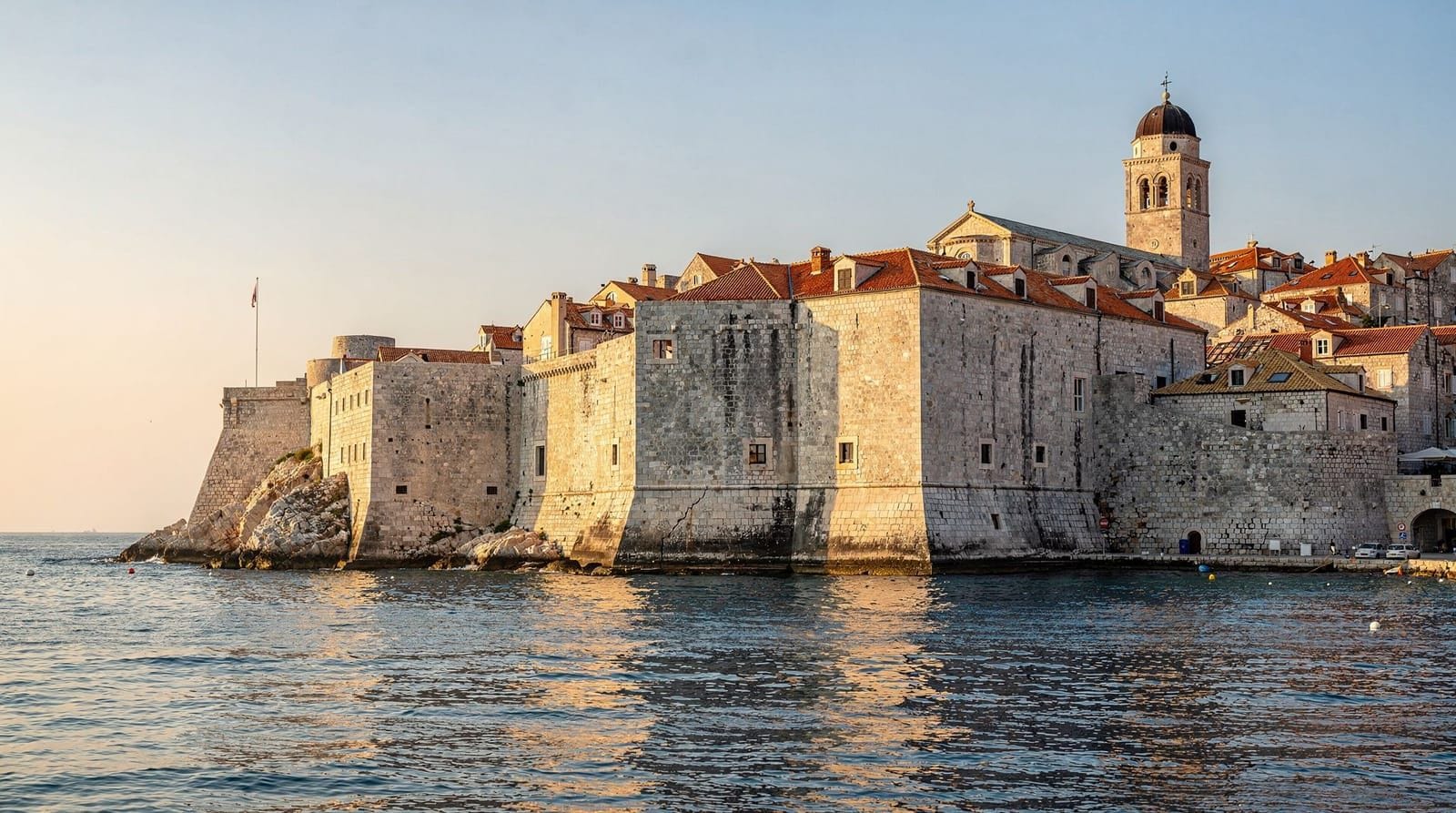
The walls form a nearly complete loop around the old town. The total length is approximately 1,940 metres, with an average thickness of 1.5–3 metres on the landward (north) side and slightly thinner on the sea side. Three large and twelve small bastions, five bastions, two corner fortifications, a large tower and the freestanding Lovrijenac Fortress guard the circuit.
Walking clockwise from the Pile Gate entry (the most common start point), the route proceeds:
Pile Gate to Minčeta Tower — the northwest section, climbing steeply up the landward (north) side. Minčeta is the highest point of the walls at 37 metres above sea level, a circular tower with sweeping views north toward the hills and west toward the Adriatic. The tower was designed by Juraj Dalmatinac (the same architect behind Šibenik Cathedral) and completed in the 15th century.
Minčeta to Revelin Fortress — the north and northeast section, with views down into the old town’s medieval roofline and, from the northeast corner, toward the harbour. Revelin Fortress (15th–16th century) is located near the Ploče Gate; it now serves as an event venue.
Revelin to St. John’s Fortress — the eastern and southeastern section, running along the harbour side. Views of the city port (Gradska luka) and the boats moored inside are some of the most photographed on the circuit.
St. John’s Fortress to Bokar Tower — the southern (sea-facing) section, the most exposed part of the walls with the Adriatic directly below. Bokar Tower, guarding the western sea approach, was also partly designed by Dalmatinac.
Return to Pile Gate — completing the circuit.
Tickets and entry points
Price (2026): €35 per adult, which includes the Lovrijenac Fortress. Children under 7: free. Dubrovnik Card holders: discounted entry.
Entry points: Three gates to access the walls:
- Pile Gate (west, main entrance): most busy, most convenient from the old town main entrance
- Ploče Gate (east): less crowded, useful if staying in the eastern old town or Ploče neighbourhood
- St. Luke’s Tower (near the harbour): less commonly used, useful if approaching from the harbour side
Tickets: Available online (book in advance in July–August to avoid queues, though you still queue to enter), or at the gates. The Dubrovnik Pass (day passes for tourists) includes wall entry; compare the math based on what else you plan to visit.
Opening hours: Generally 8am–7:30pm in summer (April–October), shorter in winter (9am–3pm November–March). Hours vary slightly year to year; check the official Visit Dubrovnik website before your visit.
Best time to walk the walls
This is the single most important planning decision. The walls are entirely exposed — there is effectively no shade on most of the circuit. In July–August, the limestone and concrete heat to oven levels by 10am. Visiting at midday in peak season combines extreme heat, maximum crowds, and the harshest possible light for photographs.
Best options:
Early morning (8–9am): The walls open at 8am. Arriving at opening time means starting ahead of the cruise ship crowds (ships typically dock from 9am onward) and in the best morning light. Temperatures are 5–8°C lower than midday.
Late afternoon / sunset (from 5pm): Crowds thin as day-trippers head back to ships and buses. The light turns golden. The sunset from the western walls, looking out over the Adriatic and toward the island of Lokrum, is outstanding. Check sunset times — in midsummer, golden hour falls around 8–9pm; in September, around 7–7:30pm.
Shoulder season (May–June, September–October): All of the above problems reduce significantly. September is probably the optimal month for Dubrovnik: warm (25–27°C), sea still at 24°C, crowds well below August levels, and light that photographers love.
Lovrijenac Fortress
The Lovrijenac — a freestanding fortress on a 37-metre rock outcrop just outside and west of the Pile Gate — is included in the walls ticket. It requires a short detour from the main circuit and is easy to miss.
The fortress dates from the 11th century in some form, though the current structure is largely 15th–16th century. An inscription over the gate reads: “Non bene pro toto libertas venditur auro” — Freedom is not sold for all the gold in the world. The motto of the Ragusan republic; a statement of intent made in limestone at the entrance of its most strategically important fortification.
Game of Thrones fans will know it as the exterior of the Red Keep in several scenes. The interior courtyard is where various throne room exterior scenes were filmed. Even without that context, the views from the fortress battlements — looking back at the walls, out to sea, and down to the rocky shoreline below — are among the best in Dubrovnik.
What the walls look like after 1991–92
An important piece of context. During the siege of Dubrovnik in 1991–92, Serbian and Montenegrin forces shelled the old city. Around 70% of buildings sustained some damage; the rooftops were devastated. UNESCO coordinated an international restoration effort, and by the late 1990s the most visible damage had been repaired. But the restoration used new terracotta tiles for the roofs — slightly brighter and more orange than the original weathered tiles. Walking the walls, you can identify which buildings were most heavily damaged by the comparative brightness of their roofs. It is a sobering layer of history visible from nowhere else.
Practical tips
Water: Bring at least 500ml per person; more in summer. There are a few spots along the circuit where cold drinks are sold, but they are expensive and spaced out.
Footwear: The surfaces are smooth stone and can be slippery in wet conditions. Flat shoes with grip are essential. Heels are inadvisable; flip-flops are manageable on dry days.
Photography: A wide-angle lens captures the roofscape panoramas best. Midday light is harsh; morning and evening light is dramatic. The sea-facing (south) section is best photographed looking east in the morning and looking west in the evening.
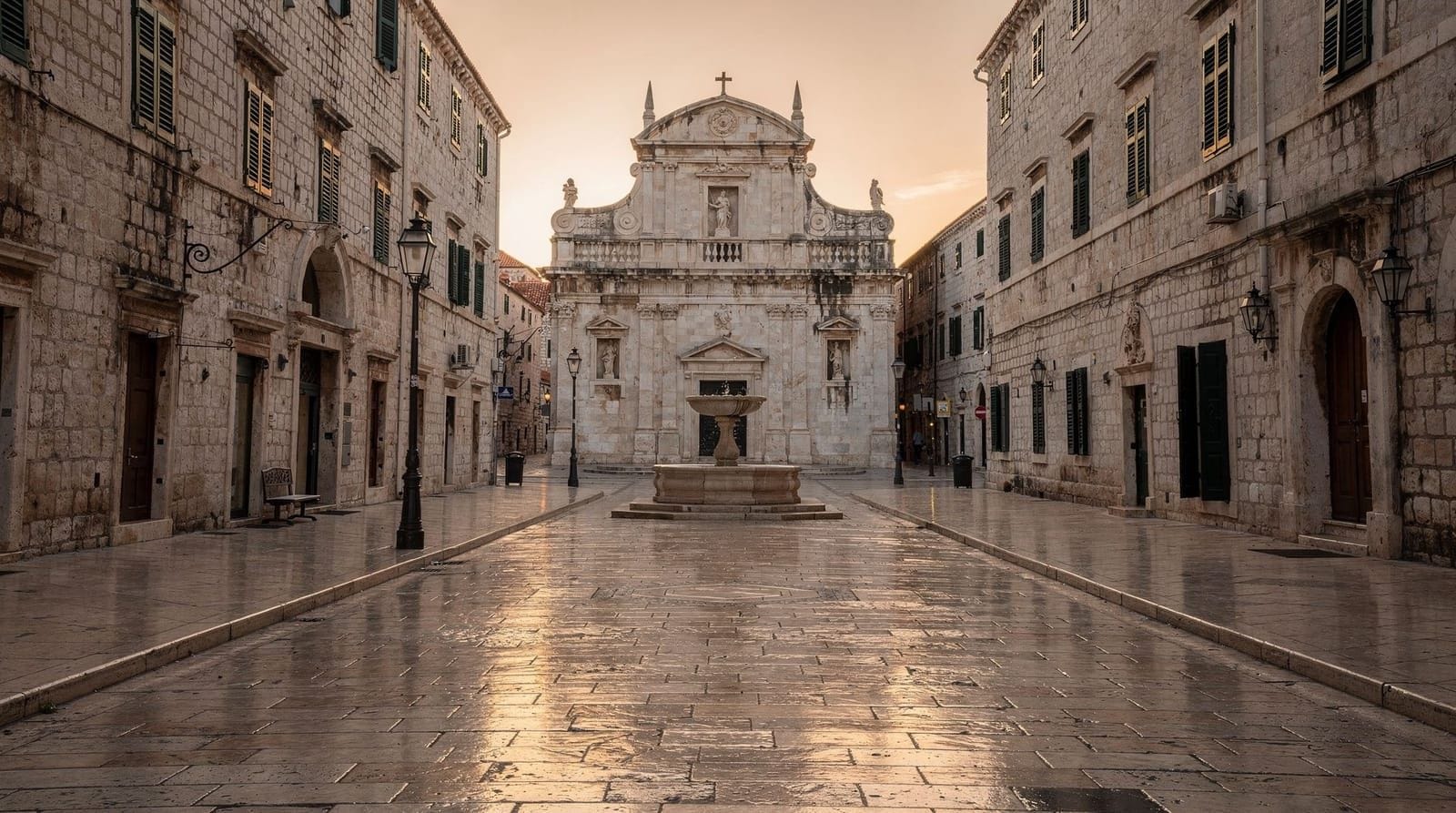
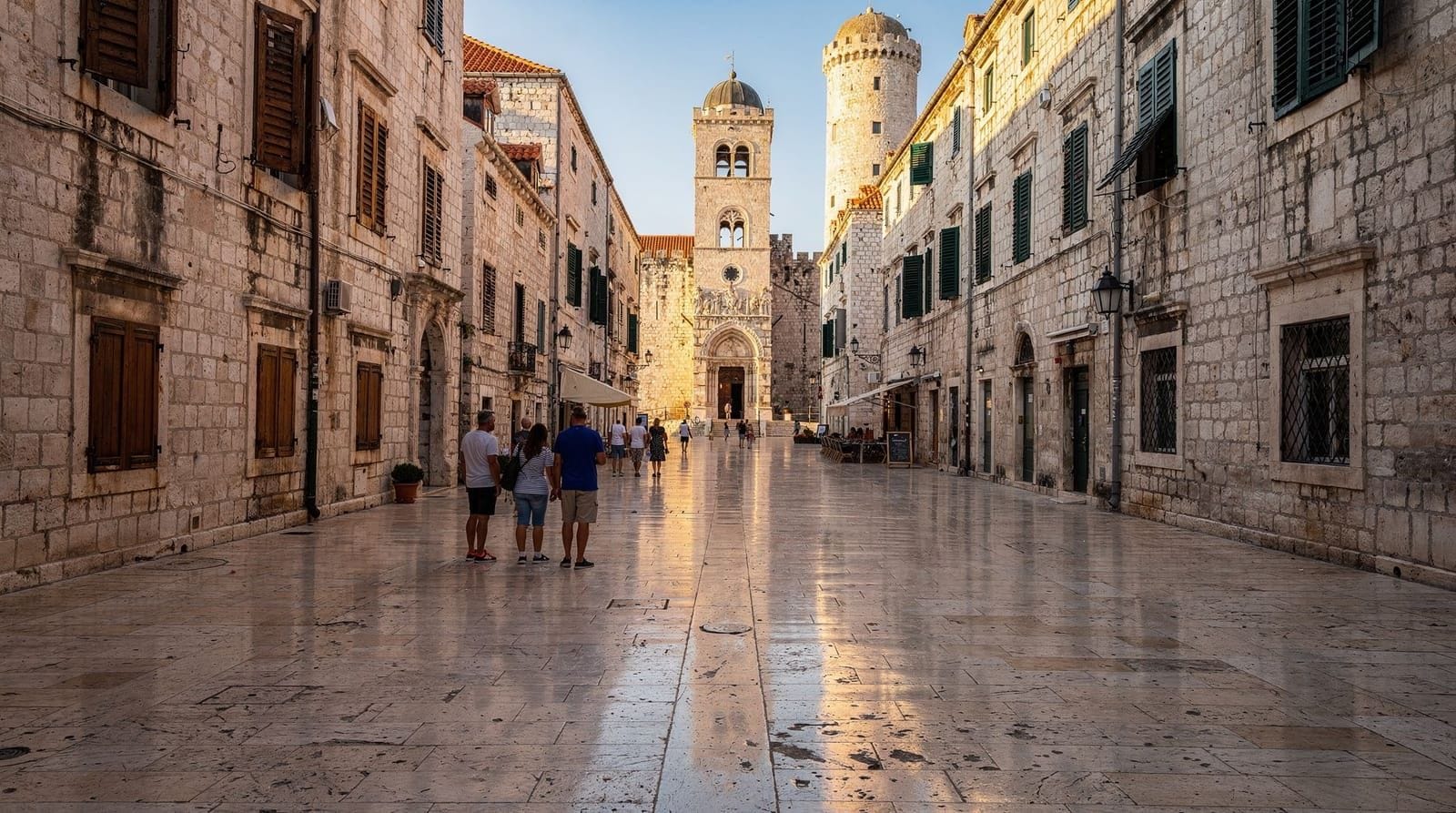
Combination with old town: The most efficient approach is to walk the walls first (early morning), then descend into the old town for the Stradun, the Rector’s Palace, the Dominican Monastery, and a coffee at Café Festival or on the Stradun. See our full Dubrovnik Old Town guide.
The walls in history: key moments
1292: The first mention of a continuous wall circuit in historical records.
1400s: Systematic strengthening of the walls as the Ottoman threat grew. The round tower form (better at deflecting cannon fire) replaced square towers in this period.
1420: Venice, which had absorbed most of Dalmatia, repeatedly sought to take Ragusa. The walls and a combination of tribute payments to both Venice and the Ottomans preserved independence.
1667: A catastrophic earthquake destroyed much of the city behind the walls. The walls themselves largely survived; the city within was rebuilt in Baroque style.
1806–1814: Napoleon abolished the Republic of Ragusa and incorporated it into the French Illyrian Provinces. The walls’ strategic independence ended.
1991–92: The siege. Yugoslav People’s Army and Serbian/Montenegrin forces attempted to take Dubrovnik. They failed militarily but caused significant damage. The walls, by the bitter irony of history, did not stop artillery.
Combining the walls with a Game of Thrones walk
Because the circuit passes above or near several King’s Landing filming locations — Fort Lovrijenac, the Pile Gate approach, and views over the harbour — many visitors combine the walls with a dedicated Game of Thrones circuit. Our self-guided GoT walking guide and the King’s Landing Dubrovnik guide both map the specific scenes and camera angles onto street-level locations, which complements the elevated views from the walls themselves rather than duplicating them.
Beyond the walls: what to do next
The walls are usually the first big activity of a Dubrovnik stay, not the only one. For a change of pace after the heat and crowds of the circuit, a ferry to the Elaphiti Islands or a paddle along the coast with sea kayaking from Dubrovnik both give you a sea-level view of the same fortifications you just walked above. If you have more than a couple of days, the day trips from Dubrovnik guide rounds up the other options — Elaphiti, Mostar, Kotor — worth weighing against a second morning on the walls itself. For overall trip pacing, see the Dubrovnik long weekend itinerary, which slots the walls walk into a realistic 3-day schedule alongside the old town and a beach or island day.
Is the walls ticket worth it if you’re on a tight budget?
At €35, the walls are the single most expensive standalone ticket in Croatia, and it is fair to ask whether the view justifies the price. For most first-time visitors, yes — there is no substitute vantage point that shows the old town’s roofscape, the Adriatic and Lokrum island together in one continuous circuit. If budget is genuinely tight, the free alternative is the view from the Buža bars cut into the southern sea walls, or simply the harbour walk at the old port — both give a taste of the same coastline without the ticket, though neither replaces the elevated 360-degree perspective of the full circuit.
Frequently asked questions about Dubrovnik City Walls
How long does it take to walk the Dubrovnik city walls?
The full circuit is approximately 1.94km and takes between 60 and 90 minutes at a brisk pace, or up to two hours if you stop frequently for photographs and views. Add time for the Lovrijenac Fortress if you visit it. Allow at least two hours in total.When is the best time to walk the Dubrovnik city walls?
First thing in the morning (8am when they open) or in the late afternoon/evening (from around 4pm onwards when day-trippers start leaving). Midday in July–August is genuinely punishing — the exposed stonework radiates heat and there is almost no shade. The walls are also beautiful at golden hour.Can you see Game of Thrones filming locations from the Dubrovnik walls?
Yes. Walking the walls gives elevated views of several Game of Thrones shooting locations — the Pile Gate area (the main approach to King's Landing), the Lovrijenac Fortress (Red Keep exterior in some shots), and views of the harbour (Blackwater Bay). A specialist GoT walking tour covers the filming spots in more depth.Are the Dubrovnik city walls accessible for people with limited mobility?
No. The walls involve steep staircases with no lift access, uneven surfaces, and sections with significant elevation change. They are not suitable for wheelchairs or pushchairs. The old town streets below offer most of the visual experience at ground level.How old are the Dubrovnik city walls?
The present walls were built primarily in the 13th to 16th centuries, though fortifications on this site date back to the 8th or 9th century. The current circuit, with its towers and bastions, was completed largely in the 15th century and strengthened in the 16th century after the Ottoman threat intensified. The walls were never successfully breached.Can you walk the walls without a guide?
Absolutely. The walls are well-signed, the route is linear (you walk the full circuit and return to your entry point), and views are self-explanatory. Audio guides are available for rental. However, a guided tour adds considerable historical context — why certain towers are round and others square, which sections were rebuilt after the 1667 earthquake, how the Republic of Ragusa maintained its independence through a combination of fortification and diplomacy.Is the Dubrovnik city walls ticket worth it at €35?
It is the single most expensive sight entry in Croatia — more than Plitvice Lakes off-season, more than the entire Diocletian's Palace in Split. Whether it is worth it depends on your tolerance for crowds and heat. The views from the walls — of the orange rooftops, the Adriatic, the island of Lokrum, and the city layout — are genuinely spectacular. On balance, yes, but only if you go at the right time of day.
Top experiences
Bookable activities with verified prices and instant confirmation on GetYourGuide.
Top experiences
Best-rated activities across GetYourGuide and Viator.

From Zadar: Plitvice Lakes with Boat Ride & Zadar Old town tour
- Viator

3Hour ALL-INCLUSIVE Sunset Dolphin Watching from Medulin onSandra
- Viator

Dolphin Watching & Sunset Boat Tour With Drinks & optional Dinner
- Viator

Fantastic DOLPHIN & SUNSET TOUR with dinner ( Pula-NP BRIJUNI )
- Viator

Medulin :All-Inclusive Pirate Boat Dolphin Watching Sunset Cruise
- Viator

Zadar Highlights: Old Town, Sea Organ & Local Tastings
- Viator