Dubrovnik Old Town: the complete visitor guide
Dubrovnik: Old town walking tour
What is the main street in Dubrovnik Old Town?
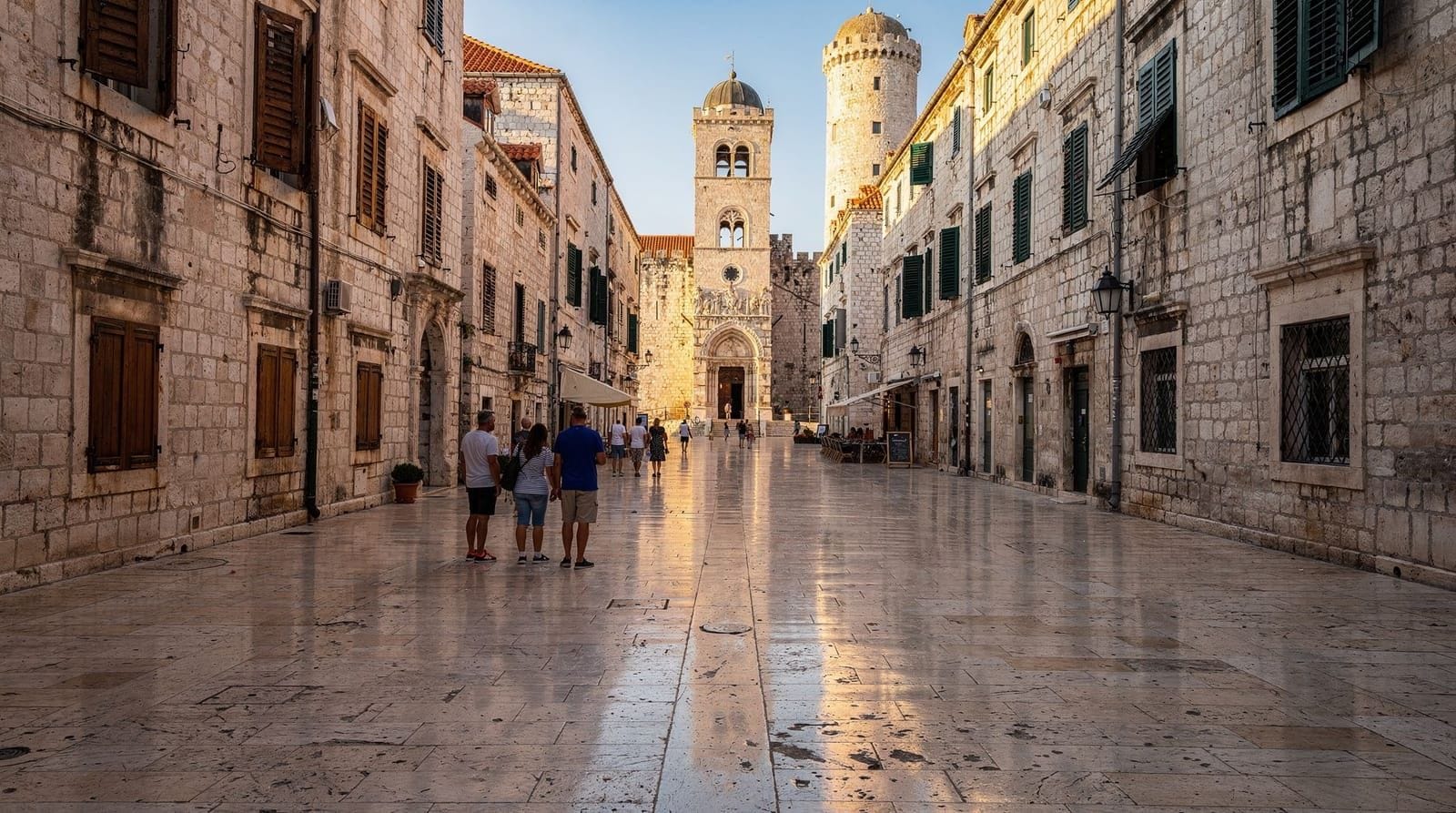
The Stradun (also called Placa) is Dubrovnik's main thoroughfare — a 292-metre marble-paved street running the full length of the old town from Pile Gate to the Clock Tower. Lined with Baroque buildings (rebuilt after the 1667 earthquake) and busy with cafés and shops, it is the social spine of the old city.
Ragusa, city of stone and sea
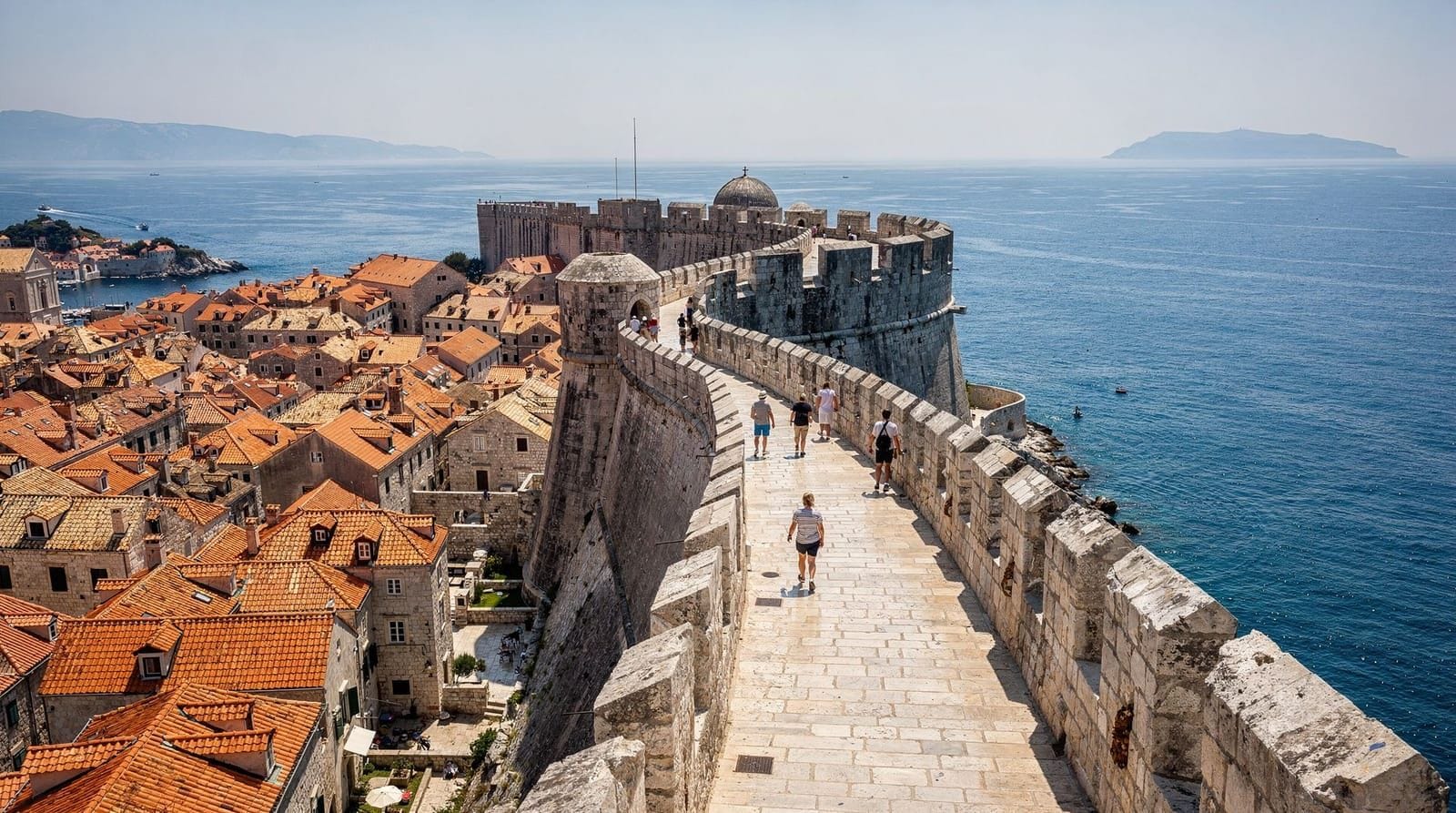
Dubrovnik’s old town is enclosed by walls that were never successfully breached in five centuries of independent statehood. The Republic of Ragusa — which maintained its independence from 1358 until Napoleon arrived in 1806 — did so through a combination of formidable fortifications and sophisticated diplomacy: paying tribute simultaneously to the Ottoman Empire and to Venice and various Christian powers while remaining officially neutral and commercially active across the entire Mediterranean.
The city that resulted from five centuries of mercantile prosperity and architectural investment is a UNESCO World Heritage Site of remarkable completeness. Stone streets, stone churches, stone palaces, stone walls — all of it limestone from the local quarries, built by craftsmen who were also employed in Split, Trogir, Šibenik and Hvar. The Baroque city rebuilt after the catastrophic earthquake of 1667 coexists with Gothic and Renaissance remnants that survived the tremors.
What makes Dubrovnik uncomfortable in July–August — the sheer density of visitors — is also its problem in the long term: the old town is gradually depopulating as residents sell or rent their apartments to tourists. What was once an inhabited historic city is becoming, in the peak season, a populated theme park. The city itself is aware of this; visitor management efforts are ongoing. The best time to see Dubrovnik as something close to itself is early morning, late evening, or outside the peak summer months.
| Cost to walk around | Free — individual sights charge €5–€15 |
| Time needed | Half a day minimum, a full day to see it well |
| Best time | Early morning or after 7pm, outside July–August peak |
| Getting there | Bus or transfer from Dubrovnik Airport, 30–45 min |
| Must-do add-on | City walls circuit (€35, 1.5–2 hours) |
The Stradun (Placa)
The 292-metre marble-paved main street of Dubrovnik is the spine of the old town — the place where, for centuries, the citizens of Ragusa met, traded, argued and watched each other. The current appearance is almost entirely Baroque: after the 1667 earthquake destroyed much of the city, the Stradun was rebuilt in a uniform style that gives it a spatial coherence unusual for a medieval city.
The smooth marble flags — polished to a mirror-like surface by centuries of foot traffic — reflect light brilliantly in the morning sun. Baroque column fountains (the Onofrio Fountains) anchor the eastern and western ends. The street-level floors of the flanking buildings are shops and restaurants; the upper floors are residential.
At the eastern (harbour) end, the clock tower (Gradski zvonik) — rebuilt in 1929 in a replica of the original — marks the boundary between the Stradun and the old harbour precinct. At the western (Pile Gate) end, the Large Onofrio Fountain (1440) provided the city with water from a 12km aqueduct system built by Onofrio di Giordano della Cava.
Pile Gate (Vrata od Pila)
The main entrance to the old town from the west, the Pile Gate is a double-arched structure — the outer Renaissance arch (1537) and the inner Gothic arch (14th century) — separated by a drawbridge over a former moat. A figure of St. Blaise (Sveti Vlaho), the city’s patron saint, watches from the niche above the inner gate.
Arriving through the Pile Gate into the Stradun is a properly dramatic entry — the sudden transition from modern street to medieval marble creates a palpable sense of entering a different kind of space.
The Rector’s Palace (Knežev dvor)
The Rector’s Palace is the most interesting museum in Dubrovnik — which is not a high bar in a city that has made some questionable decisions about its museum infrastructure, but the palace itself is remarkable. It was the seat of the Ragusan government and the residence of the Rector (the state’s chief executive, who served one-month rotating terms — a deliberate anti-corruption measure of the Republic).
The building is Gothic-Renaissance hybrid: the ground-floor loggia with its Gothic arches was designed by one master; the upper portions by another (the palace was rebuilt multiple times after fire and earthquake damage). The atrium — a colonnaded courtyard — is one of the most beautiful interior spaces in Dalmatia.
The museum collection covers Ragusan history: furniture, weapons, official objects, portraits and a collection of keys to the city gates. The pharmacy of the Franciscan Monastery was founded in 1317 and claims to be one of the oldest operational pharmacies in Europe.
Entry: around €15 (often included in the Dubrovnik Card).
The Dominican Monastery (Dominikanski samostan)
The Dominican Monastery, just inside the Ploče Gate at the eastern end of the old town, is a 14th-century Gothic complex with an exceptional cloister and a notable collection of medieval and Renaissance art. The cloister — Late Gothic arcades with a central garden — is one of the finest in Dalmatia.
The monastery museum holds Ragusan Gothic paintings (Lovro Dobričević, Nikola Božidarević) and a collection of religious objects. Entry around €5–8.
The cloister was used as a filming location for Game of Thrones; several scenes set in Meereen were shot here.
The Franciscan Monastery (Franjevački samostan)
The Franciscan Monastery on the Stradun, near the Pile Gate, dates from the 14th century. Its south portal is one of the finest Gothic-Renaissance pieces in the city — a relief of the Pietà attributed to the Petrović brothers (1498). The monastery pharmacy, founded in 1317, claims to be one of the oldest continuously operating pharmacies in Europe; the original vessels and equipment are displayed, and modern-day cosmetics and herbal products made from historic recipes are sold. Entry: around €6.
The Cathedral of the Assumption (Katedrala Uznesenja Blažene Djevice Marije)
The cathedral on the main square southeast of the Stradun is Baroque (17th–18th century), built after the 1667 earthquake destroyed the earlier Romanesque cathedral. It houses an important treasury containing relics (including a section of the True Cross and a relic of St. Blaise), a polyptych by Titian, and other significant artworks. The treasury entry is around €5.
A 12th-century Byzantine mosaic was discovered under the floor during restoration work, demonstrating the earlier Romanesque cathedral’s existence below the current building.
The old harbour (Gradska luka)
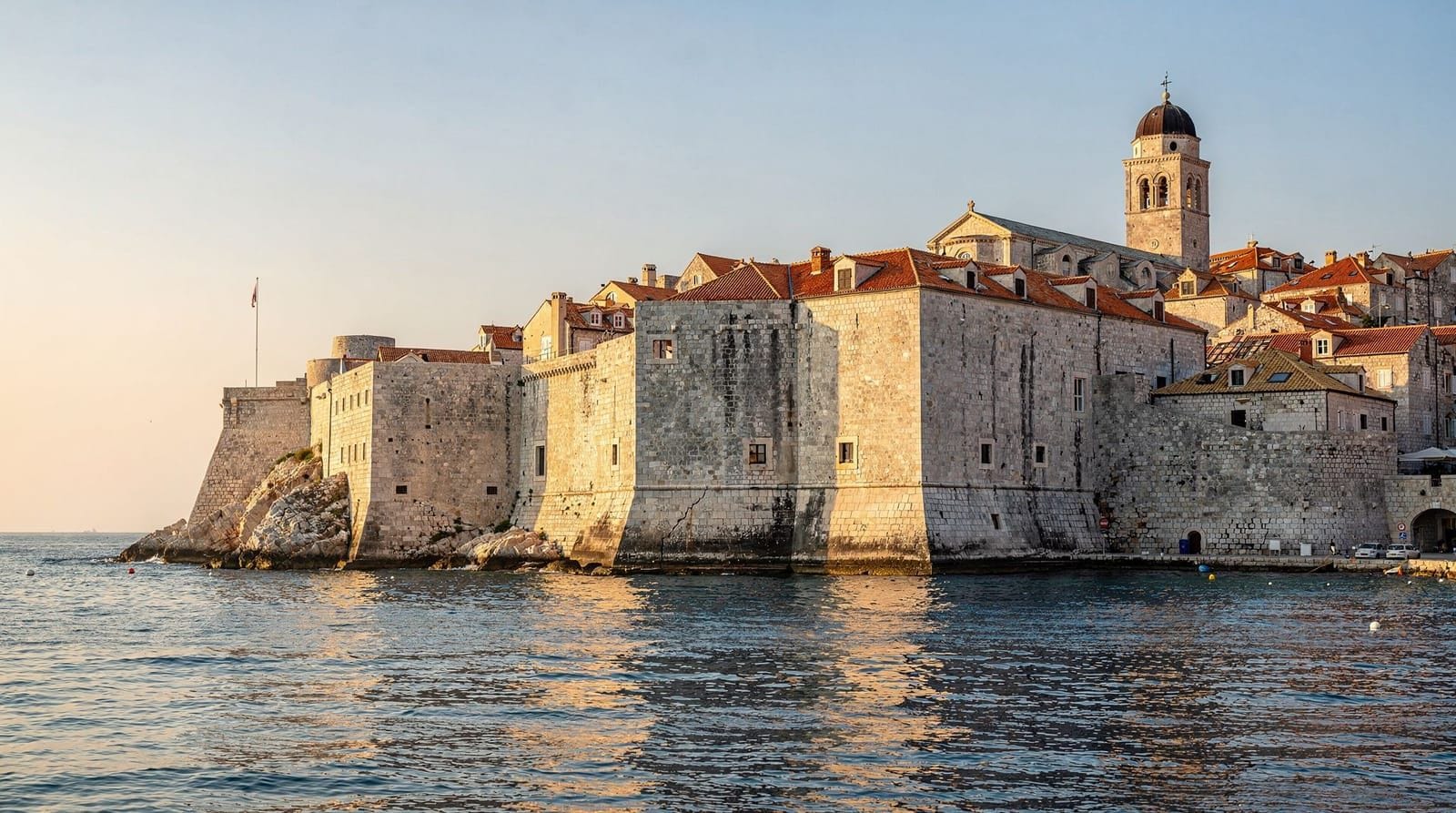
The old harbour on the eastern side of the old town, flanked by St. John’s Fortress and the Porporela breakwater, is still a working harbour for small boats. In the summer, excursion boats to the island of Lokrum (7 minutes by ferry, botanical garden and fort, no overnight stays permitted) depart from here. The fish market (Ribarnica) adjacent to the harbour is the best place to buy local seafood or to watch it being bought.
The view back from the Porporela across the harbour to the old town walls is one of the standard images of Dubrovnik — St. John’s Fortress, the bell tower of the Dominican Monastery, and the city walls all visible simultaneously.
The Buža bars
Two bars — Buža I (further west along the city wall) and Buža II (the larger, more famous one, often just called “Buža”) — are set into gaps in the southern city walls. Entry is through a doorway in the wall; the bars are on platforms of rock above the Adriatic. No swimming pool, no beach — just rock, sea, drinks, and one of the best views back to the city walls from the water side.
The Buža bars are marked on most tourist maps but finding the doorway the first time requires attention. They are genuinely atmospheric and not as crowded as the Stradun.
Dubrovnik beyond the walls
A few sights worth noting outside the old town walls:
Lokrum Island: A 10-minute ferry from the old harbour. The island has a botanical garden, a medieval fort, a café in the ruined monastery cloister (used in Game of Thrones), and (on the seaward side) the Dead Sea Lake — a sheltered saltwater pool connected to the sea by underground channels. Day entry ticket required (around €15); no overnight stays.
Mount Srđ cable car: The Žičara Dubrovnik gondola ascends 405 metres to the summit ridge above the city. The view from the top — old town, islands, Adriatic, Elaphiti Islands to the northwest — is outstanding. Ticket around €25–30 return. Restaurant and bar at the top.
Lapad and Babin Kuk: The western peninsula areas with hotels, pebble beaches and a genuinely local evening promenade. Less photogenic than the old town but more representative of how Dubrovnik residents actually live.
Practical visitor information
Getting to Dubrovnik: Dubrovnik Airport (DBV) is 20km southeast; bus connection to the old town takes 30–45 minutes for around €3–5. Taxis and transfers cost €30–50. See our Dubrovnik airport transfers guide.
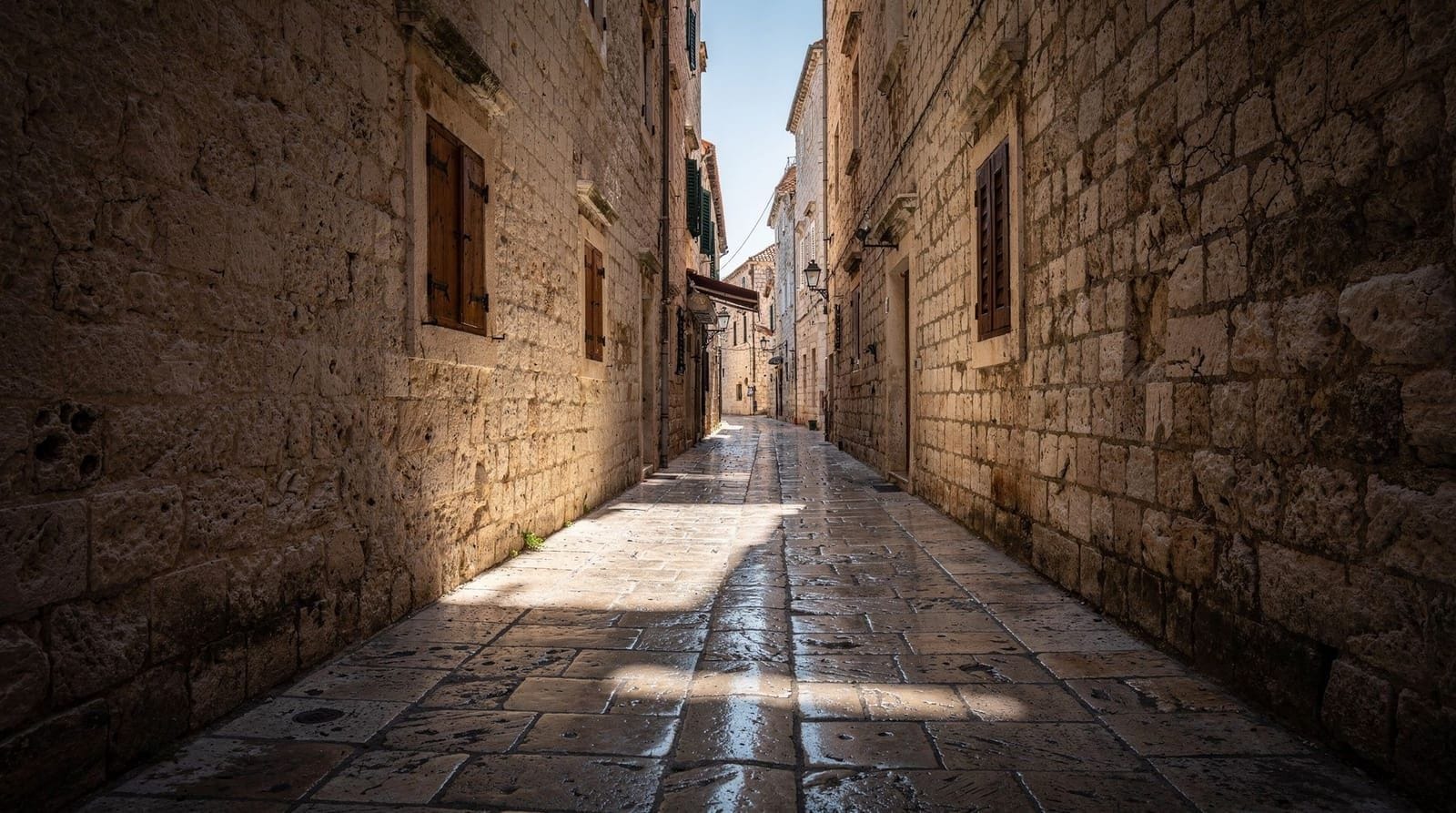
Getting around the old town: Everything is walkable. The old town is pedestrianised; the main challenge is the hills inside (the street pattern is hilly on either side of the Stradun). City buses serve Lapad and outlying areas.
Where to eat: Avoid restaurants directly on the Stradun and immediately around the cathedral — these are tourist traps with elevated prices and diminished effort. The lanes running north and south of the Stradun have better options. For a special dinner, book well in advance; the better restaurants fill months ahead in peak season.
Building a full Dubrovnik day around the old town
The old town rarely fills an entire itinerary on its own — most visitors pair it with the city walls circuit (best done first thing, before the streets below get crowded) and, for Game of Thrones fans, the more detailed King’s Landing walking guide or the self-guided GoT route, which map specific filming spots onto the streets described above. For a realistic multi-day schedule that balances the old town with a beach or island day, see the Dubrovnik long weekend itinerary.
Day trips once you’ve done the old town
After a day or two in the old town, most visitors want a change of pace. The Elaphiti Islands are the easiest escape — a short ferry with no border crossing and a genuine beach at Šunj. For something more active, sea kayaking around Dubrovnik puts you at sea level looking back at the same walls you walked above. The day trips from Dubrovnik guide rounds up the full list, including Kotor and Mostar for those with more time. If your trip continues north, the Split vs Dubrovnik comparison helps decide how to split your days between the two cities.
Where to swim near the old town
The old town itself has no proper beach, but options are close by. Banje Beach, a short walk east of Ploče Gate, is the most convenient — pebble, with sunbed rental and a view straight back at the walls. For something quieter, see the best beaches near Dubrovnik guide, which covers coves further along the coast that trade convenience for fewer crowds.
Frequently asked questions about Dubrovnik Old Town
Is Dubrovnik old town free to walk around?
Yes — walking the streets of the old town is free. Entry to the city walls costs €35 (which includes Lovrijenac Fortress). Individual monuments charge separately: the Rector's Palace (around €15), the Dominican Monastery museum (€5–8), the Franciscan Monastery pharmacy and museum (around €6), the Cathedral treasury (around €5). You can see a great deal of the old town for nothing if you are content with the outside views.How crowded is Dubrovnik old town?
In July–August, genuinely very crowded — cruise ships can land 10,000 visitors on a single day, and the Stradun becomes almost impassable at midday. The city has attempted to manage this by limiting cruise ship numbers. Outside July–August, the old town is more manageable; in May, June, September and October it is busy but enjoyable. November to March is quiet, atmospheric and significantly cheaper.What are the best things to see in Dubrovnik old town?
City walls (walking the 2km circuit), the Stradun, the Rector's Palace (the most interesting museum in the city), the Dominican Monastery cloister, the Franciscan Monastery with its medieval pharmacy, the Cathedral of the Assumption, the Sponza Palace, and the harbour (Gradska luka). At least one evening on the Stradun is essential — the city empties somewhat after 7pm and is far more pleasant.What Game of Thrones sites are in Dubrovnik old town?
Many — Dubrovnik served as King's Landing throughout most of the series. The Stradun appears as a King's Landing street; the Dominican Monastery cloister was used for several scenes; the old harbour and fort Lovrijenac featured prominently. Our dedicated King's Landing Dubrovnik guide covers all the filming locations.Where are the best views of Dubrovnik old town?
From the city walls (2km circuit, €35). From the cable car (Žičara Dubrovnik) up to Mount Srđ (€25–30 return) — the view from 405 metres is spectacular. From the Buža bar on the southern sea walls (a bar cut into the cliff with tables on rocks above the Adriatic — the view back to the old town is excellent). From Lovrijenac Fortress, looking east toward the walls.What is the best time to visit Dubrovnik?
May, early June and September–early October: warm enough for swimming, far fewer cruise ships, manageable crowds, better restaurant reservations. If you must visit in July–August, arrive at all major sights before 9am. See our best time to visit Croatia guide for broader seasonal advice.
Top experiences
Bookable activities with verified prices and instant confirmation on GetYourGuide.
Top experiences
Best-rated activities across GetYourGuide and Viator.

From Zadar: Plitvice Lakes with Boat Ride & Zadar Old town tour
- Viator

3Hour ALL-INCLUSIVE Sunset Dolphin Watching from Medulin onSandra
- Viator

Dolphin Watching & Sunset Boat Tour With Drinks & optional Dinner
- Viator

Fantastic DOLPHIN & SUNSET TOUR with dinner ( Pula-NP BRIJUNI )
- Viator

Medulin :All-Inclusive Pirate Boat Dolphin Watching Sunset Cruise
- Viator

Zadar Highlights: Old Town, Sea Organ & Local Tastings
- Viator