Croatia's UNESCO World Heritage Sites
Dubrovnik: City walls walking tour
How many UNESCO World Heritage Sites does Croatia have?
Croatia has eight UNESCO World Heritage Sites: Dubrovnik Old City, Diocletian's Palace in Split, Plitvice Lakes, the Episcopal Complex in Poreč (Eufrazijeva Basilica), the old city of Trogir, the Cathedral of St. James in Šibenik, Stari Grad Plain on Hvar, and the prehistoric funerary and cult sites of the Cetina region.
| Total sites | 8 |
| Most visited | Dubrovnik Old City |
| Least visited | Stari Grad Plain (Hvar) |
| Oldest inscription | 1979 (Dubrovnik, Split, Plitvice) |
| Newest inscription | 2021 (Cetina region) |
| Full-collection trip length | 2–3 weeks with a car |
Eight sites, two thousand years of civilisation
Croatia punches well above its weight on the UNESCO World Heritage List. For a country of four million people and 56,000 square kilometres, eight inscribed sites — across ancient Greek, Roman, Byzantine, Romanesque, Gothic and Renaissance periods — represents a remarkable density of protected heritage. This guide covers what each site is, why it matters, how to visit practically, and how to string them together if you want to see the full collection.
The sites fall into three rough geographical groupings: the Dalmatian coast (Split, Trogir, Šibenik, Hvar, Dubrovnik), Istria (Poreč), and the interior (Plitvice Lakes, Cetina).
Dubrovnik Old City (inscribed 1979, extended 1994)
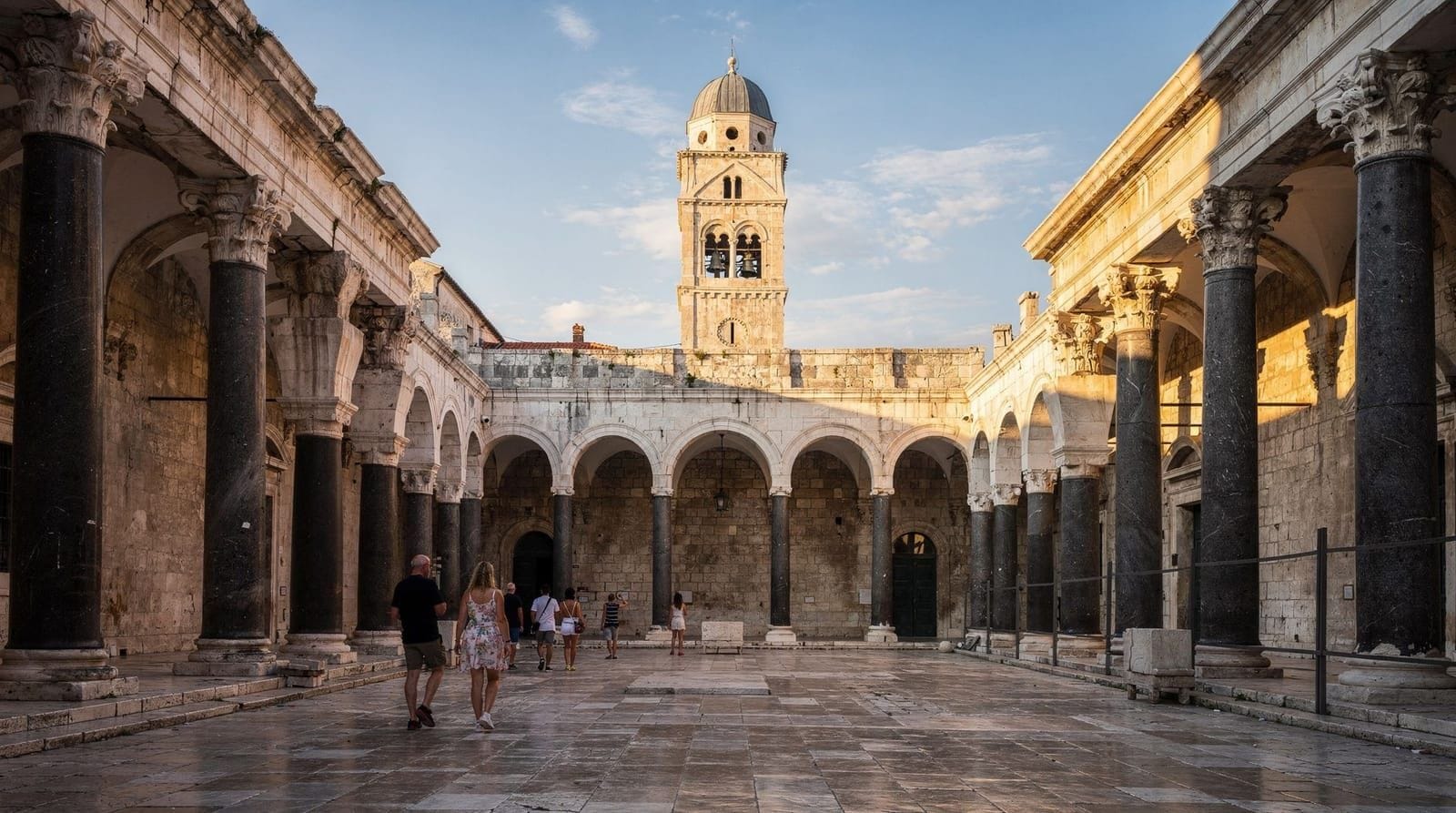
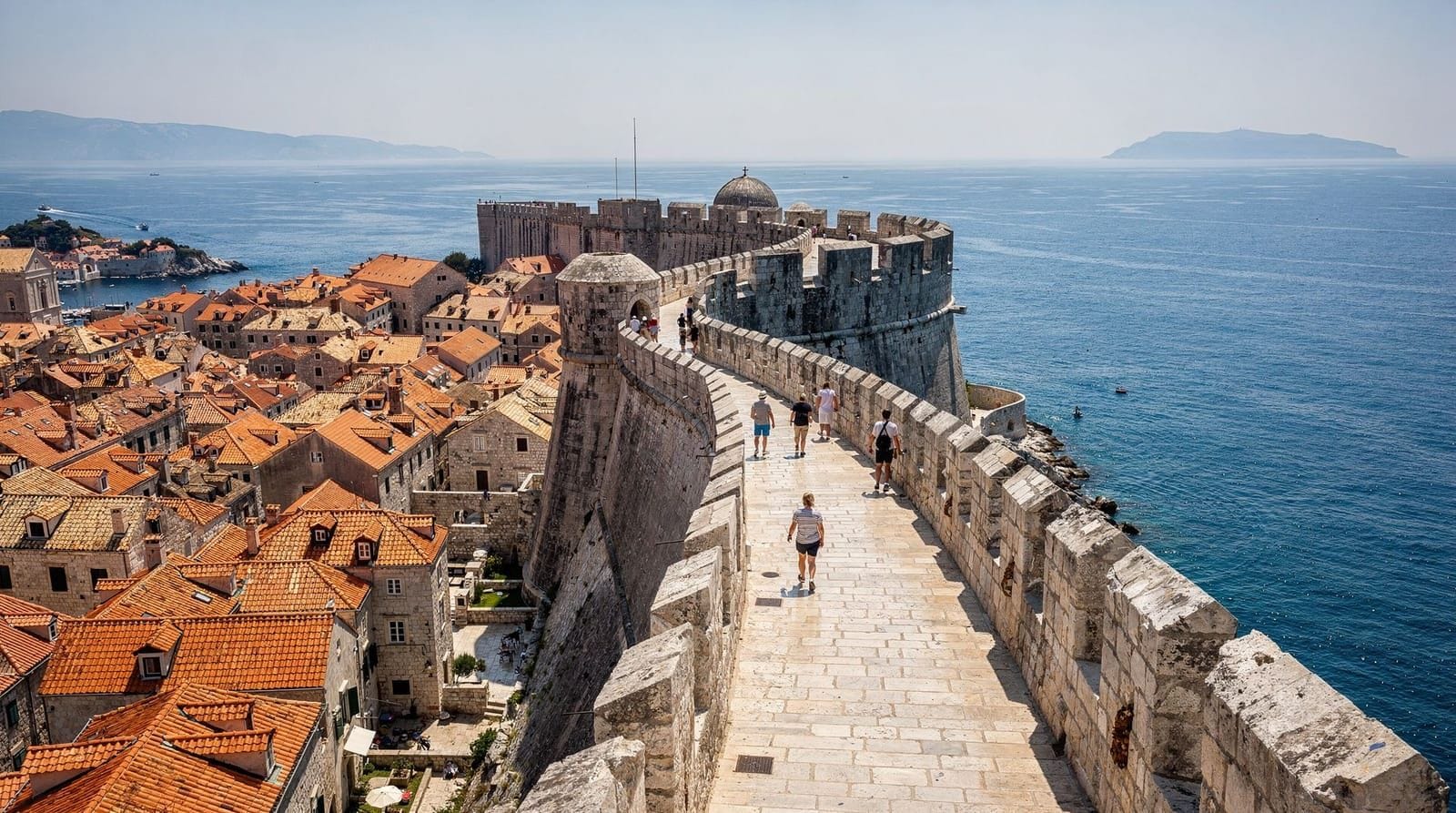
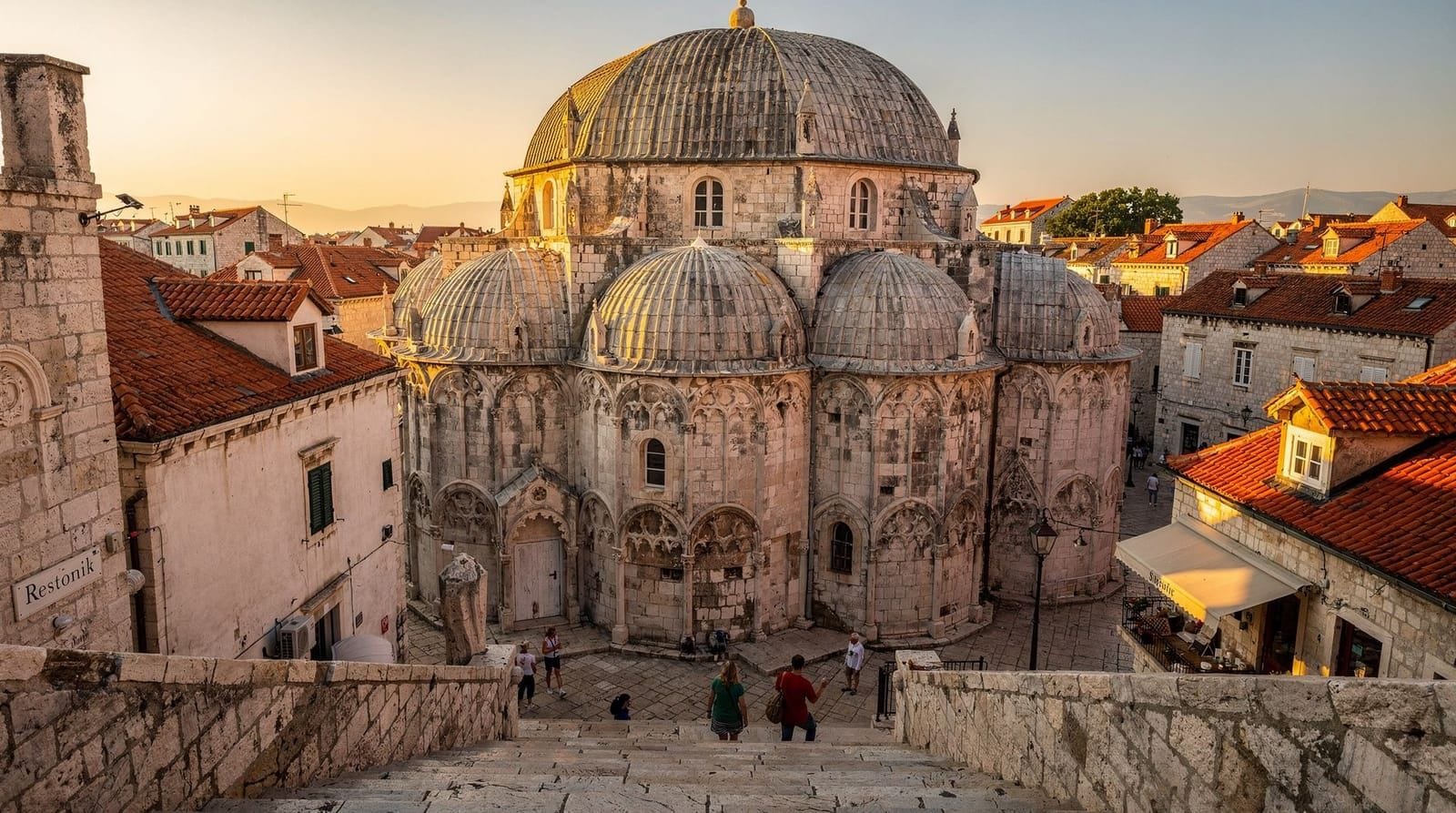
Dubrovnik’s old city is the most internationally recognised of Croatia’s UNESCO sites and, for many visitors, the primary reason to visit Croatia at all. The entire walled settlement — roughly 1.3 km² enclosed by walls up to 6 metres thick and 25 metres high — was inscribed for its exceptional townscape and its role as a major maritime republic (Ragusa) from the 13th century onwards.
The walls themselves are best walked in the early morning, when the light is ideal and crowds are thin. A full circuit covers approximately 2km and takes 90 minutes to two hours at a relaxed pace. The entry fee in 2026 is €35. Photographs of the terracotta roofscape and the Adriatic below are among the most-reproduced images of Croatia.
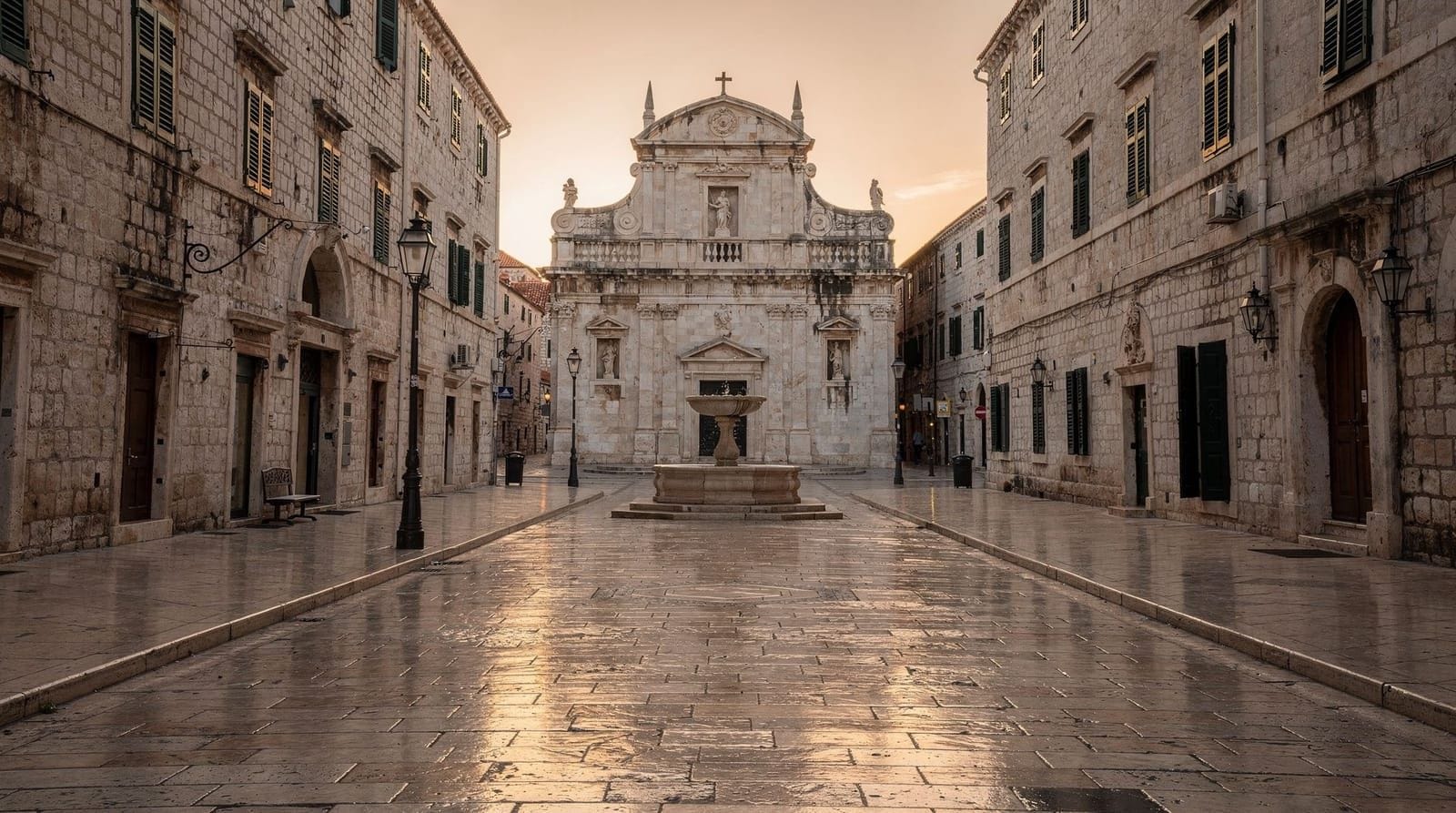
Inside the walls: the marble-paved Stradun (Placa), the Rector’s Palace, the Dominican and Franciscan monasteries, the Cathedral of the Assumption, and dozens of smaller churches and palaces. Much of the old city was damaged in the 1991–92 siege and subsequently rebuilt with considerable care — the new terracotta tiles are slightly brighter than the originals, visible if you look carefully from the walls.
For a detailed exploration of the old city, see our Dubrovnik Old Town guide and City Walls guide.
Historic City of Split with Diocletian’s Palace (inscribed 1979)
Diocletian’s Palace — the retirement fortress of Roman Emperor Diocletian, completed around 305 AD — is arguably the most extraordinary piece of living Roman heritage in Europe. Some 3,000 people live and work within the palace walls today. The Golden Gate (Porta Aurea) to the north, the Silver Gate to the east, the Bronze Gate opening to the sea, and the Iron Gate to the west form the four entrances to a site that has been continuously inhabited for 1,700 years.
What makes Split unique among Roman sites is this continuity. Medieval houses were built into Roman colonnades; the mausoleum of Diocletian was converted into a cathedral (Katedrala Svetog Duje, still in use); a baptistery occupies what was a Roman temple to Jupiter. The palace cellars (Podrumi Dioklecijanove palače) are the best-preserved underground Roman spaces of their kind — entry is around €10–12 and worth it.
The wider old town of Split, including the medieval extensions beyond the palace walls, is also part of the UNESCO zone. Our Diocletian’s Palace guide covers the full site in detail.
Historic City of Trogir (inscribed 1997)
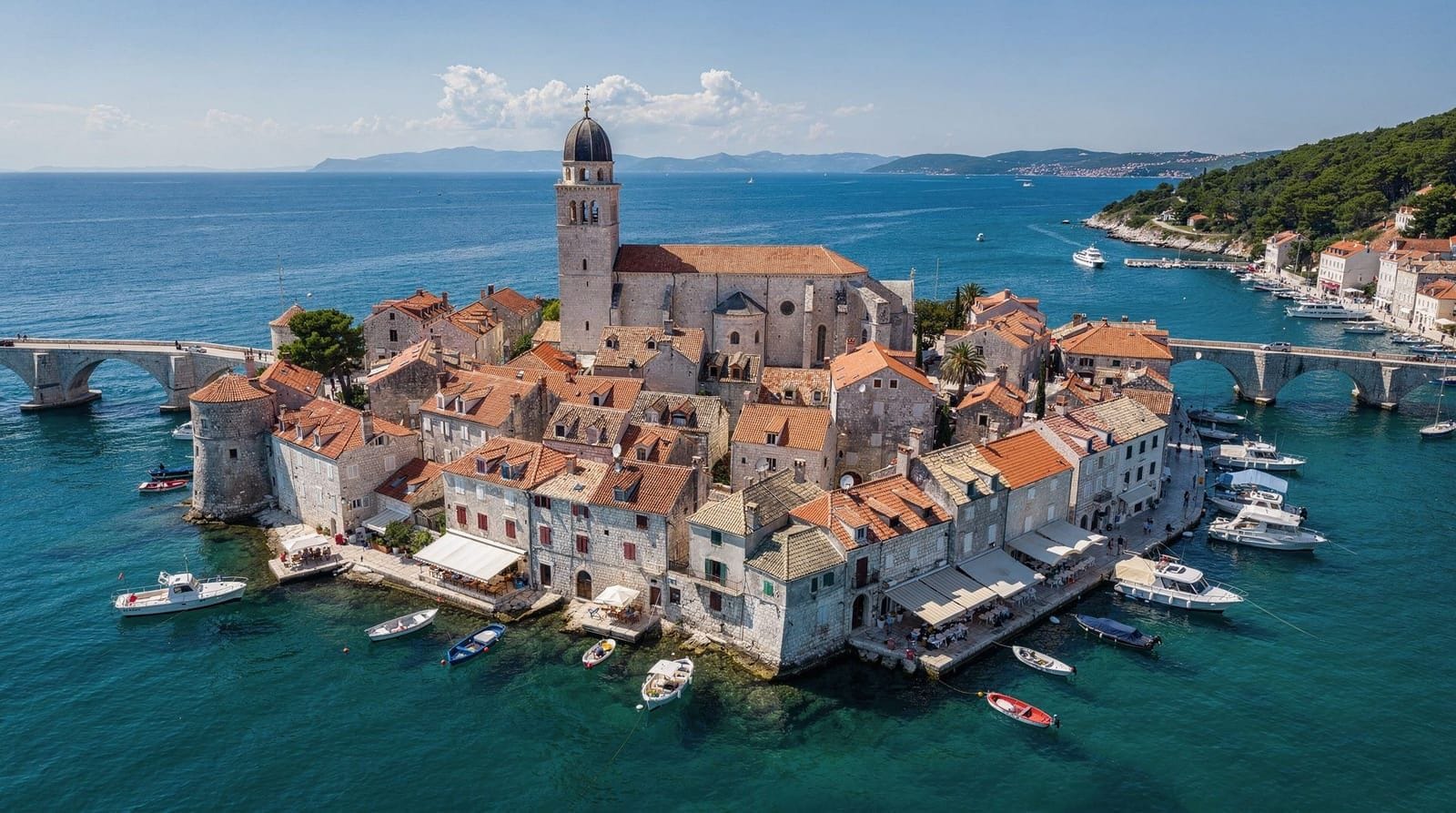
Trogir is a small island city — connected to the mainland and to the island of Čiovo by short bridges — whose medieval urban fabric is almost completely intact. The compact old town centre is a palimpsest of Hellenistic, Roman, Medieval and Renaissance layers. Its cathedral, the Katedrala Svetog Lovre (Cathedral of St. Lawrence), contains a Romanesque portal by master sculptor Radovan (completed 1240) that is the finest piece of Romanesque sculpture in Croatia and one of the best in the entire Adriatic region.
Trogir is 27km west of Split — easily reached by bus (local line 37) or by boat. Unlike Dubrovnik or Split, it is compact enough to walk in a morning; the town’s charm is in its lanes, its fortress (Kaštel Kamerlengo, open for visits), and its waterfront (Riva). Entry to the cathedral tower costs around €3. Our Trogir Old Town guide goes into further detail.
Cathedral of St. James in Šibenik (inscribed 2000)
The Katedrala Svetog Jakova in Šibenik is unique among major European cathedrals for being built entirely of stone — no bricks, no mortar, just interlocking stone blocks — by Croatian and Italian masters over more than a century (1431–1535). Its architects include Juraj Dalmatinac (Giorgio Orsini), whose 72 sculpted portraits on the exterior frieze of the apse constitute one of the most vivid galleries of 15th-century faces anywhere in Europe.
The cathedral’s dome, an engineering feat for its era, was achieved through a barrel-vault system that allowed builders to assemble pre-cut stone ribs. The building moved from Gothic to Renaissance style mid-construction as Juraj Dalmatinac’s approach evolved — and as his successor Nikola Firentinac brought Florentine Renaissance influence.
Entry in 2026 is around €5. Šibenik itself is an underrated city with a well-preserved old town, proximity to Krka National Park, and fewer tourists than Split or Dubrovnik. Our Šibenik Cathedral guide covers the building and its context in depth.
Episcopal Complex of the Euphrasian Basilica in Poreč (inscribed 1997)
The Eufrazijeva Basilica (Euphrasian Basilica) in Poreč is one of the best-preserved early Christian and Byzantine architectural ensembles in the world. Built by Bishop Euphrasius in the 6th century on the site of earlier churches, it retains its original mosaic programme in the apse — gold-ground mosaics comparable in quality (and roughly contemporaneous) with those of Ravenna, Thessaloniki and Constantinople.
The complex includes the basilica itself, an atrium, a baptistery, a bishop’s palace, and a detached bell tower. Entry to the mosaic area is around €5; climbing the bell tower costs slightly more. Poreč old town, built on a Roman street grid, surrounds the complex. Our Euphrasian Basilica guide provides full detail.
Plitvice Lakes National Park (inscribed 1979, extended 2000)
Plitvice is Croatia’s most visited national park — and its inland UNESCO site. Sixteen terraced lakes connected by waterfalls, set in forested karst terrain, form a landscape that is simultaneously dramatic and serene. The lakes are coloured by minerals and algae in shades of turquoise, mint and jade that shift with the light.
Entry is heavily managed: tickets must be purchased online in summer (June–August) and daily visitor numbers are capped. Prices range from around €7 (off-season, lower circuit) to €40 (peak-season full day). The park is accessible from Zagreb (2 hours by bus), Zadar (1.5 hours) and Split (3 hours). Our Plitvice Lakes guide covers routes, tickets and logistics in full.
Stari Grad Plain, Hvar (inscribed 2008)
The Stari Grad Plain is the least-visited and least-known of Croatia’s UNESCO sites — and one of the most quietly extraordinary. Greek colonists from Paros founded Pharos (modern Stari Grad) on the island of Hvar around 384 BC and divided the surrounding agricultural land using a geometric grid system. The chora — the stone-walled agricultural plots — remains essentially intact after 2,400 years. It is still farmed.
To visit: take the ferry from Split to Stari Grad (the main car-ferry port on Hvar), then walk or cycle out onto the plain itself. There is no visitor centre or formal entry charge. The landscape is best appreciated with some context — a map of the original Greek grid overlaid on a modern image is revelatory. Stari Grad town itself is quieter and more authentic than Hvar Town; its waterfront, the Tvrdalj fortress-residence of poet Petar Hektorović, and the narrow lanes repay an afternoon.
Prehistoric Sites of the Cetina Region (inscribed 2021)
Croatia’s newest UNESCO inscription covers a group of Bronze Age and Iron Age funerary and cult sites in the Cetina river valley in Dalmatia. The sites — tumuli (burial mounds), a doline (natural sinkhole used for ritual purposes), and rock-art locations — represent a broader Mediterranean network of cultural exchange during the 3rd to 1st millennium BC.
This is a specialist site; there is no mass tourism infrastructure and it requires a car and some navigation. The nearest towns are Sinj and Trilj. Rafting on the Cetina river (departing from near Omiš) passes through part of the river valley; see our Cetina rafting guide for that side of the river.
Roman Pula: close but not on the list
One source of frequent confusion: Pula’s Arena — a Roman amphitheatre of the 1st century AD, the sixth-largest surviving Roman amphitheatre in the world — is not a UNESCO World Heritage Site, despite being one of Croatia’s most impressive ancient monuments. It is on Croatia’s UNESCO Tentative List, which is a preliminary step. Entry in 2026 is around €14 for the arena, €10 with a guided tour. Our Roman Pula guide covers Pula’s extensive Roman heritage.
Best time to visit each site
Croatia’s UNESCO collection rewards visitors who plan around light and crowds as much as season. Timing matters more at some sites than others. Dubrovnik and Split’s Diocletian’s Palace are at their most crowded in July–August, when cruise-ship arrivals can flood the old towns with day visitors within a narrow midday window — arriving before 9am or after 5pm makes a substantial difference. Plitvice Lakes and the Cetina region sites are best in May–June or September, when waterfall flow is strong and crowds have thinned; late summer can see reduced water volume in dry years. The Euphrasian Basilica in Poreč and Trogir are comfortable to visit nearly year-round given their smaller scale and lower visitor numbers. Šibenik Cathedral and the Stari Grad Plain rarely feel crowded even in peak season, since they sit outside the main cruise-ship and coach-tour circuit. For a fuller seasonal picture across the whole country, see best time to visit Croatia and Croatia shoulder season.
UNESCO sites and Croatia’s wider heritage
The eight inscribed sites are the internationally recognised tier, but they sit within a much broader heritage landscape. Pula’s Roman Arena, discussed above, remains on the Tentative List rather than the full inscription — a reminder that UNESCO status is a formal, slow-moving process rather than a simple ranking of “best” heritage sites. Croatia’s Ministry of Culture maintains an active tentative list with several other candidates under consideration, meaning the eight-site total is likely to grow over the coming years.
For visitors interested in Croatia’s deeper historical context beyond the UNESCO sites specifically, our Croatia history guide traces the Illyrian, Greek, Roman, Byzantine, Venetian, Habsburg and Yugoslav periods that shaped the heritage on display at each of these locations — useful background before or after visiting any of them. Understanding this longer arc also explains why the sites cluster where they do: the Dalmatian coast’s dense concentration of Roman and medieval inscriptions reflects centuries as a contested maritime frontier between Rome, Byzantium, Venice and the Ottoman world, while Istria’s Byzantine mosaic heritage in Poreč reflects its closer ties to Ravenna and the eastern Adriatic during the same period.
Planning a UNESCO tour of Croatia
A realistic two-week itinerary for seeing all eight sites:
Days 1–2: Zagreb (base, city exploration, museums, café culture). Drive to Plitvice for a full day (day 2 or 3). Days 3–4: Drive to Split. Diocletian’s Palace, old town. Day 5: Day trip to Trogir (27km, half-day sufficient). Ferry to Hvar. Day 6: Stari Grad Plain (morning), Hvar Town (afternoon). Days 7–8: Return to Split/Šibenik. Šibenik Cathedral and old town (one day). Drive toward Zadar area. Days 9–10: Poreč and Istria (2.5-hour drive north of Zadar, or fly). Euphrasian Basilica. Days 11–14: Dubrovnik. City walls, old town. Day trip options (Kotor, Elaphiti).
The Cetina region (Sinj area) is most naturally worked into a Split–Dubrovnik drive day if you have a car and a specific interest in the Bronze Age sites.
Frequently asked questions about Croatia's UNESCO World Heritage Sites
Which is Croatia's most visited UNESCO site?
Dubrovnik Old City draws the most visitors — over two million per year — followed by Plitvice Lakes National Park. Diocletian's Palace in Split is close behind, functioning as a living neighbourhood as much as a monument.Is Diocletian's Palace in Split a UNESCO site?
Yes. The historic city of Split with Diocletian's Palace was inscribed on the UNESCO World Heritage List in 1979. The entire old town of Split, not just the palace complex, forms the protected zone.What is the Stari Grad Plain?
The Stari Grad Plain on the island of Hvar is an ancient Greek agricultural landscape dating from the 4th century BC. Its grid of stone walls (chora) dividing the plain into equal plots (kleros) has remained essentially unchanged for 2,400 years — one of the best-preserved Greek colonial landscapes in the Mediterranean.Can you visit all Croatian UNESCO sites in one trip?
It is possible in two to three weeks with a car. Plitvice Lakes and the Cetina region sites are inland; the rest are coastal — Poreč and Split/Trogir/Šibenik are on the Dalmatian coast, while Dubrovnik is further south. Hvar requires a ferry. A 14-day itinerary covering Split, Trogir, Hvar, Šibenik, Zadar, Poreč and Dubrovnik is feasible.Do I need to pay to enter Croatia's UNESCO sites?
Entry fees vary by site. Dubrovnik City Walls: €35 (2026). Plitvice Lakes: €7–40 depending on season and ticket type. Diocletian's Palace cellars: €10–12. The Cathedral of St. James in Šibenik: around €5. Stari Grad and the Eufrazijeva Basilica in Poreč have free or minimal entry to walk around; specific areas charge small fees.Is Dubrovnik overcrowded because of UNESCO status?
UNESCO status and Game of Thrones filming have both fuelled extreme visitor growth. In July–August, cruise ships can land 10,000+ visitors in a single day. The city now limits cruise ship dockings and tour group sizes. Visiting outside July–August, or arriving at the walls when they open at 8am, makes a significant difference.When were Croatia's UNESCO sites inscribed?
Plitvice Lakes: 1979 (extended 2000). Diocletian's Palace/Split: 1979. Dubrovnik: 1979 (extended 1994). Eufrazijeva Basilica/Poreč: 1997. Trogir: 1997. Šibenik Cathedral: 2000. Stari Grad Plain: 2008. Cetina sites: 2021.
Top experiences
Bookable activities with verified prices and instant confirmation on GetYourGuide.
Top experiences
Best-rated activities across GetYourGuide and Viator.

From Zadar: Plitvice Lakes with Boat Ride & Zadar Old town tour
- Viator

3Hour ALL-INCLUSIVE Sunset Dolphin Watching from Medulin onSandra
- Viator

Dolphin Watching & Sunset Boat Tour With Drinks & optional Dinner
- Viator

Fantastic DOLPHIN & SUNSET TOUR with dinner ( Pula-NP BRIJUNI )
- Viator

Medulin :All-Inclusive Pirate Boat Dolphin Watching Sunset Cruise
- Viator

Zadar Highlights: Old Town, Sea Organ & Local Tastings
- Viator