Zagreb Advent guide
When is Zagreb Advent and what makes it special?
Zagreb's Advent market runs late November through early January. It has been voted Europe's best Christmas market multiple times. The market is spread across several central locations, with strong local character — Croatian food, mulled wine, artisan crafts and genuine winter atmosphere rather than generic festive tourism.
Why Zagreb in December
Zagreb’s Advent market has been voted the best in Europe by Shortlist readers multiple times and is consistently ranked among the top Christmas markets on the continent. This is not a case of a small city punching above its weight out of local pride — travellers from Germany, Austria and the UK who know their Christmas markets have voted with their feet.
What makes Zagreb’s December event stand out in a crowded field? Several things: the scale (spread across multiple connected city locations), the authenticity (Croatian food and drink rather than pan-European market fare), the architecture (a handsome Central European city that photographs beautifully in festive lighting), and a local participation that gives it genuine community character rather than a tourist-only event.
If you have ever felt that the famous German markets have become too polished and too expensive, Zagreb is the answer.
| Where | Ban Jelačić Square, Zrinjevac Park, Strossmayer Square and the Upper Town |
| Cost | Free entry; mulled wine and food from a few euros per item |
| Time needed | One evening for the highlights; 2-3 days for the wider city |
| Getting there | Zagreb Airport (ZAG), or train/bus from Vienna, Ljubljana, Split, Zadar |
| Best time | Weekday evenings, especially mid-December, to avoid weekend crowds |
The market locations
Zagreb Advent is not a single concentrated market but a distributed network across the city centre. The main hubs:
Ban Jelačić Square
The central square of Zagreb — the city’s living room — becomes the main Advent hub. Food and drink stalls line the square, an ice rink is installed, and the space operates as a social centre for Zagreb’s residents and visitors alike. The equestrian statue of Ban Josip Jelačić presides over it all.
Zrinjevac Park
The tree-lined park just south of the central square is transformed with lights, stalls and a charming, slightly more refined atmosphere than the main square. The ice skating rink here is popular with locals. The illuminated trees create one of Zagreb’s most-photographed December scenes.
Strossmayer Square
Another park space in the Lower Town with Advent installations and stalls, slightly quieter than Jelačić and Zrinjevac.
Upper Town (Gornji Grad)
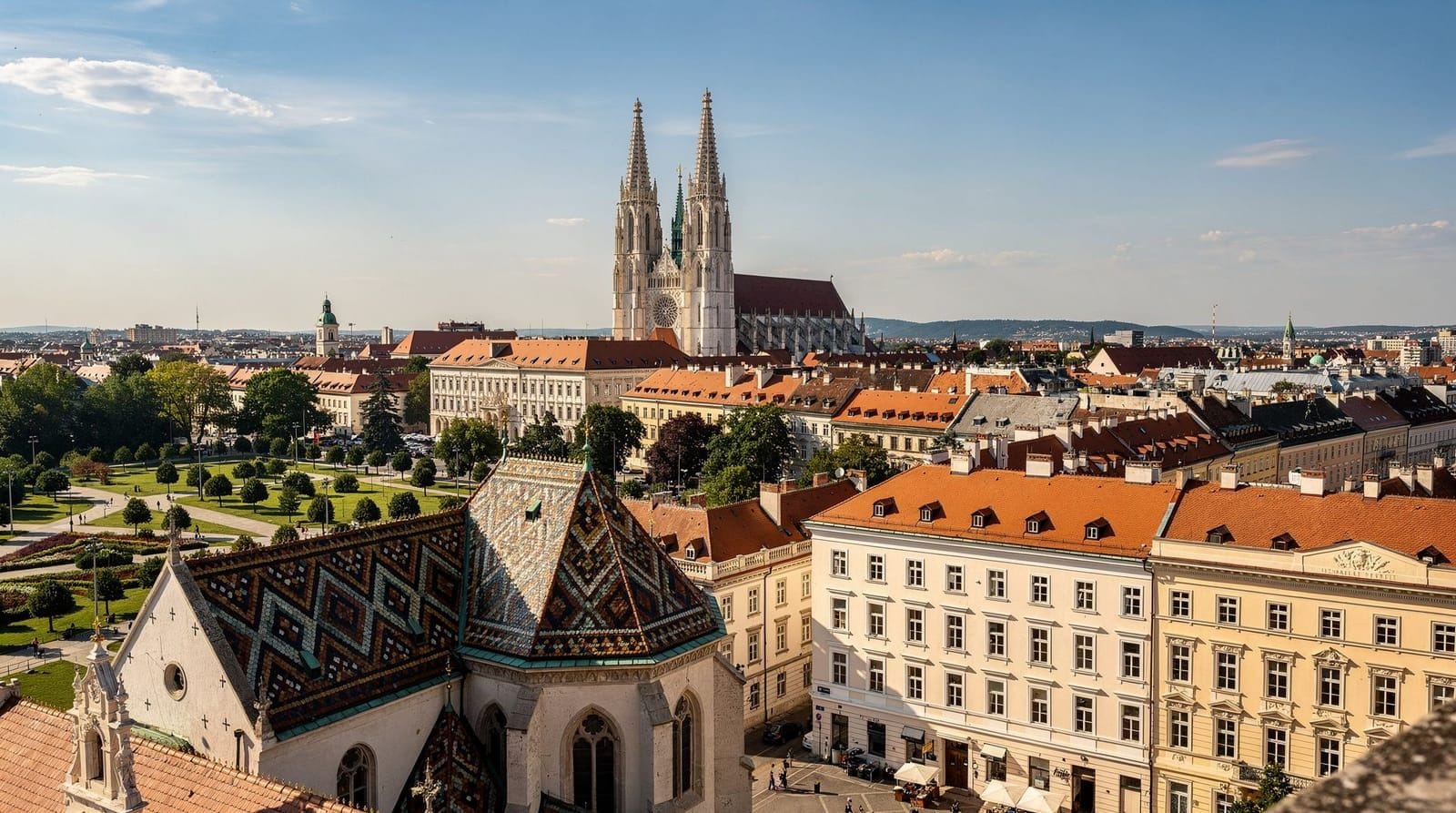
The older, hilltop part of the city accessed by the world’s shortest funicular (or a short walk up the steep lanes) has its own Advent installations, particularly around St. Mark’s Square with its famous tiled roof church. The atmosphere here is quieter and more atmospheric than the Lower Town markets.
Ice skating
Multiple ice rinks operate across the city during Advent. Skate rental is available at the main rinks.
Comparing the main locations
| Location | Atmosphere | Best for |
|---|---|---|
| Ban Jelačić Square | Busy, central, the main event | First-timers, food stalls, people-watching |
| Zrinjevac Park | Elegant, tree-lit, slightly calmer | Photos, a quieter mulled wine stop |
| Strossmayer Square | Quiet, local | Escaping the crowds |
| Upper Town | Atmospheric, hillside, historic | An evening finish after the funicular |
What to eat and drink
The food at Zagreb Advent is a genuine education in Croatian regional cuisine, presented in accessible and affordable form. Come hungry.
Drinks
Kuhano vino (mulled wine) is the Advent drink. Croatian versions tend to use local wine — often Graševina from Slavonia — with cinnamon, cloves and orange peel. It is warming without being as sweet as some German versions.
Medovača — honey brandy (rakija). A lighter, more aromatic spirit than the grape or plum rakija you encounter in restaurants. Very popular at the market.
Kuhano pivo — mulled beer. An underrated option; Croatian craft beer has developed significantly and the warm, spiced versions at some stalls are worth trying.
Hot chocolate — with Croatian štrukli pastry as accompaniment.
Food
Štrukli — the Zagreb street-food hero. Dough pastry filled with fresh cottage cheese, either boiled or baked. The baked version (zapečeni štrukli) has a golden, crispy top and soft, warm interior. Non-negotiable.
Čvarci — crispy rendered pork rinds, a traditional Croatian predjelo (starter/snack). Richer than the British pub pork scratching, served warm.
Lički janjetina — lamb on the spit from the Lika region. The mountain lamb is distinctive in flavour; watch the roasting on an open spit and eat with bread and salt.
Grilled sausages and meats — čevapi (small minced meat sausages), kobasice (pork sausages), ćevapčići — all staples of Croatian grilling culture.
Roasted chestnuts — sold from small carts throughout the market.
Kremšnita — a vanilla and cream custard slice that is the signature dessert of Samobor, the historic town 25km west of Zagreb. Sold at the market and worth the calories.
For a deeper food experience, the Zagreb food tour takes you into the markets, shops and restaurants that locals use.
Beyond the markets: Zagreb in December
The market is reason enough to come, but Zagreb in December rewards a day or two of wider exploration.
Dolac Market
Zagreb’s main outdoor market sits just above Ban Jelačić Square. It runs every morning (except Monday evenings), selling vegetables, fruit, cheese, olives, fish and flowers. In December, it has a particular warmth — the market vendors in winter coats, the produce stalls steaming slightly in the cold air. Go before 10am.
Upper Town (Gornji Grad)
The historic hilltop district is Zagreb’s most atmospheric neighbourhood. Key sights:
- St. Mark’s Church — the 13th-century church with its distinctive two-crest heraldic tile roof, one of Zagreb’s most photographed buildings
- Croatian Parliament (Sabor) — the neoclassical government building facing St. Mark’s
- Lotrščak Tower — climb for views over the city; a cannon is fired from here daily at noon
- Stone Gate (Kamenita vrata) — a surviving 18th-century city gate that now functions as a shrine; always candles burning, always quiet
The funicular connecting the Lower and Upper Town has been operating since 1890, covers 66 metres of track and takes 64 seconds. Ride it up; walk the scenic stairway down through Radiceva Street.
Museums
Museum of Broken Relationships — Zagreb’s most original cultural export, housed in a baroque palace in the Upper Town. The collection of donated objects from ended relationships worldwide is genuinely affecting and one of the best museum experiences in the Balkans. Open daily; warm inside.
Mimara Museum — major collection including Egyptian antiquities, old master paintings and Croatian cultural artefacts.
Zagreb City Museum — traces the city’s history from medieval to present day.
Most of these museums stay open through December and offer a warm, quiet alternative when the market crowds or the cold get to be too much — useful to know if travelling with children or older relatives who need a break between stalls.
Zagreb Cathedral
A short walk from Ban Jelačić Square, Zagreb’s twin-spired neo-Gothic cathedral dominates the skyline and is worth stepping inside even briefly — its scale and restored interior contrast sharply with the market bustle just outside. It is free to enter and open daily outside services.
Cafés and coffee culture
Zagreb has an outstanding café culture. Tkalčićeva Street in the Lower Town is lined end to end with cafés, bars and restaurants. In December, the outdoor heaters make the tables usable and the atmosphere genuinely convivial. The Café Express and similar traditional establishments on the street are where locals spend their morning coffees.
Practical Advent planning
When to go within the season
The market runs from late November through early January. The weekends, particularly in mid-December, are the busiest. If you can visit mid-week, you will find the stalls less crowded and get easier service. The first weekend of Advent and the weekend before Christmas are the most atmospheric but also the most congested.
Getting to Zagreb
By air: Zagreb Airport (ZAG) receives direct flights from major European hubs including London, Amsterdam, Frankfurt, Munich, Paris and Vienna. Increased winter services operate December–January.
By train: Good rail connections from Vienna (Railjet, ~6 hours), Budapest (~6 hours), Ljubljana (~2 hours) and Graz (~4 hours). Zagreb’s main train station is 15 minutes’ walk from the central market area.
By bus: Comprehensive network from Split (5–6 hours), Dubrovnik (9–10 hours), Zadar (4–5 hours) and other Croatian cities.
Getting around Zagreb
The city centre is compact and walkable. Trams cover longer distances; a day tram pass costs around €2. Ride-hailing services operate. Taxis from the airport cost around €25–35; the airport bus is €7.
Where to stay
The central area — Lower Town and Upper Town — puts you within walking distance of everything. Hotels range from boutique options in historic buildings to business hotels with good Advent-period rates. December prices in Zagreb are higher than January–November but remain well below summer coastal rates. Book 4–6 weeks ahead for the best selection.
What to wear
December in Zagreb is cold: expect 2–6°C in the day, dropping below 0°C at night. Pack: a proper winter coat (not just a light jacket), gloves, hat, scarf, waterproof shoes and comfortable walking soles. The cobblestoned Upper Town can be slippery after rain or light frost.
Day trips from Zagreb in December
Samobor (25km west) is a charming baroque market town with its own Advent market and the best kremšnita in the region. Easy half-day trip by bus or car.
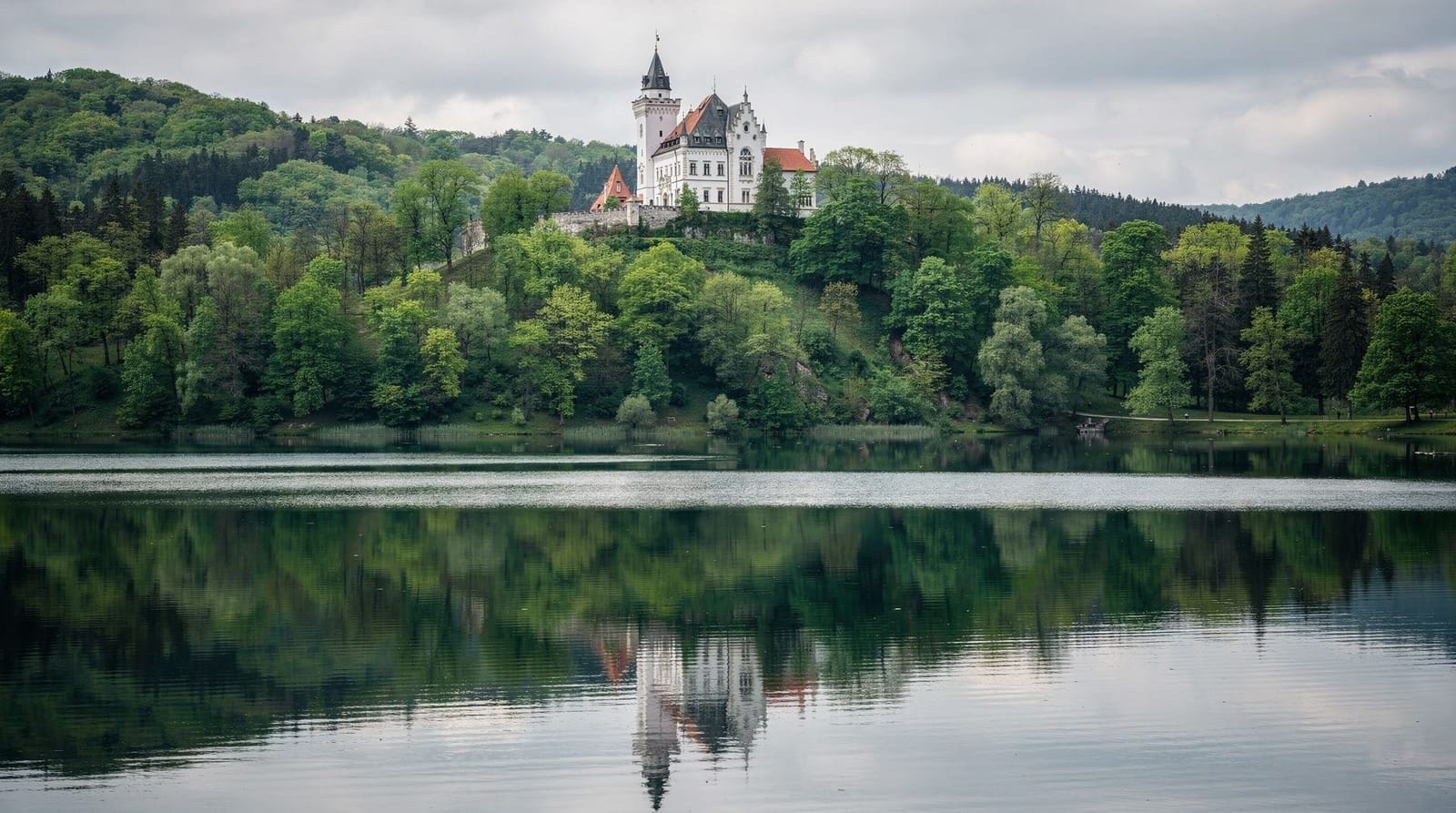
Zagorje and Trakošćan — the castle north of Zagreb is genuinely fairytale-like in a winter setting. The Zagorje hills with their medieval castles and spa towns (Krapinske Toplice) make for an excellent winter day out.
Plitvice Lakes in winter — a full-day excursion from Zagreb (roughly 2 hours each way) to see the lakes in winter conditions. Snow and ice on the boardwalks, frozen smaller cascades and near-solitary walking are the rewards. Dress very warmly; the park is 600m altitude and significantly colder than Zagreb.
For the full list of options within easy reach, see the day trips from Zagreb guide, and for how December compares to the rest of the year in Zagreb and beyond, the Croatia in winter guide and best time to visit Croatia guide are useful companion reads.
Frequently asked questions about Zagreb Advent guide
When does Zagreb Advent start and end?
Zagreb Advent typically begins in the last week of November (around 29 November) and runs through early January (around 7 January). Exact dates vary slightly by year; check the official Zagreb tourist board website for current-year dates.What food and drink is at Zagreb Advent?
Kuhano vino (mulled wine), medovača (honey brandy), štrukli (baked or boiled cheese dough pastry), čvarci (crispy pork rind), lički lamb on the spit, pasticada (slow-cooked beef in a sweet Dalmatian sauce), grilled meats, roasted chestnuts and various Croatian regional specialities.Is Zagreb Advent worth visiting?
Yes, if you enjoy Christmas markets. It has a more genuine local character than many of Europe's better-known markets and is considerably less commercialised than its famous competitors in Germany and Austria. The setting in a Central European city with elegant architecture adds to the atmosphere.Where are the main market locations in Zagreb?
The main hub is Ban Jelačić Square in the Lower Town. Other key locations include Zrinjevac Park (a more elegant, park-based section), Strossmayer Square and the Upper Town (Gornji Grad) around St. Mark's Church.How do I get to Zagreb for Advent?
Zagreb Airport (ZAG) is connected to major European cities. Trains run from Vienna, Budapest, Ljubljana and Graz. Buses connect from Split, Dubrovnik and Zadar. From the airport, a bus or taxi reaches the centre in 25–35 minutes.Is Zagreb cold in December?
Yes — December averages 2–6°C with occasional frosts and the possibility of snow. Dress in proper winter clothing: coat, gloves, hat, waterproof shoes. Evenings can be genuinely cold, which actually adds to the atmosphere with all the warm drinks and food stalls.How many days should I spend in Zagreb for Advent?
Two to three days is ideal. The Advent market and the key cultural sights (Upper Town, Museum of Broken Relationships, Zagreb Cathedral, Dolac market) can be covered in a long weekend, with time to eat and drink properly.Which Zagreb Advent location should I prioritise if I only have one evening?
Start at Ban Jelačić Square for the main atmosphere and food stalls, then walk to Zrinjevac Park for the illuminated trees, and finish with a short funicular ride up to the Upper Town for a quieter, more atmospheric close. This loop takes about two to three hours and covers the market's best contrasts without rushing.Is Zagreb Advent good for families with children?
Yes. The ice rinks, the funicular ride, the relatively compact layout, and the mix of food stalls make it an easy event for families. Strollers manage fine on the Lower Town's flat squares, though the Upper Town's cobblestones and steps are trickier; consider the funicular both ways if travelling with very young children.
Top experiences
Bookable activities with verified prices and instant confirmation on GetYourGuide.
Top experiences
Best-rated activities across GetYourGuide and Viator.

Mostar and Herzegovina Tour with Kravica Waterfall from Split & Trogir
- Viator

3Hour ALL-INCLUSIVE Sunset Dolphin Watching from Medulin onSandra
- Viator

Dolphin Watching & Sunset Boat Tour With Drinks & optional Dinner
- Viator

Fantastic DOLPHIN & SUNSET TOUR with dinner ( Pula-NP BRIJUNI )
- Viator

Medulin :All-Inclusive Pirate Boat Dolphin Watching Sunset Cruise
- Viator

Mostar & Kravice waterfalls full-day guided tour from Split
- Viator