Croatia month by month
What is Croatia like each month of the year?
Croatia's coast peaks in July–August (warmest, most crowded, most expensive). The shoulder months — May, June, September and early October — offer warm weather and calmer conditions. November through March is low season on the coast but Zagreb and Plitvice remain rewarding.
| Best overall months | May, June, September |
| Warmest sea | August (25–26°C), close behind by September |
| Cheapest months | January–February |
| Peak crowds | mid-July to mid-August |
| Zagreb headline event | December Advent market |
| Coast low season | November–March, most island businesses closed |
How to read Croatia’s calendar
Croatia’s tourism rhythm is dictated almost entirely by the Adriatic. From roughly November to March, the coast and islands quieten dramatically — many restaurants, hotels and ferry routes simply close. From April, things begin to wake up. By June it is fully alive, and July–August is when the majority of Croatia’s annual visitors arrive.
Understanding what each month actually looks like on the ground will help you decide when your trip makes most sense.
January
Coast air temp: 8–12°C | Sea temp: 12°C | Crowds: Very low
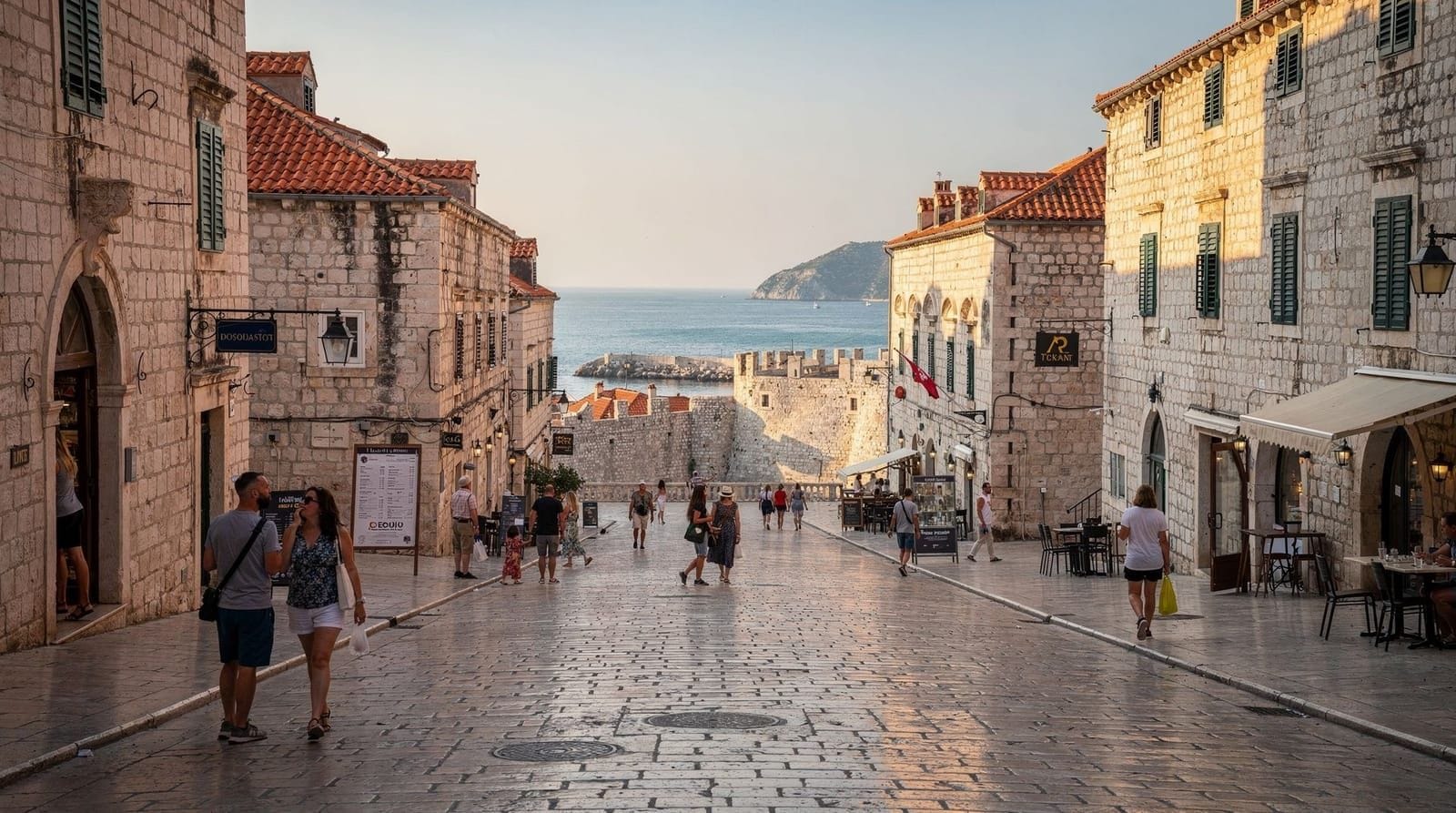
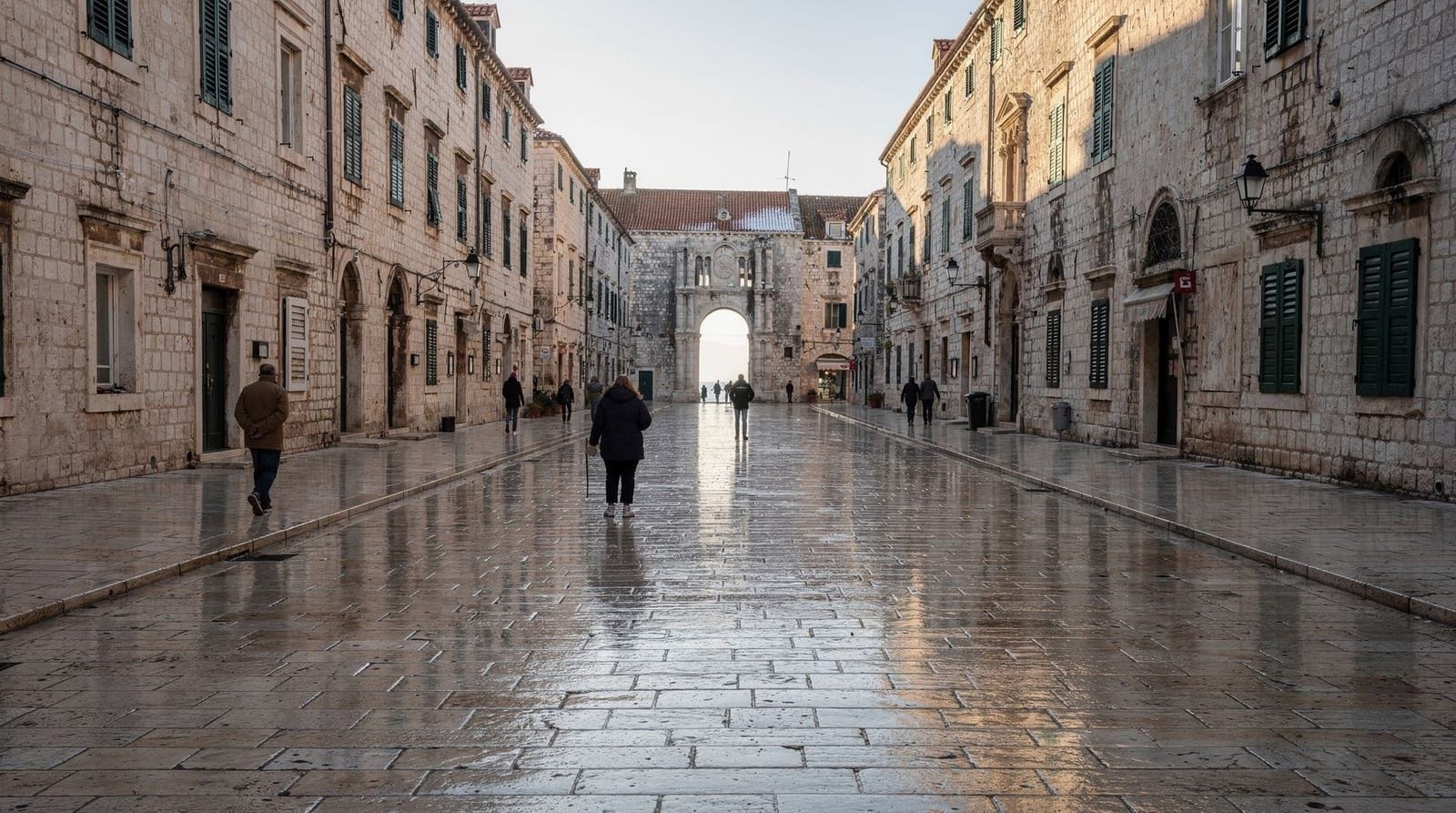
January is deep low season on the Dalmatian coast. Many hotels on the islands are shut, catamaran services run minimal timetables, and seafront restaurants in smaller towns may be closed entirely. Dubrovnik remains open — it is a year-round city — but much quieter than any other time of year.
Zagreb in early January still has the glow of Advent fading. The Museum of Broken Relationships and the city’s café culture make it a civilised winter break. Plitvice Lakes under a light blanket of snow is genuinely magical and essentially crowd-free — check the park website for winter conditions before you go.
Good for: Off-season city breaks in Zagreb; Plitvice in the snow; absolute quiet on the coast.
Not good for: Beach holidays; island hopping; most coastal activities.
February
Coast air temp: 9–13°C | Sea temp: 12°C | Crowds: Very low
February is the cheapest month in Croatia and the quietest. Accommodation prices drop to their annual floor. The Carnival period (Karneval) is celebrated in various towns — most notably in Rijeka, which hosts one of the region’s oldest and most elaborate carnival parades.
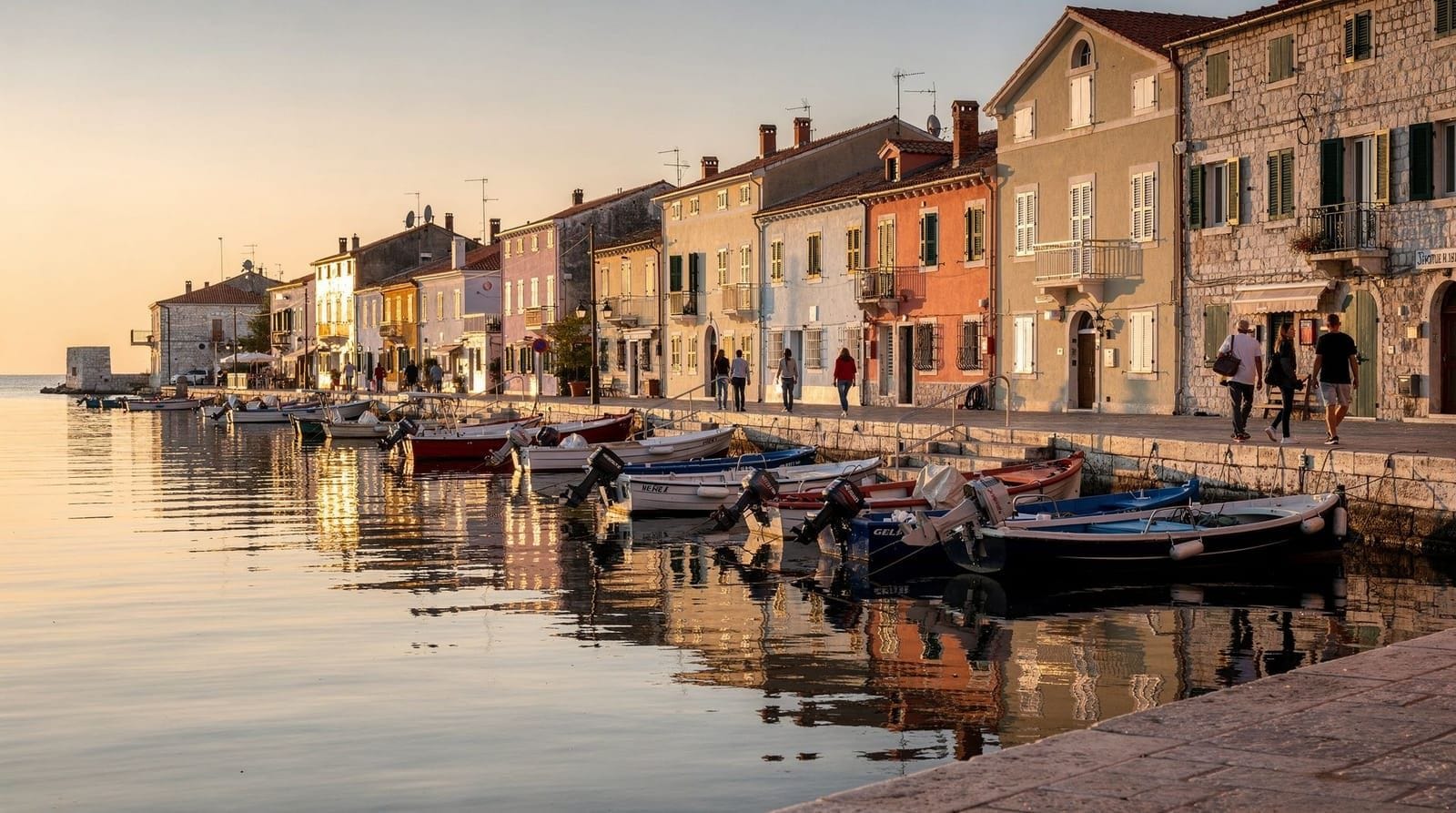
The coast is scenic in winter light, particularly Dubrovnik and Rovinj, both of which work well as week-long slow-travel destinations when the summer crowds are absent.
Good for: Budget travellers; Rijeka Carnival (mid-February); quiet exploration of Dubrovnik and Rovinj.
March
Coast air temp: 13–17°C | Sea temp: 13°C | Crowds: Low
March is a transitional month. The coast is waking up slowly — some businesses reopen, ferry services tick up — but it is not yet open enough for a conventional coastal holiday. Temperatures are mild but unpredictable, and rain is possible.
Zagreb comes into its own: café terraces, gallery openings and a pleasant lack of tourist congestion. The Easter period falls in late March some years, bringing some religious festivities and slightly increased visitor numbers.
Good for: Zagreb city breaks; inland Croatia; Plitvice with late snowmelt waterfalls.
April
Coast air temp: 16–20°C | Sea temp: 14–16°C | Crowds: Low–medium
April is the month when Croatia begins to feel like itself again. Temperatures are warm enough for long walks along sea walls and coastal promenades. Wildflowers cover the hillsides in Dalmatia and Istria. The ferry network wakes up and most hotels and restaurants reopen.
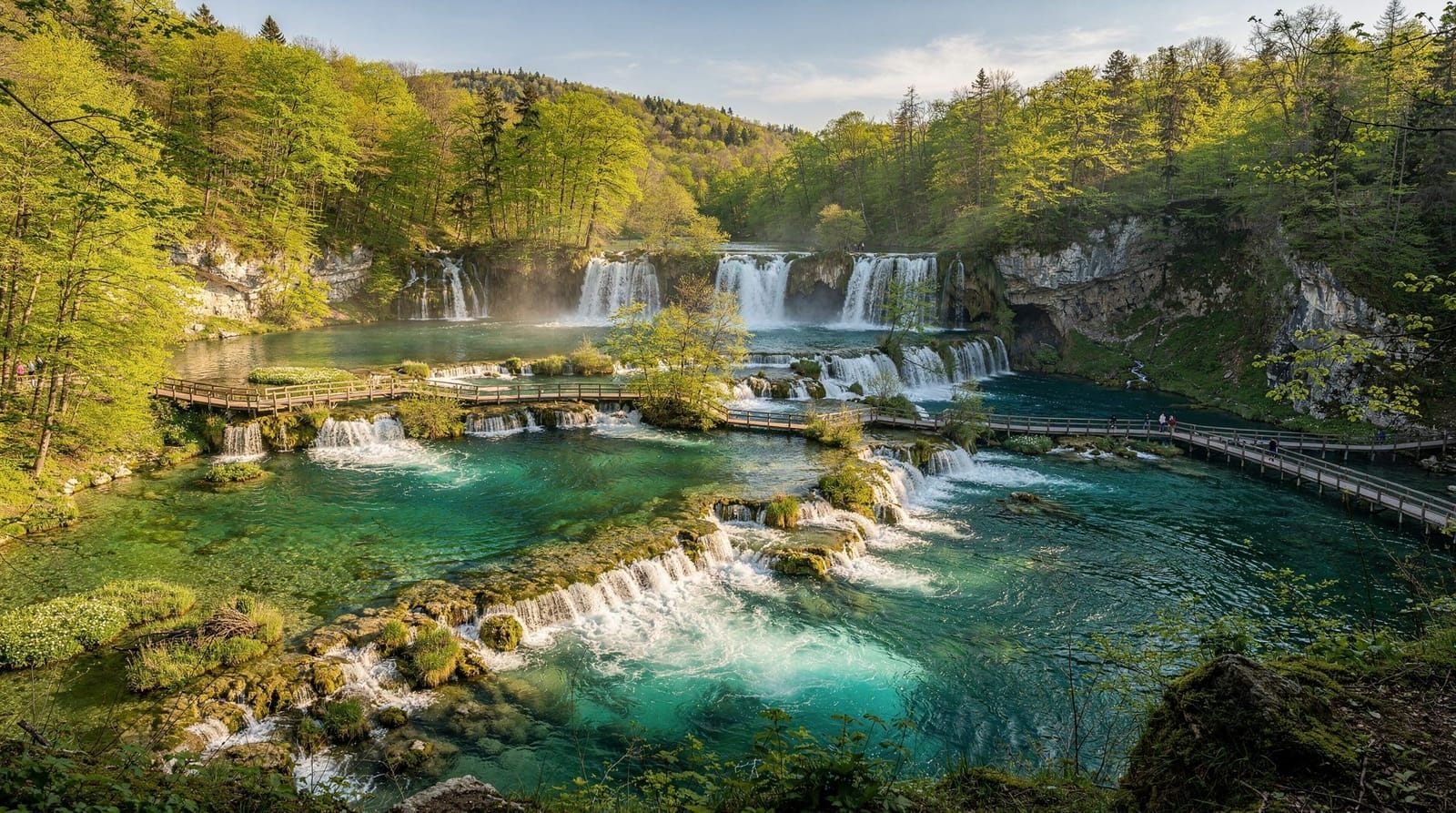
Plitvice Lakes in April is outstanding — waterfalls at high volume from snowmelt, vivid green water, very manageable visitor numbers. This is one of the best months to visit the national parks.
Sea temperatures at 14–16°C are too cold for recreational swimming for most people, though a determined few do go in.
Good for: Hiking; Plitvice and Krka; city breaks in Split and Dubrovnik; budget coastal travel.
Easter in Croatia: When Easter falls in April, expect a short bump in domestic visitor numbers around the holiday weekend itself, particularly in Zagreb and inland towns with strong religious traditions, but coastal tourist infrastructure is unaffected — it simply isn’t summer season yet.
May
Coast air temp: 20–24°C | Sea temp: 18–19°C | Crowds: Medium
May is widely regarded by experienced Croatia travellers as the best month. Everything is open and running, the landscape is at its most vivid and green, the sea is warming to swimmable temperatures, and the tourist volumes have not yet spiked.
The long daylight hours (sunset around 8.30pm by late May) give you maximum time to explore. Ferry schedules are close to full summer timetables from mid-May onwards, enabling island hopping in earnest. Accommodation prices are 20–30% below their August peak.
Walking the Dubrovnik city walls or exploring Diocletian’s Palace in Split in May is genuinely pleasurable — you can linger, take photos without crowds in the frame, and stop for a coffee without hunting for a table.
For a detailed month guide, see Croatia in May.
Good for: Almost everything — the best overall month.
June
Coast air temp: 25–28°C | Sea temp: 21–22°C | Crowds: Medium–high
June is the start of genuine summer: long hot days, a sea that invites swimming, and full operational mode across the country. It sits in the sweet spot between shoulder season and the full July–August peak.
Early June can still feel relatively calm. After the British school half-term (late May) and Italian school exit (mid-June) weekends, numbers begin to build. By late June, Dubrovnik and Hvar are busy — not overwhelmingly so, but the difference from May is noticeable.
Sailing is particularly good in June: the Maestral (northwest wind) blows steadily on the central Dalmatian coast, giving reliable conditions for both day trips and skippered week-long cruises.
Good for: Swimming, sailing, island hopping, long evenings on terrace restaurants.
Festival season begins: Late June sees the run-up to Croatia’s biggest summer festivals, including large electronic music events on the islands and around Split, which draw a younger crowd and push accommodation prices in specific towns higher than the general June average — worth checking festival calendars for your destination before booking if you’d rather avoid (or seek out) that scene.
July
Coast air temp: 28–32°C | Sea temp: 24–25°C | Crowds: Very high
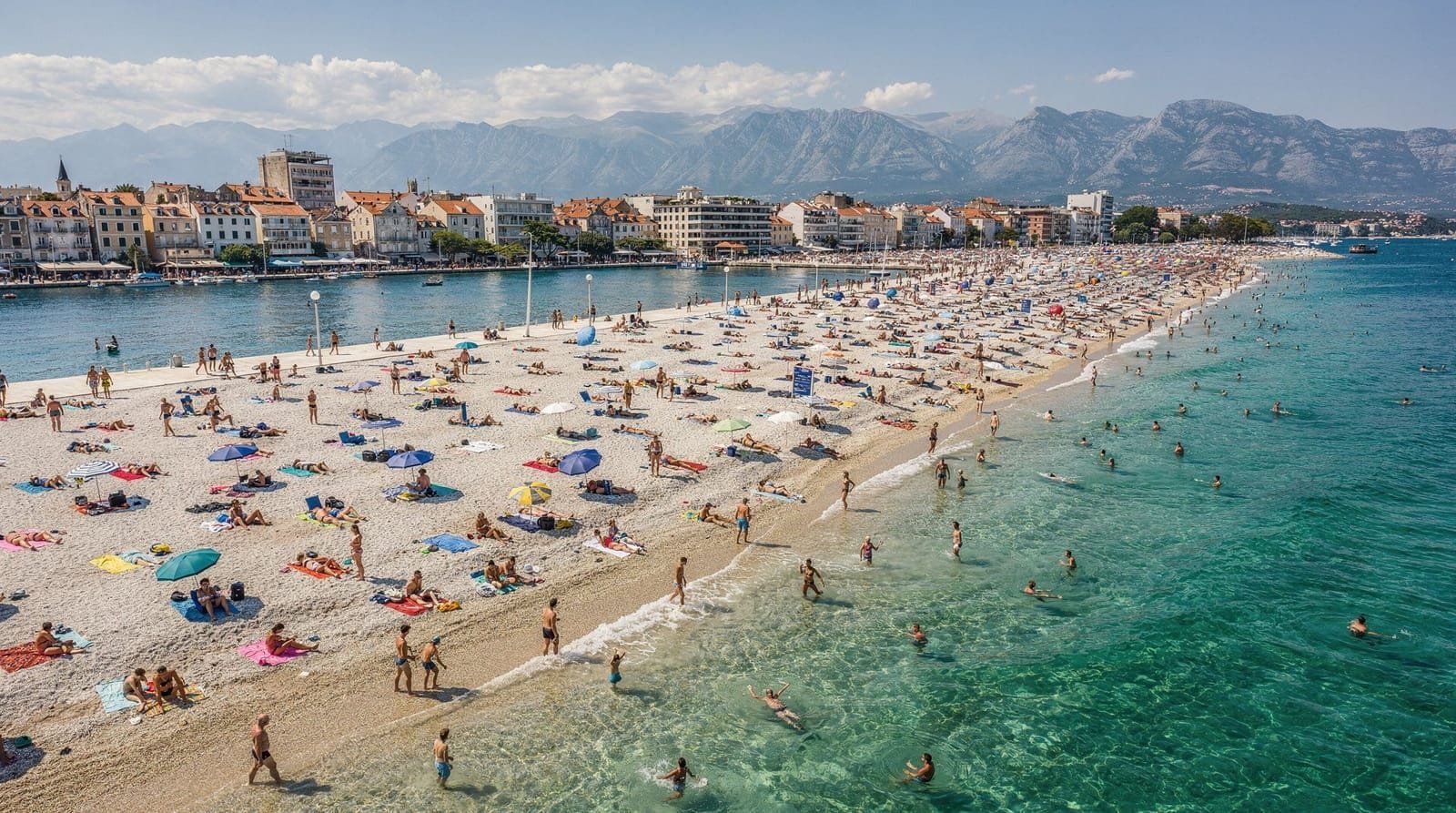
July is Croatia at maximum intensity. The Adriatic glitters at 24–25°C and the beaches are at their most photogenic. It is also the month when Dubrovnik’s Old Town becomes, for several hours each day, almost unpleasant with congestion.
If you are visiting in July, your tactics matter enormously. Walk the city walls before 9am. Visit Plitvice with pre-booked tickets and arrive at opening. On Hvar, the nightlife is electric but the main square fills shoulder-to-shoulder by evening. Use a base in Brač, Vis or Korčula if you want to explore the islands with more breathing room.
Book accommodation months in advance. Car ferry slots on Split–Hvar and Split–Korčula sell out; buy tickets online as soon as your dates are fixed.
Good for: Beach lovers; those who like summer energy; families who cannot travel outside school holidays.
Not good for: Those sensitive to crowds; budget travellers.
August
Coast air temp: 28–33°C | Sea temp: 25–26°C | Crowds: Highest of year
August is the absolute peak. Sea temperatures hit their annual maximum of 25–26°C. Accommodation prices in Dubrovnik and Hvar reach their highest. The roads along the Dalmatian coast are congested, parking is nearly impossible in major towns, and popular beaches fill up by 9am.
That said, August has its own magic. Summer festivals take place across Croatia. The open-sea swimming, the smell of pine and sunscreen, the late-evening langoustines — it is undeniably the quintessential Adriatic experience.
Our advice: if you go in August, choose your base carefully. Zadar, Šibenik and the lesser-known islands see fewer visitors than Dubrovnik and Split while still delivering the full Dalmatian experience.
For detailed tactics, see Croatia in summer.
September
Coast air temp: 24–27°C | Sea temp: 23–24°C | Crowds: Medium
September is the month many experienced Croatia travellers consider their personal best. The sea is at its warmest-feeling because the surface water has had all summer to absorb heat. Air temperatures are perfect. Crowds drop significantly from 1 September onwards, especially in the first two weeks.
Late September opens the Istrian truffle season: Motovun and the surrounding forests offer truffle hunting experiences that combine gastronomy and landscape in a way unique to this corner of Croatia.
The practical note: ferry timetables begin to reduce from mid-September. If you plan to island-hop in the last week of September, check routes carefully and be prepared for fewer daily sailings.
See Croatia in September for the full breakdown.
October
Coast air temp: 18–22°C | Sea temp: 19–21°C | Crowds: Low–medium
Early October (1–15) remains genuinely good for the coast: the sea is still swimmable at 20–21°C, the light is extraordinary — a warm amber that photographers treasure — and tourist numbers have thinned substantially. Prices drop.
After mid-October, the picture changes fast. Catamaran services to smaller islands thin to once or twice daily. Some restaurants close for the season. The coast can feel empty in a way that is either peaceful or lonely, depending on your disposition.
Inland Croatia shines in October. Zagreb is excellent, Plitvice offers autumn colour without summer queues, and Istria with its truffle hunts and wine harvest makes for an exceptional food-focused trip.
Good for: Photography; food tourism (Istrian truffles, wine harvest); Plitvice; budget coastal travel in early month.
White truffle peak: October is generally considered the peak of the white truffle harvest around Motovun and the Istrian interior, slightly ahead of the wider September–January season — worth timing an Istria trip specifically around this window if truffles are the priority.
November
Coast air temp: 13–17°C | Sea temp: 16°C | Crowds: Low
November is unambiguously low season on the coast. Most island businesses are closed. Even in Split and Dubrovnik, the tourist infrastructure is operating at reduced capacity. Weather is mild but unpredictable — the Jugo (sirocco) wind can bring rain and rough seas.
Zagreb is an excellent November destination. Museums, theatre, restaurants and cafés are in full swing with a local, un-touristy feel.
December
Coast air temp: 8–12°C | Sea temp: 13°C | Crowds: Very low on coast; festive in Zagreb
December on the Dalmatian coast is very quiet. Dubrovnik has its atmospheric winter mood — the Old Town is beautiful without crowds — but many businesses are closed.
Zagreb Advent is the headline event of Croatia’s December: the market runs from late November through early January and has been voted the best in Europe multiple times. Ice skating, mulled wine, traditional food stalls and a genuinely festive atmosphere make it one of the continent’s underrated winter city breaks.
For a detailed guide to Zagreb in December, see Zagreb Advent.
Regional variation: it’s not one climate
Croatia’s regions don’t move through the seasons in lockstep, and travellers planning a multi-region trip benefit from knowing the differences. Dalmatia (Split, Dubrovnik, the islands) has the classic Mediterranean pattern described month by month above — hot, dry summers and mild, wetter winters. Istria, in the northwest, runs 1–2°C cooler than Dalmatia in both air and sea temperature year-round, with a more Italian-influenced, greener landscape and a longer, gentler shoulder season either side of summer. Kvarner (Rijeka, Krk, Opatija) sits between the two climatically, with the Bura wind a more frequent factor in winter. Zagreb and the interior run on a continental pattern entirely separate from the coast — genuinely cold winters (occasionally below freezing with snow) and warm, sometimes humid summers, meaning a “good month” for Zagreb doesn’t map onto a “good month” for the coast. A trip combining Zagreb with Dalmatia should treat them as two separate weather decisions, not one.
Quick comparison by travel type
| Travel style | Best months | Avoid |
|---|---|---|
| Beach + swimming | July–August (warmest); September (calmer) | Before June; after October |
| National parks | May–June, September–October | August (caps and crowds) |
| Island hopping | June, September | Late October–April |
| Sailing | May–June | November–March |
| City breaks | April–June, September–October, December (Zagreb) | — (year-round viable) |
| Budget travel | April–May, October | July–August |
| Food and wine | October (Istrian truffles), September (harvest) | — |
| Avoiding crowds | May, October, November–March (coast) | July–August |
Choosing between two close months
Several month pairs get compared constantly, and the honest answer is usually “it depends what you’re optimising for.” May vs June: May is quieter and cheaper; June is warmer for swimming. Choose May if crowds bother you more than a cool sea; choose June if a comfortable swim matters more. September vs October: September keeps summer’s warm sea with thinning crowds; October trades a few degrees for even lower prices and near-empty sights, particularly after the 15th. June vs September: near-identical in crowd levels and price, but September’s sea is 1–2°C warmer on average, while June has longer daylight hours. See Croatia in May, Croatia in September and Croatia’s shoulder season guide for the month-specific detail behind these trade-offs.
Frequently asked questions about Croatia month by month
What is the best month to visit Croatia?
June and September are widely regarded as the best months. Both offer warm sea temperatures, full transport schedules and materially lower prices and crowds than July–August.What is Croatia like in April?
April sees the coast begin to wake up: temperatures reach 16–20°C, the landscape is green and flowering, and Plitvice Lakes are excellent. Sea temperatures (14–16°C) are still cold for swimming, but it is an ideal month for sightseeing and hiking.Is October a good month for Croatia?
Early October is excellent — still warm (18–22°C), sea at 20–21°C, Istrian truffle season in full swing, and far fewer tourists. Late October sees transport schedules thin and some coastal businesses close.What months does Croatia get crowds?
July and August are the peak crowd months, particularly in Dubrovnik, Split, Hvar and on the main ferries. The Plitvice Lakes entry cap kicks in from June through August.When is the Adriatic warmest for swimming?
August is technically the peak at 25–26°C, but September (23–24°C) is often preferred because the surface water has fully heated and crowds have started to thin.What happens in Croatia in December?
Zagreb's Advent market, repeatedly voted the best in Europe, runs through December. The Dalmatian coast is quiet, with many island businesses closed, but Split and Dubrovnik remain walkable city breaks.Is March a good time to visit Croatia?
March works well for Zagreb (cultural venues, restaurants, no crowds). The coast is very quiet — some businesses are still closed — and sea temperatures (12–13°C) preclude swimming. Plitvice can be stunning with late snow and spring runoff.
Top experiences
Bookable activities with verified prices and instant confirmation on GetYourGuide.
Top experiences
Best-rated activities across GetYourGuide and Viator.

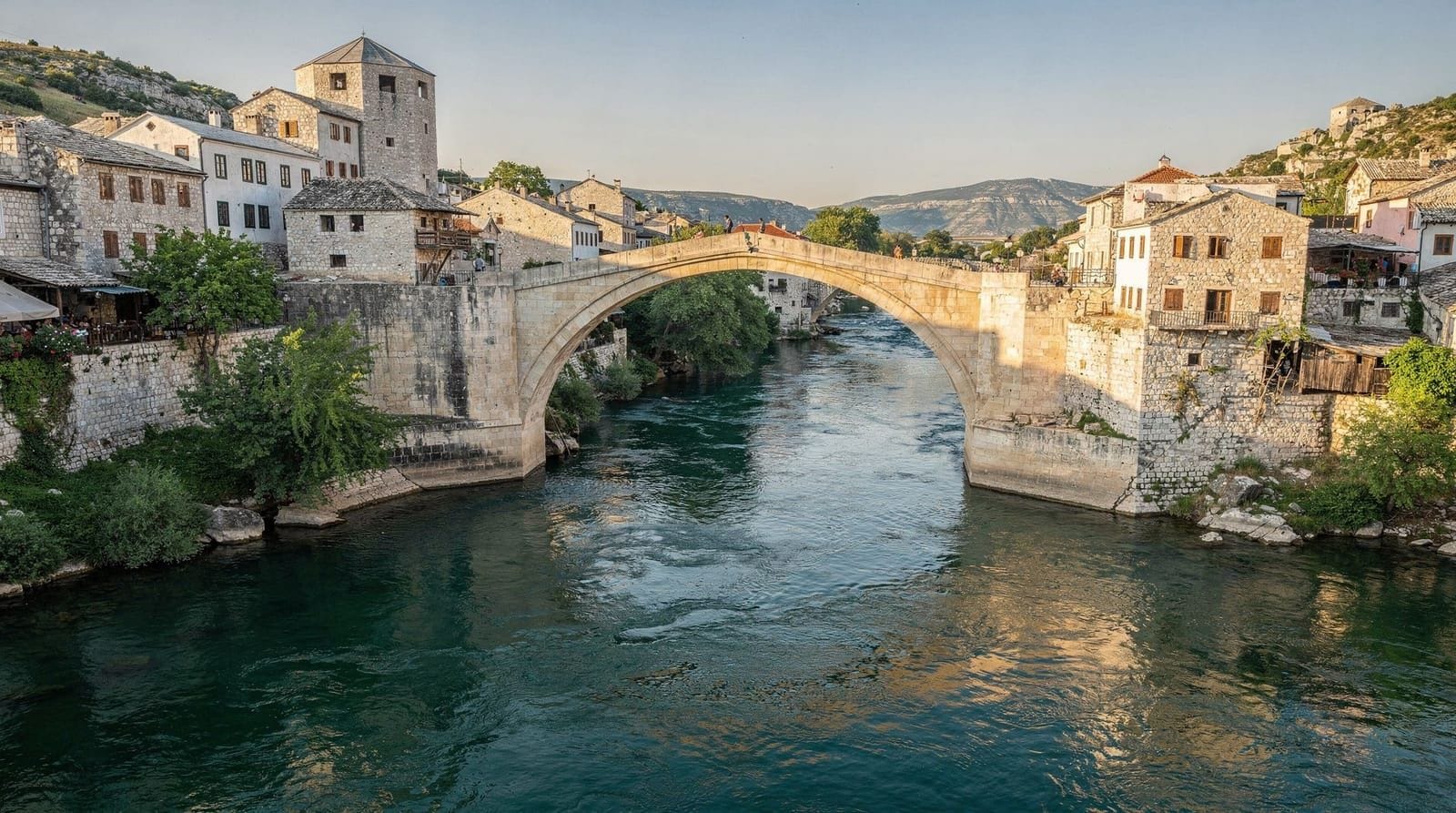
Mostar and Herzegovina Tour with Kravica Waterfall from Split & Trogir
- Viator

3Hour ALL-INCLUSIVE Sunset Dolphin Watching from Medulin onSandra
- Viator

Dolphin Watching & Sunset Boat Tour With Drinks & optional Dinner
- Viator

Fantastic DOLPHIN & SUNSET TOUR with dinner ( Pula-NP BRIJUNI )
- Viator

Medulin :All-Inclusive Pirate Boat Dolphin Watching Sunset Cruise
- Viator

Mostar & Kravice waterfalls full-day guided tour from Split
- Viator