Zagreb Walking & Food Tours: Best Options Compared
Zagreb: Taste Zagreb food tour
| Where | Zagreb upper and lower town, Dolac market |
| Cost | around €35-70 per person depending on format |
| Time needed | 2-4 hours |
| Getting there | walking tour, most meet centrally near Ban Jelačić Square |
| Best time | morning departures for the Dolac market-focused formats, which shut by noon |
Why Zagreb Deserves More Than a Stopover
Zagreb is the most consistently underrated capital in Central Europe. Most visitors pass through for a night or two on their way to the Dalmatian coast — the islands, the sea, the predictable postcard Croatia — and leave thinking they saw enough. They rarely did.
The city has a compact but genuinely layered quality. The upper town (Gornji Grad) sits on a limestone ridge above the lower town, connected by Europe’s shortest funicular. The lower town radiates out in a Viennese grid of parks, markets, and coffee house culture that feels more Central European than Mediterranean. Dolac market opens each morning with a noise and colour that is nothing like the tourist-facing version of Croatian culture you encounter on the Dalmatian islands. And Zagreb’s food scene — built around štrukli, kremšnita, slow-braised meats, rakija, and some of the best coffee in the region — is the real reason to slow down here.
Walking and food tours in Zagreb are, consequently, among the more rewarding urban tour formats you can choose in Croatia. This is not a city where a guided walk is just a logistical convenience. It is a city where context matters and where a good local guide genuinely changes what you see and understand.
The question is which format suits your interests. The options range from pure food-tasting experiences to history-focused walking tours, with several hybrids in between. If you want more background on the dishes themselves before you book, our Dalmatian cuisine guide covers the coastal side of Croatian food culture, useful context for understanding how continental Zagreb cooking — heavier, more Central European — differs from what you will eat later on the coast.
The Food Tasting Tour Format: What You Actually Eat
The most food-forward format involves 4-6 stops at restaurants, bars, market stalls, or pastry shops, with tastings at each. Total number of tastings across the tour is typically 8-12 items. Duration is 2.5-3.5 hours. Prices range from €45-70.
See the Taste Zagreb food tour itinerary and current availabilityWhat you typically eat on a Zagreb food tour:
Štrukli is almost always the centrepiece — baked with cottage cheese and a caramelised top, or boiled and silkier, sometimes served both ways for comparison. This is the dish Zagreb is most proud of, registered on Croatia’s cultural heritage list, and every decent food tour makes it a focal point.
Kremšnita — the Zagreb cream cake — is a layered vanilla custard slice that appears on the menus of nearly every café in the city. It originated in the nearby town of Samobor but Zagreb has made it its own. On a food tour, you will typically try it at a café with some history behind the recipe.
Cheese and charcuterie from continental Croatia feature on most tours: kulen (spiced dried sausage from Slavonia), air-dried ham, and aged sheep’s cheese from the islands. Wine is occasionally included — Croatian wine is excellent and under-explored outside the country. Rakija, the fruit brandy, appears on most tours, often as a grappa-style finish to a savoury tasting.
Compare the restaurants and food walking tour formatThe guide’s role on a food tour is as important as the food itself. The best Zagreb food tour guides know the producers behind what you are eating, can explain the regional differences between Dalmatian and continental Croatian cuisine, and have actual relationships with the shop owners and market vendors. This is what separates an 8/10 food tour experience from a 6/10 one — read reviews carefully for mentions of guide knowledge specifically.
Morning Walking Tour with Breakfast: A Different Rhythm
The morning walking tour with breakfast format is more leisurely and better suited to visitors who want an orientation as much as a culinary experience. Tours typically depart at 9am or 9:30am, run 3-4 hours, and include a sit-down breakfast component — usually in the upper town or at a market café.
See the morning walking tour with breakfast and what is includedThe morning format has a specific structural advantage: Dolac market. Zagreb’s open-air fruit, vegetable, and flower market on the terrace above the lower town runs every morning but shuts down by noon — earlier on quieter days. A morning tour goes through when the stalls are loaded and the vendors are engaged. You see the city functioning as a city, not as a tourism product.
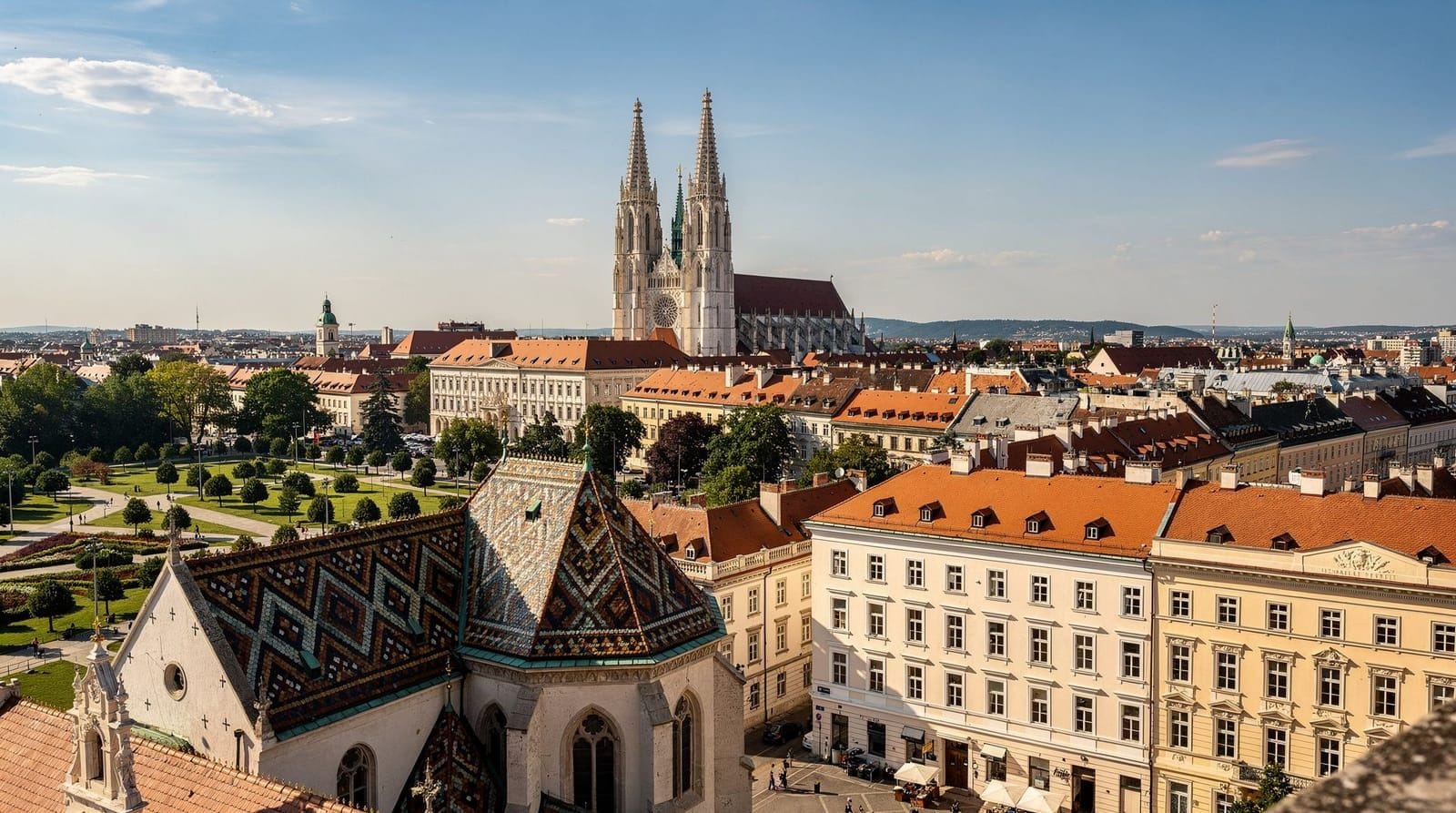
The walking component in these tours typically covers both towns: the lower town (Ban Jelačić Square, Dolac market, the Flower Square, the Art Pavilion area) and the upper town (Kamenita ulica, the Stone Gate, St. Mark’s Church, Lotrščak Tower). It is a more complete picture of Zagreb than a purely food-focused afternoon tour usually provides.
The breakfast itself varies by operator — it might be a full sit-down meal, a substantial continental breakfast, or a series of light tastings taken while walking. Read the description carefully if the quantity and nature of food matter to you.
City History Walk with WWII Tunnels
The city history walking tour with WWII tunnels is a different product and serves a different interest. It covers the historical development of Zagreb from its medieval origins through the Austro-Hungarian period into the twentieth century, with the Grič Tunnel as the signature experience.
See the WWII tunnels city tour with guideThe Grič Tunnel is a network of underground passages built beneath the upper town as air raid shelters during World War II. It runs approximately 350 metres and is now open to visitors, used occasionally as an art space. It is genuinely interesting — not dramatic or atmospheric in the way of, say, Paris catacombs, but historically honest and cool in both temperature and mood.
This tour format works well for visitors with a specific interest in twentieth-century European history, or for those who have already done the food and market experience and want a different angle on Zagreb. It is not the format to choose if food is your primary motivation, as food stops are minimal or absent.
Duration is typically 2.5-3 hours. Prices are €40-60.
Funicular Ride Combination Tour
Several operators include the funicular ride as part of a general Zagreb orientation tour. The Zagreb funicular connects Ilica (lower town) to Strossmayerovo šetalište (upper town) in about 55 seconds — it is genuinely one of the shortest funicular rides in the world.
The funicular itself costs around €1 per ride one way. It is a pleasant novelty and a logical route between the two towns. Tours that market the funicular as a headline attraction are, frankly, selling you a €1 ticket as a premium experience. What they are actually offering is a guided orientation of both towns connected by the funicular — which is a reasonable product, just understand the framing.
For visitors with limited time who want a quick overview of Zagreb without heavy food focus, these orientation tours work well and typically run 2-2.5 hours at €35-45.
Comparing the Options Side by Side
The food tasting tour is the correct choice for visitors who want to eat well, learn about Croatian ingredients and food culture, and have a memorable sensory experience of Zagreb. It is worth spending toward the upper end of the price range if the reviews back up the guide quality.
The morning walking tour with breakfast suits visitors who want both cultural context and food, are arriving with time to spare, and want to see the city operating at its most authentic — the market in full swing, the coffee houses filling up.
The city history tour with WWII tunnels is for history-focused travellers or return visitors who have already covered the standard Zagreb highlights and want something more specific.
The funicular-based orientation tour is best for short visits of one night only, or for visitors who have no particular interest in food or history but want a competent overview before moving on.
| Format | Price | Duration | Best for |
|---|---|---|---|
| Food tasting tour | €45-70 | 2.5-3.5 hrs | eating well, learning Croatian ingredients |
| Morning walk with breakfast | not stated | 3-4 hrs | seeing Dolac market in full swing plus orientation |
| WWII tunnels history walk | €40-60 | 2.5-3 hrs | history-focused travellers, return visitors |
| Funicular orientation tour | €35-45 | 2-2.5 hrs | short visits, no particular food or history focus |
What Zagreb Food Tours Do Well and Where They Can Fall Short
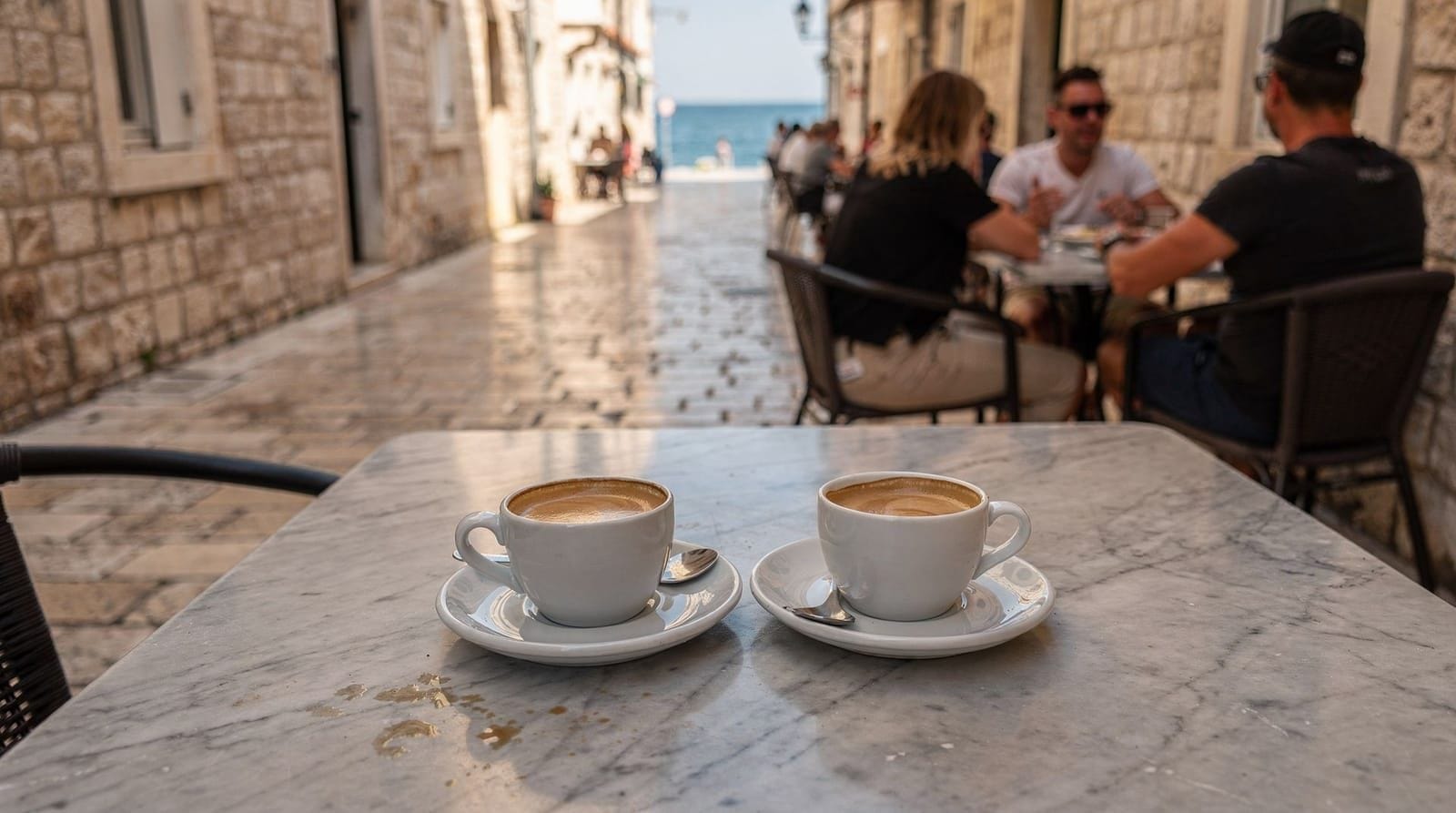
Zagreb is genuinely excellent as a food destination and deserves more recognition for it. The coffee culture alone — Croatians are intensely serious about their morning coffee and the ritual of sitting in a café for an extended time, not rushing — is something that a good local guide can illuminate in ways that independent wandering cannot. The distinction between a kavana (traditional coffee house) and a kafić (modern café bar) sounds trivial but shapes the rhythm of the entire city.
Where some tours fall short: the difference between a tour that is primarily about walking and includes a couple of food stops, and a tour that is genuinely food-led, is significant and not always clear from the title. A tour described as a “food and walking tour” might involve 2 tastings and 90 minutes of walking. A tour described as a “food tour” should involve 8-12 tastings and have food at its centre. Read the detailed itinerary, not just the title.
Tours run rain or shine. Zagreb in rain is fine — the streets are walkable and cafés offer shelter. The market is slightly diminished in heavy rain but still functions.
Group size matters more in Zagreb than in many cities because the streets of the upper town are narrow and acoustics in busy areas are difficult. Groups of more than 12-15 people become unwieldy on a walking tour. Check the group size policy before booking.
Footwear and pacing are worth a note too: the upper town is reached via cobbled, occasionally steep lanes even if you take the funicular for part of the climb, and Dolac market involves standing and shuffling through crowded stalls rather than brisk walking. Comfortable flat shoes serve every format well. Pace is generally gentle — this is not a fitness challenge — but anyone with mobility concerns should ask the operator about stairs and cobblestones specifically, since the upper town has more of both than the lower town’s grid streets.
How to Book
Book in advance, particularly for morning tours that are timed to the market schedule. Availability is usually fine in spring and autumn. In July and August, desirable morning slots fill quickly.
Look for operators offering free cancellation up to 24 hours before departure — this is standard practice and any operator not offering it should give you pause.
If food is your priority, book the tour that explicitly lists the most tastings and most food stops, regardless of what other walking content it includes. You can always explore the upper town independently after the tour ends — you cannot recreate a curated sequence of Zagreb food tastings on your own without significant research.
Fitting a Zagreb Tour Into a Wider Trip
Most visitors treat Zagreb as a one- or two-night stop on the way to or from the coast, and a walking or food tour is the most efficient way to make that short stay count. If you are weighing how long to actually stay, our Zagreb vs Split comparison is useful for calibrating expectations — the two cities offer genuinely different travel moods, continental versus Mediterranean, and neither is a substitute for the other. For onward travel, the day trips from Zagreb guide covers excursions to Plitvice and beyond, and travellers building a longer route through the region may find the Istria–Zagreb–Slovenia circuit itinerary useful for sequencing a Zagreb stop with the rest of the trip. If you are visiting in December, note that the food and walking tour scene shifts considerably during Advent — see the Zagreb Advent guide for what changes.
Compare alternative tours
Frequently asked questions about Zagreb Walking & Food Tours
How many tastings are typically included on a Zagreb food tour?
Most food-focused tours include 8-12 tastings across 4-6 stops. These usually feature štrukli (baked cheese pastry), kremšnita (cream cake), local cheese, cured meats, and rakija. Some include a glass of Croatian wine. Check the specific listing carefully, as tastings vary widely between operators.What is štrukli and why does everyone in Zagreb talk about it?
Štrukli is a traditional Zagreb pastry made from thin dough filled with fresh cottage cheese. It can be baked (pečeni) or boiled (kuhani). The baked version is caramelised on top and deeply comforting. It is listed on Croatia's register of cultural goods and is considered Zagreb's defining dish.When do morning food tours run and why is timing important?
Morning tours typically depart between 9am and 10am and are timed to visit Dolac market while it is in full swing. The market closes by noon and vendors start packing up earlier. An afternoon food tour misses the market entirely, which is a significant omission.What is the Grič Tunnel and is it worth visiting?
The Grič Tunnel is a network of underground passages built in World War II as a bomb shelter beneath the upper town. It is now open to visitors and covers approximately 350 metres. Some guided tours include it as part of a city history walk. It adds 45-60 minutes to a tour and is genuinely interesting, though not the primary reason to visit Zagreb.Is the funicular ride worth including?
The Zagreb funicular is one of the shortest in the world — the ride takes about 55 seconds. It connects the lower and upper town and has been running since 1890. At around €1 each way, it is worth riding once for the novelty and the transition between neighbourhoods. Tours that include a funicular ride are not offering a premium experience, just a pleasant logistical link.Are Zagreb food tours good for vegetarians?
Some are, some are not. Traditional Croatian charcuterie and meat-heavy dishes feature prominently on most food tours. If you are vegetarian, contact the operator before booking and ask what can be substituted. Operators with larger group sizes may have less flexibility.What neighbourhood does the upper town tour cover?
The upper town (Gornji Grad) contains St. Mark's Church with its colourful tiled roof, Lotrščak Tower (climb for views and to hear the daily noon cannon), the Croatian Parliament building, the Museum of Broken Relationships, and the Baroque streets of Radiceva and Kamenita ulica with the Stone Gate.