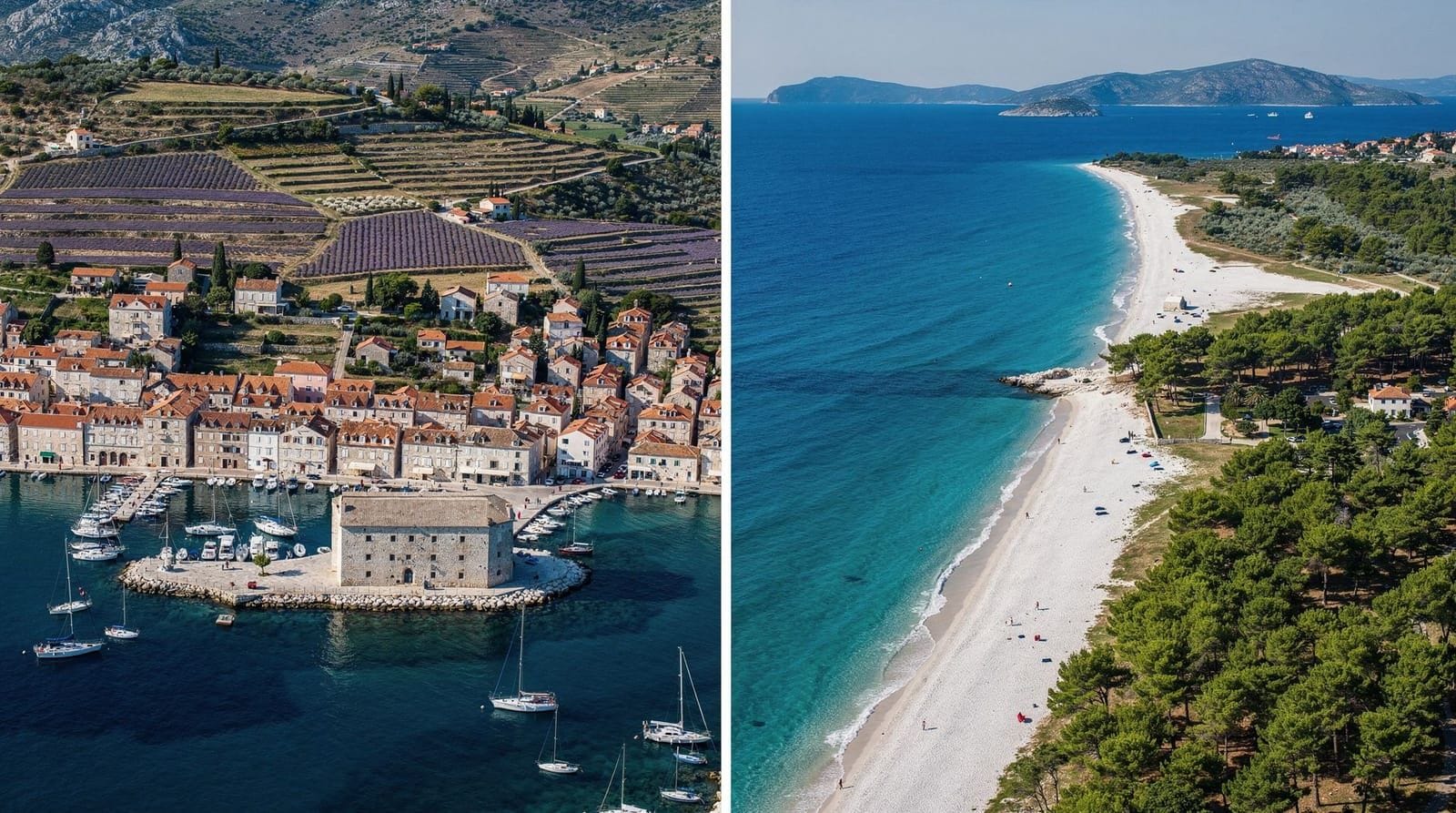
Brač & Zlatni Rat Tours: Which Option Is Best from Split?
Split: Discover Brac with history, food and Zlatni Rat
Brač Beyond the Beach: What the Island Actually Offers
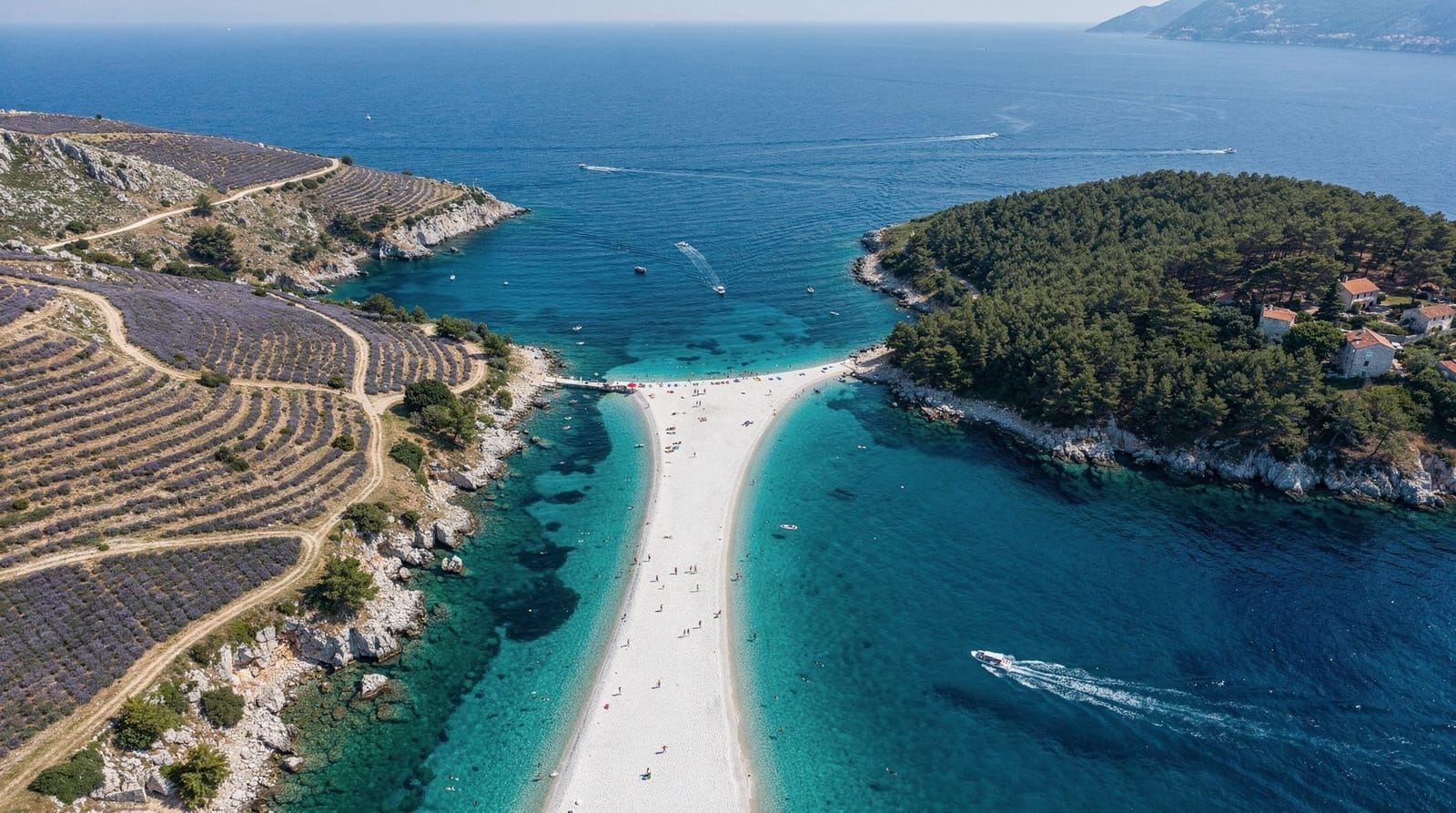
Brač is the largest island in Dalmatia and sits immediately across the water from Split — the ferry takes 50 minutes and runs many times daily. Most visitors know it because of Zlatni Rat, the triangular pebble spit that projects into the sea near the town of Bol and has been reproduced on more Croatian tourism materials than any other single image. The beach is genuinely extraordinary and deserves its reputation.
But Brač is considerably more than its famous beach, and this distinction shapes how you should think about which tour to book. The inland island — stone quarries, abandoned monasteries, ancient olive groves, the oldest continuously inhabited village in Croatia — is a different and equally compelling destination from the beach. Choosing a tour that only gets you to Zlatni Rat is choosing perhaps half the island.
This guide covers all the major Brač day tour formats available from Split: the jeep-based island exploration that goes deep into the interior, the speedboat tour that focuses on the sea and the beach, the combined Hvar and Brač day, and the ferry-based options. Each serves a different kind of visitor.
| Where | Departs Split ferry port or harbour; Brač is 50 minutes by ferry |
| Cost | Around €50–150/person depending on format |
| Time needed | 6–10 hours depending on tour type |
| Getting there | Split ferry port for jeep/bus tours, harbour for speedboats |
| Best time | May–September; visit Zlatni Rat before 9am in July/August |
Understanding Zlatni Rat: What the Photographs Don’t Fully Show
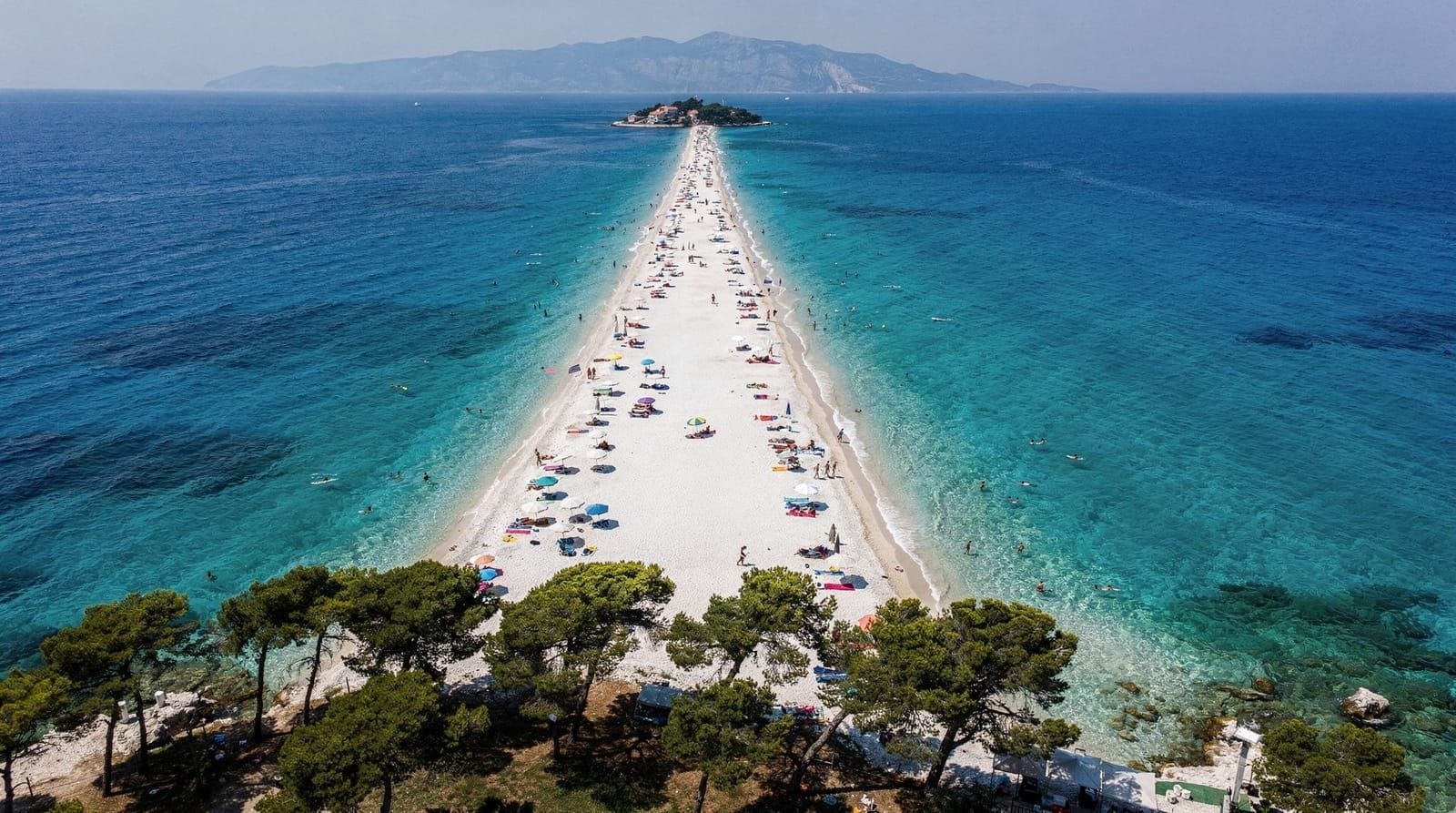
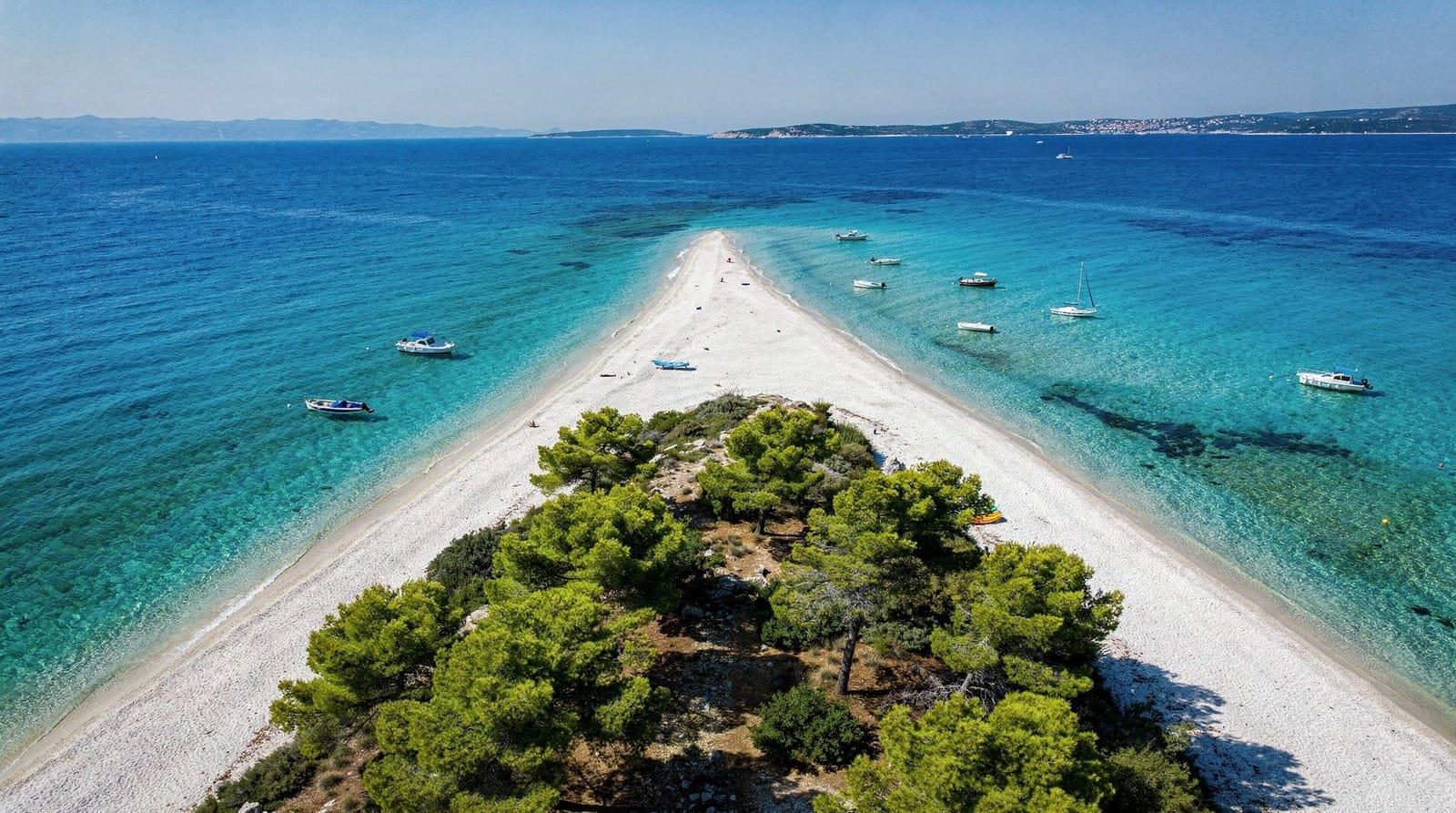
Zlatni Rat — Golden Horn in Croatian — is a narrow tongue of land projecting 634 metres into the sea from the shoreline west of Bol. Its distinctive triangular shape, covered in smooth white pebbles, is surrounded by clear turquoise water on both sides. The tip of the spit shifts direction depending on sea currents and wind, which is a real natural phenomenon and part of what makes it geologically interesting.
The beach is pebble throughout. Smooth stones, comfortable for lying on with a mat, but not sand. Water shoes are advisable for entry, as the pebbles continue into the water. The sea on both flanks of the spit is shallow and clear — good for families and casual swimmers, excellent for snorkellers slightly further out.
In peak July and August, Zlatni Rat becomes one of the most densely occupied beaches in Croatia. The number of parasols, bodies, and boats in the water removes most of the visual drama from the famous photographs. Arriving early — before 9am — or late afternoon gives you a meaningfully different experience. Tours that position the beach visit at the beginning of the day rather than midday are preferable in high season.
Pine trees flank the promenade approaching the beach and provide shade. Cafés and restaurants on the waterfront in Bol are decent and not extortionate by Croatian coast standards.
The Jeep Island Exploration Tour
The jeep or 4x4 island tour is, for most visitors interested in Brač as a whole rather than just its famous beach, the superior format.
See the Brač history, food and Zlatni Rat island discovery tourThese tours typically cover: Supetar (the main ferry port and a pleasant small town), Skrip (the oldest settlement on the island, with Illyrian walls, a Roman mausoleum, and a small museum of Brač heritage), Pučišća (the stonemason village), Blaca hermitage, the interior olive and vine growing areas, and Zlatni Rat. The route varies by operator but the principle is consistent — this is a circumnavigation and exploration of the island, not just a beach transfer.
The off-road sections of jeep tours access Blaca hermitage, which is the highlight of the format and inaccessible by conventional vehicle. Blaca was built into a cliff canyon in the 16th century by Glagolitic monks fleeing the Ottoman advance. It was inhabited continuously until 1963, when the last inhabitant — the last in a lineage of monks and later their secular descendants — died and left it to the state. The monastery is now preserved as it was, with astronomical instruments, an extensive library, and a deeply unusual atmosphere. The 45-minute walk from the road to the hermitage is part of the experience; the jeep tour gets you to the trailhead.
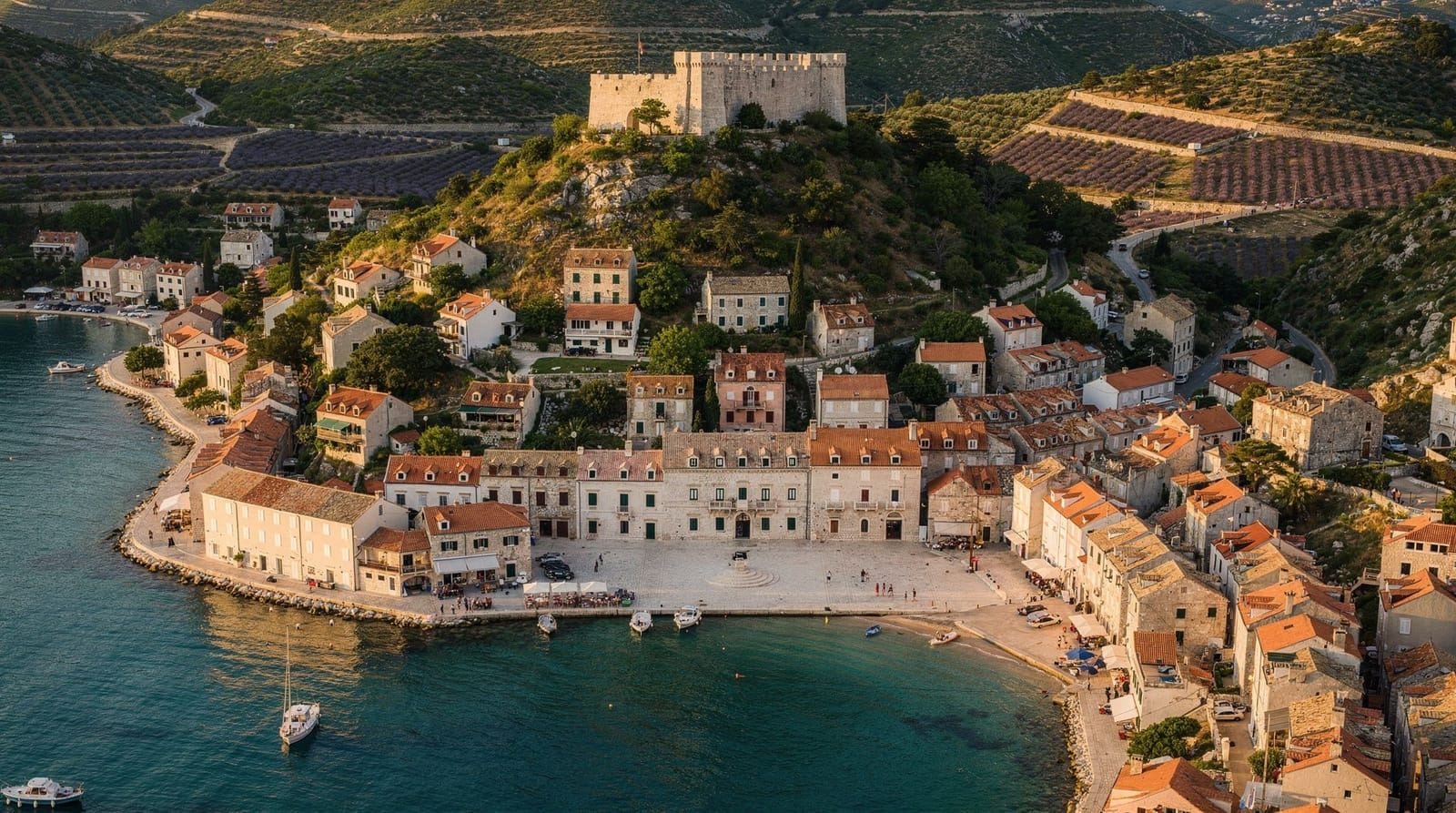
Pučišća warrants its own note. The stonemason tradition here is ancient — the white limestone of Brač has been quarried for over 2,000 years, and the stone of Diocletian’s Palace in Split came from these quarries. So did the stone used in the White House in Washington. A stonemason school still operates in the village today. The village itself, built entirely from its own quarried stone and reflected in a sheltered bay, is one of the most perfectly preserved and least-touristed architectural environments in Dalmatia. Most visitors have never heard of it. Tours that include it are worth choosing for this alone.
See the 4x4 jeep island exploration of BračDuration for jeep tours is typically 8-10 hours including the ferry crossing. Prices are €65-90 per person. Departures are usually from Split ferry port.
The Speedboat Tour: Sea Approach, More Flexibility
Speedboat tours from Split bypass the ferry entirely. You depart from the Split harbour or Bačvice area, transit by private speedboat to the coast of Brač, and have more freedom over where you stop — including sea caves, snorkelling spots, and the approach to Zlatni Rat from the water rather than the road.
See the private speedboat tour to Zlatni Rat and PučišćaThe speedboat format is best for visitors whose primary interest is the sea and the beach. The coastal approach to Zlatni Rat from the water is dramatic — you see the spit from the angle that makes the photographs, before landing on it. Sea cave exploration and snorkelling stops are significantly easier from a speedboat than from a ferry-based tour.
The inland sites of Brač are largely absent from standard speedboat tours. If Blaca hermitage and Pučišća are on your list, you need a jeep tour or a multi-format day that involves both road and sea transit.
Private speedboat tours cost €100-150 per group for a 4-6 person boat, which works out at €20-30 per person for a full group. Semi-private and shared options are €60-90 per person. Duration is typically 6-8 hours.
For the combined approach — arriving by speedboat, exploring parts of the island by jeep or bus, and returning by sea — you need to book independently or find a multi-format operator. Most off-the-shelf tours do one or the other.
The Combined Hvar and Brač Day Tour
Several operators offer a single-day itinerary combining Brač (primarily Zlatni Rat) with Hvar (primarily Hvar town and the old fortifications). This is the most popular day tour format sold from Split for good reason — it is a very attractive proposition on paper.
See the combined Hvar and Brač islands day tripIn practice, the combined day involves real compromises. Time on each island is typically 2-3 hours, which means Zlatni Rat gets a beach visit of 1.5-2 hours (pleasant but not immersive) and Hvar town gets a similarly abbreviated exploration. Neither island gets the time it warrants.
If this is your only visit to Croatia or your only chance to see these islands, the combined day is a legitimate choice — better to see both briefly than neither. But if you have any flexibility, separate days on Hvar and Brač are significantly better for both destinations.
The combined tour format also tends to use larger boats to carry the group between islands, which makes the sea transit less intimate than a private or small-group speedboat. Prices are €60-85 per person.
The Standard Bus/Ferry Island Tour
The most affordable Brač tour format involves the ferry to Supetar and a bus or van tour around the island, typically covering a subset of the inland sites and ending at Zlatni Rat for a beach stop before returning by ferry.
See the full island of Brač tour visiting the best placesThis format is the most accessible for visitors with limited budgets or mobility issues (bus tour components can be conducted with less physical demand than jeep tracks). Prices are €50-65. The tradeoff is that bus tours follow paved roads, which means Blaca hermitage is usually omitted, and group sizes tend to be larger.
For visitors primarily interested in seeing Zlatni Rat plus a couple of the surface highlights of Brač — Supetar, possibly Bol town — the bus/ferry format is adequate and cost-effective. For visitors who want to understand what makes Brač genuinely distinct from other Dalmatian islands, the jeep tour goes further.
How to Choose: The Honest Decision Tree
Start with your primary interest:
If Zlatni Rat beach is the sole goal and you want to spend as much time there as possible, the speedboat tour is the most efficient delivery mechanism. You arrive faster, you have the sea approach, and you have snorkelling options in transit.
If you want to see and understand Brač as a whole — the quarries, the monasteries, the interior landscape — the jeep island tour is the right format and is genuinely the best day out on the island.
If you want to combine islands and have only one day, the combined Hvar and Brač tour achieves this, but go in knowing the limitations. The Hvar vs Brač guide is worth reading first if you are unsure which island deserves more of your time.
If budget is the primary constraint, the ferry-based bus tour is the most affordable structured option, with no significant compromise on the headline attraction.
On timing: whatever format you choose, prioritise beach time either early morning or late afternoon. Mid-July through mid-August at peak hours, Zlatni Rat is packed to the point where the experience is largely about finding space rather than enjoying the place. The best beaches near Split guide has quieter alternatives if Zlatni Rat’s crowds put you off entirely.
Format comparison at a glance
| Format | Price/person | Duration | Best for |
|---|---|---|---|
| Jeep island exploration | €65–90 | 8–10 hrs | Understanding Brač beyond the beach |
| Private speedboat | €20–30 (group boat) | 6–8 hrs | Sea approach, snorkelling, beach-focused |
| Combined Hvar + Brač | €60–85 | Full day | One-day visitors wanting both islands |
| Ferry/bus island tour | €50–65 | 6–8 hrs | Budget travellers, easier mobility |
What Most Visitors Don’t Expect About Brač
The interior of the island is dry, hot, and scrubby in summer. The traditional village architecture is austere grey limestone — beautiful but severe. Brač does not have the floral softness of Hvar or the lush greenery of Mljet.
The wine is good and underrated. Plavac Mali grown on the southern slopes of Brač produces deep, tannic red wines that do not travel well and are rarely seen outside the island. Some jeep and food-focused tours include tastings — if wine interests you, this is worth looking for.
Bol, the town at the base of Zlatni Rat, is a pleasant small resort with a decent old quarter and some good restaurants. It is significantly less developed than Hvar town and has a more relaxed atmosphere. Arriving the night before on the ferry and spending a morning at the beach before the tour groups arrive is, for those with the flexibility, the best possible Zlatni Rat experience.
Getting there independently, and what a self-planned day looks like
For travellers who would rather skip a structured tour entirely, the Jadrolinija ferry to Supetar runs frequently from Split’s main ferry port, and a local bus or rented scooter covers the roughly 40-minute drive from Supetar to Bol and Zlatni Rat. This route gives you full control over timing — arrive on the first ferry, get to the beach before the tour buses, and stay as long as you want rather than working around a group schedule. The trade-off is that you lose the jeep tour’s access to Blaca hermitage and the guided context at Pučišća and Škrip; a self-driven day realistically covers Supetar, Bol, and the beach, without the inland sites.
This self-planned approach suits travellers with a car already rented in Split, or anyone spending several days on the Dalmatian coast who wants one flexible day rather than a fixed-format tour. For those planning a longer coastal stay that includes Brač alongside several other islands, the dalmatian island hopping 7 days itinerary shows how a self-driven Brač day fits into a wider week without a guided tour at all.
Food on Brač: what to actually order
Brač’s food culture leans heavily on lamb — the island’s dry, herb-covered scrubland (the same terrain that makes the interior look austere) produces some of Dalmatia’s best-regarded lamb, traditionally slow-roasted under a peka (a metal dome covered in embers). Several jeep and food-focused tours include a peka-style lunch or a tasting stop featuring local olive oil, which Brač produces in significant quantity from ancient terraced groves visible throughout the interior. If a tour description mentions a “traditional lunch” or “tasting,” it is very likely built around these two staples rather than seafood, which is more associated with the coastal towns than with Brač’s largely agricultural interior.
The stone quarries around Pučišća are still operating commercial quarries, not heritage sites. Some tours drive past active extraction areas. The sight of enormous blocks of white limestone being cut from hillsides that have been quarried since Roman times is striking and unexpected.
How to Book
Book in advance from May through September. July and August departures for popular formats sell out quickly. Jeep tours with Blaca hermitage are often limited to smaller groups and book up fastest.
Private speedboat tours can be arranged with shorter notice in shoulder season (May, early June, September, October) but peak August private bookings should be made at least a week ahead.
Free cancellation policies of 24-48 hours are standard across reputable operators. The ferry to Brač runs year-round regardless of tour bookings — if a tour cancels due to weather, the independent ferry option remains available. For a longer coastal trip that includes Brač alongside other islands, the dalmatian island hopping 7 days itinerary and the broader island hopping Croatia guide are useful planning references. If your day trip is one stop among several from Split, the day trips from Split guide rounds up the alternatives.
Compare alternative tours
| Tour | Duration | Rating | Price | Highlights | |
|---|---|---|---|---|---|
| Split: Day trip to Hvar and Brac islands with Zlatni Rat beach | — | — | — | — | Check |
| Split: Brac island exploration tour by 4x4 jeep | — | — | — | — | Check |
| Brac: Golden Horn and Pucisca private speedboat tour | — | — | — | — | Check |
| Brac: Island tour to visit the best places | — | — | — | — | Check |
| Trogir and Split: Private speedboat tour to Brac | — | — | — | — | Check |
Frequently asked questions about Brač & Zlatni Rat Tours
How long is the ferry from Split to Brač?
The Jadrolinija ferry from Split to Supetar (Brač) takes approximately 50 minutes and runs multiple times daily. It is one of the most frequent ferry routes in Croatia. Some tours use the ferry as part of their itinerary; speedboat tours bypass the ferry entirely.Is Zlatni Rat actually a sandy beach?
Zlatni Rat is a pebble and fine shingle beach, not sand. The stones are smooth and comfortable underfoot in the water but beach shoes are advisable. Its famous triangular spit shifts direction depending on sea currents — this is a real phenomenon, not marketing, and is part of what makes the beach visually distinctive.How crowded does Zlatni Rat get in summer?
Zlatni Rat is one of the most photographed beaches in Croatia and becomes extremely crowded in July and August, particularly between 11am and 4pm when it is at full capacity. Arriving early (before 9am) or late afternoon (after 5pm) makes a significant difference to the experience.What is Pučišća and why is it worth visiting?
Pučišća is a stone quarrying village on the northern coast of Brač, built almost entirely from the white limestone that has been quarried here for centuries. The stone used for Diocletian's Palace in Split came from these quarries, as did stone used for the White House in Washington. There is a stonemason school still operating in the village. It is one of the most architecturally coherent and genuinely beautiful villages in Dalmatia.What is Blaca hermitage and how do you reach it?
Blaca is a 16th-century hermitage and monastery built into a cliff face in a remote canyon on the southern coast of Brač. It was inhabited continuously by monks and their descendants until 1963 and is now a museum. It can only be reached on foot (a 45-minute walk from the nearest road) or by jeep tour on 4x4 tracks. This remoteness is part of its appeal.Is combining Hvar and Brač in one day worthwhile?
Possible but rushed. A combined Hvar and Brač day typically allocates 2-3 hours per island with transit time in between. Zlatni Rat gets 1.5-2 hours maximum, Hvar old town gets similar. If this is your only chance to see both islands it may be worthwhile, but both destinations are better with more time. If you have the flexibility, separate days are strongly preferable.What does the jeep island tour on Brač actually cover?
Jeep or 4x4 tours on Brač take the inland tracks connecting villages, vineyards, olive groves, and remote sites inaccessible by standard roads. Typical stops include Skrip (the oldest village on the island with Illyrian and Roman remains), Blaca hermitage, Pučišća, and Zlatni Rat. This is significantly more of the island than any boat or bus tour covers and is the recommended format for visitors who want to understand Brač beyond the beach.