Best Beaches Near Split — City Swims and Island Escapes
Split: Half-day blue lagoon, Ciovo and Trogir boat tour
What are the best beaches near Split?
Bačvice (10 min walk from old town, very shallow pebble) is the city classic. Bene beach (Marjan peninsula, 30 min by bike) is prettier and less crowded. For the best swimming, take a ferry to Zlatni Rat on Brač (2h round trip) or a catamaran to Hvar (50 min). The Blue Lagoon near Trogir (30 min by boat) is the top day-trip beach from Split.
Split’s Beach Geography — What You’re Working With
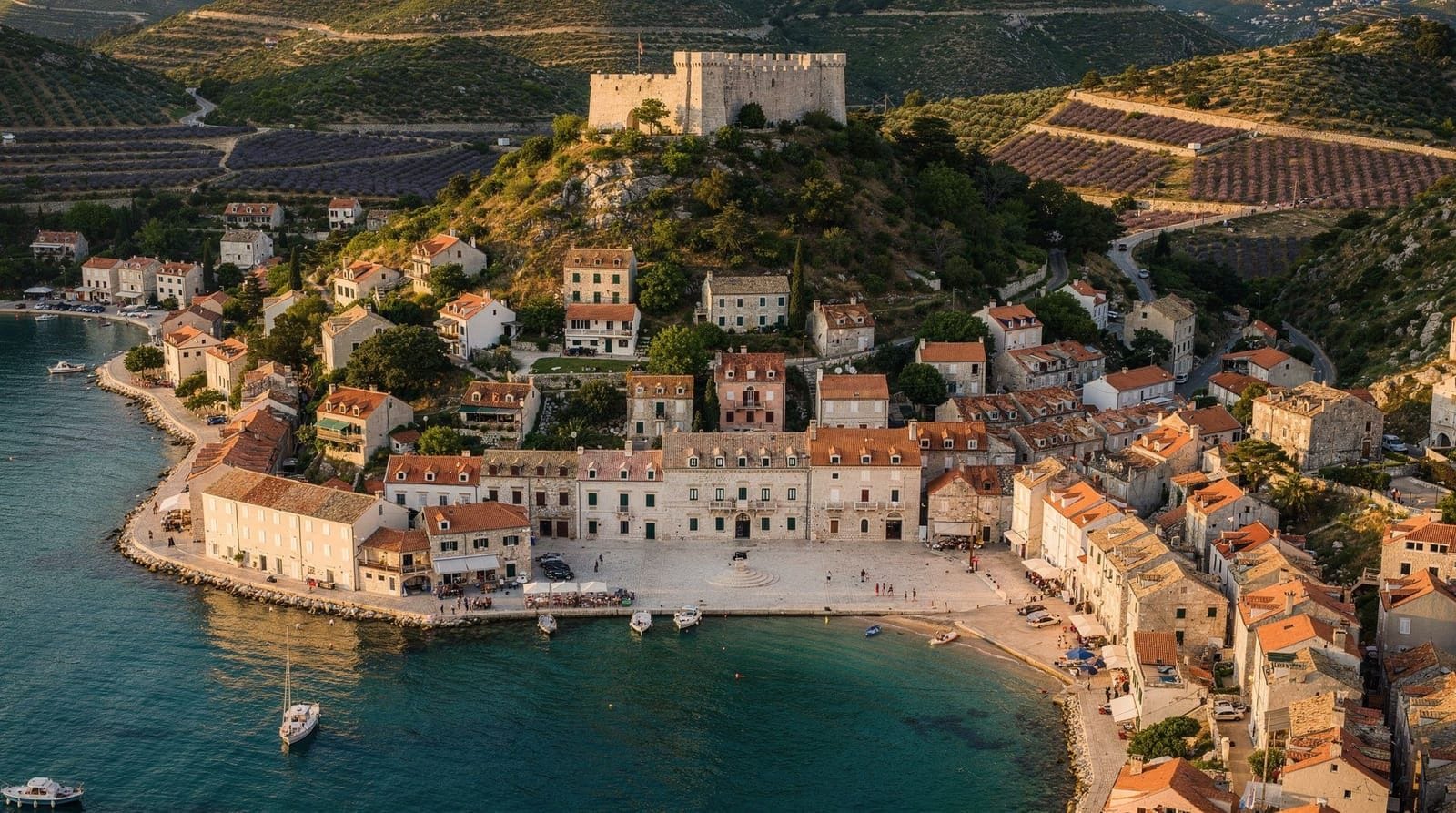
Split is built around Diocletian’s Palace, a fourth-century Roman palace directly on the harbour. The city faces northwest across the Split channel toward the islands of Čiovo (connected by bridge), Šolta, Brač, Hvar and, on a clear day, Vis. This geography is Split’s greatest advantage for beach access: the ferry port is part of the city centre, and some of the finest beaches in Dalmatia are reachable in under two hours.
The city beaches themselves — Bačvice, Firule, Kaštelet, Bene — are decent and very convenient, but they’re city beaches: busy, with urban backdrop, and the water clarity (while good) doesn’t match the island coves. The real beaches near Split are accessed by boat, and Split’s excellent ferry and catamaran connections make this straightforward. For the wider national picture, see the best beaches in Croatia guide.
| Closest beach | Bačvice — 10-min walk, very shallow |
| Least crowded city beach | Bene, Marjan peninsula |
| Best day trip | Zlatni Rat, Brač — around 1h30 each way |
| Cost | City beaches free; boat day trips around €30–60 |
| Best time | Depart Split by 8–9am to beat island crowds |
City Beaches — Walk from Diocletian’s Palace
Bačvice — The Cultural Heart of Split Swimming
Bačvice is Split’s civic beach. The city has a deep emotional attachment to this small cove — it’s where the game of picigin has been played for over a century (a traditional game played standing in ankle-to-knee-deep water, keeping a small ball in the air with dramatically acrobatic moves). On a summer morning, locals of all ages will be in the shallows; by noon the beach is full of tourists.
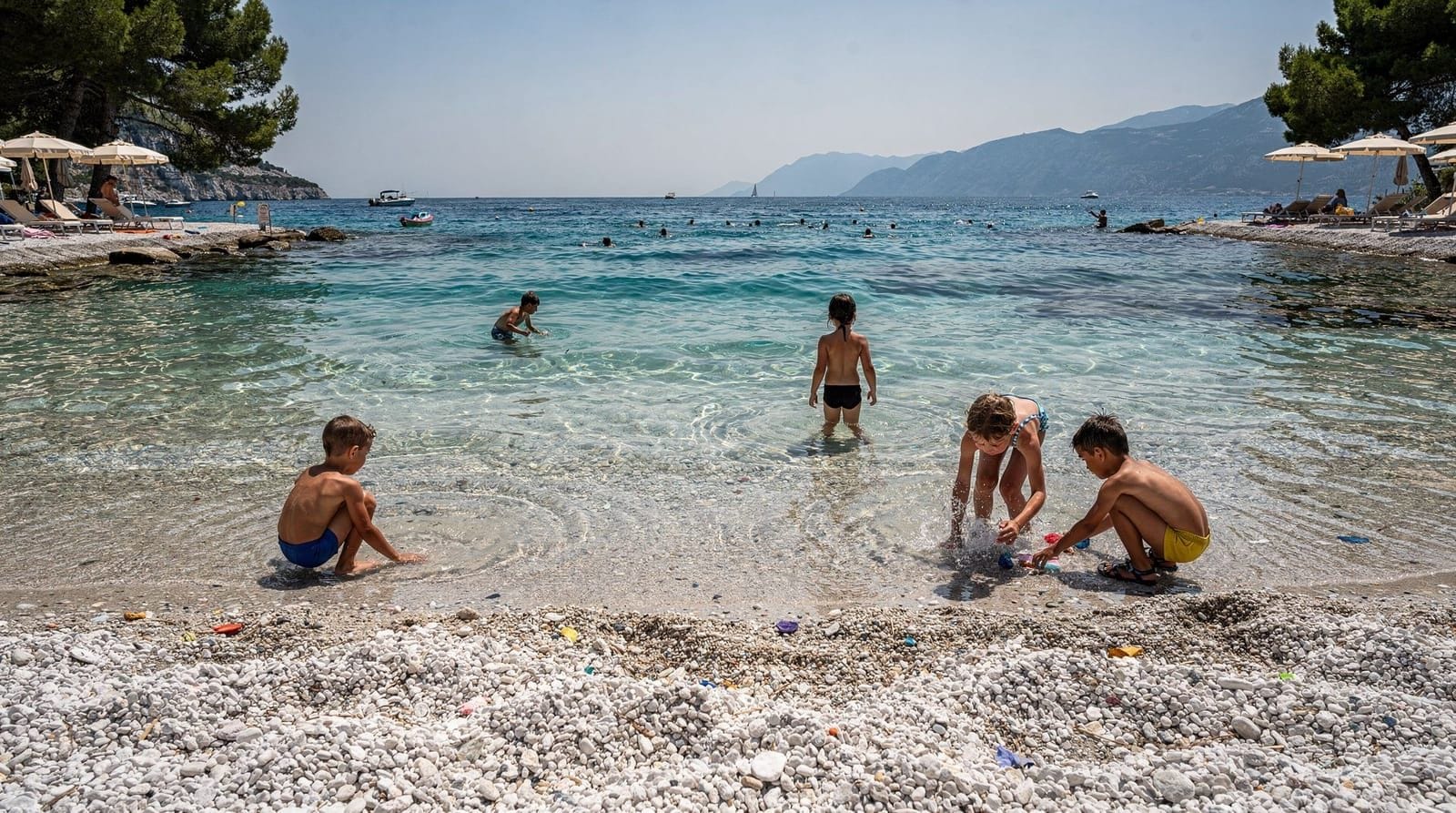
The beach is pebble-shingle with very gradual entry — walking 40–50 metres out puts you only thigh-deep. The water is clear enough (not island-clear, but respectable for a city beach). Facilities are excellent: changing rooms, showers, beach bars, restaurants, and the famous Art Deco bathing pavilion. Open day and night.
Distance: 10 minutes south from Diocletian’s Palace on foot.
Best for: Families with small children (shallow water), afternoon social swim, experiencing Croatian beach culture.
Water shoes: Recommended — pebble shingle and sea urchins possible on rock edges.
Firule — Bačvice’s Quieter Neighbour
Just east of Bačvice, Firule is a smaller cove with similar conditions but fewer tourists. A local favourite and less photographed than Bačvice. Good facilities, slightly clearer water than Bačvice due to the cove’s different orientation.
Distance: 15 minutes south-east from Diocletian’s Palace.
Kaštelet — Organised and Accessible
Kaštelet is a large organised beach west of the city centre, backed by the suburb of Spinut. It has extensive sunbed facilities, several beach bars, volleyball courts, and good access for visitors with mobility issues (paved walkways to the beach edge). Less intimate than Bačvice but useful for a full beach day without island logistics.
Distance: 20 minutes west of the centre by bus or taxi.
Bene — Best City Beach, Least Crowded
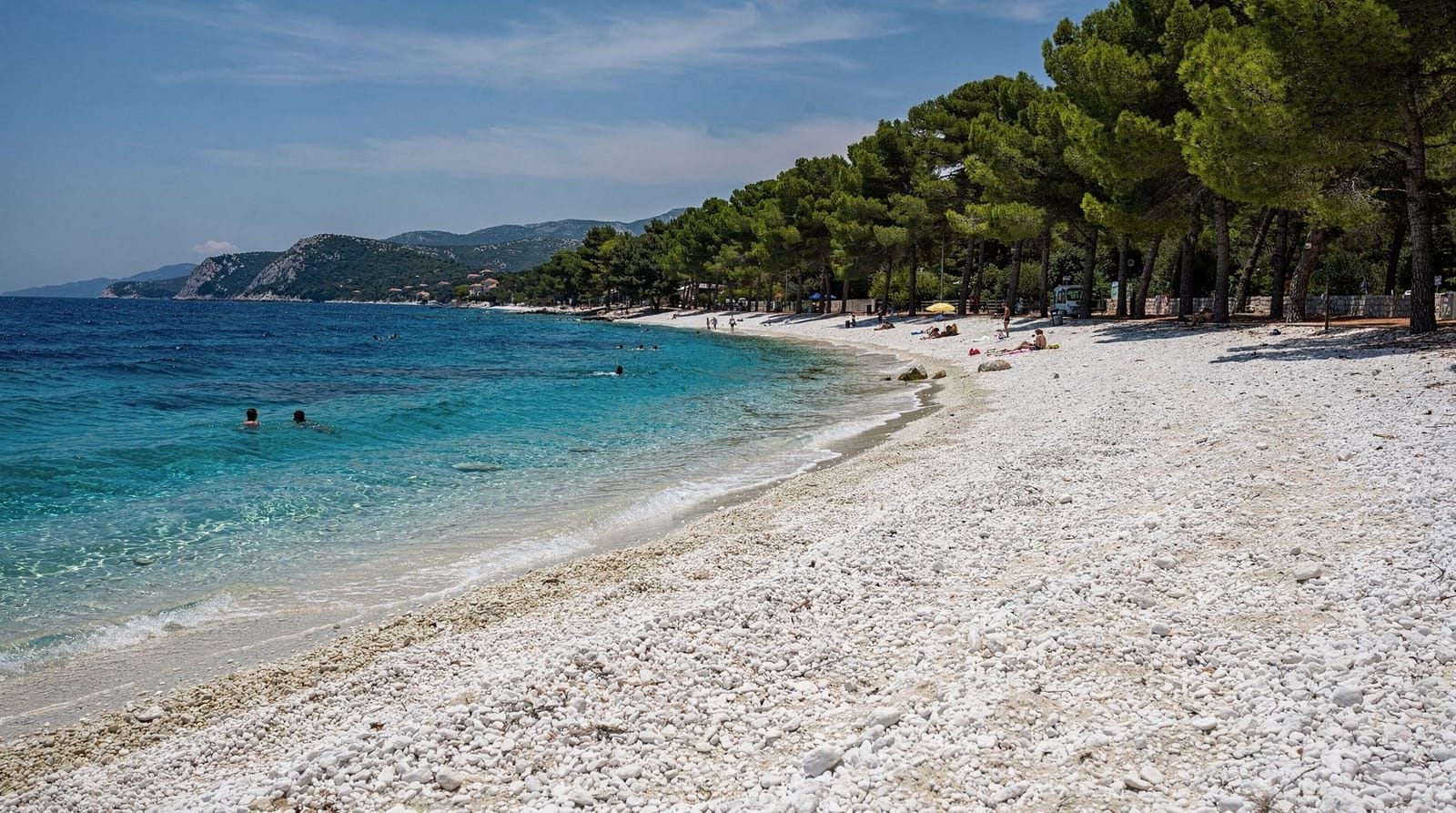
Bene is a pebble beach at the tip of the Marjan peninsula, Split’s forested hill that juts into the sea west of the city. To reach it: walk or cycle through Marjan park (a lovely 30-min walk through pine forest) or take bus 12 from Trg Gaje Bulata. The beach has a rocky platform section and pebble coves. The water is noticeably clearer than Bačvice — the Marjan peninsula juts into the channel and gets less urban runoff.
Bene has a tennis club, beach bar, children’s playground and table tennis. The walk through Marjan is itself worthwhile — Split’s green lung with views back over the city and out to the islands.
Distance: 30 minutes by foot through Marjan park, or bus 12 from centre.
Best for: Those who want clearer water and fewer crowds without leaving the city.
Choosing between the city beaches
The four city beaches are not interchangeable, and a little thought saves a wasted afternoon. If you have small children or simply want the most sociable scene, Bačvice is the obvious pick. If you want a quieter swim and don’t mind a longer walk, Bene rewards the effort. Firule sits between the two in character, while Kaštelet suits anyone who values sunbeds, bars and easy access over atmosphere. Many visitors settle into one beach for the whole stay, but trying two on different days gives a better feel for how Split’s residents actually spend their summer. If you are still deciding where to base yourself, the Split old town guide and the wider Split destination page explain how the neighbourhoods relate to the waterfront.
Blue Lagoon (Plava Laguna) — Best Accessible Day-Trip Beach
The Blue Lagoon is a narrow channel between Krknjaši (Drvenik Veli) island and a smaller islet, about 30 km northwest of Split near Trogir. The channel has an unusual property: clear, shallow water over a white sandy-shell seabed that appears vivid turquoise-blue from above. This is the most popular swimming excursion from Split.
From mid-morning, the lagoon fills with tour boats from Split and Trogir — sometimes dozens at anchor simultaneously in peak season. The experience ranges from sublime (arrive early by speedboat) to crowded (arrive by group boat at noon in August). Despite the crowds in peak season, the water quality and colour are genuinely exceptional.
Getting there: Multiple operators run boat tours from Split’s ferry terminal. Journey time 30–45 min by speedboat, longer by traditional boat. Price €30–60 depending on tour type.
Group tour vs. private speedboat to the Blue Lagoon
A shared group boat is the cheapest way to reach the Blue Lagoon and works fine if you don’t mind a fixed schedule and sharing the anchorage with other tour groups arriving at the same time. A private speedboat costs more but lets you arrive at 8am before the group boats, linger longer, and often combine the lagoon with a quieter stop at Čiovo or a smaller islet the group boats skip. If the Blue Lagoon’s turquoise water is the entire reason for your Split trip, the extra cost of a private or small-group option is usually worth it — arriving even 90 minutes before the first big group boats transforms the experience from crowded to near-empty.
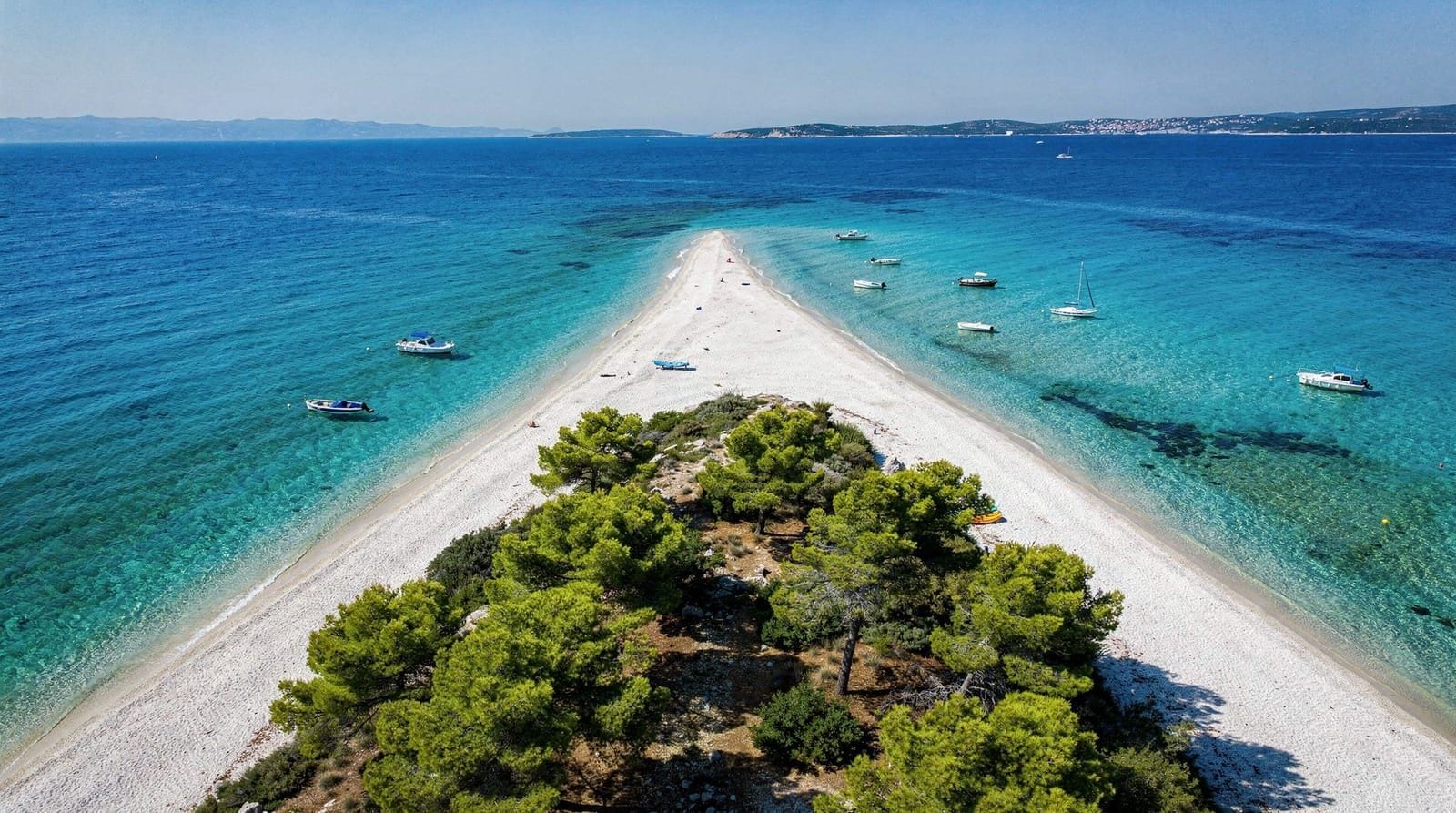
Zlatni Rat, Brač — The Classic Half-Day Trip
The most famous beach in Croatia is completely accessible from Split as a day trip. Ferry from Split harbour to Supetar on Brač (50 min, hourly in season; fares on the Jadrolinija website), then local bus or taxi to Bol (35 min). Walk from Bol town through pine forest to Zlatni Rat (25 min). Total one-way travel: about 1h30–1h45.
In season, a direct catamaran from Split to Bol cuts this to about 1 hour. This is significantly more comfortable.
For the full Zlatni Rat guide including crowd tactics and facilities, see Zlatni Rat Beach — Complete Guide to Bol’s Golden Horn.
Pakleni Islands — Hvar’s Private Coves From Split
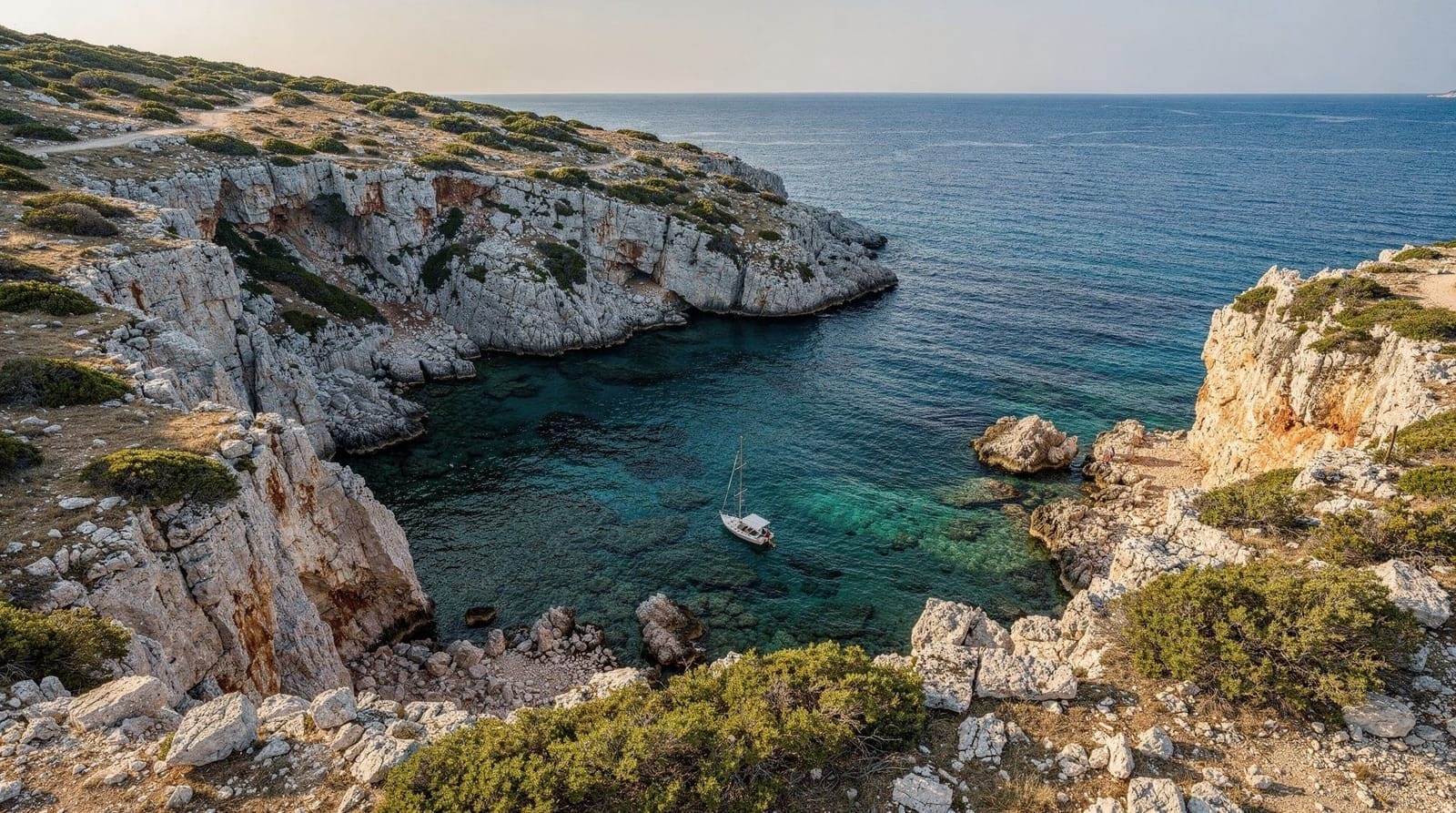
From Split, take the fast catamaran to Hvar Town (50 min, Krilo or Jadrolinija). From Hvar Town, water taxis run every 20–30 minutes to Jerolim and Stipanska on the Pakleni Islands (5–15 min; fares on the operator’s website). The Pakleni coves — pine-backed, fine-pebble, exceptional water — are genuinely superb and feel far more remote than they are.
Total travel time Split–Pakleni Islands: approximately 1h15 each way. A full beach day (depart Split at 8am, return by 7pm) works perfectly.
Vis — For Those Who Want the Best
If you’re based in Split for a week and beach quality matters, take a day (or overnight) to Vis. The fast catamaran takes 2h20. From Vis Town or Komiža, access Stiniva (Europe’s most dramatic cove) by boat or steep hike, or explore quieter bays on the island’s north coast. Vis has genuinely world-class swimming with a fraction of Brač’s visitors.
Vis deserves more than a day trip if possible — it’s quiet, has excellent konoba restaurants, and feels authentically Croatian in a way Hvar Town no longer can at peak season. See our vis island guide for full details.
Trogir Beaches — West of Split
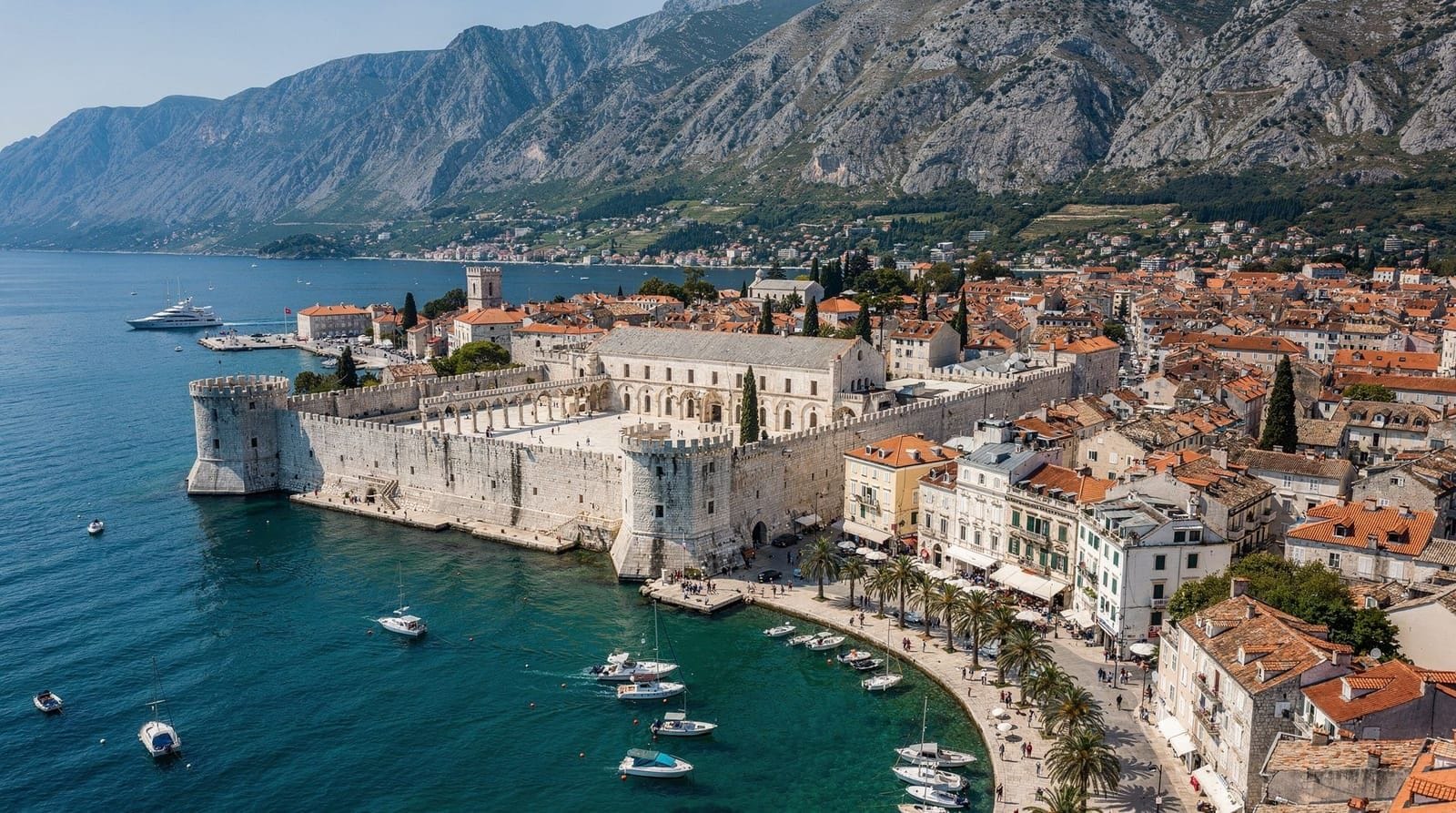
Trogir, 27 km west of Split (direct bus, 35–40 min), has a UNESCO old town worth visiting. The town beaches are rocky and modest, but the islands near Trogir — Čiovo (connected by bridge), Drvenik Veli and Drvenik Mali — have good pebble coves accessible by short boat hop.
The Blue Lagoon is closer to Trogir than to Split, making Trogir a good alternative base for those who want more beach focus and fewer crowds.
Makarska Riviera — Best Road-Trip Beach Strip
The Makarska Riviera — the coastal strip from Brela to Gradac, about 60–80 km south of Split — has some of the best mainland beaches in Croatia. Punta Rata near Brela is outstanding: long fine-pebble beach backed by pine trees with the Biokovo mountains above. Baška Voda, Makarska town beach and Tučepi are all good.
All are reachable by bus from Split (1–1.5h for Brela, 1.5–2h for Makarska). By car, the coastal D8 road is spectacular. If you’re driving Split to Dubrovnik, the Makarska Riviera is the natural lunch-and-swim stop.
Which beach fits your time budget
| Time available | Best choice | Notes |
|---|---|---|
| 2–3 hours | Bačvice or Bene | Walk or short bus, no boat needed |
| Half day | Blue Lagoon or Pakleni Islands | Speedboat tour, back by early afternoon |
| Full day | Zlatni Rat, Brač | Ferry + bus/taxi, doable comfortably in a day |
| Full day, less crowded | Trogir islands (Drvenik Veli/Mali) | Fewer visitors than the main Blue Lagoon anchorage |
| Overnight or 2 days | Vis | Worth the extra travel time for the quietest, best water |
Building a beach week around Split
Split works well as a base for a week of swimming because each day can have a different character. A sensible rhythm is to alternate a boat day with a lazy city day: one morning on the water, the next at Bene or Bačvice with a long lunch and an evening stroll along the waterfront. That pacing keeps you from arriving at the ferry pier tired and rushed, and it leaves room to swap days around when the weather changes. If you would rather see how the islands fit together before committing, the best islands near Split guide compares them, and the island hopping itinerary shows how to link several in one trip. Those without a car can follow the Split base week itinerary, which is built around exactly this kind of ferry-and-bus routine.
Reading the weather before you commit
Sea conditions matter more than the forecast headline. A bright day with a strong wind can make the open channel choppy, which turns a speedboat tour into an uncomfortable ride and a catamaran crossing into a bumpy one. Sheltered city coves like Bačvice stay swimmable when exposed island beaches are not, so keep a flexible plan and decide the evening before. Operators will usually tell you openly if conditions are poor, and rebooking is easier when you have not stacked several tickets into one day. For a broader look at seasonal patterns, see the Croatia sea temperatures guide and the Croatia weather guide.
What to bring
Pack light but deliberately: water shoes for pebble coves, a hat and sun protection with little natural shade on some island beaches, a refillable bottle, a small towel that dries quickly, and a waterproof pouch for your phone and cards. Beaches such as Zlatni Rat and the Pakleni coves involve some walking, so a small daypack is more comfortable than a bulky bag. The packing for the coast article goes through the details, and the best beaches roundup is a good companion if you want to compare Split’s options with the rest of the coast.
Practical Notes for Beach Days From Split
Ferry terminal: The main Jadrolinija ferry port is 10 minutes’ walk from Diocletian’s Palace along the harbour. Catamarans leave from a separate pier. Konfuzija (confusion) is common: check which pier before arriving. The Croatia ferries guide covers booking and terminal logistics in more depth.
Catamaran bookings: In July and August, fast catamarans (especially Split–Hvar) fill up. Book online via Jadrolinija or Krilo a day or two ahead. Car ferries rarely sell out but arrive 30 min early in peak season.
Cash: Small beach bars on islands often prefer cash. Bring €20–30 in smaller notes.
Timing: Leave Split by 8–9am to beat crowds at island beaches. Return in the late afternoon (5–7pm boats) when they’re quieter.
Seasons: June and September offer warm water and manageable crowds. July–August has the warmest sea (24–25°C in Split channel) but maximum crowds on all popular beaches.
Travelling with children: if shallow, calm water matters more than scenery, see the family beaches Croatia guide, which ranks options specifically for younger swimmers. For beaches most day-trippers miss entirely, the hidden coves Croatia guide and the broader day trips from Split guide are worth reading before you plan a fixed itinerary.
Frequently asked questions about Best Beaches Near Split
Is Bačvice beach good for swimming?
It's very good for wading and shallow paddling — the beach slopes so gently that you can walk 50 metres out and still be thigh-deep. This makes it ideal for the traditional game of picigin (played standing in knee-deep water). Serious swimmers prefer Bene on the Marjan peninsula, which has clearer water and is less crowded.How far is the Blue Lagoon from Split?
The Blue Lagoon (Plava Laguna) near Drvenik Island and Trogir is about 30 minutes by speedboat from Split harbour, or 45–60 min by regular tour boat. It's a popular swimming spot — a protected channel between islets with vivid turquoise water over white seabed. Extremely crowded in July–August.Can I reach Zlatni Rat beach (Brač) from Split in a day?
Yes easily. Ferry Split–Supetar (50 min) then bus or taxi to Bol (35 min). Total travel time each way around 1h30–1h45. This is the standard Zlatni Rat day trip from Split and absolutely doable in a day. Or take the direct catamaran to Bol in season (1h each way). Return by 7pm to be comfortable.What beach is closest to Split city centre?
Bačvice is the closest — a 10-minute walk south from Diocletian's Palace. It's a sheltered cove with pebble-shingle and very shallow water. Firule beach is the next cove east (15 min walk). Both are city beaches with the corresponding crowds and facilities.Are there any quieter beaches near Split for locals?
Bene on the Marjan peninsula is quieter than Bačvice and has clearer water (30 min walk or short bike ride through Marjan park). Kaštelet is a large organised pebble beach west of the city centre. The Stobreč and Podstrana areas south of Split have several local beaches.Can I reach Hvar beach in a day from Split?
Easily. The fast catamaran from Split to Hvar Town takes 50 minutes. From Hvar Town, water taxis run to the Pakleni Islands in 5–15 minutes. A day trip to Hvar for beach and town is one of the most popular excursions from Split. See the Hvar destination guide for a full breakdown.
Top experiences
Bookable activities with verified prices and instant confirmation on GetYourGuide.
Top experiences
Best-rated activities across GetYourGuide and Viator.

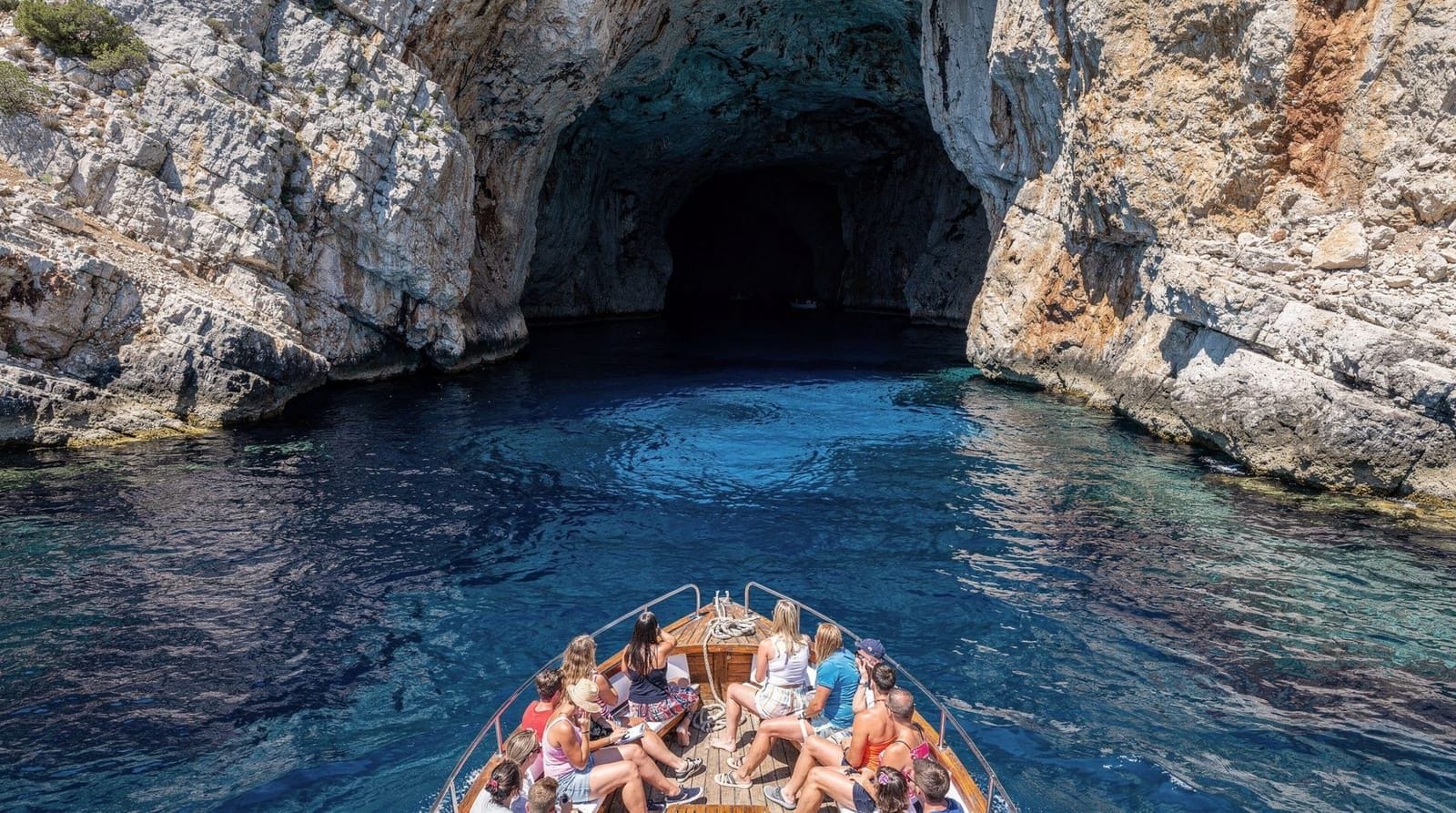
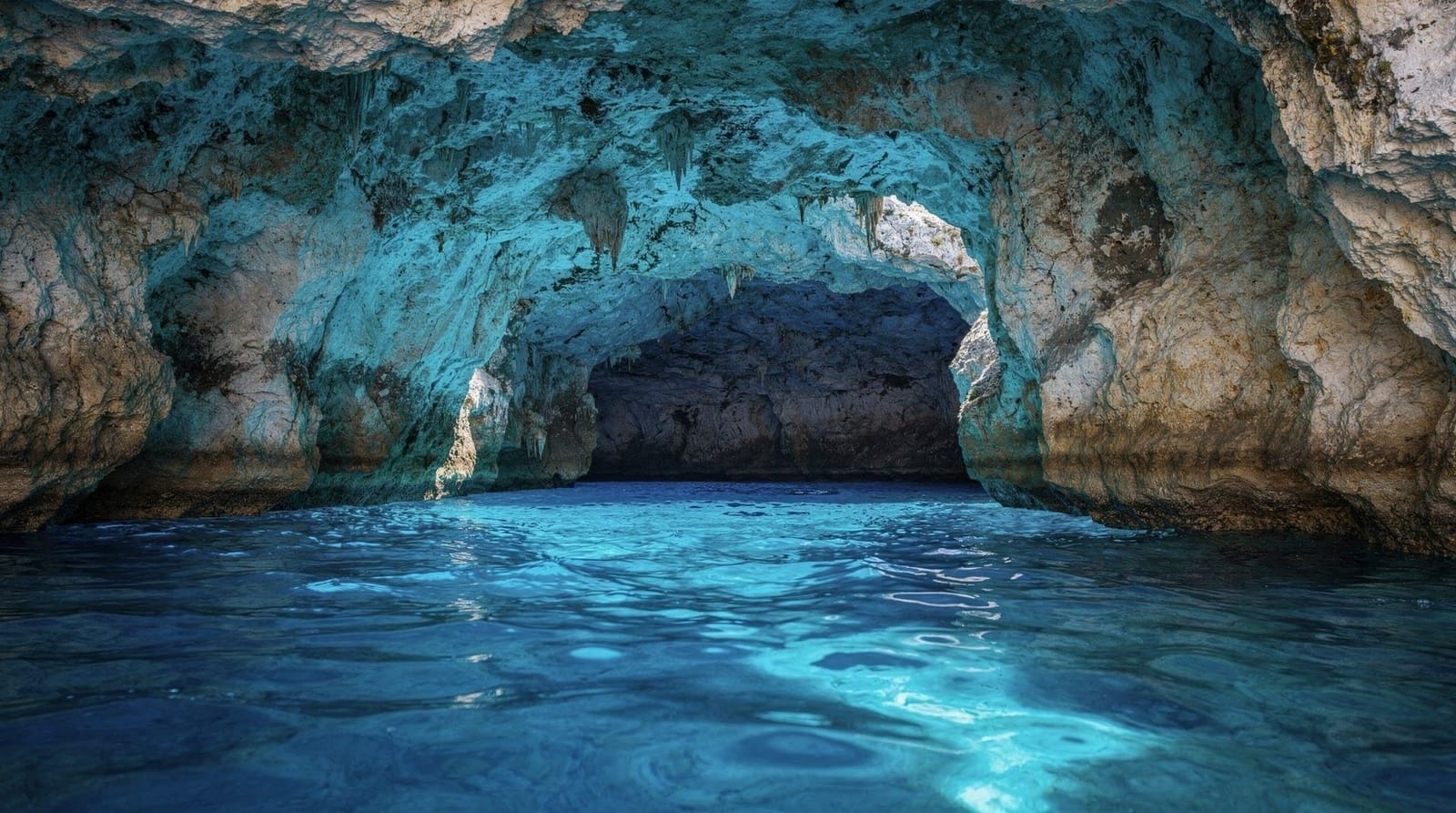
Blue cave, Mamma Mia and Hvar, 5 islands speedboat tour
- Viator

Blue Cave and Hvar Tour - 5 Islands Tour from Split and Trogir
- Viator

Blue cave, Mama Mia and Hvar, 5 Island Speedboat Tour from Trogir
- Viator

Hvar, Brač & Pakleni islands cruise with lunch & drinks from Split & Trogir
- Viator

Blue Cave & Vis Island speedboat tour from Hvar
- Viator

KAYAK ADVENTURE! Wild Coast Exploring - Snorkeling & Cliff Jumps
- Viator