Dalmatian Island Hopping: 7-Day Ferry Itinerary
Split: Blue cave and 5 islands tour
Island hopping in Dalmatia: the honest version
Island hopping in Croatia sounds romantic and it genuinely is — but only if you understand the ferry system before you start. Croatia’s ferry network is extensive but not seamless: schedules are seasonal, direct connections between islands are limited (many routes go via Split), and car ferries require advance booking in summer. This itinerary uses passenger-only catamarans wherever possible and avoids the common mistake of trying to island-hop too quickly.
The route: Split → Hvar → Pakleni Islands → Vis → Korčula → (optional: Mljet) → back to Split or continuing to Dubrovnik. Seven days, no car needed.
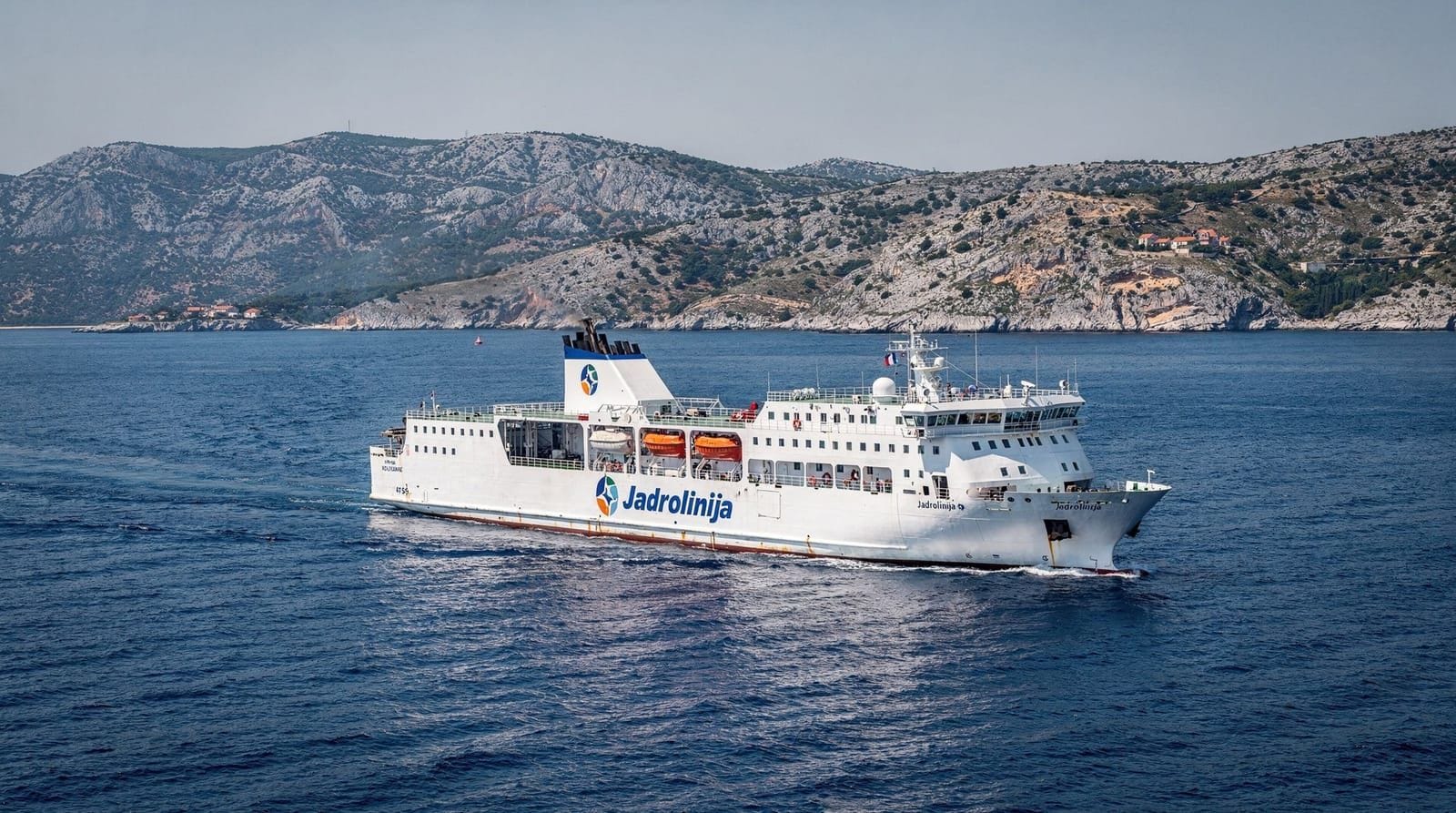
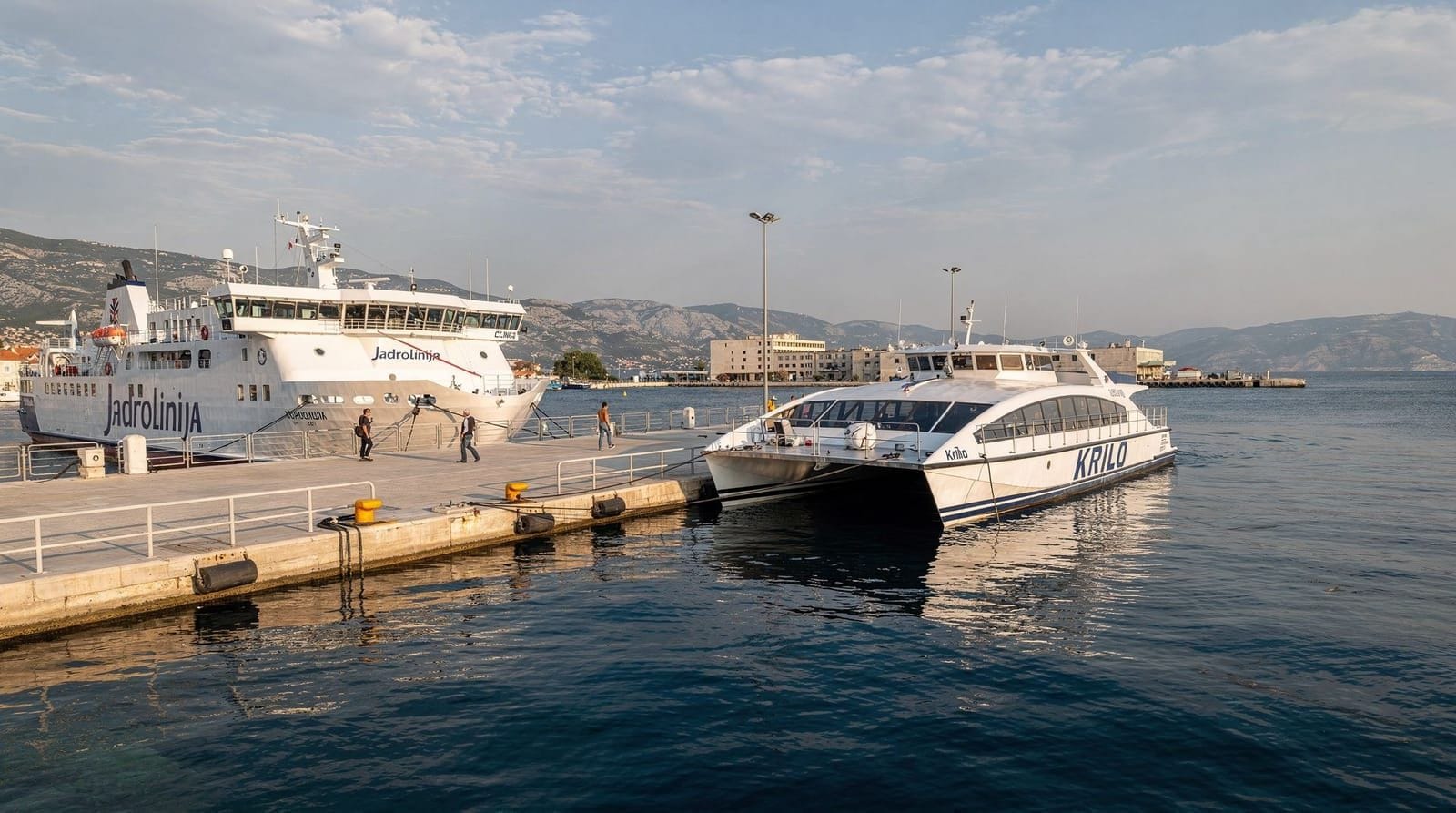
Ferry basics: Most inter-island catamarans are passenger-only (no cars). Jadrolinija is the state operator with the broadest network; Krilo and TP-Line run faster passenger catamarans on key routes. In peak season (July–August), book catamaran tickets online at least one week in advance for the most popular routes. Off-season, you can often buy at the dock. See Jadrolinija vs Krilo for how the two compare on price, speed and booking.
| Route | Split → Hvar → Vis → Korčula → Brač → Split |
| Car needed | No, fully car-free |
| Cost | around €700–1,050 per person, flights extra |
| Best time | May–June or September |
| Book ahead | Split–Hvar catamaran, Vis accommodation, Blue Cave excursion |
This route trades breadth for depth compared with our 7-day Dalmatia highlights itinerary, which swaps Vis for Dubrovnik. If open-water time matters more than covering four islands, see the sailing week from Split itinerary for a skippered alternative.
Day 1: Arrive Split — ferry briefing
Fly or arrive in Split and check in for one night. Use this arrival afternoon to sort logistics: check ferry and catamaran timetables for your departure date, book the Split→Hvar catamaran if you haven’t already, and explore the Diocletian’s Palace area — you will be back at the end, so this is just a taster.
Dinner inside the palace walls; early night before a busy week.
Key ferry resources: Jadrolinija (jadrolinija.hr) and Krilo (krilo.hr) both have English-language booking. Ferry schedules change between seasons; always check the current timetable.
Day 2: Split to Hvar — settle into the island
The morning catamaran from Split to Hvar Town takes approximately 1 hour (Krilo or Jadrolinija). Book this in advance in summer.
Hvar is Croatia’s most famous island and deserves two nights. The town itself — the main square, the Španijola Fortress above the town, the harbour lined with luxury yachts alongside fishing boats — is genuinely attractive despite its reputation for party tourism. The fortress view over the Pakleni Islands is worth the 20-minute climb on its own.
Afternoon: explore the old town on foot. The Arsenal (where Hvar’s famous wine cellar is located) and the theatre above it (one of the oldest public theatres in Europe, 1612) are worth a look inside.
Where to sleep (Hvar, 2 nights): For mid-range: Pharos Hvar hotel or guesthouses in the lanes above the square. For splurge: Hotel Riva. Book well ahead for July–August — Hvar is the most expensive island destination in Croatia.
Day 3: Pakleni Islands day — the real Hvar
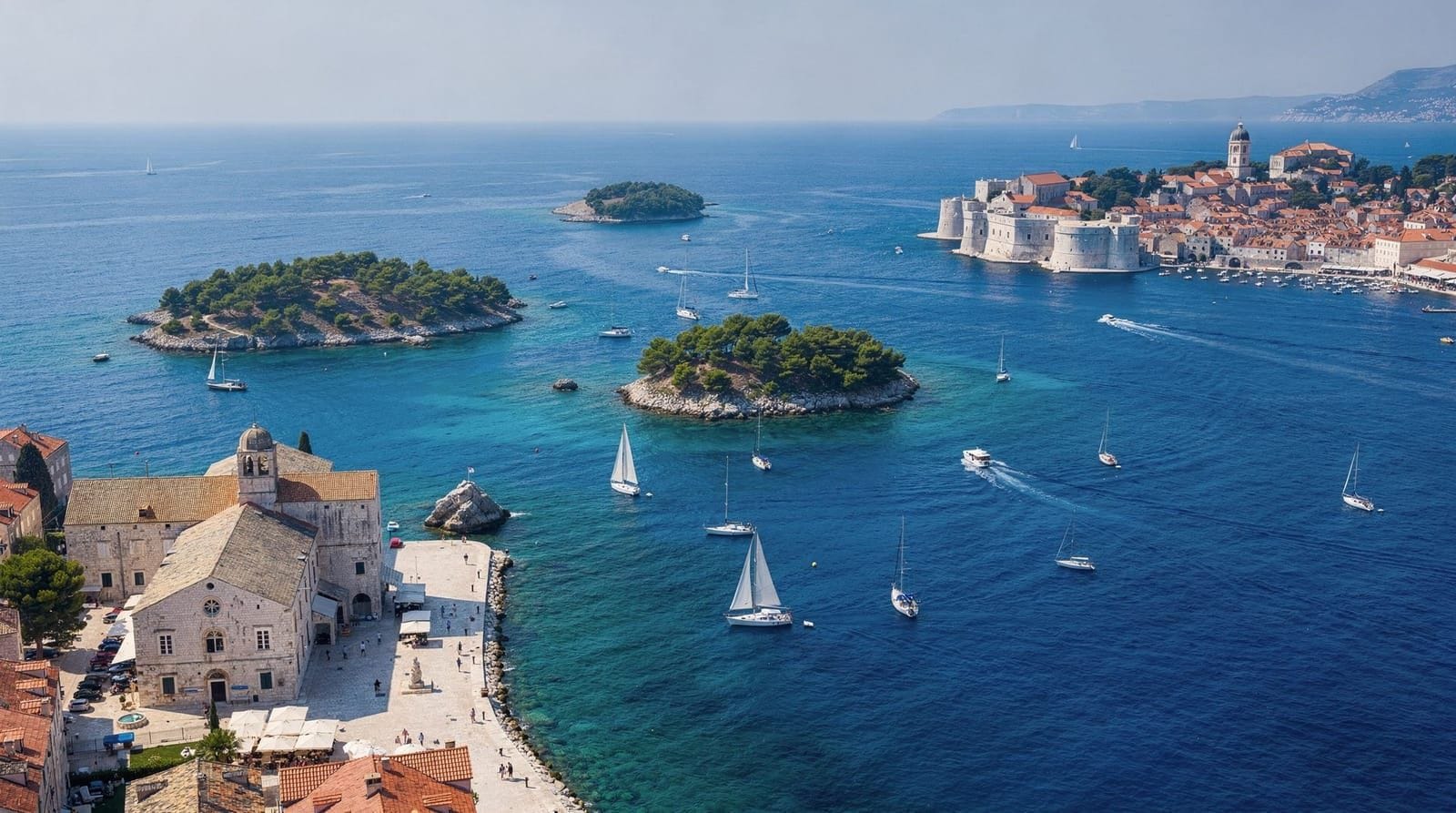
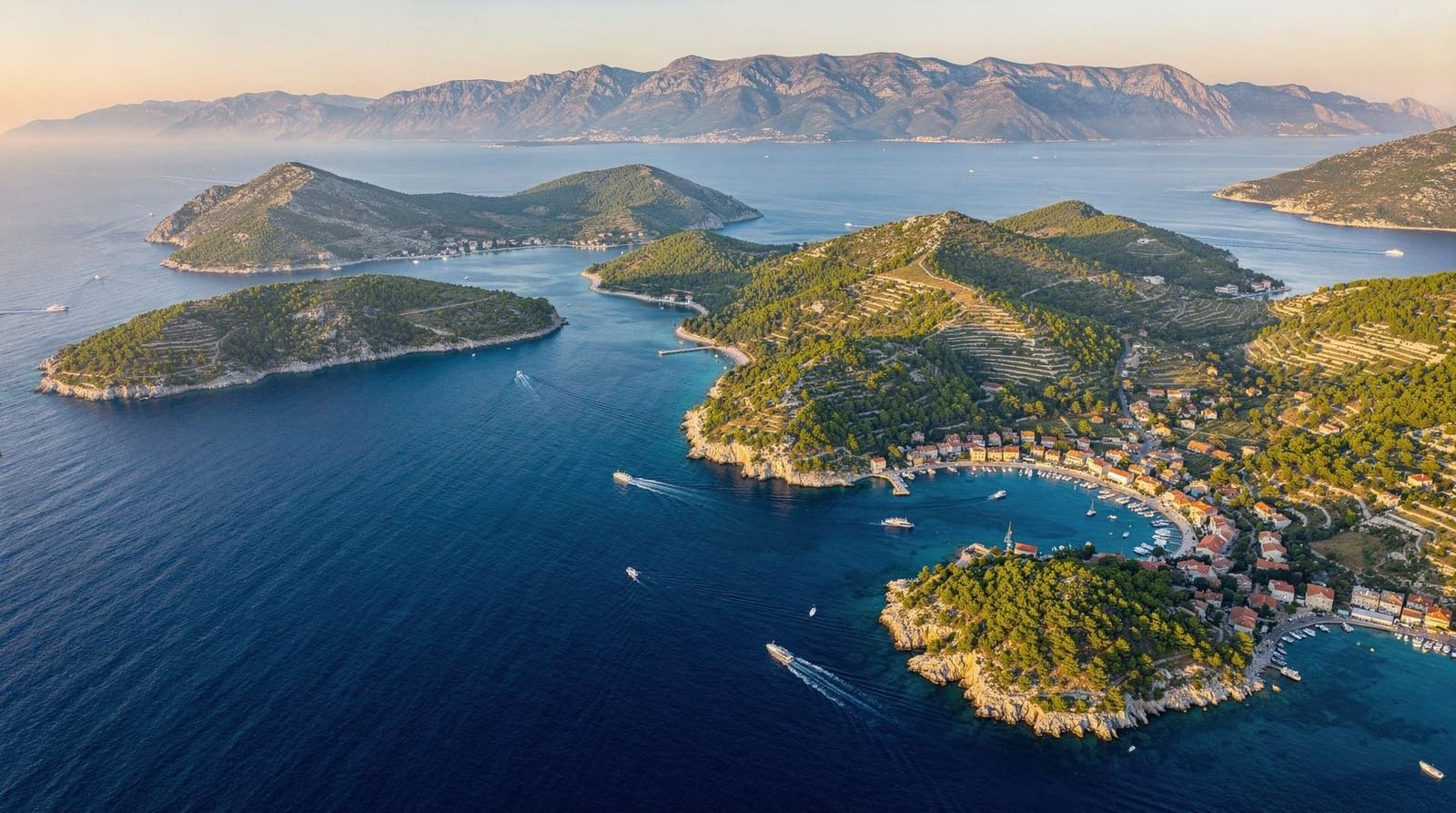
The Pakleni Islands (Pakleni Otoci) are what most visitors come to Hvar for and most manage to do badly. They are a scattering of pine-covered islets 10 minutes by water taxi from Hvar Town harbour. The main stops are Palmižana, Marinkovac (Stipanska bay) and Sveti Klement.
Water taxis depart every 15–20 minutes from the main dock in summer (€5–10 return per island). Palmižana has the most famous beach restaurants — Meneghello is the classic choice, with excellent fish and a price tag to match. Stipanska is quieter and has good swimming.
Take a private or small-group boat tour to see more of the islands’ coastline, caves and lesser-visited bays. The south coast of Hvar island is dramatic and far less visited than the town side.
Return to Hvar Town for the night.
Day 4: Hvar to Vis — the remote island
Vis is the furthest from the mainland of Croatia’s major inhabited islands, and this remoteness is its greatest asset. Military restricted until 1989, it developed almost no mass tourism infrastructure and retains an authenticity that Hvar lost 20 years ago. The fishing town of Vis Town (Issa) and the village of Komiža on the opposite coast are the two centres.
The catamaran from Hvar to Vis takes approximately 1 hour (Jadrolinija route via Hvar; check current schedules — not all routes connect directly; some require going back to Split). Alternatively, a direct catamaran runs from Split to Vis in about 2.5 hours.
Vis Town is built around a wide harbour with a Venetian tower and a waterfront of old stone houses. The Archaeological Museum, the Roman baths and the beautiful cemetery are all within a short walk. Komiža (20 minutes by bus from Vis Town) is the base for Blue Cave excursions.
The Blue Cave (Modra Špilja) is on the uninhabited island of Biševo, 5 km from Komiža. Sunlight enters through a submerged opening around midday and turns the cave interior an electric blue. Excursions run from Komiža and Hvar; book ahead in summer.
Where to sleep (Vis, 1 night): Small hotels and family guesthouses in Vis Town or Komiža. Both are good; Komiža has a slightly livelier evening scene.
Day 5: Vis to Korčula
From Vis, the catamaran to Korčula runs via Split on most days (2.5 hours to Split, then 3 hours Split to Korčula) — or check for any direct connections via Hvar, which are occasionally available on certain routes.
Arriving in Korčula Town by early afternoon gives you the rest of the day and the following morning. Korčula’s old town is a UNESCO-listed medieval centre on a narrow peninsula, and one of the most intact in Dalmatia. The Cathedral of St. Mark is the architectural centrepiece; the alleged house of Marco Polo (the claim is disputed but entertaining) is a pleasant stop.
Korčula produces two excellent white wines: Pošip and the rarer Grk. Every restaurant in the old town serves them; they are excellent with local seafood.
Where to sleep (Korčula, 1 night): Korčula de la Ville (mid-range), guesthouses in the old town, or apartments on the waterfront.
Day 6: Korčula to Brač — Zlatni Rat
From Korčula, the route north toward Split passes Brač. The Jadrolinija catamaran from Korčula to Bol (on Brač) is not a single direct service on most days; the practical option is Korčula to Split (~3 hours) and then Split to Bol by catamaran (~1 hour).
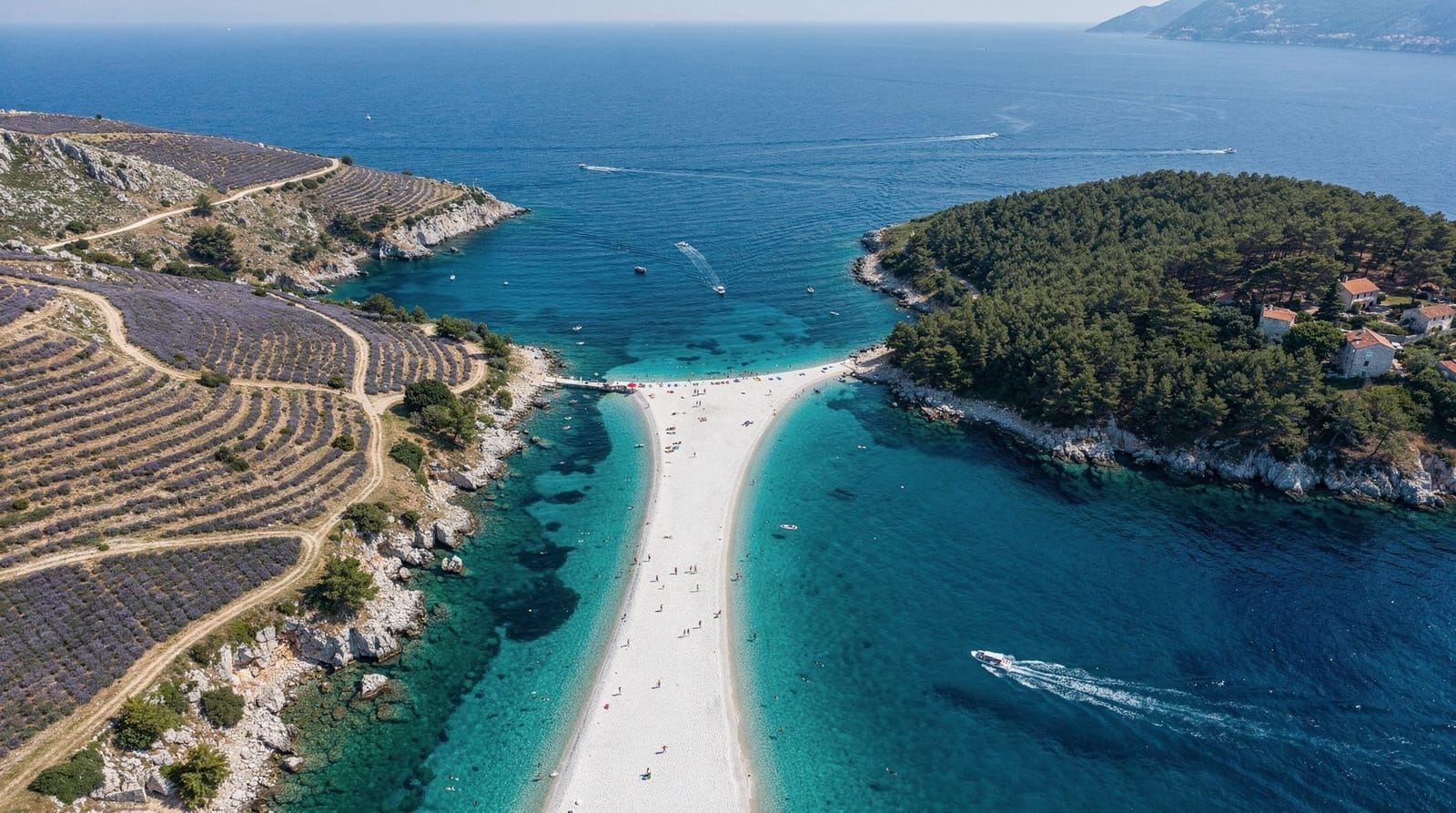
Bol is the home of Zlatni Rat — Croatia’s most photographed beach, a distinctive shingle spit that extends into the sea and changes shape with the currents. It is beautiful and busy in summer, but the swimming is excellent and the windsurfing is world-class (consistent afternoon maestral wind).
Beyond Zlatni Rat, the beaches at Potočine east of Bol and the rocky coves along the island’s south coast are quieter. Brač interior: the village of Škrip (archaeological museum) and the stone-carving tradition of Pučišća are cultural highlights.
Where to sleep (Bol, 1 night): Hotel Elaphusa (good beach access, mid-range), apartments in Bol village.
Day 7: Brač to Split — final morning
The morning catamaran from Bol back to Split takes about 1 hour. Arrive in Split by 10:00–11:00, leave bags at the left-luggage facility near the ferry terminal, and spend the final morning inside Diocletian’s Palace. The old town is compact enough to see its highlights in 2–3 hours.
Afternoon flight from Split Airport (SPU), 25 km west of the city (30–40 minutes by bus or taxi).
Day-by-day summary
| Day | Base | Highlight |
|---|---|---|
| 1 | Split | Arrival, ferry logistics, palace taster |
| 2 | Hvar | Catamaran, town and fortress |
| 3 | Hvar | Pakleni Islands boat day |
| 4 | Vis | Catamaran to the remote island, Blue Cave option |
| 5 | Korčula | Catamaran via Split, old town and wine |
| 6 | Brač | Catamaran via Split, Zlatni Rat beach |
| 7 | Split | Catamaran back, final morning, depart |
Why Vis instead of the more obvious islands
Most first-time Croatia itineraries skip Vis entirely in favour of the easier, better-connected islands, which is exactly why it earns a full day here. Closed to foreign visitors as a military zone until 1989, Vis never developed the mass-tourism infrastructure of Hvar or Brač, and it shows: fewer boats, quieter harbours, and a food scene built for locals rather than day-trippers. If your time is genuinely tight, Vis is the day to cut first — see best Croatian islands for how it compares to the alternatives — but doing so trades away the most distinctive stop on this route.
Extending to Mljet or Dubrovnik
As the final section below notes, Mljet fits neatly between Korčula and Dubrovnik for travellers with an extra day, and Dubrovnik itself is a natural extension if you would rather end the trip there than loop back to Split. In that case, treat this itinerary as days 1–6 and splice in the Korčula-to-Dubrovnik catamaran leg from our 7-day itinerary instead of returning north to Brač.
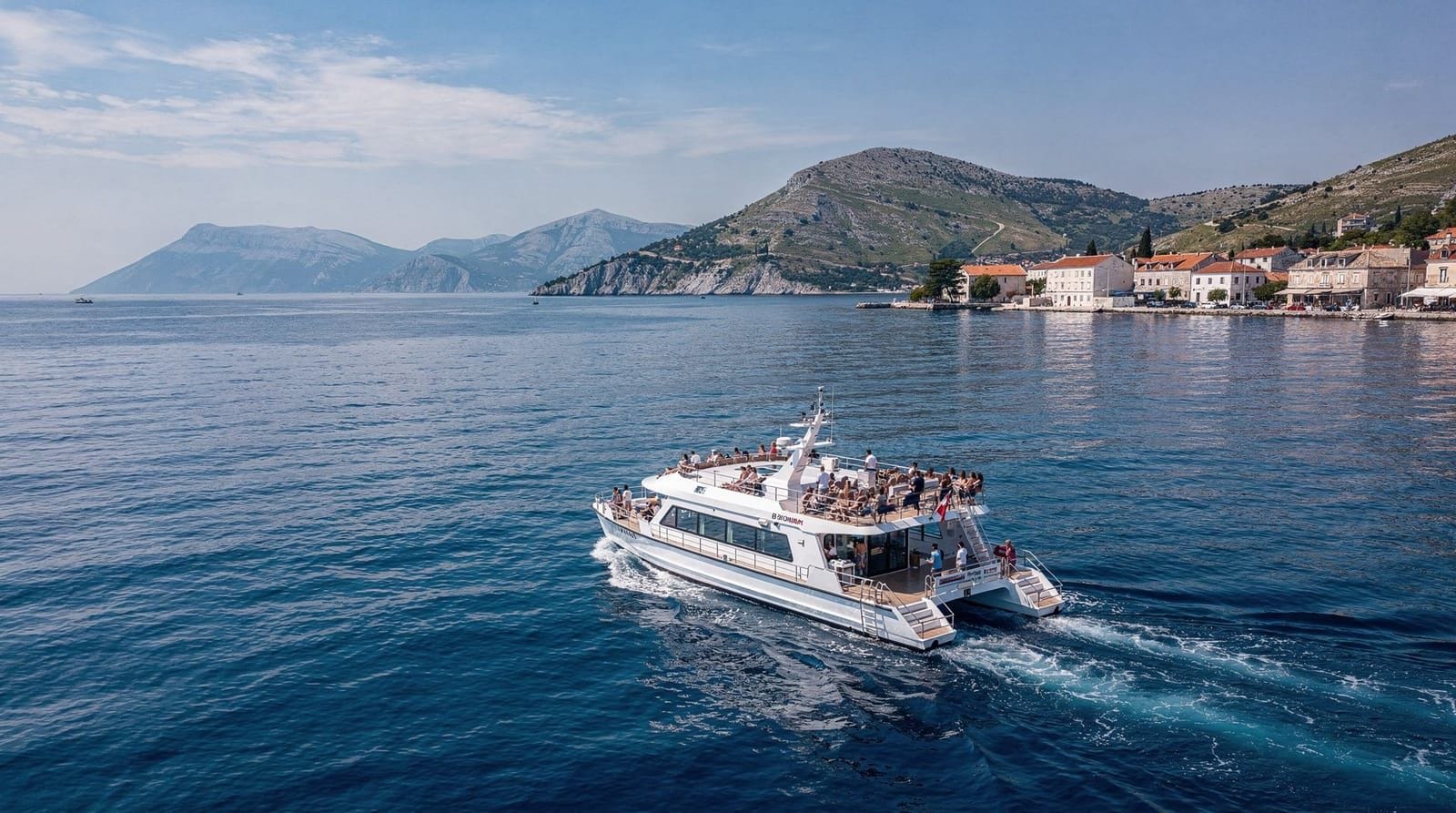
Split five-islands day tour with Blue Cave and VisFor travellers who would rather see the Blue Cave and Vis’s coastline as a single organised day trip from Split rather than overnighting on Vis, this full-day boat tour covers the same highlights compressed into one long day — a reasonable trade if accommodation on Vis is fully booked.
What to pack for a week of catamarans
Deck seating on Croatian catamarans is often outdoors or semi-covered — bring a light jacket even in summer, since sea breeze on a moving boat is noticeably cooler than on land. Motion sickness tablets are worth packing if you are prone to it; some of the longer legs (Vis–Korčula via Split) run 5+ hours door to door. A dry bag or ziplock for phones and documents is sensible on the water-taxi hops to the Pakleni Islands.
FAQ
Do I need to book every ferry and catamaran leg in advance? For July–August, yes for the popular routes — Split–Hvar especially sells out. For the less-travelled Vis and Korčula legs, and for any month outside peak summer, buying at the dock the same day is usually fine, but check current ferry schedules before relying on that.
Is Vis worth the extra transfer time compared with a more straightforward Hvar-to-Korčula route? For most travellers, yes — Vis is the most distinctly different island on this itinerary, with a genuinely local, uncrowded feel that Hvar and Korčula have partly lost. If time is very tight, though, it is the easiest day to cut without damaging the rest of the route.
Practical information for this island-hopping itinerary
Ferry costs: Approximate total for all inter-island catamaran legs: €60–90 per person.
What to book ahead: Split–Hvar catamaran (summer); Blue Cave excursion from Komiža or Hvar (summer); accommodation on Hvar (months ahead for peak season); Vis accommodation (limited supply, book 4–6 weeks ahead).
What you do not need: A car (this entire itinerary is car-free).
Timing: May–June and September are the sweet spots. July–August is possible but Hvar in particular becomes very crowded and expensive. Vis is more manageable year-round due to lower overall tourist numbers.
The missing island option: Mljet is a beautiful detour between Korčula and Dubrovnik — a heavily forested island with a national park covering its western end (two saltwater lakes, a small island with a Benedictine monastery). If you have a flexible 8th day, Mljet is the perfect addition before ending in Dubrovnik.
Top experiences
Bookable activities with verified prices and instant confirmation on GetYourGuide.