Hvar vs Brač vs Korčula — Which Dalmatian Island Is Right for You?
Split: Day trip to Hvar and Brac islands with Zlatni Rat beach
Hvar, Brač or Korčula — which Dalmatian island is best?
Hvar wins for nightlife, scenery and sailing. Brač wins for beach day trips and families on a budget. Korčula wins for culture, wine and a calmer pace. All three are reachable from Split by Jadrolinija ferry. The best choice depends entirely on what kind of holiday you want.
Three Islands, Three Personalities
Hvar, Brač and Korčula are the three most visited islands in central Dalmatia and they make an interesting study in contrasts. They are close enough that you could technically see all three in a long weekend, but that would be missing the point. Each has a distinct character, a distinct cost level and a distinct type of traveller it suits best.
This guide compares them honestly — crowds, beaches, food, nightlife, cost and logistics — so you can make a confident decision rather than defaulting to whichever name you have heard most often.
| Best for nightlife & sailing | Hvar |
| Best for budget & families | Brač |
| Best for culture & wine | Korčula |
| Fastest from Split | Brač (50 min) |
| Slowest from Split | Korčula (~3 h) |
| Cheapest base | Brač |
For a broader shortlist beyond these three, see the best Croatian islands guide and the best islands near Split.
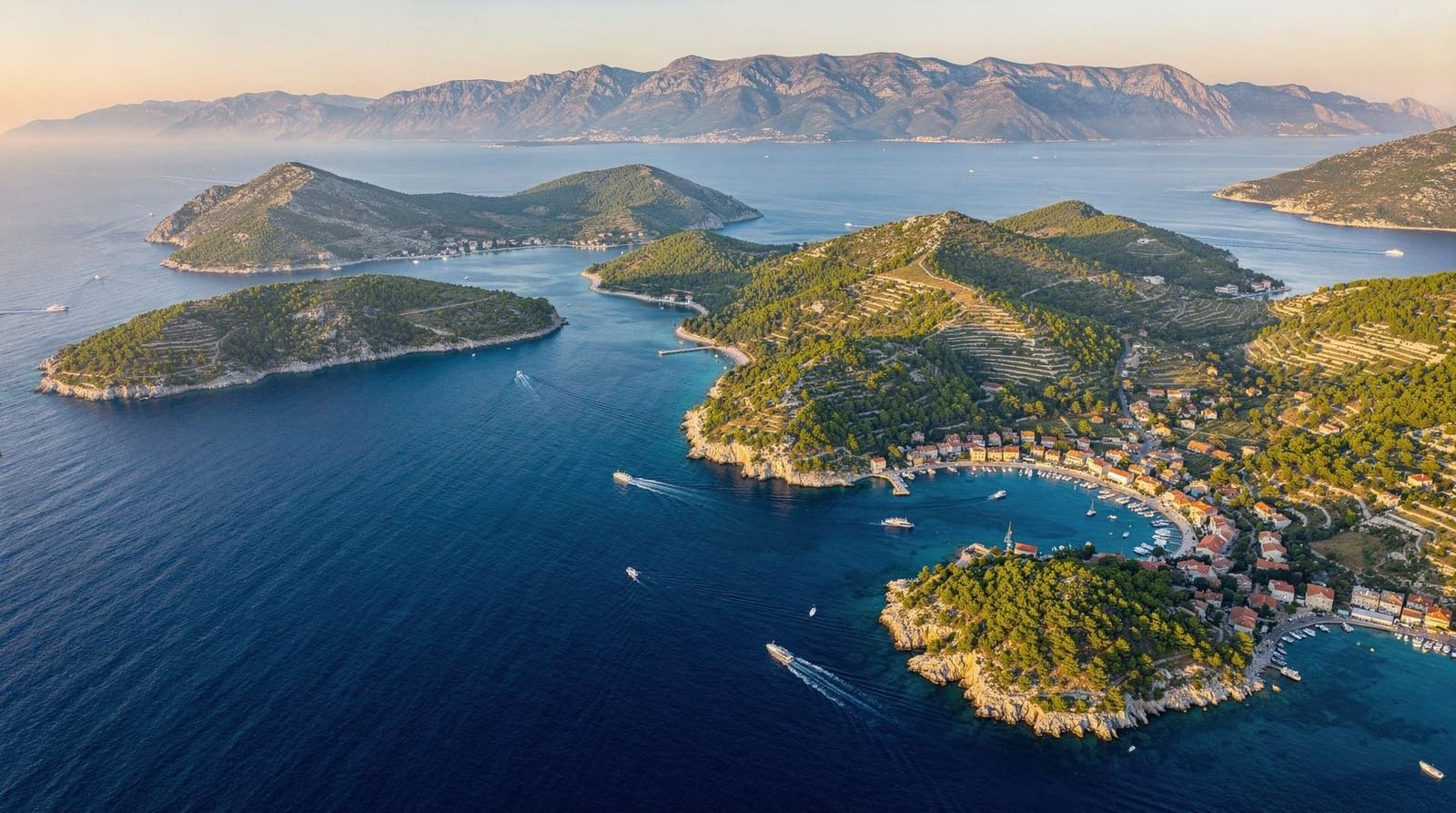
Hvar — The Celebrity Island
Hvar is Croatia’s most famous island. This is both its greatest asset and its biggest liability.
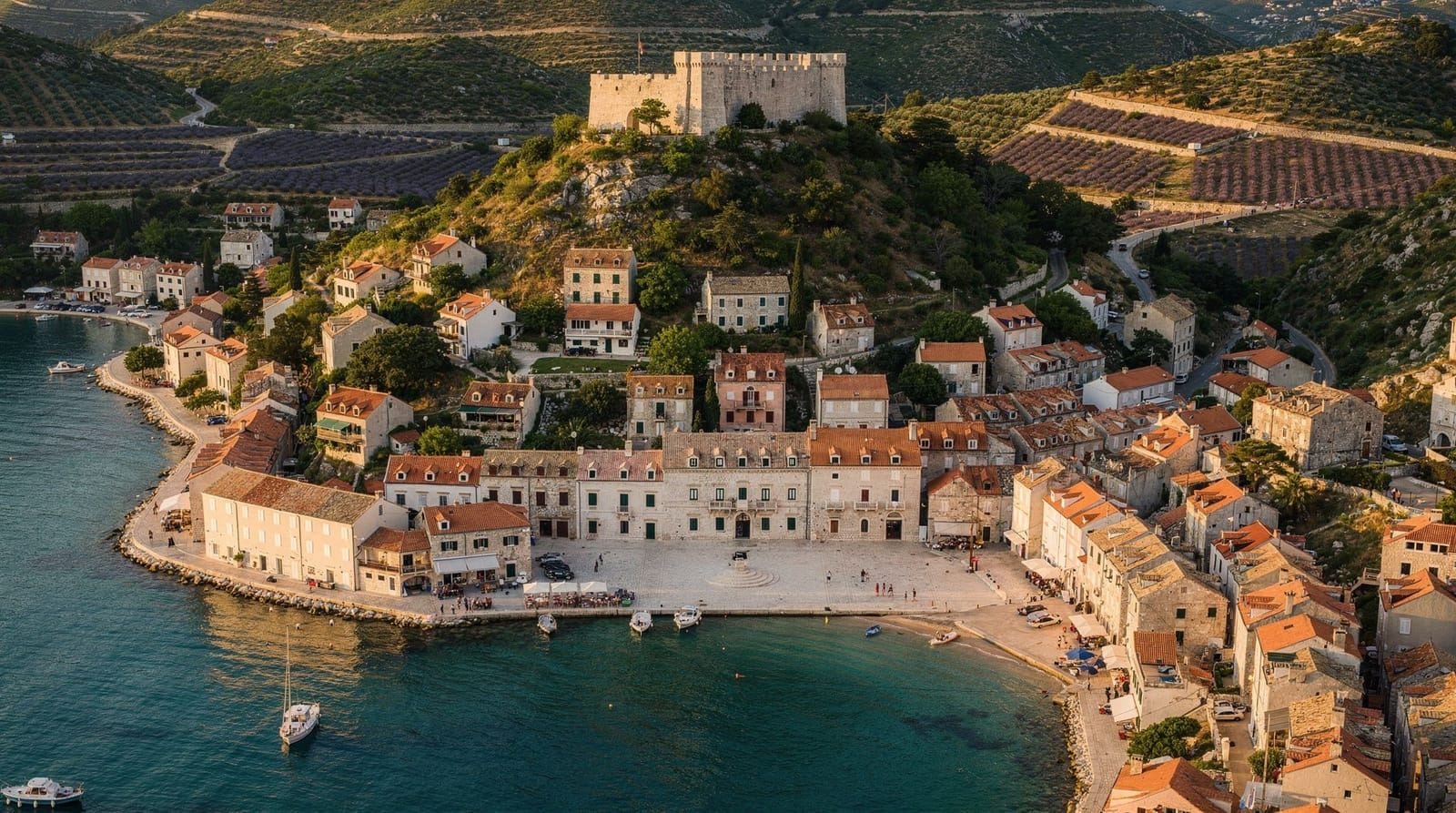
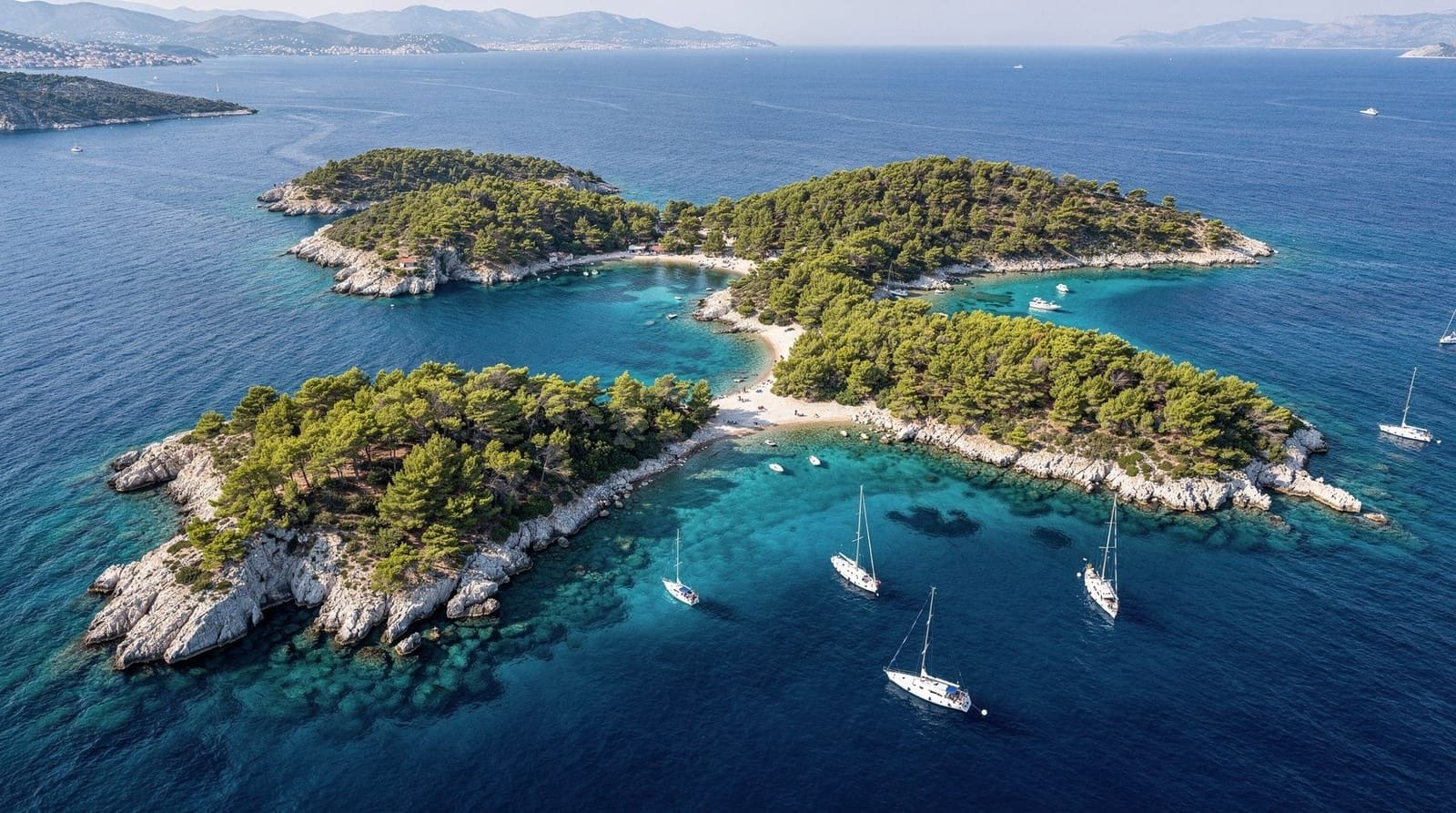
The asset: Hvar genuinely has it all. The old town, built around a 13th-century loggia and Venetian fortress, is spectacular. The surrounding hills are covered in lavender, rosemary and ancient olive groves. The Pakleni Islands — a scatter of pine-covered islets a ten-minute water taxi ride from Hvar Town — offer sheltered bays and excellent swimming. The sailing infrastructure is outstanding. The restaurant scene is the best of the three islands.
The liability: Hvar in late July and August is genuinely overwhelming. The cruise ships dock and disgorge thousands of day-trippers. The beach clubs on the Pakleni Islands fill with yachts by 11 am. Accommodation prices — already high — spike further in August. A midrange room that costs €120 in June costs €220 in August. Tables at the better restaurants need booking days ahead.
Who Hvar suits: Couples and groups who want nightlife and glamour, sailing enthusiasts, people visiting in shoulder season (May–June, September) when the island resets to something more manageable.
Who Hvar does not suit: Families with young children who need early nights, budget travellers, anyone who wants a quiet island holiday in July or August.
Hvar Town itself rewards a slow wander even outside the beach and boat scene — the Fortica fortress above town gives a sunset panorama over the harbour, and the promenade fills with a genuine passeggiata atmosphere after dinner. If Hvar’s price tag or crowds put you off, the direct Hvar vs Brač comparison digs deeper into the trade-offs between just those two, and Vis is the honest quieter alternative one ferry hop further out.
Brač — The Practical Choice
Brač is the largest of the three islands and the most straightforward to visit. The car ferry from Split to Supetar takes 50 minutes and runs more than ten times daily in peak season — you can almost walk-on, which makes it the easiest island for spontaneous visits or as a day trip from a Split base.
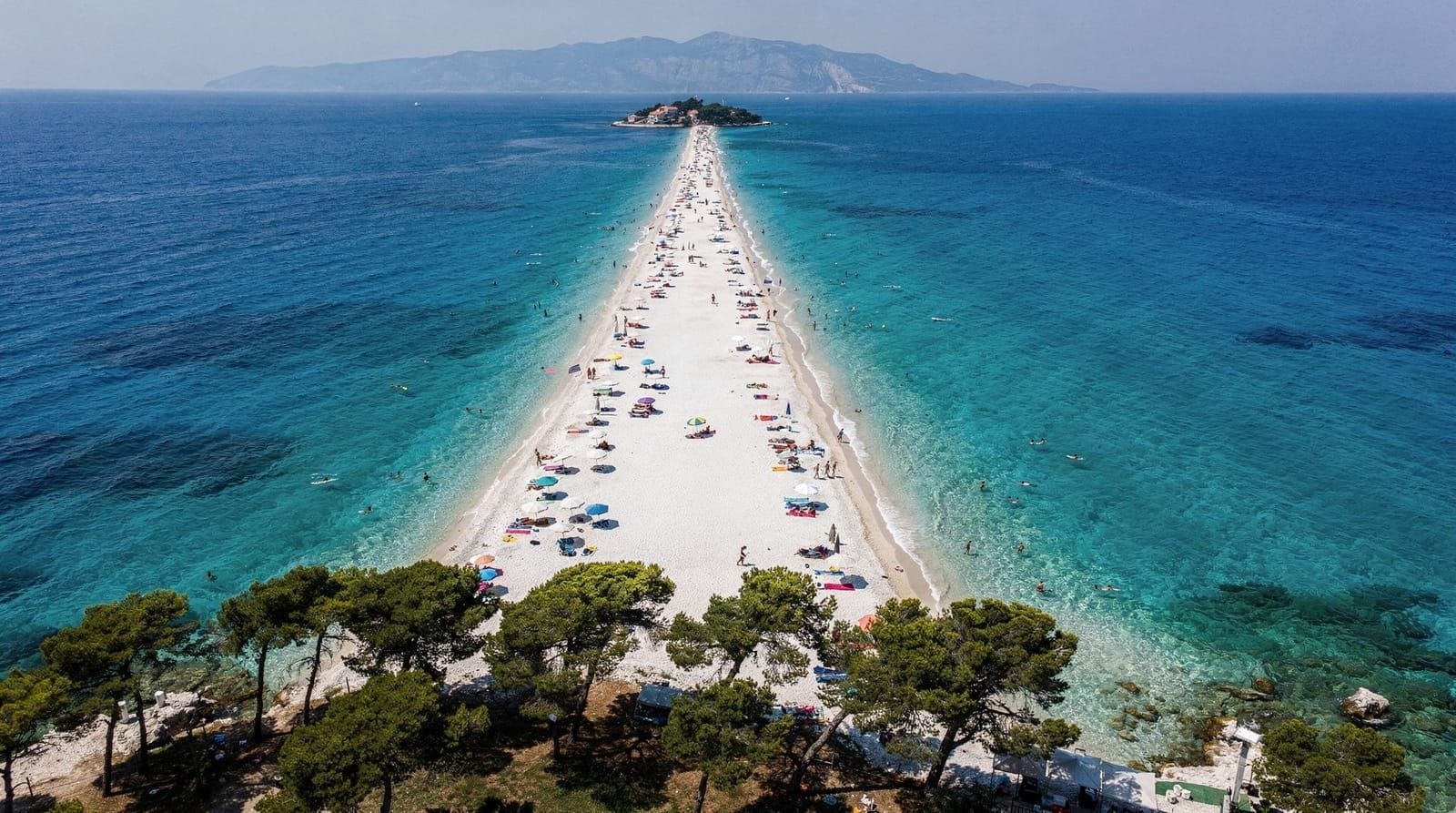
The main draw is Zlatni Rat (Golden Cape), the pebble spit that extends from the town of Bol into the Adriatic and changes shape slightly depending on wind and current. It is one of Croatia’s most photographed locations and deservedly so — the turquoise water on both sides, the pin-shaped spit, the mountain backdrop — it looks like the photographs.
Zlatni Rat is very busy in summer. Arrive before 9 am for morning calm before the tour boats arrive. Bol itself is a pleasant small town with a medieval Dominican monastery, a windsurfing scene driven by the reliable maestral wind, and a string of good restaurants along the seafront.
Beyond Bol, Brač rewards exploration. The interior village of Škrip is the oldest settlement on the island, with Illyrian walls and a small museum. The island’s famous white stone — used in Diocletian’s Palace in Split and reportedly in the White House in Washington — comes from quarries near Pučišća on the north coast.
Who Brač suits: Families, budget travellers, day-trippers from Split, anyone who wants a classic beach holiday without Hvar’s prices.
Who Brač does not suit: Travellers seeking nightlife, culture or the most dramatic scenery.
Because the ferry runs so frequently, Brač also works well as a base for exploring the wider region — day sailing trips depart Split’s harbour daily in summer, and Brač is often the first stop. See sailing from Split if a skippered day or multi-day charter appeals more than the ferry-and-beach routine.
Korčula — The Cultural Island
Korčula sits further south than Hvar and Brač, closer to the Pelješac Peninsula and about three hours by catamaran from Split. That extra distance puts it off many itineraries — which is exactly what keeps it from becoming overrun.
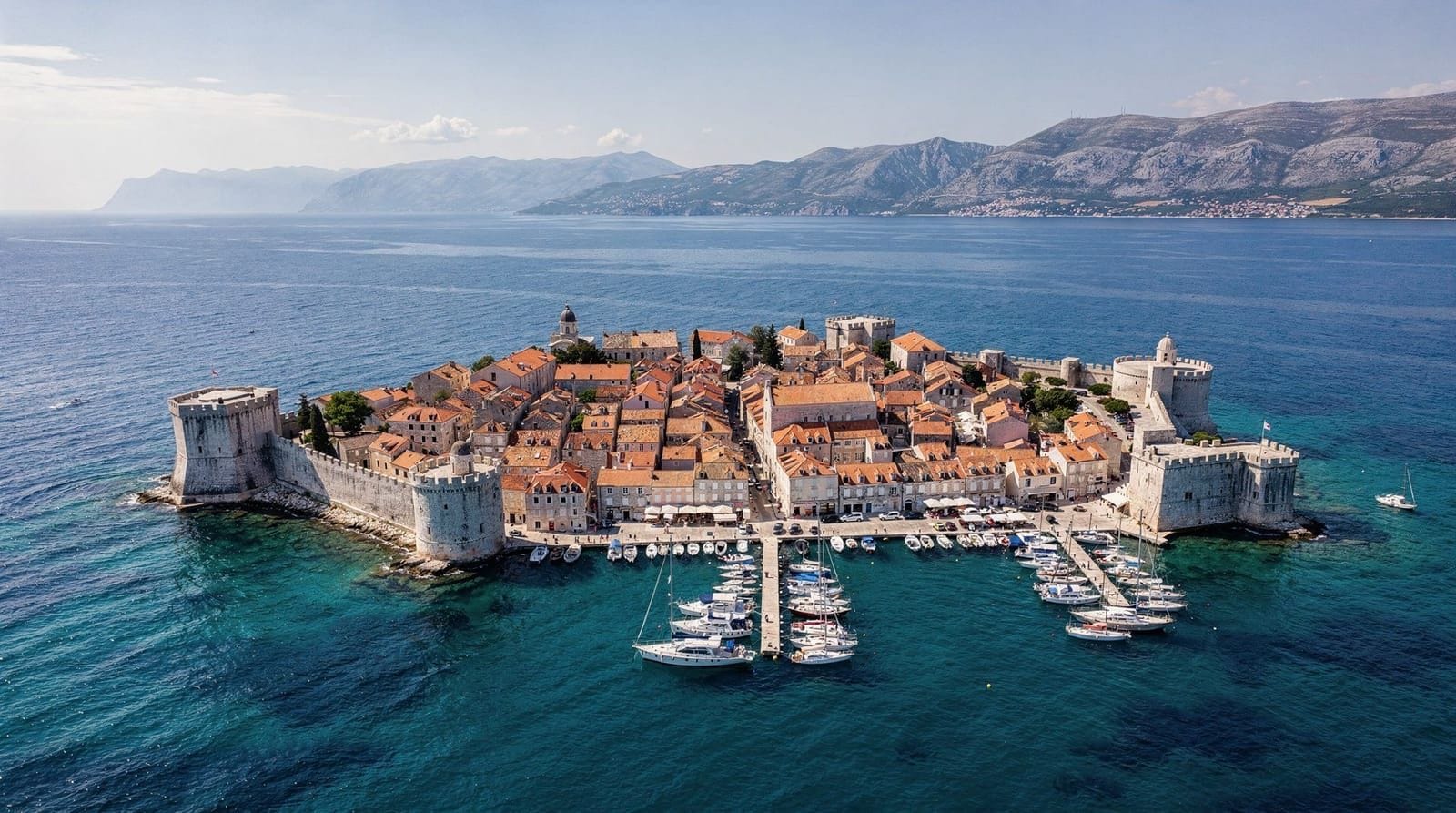
The old town is the headline attraction. Built on a small peninsula with a medieval grid of narrow lanes radiating from a central spine, it is often compared to Dubrovnik’s old town on a smaller, more human scale. The Cathedral of Saint Mark, the birthplace (debated) of Marco Polo, the city walls and towers — there is genuine heritage here, not just attractive stone streets.
Korčula is also wine country. The indigenous white grape varieties Pošip and Grk grow almost exclusively on this island. Pošip is dry, mineral and very drinkable with grilled fish; Grk comes primarily from the sandy soils of Lumbarda village at the eastern tip of the island. Neither travels particularly well, which means the best versions are only available on the island or in Croatia.
The Moreška sword dance — performed weekly in summer — is a theatrical spectacle that has been staged in Korčula for over 400 years. It is unabashedly touristy and worth watching once.
Who Korčula suits: Culture-seekers, wine lovers, travellers combining Dalmatia with Dubrovnik (Korčula fits neatly between Split and Dubrovnik on a catamaran route), couples wanting quiet evenings over good local wine.
Who Korčula does not suit: Beach-focused travellers (the beaches are fine but not exceptional), people wanting a lively nightlife scene.
For a proper sit-down tasting rather than a hunt for the right bottle, book ahead — the island’s small family wineries pour by appointment more often than walk-in. The Korčula wine guide covers which producers welcome visitors.
Korčula island wine and sightseeing tourHead-to-Head Comparison
| Category | Hvar | Brač | Korčula |
|---|---|---|---|
| Ferry time from Split | 1 h (catamaran) | 50 min (car ferry) | ~3 h (catamaran) |
| Peak season cost | HighestHigh | Lowest | Medium |
| Nightlife | Excellent | Minimal | Minimal |
| Beaches | Very good (coves + Pakleni) | Zlatni Rat (iconic) | Good (not exceptional) |
| Old town | Very good | Supetar (charming) | Excellent |
| Crowds in August | Heavy | Moderate | Light-moderate |
| Wine | Good | Good | Excellent (Pošip, Grk) |
| Sailing infrastructure | Best | Fair | Good |
| Best for families | Stari Grad only | Yes | Yes |
Ferry Routes and Logistics
All three islands are served by Jadrolinija from Split’s ferry terminal.
Brač: Car ferry Split–Supetar, 50 minutes, runs 10–13 times daily in summer. Passenger catamaran Split–Bol also operates. The cheapest and easiest option.
Hvar: Fast catamaran Split–Hvar Town, approximately 1 hour (Jadrolinija and Krilo). Car ferry Split–Stari Grad, 1 hour 50 minutes — note that Stari Grad is on the north side of the island, about 20 km from Hvar Town. A local bus runs between them but the timing can be inconvenient.
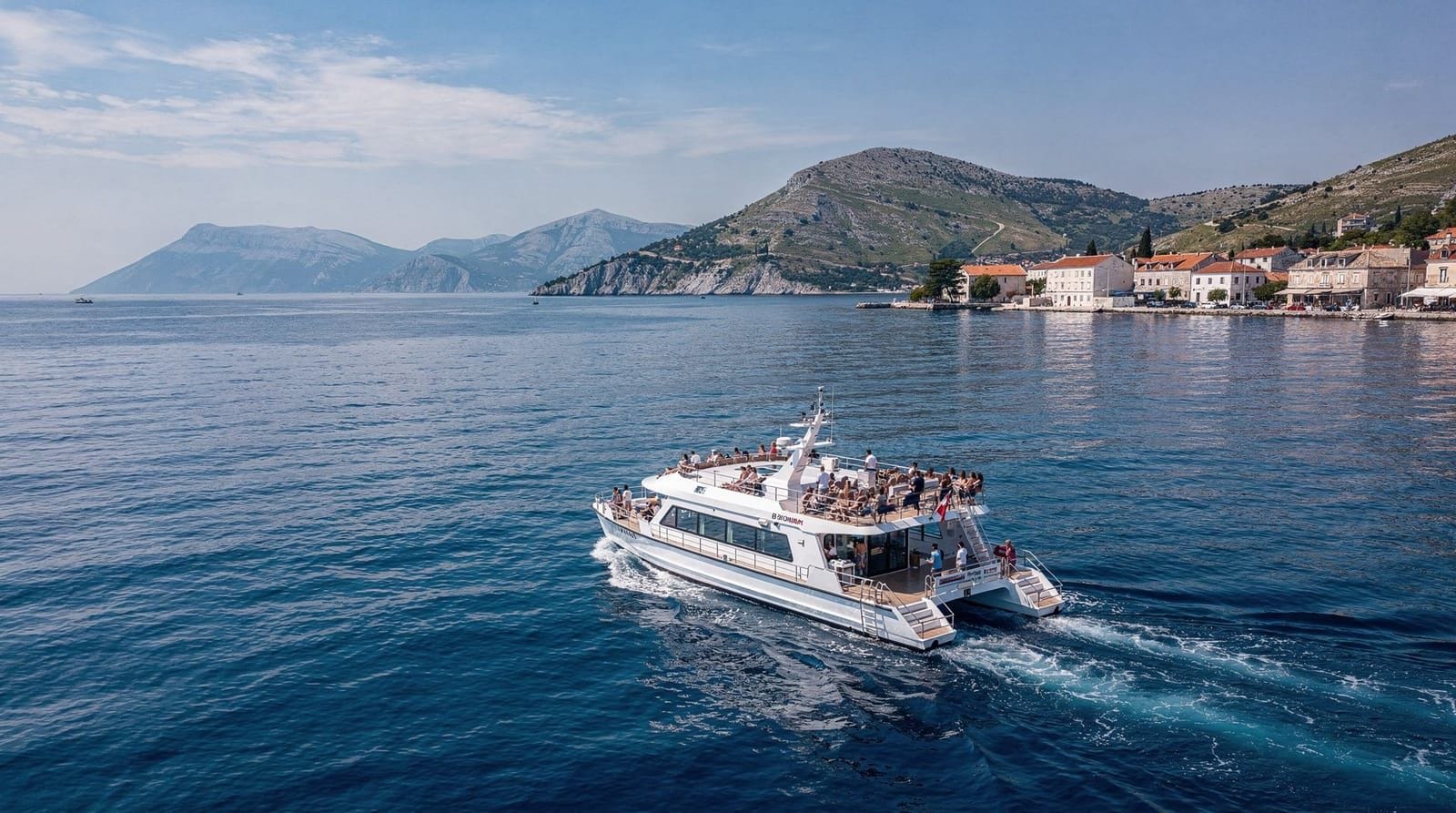
Korčula: Fast catamaran Split–Korčula Town, approximately 2 h 45 min–3 h. Alternatively accessible from Dubrovnik by catamaran in about 2 hours, making Korčula a natural midpoint on a Split–Dubrovnik routing.
For full timetables and booking, see the Croatia ferries guide and the Jadrolinija vs Krilo comparison.
Combined Itinerary
For a 10-day trip based in Split with island exploration:
- Days 1–2: Split
- Day 3: Day trip to Brač/Zlatni Rat
- Days 4–6: Hvar (including half-day to Pakleni Islands)
- Days 7–8: Korčula (catamaran from Hvar, 1.5 h)
- Days 9–10: Return to Split or continue to Dubrovnik
This covers the range without backtracking excessively. The island-hopping itinerary expands on this with alternatives including Vis and Mljet.
Choosing By Trip Type
If you are still torn, think in terms of trip type rather than island name. A bachelor/bachelorette or nightlife-focused group should go straight to Hvar and not apologise for it. A family with kids under 10 is almost always happier on Brač, or on Hvar based in quiet Stari Grad rather than the harbour. A couple who likes wine, architecture and early nights will get more out of Korčula than the other two combined. A sailing crew should treat Hvar as the anchor point and use Brač and Korčula as stops along the way rather than choosing just one. Base destinations for each island — Hvar, Brač and Korčula — have practical stay-length and accommodation guidance if you want to go deeper on any single one.
Frequently asked questions about Hvar vs Brač vs Korčula
Which island is cheaper — Hvar, Brač or Korčula?
Brač is consistently the cheapest of the three, followed by Korčula. Hvar is the most expensive by a significant margin in peak season — accommodation and restaurants can cost double what you pay on Brač. All three islands become more affordable in May, June and September.How far is each island from Split?
Brač (Supetar) is 50 minutes by car ferry. Hvar Town is 1 hour by Jadrolinija catamaran (or 1 h 50 min by car ferry to Stari Grad). Korčula Town is approximately 3 hours by catamaran from Split. Ferries run several times daily in summer.Which island is best for a family with children?
Brač is the safest bet for families — calm shallow water near Zlatni Rat beach, easy ferry connections for day trips, lower prices and a relaxed pace in Supetar. Korčula also works well. Hvar's nightlife makes it less suited to families with young children unless you stay in the quieter town of Stari Grad.Which island has better beaches — Hvar or Brač?
Brač has Zlatni Rat, one of Croatia's most recognisable beaches. Hvar has beautiful coves like Dubovica and Zaraće, plus the Pakleni Islands just offshore. For quantity and variety of beaches, Hvar edges it; for a single iconic beach experience, Brač wins.Is Korčula worth visiting compared to Hvar?
Yes, especially if you want culture, wine and authenticity. Korčula's old town is one of the most beautiful in Dalmatia, the indigenous wines (Pošip and Grk) are outstanding, and the island gets far fewer visitors than Hvar. It lacks Hvar's nightlife but has more substance.Can I visit all three islands in one trip?
Yes, easily as part of a longer stay. A practical route: Split base, day trip to Brač (Zlatni Rat), two nights Hvar, two nights Korčula, catamaran onward to Dubrovnik. This covers the highlights without feeling rushed. See the island-hopping itinerary for a full schedule.Which island is best for sailing?
Hvar is the sailing capital of Dalmatia. The marina at Hvar Town is one of the most active in Croatia, the Pakleni Islands offer sheltered anchorages, and provisioning is easy. Korčula is a good second stop on a longer sailing itinerary heading south toward Dubrovnik.
Top experiences
Bookable activities with verified prices and instant confirmation on GetYourGuide.
Top experiences
Best-rated activities across GetYourGuide and Viator.

Blue cave, Mamma Mia and Hvar, 5 islands speedboat tour
- Viator

Blue Cave and Hvar Tour - 5 Islands Tour from Split and Trogir
- Viator

Blue cave, Mama Mia and Hvar, 5 Island Speedboat Tour from Trogir
- Viator

Medulin-Kamenjak 5h boat trip ALL-INCLUSIVE drinks on Sandra Boat
- Viator

Medulin: All-Inclusive Kraken Boat Tour to Kamenjak Cave & Levan
- Viator

3Hour ALL-INCLUSIVE Sunset Dolphin Watching from Medulin onSandra
- Viator