Elaphiti Islands travel guide
Explore the Elaphiti Islands from Dubrovnik: Šipan, Lopud, and Koločep by day trip or overnight ferry, beaches, car-free villages, and boat tours.
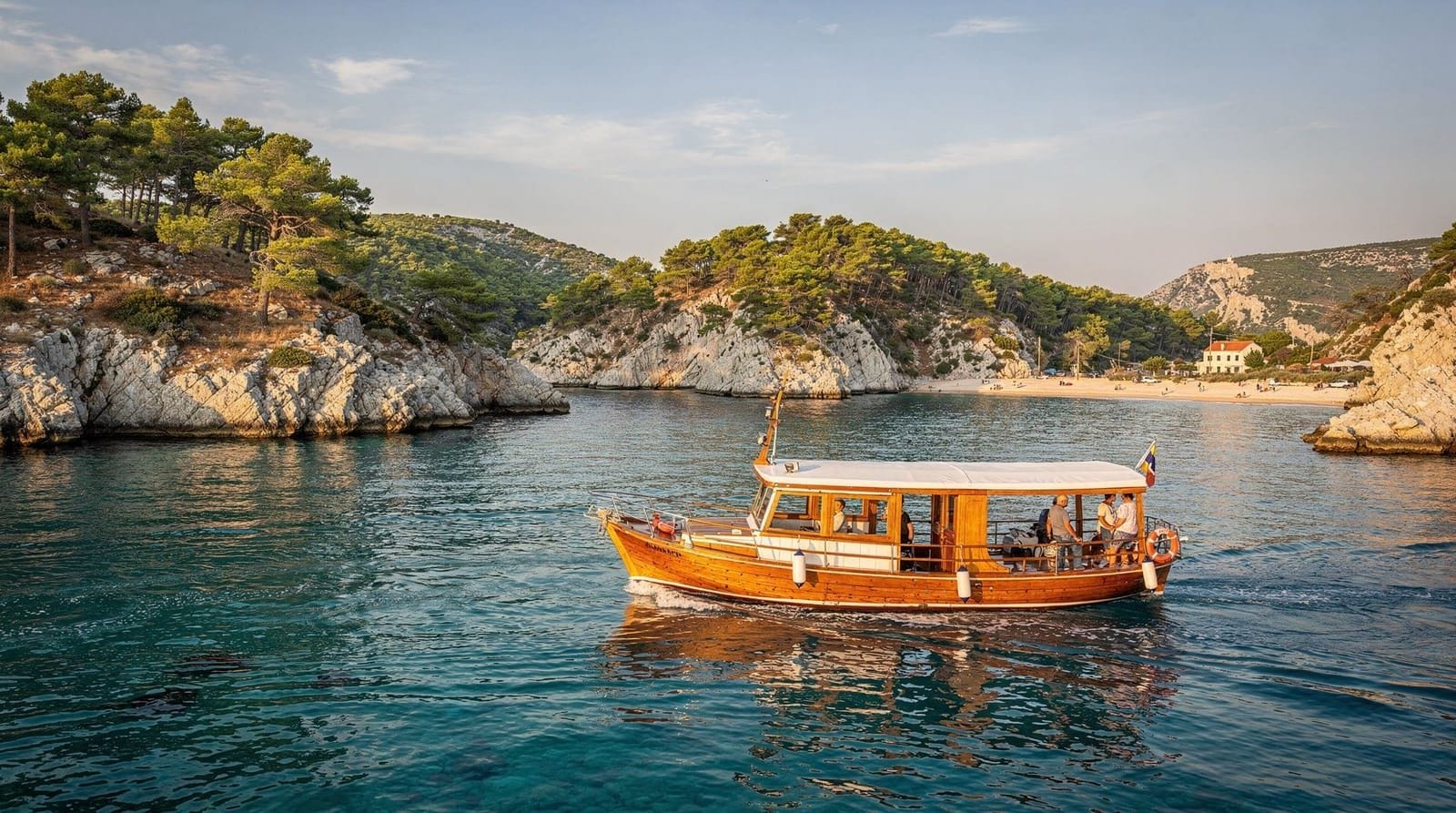
Dubrovnik: Full-day Elaphiti Islands boat tour with snacks
Quick facts
- Best time
- May–October
- Days needed
- 1–2 days (day trip from Dubrovnik possible)
- Getting there
- Jadrolinija ferry from Dubrovnik Old Port (Gruž) 30–90 min
- Budget per day
- €50–€110
The Elaphiti Islands (Elafitski Otoci) are a small archipelago of fourteen islands and islets scattered across the sea northwest of Dubrovnik. Three are inhabited: Koločep, Lopud, and Šipan. They offer what Dubrovnik itself cannot: peace, green vegetation, crystal-clear swimming coves, and car-free lanes where the only sounds are cicadas and the occasional fishing boat. They are among the most undervisited islands in the Adriatic given how close they sit to one of Croatia’s most popular cities.
The name Elaphiti derives from the Greek for deer (elaphos) — deer reportedly lived here in antiquity and have since been reintroduced to Šipan.
| Where | Northwest of Dubrovnik |
| Cost | Around €50–€110/day |
| Time needed | 1–2 days (day trip from Dubrovnik possible) |
| Getting there | Jadrolinija ferry from Dubrovnik Old Port (Gruž), 30–90 min |
| Best time | May–June and September |
Getting to the Elaphiti Islands
Jadrolinija ferry from Dubrovnik (Gruž port): This is the standard route. The regular ferry from Dubrovnik’s main Gruž port stops at Koločep (30 min), Lopud (50 min), and Šipan (90 min). Several sailings per day in summer, fewer in winter. Foot-passenger tickets cost around €5–€8 each way. There is no car ferry — all three islands are car-free (except for a few service vehicles on Šipan).
Boat tours from Dubrovnik: A popular alternative to the regular ferry is a guided boat tour that visits two or three of the islands in a single day, combining swimming stops with village visits. These depart from the Old Harbour (Stara Luka) in Dubrovnik and typically include lunch or snacks.
From Korčula or Mljet: The coastal catamaran route can give you onward connections, but the Elaphiti are most naturally combined with a Dubrovnik stay.
The Three Inhabited Islands
Koločep
The smallest and nearest of the inhabited Elaphiti, Koločep lies just 8 km northwest of Dubrovnik and is reachable in 30 minutes by ferry. The island has about 150 permanent residents spread across two small villages — Donje Čelo (the main ferry landing) and Gornje Čelo.
The island’s main attraction is its beaches: the sandy bay at Donje Čelo is one of the few genuine sand beaches near Dubrovnik. The water is shallow and calm, ideal for families. A marked path through dense subtropical vegetation connects the two villages in about 40 minutes — you’ll pass through orange and lemon groves, old stone terraces, and a cave church (cave of St Anthony).
Koločep is best as a half-day or full-day beach excursion from Dubrovnik. There is very limited accommodation.
Lopud
Lopud is the most visited of the three Elaphiti and the best equipped for tourism. The island has a small car-free village with a promenade, a handful of restaurants and cafés, several modest hotels and guesthouses, and a cluster of historic monuments that reward anyone willing to spend an hour exploring beyond the waterfront.
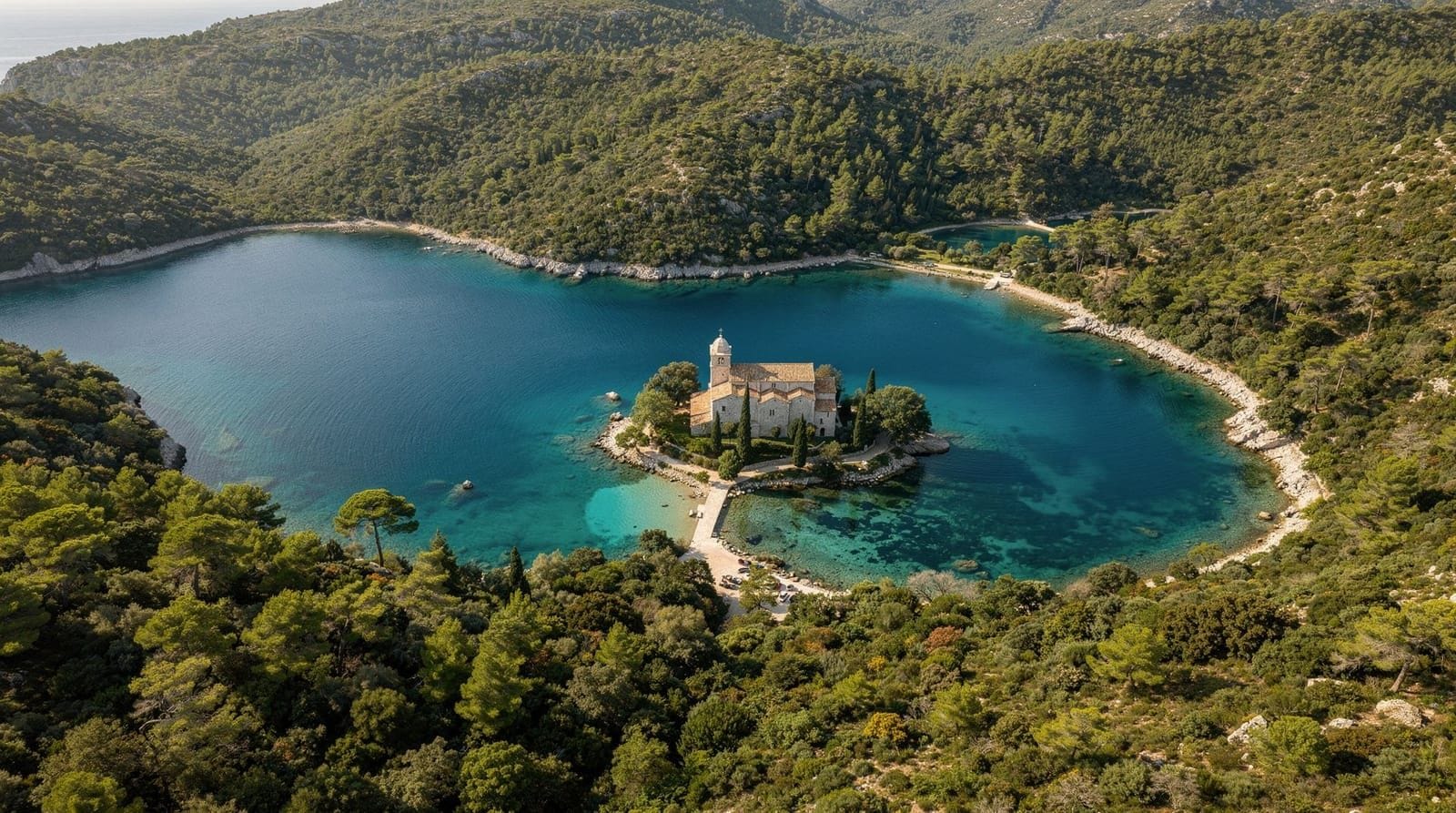
The Franciscan monastery, founded in the 15th century, sits at the edge of the village and is one of the most serene spots in the archipelago. Its cloister garden is planted with citrus trees — oranges, lemons, and citrons — as well as palms and oleander, all enclosed by stone arches that have stood since the 1480s. The garden is open to visitors and is the kind of place where it is easy to spend half an hour in complete quiet. The monastery also holds a small collection of religious art and manuscripts.
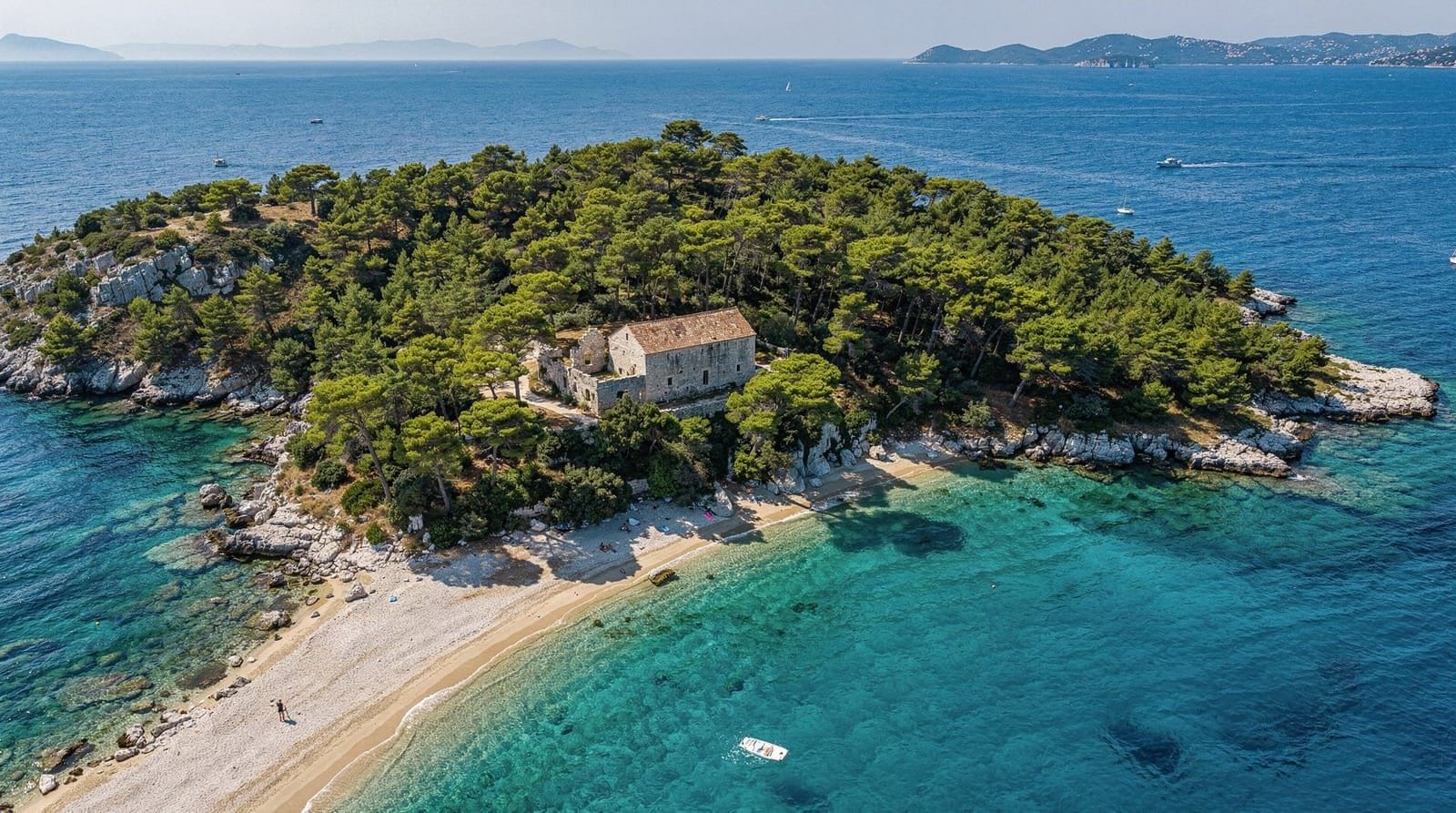
Closer to the ferry landing, the ruins of the Dominican monastery occupy a headland above the water. The Dominican complex was partly destroyed over the centuries but has been partially restored; a section now operates as a small hotel, while the surrounding garden — terraced, overgrown in places, and planted with fig trees and Mediterranean herbs — remains accessible and has one of the best views back across the bay. It is far less visited than the Franciscan monastery and well worth a short detour.
Above the village, the Venetian fortification known as Kastio sits on the hillside and is reachable by a short but steep path from the village lanes. The fort itself is a ruin, but the walk up rewards with sweeping views over the rooftops of Lopud, out across the channel toward the mainland hills, and down to Šunj Bay on the far side of the island. It takes about 15 minutes to reach from the village centre and another 10 to circle back down.
In the evening, when the day-tripper boats have returned to Dubrovnik, the Riva — Lopud’s waterfront promenade — becomes a gathering place for the island’s permanent residents. Older men play cards outside the café; children cycle along the car-free path; fishing boats rock gently at their moorings. This quiet hour is one of the best arguments for spending a night on the island rather than coming purely for the beach.
The island’s main draw for day visitors is Šunj Bay on its southeastern side — a long, sandy bay that is one of the best beaches in the Dubrovnik region and one of the only sandy beaches in this part of the coast. The walk across the island from the village to Šunj takes about 25–30 minutes through pine forest; in summer a small tractor-taxi makes the crossing for those who don’t want to walk.
Šunj is genuinely beautiful — shallow, calm, warm water, and a long sandy shore framed by hills. It can get crowded at peak season with Dubrovnik day-trippers, but mornings and evenings are lovely.
Lopud is worth an overnight stay to experience the island after the day-tripper boats have left.
Šipan
Šipan is the largest and quietest of the three. Two villages — Šipanska Luka (the main port on the west coast) and Suđurađ (on the east coast) — are connected by a road that crosses the fertile agricultural interior. The island is relatively flat compared to others in the Adriatic, which makes its landscape distinctive: instead of bare limestone terraces falling to the sea, you move through vineyards, working olive groves, and citrus orchards that have been cultivated here for centuries. The island produces olive oil in quantities that matter, and the smell of the groves in late spring — blossom, earth, and sea breeze — is one of its quiet pleasures.
Šipan has around 500 permanent residents, making it the most populated of the three Elaphiti islands. That said, “most populated” is relative: you will walk the road between the villages in summer and see almost no one. The island’s population has declined steadily over decades as younger residents have moved to Dubrovnik or beyond, and what remains is an ageing community that keeps the olive groves tended and the fishing boats going.
The island was historically favoured by Dubrovnik’s noble families as a summer retreat, and a number of Renaissance summer villas — many now ruined or partially restored — dot the landscape. The most notable is the Villa Stjepović-Skočibuha in Šipanska Luka, a 16th-century residence that stands near the waterfront. Its defining feature is a distinctive garden arcade — a covered loggia running along the garden front — that is visible from the path along the harbour. The villa is privately owned and not open for tours, but the exterior and the arcade can be clearly seen from the public path, and the proportions of the Renaissance stonework are striking even in a state of partial decay. Several other villa ruins are scattered through the interior and along the road to Suđurađ; most are overgrown, but they give the island a quality unlike the other Elaphiti — a sense of former elegance slowly being reclaimed by vegetation.
Šipan is genuinely off the beaten track — even in summer, it sees a fraction of the visitors that reach Lopud. If you want to understand what the Elaphiti were before mass tourism, Šipan is the answer.
History of the Elaphiti Islands
The Elaphiti Islands have been inhabited since antiquity. Traces of prehistoric settlement have been found on several of the islands, and the Greeks and Romans both recognised the archipelago’s sheltered position as useful for navigation along the eastern Adriatic coast. The name itself — from the Greek elaphos, meaning deer — suggests that the islands were known to classical writers, and deer bones have been found in archaeological contexts here.
After the fall of Rome, the islands passed through a succession of powers typical of the eastern Adriatic: Byzantine administration, Croatian principalities in the early medieval period, then Venetian influence as Venice consolidated its hold on the Dalmatian coast. The Ragusan Republic — the independent city-state centred on Dubrovnik — acquired the Elaphiti definitively in the 14th century, and from that point the islands’ history becomes inseparable from that of Ragusa.
For Dubrovnik’s merchant and noble families, the Elaphiti became a combination of productive estate and summer retreat. The mild climate suited citrus and olive cultivation, and the islands were close enough to Dubrovnik to allow a noble to be at his country villa one day and attending the Great Council the next. From the 15th century onward, summer villas began to appear — particularly on Šipan, which was large enough to support genuine agricultural production. The Franciscan and Dominican monasteries on Lopud were founded during this same period, partly as expressions of Ragusan piety and partly as institutions that served the island communities directly.
Koločep has an older ecclesiastical history still. The island contains early Christian remains dating to late antiquity, and a cave monastery — associated with St Anthony — represents a tradition of hermitic religious life that predates the main period of Ragusan development. The cave church in the woods between Donje Čelo and Gornje Čelo is one of the oldest continuously venerated sites in the archipelago.
The fall of the Ragusan Republic to Napoleon in 1806 began a turbulent century: French, then Austrian, then brief periods of instability followed by incorporation into the Kingdom of Yugoslavia after the First World War. The islands were part of Yugoslavia throughout the 20th century and passed to the independent Republic of Croatia in 1991. Tourism began slowly in the Yugoslav era — Lopud in particular had a modest hotel tradition by the 1970s — but the islands never developed the infrastructure that transformed places like Hvar or Brač, which is precisely why they remain so quiet today.
Walking on the Elaphiti Islands
All three inhabited islands have marked walking paths, and walking is genuinely the right way to experience them. None requires serious fitness or equipment — the terrain is mild, distances are short, and the paths are well-worn. Good shoes and water are sufficient for everything described here.
Koločep has a marked coastal path connecting Donje Čelo and Gornje Čelo that takes about 40 minutes at a relaxed pace. The path passes through dense subtropical vegetation — one of the most distinctive stretches of walking near Dubrovnik, with the forest closing in on both sides and occasional glimpses of the sea below. Along the way you pass through the remnants of old stone terraces and, near the midpoint, the cave church of St Anthony: a small chapel cut into the rock face, lit by candles, and tucked into the hillside so discreetly that you can walk past it if you are not paying attention. The path emerges at Gornje Čelo, a tiny village with a handful of houses and a café. Allow an hour and a half for the round trip with time to stop.
Lopud has several walking options. The most used is the route to Šunj beach, which crosses the island from the village on its northwest side to the bay on the southeast. The path leads through pine forest, takes 25–30 minutes at a steady walk, and is clearly marked from the village. A second route climbs to the Kastio fortification above the village — a steeper 15-minute ascent that rewards with views in all directions — and can be combined with the Šunj walk for a more complete circuit of the island’s highlights. A longer loop around the island’s perimeter is also possible for those with a full day and a taste for exploration; it takes 3–4 hours and passes several ruined structures and quieter coves not reachable from the village.
Šipan is the most rewarding island for a proper walk. The main path between Šipanska Luka and Suđurađ follows the road through the agricultural interior — approximately 6 km, which takes about an hour at an easy pace. The landscape is the attraction here rather than any single destination: you move through working olive groves, past vineyard terraces, and along stone walls that have divided these fields for centuries. The gradient is gentle throughout. From Suđurađ, a Renaissance tower house overlooks the harbour; the tower is among the best-preserved examples of Ragusan defensive architecture on the islands and worth inspecting closely before catching the return ferry or walking back. Allow two and a half to three hours for the round trip with stops.
Beaches in the Elaphiti Islands
Šunj Bay (Lopud): The finest beach in the group — a long sandy bay on the south side of Lopud, reached by a 25–30 minute walk through pine forest from the village (or a short tractor-taxi ride in summer). The bay faces southeast, which means it catches morning sun and is shaded at the far ends by the surrounding hills in the late afternoon. The water is very shallow at the edges and deepens gently — ideal for children and for those who like to wade a long way out before swimming properly. Clarity is excellent; the sandy bottom is visible in several metres of water. Wave exposure is minimal, sheltered from the main Adriatic swell by the surrounding headlands. Sun loungers and parasols are available for hire; a small beach bar operates in peak season. It can get crowded from mid-morning in July and August when the tour boats arrive — the best times are before 10am and after 4pm.
Donje Čelo beach (Koločep): A small sandy cove directly at the ferry landing on Koločep — the first thing you see when you step off the boat. The water is shallow and calm, sheltered from almost all wind directions by the surrounding arms of the bay, which makes it one of the most reliably flat-water beaches near Dubrovnik. Good for families and for anyone arriving without much time; you can be in the water within five minutes of the ferry docking. The cove is small, so it fills quickly on busy days — arrive on the early ferry for space. Water shoes are useful near the rocky edges.
Rock swimming near Šipanska Luka (Šipan): The waterfront around Šipanska Luka village has clear water and good swimming off the rocks directly below the promenade. There is no beach as such, but the water is deep enough to jump from the lower rocks and the clarity is outstanding — some of the cleanest water in the archipelago, away from any significant boat traffic. No facilities, which keeps numbers low even in summer. This is genuinely local swimming: Šipan residents use this stretch throughout the season.
Quiet coves on Šipan: Several small pebble coves around the island’s coastline are accessible only by boat or by longer walking paths from the villages. These are among the most secluded swimming spots in the Elaphiti — genuinely deserted in most conditions. If you are on a private boat tour, ask your skipper to anchor in one of the coves on Šipan’s northern shore.
Boat Tours from Dubrovnik
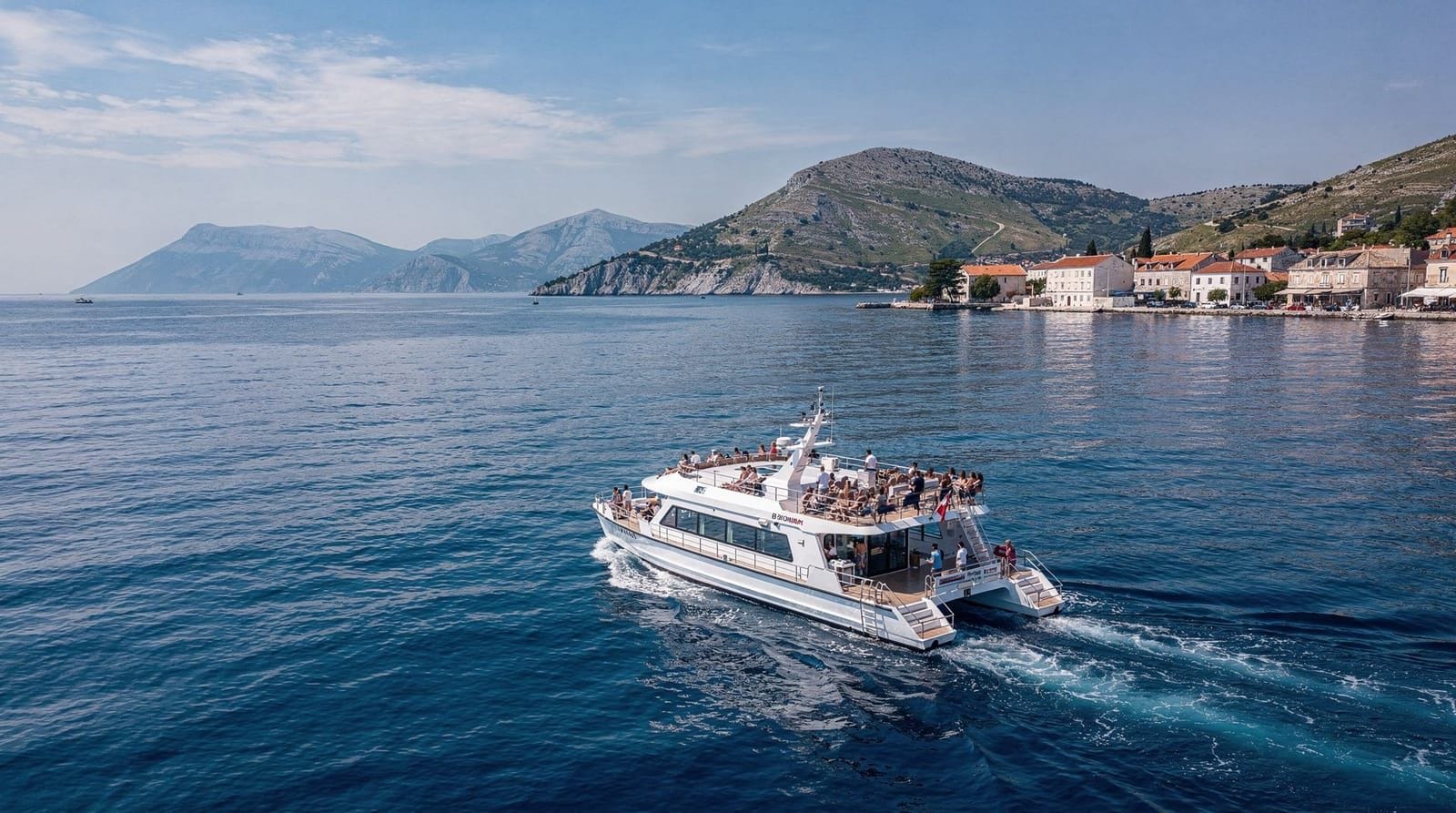
The most flexible way to see all three Elaphiti in a single day is a boat tour from Dubrovnik. These typically depart around 9–10am and include swimming stops, a village visit (usually Lopud), and a light lunch or snacks on board. They return by late afternoon.
Private boat tours allow more flexibility — you can choose your own itinerary and spend longer at quieter anchorages. A half-day private boat from Dubrovnik typically costs €200–€400 depending on boat size and group.
Where to stay in the Elaphiti Islands
Most visitors come on day trips from Dubrovnik. Overnight options are limited but beautiful.
Lopud: The Lafodia Sea Resort is the main hotel — comfortable, with a good beach position. Private apartments from €60–€130/night in peak season. Book ahead.
Šipan: A handful of private rooms and small guesthouses. Very basic but wonderfully quiet.
Koločep: Minimal accommodation — a few rooms and the Coral Hotel. Limited services.
Where to eat in the Elaphiti Islands
Obala (Lopud): A reliable waterfront restaurant in Lopud village — fresh fish and seafood, reasonable prices for a tourist-adjacent location.
Restaurant Šipan (Šipanska Luka): Simple, honest Dalmatian cooking in Šipan’s main village. Fish is fresh.
Konoba Kod Marka (Koločep): A casual spot at Donje Čelo for grilled fish and cold drinks after the beach.
Pack picnic supplies from Dubrovnik’s market if you’re heading to the islands for a full day — food options on all three islands are limited.
Best time to visit the Elaphiti Islands
May–June and September are ideal: warm weather, swimmable sea, working ferry schedules, and significantly fewer day-trippers than July–August. In June, the islands are green and lush from spring rain.
July–August: Lopud’s Šunj beach gets crowded with Dubrovnik day-trippers, but the other islands remain relatively quiet. Take the early ferry to arrive before the tours.
October: Peaceful and still warm enough to swim through mid-month. Increasingly quiet from mid-October.
Elaphiti vs other Dubrovnik day trips
The Elaphiti Islands are the obvious beach-and-swimming choice among Dubrovnik’s day-trip options, but they’re not the only one. For history and old-town atmosphere without a boat, Cavtat is a 30–45 minute bus or boat ride south. For a longer island excursion with a more dramatic old town, Korčula and Mljet are reachable by catamaran, though both require a full day. The full range of options — including Kotor and Mostar across the border — is compared in the day trips from Dubrovnik guide.
Money and practical notes for the islands
None of the three inhabited Elaphiti has a bank or a reliable ATM, so withdraw cash in Dubrovnik before you leave — konobas and small shops on Koločep, Lopud, and Šipan are largely cash-only. See the money in Croatia guide for the wider picture on costs and cards. Mobile coverage is generally fine near the villages and ferry landings but patchy on the walking paths and quieter coves, which is part of the appeal if you’re looking for a genuine disconnect from Dubrovnik’s bustle.
Snorkelling and swimming spots beyond the main beaches
Beyond Šunj Bay and Donje Čelo, the Elaphiti reward those willing to swim a little further from the ferry landings. The rocky coastline on Lopud’s western side, reachable via the Kastio fortification path, has several small, clear coves with almost no boat traffic — good snorkelling over rock and Posidonia seagrass, with visibility comparable to the more famous Adriatic swimming spots but a fraction of the crowd. On Šipan, the coastline north of Šipanska Luka has similarly quiet rock-swimming spots, though reaching them typically requires either a longer walk or a boat, since the interior road stays inland.
Water temperatures in the Elaphiti track the wider Dalmatian coast: swimmable from late May, warmest (24–25°C) in August and early September, and cooling quickly by mid-October. Because the islands are sheltered by the mainland and by each other, wave conditions are usually calmer here than on the open coast around Dubrovnik itself, which makes them a good choice on days when a stiff maestral wind makes swimming elsewhere uncomfortable.
Planning an overnight stay vs a day trip
Most visitors treat the Elaphiti as a single day trip from Dubrovnik, and that’s a perfectly reasonable way to see the highlights — Šunj Bay, the Lopud monasteries, and a swim at Koločep can all fit into one long day using the scheduled ferry or a guided boat tour. But the islands genuinely change character in the evening, once the day-tripper boats have returned to Gruž harbour. Staying even one night on Lopud lets you experience the Riva at dusk, when the island’s small permanent population reclaims the waterfront, and gives you first access to Šunj Bay the next morning before the tour boats arrive.
For those weighing the two approaches: a day trip suits travellers with a packed Dubrovnik itinerary who want a taste of island life without rearranging accommodation. An overnight (or two) suits travellers who’ve already covered Dubrovnik’s essentials and want a genuinely slower register for a day or two — the islands are close enough that you’re never more than 90 minutes from the old town if plans change. Given the limited accommodation on Šipan and Koločep, book Lopud well ahead if aiming for a summer weekend, since the Lafodia Sea Resort and the better private apartments fill early.
Whichever you choose, pack for genuine self-sufficiency: none of the three islands has a pharmacy or a proper supermarket, so bring any medication, sun protection, and snacks you might need beyond what a small village shop can supply. This is doubly true if you’re travelling with young children, since the nearest full medical facilities are back in Dubrovnik.
Top experiences
Bookable activities with verified prices and instant confirmation on GetYourGuide.
Top-rated experiences in Elaphiti Islands travel guide
Best-rated activities across GetYourGuide and Viator.

Blue Cave & Vis Island speedboat tour from Hvar
- Viator

Rafting on Cetina River Departure from Split or Blato na Cetini village
- Viator

Blue Cave and Pakleni Islands group Tour from Hvar
- Viator

Boat Tour at Delfina Hvar
- Viator

Korcula Buggy (Official) Safari Tour - Local Food & Wine Tasting
- Viator

Blue cave group tour with swimming and snorkelling from Hvar
- Viator