Money in Croatia
What currency does Croatia use?
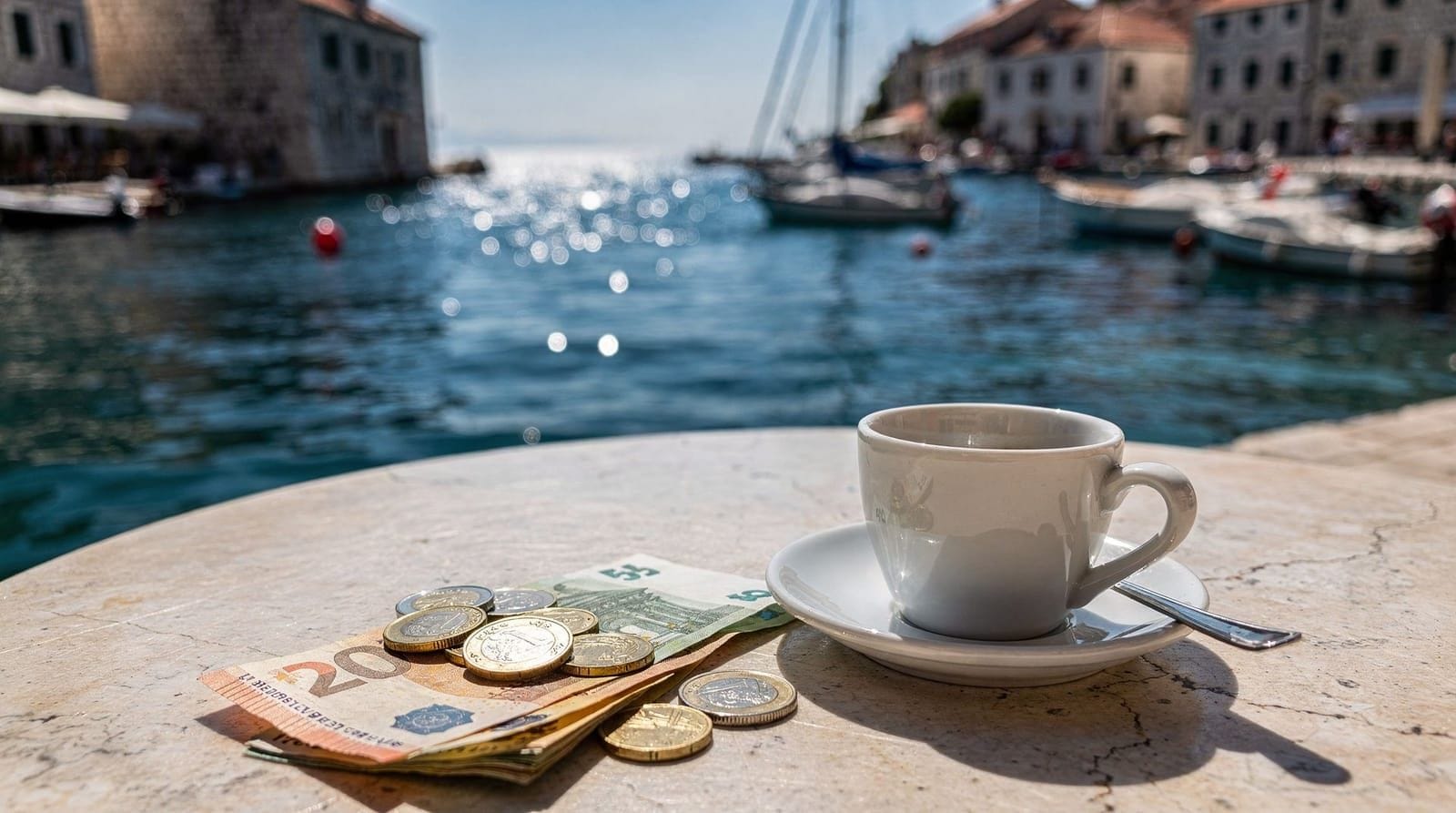
Croatia adopted the euro (EUR) on 1 January 2023, replacing the Croatian kuna. No currency exchange is needed for eurozone travellers. Cards are widely accepted but carry some cash for markets, small islands, small konobas, tips and parking.
| Currency | Euro (EUR) since 1 January 2023 |
| Cash to carry | Around EUR 100-200 at any time |
| Cards | Widely accepted in cities; less so on small islands |
| ATMs | Use bank ATMs; avoid standalone yellow Euronet machines |
| Tipping | Not obligatory; round up or add ~10% in cash |
Croatia’s currency: the euro
Croatia joined the eurozone on 1 January 2023, the same day it entered the Schengen Area. The Croatian kuna (kuna), in use since 1994, is now historical. The old dual-currency confusion that characterised Croatia for years — kuna prices, euro payments, kuna change — is gone.
For eurozone visitors, this makes Croatia seamless: no currency exchange, no conversion calculations, no risk of being given bad change in a currency you do not understand. For everyone else, it is a standard euro destination.
In practical terms: Euros are the currency of Croatia. All prices are in euros. All payments, change and ATM withdrawals are in euros.
Cards: where they work and where they do not
Croatia is increasingly card-friendly, but not universally so. Understanding where cards work and where cash is still needed prevents frustrating situations.
Cards accepted (usually)
- Hotels and larger accommodation
- Restaurants in tourist areas and cities
- Chain supermarkets (Konzum, Spar, Lidl, Tommy)
- Petrol stations
- Tour operators and ticket offices (Plitvice, Krka, Dubrovnik walls)
- Larger shops and souvenir retailers
- Ferry terminals (Jadrolinija) for ticket purchases
Cash preferred or required
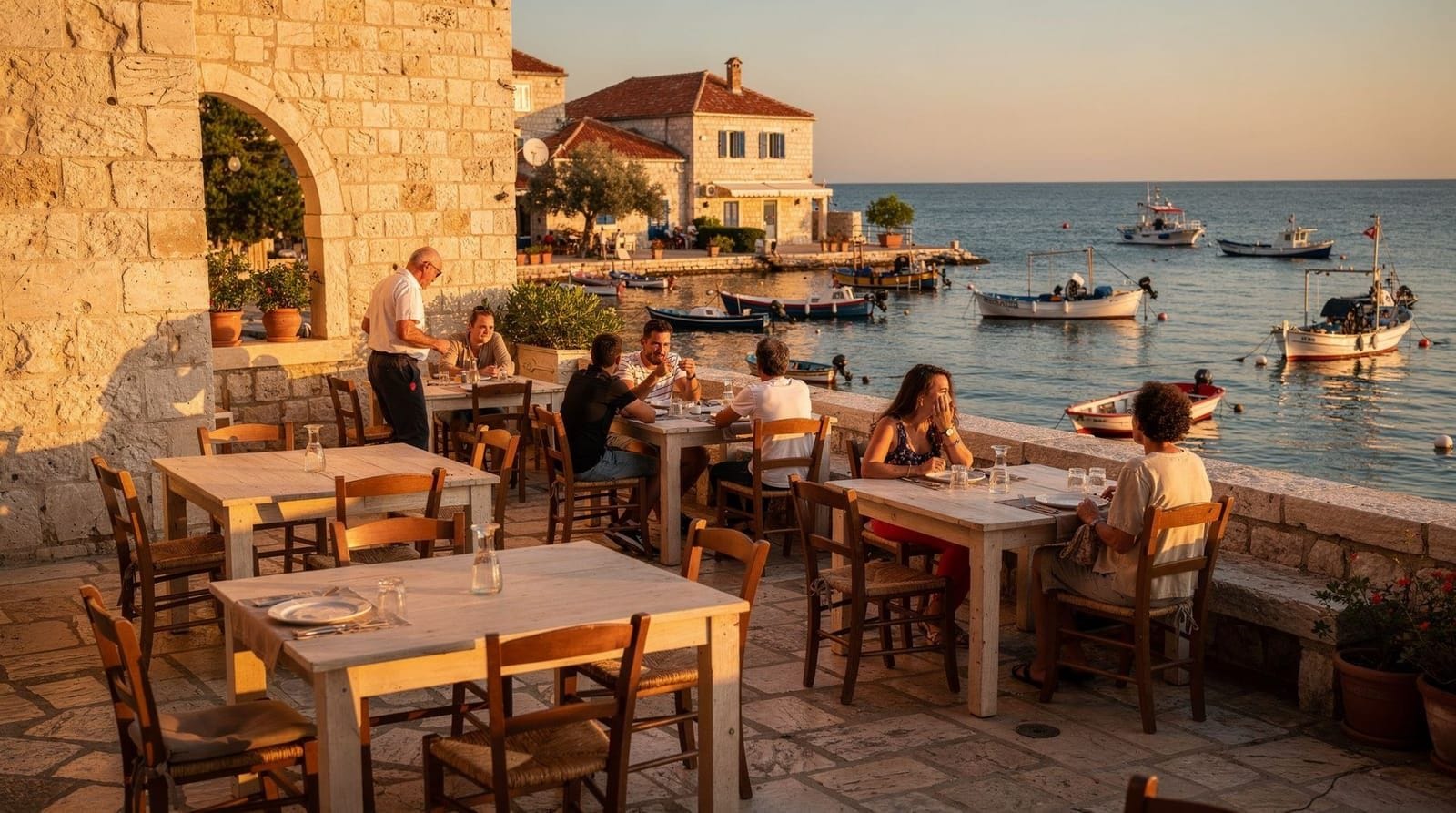
- Small traditional konobas and local family restaurants
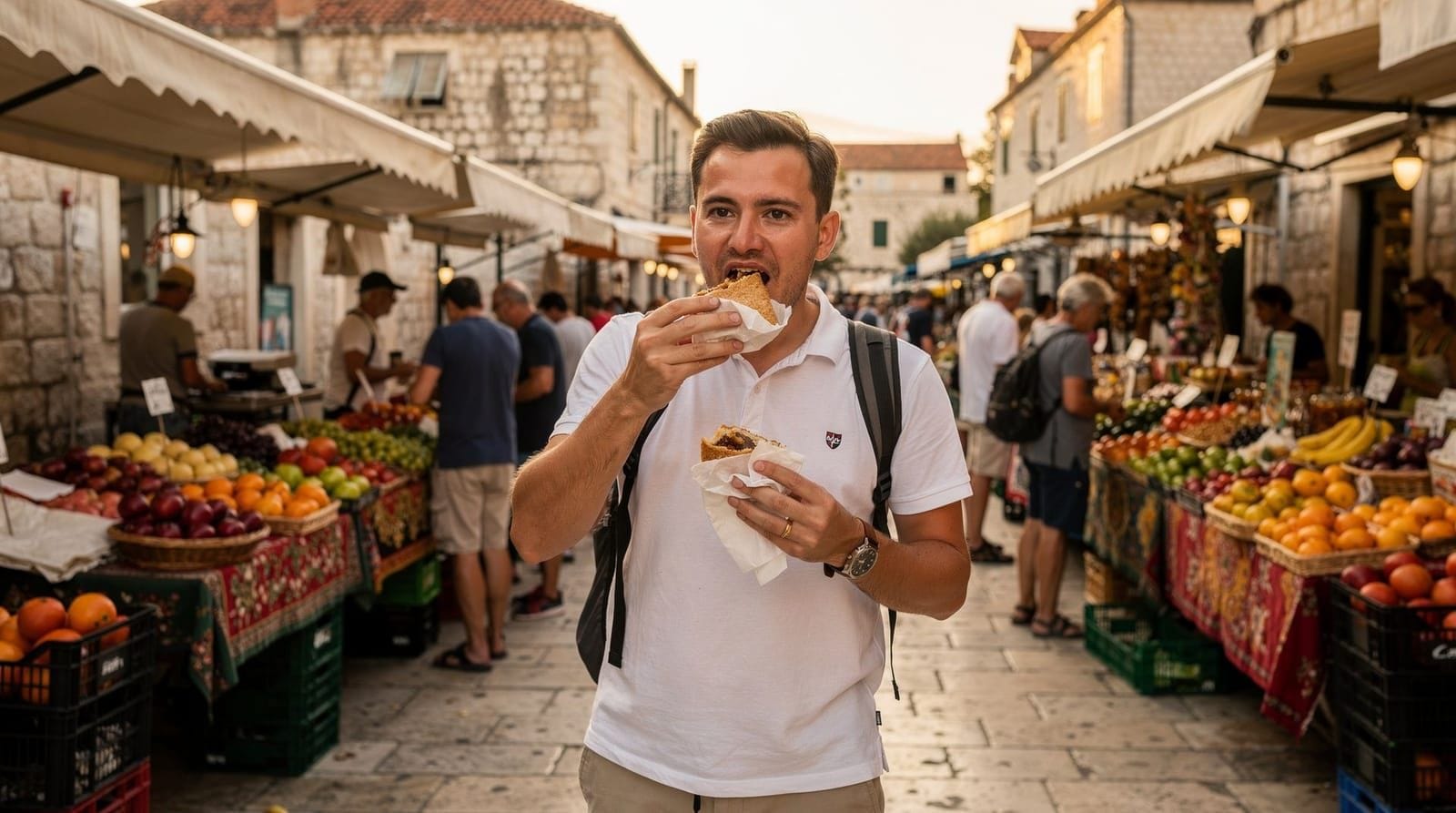
- Markets and outdoor produce stalls (tržnica/pijaca)
- Small island businesses (some accept cards, many prefer cash)
- Parking meters and car parks (many are cash or app-based)
- Ferry kiosks on smaller islands
- Tips (always cash)
- Small churches, local festivals, craft stalls
- Rural areas and village shops
The rule of thumb: anything with “tourist infrastructure” will take a card; anything genuinely local may prefer cash.
ATMs in Croatia: the safe way
ATMs are plentiful in cities and tourist centres. On smaller islands or in rural areas, they may be scarce — plan accordingly.
Use bank ATMs
The following bank ATMs are safe and offer fair rates:
- Erste Bank (blue/red branding) — widespread
- PBZ (Privredna Banka Zagreb) — widespread
- ZABA (Zagrebačka Banka) — widespread
- Splitska Banka — common in Dalmatia
- OTP Banka — present in larger towns
Avoid Euronet ATMs
Euronet operates a network of standalone yellow ATMs in tourist areas across Europe, including Croatia. These machines:
- Offer exchange rates 5–15% worse than the real rate
- Charge fixed fees (€3–5) on top of the poor rate
- Are deliberately positioned near tourist spots to catch visitors unfamiliar with the local banking landscape
If an ATM is yellow, standalone (not in a bank), and offers a “convenient” rate in your home currency — walk on.
Decline Dynamic Currency Conversion (DCC)
At an ATM or card terminal, you may be offered the option to complete your transaction in your home currency (British pounds, US dollars, Australian dollars, etc.). This is called Dynamic Currency Conversion and it benefits the Croatian bank or merchant, not you. The conversion rate is typically 3–8% worse than your home bank’s rate.
Always choose: “Charge in EUR” or “Continue without conversion” or “No, pay in local currency.”
The best cards to use in Croatia
If you travel regularly, a fee-free travel card saves meaningful money.
For UK residents:
- Starling Bank — no foreign transaction fees, good ATM allowance
- Chase UK — no foreign transaction fees
- Revolut — no fees up to monthly limit; extra fees above
- Wise — good rates, small ATM fee above monthly threshold
For US residents:
- Charles Schwab debit card — reimburses all ATM fees worldwide; excellent for travel
- Capital One Venture (credit card) — no foreign transaction fees
- Wise — multi-currency account, good rates
For Australian residents:
- Wise and ING Australia are popular fee-free options
Using a standard bank card with 2–3% foreign transaction fees on a two-week Croatia trip at €1,500 total spend = €30–45 in fees that a travel card eliminates.
How much cash to carry
A reasonable amount to have available at any time in Croatia: €100–200.
You can withdraw more at any bank ATM. Having this amount covers:
- Casual restaurant meals at konobas that prefer cash
- Market shopping
- Tips for guides, drivers, hotel housekeeping
- Parking (where card not accepted)
- Small island businesses
- Incidentals
For a two-week trip, plan to withdraw €300–500 in cash over the course of the stay, depending on your eating habits and activities.
Currency exchange in Croatia
If you are arriving with foreign currency to exchange:
- Banks offer the best rates (buy/sell spread similar to interbank). Open Monday–Friday, limited Saturday hours.
- Exchange offices (mjenjačnica) — plentiful in tourist areas; rates vary. Check the rate and any commission before handing over money. Some display competitive rates but charge a flat fee that negates the benefit.
- Airport exchange desks — convenient but typically poor rates. Avoid for large amounts. Withdraw from an airport ATM instead, or exchange only the minimum.
- Hotels — usually offer poor rates and charge commission. Use only for small amounts in emergencies.
Best approach: Arrive with some euros in cash (€50–100) and withdraw more as needed from bank ATMs during your trip.
Paying for things in Croatia: practical notes
Splitting bills: Croatia restaurants rarely split bills. Pay the full amount and sort it among yourselves. Some will try; most will not.
VAT (PDV): Croatia’s standard VAT rate is 25% (reduced rates apply to some categories). Prices shown in menus and shops are final prices including VAT.
Receipts: By law, businesses must issue a receipt (račun) for every transaction. This has been enforced via the fiscalisation system since 2013. You should receive a receipt for every purchase.
Price negotiation: Not a Croatian norm for tourism. Private sobe (rooms in family homes) outside peak season sometimes allow negotiation, as do multi-night stays. Markets: the price is usually fixed.
Currency for tipping: Always tip in cash, directly to the person. See tipping in Croatia for amounts and customs.
Money safety
Croatia has very low violent crime. Card skimming at ATMs does exist, as in all of Europe — use covered keypads, check for unusual attachments on ATM card readers, and prefer ATMs physically attached to banks over standalone street machines.
If your card is lost or stolen:
- Contact your bank immediately to block the card (most have 24-hour numbers and app options)
- Report to local police if necessary for insurance purposes
- Nearest replacement options: major cities (Zagreb, Split, Dubrovnik) have bank branches that can assist
Travel insurance covering financial loss from card fraud is recommended.
Budgeting beyond currency logistics
Knowing how to pay is only half the picture — knowing roughly how much things cost matters just as much for planning. The Croatia daily costs guide breaks down realistic spending by traveller type, from backpacker to comfortable mid-range, and the is Croatia expensive guide answers the broader question of how the country compares to its Mediterranean neighbours. If you are trying to trim costs specifically, the Croatia on a budget and Croatia budget tips guides go deeper into where the savings actually are — often accommodation timing and ferry booking rather than day-to-day spending.
Planning your total trip cost
Once you understand the currency and payment landscape, the next practical step is estimating what a full trip will actually cost door to door — flights, accommodation, food, activities and transport combined. The Croatia trip cost guide walks through a full budget for different trip lengths and styles, which is more useful for planning purposes than the day-to-day payment logistics covered here. If this is your first visit, the first time in Croatia guide and the Croatia entry requirements guide cover the wider practical groundwork alongside money matters.
Frequently asked questions about Money in Croatia
Does Croatia use the euro?
Yes — Croatia adopted the euro on 1 January 2023. The Croatian kuna is no longer valid currency. Eurozone visitors need no currency exchange; all other visitors exchange to euros.Can I use a card in Croatia?
Yes, cards are widely accepted in hotels, restaurants, shops and tour operators in tourist areas. However, carry cash for smaller konobas, markets, small island businesses, parking meters, ferry kiosks, tips and rural areas.Are there good ATMs in Croatia?
Yes — ATMs are plentiful in cities and coastal towns. Use bank ATMs (Erste, PBZ, ZABA, Splitska Banka). Avoid Euronet standalone yellow ATMs — they offer poor exchange rates and charge high fees.Should I use my home currency or euros when paying by card?
Always choose to be charged in euros (EUR). If offered the option to pay in your home currency, decline — this is called Dynamic Currency Conversion (DCC) and the exchange rate is much worse than your card's rate.Can I exchange currency in Croatia?
Yes — exchange offices (mjenjačnica) operate in cities and tourist areas. Compare rates before exchanging. Banks generally offer fair rates. Avoid airport exchange desks for large amounts.How much cash should I bring to Croatia?
Carrying €100–200 in cash is sensible for smaller expenses. You can withdraw more as needed from bank ATMs. Croatia is not a cash-heavy destination overall, but pure card travel leaves you exposed in some situations (small islands, tips, parking, markets).Are there bank charges for using cards in Croatia?
Check with your bank before travel. Many UK, US and Australian bank cards charge foreign transaction fees of 1–3%. Fee-free travel cards (Wise, Revolut, Starling in the UK; Charles Schwab in the US) save significant money on longer trips.
Top experiences
Best-rated activities across GetYourGuide and Viator.

Mostar and Herzegovina Tour with Kravica Waterfall from Split & Trogir
- Viator

3Hour ALL-INCLUSIVE Sunset Dolphin Watching from Medulin onSandra
- Viator

Dolphin Watching & Sunset Boat Tour With Drinks & optional Dinner
- Viator

Fantastic DOLPHIN & SUNSET TOUR with dinner ( Pula-NP BRIJUNI )
- Viator

Medulin :All-Inclusive Pirate Boat Dolphin Watching Sunset Cruise
- Viator

Mostar & Kravice waterfalls full-day guided tour from Split
- Viator