Opatija travel guide
Opatija is Croatia's grand old dame — Habsburg-era villas, the Lungomare promenade, lush parks, and the Kvarner coast without the summer crush.
Zagreb: Truffle hunting, Istrian gems, Motovun and Opatija day trip
Quick facts
- Best time
- May–June, September–October
- Days needed
- 2–3 days
- Getting there
- Bus from Rijeka (20 min) or Zagreb (3 h)
- Budget per day
- €70–€150
Opatija is the original Croatian resort town — a place where Austro-Hungarian emperors, Viennese aristocrats, and assorted European nobility once took the sea air along a promenade lined with magnolias and century-old villas. Today it remains one of the most graceful destinations on the Adriatic, offering a quieter, more refined alternative to the packed beaches of Dalmatia.
The Lungomare coastal walkway stretches 12 kilometres from Volosko in the north to Lovran in the south. Walking it at sunset, past wrought-iron lampposts, overgrown wisteria, and the occasional glimpse of Kvarner Bay shimmering between historic hotels, you understand why the Habsburgs called this place the “Nice of the Adriatic.”
The Lungomare and the seafront
The Lungomare (officially the Franz Joseph I Promenade) is Opatija’s defining feature. Completed in 1889, it remains one of the most beautiful coastal walks in the entire Mediterranean, connecting a string of Habsburg-era resorts, fishing harbours, and rocky swimming coves along the foot of the Učka mountain.
Start in Volosko, a working fishing village that has quietly become one of Croatia’s best dining destinations, and walk southward through Opatija itself, past the famous Maiden with the Seagull sculpture, and on to the vine-covered town of Lovran. The full 12 kilometres takes roughly three hours at a leisurely pace; most visitors cover the central Opatija–Volosko section in an hour.
Swimming is from concrete platforms and rocky ledges rather than sandy beaches. The water in the Kvarner Gulf is clear and noticeably cooler than the Dalmatian south; comfortable swimming runs from June to late September.
What to see in Opatija
Villa Angiolina and the Park occupy the heart of the old resort. The 19th-century villa — which triggered the entire Opatija tourism boom when Austrian industrialist Iginio Scarpa built it in 1844 — sits in a botanical garden filled with exotic species: Japanese camellias, American sequoias, and Chinese bamboo groves. The garden is open year-round and free to enter.
St James’s Church stands just off the seafront, a neo-Gothic structure with fine views over the bay from its terrace. The small chapel is the oldest preserved building in town.
The Imperial Hotel (Kvarner Palace), opened in 1884, was the first hotel on the Adriatic coast. Its grand white facade still dominates the seafront. Even if you’re not staying, it’s worth walking through the lobby.
Učka Nature Park rises steeply behind Opatija to 1,396 metres. The marked trails from town are challenging but reward hikers with panoramic views over the Kvarner islands — Krk, Cres, and Lošinj spread out below on a clear day. The road to the summit (with a lookout tower) also makes a fine short drive.
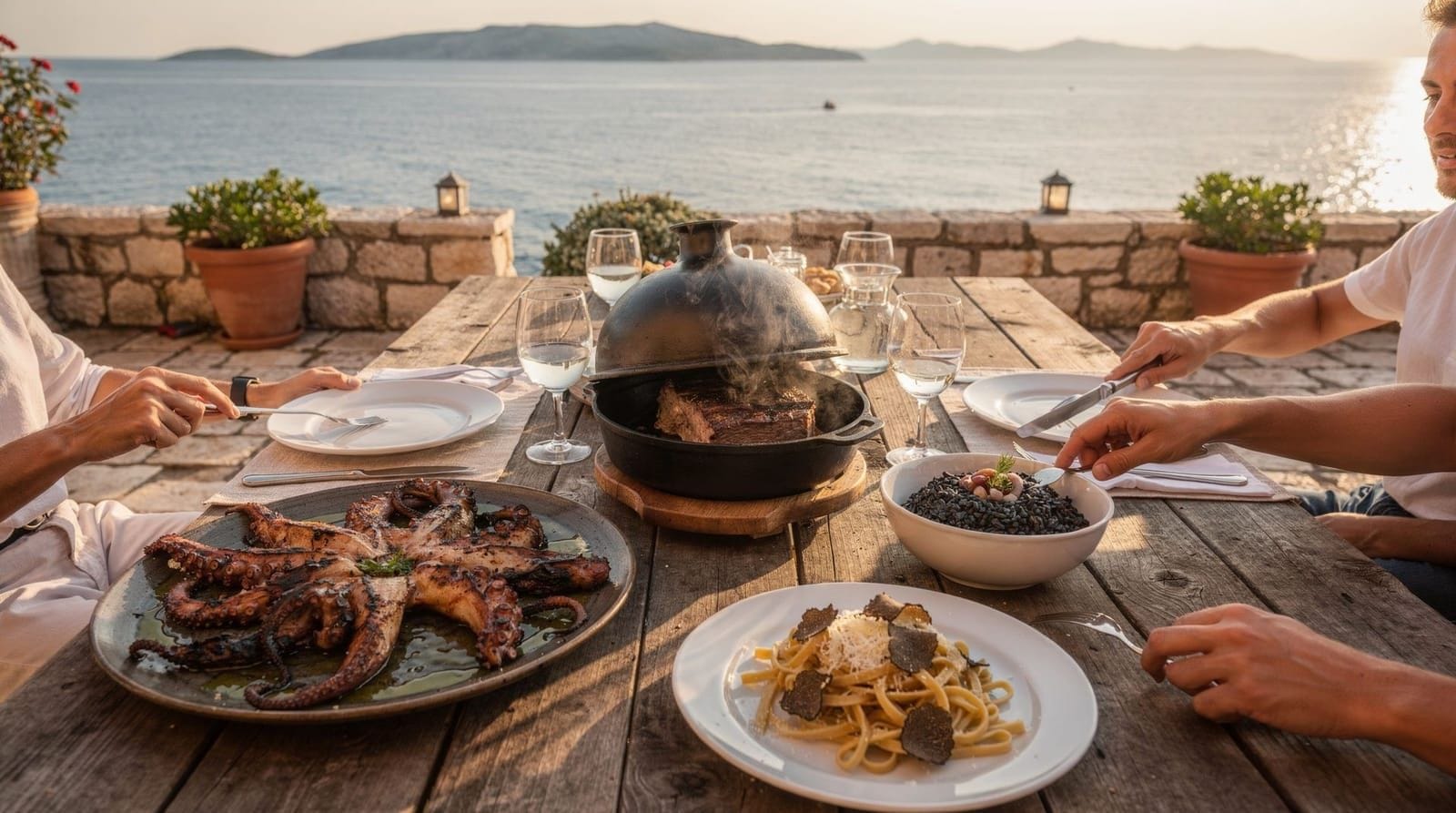
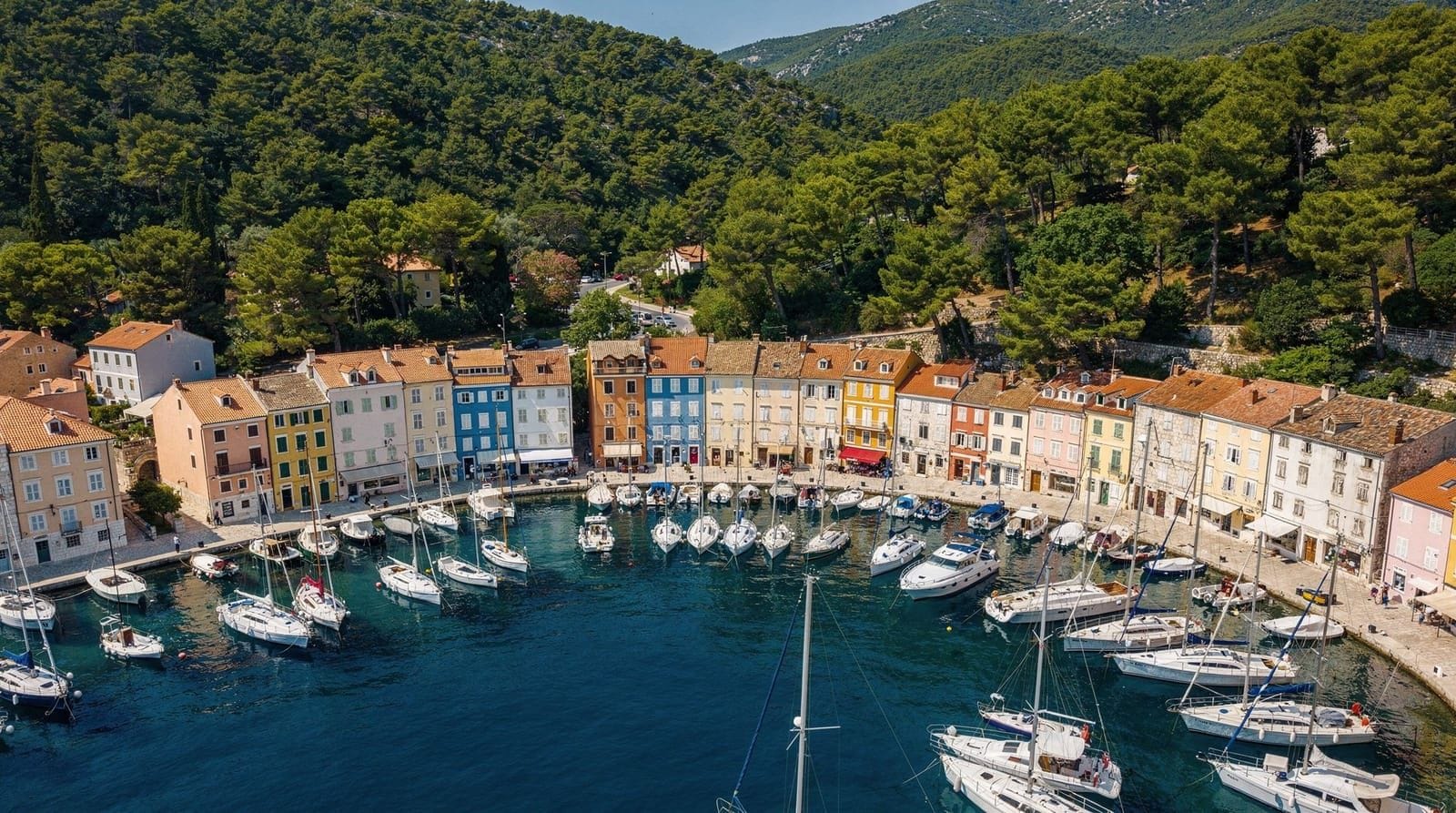
Volosko deserves a dedicated evening. This former fishing village is now known for excellent konobas, where local chefs combine Kvarner seafood with Istrian ingredients — scampi, scallops, and the famous Kvarner prawns (škampi).
Getting to and around Opatija
From Zagreb: Bus services run frequently (3–3.5 hours, around €15–20). The drive by car takes around 2.5 hours via the A6 motorway.
From Rijeka: City bus routes connect Opatija and Rijeka in around 20–25 minutes; taxis and ride-shares are also straightforward. Rijeka has a mainline railway station and ferry connections.
From Istria: Opatija is under an hour from Poreč and around 90 minutes from Pula by car, making it a natural add-on to an Istrian circuit. Buses connect Pula with Rijeka/Opatija via the coastal road.
Getting around: The Lungomare and the town centre are fully walkable. For Učka and inland villages, a car or organised excursion is needed. If you’re driving yourself around the Kvarner, the renting a car in Croatia guide covers licences, insurance add-ons and the toll roads you’ll actually use.
Where to stay in Opatija
Opatija’s hotel stock skews toward grand, slightly formal properties. The Hotel Kvarner is the historical benchmark — old-world charm with a pool terrace. Villa Ariston offers smaller, more intimate Belle-Époque rooms. Budget travellers will find better-value guesthouses (sobe) in the residential streets above the promenade or in neighbouring Lovran.
Self-catering apartments are plentiful; book early for July–August when Croatian domestic tourists fill the Riviera.
Where to eat and drink
Volosko is the culinary centre of gravity. Konoba Draga di Lovrana is one of the most lauded restaurants in the region, combining local scampi and truffles with careful wine pairings. Le Mandrac is the modernist choice, right on the harbour.
Back in Opatija centre, the café culture along the promenade is very much part of life here. Order a Croatian espresso (kava) and sit outside. Prices are measurably higher than the Croatian interior but lower than Dubrovnik or Hvar in peak season.
Kvarner prawns (Kvarnerski škampi) are among the finest in the Adriatic — usually grilled simply with olive oil and garlic, or served in a bisque. Order them whenever you see them on a daily specials board.
History in brief
Opatija’s story as a resort begins in 1844, when Iginio Scarpa — an Austrian-Italian businessman from Rijeka — built Villa Angiolina and planted an exotic garden around it on what was then a tiny fishing village. The climate he chose was not accidental: the bay faces southwest, sheltered from the cold bura north wind by the Učka massif, and receives around 2,100 hours of sunshine per year.
The decisive moment came in 1873 when the Southern Railway reached Rijeka. Within a decade, the imperial court of Vienna had taken notice. Empress Maria Theresa, Archduke Carl Stephan, Gustav Klimt (who spent summers here), and later the Austro-Hungarian Empress Elisabeth (“Sisi”) all stayed. The Kvarner was formally declared a “health resort zone” in 1889, and the Lungomare was completed the same year.
After the Habsburg collapse in 1918, Opatija passed through Italian control (known as Abbazia) until 1947, when it became part of Yugoslavia. The grand hotels survived the 20th century remarkably intact — they were repurposed as party-approved resorts, which paradoxically preserved them. The result is one of the most authentic Belle-Époque townscapes on the Adriatic.
What to skip — honest notes
The crowded central beach platforms in July and August — Opatija’s coastline is Rocky and beautiful but not for sunbathing if you need space. In peak summer the popular concrete platforms near the centre fill very early. Either go before 9am or walk 1 km north or south to find quieter spots.
Overpriced promenade restaurants — the cafés directly on the Lungomare between the main hotel cluster and Villa Angiolina are tourist-trap territory: inflated prices, average food, and menus in six languages. Walk an extra 15 minutes to Volosko for a dramatically better meal at lower cost. The same principle applies to hotel restaurants at the landmark properties — the views justify a coffee, not dinner.
The ice cream stalls near the Maiden with the Seagull sculpture — the famous statue is unmissable, but the surrounding commercial area is the busiest, most congested point on the promenade. Pause briefly and keep walking.
Nightlife and shopping
Opatija skews toward a mature, couples-and-families demographic rather than a party crowd. Nightlife is genteel: cocktails on hotel terraces, late dinners, and the korzo (evening promenade walk) that ends around midnight rather than beginning at midnight. The casino at the Hotel Admiral offers late-night entertainment for those who want it.
Shopping is concentrated on Ulica Maršala Tita (the main inland street running parallel to the Lungomare) and the small streets behind the promenade hotels. Local products worth buying: Istrian truffle products (truffle oil, truffle-infused pasta), local wine (Malvazija from Istria, Žlahtina from Krk), and Kvarner prawn paste (škampi in jars) available from several delicatessens near the market.
A small open-air market operates near the bus station, selling local produce, lavender products, and craft items — best visited on weekend mornings.
Expanded where to eat
Opatija and Volosko have a restaurant density that vastly exceeds most towns of their size, a legacy of the Habsburg resort tradition.
In Volosko (5 minutes’ walk from central Opatija):
- Konoba Draga di Lovrana — the most celebrated restaurant on the Kvarner coast; elegant but not stuffy, with impeccable Kvarner seafood and thoughtful wine pairings. Book ahead.
- Le Mandrac — a modern restaurant right on the Volosko harbour, with a strong fish-focused menu and good positioning for watching fishing boats come and go.
- Plavi Podrum — local seafood at excellent value, unpretentious, popular with Rijeka residents who drive out for a meal.
In Opatija proper:
- Bevanda — on a private pier jutting into the bay, with seafood at the premium end of the spectrum but a genuinely remarkable setting.
- Restaurant Amfora — reliable mid-range choice for Kvarner scampi, grilled fish, and a classic Croatian seafood menu without the tourist-trap pricing of promenade neighbours.
- Kavana Slavija — the grand old café on the promenade for morning coffee and pastry; order the kroasan and sit outside regardless of season.
For a budget meal: The street behind the main market (two blocks inland from the Lungomare central section) has bakeries and burek spots where workers eat lunch. Far cheaper than anything on the waterfront.
Getting around Opatija in detail
Within the town: The Lungomare and town centre are flat enough for comfortable walking. The 12 km full walk from Volosko to Lovran is manageable and one of the area’s highlights. Rental scooters and electric bikes are available from a shop near the bus station — useful for Učka explorations and for reaching beaches beyond the promenade.
Taxis and apps: Bolt and local taxi services operate between Opatija, Rijeka, and the wider Kvarner area. Prices are moderate; the Opatija–Rijeka run costs roughly €15–20 by taxi (vs €2 by bus).
For Učka: A car or organised excursion is needed for the summit and the hilltop villages. The main road up Učka (to Vojak peak, 1,396 m) is a popular short drive with a lookout tower at the top offering extraordinary views over the Kvarner Gulf.
Day trips from Opatija
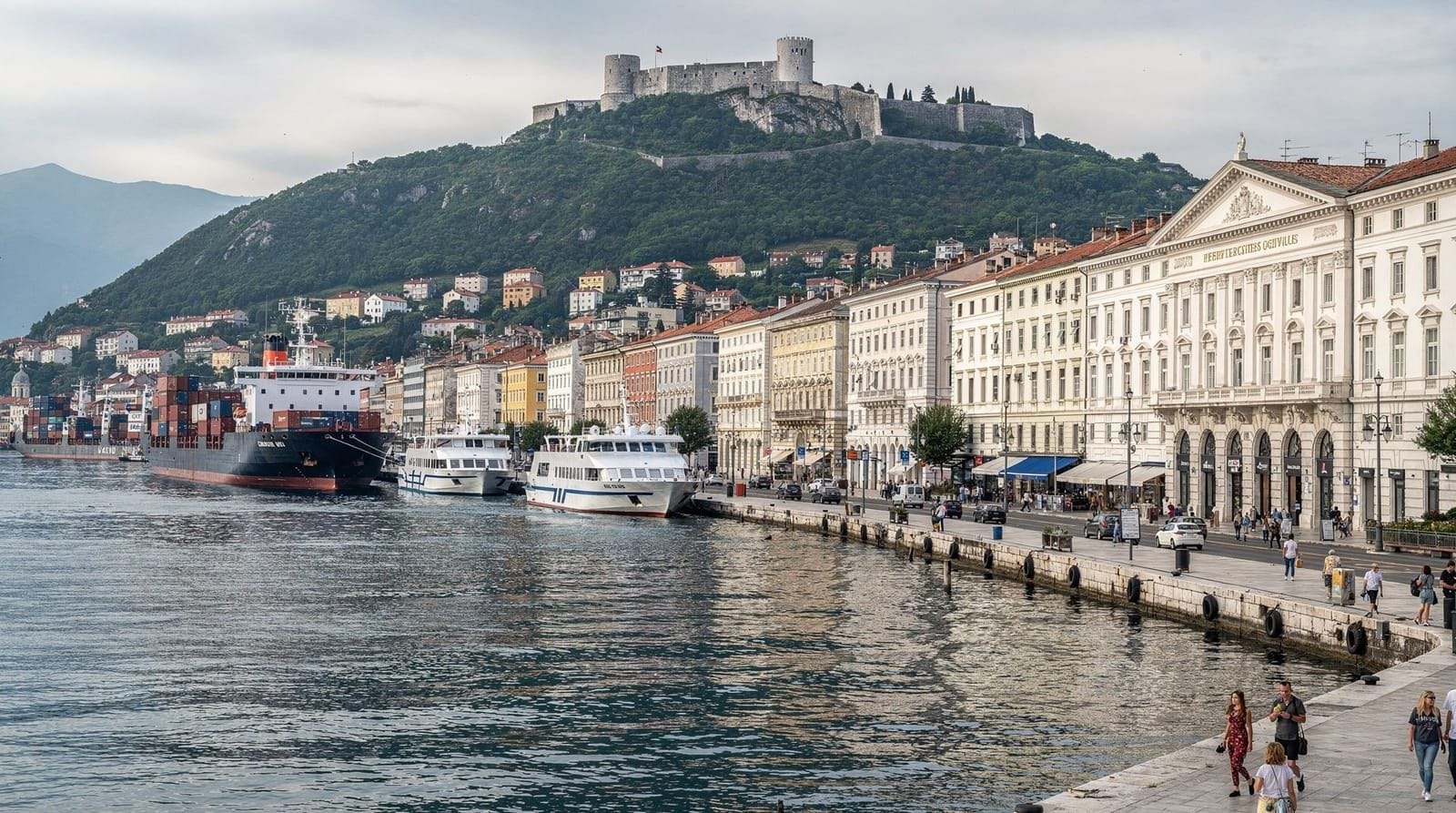
Rijeka is 20 minutes away by bus — worth a half-day for its Market Hall (Tržnica), the Trsat Castle, and the city’s underrated café scene. See the Rijeka guide for details.
Krk Island is reachable via the Krk Bridge from the mainland near Rijeka — around 45 minutes by car. The island offers a mix of package-resort beaches and quieter medieval towns. See the Krk guide.
Istrian day trips work well from Opatija: Rovinj is 90 minutes south, and Motovun and truffle-country are within two hours. A guided day excursion combining Motovun, Istrian gems, and the return via Opatija is a popular option.
Lošinj is accessible by ferry from Brestova (near Opatija) across to Cres, then south — a leisurely day, or better as an overnight. See the Lošinj guide.
Where to stay in Opatija — detailed
Opatija’s hotel landscape divides into three tiers with very different price and experience profiles.
Grand historic hotels:
- Hotel Kvarner (also known as Hotel Kvarner Palace) — the original Opatija hotel, opened 1884. The white Belle-Époque facade, the grand staircase, and the pool terrace overlooking the bay define the experience. Not always the sharpest service, but the history and atmosphere are irreplaceable.
- Hotel Imperial — adjacent to the Kvarner Palace, slightly more modern renovation with a better spa facility. The rooftop pool has good Lungomare views.
- Villa Ariston — a smaller, more intimate option in a genuine Habsburg villa with a garden running to the sea. For couples who prefer character over scale.
Mid-range and boutique options:
- Hotel Agava — a well-run mid-range hotel on the inland side of the main road; comfortable and significantly cheaper than the seafront properties.
- Hotel Milano — near the Villa Angiolina park, with a good position and reasonable rates for the standard of room.
Budget and self-catering: The residential streets above the Lungomare (climbing toward Učka) have family-run sobe (rooms) at €40–70 per night — a very significant saving over promenade hotels. Look for the “Sobe / Rooms” signs on the houses in the streets above Ulica Maršala Tita. Self-catering apartments on platforms offer the best value for longer stays.
Opatija vs Dalmatia — which suits you
Opatija sits in the Kvarner, not Dalmatia, and the two halves of the Croatian coast feel different enough that it’s worth knowing which one you actually want before booking. The Istria vs Dalmatia guide covers the broader regional split in detail; the short version for Opatija specifically is below.
| Opatija (Kvarner) | Dalmatia (Split/Dubrovnik/Hvar) | |
|---|---|---|
| Coastline | Concrete platforms and rocky ledges, cooler water | Pebble and sand coves, warmer water |
| Pace | Genteel, promenade walks, spa culture | Louder, island-hopping, nightlife-heavy in places |
| Crowds | Busy but rarely overwhelming, even in August | Dubrovnik and Hvar can feel saturated in peak summer |
| Best for | Couples, honeymooners, wellness breaks | Beach-and-island holidays, sailing, party crowds |
| Architecture | Habsburg Belle-Époque villas and parks | Venetian and Roman old towns |
Couples planning a honeymoon around the villas and thermal spas here should also check the Croatia honeymoon guide for how Opatija fits into a wider two-region trip.
Best time to visit Opatija
May and June are the sweet spot: the magnolias and camellias are flowering, the Lungomare is uncrowded, and the sea is warming up. September and October offer warm weather with almost no tourists. July and August are busy — the Kvarner Riviera draws Croatian families and Italian visitors in particular — but Opatija never reaches Dubrovnik-level congestion.
Winter is mild compared to the Croatian interior (the Učka massif shields the bay from cold north winds). The hotel and restaurant scene thins out but doesn’t close entirely; the promenade walk remains beautiful year-round.
FAQ
Is Opatija worth visiting if I’ve already seen Dubrovnik or Split? Yes, and arguably more so — Opatija offers a genuinely different Croatian experience: Belle-Époque architecture, thermal spa culture, and a promenade pace rather than another Venetian old town. Pair it with a short hop to Rijeka for contrast.
Can I swim in Opatija, or is it just a walking destination? You can swim, but expect concrete platforms and rocky ledges rather than sand — the water is clear and comfortably swimmable from June to late September, just noticeably cooler than the Dalmatian south.
Top experiences
Bookable activities with verified prices and instant confirmation on GetYourGuide.