Krk Island travel guide
Krk is Croatia's largest and most accessible island — connected by bridge, with medieval Krk Town, Baška's famous beach, and year-round ferry links…
Quick facts
- Best time
- June, September; year-round for Baška
- Days needed
- 2–4 days
- Getting there
- Krk Bridge from the mainland (near Rijeka); ferry from Valbiska to Merag (Cres)
- Budget per day
- €65–€130
Krk (pronounced roughly “Kurk”) is simultaneously Croatia’s largest island and its most accessible — connected to the mainland by the Krk Bridge, the only fixed link between any Croatian island and the coast. This convenience makes it the obvious first-island choice for travellers driving from Zagreb or the European hinterland, and it gives Krk a year-round liveliness that more remote islands lack.
The island is bigger than it looks on a map: 405 square kilometres of varied terrain ranging from the lush, forested north around Punat to the dramatically barren, stone-bleached south near Baška. Medieval Krk Town anchors the west coast, the beach resort of Baška draws most summer visitors to the south, and a string of smaller harbours and villages fills the interior and coastline between them.
| Where | Kvarner Gulf, connected by bridge near Rijeka |
| Cost | Around €65–€130/day |
| Time needed | 2–4 days |
| Getting there | Krk Bridge from the mainland; ferry from Valbiska to Merag (Cres) |
| Best time | June and September; year-round for Baška |
Krk Town
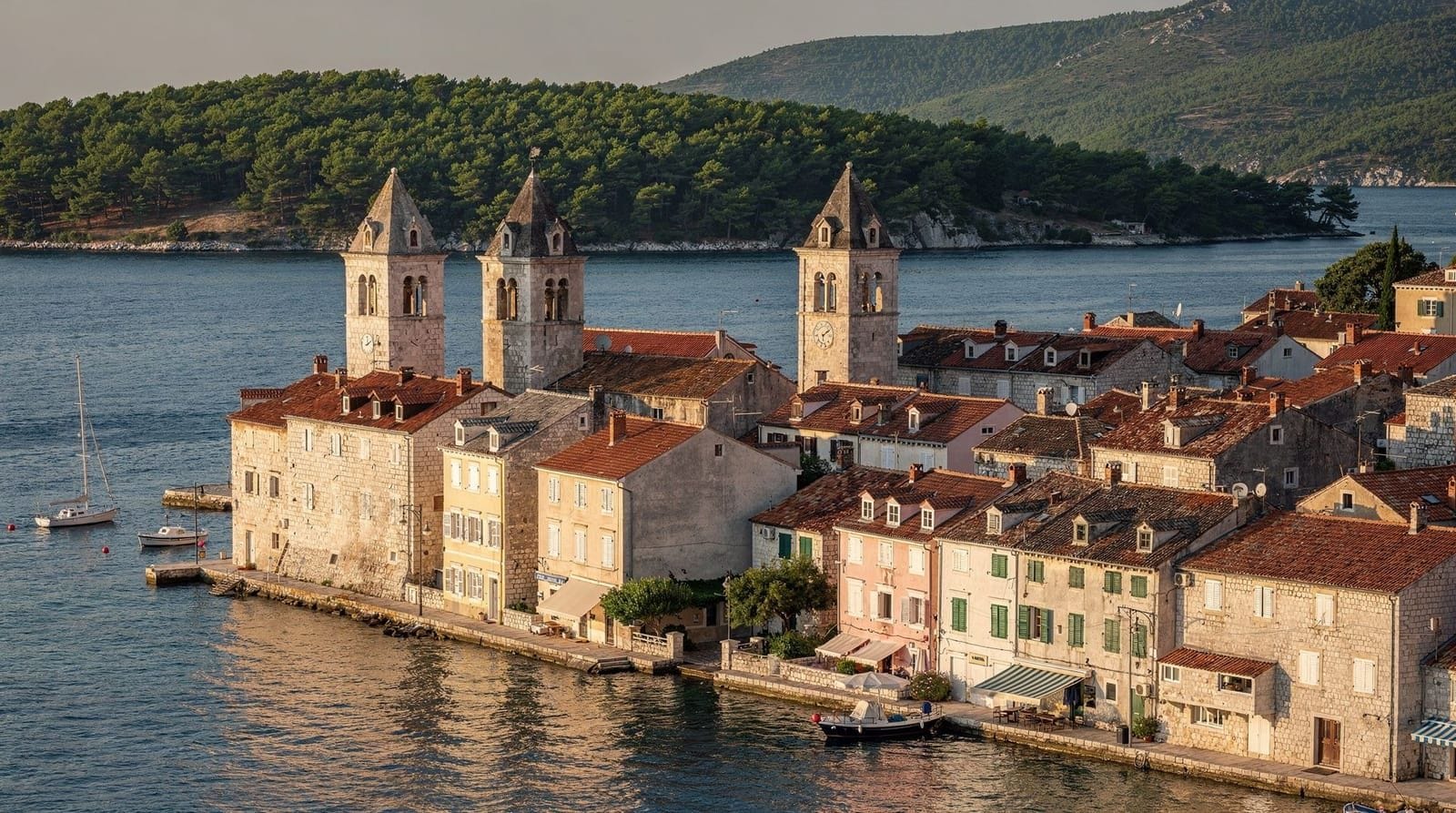
Krk Town, the island’s small capital, is a well-preserved medieval settlement built on foundations going back to the Romans and Liburnians. The compact old town sits within surviving walls from the Frankopan era — the powerful Croatian noble family who ruled the island for centuries. The Cathedral of the Assumption (12th–15th century) and the adjacent Frankopan Castle overlook the harbour and form the visual core of the old town.
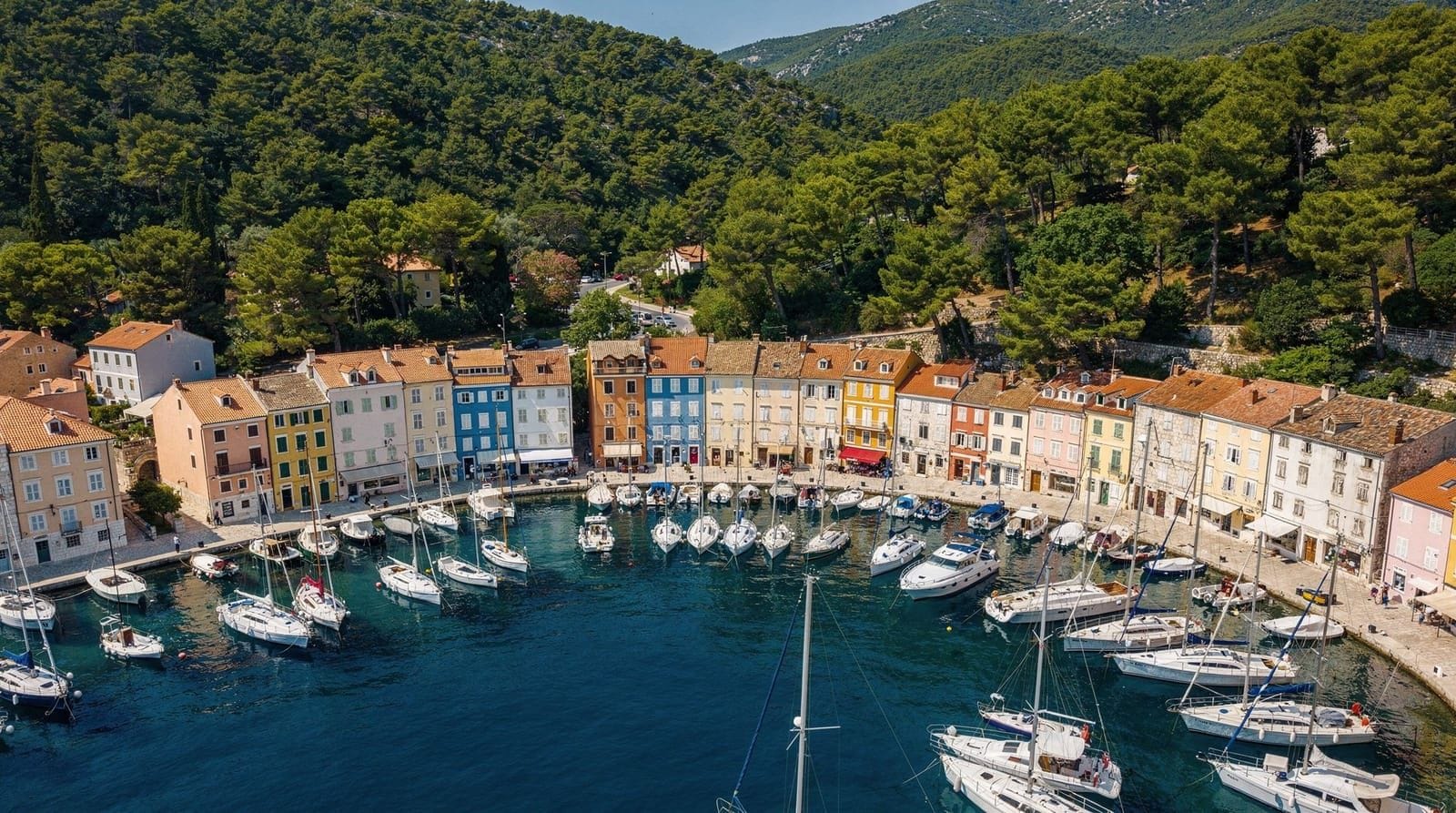
The harbour promenade (Riva) is lined with café-bars and restaurants — good for an evening meal of fresh Kvarner fish or the island’s signature scampi. The old town is small enough to walk end-to-end in 15 minutes, but its lanes repay slower exploration.
Baška
Baška, at the island’s southern tip, is home to one of Croatia’s most celebrated beaches — a 2-kilometre crescent of fine pebble-and-gravel shore backed by the dramatic bare limestone of the Velebit range on the mainland. It is genuinely impressive: long, well-organised, with clear turquoise water and mountain scenery that gives it a different visual scale from most Croatian beaches.
The town of Baška is a working village that has adapted gracefully to tourism, with a good selection of restaurants, ice-cream shops, and accommodation. In peak July–August, the beach gets very crowded; in June and September, it is far more enjoyable. The bay faces south-southeast, which means it catches afternoon sun beautifully.
The Baška Tablet (Bašćanska ploča) — discovered in the local church of St Lucy and now a copy on display there — is one of the most important documents in Croatian history: an 11th-century stone inscription in the Glagolitic script, the earliest known example of written Croatian.
The rest of the island
Punat on the south coast hosts a large marina and the islet of Košljun, reachable by a short boat ride. The Franciscan monastery on Košljun contains an interesting collection of religious art and a rare 15th-century polyptych.
Vrbnik perches dramatically on a cliff above the northeast coast — a medieval village famous locally for its Žlahtina white wine (crisp, mineral, made only here) and for the street Klančić, reportedly the narrowest in the world at around 43 centimetres at its tightest point.
Njivice and Malinska on the northwest coast offer quieter, more sheltered swimming and are popular with Croatian families.
Žlahtina wine
Žlahtina is the autochthonous white grape of Krk, grown almost exclusively in the Vrbnik area. The wine it produces is dry, pale, and relatively light — with a pleasant saline mineral note that locals attribute to the island’s proximity to the sea. Ask for it in any restaurant on the island; a glass with a plate of Kvarner scampi or local cheese is a quintessentially Krk experience.
Getting to and around Krk
By car from the mainland: The Krk Bridge connects the island to the Adriatic coastal road at Krk Bridge — a toll applies (around €4–6 depending on vehicle size). From Rijeka, the bridge is around 40 minutes; from Zagreb, allow 2.5–3 hours total.
By bus: Buses connect Rijeka with Krk Town and Baška via the bridge. Services are frequent in summer, reduced in winter. From Zagreb, there are direct seasonal bus services.
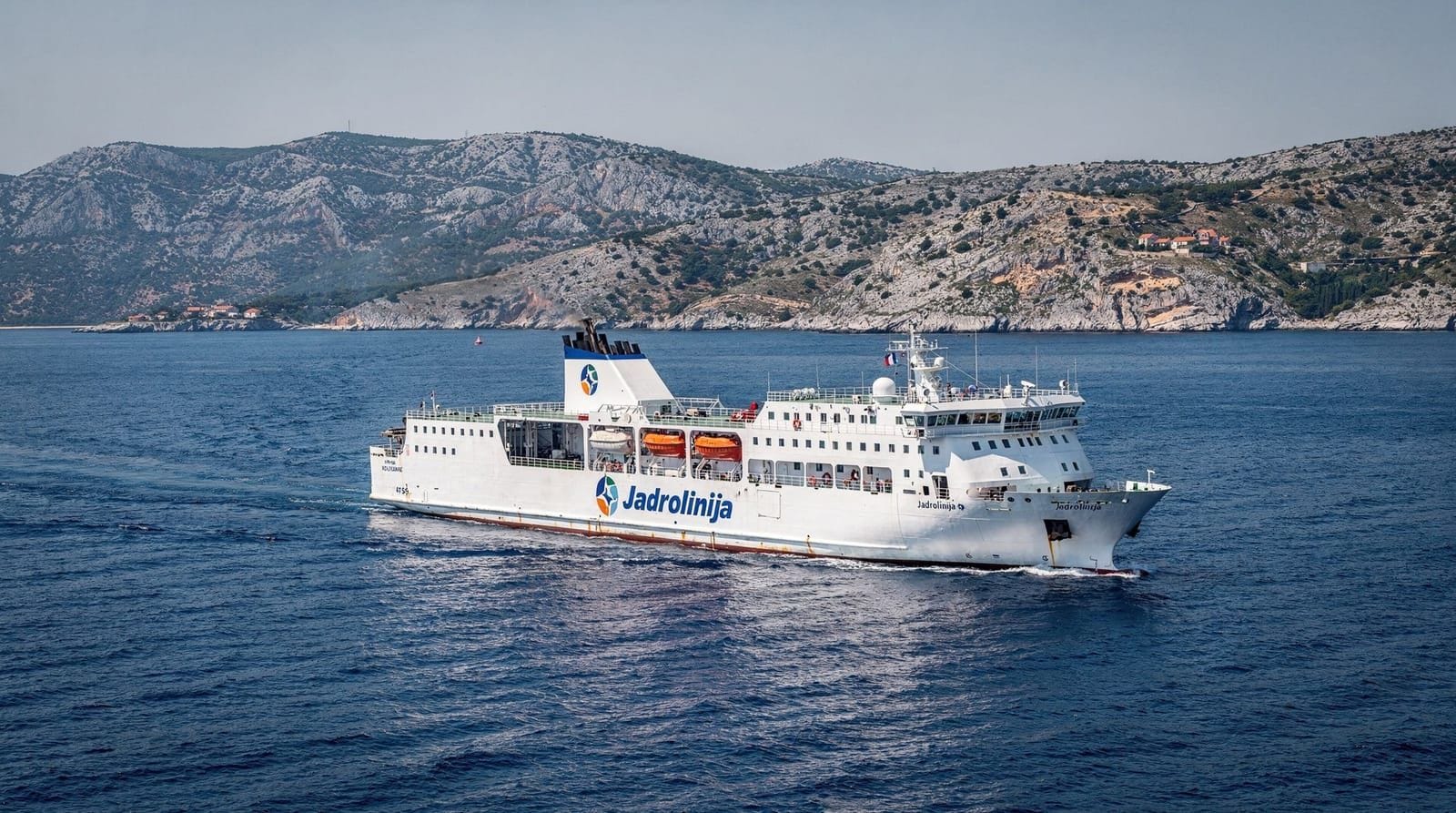
By ferry: Jadrolinija car ferries run from Valbiska (western Krk) across to Merag on the island of Cres. This is useful for Kvarner island-hopping — Cres connects southward toward Lošinj. Ferries also run from Šilo (northeast Krk) to Crikvenica on the mainland.
Getting around the island: A car or scooter gives maximum flexibility. Local buses connect the main villages but run infrequently between smaller settlements. Bicycles can be rented in Krk Town and Baška.
Where to stay
Krk Town has the best hotel selection. Hotel Dražica has a pool and beach access in a convenient location. Apartment rentals dominate the market overall — Baška has a wide range at various price points. Book early for August; June and September offer far more availability and better prices.
Where to eat
Fresh fish and Kvarner scampi are the staples. Konoba Nono in Krk Town is a local institution with solid traditional cooking. In Baška, the waterfront restaurants are all similar in quality — walk the strip and look for daily specials featuring local fish over frozen imports. Vrbnik has a handful of wine-focused restaurants pairing Žlahtina with local lamb and cheese.
Day trips from Krk
Cres and Lošinj: The Valbiska–Merag ferry opens up the southern Kvarner islands. Cres is wild and underpopulated; Lošinj (connected to Cres by a drawbridge) is more developed. See the Lošinj guide.
Rijeka and Opatija: Both are within easy driving range for a half-day. Rijeka has the castle and the market; Opatija has the Lungomare promenade.
Rab Island: No direct ferry — you’d backtrack to the mainland and head south, or loop via Cres. Worth it as an overnight rather than a day trip. See the Rab guide.
History in brief
Krk has been inhabited since at least the Bronze Age, but its defining historical chapter comes from the Frankopan dynasty — one of the most powerful Croatian noble families, whose rule over the island spanned roughly 1100 to 1480. The Frankopan lords left behind the fortified walls of Krk Town, the castle that still dominates the harbour, and a chain of smaller fortified towers around the island.
The island’s other great historical contribution is linguistic: the Glagolitic script, the oldest alphabet created specifically for a Slavic language, was used on Krk and the surrounding Kvarner region longer than almost anywhere else in Croatia. The Baška Tablet (11th century), discovered in the Church of St Lucy in Baška, is written in Glagolitic and is among the most important documents in Croatian cultural history — effectively the island’s claim to a place in the story of written Croatian identity.
In the medieval period, Krk was part of the broader Venetian trade network, and the Cathedral of the Assumption in Krk Town preserves mosaics and stonework from that era. After the Frankopans, Venetian then Habsburg rule followed; the island became part of Yugoslavia in 1945 and modern Croatia in 1991.
Expanded where to eat
Krk’s restaurant scene is shaped by its two distinct populations — the medieval harbour town of Krk Town and the beach resort of Baška — and quality varies accordingly.
In Krk Town:
- Konoba Nono — the local institution; generous portions of Kvarner scampi and grilled fish at honest prices. Long tables, unpretentious, reliable.
- Konoba Šime — slightly more polished than Nono, with a good selection of local lamb (janjetina) alongside the seafood.
- Krčka konoba — in the old town lanes, a reliable choice for a grilled fish plate and a carafe of Žlahtina.
In Baška:
- The waterfront strip has a row of similar restaurants; walk to the far end of the Riva (away from the main beach entrance) for better value and calmer atmosphere.
- Konoba Mimi and Konoba Škoj are both locally recommended for fresh fish over frozen imports — look for the daily catch board.
In Vrbnik:
- Nada is the celebrated choice in Vrbnik — a family-run konoba pairing the island’s Žlahtina wine with local lamb, cheese, and seafood. Worth the drive north from Krk Town.
What to order: Kvarner scampi (in any form — grilled, in pasta, in risotto), local lamb slow-cooked under the peka lid, and a carafe of chilled Žlahtina. Cheese from the island (a mild, slightly salty sheep’s milk cheese) makes a good starter.
Getting around Krk in detail
A car is the most practical option for exploring the full island. The main road runs north-south through the interior; coastal roads add time but scenery. Distances are small — Krk Town to Baška is 35 km but takes 30 minutes.
Without a car: Buses connect Krk Town with Baška (1 hour, several daily in summer), Punat, and the northern settlements of Malinska and Njivice. Vrbnik is harder to reach without your own transport — a taxi from Krk Town costs around €15–20.
Bicycles and scooters: Available for hire in Krk Town and Baška. The island terrain includes some climbs but nothing extreme; e-bikes make the interior routes accessible for all fitness levels. The coastal road between Baška and Stara Baška (the small cove to the west) is one of the best cycling routes on the island.
Ferry connections: Valbiska (western coast, 10 km from Krk Town) connects by car ferry to Merag on Cres — the essential link for island-hopping southward toward Lošinj.
What to skip — honest notes
Baška in the last two weeks of July: The beach is magnificent but capacity is genuinely strained at the absolute peak. The main access road backs up; the beach chairs are elbow-to-elbow. Arrive before 8:30am or visit in June/September.
The northern resort of Krk Town’s beach area — the small beach immediately beneath the old town walls is pretty but gets very busy and does not have the clear water quality of Baška. Walk 20 minutes north along the coast to find better swimming.
Package-resort hotels in Malinska and Njivice — these northwest coast resorts are perfectly pleasant but have little character beyond the beach. Krk Town or Baška gives a much better base for experiencing the island properly.
Best time to visit Krk
June is consistently recommended: comfortable swimming temperatures (sea around 21–22°C), all restaurants open, beaches not yet at peak capacity. September is equally good — the sea is at its warmest, crowds have eased, and prices drop. July and August are crowded, especially around Baška, but the beach itself has enough space to absorb visitors.
The island has some year-round life (unlike more isolated islands), so shoulder-season visits from April–May and October are feasible.
Expanded where to stay in Krk
Krk’s accommodation stock is dominated by self-catering apartments, which are the best-value option for most visitors. Hotels are concentrated in Krk Town and the resort areas.
Krk Town:
- Hotel Dražica — the main hotel in Krk Town; a large resort-style property with sea views, pool, and beach access. Reliable and well-positioned.
- Hotel Marina — a smaller property near the harbour, better for those who want to be in the old town lanes rather than a poolside resort.
Baška:
- A wide range of apartment rentals surrounds the beach; quality varies significantly. Look for properties with confirmed sea views or confirmed walking distance to the beach rather than relying on the description alone.
- Hotel Corinthia Baška is the largest hotel option at Baška beach — a renovated property with direct beach access.
Vrbnik:
- A handful of guesthouses and B&Bs in the dramatic cliff-top village. The position is spectacular; road access requires care (steep and narrow).
Booking advice: Book Baška accommodation by April for July–August. Krk Town has more flexibility but still books out at peak. June and September offer 20–30% lower rates and far better availability.
Practical travel tips for Krk
The Krk Bridge toll: The toll is levied in one direction only (entering the island). As of 2026, approximately €4–6 for a standard car. Payment is by card at automated booths; the process is quick. Motorcycle rates are lower.
Driving on the island: The main road is dual-carriageway standard between the bridge and Krk Town. Secondary roads (to Vrbnik, to the south coast) are narrow and sometimes single-track with passing places; drive carefully and yield to uphill traffic as convention. Signage is reliable.
Water sports and activities: Krk Town and Baška both have operators renting kayaks, paddleboards, and snorkelling equipment. The sheltered waters east of Krk Town are ideal for kayaking; the Baška bay is good for paddleboarding. Diving centres in Krk Town offer guided dives along the island’s underwater walls.
Mobile coverage and internet: Good across the main settlements; patchy in the interior and on western hiking trails.
Krk vs the other Kvarner islands
Krk’s bridge access is a double-edged sword — it means no ferry queues, but it also means more day-tripper traffic than Kvarner islands reachable only by boat. If you want Krk’s convenience but a quieter pace, base in Vrbnik or the northern villages rather than Baška or Krk Town in peak season. For a genuinely different, wilder island character within the same region, Cres and Lošinj are reachable via the Valbiska–Merag ferry, and Rab is worth an overnight if you’re looping the wider Kvarner archipelago. The island hopping in Croatia guide covers how to sequence Krk with its neighbours efficiently.
Money on Krk
Cards are accepted at hotels, larger restaurants, and shops in Krk Town and Baška, but the smaller konobas in Vrbnik and the inland villages sometimes prefer cash — carry euros for these. See the money in Croatia guide for realistic daily budgets across the country, and renting a car in Croatia if you’re planning to explore the island’s interior beyond the two main towns.
Cycling and walking on Krk
Krk’s varied terrain — flat coastal stretches around Punat and Malinska, dramatic climbs toward Vrbnik and Baška — makes it a solid island for both easy family cycling and more demanding routes. The coastal road between Baška and the small cove of Stara Baška is one of the best rides on the island: rolling hills, sea views throughout, and light traffic outside peak season. Bike hire is available in Krk Town and Baška, with e-bikes increasingly common for tackling the steeper interior climbs toward Vrbnik.
For walkers, the path around the Punat peninsula and out toward the Košljun islet viewpoint is an easy, flat option suitable for most fitness levels, while the coastal trail south of Baška toward Stara Baška offers a tougher but more rewarding half-day hike with limestone scenery reminiscent of the mainland Velebit range across the channel. As with cycling, allow extra water and sun protection — much of the island’s walking terrain is exposed limestone with little natural shade in summer.
Bike and walking route maps are available free from the tourist information offices in Krk Town and Baška, and most rental shops can advise on which routes suit your fitness level and available time — useful given how much the terrain varies across the island’s 405 square kilometres.