Rab Island travel guide
Rab Island combines Croatia's finest medieval walled town with genuinely sandy beaches — a rare combination in the Kvarner that rewards the effort to…
Quick facts
- Best time
- June–September
- Days needed
- 3–4 days
- Getting there
- Ferry from Jablanac (20 min) or Valbiska/Krk; seasonal ferry from Rijeka
- Budget per day
- €60–€130
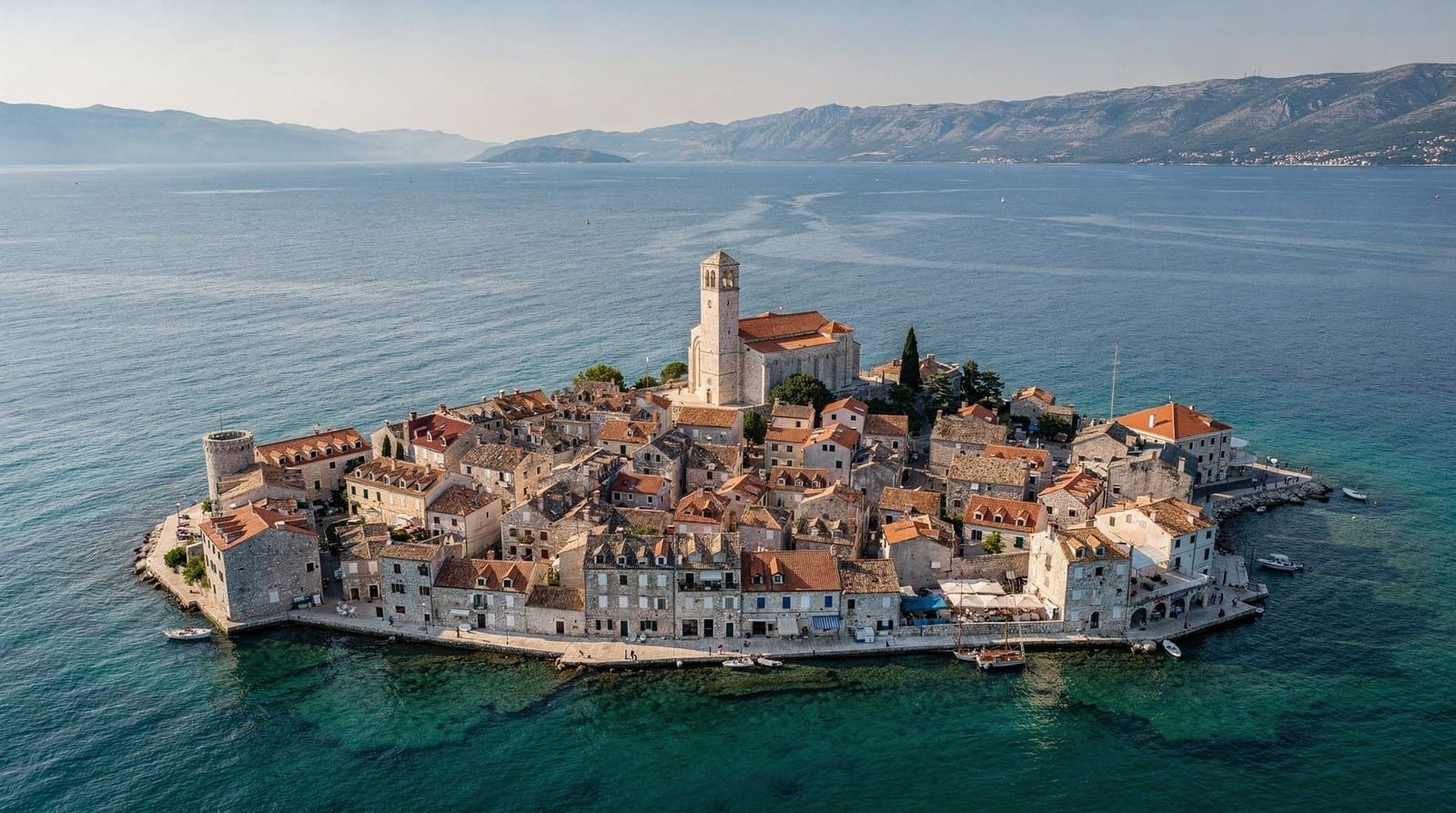
Rab is one of those islands that rewards the slightly harder effort of getting there. It lacks the bridge convenience of Krk and the wellness branding of Lošinj, but what it has is arguably better: a medieval walled town of extraordinary beauty, four Romanesque bell towers rising against the Velebit mountain backdrop, and sandy beaches that are genuinely rare along the Croatian coast.
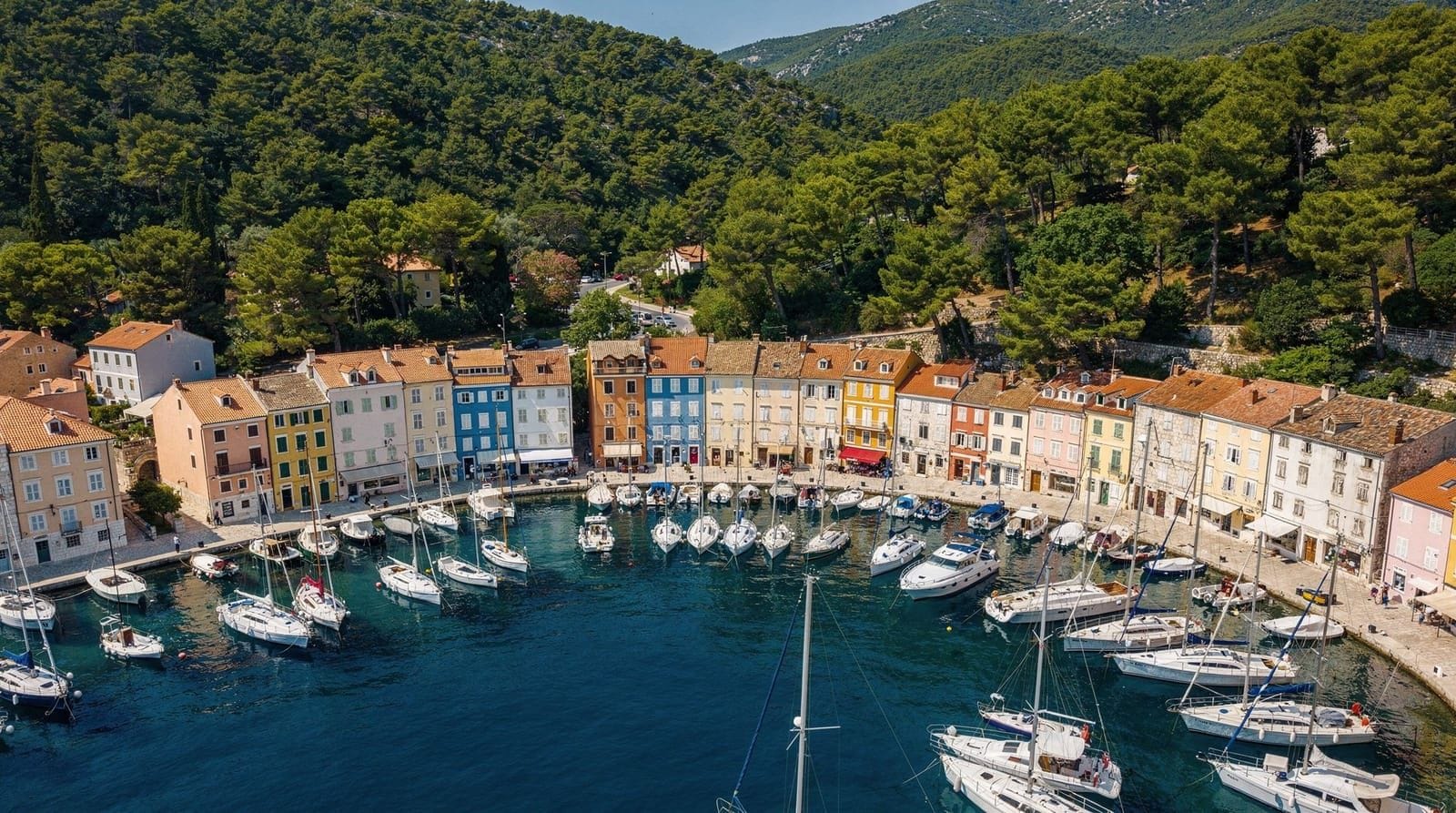
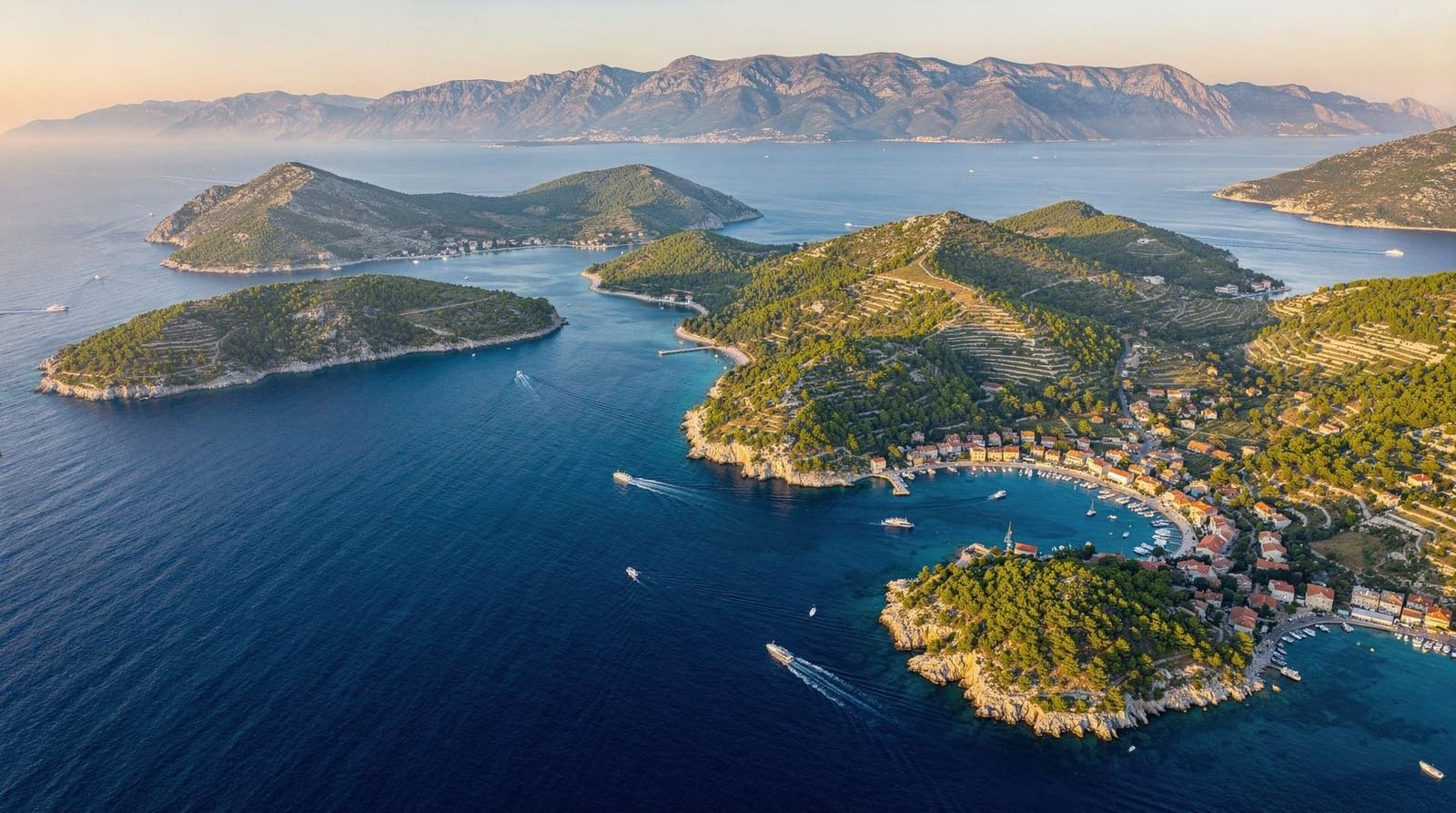
The island splits sharply in two by topography: the northwest coast faces the mainland and is bare and windy — the karst landscape receiving the full force of the bura (north wind). The southeast is lush with pines and holm oaks, sheltered from the bura, with calm turquoise coves. The old town occupies a narrow peninsula between the two worlds.
Rab Town (Grad Rab)
Rab Town is the island’s showcase — and genuinely one of the most beautiful medieval settlements in the entire Adriatic, a fact easy to understate amid Croatia’s riches. Four Romanesque bell towers punctuate the skyline of the old town peninsula in a sequence that is best viewed from the sea approaching on the ferry: the Great Bell Tower (Veliki Zvonik, 26 metres, 12th century), the Small Bell Tower, the St Mary the Great Tower, and the Chapel of St Andrew.
The walled town itself covers the narrow headland in a neat grid of three parallel lanes (Gornja, Srednja, and Donja ulica — Upper, Middle, and Lower Street), connected by stepped alleyways. The Cathedral of the Assumption, the Benedictine Convent of St Andrew (with an extraordinary collection of relics), and the Rab Festival venue are the highlights within the walls.
The Komrčar Park — a shaded Austro-Hungarian park of holm oaks just south of the old town — offers a peaceful alternative to the beach when the midday heat is intense.
Rab Carnival (27 July) celebrates the island’s liberation from Hungarian-Venetian siege in 1364 with a crossbow tournament, medieval pageantry, and a town-wide celebration. It is one of the more authentic local festivals on the Croatian coast.
Beaches
Rab’s sandy beaches at Lopar on the island’s northern tip are among the most celebrated in Croatia — sandy beaches are rare enough in Croatia that Lopar’s Raja and Sahara beaches regularly top national beach rankings. Lopar is about 14 km from Rab Town and reachable by local bus.
The Frkanj peninsula north of Rab Town has a concentration of smaller beaches and coves, both natural and organised, suitable for families. The water around here is clear and gentle.
Kandarola bay, closer to town, is popular for its accessible swimming platforms and calm water.
Naturism and the Kvarner tradition
Rab has a strong naturist tradition — the island claims that Edward VIII and Wallis Simpson swam naked here in 1936, receiving special permission from the local mayor. The Suha Punta naturist resort on the island’s west coast is one of the oldest and largest naturist facilities in Europe, and naturism is a significant part of the island’s tourism identity. Several bays around the island have informal naturist sections. See the naturist beaches in Croatia guide for how Rab compares with the country’s other naturist destinations.
Getting to Rab
From the mainland via Jablanac: The main year-round car ferry route runs from Jablanac (a tiny mainland port on the coastal road south of Karlobag, around 2 hours south of Rijeka by car) to Mišnjak on Rab’s south coast. The crossing takes 20 minutes and runs frequently. This is the fastest and most practical option.
From Krk: A seasonal car ferry connects Valbiska (western Krk) to Lopar (northern Rab) in summer. This is the most direct option for island-hopping between Krk and Rab.
From Rijeka: Jadrolinija’s seasonal catamaran runs in summer. Not the most practical option if you have a car. See the Rijeka guide and the Croatia ferries guide for wider Kvarner connections.
Getting around the island: A car is very helpful for exploring beyond Rab Town — the road to Lopar and the west coast beaches benefits from your own transport. Local buses serve the main routes but run infrequently outside peak season.
Where to stay
Rab Town has the most atmospheric accommodation. Hotel Arbiana in the old town is the landmark choice — a converted palazzo with a terrace overlooking the sea and the bell towers. Apartments throughout the old town offer more affordable options with a real sense of place.
Lopar has a separate resort complex for those prioritising beach access.
Where to eat
The old town lanes have a good concentration of konobas. Konoba Rab is a reliable choice for Kvarner fish and local lamb (janjetina) cooked under the peka. Astoria on the Riva is better for position and relaxed drinks. The local Rapska torta — a honey-almond tart with local herbs — is the island’s signature sweet; try it from the bakeries on the middle lane.
Local wine: ask for Kvarner whites or a glass of Žlahtina from neighbouring Krk.
History in brief
Rab’s history as a settled place goes back to Illyrian times, but its defining era is the medieval period when the island — then called Arba by the Romans and later Raussa in Venetian records — was an important Adriatic trading and ecclesiastical centre. The four bell towers visible on the old town peninsula today all date from the 11th–13th centuries, when Rab’s prosperity and ecclesiastical importance put it on par with Split and Zadar in regional significance.
The most celebrated episode in Rab’s medieval history is the siege of 1364, when the island successfully repelled a combined Hungarian-Venetian naval attack. The annual Rab Carnival (27 July) commemorates this event with a crossbow tournament that has been held almost continuously since the Middle Ages — the original troops who held the walls were rewarded with the right to carry arms, expressed in the crossbow tradition that continues today.
The island’s Venetian connection left architectural traces throughout the old town: the Venetian Gothic windows on the harbour palaces, the loggia, and the overall urban structure of the three parallel lanes (Gornja, Srednja, Donja) reflect Venetian urban planning principles applied to an unusually narrow peninsula site.
Expanded where to eat
Rab Town’s old lanes have a good density of restaurants and konobas; the trick is avoiding the tourist-menu spots nearest the ferry landing and finding the better establishments a few lanes in.
In Rab Town:
- Konoba Rab — the reliable local benchmark; Kvarner fish, local lamb cooked under the peka lid, and the island’s signature Rapska torta. Order the lamb a day ahead if possible.
- Restaurant Santa Maria — inside a medieval building in the upper lane with good fish soup (riblja juha) and well-prepared grilled seafood.
- Astoria on the Riva — the terrace position is better than the food, but it is the perfect spot for a glass of wine at sunset watching the boats.
- Konoba Sveti Nikola — slightly north of the main tourist circuit and correspondingly better value; daily specials are honest and the fish is fresh.
In Lopar (at the beach, 14 km north):
- Beach restaurant options at Lopar are functional rather than destination dining; bring a packed lunch if you are staying all day, or eat the excellent fried fish at the smaller snack stalls near the beach access points.
What to eat: The Rapska torta (honey-almond tart with local herbs and maraschino) is the island’s signature and available from bakeries and café patisseries throughout the old town — try it with morning coffee. Local lamb and Kvarner scampi are the meal highlights.
Getting around Rab in detail
Rab Town, Lopar, and the northwest coast beaches can all be reached from the main town by local bus (several daily services in summer, reduced in winter). However, frequencies are low enough that a car or scooter gives significantly more flexibility.
Scooter hire is available in Rab Town and is the recommended option for a 2–3 day visit — the island is compact (22 km long), the roads are mostly low-traffic outside July–August, and the west coast road to Supetarska Draga and Kampor is beautiful on a clear day.
Water taxis: From Rab Town harbour, small boats offer excursions to the Frkanj peninsula beaches and some of the smaller coves around the southern coast. These operate informally in summer — negotiate directly on the harbour.
The ferry logistics: The Jablanac–Mišnjak car ferry (20 minutes, very frequent) lands at the island’s southern tip, 20 km from Rab Town by a road that crosses the interior. Allow 30 minutes to reach the town from the ferry landing. The seasonal Valbiska (Krk)–Lopar ferry is very useful for island-hoppers.
What to skip — honest notes
The hotel complex at Suha Punta in July–August — the naturist resort and its surroundings are pleasant but overcrowded at peak season. The roads in the northwest become congested with buses and transfers. Visit outside peak weeks for a much better experience.
The Riva restaurants nearest the main ferry landing — the first two or three restaurants you see stepping off the ferry are the most tourist-facing and the worst value. Walk five minutes into the old town and prices drop while quality improves.
Lopar by car in August — the road to Lopar narrows to a single effective lane in places and the car park at the beach fills before 10am in August. Consider taking the bus from Rab Town.
Rab’s less-visited corners
Kampor on the island’s northern coast has a Franciscan monastery (1446) with a cloister and a small museum of religious art. The village is quiet and the coast around it is lightly visited.
Barbat in the south is the island’s oldest village, with stone houses and a small Romanesque church. Good swimming from nearby bays.
Dundovo plateau in the island’s wooded interior can be explored by mountain bike or on foot — trails through the pine forest with views toward the Velebit mountains.
Where to stay in Rab
Accommodation in Rab splits clearly between the charm of the old town and the practicality of the beach resorts.
Rab Town (old town): The most atmospheric option. Hotel Arbiana is the landmark — a renovated palazzo inside the medieval walls with a small terrace directly facing the sea and the bell towers. Apartments within the old town lanes (accessible by foot only — no cars in the old town) offer an authentic island-living experience. Booking these requires attention to luggage logistics: trolleys and rolling suitcases are difficult on the stepped streets.
Lopar resort area: The northern resort around Raja beach has larger, more modern hotel complexes suited to families who want direct beach access as the priority. Less atmosphere, more beach space.
Frkanj peninsula hotels: Several mid-range hotels on the peninsula north of town combine reasonable beach access with proximity to Rab Town’s dining and atmosphere.
Booking: Rab is popular with Croatian families and Italian visitors; July–August fills up quickly. June and September are ideal — sea temperature is warm (22–25°C) and accommodation is freely available.
Practical travel tips
Getting around the island: A car or scooter makes the island significantly more enjoyable. Scooter hire is available in Rab Town and costs around €40–60 per day. The island is small enough (22 km long) that no destination is more than 40 minutes from Rab Town.
The bura wind: Rab sits in the Velebit channel and is periodically subject to the bura (northeast wind) which can arrive suddenly and with force. The northwest coast of the island takes the full impact — the sheltered southeast coast around Rab Town is largely protected. When the bura blows, swimming at Lopar is usually fine (south-facing); the northwest coast bays are not.
Ferry timing: The Jablanac–Mišnjak ferry (mainland to Rab) runs frequently — typically every 30–60 minutes in peak season. The crossing takes 20 minutes. No booking is required; pay at the terminal.
Money: The euro is the official currency since 2023. ATMs in Rab Town are available but can run low in August. Card payments are accepted at hotels, most restaurants, and larger shops. Bring cash for smaller konobas and market stalls.
Rab often appears on shortlists of the best Croatian islands; for combining it with a wider island hopping trip through the Kvarner, plan the Krk–Rab–Krk seasonal ferry into your route rather than doubling back through Jablanac.
FAQ
Is Rab worth the extra ferry effort compared to Krk? Yes for most visitors — Rab’s medieval old town and sandy Lopar beaches are a noticeably higher-quality experience than Krk’s more developed resort towns, and the Jablanac–Mišnjak crossing is only 20 minutes and very frequent.
Are Rab’s beaches actually sandy, or is that overstated? Lopar’s Raja and Sahara beaches are genuinely sandy — rare in Croatia — but most of the rest of the island’s coastline is the typical pebble and rock found elsewhere in the Kvarner.