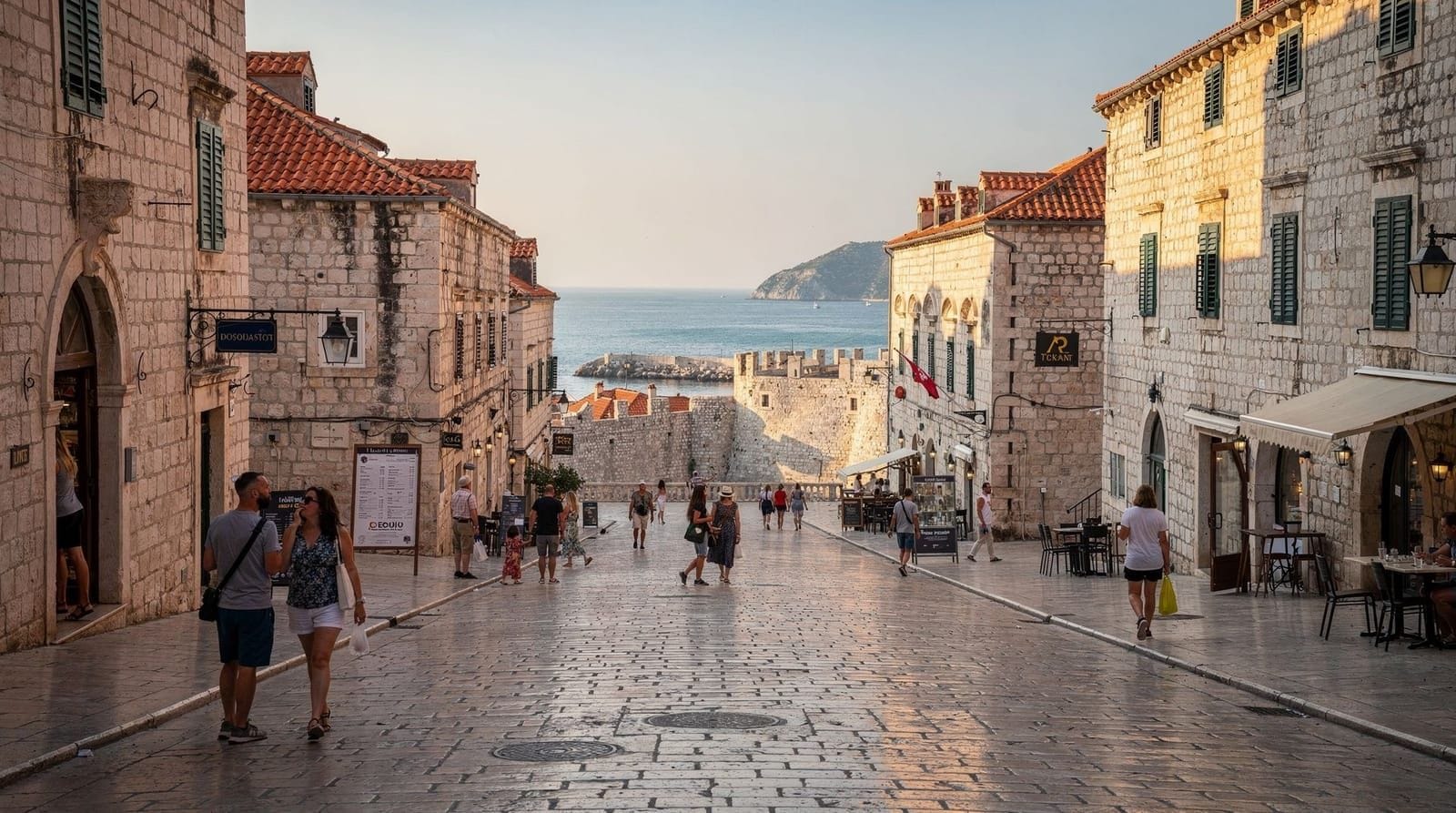
Pag travel guide
Everything about Pag island: the lunar landscape, world-famous Paški sir cheese, handmade lace UNESCO craft, Zrće beach party scene, and how to get there.
Split: Blue cave and 5 islands tour
Quick facts
- Best time
- June–September (coast); year-round for cheese and lace
- Days needed
- 2–3 days
- Getting there
- Bridge from mainland (no ferry needed); or ferry Prizna–Žigljen (20 min)
- Budget per day
- €50–€130
Pag is Croatia’s most distinctive island. Where most Adriatic islands are lush with Mediterranean vegetation, Pag is a moonscape: bare white limestone karst, wind-scraped of almost all trees by the fierce bora wind, with only a few low-growing aromatic herbs — sage, immortelle, and wild thyme — clinging to the rock. It’s a landscape unlike anywhere else in Croatia, dramatic and otherworldly in a way that photographs rarely capture.
Yet this apparent harshness produces two of Croatia’s most celebrated artisan products: Paški sir (Pag cheese), considered by many the finest hard sheep’s milk cheese in Croatia, and Paška čipka — a needle-point lace of extraordinary delicacy, recognised on UNESCO’s Intangible Cultural Heritage list. The island is also, improbably, the site of Zrće beach, one of the Mediterranean’s most famous outdoor nightlife venues.
Getting to Pag
Pag is unusual among Croatian islands in being connected to the mainland by a road bridge — the Paški Most, which crosses the narrow Pag Strait near the island’s southeastern end. This means driving to Pag requires no ferry at all from the south (Zadar direction): take the coast road, cross the bridge, and you’re on the island. Drive time from Zadar is about 45 minutes to Pag town.
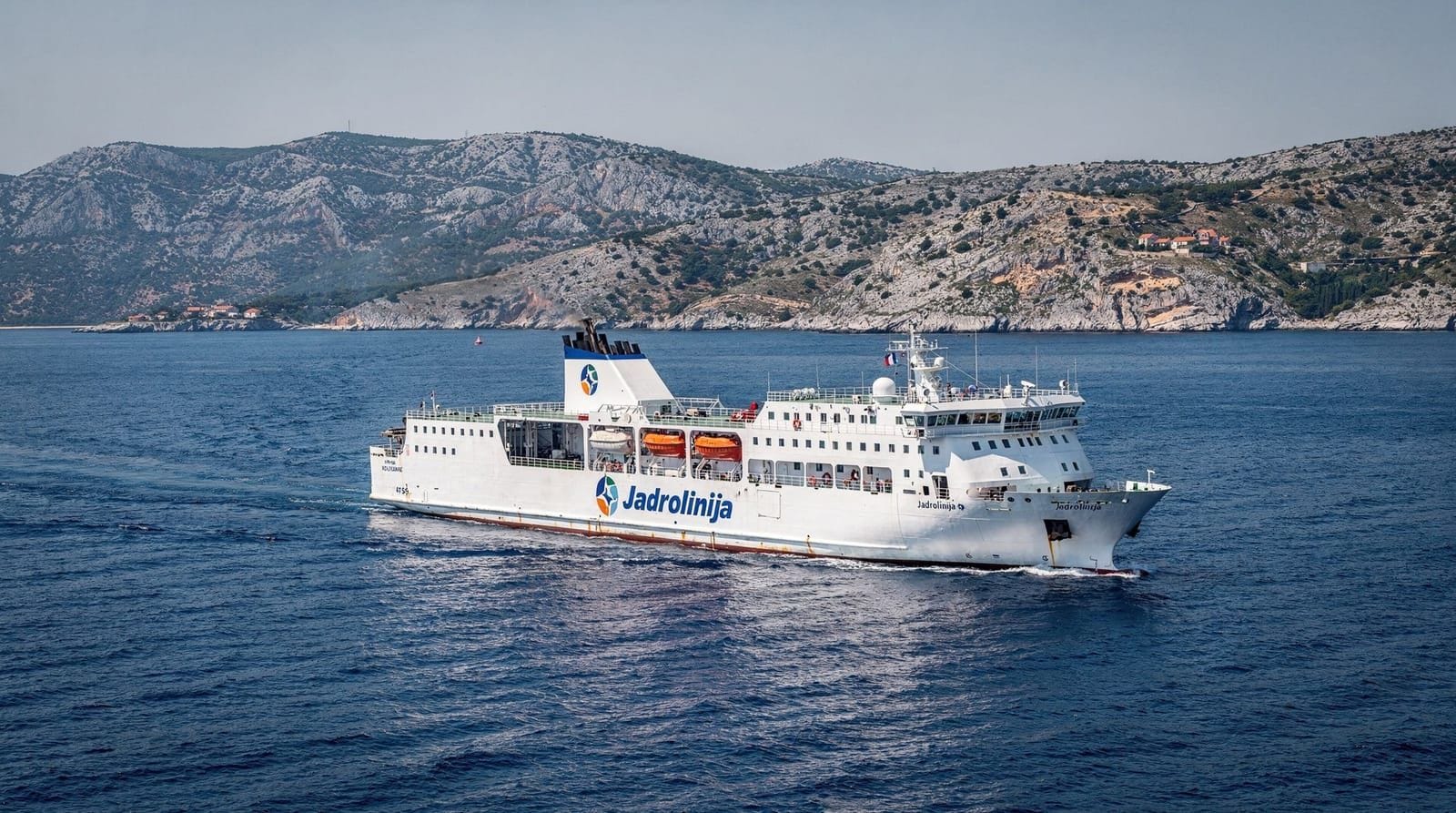
From the north (Rijeka/Zagreb direction): The ferry between Prizna on the mainland and Žigljen on the northern tip of Pag takes 20 minutes. Multiple sailings daily. This is the faster route if approaching from the north. A car plus driver costs around €15–€20 each way.
Public transport: Buses from Zadar reach Pag town (around 1 hour 30 minutes via the bridge). No catamaran service to Pag. See the Croatia ferries guide for how the Prizna–Žigljen crossing fits the wider island-hopping network.
What to see and do on Pag
Pag Town
Pag town is one of Croatia’s most architecturally coherent historic towns. Founded as a new town in the 15th century, it was designed from scratch by the Renaissance architect Juraj Dalmatinac on a regular grid plan — still perfectly intact today. Dalmatinac is the same master builder behind Šibenik Cathedral, one of Croatia’s most celebrated Gothic-Renaissance monuments, and he contributed elements to towns across the Dalmatian coast including Korčula. His fingerprints on Pag are less celebrated than Šibenik but no less impressive: the geometric logic of the street grid, the proportions of the main square, and the placement of the cathedral and ducal palace all reflect a deliberate Renaissance urban vision rather than the organic growth typical of medieval Dalmatian towns.
The town was built first and foremost to manage the salt trade. Pag’s salt pans had been worked since Roman times, and by the 15th century the Venetian Republic — which controlled the island — recognised the strategic and commercial importance of salt production at scale. The new town’s layout was inseparable from this economic purpose: the salt works infrastructure, the warehouses, and the administrative buildings were all planned as an integrated system. Salt produced on Pag was measured, taxed, and exported under Venetian regulation, making the town not just a settlement but a functioning economic instrument of empire. Walking the town today is to walk through that system preserved almost intact — the old core has changed remarkably little in five centuries, and the combination of intact urban fabric, dramatic coastal setting, and near-total absence of tourist crowds gives Pag town a quality of free outdoor museum that few places in Croatia can match.
The town square, Romanesque cathedral (unfinished but beautiful in its incompleteness), ducal palace, and salt works infrastructure all date from the same 15th-century foundation. The Lace Museum in the old town explains the 400-year tradition of Paška čipka — a form of needle-point lace made exclusively by women of Pag, using techniques passed down through families. The lacework is extraordinarily fine: a single piece can take months to complete. Active lacemakers still sell work directly from homes around the old town. Prices start around €30 for small pieces and can run to hundreds of euros for large elaborate works.
Paški Sir (Pag Cheese)
Paški sir is one of Croatia’s three protected-designation products (alongside Dalmatian prosciutto and Slavonian kulen). It’s a hard sheep’s milk cheese made from the milk of Pag sheep — an indigenous breed that grazes on the bare, herb-covered limestone plateau. The aromatic herbs the sheep eat (sage, immortelle, thyme) give the cheese its distinctive flavour: sharp, salty, intense.
To carry the official PDO (Protected Designation of Origin) designation, Paški sir must be aged for a minimum of two months, but the cheeses that will impress most visitors are typically those aged six to twelve months. At six months the paste has developed real depth — slightly granular, with a clean sharpness and a long finish. At twelve months and beyond, the cheese becomes hard and crystalline, deeply savoury, and almost buttery in the way its fat crystals melt on the tongue. These older rounds are Croatia’s answer to Pecorino Romano and hold their own in any European artisan cheese comparison.
Buying directly from producers is straightforward. The outdoor market in Pag town runs most mornings through the main season: a handful of stalls near the old town offer fresh and aged Paški sir, often alongside local prosciutto and olive oil. Several farms are also signposted from the main road across the island — a handwritten sign reading “sir” (cheese) or “domaći sir” (homemade cheese) is a reliable invitation to stop and taste before you buy. Prices run from around €15–€20 per kg for younger cheese and considerably more for well-aged rounds.
For pairing, the classic combination is the cheese itself with thin slices of Dalmatian pršut (prosciutto) — the salt of the meat and the salt of the cheese balance each other. Žutica, a white wine produced from Pag’s own vineyards, is the local choice: dry, light, and slightly mineral from the island’s limestone soil, it cuts through the richness of the cheese without overpowering its flavour. A drizzle of local olive oil over a fresh slice of young Paški sir is another traditional approach. Together these three products — cheese, prosciutto, and oil — represent the flavour of Pag more completely than any restaurant meal.
Tasting Paški sir with local prosciutto, olives, and a glass of wine is one of the great simple pleasures of a trip to Croatia.
Pag Lamb (Paška Janjetina)
Alongside Paški sir, Pag lamb — Paška janjetina — carries its own protected status as a Croatian geographical indication product. The connection between the two is direct: the same sheep that produce the milk for the cheese also produce the lambs, and they graze the same aromatic herb-covered karst that flavours both products. Sage, immortelle, and thyme don’t just season the milk — they season the meat from the inside out, giving Pag lamb a herbal, almost perfumed character that sets it apart from lamb raised on lush pastures elsewhere in Europe.
The traditional preparation is slow roasting on a spit over an open wood fire, which allows the fat to baste the meat continuously and the exterior to develop a dark, slightly caramelised crust while the interior stays succulent. The other classic method is peka — a cast-iron lid placed over the meat with embers heaped on top, creating an enclosed roasting environment that traps moisture and intensifies flavour. Both methods require patience; a whole lamb under peka needs two to three hours of steady heat, which is why the result is so different from anything rushed out of a conventional oven.
The best Pag lamb is not found in the main tourist restaurants in Pag town or Novalja, where the demand is highest and the sourcing may not be exclusively local. Look instead for farmhouse konobas on the roads between settlements — small, family-run places with plastic tablecloths and limited menus, where the lamb was almost certainly raised within a few kilometres of where you’re sitting. These konobas often don’t take reservations and may close if they run out of meat, so arriving at midday when the peka comes off is the reliable strategy. The meal typically includes bread, a simple salad, and whatever local wine the family produces or buys — nothing complicated, nothing unnecessary.
Zrće Beach and the Party Scene
On Pag’s western coast, north of Novalja, Zrće beach is Croatia’s most famous club beach — home to open-air clubs (Papaya, Aquarius, Noa) that operate around the clock from June to September. It draws an international party crowd in July and August. If this is your scene, Pag in peak summer is genuinely exhilarating — the combination of beach, sea, and continuous music is unlike anything else in Croatia.
If this is not your scene, avoid Novalja and the northern end of the island in July–August and head to Pag town’s beaches or the quieter southern coast instead.
The Lunar Landscape and Bora Wind
The visual drama of Pag’s landscape deserves time of its own. Drive or walk through the bare karst hills and you’ll understand immediately why this island has always fascinated artists and writers. The contrast between the white rock, the blue sea, and the occasional low green plant is stark and beautiful. The bora wind that sculpted this landscape — a cold, dry, fierce northeasterly that can reach 200 km/h at the island’s northern end — is responsible for keeping the rock bare and the sheep’s forage distinctively flavoured.
The bora is not merely a scenic backdrop. In practical terms, it is one of the most powerful weather phenomena the Adriatic experiences, and Pag sits directly in its path. If you visit between October and April, there is a reasonable chance you will encounter it directly. The bora arrives suddenly — conditions can change from calm to gale-force within an hour — and once established it can blow without let-up for two, three, or even five days. Temperatures drop sharply when it blows, the wind is physically difficult to walk against, and outdoors activities become uncomfortable or impossible. Ferry crossings are cancelled when the bora reaches dangerous intensity; if you are relying on the Prizna–Žigljen ferry to reach or leave the northern end of the island, build buffer time into your schedule. Roads across the exposed central plateau can also be treacherous for high-sided vehicles.
The best season to experience the bora as a dramatic natural event rather than an inconvenience is late winter or early spring — February through April — when it blows most frequently and most powerfully, and the island is otherwise quiet. The sight of spray being ripped horizontally off the sea surface, the sound of the wind in the stone, and the physical sensation of the air on exposed skin are genuinely memorable. Locals have long adapted: traditional Pag architecture features small, deeply recessed windows on the northeast faces of buildings specifically designed to resist the wind.
The salt pans (solane) near Pag town have been worked since Roman times and still produce sea salt commercially. You can visit and buy salt directly. Pag sea salt is harvested by hand using traditional wooden tools during the summer evaporation season, and the resulting product — coarser and more mineral-rich than industrial salt — has found its way into specialty food shops in Zagreb and, increasingly, into export markets across Europe and beyond. Chefs prize it for finishing dishes. It is sold in small bags and ceramic pots at the salt pans themselves and in shops in Pag town; it makes an easy and genuinely local gift to bring home.
Beaches on Pag
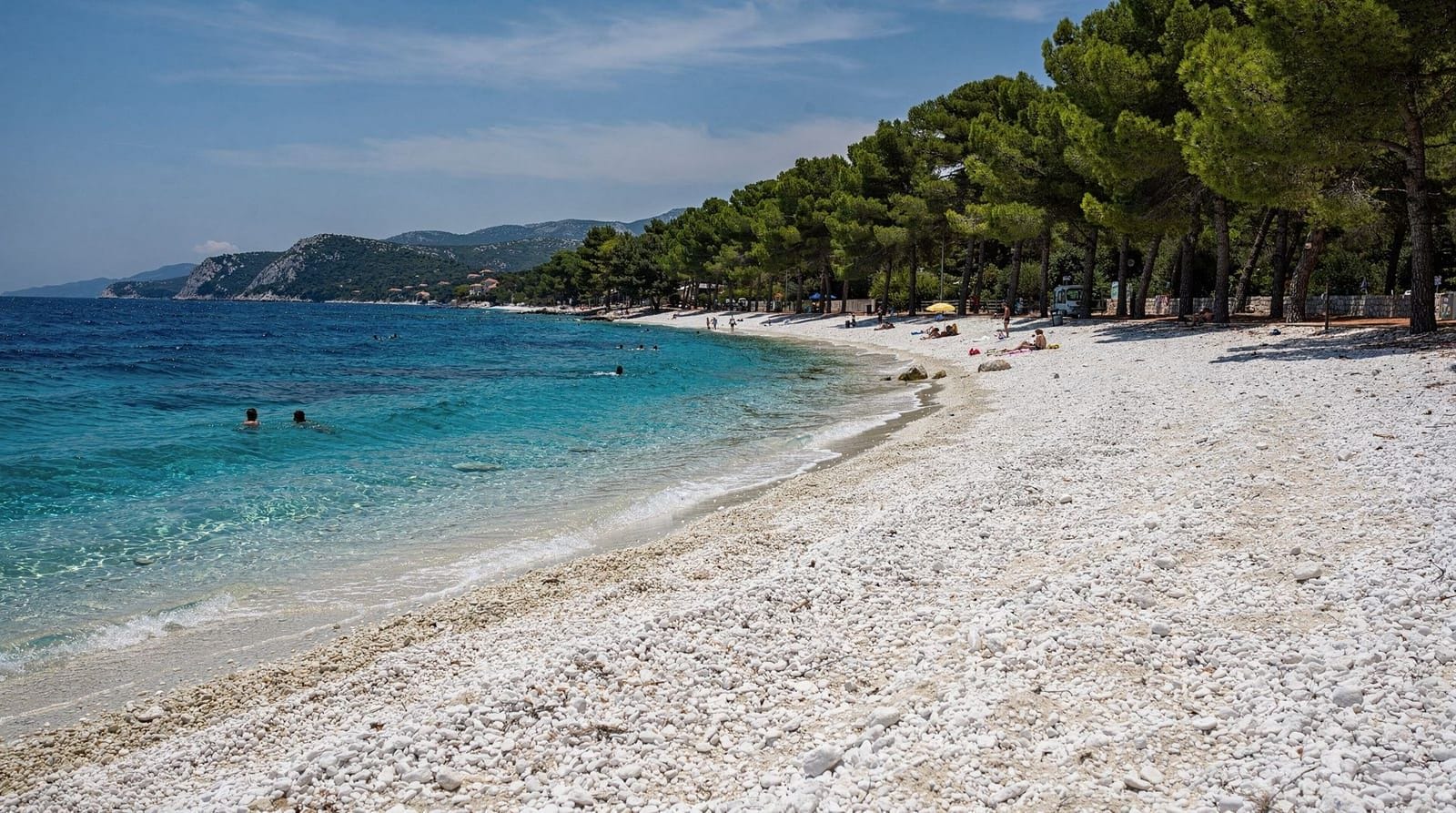
Pag’s beaches are largely pebbly and rocky, which keeps the water beautifully clear.
Zrće (near Novalja): Party beach — detailed above. Also genuinely good for swimming if you’re there outside club hours or in early June.
Straško (Novalja): A 1.5 km stretch of beach east of Novalja — one of the longest beaches on the island, calmer than Zrće, with good facilities.
Stara Vas (near Pag town): Small pebble beach near the old town, fine for a morning swim before exploring the streets.
Prosika (southern coast): A network of quieter coves on the southern coast near Pag town, reachable by car or bicycle. Fewer facilities but much calmer.
For how Pag’s pebbly, wind-clear coastline compares with the rest of the country, see the best beaches in Croatia guide.
Where to stay on Pag
Novalja is the party capital — most backpackers and club-goers base here. Hostels from €20/night per dorm bed; private apartments from €50. Extremely busy July–August.
Pag town is calmer and more cultural — better for those interested in the old town, cheese, lace, and history. Apartments from €45–€100/night.
Simuni (central coast): A quieter resort village with campsite and apartments, popular with families and sailors.
Where to eat on Pag
Konoba Na Tale (Pag town): The most-recommended traditional restaurant in Pag town — serving Paški sir, local lamb roasted under a peka, and house wine. Excellent and honest.
Restaurant Boškinac (Novalja): The island’s most upscale option — a boutique hotel restaurant in a vineyard setting, with tasting menus showcasing Pag lamb and local wine. For a special evening.
Konoba Giaxa (Pag town): Simpler and cheaper than Boškinac, with excellent fresh fish and good local wine. The prosciutto-and-cheese plate is ideal.
Best time to visit Pag
June is ideal for those who want the beach and party experience without the absolute peak-summer intensity. Zrće is operating but not yet at full capacity.
July–August: The island is at maximum energy around Novalja. Pag town remains calmer. This is when Pag is most alive for those who want the full experience.
September: The party scene winds down, the island becomes quieter, and Pag town is particularly beautiful. Paški sir and the lace market operate year-round.
October–May: Quiet, with good cheese and lace shopping. The landscape is actually most dramatic in winter when the bora wind is blowing.
Day trips from Pag
Pag’s central location between the Kvarner and northern Dalmatia makes it a reasonable base for day trips in either direction, provided you have a car.
Zadar is the obvious destination. The city lies roughly 55 km south of Pag town, reachable in just under an hour by car across the bridge. Zadar is one of Croatia’s most underrated cities — its old town occupies a narrow peninsula packed with Roman ruins, medieval churches, and well-preserved Venetian-era streets. The two unmissable modern installations are the Sea Organ (a series of stone steps on the seafront whose underwater pipes play chords driven by wave motion) and the Greeting to the Sun (a circular solar installation beside it that stores energy during the day and produces a light show at night). The city’s beaches — particularly Kolovare — are also good for a morning swim before exploring the old town. A full day in Zadar is easy to fill. See also the guide to day trips from Zadar for onward options from the city.
Novigrad is a small town roughly halfway between the Pag bridge and Zadar, worth a stop rather than a dedicated day. It sits at the mouth of the Novigrad Sea, a sheltered bay almost enclosed by the mainland coast, with a small medieval fortress, a pleasant seafront, and significantly fewer tourists than Zadar. The bay is known for shellfish — oysters and mussels are farmed in its calm waters and served at the waterfront konobas. It makes a natural lunch stop if you’re driving between Pag and Zadar.
Paklenica National Park lies about 90 km south of Pag town — roughly one hour fifteen minutes by car. The park protects two dramatic limestone gorges, Velika Paklenica and Mala Paklenica, cut deep into the Velebit mountain range directly behind the Adriatic coast. It’s primarily a destination for hikers and rock climbers — Paklenica has some of the best multi-pitch climbing routes in the eastern Mediterranean — but the lower gorge walk is accessible to any reasonably fit visitor without technical equipment. Towering canyon walls, a cave system, and the shift from coastal heat to mountain air make it a complete contrast to the island. See the Paklenica destination page for full information before visiting.
FAQ
Is Pag worth visiting if I’m not interested in the Zrće club scene? Yes — Pag town’s Renaissance grid, the cheese and lace traditions, and the lunar landscape are worthwhile independently of Novalja’s nightlife. Base in Pag town and skip the north end of the island entirely if the party scene isn’t your thing.
How many days should I spend on Pag? 2–3 days covers Pag town, the cheese and salt tastings, and a beach day comfortably. Add a day if you want to combine it with Zadar or Paklenica as a loop rather than a single day trip.
Top experiences
Bookable activities with verified prices and instant confirmation on GetYourGuide.
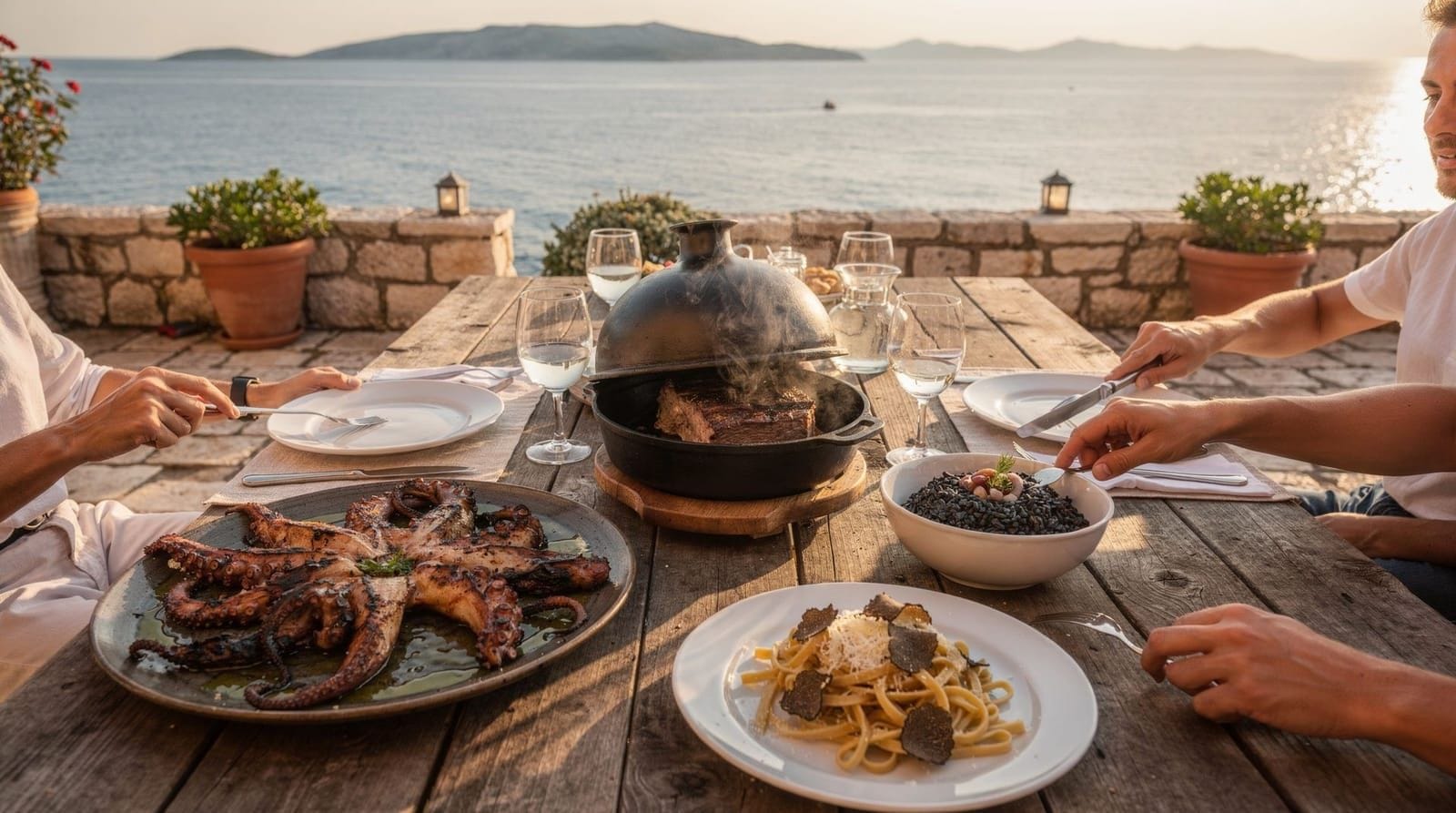
Top-rated experiences in Pag travel guide
Best-rated activities across GetYourGuide and Viator.

Blue Cave & Vis Island speedboat tour from Hvar
- Viator

Rafting on Cetina River Departure from Split or Blato na Cetini village
- Viator

Blue Cave and Pakleni Islands group Tour from Hvar
- Viator

Boat Tour at Delfina Hvar
- Viator

Korcula Buggy (Official) Safari Tour - Local Food & Wine Tasting
- Viator

Blue cave group tour with swimming and snorkelling from Hvar
- Viator