Best Beaches in Croatia — Honest Guide to the Adriatic Shore
Split: Day trip to Hvar and Brac islands with Zlatni Rat beach
What is the best beach in Croatia?
Zlatni Rat on Brač is the most famous, but Stiniva on Vis is arguably more beautiful. For sand, Sakarun on Dugi Otok is Croatia's finest. For easy access near Split, Bene and Kaštelet are solid. No single beach suits everyone — it depends on whether you want a spectacle, a swim, or a quiet cove.
The Honest Truth About Croatian Beaches
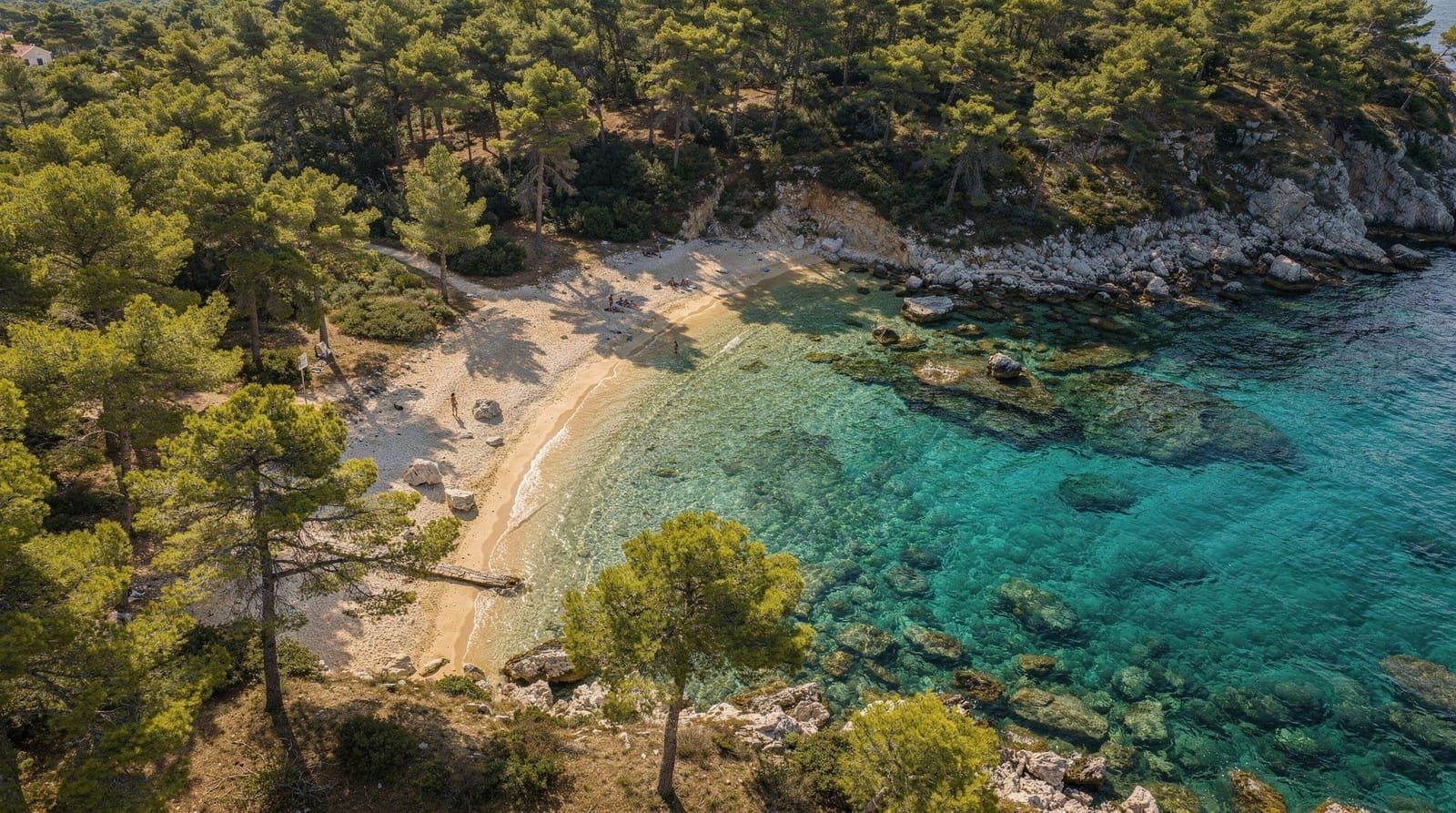
Croatia’s beaches are celebrated across Europe, and with good reason — the Adriatic is exceptionally clear, the coastline dramatic, and the setting on most swimming spots is genuinely beautiful. But a few things are worth knowing before you arrive expecting the Caribbean.
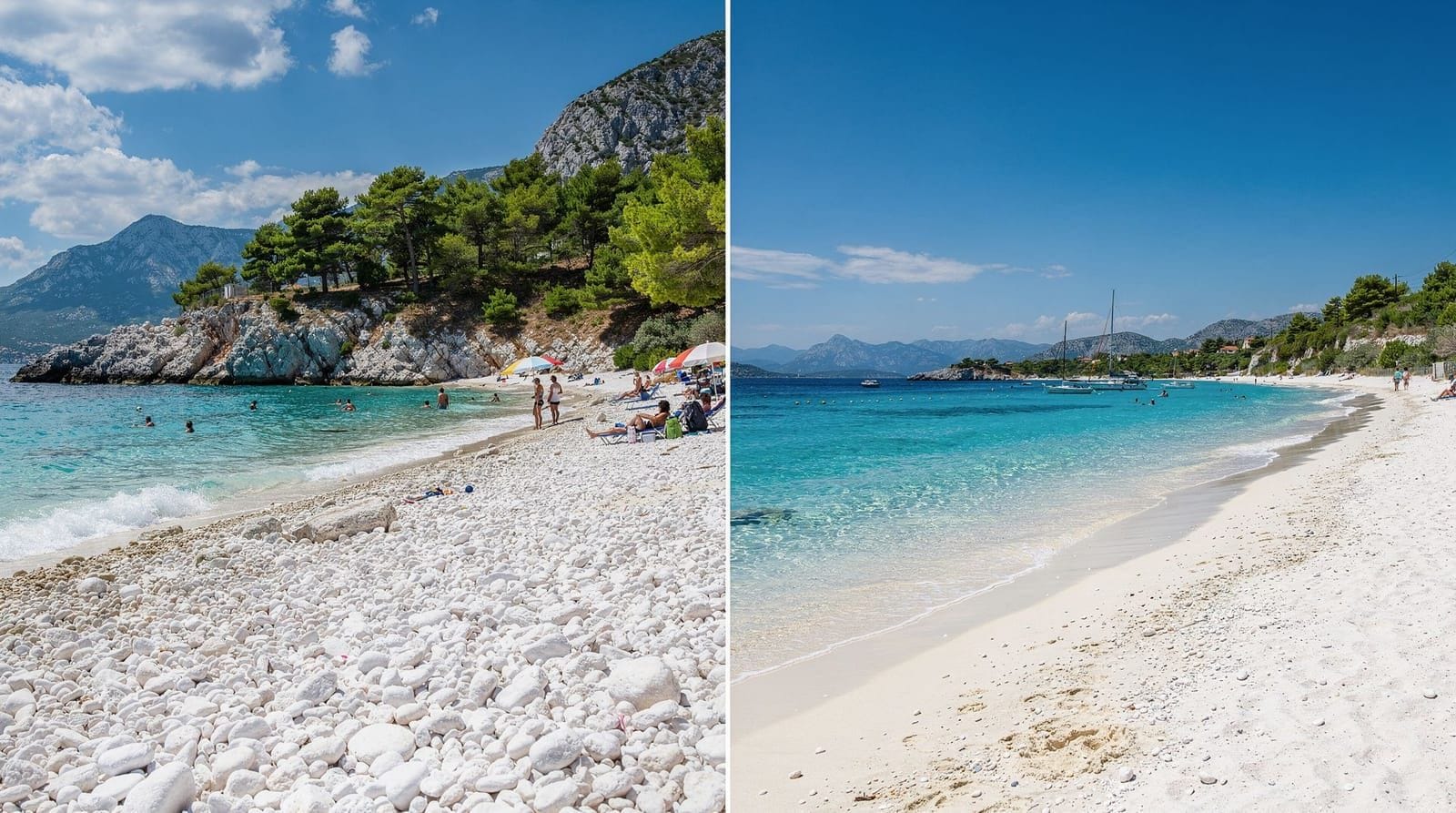
First: almost every famous Croatian beach is pebble, gravel or rock, not sand. The crystal-clear water is partly because there’s no sand to disturb. Second: sea urchins are real. Wear water shoes. Third: the most photographed beaches get genuinely crowded in July and August. Fourth: distances are deceiving on a map — getting from Split to Stiniva on Vis takes the better part of a day by public transport.
None of this should deter you. The beaches described below are among the finest in the Mediterranean. You just need to go in with accurate expectations, ideally after checking the best time to visit Croatia and current sea temperatures for your travel dates.
| Beach type | Mostly pebble, gravel or rock; sand is rare (Sakarun, parts of Rab) |
| Cost | Shoreline always free; sunbed/parasol rental around €8–20/day |
| What to bring | Water shoes (€5–15) — sea urchins are common on rock |
| Best time | Late June or September for warm water and fewer crowds |
| Access | Mostly ferry/catamaran plus bus, taxi or hire car from the port |
Zlatni Rat, Brač — The Most Famous Beach in Croatia
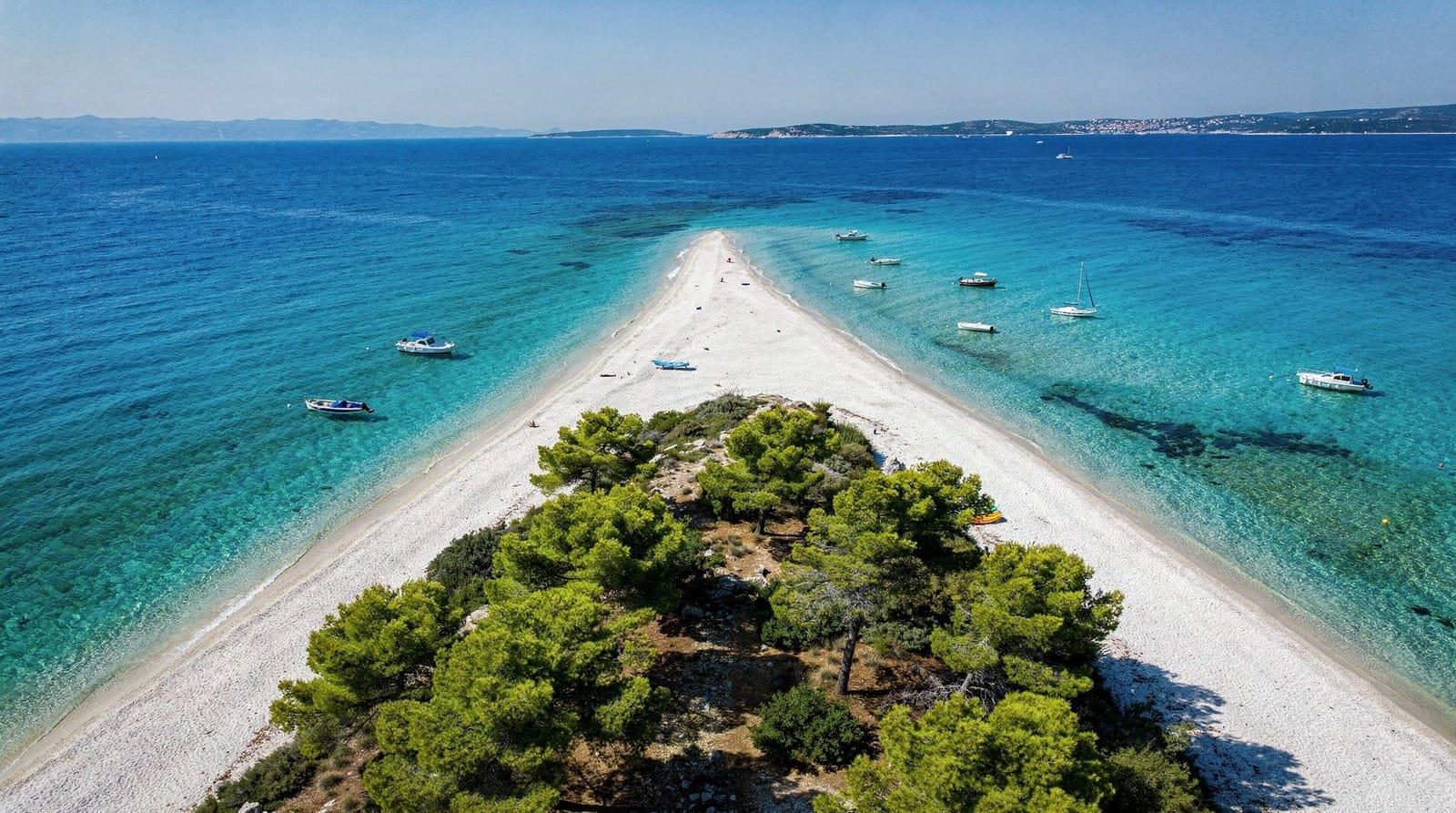
Zlatni Rat (Golden Horn or Golden Cape) at Bol on Brač is the postcard image of Croatian beaches: a triangular spit of white-grey pebble extending 500 metres into the Adriatic, with the distinctive feature that its tip slowly shifts left or right depending on currents and wind. Seen from above — and easily photographed from the hillside above Bol — it looks otherworldly.
At water level, it’s a superb beach with excellent swimming on both sides. The Hvar channel to the south provides warm, sheltered water; the northern side catches more breeze (windsurfers favour it). The pebbles are fine enough to be comfortable, the water is clear and deep enough to dive from the tip, and there are beach bars and facilities. Pine trees shade the approach path.
The reality check: from mid-July through August, Zlatni Rat is extremely crowded. Day-tripper boats from Split and Hvar disgorge hundreds of visitors between 10am and 4pm. Arrive early (before 9am) or come in June or September. The walk from Bol town takes 20–25 minutes through pine woods.
Getting there: Ferry Split–Supetar (50 min), then bus or taxi to Bol (30 min). Or direct catamaran from Split to Bol. From Hvar Town, water taxis and tour boats run directly in season.
Stiniva, Vis — The Most Beautiful Cove
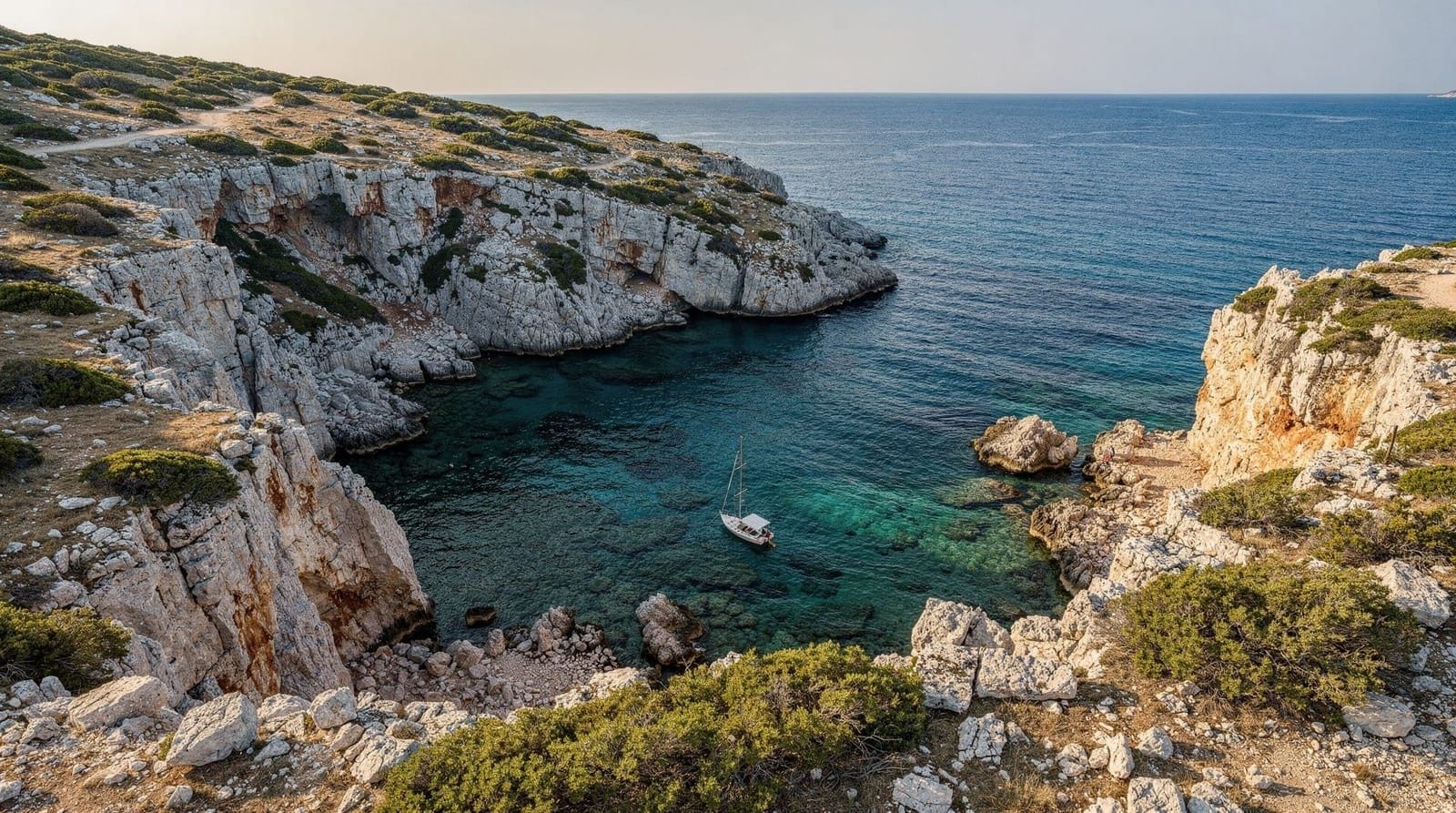
Stiniva on Vis is repeatedly named one of Europe’s most beautiful beaches, and on a calm morning before the boats arrive, it earns that title. The cove is enclosed by dramatic limestone cliffs that narrow to a gap perhaps six metres wide at the sea entrance — boats slip through sideways. Inside, a crescent of pebble beach opens out in a natural amphitheatre. The water is deep blue-green, the cliffs tower 100 metres overhead, and the effect is theatrical.
Access from the land is via a steep hiking path (30–40 minutes down from the road, longer back up). Most visitors arrive by boat, which means from late morning through afternoon the small cove fills quickly. Facilities are minimal: one small bar in summer, no sunbeds for rent, no facilities. Bring water, shoes for the hike, and snorkelling gear — underwater visibility is exceptional.
Getting there: Ferry Split–Vis (2h20 by catamaran). Car, scooter or bicycle from Vis Town (~8 km to the path trailhead). Water taxis from Vis Town and Komiža run in summer.
Sakarun, Dugi Otok — Croatia’s Best Sandy Beach
If you’re set on sand rather than pebble, Sakarun on the island of Dugi Otok is Croatia’s answer. A shallow, horseshoe-shaped bay with genuine white-ish sand shelving very gradually into turquoise water, Sakarun looks more Caribbean than Adriatic. The sand is real — fine, pale, soft underfoot. The water stays shallow for 50–100 metres, making it the best swimming beach in Croatia for children who want to splash rather than be in deep water immediately.
The island of Dugi Otok is far less visited than Hvar or Brač — Sakarun is relatively quiet even in peak season. There’s a beach bar in summer. The wider island has the Telašćica nature park and salt lake worth combining.
Getting there: Fast catamaran from Zadar to Sali or Brbinj on Dugi Otok (1–1.5 h), then taxi or rental vehicle (~20 km to Sakarun).
Banje Beach, Dubrovnik — Best City Beach
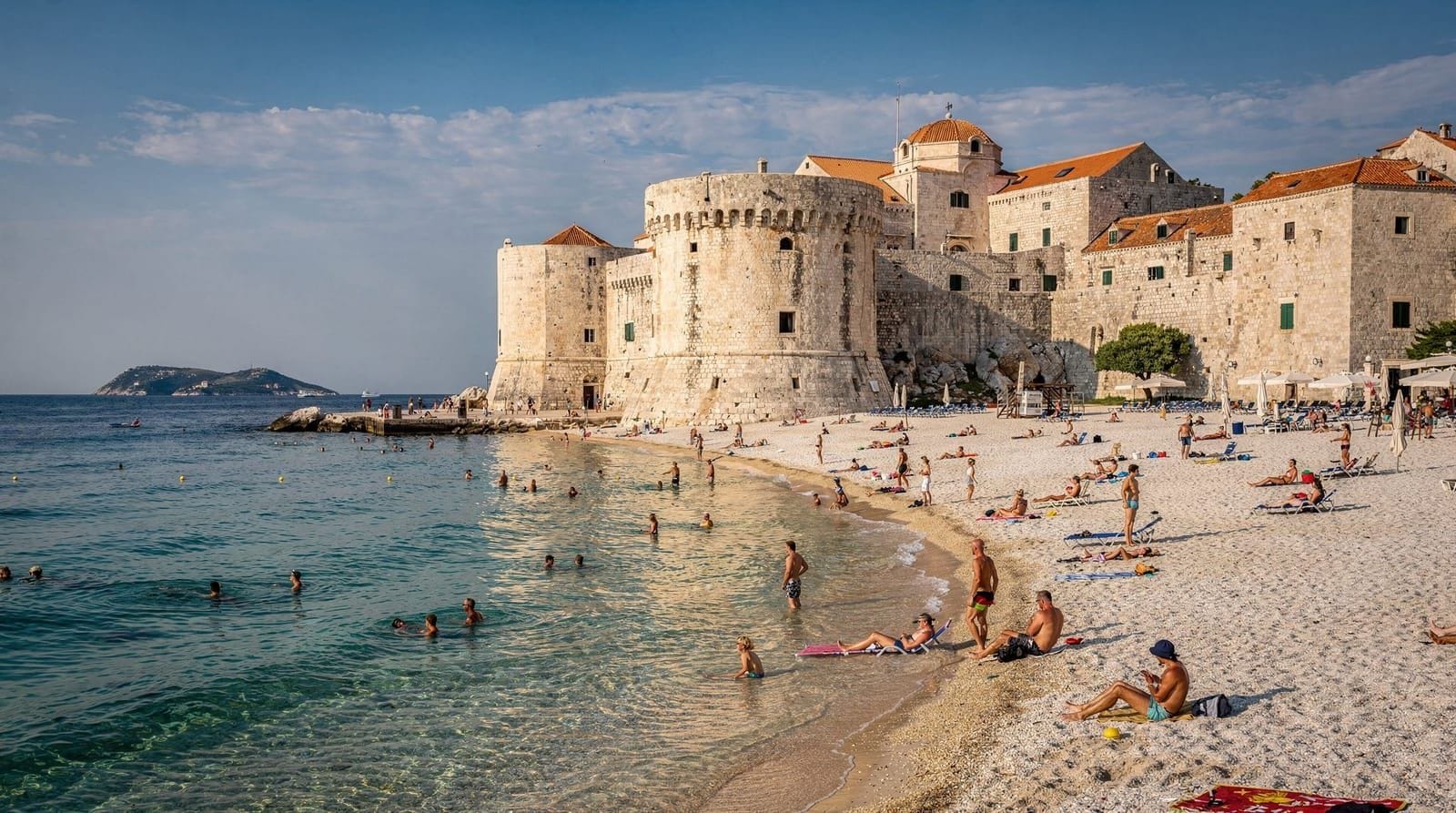
Banje is Dubrovnik’s most famous city beach and one of the more dramatic urban swimming spots in Europe: a pebble crescent directly below the old town walls, looking back at the limestone mass of the old city and across to Lokrum island. The backdrop is genuinely spectacular.
The beach itself is a mix of public pebble area and the private section run by the Eastwest Beach Club (sunbeds/parasol rental required). The public section is free. Water shoes are essential on the rocky entry. The water is clear. Gets crowded by 10am in peak season — arrive early or late afternoon.
Getting there: 10-minute walk east from Pile Gate (old town entrance) or water taxi from the old town harbour.
Nin Lagoon (Laguna) — Best for Families and Toddlers
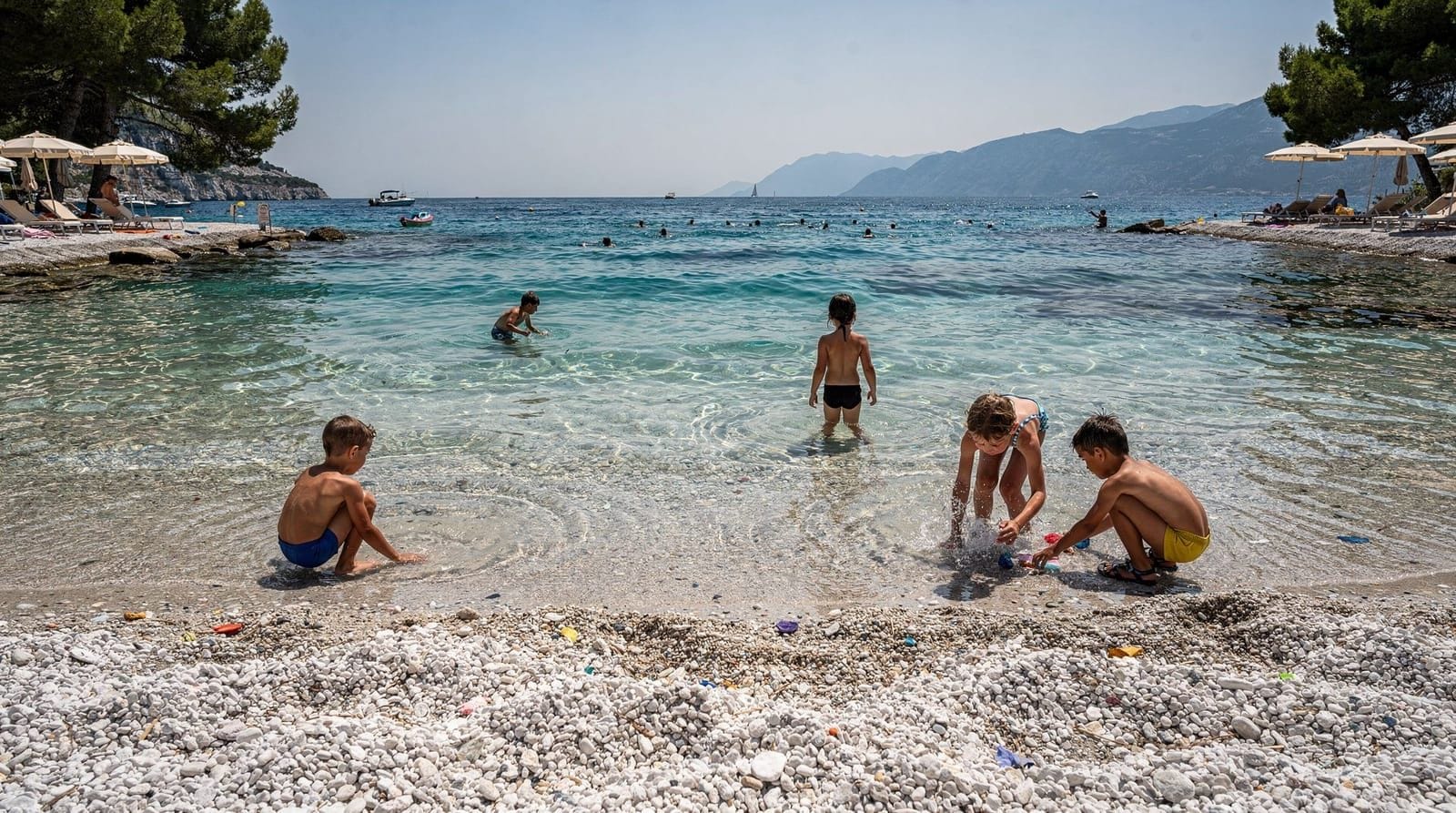
Nin, a small historic town 15 km north of Zadar, has a large, shallow lagoon beach where the water stays ankle-to-knee deep for 200 metres out. The sand is fine and pale. The water warms to over 28°C in summer because of its shallowness. The lagoon mud is promoted as therapeutic (people do coat themselves in grey mud before swimming it off). For toddlers and children nervous of deep water, this is the single best beach option in Croatia.
Getting there: Bus from Zadar to Nin (20–25 min), then 15-minute walk to the lagoon. Easy self-drive.
Punta Rata, Brela — Makarska Riviera’s Finest
Punta Rata near Brela (Makarska Riviera, roughly halfway between Split and Makarska) is a classic stretch of pebble-and-pine beach framed by the Biokovo mountains behind and unusually clear water in front. The star feature is the Brela Stone — a small rock topped by a pine tree that sits just offshore and appears in a thousand postcards. The beach runs for several kilometres of relatively uncrowded pebble.
Getting there: Bus from Split to Brela (1.5 h); the beach is 10 minutes’ walk from the village.
Rovinj Area — Istria’s Best Swimming
Istria’s beaches are generally rockier and less dramatic than Dalmatia’s, but the Rovinj area has several excellent rocky platforms and small pebble patches around Zlatni Rt (Golden Cape) nature park, south of town. The park is a 10-minute walk from Rovinj old town through pine and cypress forest. Platforms and small coves open onto clear water with good snorkelling. The setting — pine-scented forest meeting the sea — is gorgeous.
Pakleni Islands Near Hvar — Island-Hopping Swims
The Pakleni Islands (Paklinski otoci) stretch across the channel immediately south of Hvar Town, a five-minute water taxi ride away. Each small island has its own coves, from the busy naturist beach at Zdrilca to the calmer Palmižana and Vlaka. The water between islands is deep and intensely blue. Most visitors combine swimming stops with lunch at one of the island restaurants. Ideal for a half-day from Hvar Town.
More beaches worth the detour
The seven above are the headline names, but Croatia’s coastline has real depth beyond them.
Zrće, Novalja (Pag island): The opposite of a quiet cove — Zrće is Croatia’s party beach, a curved gravel bay lined with open-air clubs that run daylight-to-dawn events through July and August. Outside peak summer it reverts to a perfectly pleasant, less frantic swimming spot. The Pag island interior, all salt-white karst and sheep pasture, is worth a look if you’re already there.
Rajska Plaža (Paradise Beach), Rab: A rare stretch of genuine fine sand on the island of Rab, shelving gently into shallow, warm water — closer to a family lido than a dramatic cove, and one of the best sandy options after Sakarun. Pine forest shades much of the beach.
Vela and Mala Plaža, Krk town: Two small central beaches right in Krk town, easy to reach on foot with no ferry required to the island (it’s bridge-connected). Convenient rather than spectacular, but genuinely useful if you’re based there without a car.
Pupnatska Luka, Korčula: A pebble bay backed by pine forest on the south coast of Korčula, well outside the day-tripper radius of Korčula Town. Quiet even in August by Croatian coastal standards, with a single seasonal beach bar.
If you’d rather explore beaches that most visitors miss entirely, the hidden coves of Croatia guide is built specifically around that goal, and the naturist beaches of Croatia guide expands on the FKK tradition mentioned in the FAQ below.
Which beach matches your trip
| Beach | Best for | Access effort |
|---|---|---|
| Zlatni Rat, Brač | Iconic photo, active swimming, windsurfing | Moderate — ferry + bus/taxi |
| Stiniva, Vis | Dramatic scenery, snorkelling, adventurous | High — ferry + hike or boat |
| Sakarun, Dugi Otok | Sand, shallow water, families | Moderate — catamaran + taxi |
| Banje, Dubrovnik | City break, easy access, views | Low — walk from Old Town |
| Nin Lagoon, near Zadar | Toddlers, very shallow warm water | Low — short bus from Zadar |
| Punta Rata, Brela | Relaxed pebble beach, mountain backdrop | Low — bus from Split |
| Rajska Plaža, Rab | Genuine sand, gentle entry | Moderate — ferry + short walk |
| Zrće, Pag | Nightlife and beach clubs | Moderate — bus/car to Novalja |
Practical Advice for All Croatian Beaches
Water shoes: Buy them before you leave home or from any seaside shop (€5–15). Pebble beaches are painful underfoot and sea urchins are common on rock. Worth every euro.
Timing: Beaches fill between 10am and 4pm. The early morning and late afternoon light is also far better for photography. Sunrise swims in July are magical — and uncrowded.
Facilities: Most organised beaches have changing rooms, toilets and a snack bar. Remote coves have nothing. Carry water, a picnic and shade if you’re heading somewhere isolated.
Sunscreen: The Adriatic sun is strong, reflected off water and white pebble. Factor 30 or higher, even in June.
Snorkelling: Croatia’s clear water makes snorkelling excellent. Bring your own mask and fins — rental is available at most beach towns but quality varies.
Blue Flag beaches: Many Croatian beaches hold Blue Flag certification (water quality and facilities). It’s a useful baseline indicator but doesn’t guarantee a quiet experience.
For the best beaches specifically around Split, see our best beaches near Split guide. For Dubrovnik, see best beaches near Dubrovnik. If you’re bringing children, our family beaches Croatia guide goes deeper on shallow, safe options. And if you’re curious about pebble vs sand beaches in Croatia, we’ve compared them honestly. For the full story on Croatia’s most photographed beach, see the dedicated Zlatni Rat guide.
Frequently asked questions about Best Beaches in Croatia
Do Croatia's beaches have sand or pebbles?
Mostly pebble and rock. True sandy beaches are rare — Sakarun on Dugi Otok and a few patches on Rab are the best examples. Most famous beaches, including Zlatni Rat, are actually fine gravel. Pebble beaches have the advantage of crystal-clear water since no sand gets stirred up.Do I need water shoes in Croatia?
Yes, on most rocky and pebble beaches. Sea urchins (ježinci) are common on submerged rocks and can cause painful puncture wounds. Water shoes protect your feet entering and exiting the water and make walking on pebbles far more comfortable. They cost €5–15 in any seaside shop.When is the best time to visit Croatian beaches?
Late June and September are the sweet spots. July and August are the warmest (sea around 24–26°C) but also the most crowded and expensive. Late June offers warm water (~22°C), long days and manageable crowds. September is the locals' favourite — sea still warm from summer, beaches emptier, accommodation cheaper.Are Croatian beaches free?
The water's edge is always free by law. However, most organised beaches charge for a sunbed and parasol rental (€8–20/day depending on location). You can always lay your own towel on the public area. Some small coves have no facilities at all.Which beach is best for families with young children?
Look for beaches with shallow, gradual entries and calm water. Good options: Bačvice in Split (knee-deep for a long way out), Nin Lagoon near Zadar (famously shallow and warm), Uvala Vira on Brač, and many sheltered bays on Korčula and Krk. Avoid steep-entry pebble beaches for toddlers.Which beaches are nudist in Croatia?
Croatia has a long naturist tradition. Koversada near Poreč is Europe's largest naturist resort. Pakleni Islands near Hvar have Zdrilca and Stipanska. Rab's Kandarola peninsula has been a FKK site since the 1930s when Edward VIII reportedly bathed there. Look for the FKK designation.How do I get to the best beaches on islands?
Ferry from Split to Brač (Supetar, 50 min) then bus or taxi to Bol for Zlatni Rat. Ferry from Split to Vis (~2h20) then taxi or car to Stiniva. Fast catamaran from Zadar to Dugi Otok for Sakarun. Many beaches are accessible only by water taxi (brodica) from the nearest town — budget €5–15 per trip.
Top experiences
Bookable activities with verified prices and instant confirmation on GetYourGuide.
Top experiences
Best-rated activities across GetYourGuide and Viator.

Blue cave, Mamma Mia and Hvar, 5 islands speedboat tour
- Viator

Blue Cave and Hvar Tour - 5 Islands Tour from Split and Trogir
- Viator

Blue cave, Mama Mia and Hvar, 5 Island Speedboat Tour from Trogir
- Viator

Hvar, Brač & Pakleni islands cruise with lunch & drinks from Split & Trogir
- Viator

Blue Cave & Vis Island speedboat tour from Hvar
- Viator

KAYAK ADVENTURE! Wild Coast Exploring - Snorkeling & Cliff Jumps
- Viator