Croatia Bus Guide 2026 — The Backbone of Coastal Travel
Split: Transfer to Zagreb with entry to Plitvice Lakes
Are buses good in Croatia?
Excellent — Croatia's intercity bus network is the primary mode of transport for the Dalmatian coast. Modern coaches connect Zagreb, Split, Zadar, Šibenik and Dubrovnik frequently and cheaply. Buses go where trains don't: the entire Adriatic coast south of Zagreb is bus-served, with Dubrovnik having no rail connection at all.
Croatia has no meaningful coastal rail network — the train from Zagreb reaches Split, and that is essentially where the passenger rail story ends. From Split south to Dubrovnik, and throughout the Dalmatian archipelago, the bus is the dominant public transport mode. It is also faster and more frequent than trains on the Zagreb–Split route itself. Understanding Croatia’s bus network is fundamental to independent travel here.
| Main operators | Arriva, Autotrans, Libertas, FlixBus |
| Zagreb–Split | 5.5–6h, €15–25 |
| Split–Dubrovnik | 4–5h, €15–22 |
| Booking | Online (GetByBus, Vollo) or at station kiosks |
| Best for | Coastal routes with no rail alternative |
Why buses dominate the coast
The Dalmatian coast’s geography — a narrow coastal plain backed by limestone mountains — made railway construction expensive and politically complex throughout the 20th century. Yugoslavia built the Zagreb–Split line as a priority; lines beyond Split were never completed. Dubrovnik has no rail connection and never has. The result is a well-funded, well-run bus network that fills the gap entirely.
Bus travel in Croatia is not a last resort — it is the intelligent choice on many routes: faster than some rail alternatives, cheaper than driving when tolls and fuel are factored in, and more frequent than trains on the key corridors.
Key routes and journey times
Zagreb ↔ Split
The most-travelled long-distance route in Croatia.
- Time: 5.5–6 hours (express)
- Price: €15–€25
- Frequency: Multiple departures daily, every 1–2 hours during the day; overnight services available
The A1 motorway is the route most express services take — fast, comfortable, through the dramatic Lika plateau landscape. For a full breakdown see Zagreb to Split.
Split ↔ Dubrovnik
Essential for Dalmatian coast travellers.
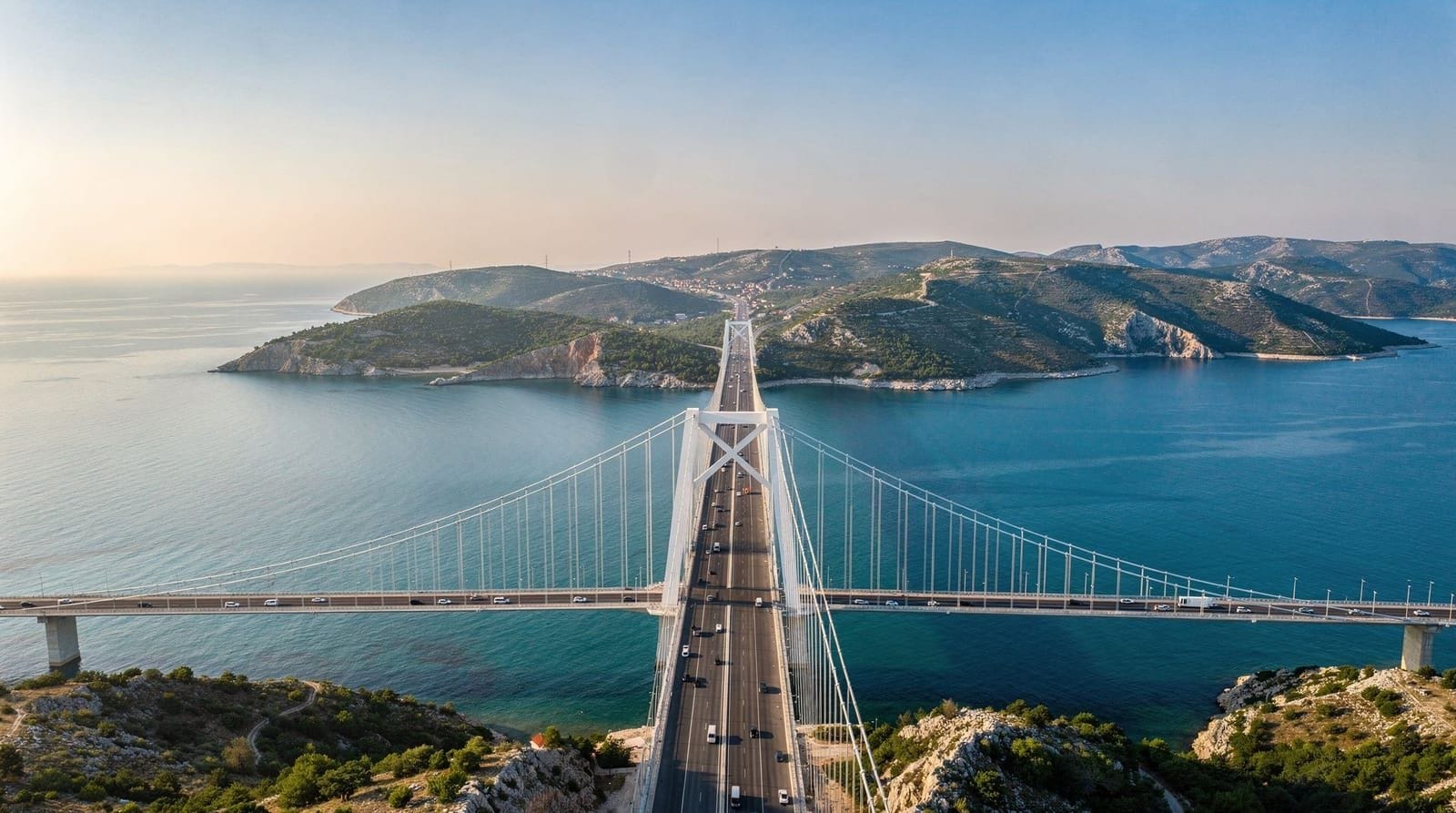
- Time: 4–5 hours (depending on route — via Pelješac Bridge or Neum)
- Price: €15–€22
- Frequency: Every 1–2 hours in summer, several times daily year-round
The Pelješac Bridge route (some operators) avoids the Bosnia/Neum border crossing. Confirm when booking. See Split to Dubrovnik and Pelješac Bridge guide.
Zagreb ↔ Zadar
- Time: 3.5–4 hours
- Price: €12–€20
- Frequency: Multiple daily, including night services
Zagreb ↔ Dubrovnik
A long-haul route for the whole coast.
- Time: 8–10 hours (daytime); overnight services also available
- Price: €25–€40
- Frequency: Several daily including overnight departures
Split ↔ Zadar
- Time: 2–2.5 hours
- Price: €10–€15
- Frequency: Multiple daily, very frequent in summer
Zadar ↔ Šibenik ↔ Split
Short coastal hops served frequently. Šibenik-Split: ~1 hour, €6–€10.
Zagreb ↔ Plitvice Lakes
- Time: ~2 hours to Plitvičko Jezero bus stop
- Price: €10–€15
- Frequency: Several daily, more in summer
- Note: The bus stop is at the main Plitvice Lakes National Park entrance — very convenient
Rijeka ↔ Zadar ↔ Split (coastal service)
A slower coastal bus service covers the intermediate towns between Rijeka and Split (including Senj, Karlobag, Starigrad, Zadar). Not fast, but useful for accessing smaller coastal communities.
Operators and booking
Arriva Croatia: Major operator on Zagreb–Split, Zagreb–Zadar and connecting routes. Website and app in Croatian and English.
Autotrans: Covers the Kvarner region (Rijeka, Opatija, Krk, Istria). Strong network on the northern routes.
Libertas: Dubrovnik and the south Dalmatia region.
FlixBus: Operates some long-distance routes, including international services (Zagreb–Ljubljana, Zagreb–Vienna, Zagreb–Sarajevo). The green coaches now part of the Croatian bus landscape.
Aggregators:
- GetByBus (getbybus.com): Best aggregator for Croatian domestic routes — compares multiple operators on a single search
- Vollo (vollo.hr): Croatian platform, strong for domestic searches
- Booking.com Transport / Busbud: International comparison, useful for cross-border routes
At the bus station: Croatia’s bus stations (autobusni kolodvori) have ticket kiosks for same-day or advance purchase. Cash and cards accepted at most. The main stations (Zagreb, Split, Dubrovnik) have digital departure boards and good English signage.
What to expect on board
Modern express coaches on the main Croatian routes are comfortable: reclining seats, air conditioning, USB charging, sometimes Wi-Fi (quality varies). The standard of vehicles on Zagreb–Split and Split–Dubrovnik routes has improved significantly in recent years as operators have updated their fleets.
Luggage: Stored in the hold below the bus. You receive a ticket stub when you hand luggage over — keep it. Theft from luggage holds is rare but not unheard of; keep valuables in your cabin bag.
Food and drink: Most express services make one or two rest stops (odmorišta) at motorway service areas, typically for 15–20 minutes. Use these — particularly on 5–6 hour journeys. Prices at service area cafes are slightly elevated but not extreme.
Pets: Generally allowed in a carrier. Confirm with the operator when booking.
Disabled access: Modern Arriva and Flixbus coaches are wheelchair-accessible; older fleets may not be. Call the operator in advance if this is required.
Night buses
Night buses (noćni autobusi) deserve a special mention. On the Zagreb–Split, Zagreb–Dubrovnik and Split–Dubrovnik routes, overnight departures leave in the late evening and arrive at the destination in the early morning. This lets you save a night’s accommodation cost — genuinely useful for backpackers and budget travellers.
Realistic expectations: Sleep quality is variable. The coaches are comfortable but not beds. A neck pillow, eye mask and ear plugs transform the experience. Night buses tend to be cheaper than daytime equivalents and often have empty seats in low season.
Local buses within cities
Zagreb: A modern tram network covers the city centre and inner suburbs efficiently. Day tickets available.
Split: Promet Split city buses connect the ferry terminal area, old town (Riva), and outlying suburbs. The airport shuttle bus is operated by Promet. Useful apps: Promet Split or Moovit.
Dubrovnik: City bus No. 1A/1B connects the ferry terminal at Gruž, the bus station and Pile Gate (old town entrance). The circular route is all most visitors need. Tickets: buy at kiosks or from the driver.
Zadar: Liburnija operates local routes connecting the bus station to the old town and surrounding areas.
Tips for first-time bus travellers in Croatia
Book the window seat: Croatian bus routes through the Dalmatian coast, the karst mountain passes and the Lika plateau offer dramatic scenery. The right-hand side heading south from Zagreb has better mountain views; the coastal (D8 route) left side faces the sea.
Arrive 15 minutes early: Bus stations in Croatia are organized but busy in summer. Find your platform (baza or perona), confirm the departure board shows your bus, and be in the right queue.
Print or download your ticket: Phone signal is unreliable on mountain routes. Have your QR code saved offline.
Ask about Neum/Bridge: When booking Split–Dubrovnik, confirm whether the route crosses Bosnia (Neum) or uses the Pelješac Bridge. If you have a non-Schengen passport and want to avoid the border crossing, insist on the bridge route.
If you’re combining a bus journey with a Plitvice Lakes visit between Zagreb and Split, consider a guided transfer with Plitvice entry included instead of managing separate bus tickets and park entry.
Regional bus routes: getting off the beaten track
Beyond the main intercity routes, Croatia’s regional bus network covers a surprising range of smaller destinations:
From Split:
- Omiš (35 min, €4): Rafting on the Cetina, dramatic gorge, fortress hilltop
- Makarska (1h, €8): Biokovo backdrop, best Riviera base
- Sinj (1h, €6): Traditional Dalmatian market town, home of Sinjska alka
- Imotski (1.5h, €8): The Red and Blue Lake — extraordinary karst phenomena
From Dubrovnik:
- Cavtat (30 min, €4): Beautiful resort 3 km past the airport; the Račić Mausoleum by Meštrović
- Ston (1.5h, €8): Europe’s second-longest medieval walls, oysters
- Neum, Bosnia (1.5h, €8): Duty-free shopping, beach
From Zadar:
- Nin (30 min, €4): Smallest cathedral in the world, ancient salt pans, sandy beaches
- Biograd na Moru (30 min, €5): Sailing hub, gateway to Kornati archipelago
- Šibenik (1h, €8): UNESCO cathedral, gateway to Krka National Park
From Rijeka:
- Opatija (15 min, €3): Belle-époque riviera town, the Austrian Riviera of Croatia
- Lovran (20 min, €4): Chestnut festival, Habsburg villas
- Crikvenica (30 min, €5): Family beach resort
Booking a night bus: step-by-step
- Search GetByBus or Vollo for your route with the filter for night departures (often marked as “noćni” or showing departure times after 9 pm)
- Select your company — Arriva and similar operators offer the most reliable night services
- Choose your seat — pick a window seat on the correct side for the best morning light arrival views
- Download the ticket to your phone as a PDF — screenshot as backup for poor signal
- Pack your essentials in your cabin bag: ear plugs, eye mask, phone charger, small snack. Main luggage goes in the hold (note the receipt).
- Arrive at the bus station 20 minutes early — find your platform (perona), confirm with station staff if uncertain
- On board: Most overnight drivers will turn cabin lights off after 11 pm. The rest stop is usually announced in Croatian; “pausa” means the driver is stopping
What a Croatian bus station looks like
Croatia’s main bus stations (Zagreb, Split, Dubrovnik, Zadar) are multi-platform facilities with:
- Central waiting hall with digital departure boards
- Multiple ticket windows (different companies, different windows)
- Platform (perona) numbers for each departure
- Cafes and kiosks (quality varies from excellent to grim)
- Left luggage facilities at major stations
- Public toilets (small charge, typically €0.30–€0.50)
Smaller stations (Šibenik, Makarska, Trogir) are simpler — often a single shelter with one kiosk and a few platforms. Still functional; check the timetable board rather than expecting departure boards.
International buses from Croatia
Croatia’s strategic position makes it a transit hub for Balkan bus travel:
Zagreb-based international routes:
- Ljubljana (2.5h, €15–€20): Multiple daily, FlixBus and local operators
- Vienna (6h, €25–€40): Direct services several times weekly
- Frankfurt/Munich (12–14h, €40–€70): Overnight services for diaspora communities
- Sarajevo (5h, €20–€30): Via Banja Luka or direct
- Budapest (5h, €20–€30): Via Osijek or direct
Split and Dubrovnik international routes:
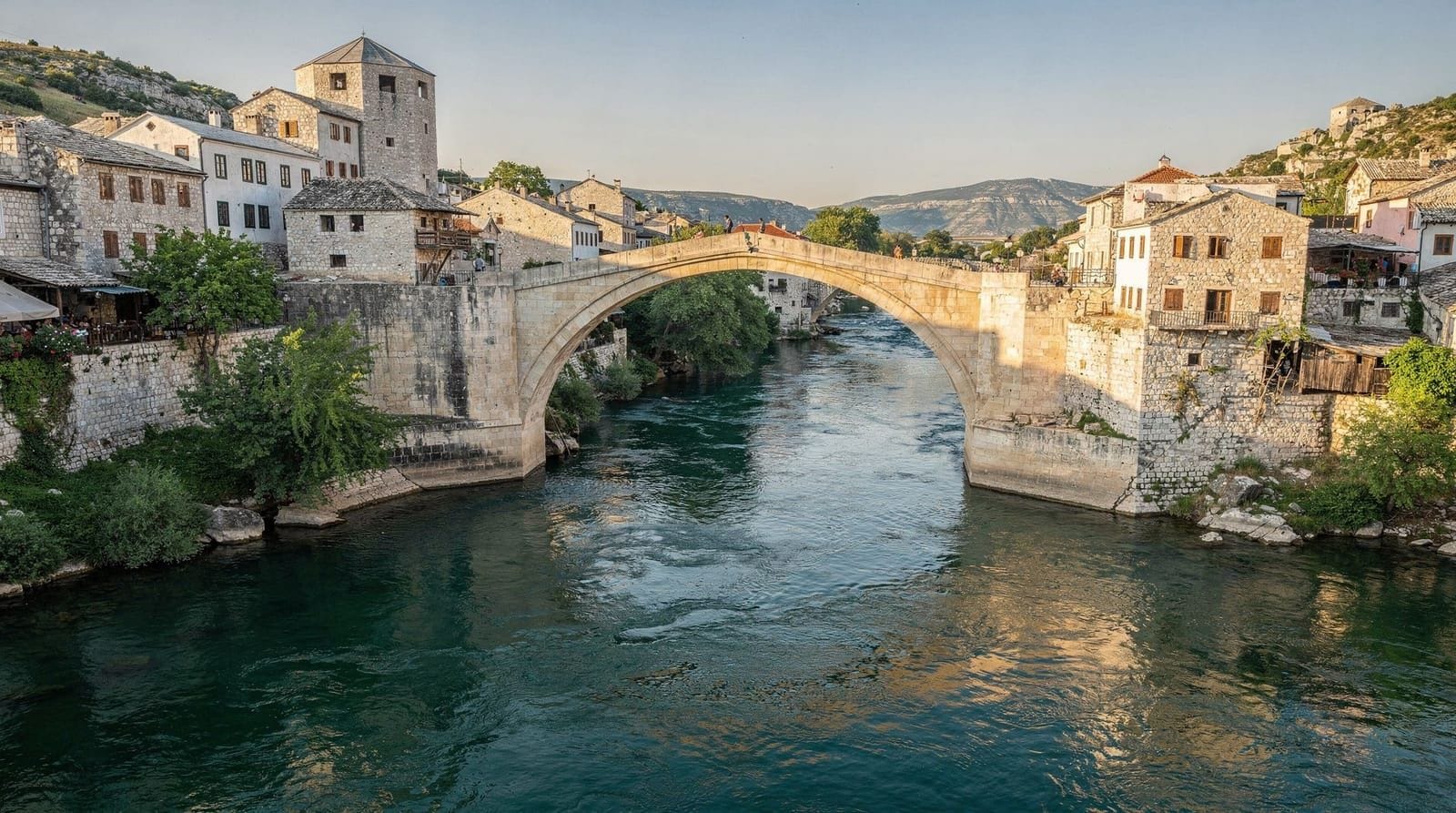
- Sarajevo from Split (5h, €20–€30): Via Mostar; an extraordinary mountain route
- Mostar from Dubrovnik (3h, €15–€20): Popular day-trip bus
- Herceg Novi / Montenegro from Dubrovnik (1.5–2h, €10–€15): Frequent summer service
International buses require your passport for border crossings. For non-Schengen passengers crossing into Bosnia or Montenegro, have your document ready at the border stop.
Bus etiquette in Croatia
A few unspoken rules for a smooth experience:
- The hold receipt: When the driver or assistant takes your luggage for the hold, you receive a small receipt with a number. Do not lose this — it is used when retrieving your bag at the destination.
- Seat numbers: Some operators assign seats; others are free-choice. Check your ticket. If assigned, the number is printed — find your row (red je); window (prozor) or aisle (hodnik).
- Eating on board: Light snacks are acceptable; strong-smelling food is considered rude and impractical on a sealed coach. Buy food at the service area stop.
- Music and calls: Headphones are expected. Speakerphone calls are frowned upon; Croatian passengers generally travel in quiet dignity.
- Toilets: When a bus has a toilet (on some long-haul services), it is at the back. Use it before the rest stop queue forms. On buses without a toilet, wait for the service area break — typically every 2–3 hours.
Buses vs renting a car: an honest comparison
For a coast-focused trip staying in Split, Dubrovnik and one or two islands, buses plus ferries are usually the better choice — no parking headaches in old towns, no per-day rental and fuel cost, and the routes you need (Zagreb–Split, Split–Dubrovnik) are well served. A car pays off specifically for Istria, the national parks circuit, or a road trip through smaller inland towns the bus network does not reach well. See renting a car in Croatia and getting around Croatia for the fuller comparison, and driving in Croatia for what to expect on the roads if you do rent.
Frequently asked questions about Croatia Bus Guide 2026
How do I buy bus tickets in Croatia?
Online via GetByBus, Vollo or Flixbus (for Flixbus-operated routes), at the bus station kiosk, or via operator apps (Arriva, Autotrans). In peak summer, book in advance — seats sell out on popular morning departures.What are the main bus companies in Croatia?
Arriva (major intercity routes including Zagreb–Split), Autotrans (Rijeka, Istria and Kvarner routes), Libertas (Dubrovnik area), FlixBus (selected long-distance routes). The Croatian Bus portal aggregates multiple operators. Local regional routes are covered by municipal companies.Are there luggage restrictions on Croatian buses?
Standard policy: one piece of hand luggage in the cabin and one larger bag in the hold (usually included in the ticket). A small surcharge (€0.50–€1.50) applies for hold luggage at some operators. Very large bags or multiple bags may require negotiation with the driver.Do Croatian buses have Wi-Fi and power outlets?
Many modern intercity coaches have Wi-Fi (variable quality) and USB charging points at seats. Air conditioning is standard. Toilets are available on some long-haul services but not all — plan accordingly.Is there a bus to Plitvice Lakes?
Yes — regular buses from Zagreb, Zadar and Split stop at the Plitvičko Jezero (Plitvice bus stop), which is at the main park entrance. Journey time from Zagreb: around 2 hours. From Split: 2–2.5 hours. From Zadar: 1.5 hours.How often do buses run from Split to Dubrovnik?
In summer, every 1–2 hours during the day, with additional evening departures. Year-round several times daily. Journey time: 4–5 hours depending on whether the route uses the Pelješac Bridge or the Neum corridor.Can I take a bus from Croatia to neighbouring countries?
Yes. International buses run from Zagreb and Split to Sarajevo, Ljubljana, Vienna, Frankfurt and many other cities. Check the bus station or online aggregators for cross-border services.Is it better to rent a car or use buses in Croatia?
For a coastal trip covering Split, Dubrovnik and the islands, buses plus ferries are usually simpler and cheaper — no parking hassle in the old towns and the key routes are well served. A car is worth it specifically for Istria, the national parks circuit, or a flexible inland road trip that buses do not reach well.
Top experiences
Bookable activities with verified prices and instant confirmation on GetYourGuide.
Top experiences
Best-rated activities across GetYourGuide and Viator.

Mostar and Herzegovina Tour with Kravica Waterfall from Split & Trogir
- Viator

Mostar & Kravice waterfalls full-day guided tour from Split
- Viator

Split airport to Split Private transfer to 8 pax (Door to Door any location)
- Viator

Zagreb to Split Group Transfer with Plitvice Lakes guided Tour
- Viator

Zadar: Zrmanja River Kayaking, with optional transfer from Zadar
- Viator

Mostar and Kravica Waterfall Discovery Day Trip from Split or Trogir
- Viator