Zagreb to Split — All the Ways to Travel
Split: Transfer to Zagreb with entry to Plitvice Lakes
What is the best way to get from Zagreb to Split?
The bus is the most popular choice — comfortable, frequent, approximately 5.5–6 hours and €15–€25. Driving via the A1 motorway takes 3.5–4 hours and costs around €26 in tolls plus fuel. The train is slower (5.5–6 hours) but more scenic through the Dalmatian canyon. A private transfer can stop at Plitvice Lakes en route.
The Zagreb–Split corridor is one of Croatia’s most-travelled routes — the connection between the capital and the country’s premier coastal city. There are four distinct ways to make the journey, each with meaningful trade-offs. Here is an honest assessment of each.
| Distance | About 390km via the A1 motorway |
| Cost | Bus €15-25; car tolls around €26 plus fuel; private transfer €80-150 |
| Time needed | 3.5-4 hours by car; 5.5-6 hours by bus or train |
| Getting there | Zagreb Bus/Train Station to Split Bus/Train Station, or A1 motorway |
| Best time | Weekday departures outside July-August for easier bus availability |
Option 1: Bus (the default choice)
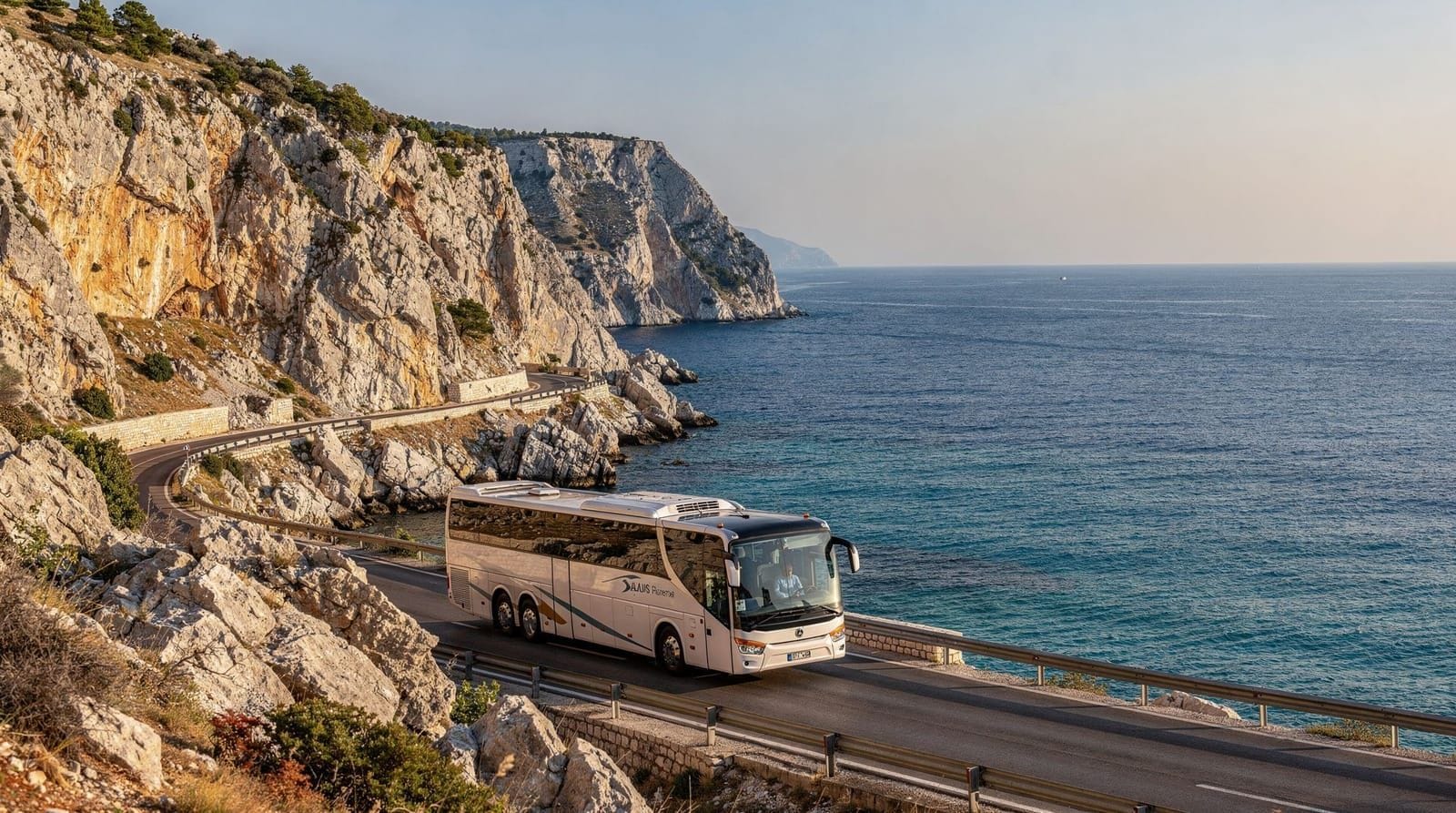
The intercity bus is how most Croatians and budget travellers cover this route. Croatia’s bus network is extensive, comfortable and reliable on this corridor.
Operators: Multiple companies including Flixbus, Arriva, Autotrans, Libertas and others. Compare on GetByBus or Vollo aggregators.
Journey time: 5.5–6 hours (express services); some services stop more frequently and take up to 7 hours
Prices: €15–€25 one way. Night buses slightly cheaper. Booking in advance (especially July–August) gives better prices and guarantees a seat.
Departure point: Zagreb Bus Station (Autobusni kolodvor), central Zagreb near the main railway station. Bolt or tram gets you there.
Arrival point: Split Bus Station — directly adjacent to the ferry terminal (Trajektna luka). Walk 2 minutes to buy island ferry tickets.
Night buses: Depart Zagreb at 10 pm–midnight, arrive Split around 4–6 am. Popular with budget travellers who save a night’s accommodation. Sleep quality varies; bringear plugs and a neck pillow.
Comfort: Modern coach with reclining seats, air conditioning, USB charging points on most services. Some longer-haul coaches have toilet facilities. Luggage goes in the hold below — a receipt ticket is given for each bag.
Booking tip: For July and August, book at least a week ahead. The 8 am and 2 pm departures are the most popular; the very early morning buses (5–6 am) are least crowded.
Option 2: Car via the A1 motorway
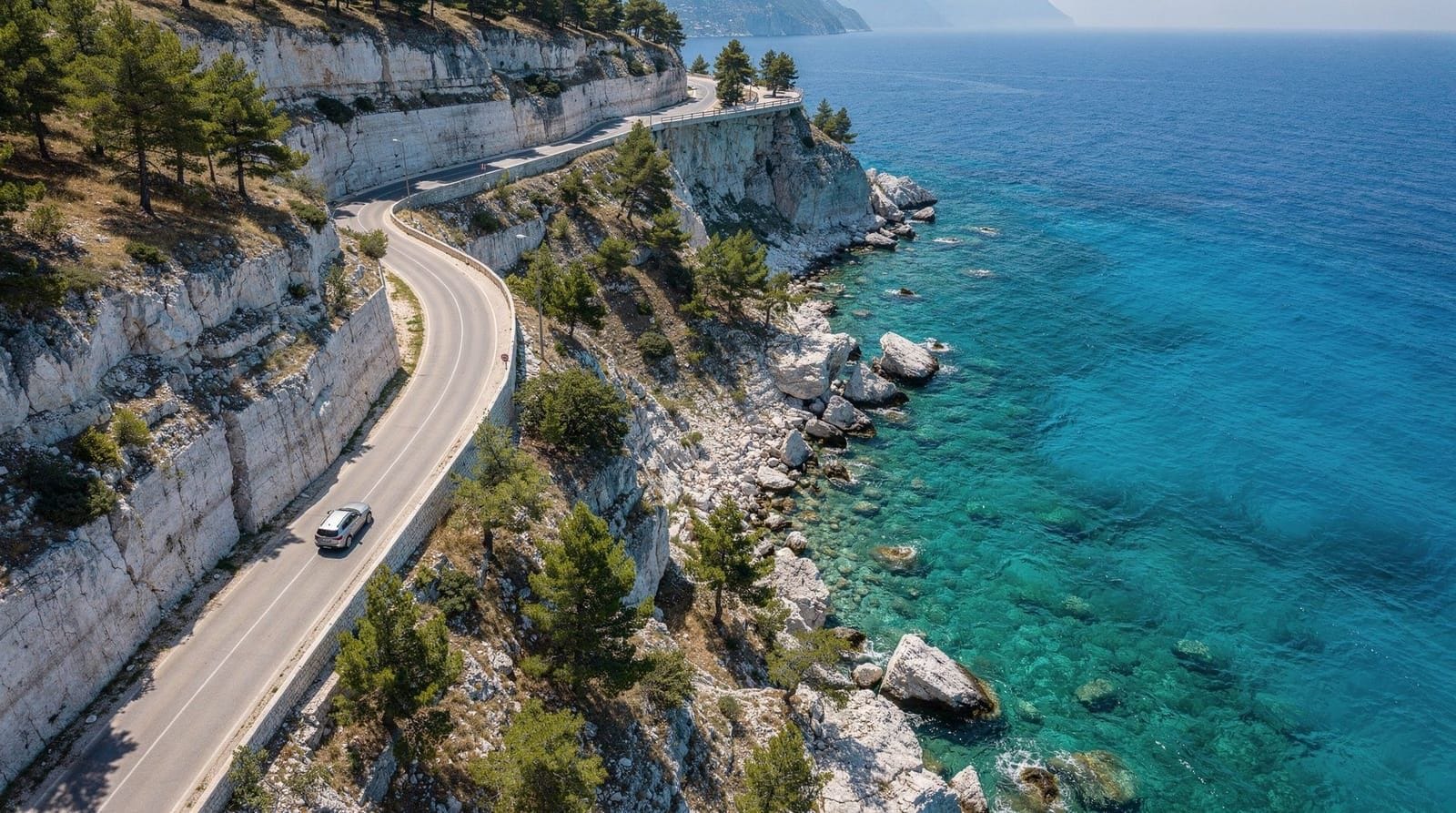
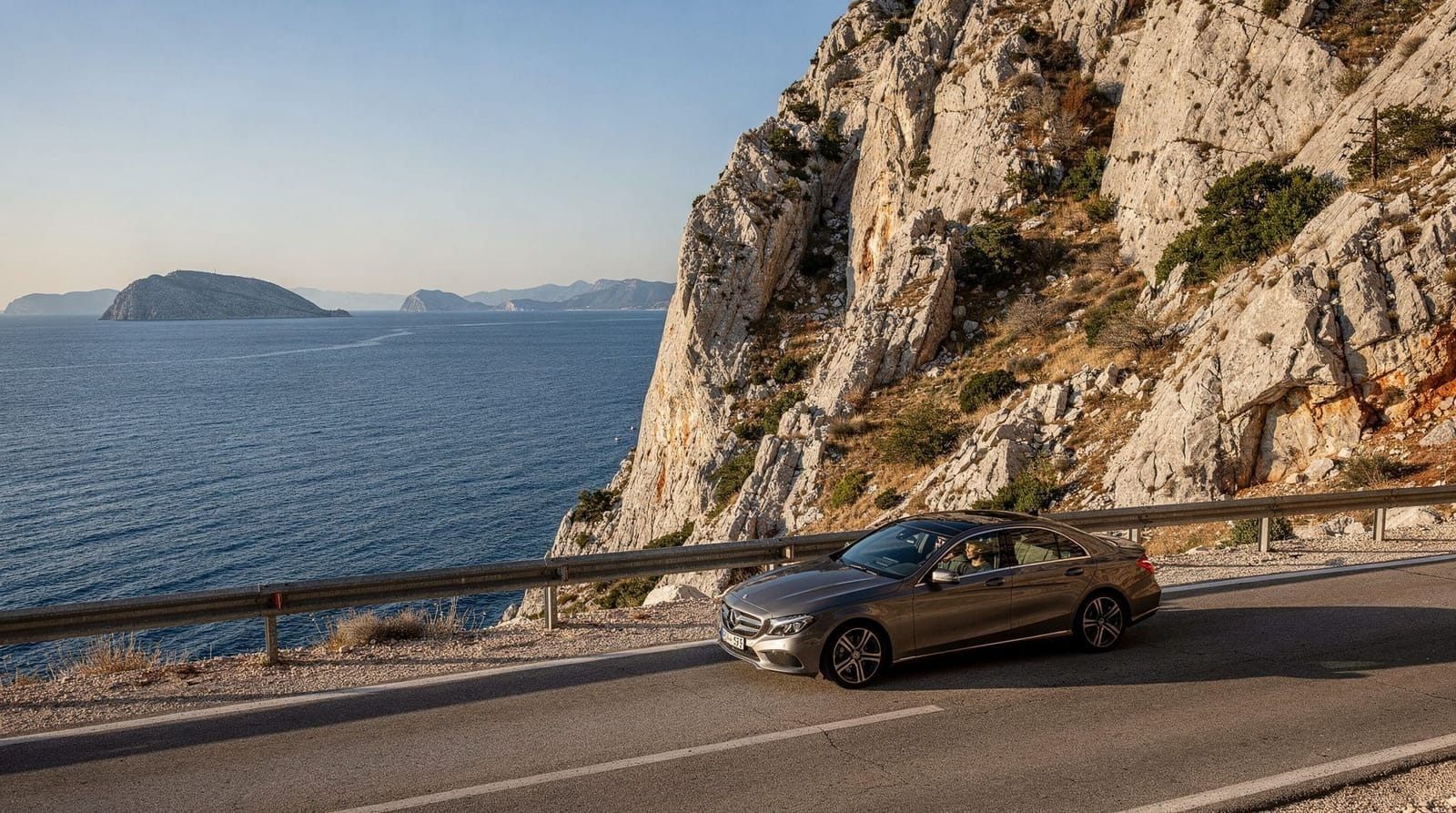
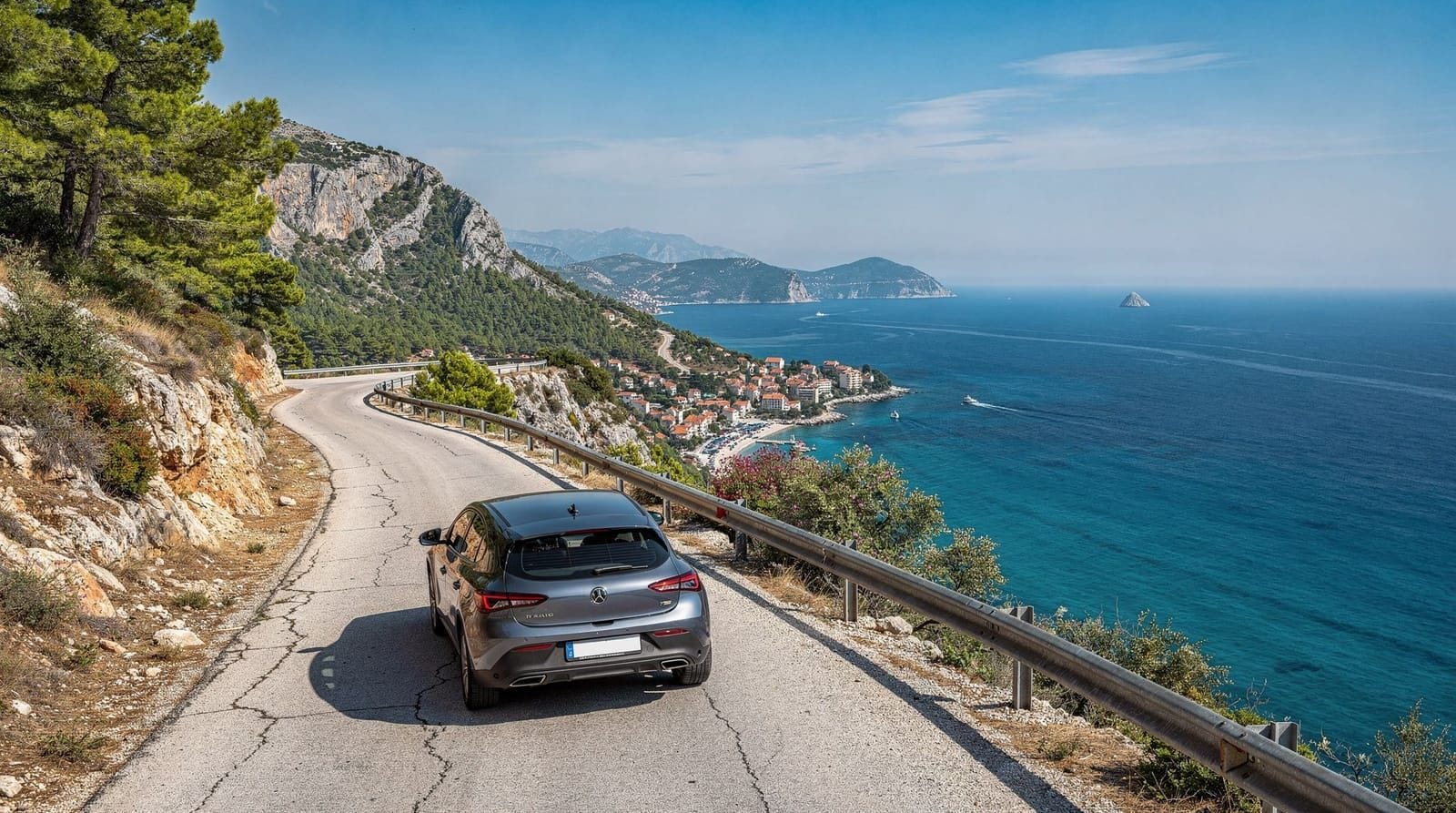
Driving from Zagreb to Split on the A1 is one of Croatia’s most impressive road journeys. The motorway starts near the city, climbs through the forests of Gorski Kotar, crosses the Lika plateau with views of the Velebit mountains, then descends dramatically into the Dalmatian hinterland before hitting the coast near Split.
Journey time: 3.5–4 hours in normal traffic; 4–5 hours in peak summer
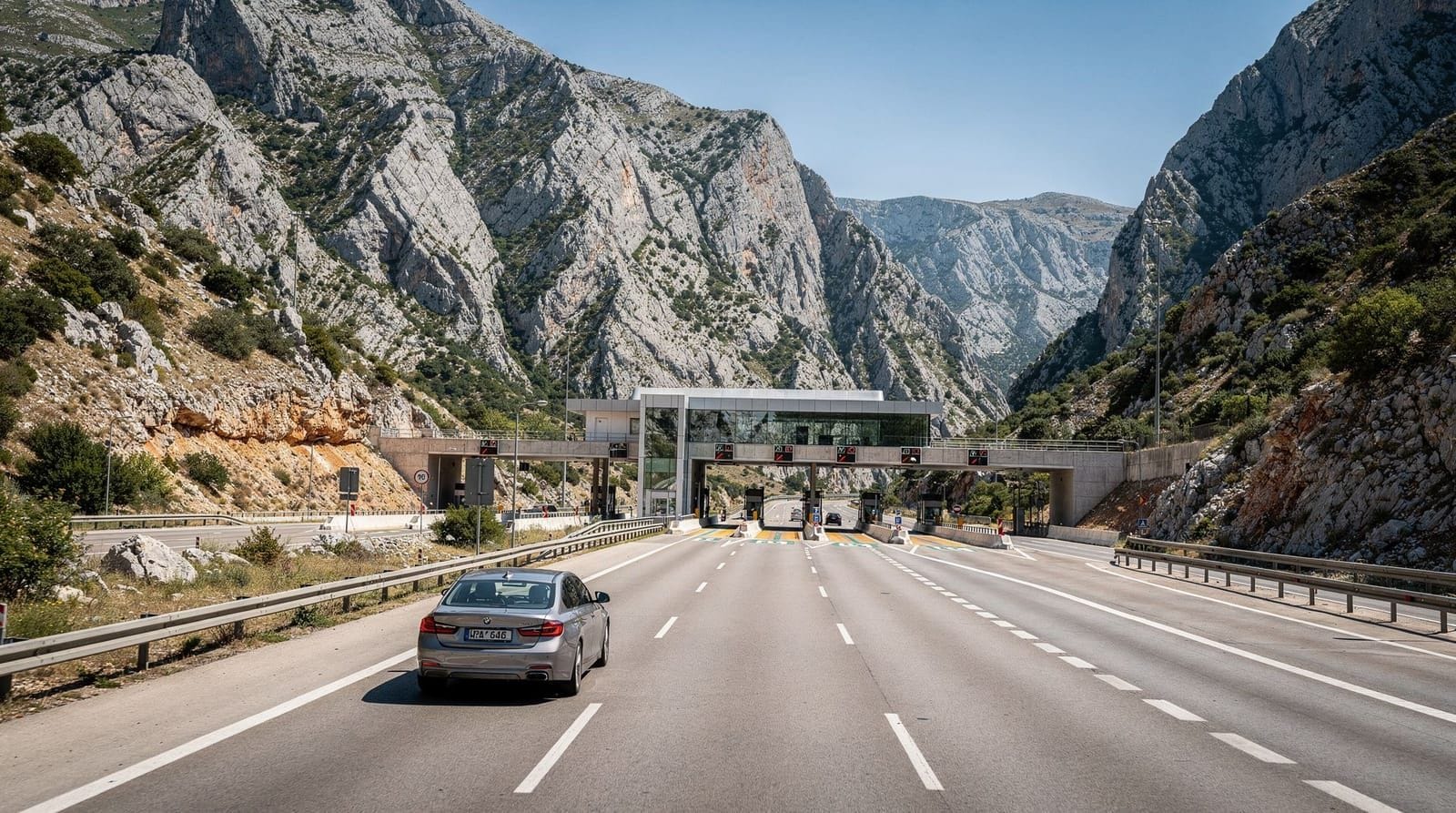
Motorway toll: ~€26 for a passenger car, payable at exit toll plazas (take a ticket at entry, pay on exit). Card or cash accepted. For full details, see Croatia tolls explained.
Petrol: ~€1.55/litre. Service areas on the A1 are regular (every 50–70 km) with cafes, toilets, fuel and convenience stores.
Parking in Split: The A1 ends near Split; follow signs toward the harbour. Parking in the old town area is metered and limited. For arrivals heading to the ferry, drive to the Trajektna luka (ferry terminal) — there is short-term parking nearby. For longer stays, use the Kopilica park-and-ride on the western edge of the city.
Alternative routes: The old road through Karlovac and Knin (E65) is far slower but more scenic through the military history-rich Krajina region. Allow 5–7 hours; recommended only for those who specifically want this experience.
Option 3: Train
The Zagreb–Split train is the subject of divided opinion. Travel writers tend to love it; pragmatic travellers are frustrated by it. The truth is somewhere between.
Operators: HŽ Putnički Prijevoz (Croatian Railways) Departure: Zagreb Glavni Kolodvor (main train station) Arrival: Split Station (city centre — note: not the same location as the bus station near the ferry terminal) Journey time: 5.5–6 hours depending on the service Frequency: A handful of departures per day; check the current schedule Price: Around €12–€25 depending on class and advance purchase
Why the train is appealing: The route through the karst landscape south of Zagreb is genuinely beautiful — limestone gorges, viaducts over river valleys, dense forest giving way to the bare moonscape of the Lika plateau. The final descent toward Split through the Dalmatian mountains is spectacular.
Why the train is frustrating: Slower than both the bus and car. The timetable is thin. Eurorail pass holders can use it — worth considering if already on a rail-heavy itinerary. Air-conditioning reliability varies.
Split station versus bus station: The train arrives at Split’s railway station, which is in the city centre but about 1 km from the ferry terminal. A short taxi or walk gets you there.
Option 4: Private transfer (with or without Plitvice)
A private minibus or car between Zagreb and Split takes 3.5–4 hours and costs roughly €80–€150 for a standard vehicle (2–4 passengers), more for a minivan.
The Plitvice detour: Many travellers turn the Zagreb–Split transfer into a half-day experience by stopping at Plitvice Lakes National Park en route. Plitvice is approximately 2 hours from Zagreb and 2 hours from Split — perfectly positioned for a midpoint visit. You spend 3–5 hours in the park and continue to Split by afternoon or early evening.
The Split-to-Zagreb transfer with Plitvice entry handles this seamlessly — pickup in Split, stop at Plitvice (park entry included), drop-off in Zagreb. The reverse direction, Zagreb/Trogir to Split with a Plitvice Lakes tour, does the same in the other direction.
Who private transfers suit: Groups of 3–6 people (cost per person becomes competitive), travellers with heavy luggage, those wanting the Plitvice stop built in, or anyone who values door-to-door convenience. Splitting the vehicle cost across a full group often brings the per-person price close to the bus fare while adding the flexibility of a fixed pickup time and a built-in park stop.
The Plitvice Lakes stop (independent approach)
If you’re travelling by bus with your own schedule, stopping at Plitvice independently involves:
- Bus: Zagreb to Plitvičko Jezero (2 hours, several daily services)
- Visit the park (minimum 4 hours for Route A/B, ideally a full day)
- Bus: Plitvičko Jezero to Split (2.5 hours, fewer services)
The timetable for Step 3 is the constraint — buses from Plitvice to Split run several times daily but the afternoon departures are limited. This approach works well but requires precise timetable planning; book ahead in summer when buses fill quickly.
Total cost comparison, including extras
Sticker price alone can be misleading once you factor in what each option actually includes:
| Option | Base price | Extras to budget for | Realistic total (1 person) |
|---|---|---|---|
| Bus | €15-25 | None significant | €15-25 |
| Car (own/rental) | Fuel + €26 toll | Rental, one-way drop fee, parking in Split | €80-200+ depending on rental |
| Train | €12-25 | Taxi/walk from Split Station to the harbour | €12-30 |
| Private transfer | €80-150 (per vehicle) | Often includes Plitvice entry | €20-40 per person if shared |
For background on Croatia’s whole transport network beyond this one route, see the getting around Croatia guide and Croatia buses guide. If you’re weighing self-driving more broadly, driving in Croatia and renting a car in Croatia cover the practicalities, and the Croatia airports guide is useful if you’re flying in or out via Zagreb or Split.
Which option is right for you?
| Traveller type | Recommended option |
|---|---|
| Budget traveller | Bus (book in advance) |
| Fastest journey | Car (A1 motorway) |
| Scenic rail experience | Train (if timing works) |
| Want Plitvice stop | Private transfer or car |
| Group of 4+ | Private transfer or car |
| No luggage, flexible | Bus |
What to see between Zagreb and Split
The Zagreb–Split corridor passes through some genuinely spectacular landscape that most travellers experience only through a bus window. With a car or strategic stop, these sites reward attention:
Karlovac (50 km from Zagreb)
A historic military town at the confluence of four rivers, built in a perfect hexagonal star-fort pattern in the 16th century. The old town is pleasant for a coffee stop. More compellingly: Karlovac is home to the Piasek neighbourhood’s riverside beer gardens and the Ozujsko brewery tour. The A1 motorway bypasses Karlovac; the old road runs through the centre.
Rastoke (near Slunj, 90 km from Zagreb)
One of Croatia’s most beautiful and least-visited villages — a small mill town where the Slunjčica river cascades over waterfalls and through houses in a fairy-tale arrangement. The walk through Rastoke takes 30–45 minutes. A compelling argument for the old road rather than the A1.
Plitvice Lakes National Park (135 km from Zagreb)
Croatia’s most-visited national park — emerald lakes connected by waterfalls, traversed by wooden boardwalks through a UNESCO-protected forest canyon. Entry by timed ticket (book in advance in summer). Plan at least 3–4 hours for Route A or B. The park entrance is directly on the bus route between Zagreb and Split (stop: Plitvičko Jezero). See our Plitvice Lakes guide for full advice.
Vrlika and the Dalmatian interior (around Sinj, 260 km from Zagreb)
As the A1 descends toward the coast from the Lika plateau, side roads lead into the Dalmatian interior — a landscape of ruined medieval fortresses, stone-walled fields and traditional villages. The town of Sinj hosts the famous Sinjska alka (equestrian jousting tournament) in August. The drive from Sinj toward the Cetina canyon (10 km) is remarkable.
Klis Fortress (20 km from Split)
Perched dramatically above the gorge where the Jadro river meets the coast plain, Klis Fortress (Tvrđava Klis) is where Daenerys held her dragons in Game of Thrones season 5. A striking landmark on the approach to Split. Take the local road exit from the A1 toward Klis and you’re there in 15 minutes.
None of these stops are realistic on a scheduled bus, which is the main trade-off of choosing convenience over flexibility on this route — worth weighing honestly if the drive itself is part of what you want from the trip, not just the destination.
Zagreb departure points
By bus from Zagreb Bus Station
Zagreb’s main bus station (Autobusni kolodvor Zagreb) is centrally located near the main train station, a short tram ride or 15-minute walk from the Gornji Grad (Upper Town) area. The station is modern, with digital departure boards, cafes and ticket kiosks. Note that different bus companies operate from adjacent bays — check which gate (perona) your specific service uses when booking.
By train from Zagreb Main Station
Zagreb Glavni Kolodvor (main train station) is immediately east of the bus station — both are in the same neighbourhood of the city. The architectural contrast is notable: the train station is a grand 19th-century hall; the bus station is modern and functional.
By car from Zagreb
The A1 on-ramp is clearly signposted from Zagreb city centre. Follow signs for “Split” or “A1 Jug” (south). The motorway begins just south of the city at the Lučko interchange.
Arriving in Split
By bus
Split Bus Station is on the harbour, directly adjacent to the ferry terminal. Walk 2 minutes from the bus arrival bay to the Jadrolinija ticket office. The Riva waterfront promenade is immediately behind the terminal — orientation is effortless.
By train
Split Station is in the city centre, about 1 km west of the bus station along the waterfront. A short walk or tram (city bus) connects the two. The approach by train is scenic — the final descent through the Dalmatian canyon is among the best arrival moments in Croatian travel.
By car
Follow signs for “Trajektna luka” (ferry terminal) if heading to the islands, or “Stari Grad” (old town) for the historic centre. Parking: Kopilica park-and-ride (western approach) is the best option for multiple-day stays. City centre parking (Riva, Vestibul area) is limited and expensive.
The overnight bus option in detail
Night buses on the Zagreb–Split route are worth a longer look. Departures typically at 10 pm, 11 pm and midnight; arrivals in Split around 4–6 am. Price: €12–€20 (the lowest fares on this route, often).
Practical concerns:
- The bus stops at 1–3 points en route (Karlovac, sometimes Plitvice junction, Split approach). Total road stops: 15–20 minutes, usually for a service area break.
- Arrival at 4–5 am: Split Bus Station has a 24-hour waiting area. The Riva waterfront is open and atmospheric even at 5 am in summer (early fishermen, first ferries warming up). Some accommodation accepts very early key pickup; confirm before arrival.
- Luggage storage: Available at Split Bus Station, which opens early. Store luggage and explore the old town before check-in.
The night bus is genuinely useful for anyone on a tight schedule or budget — saving both a hotel night and the daytime journey time.
Continuing south from Split
Many travellers treat Zagreb–Split as one leg of a longer coastal trip. If Split is a stopover rather than an endpoint, the Split to Dubrovnik guide covers the next stage south, and the Split destination guide and Zagreb destination guide round out planning at both ends.
Frequently asked questions about Zagreb to Split
How long is the bus from Zagreb to Split?
Approximately 5.5–6 hours on express services. Some slower services take 7 hours with more stops. Night buses run overnight, departing Zagreb late evening and arriving in Split early morning.How much is the bus from Zagreb to Split?
Around €15–€25 depending on the company, time of booking and season. Night buses tend to be slightly cheaper. Book in advance for the best prices, especially in summer.How long does it take to drive from Zagreb to Split?
Around 3.5–4 hours on the A1 motorway in normal traffic. Allow an extra 30–60 minutes in peak summer. Motorway toll: approximately €26 for a passenger car.Is the Zagreb to Split train worth it?
The train journey winds through the Dalmatian karst canyon country south of Zagreb — genuinely beautiful and one of Croatia's most scenic rail routes. However, it takes 5.5–6 hours (comparable to the bus), runs only a few times per day, and the train arrives at Split Station rather than the bus station near the ferry terminal.Can I stop at Plitvice Lakes on the way from Zagreb to Split?
Yes — Plitvice is roughly halfway between Zagreb and Split, about 2 hours from Zagreb by car. With your own car, this is a natural stopping point. By public transport, you need to take a Zagreb–Plitvice bus, spend time at the park, then catch a separate Plitvice–Split bus.What is the distance from Zagreb to Split?
Around 390 km by motorway (A1). The direct crow-flies distance is shorter but the route curves through the Lika plateau.Are there direct flights from Zagreb to Split?
Croatia Airlines operates some Zagreb–Split domestic flights, but these are expensive relative to the bus and departure times are limited. Most travellers take the bus or drive.Is it better to travel Zagreb to Split during the day or overnight?
For most visitors, daytime travel is worth the extra alertness cost — the route through Lika and the descent to the coast is genuinely scenic and easy to miss overnight. The night bus makes sense mainly for budget travellers on a tight schedule who would rather sleep in transit than pay for an extra hotel night.Can I rent a car in Zagreb and drop it off in Split?
Yes, one-way rentals between Zagreb and Split are common and offered by all major agencies, usually for a drop-off fee of roughly €50–150 depending on the company and season. This suits travellers who want to drive the A1 and stop at Plitvice or Rastoke but don't need a car once on the coast.
Top experiences
Bookable activities with verified prices and instant confirmation on GetYourGuide.
Top experiences
Best-rated activities across GetYourGuide and Viator.

Mostar and Herzegovina Tour with Kravica Waterfall from Split & Trogir
- Viator

Mostar & Kravice waterfalls full-day guided tour from Split
- Viator

Split airport to Split Private transfer to 8 pax (Door to Door any location)
- Viator

Zagreb to Split Group Transfer with Plitvice Lakes guided Tour
- Viator

Zadar: Zrmanja River Kayaking, with optional transfer from Zadar
- Viator

Mostar and Kravica Waterfall Discovery Day Trip from Split or Trogir
- Viator