Split to Dubrovnik — Every Way to Travel
Split: Hvar, five islands and blue cave private tour
What is the best way to travel from Split to Dubrovnik?
The daytime coastal catamaran (via Hvar, Korčula and Mljet) is the most scenic and enjoyable option — around 5–6 hours with island stops. The bus is cheaper (€15–€22, 4.5 hours) and the most frequent year-round option. Driving (230 km, around 3–4 hours) gives flexibility but involves summer traffic. Private transfers are the fastest and most convenient door-to-door option.
Split and Dubrovnik are the two pillars of a Dalmatian itinerary, separated by around 230 km of spectacular coastline — and several radically different ways to travel. The choice between them shapes not just the journey itself but which islands you visit and how much of Dalmatia you actually see. Here is an honest breakdown of every option.
| Distance | ~230km coastal road |
| Fastest | Private transfer, 3–3.5hrs |
| Cheapest | Bus, €15–22, 4–5hrs |
| Most scenic | Daytime coastal catamaran, 5–6hrs |
| Best time | Book ahead for July–August on any option |
Option 1: Daytime coastal catamaran (the scenic route)
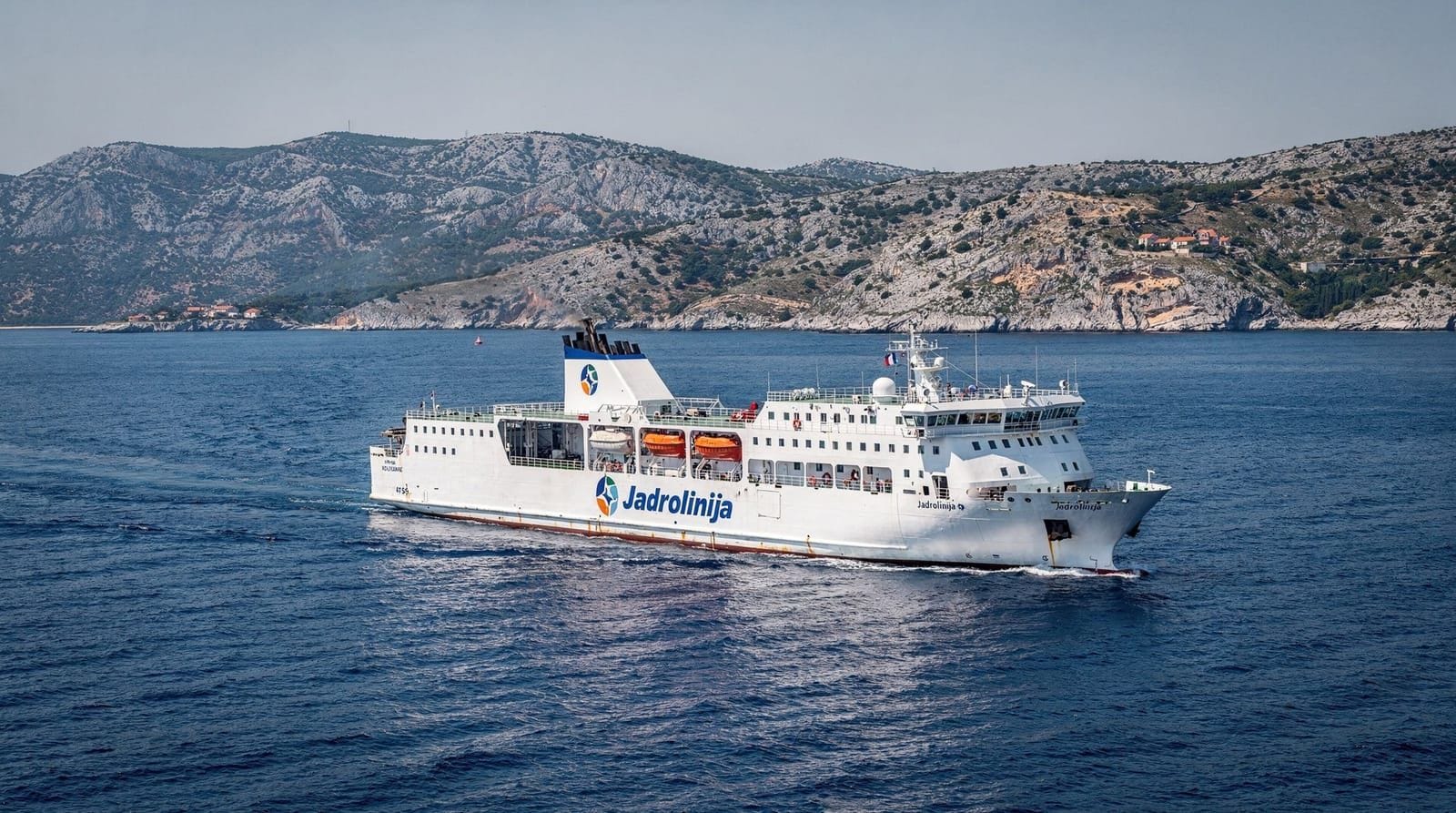
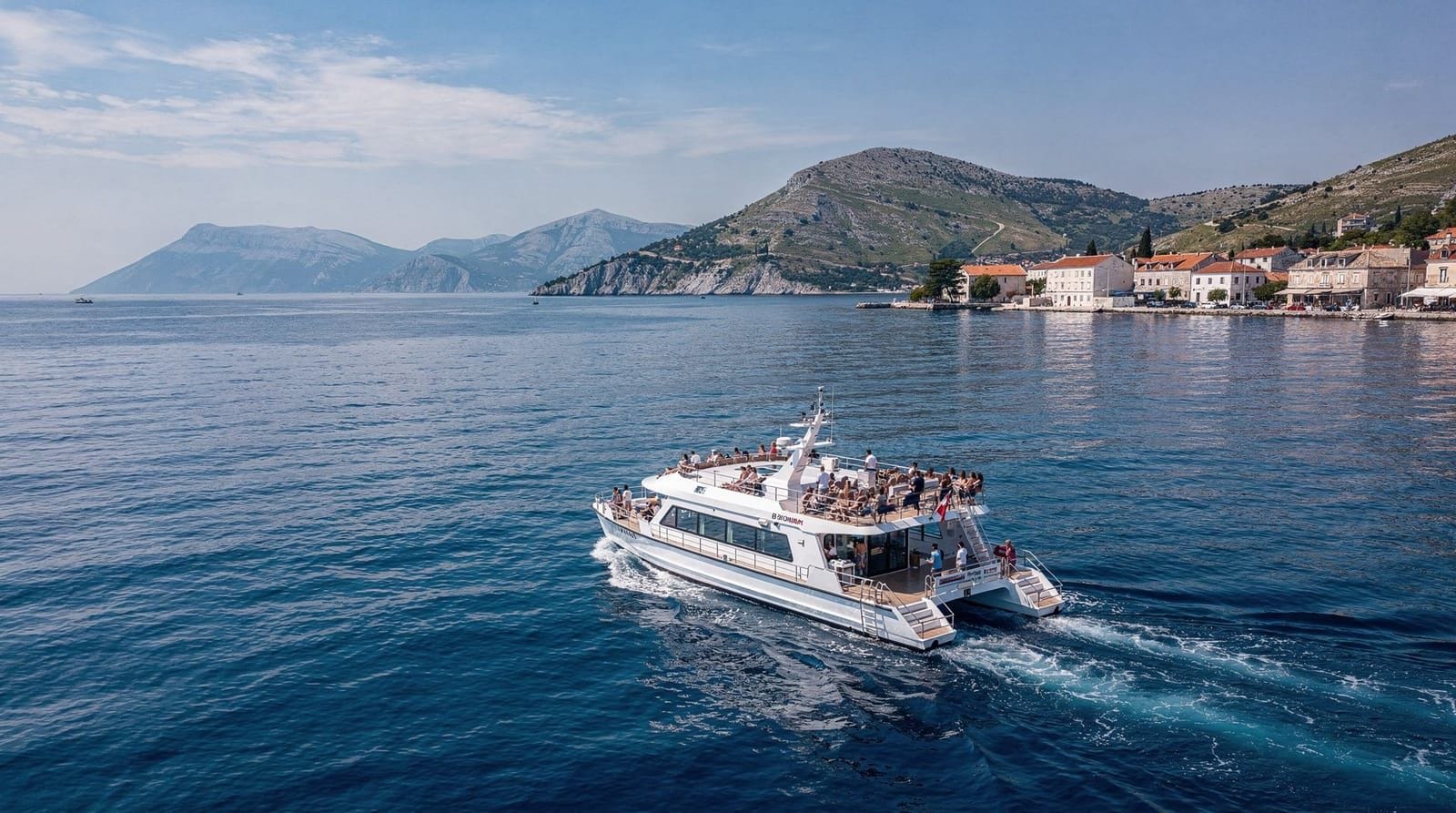
The most memorable way to make this journey. Jadrolinija’s daytime coastal catamaran departs Split in the morning, weaves through the Dalmatian archipelago, and arrives in Dubrovnik’s Gruž harbour in the afternoon. En route it calls at Hvar Town, Korčula (and sometimes Mljet — check the timetable), giving you the option to hop off at any of these islands and continue on a later sailing.
Journey time: 5–6 hours total (Split to Dubrovnik) Departure: Typically around 8–9 am from Split ferry terminal Arrival: Dubrovnik Gruž harbour, early to mid-afternoon Cost: ~€27–€35 foot passenger Cars: Not accepted
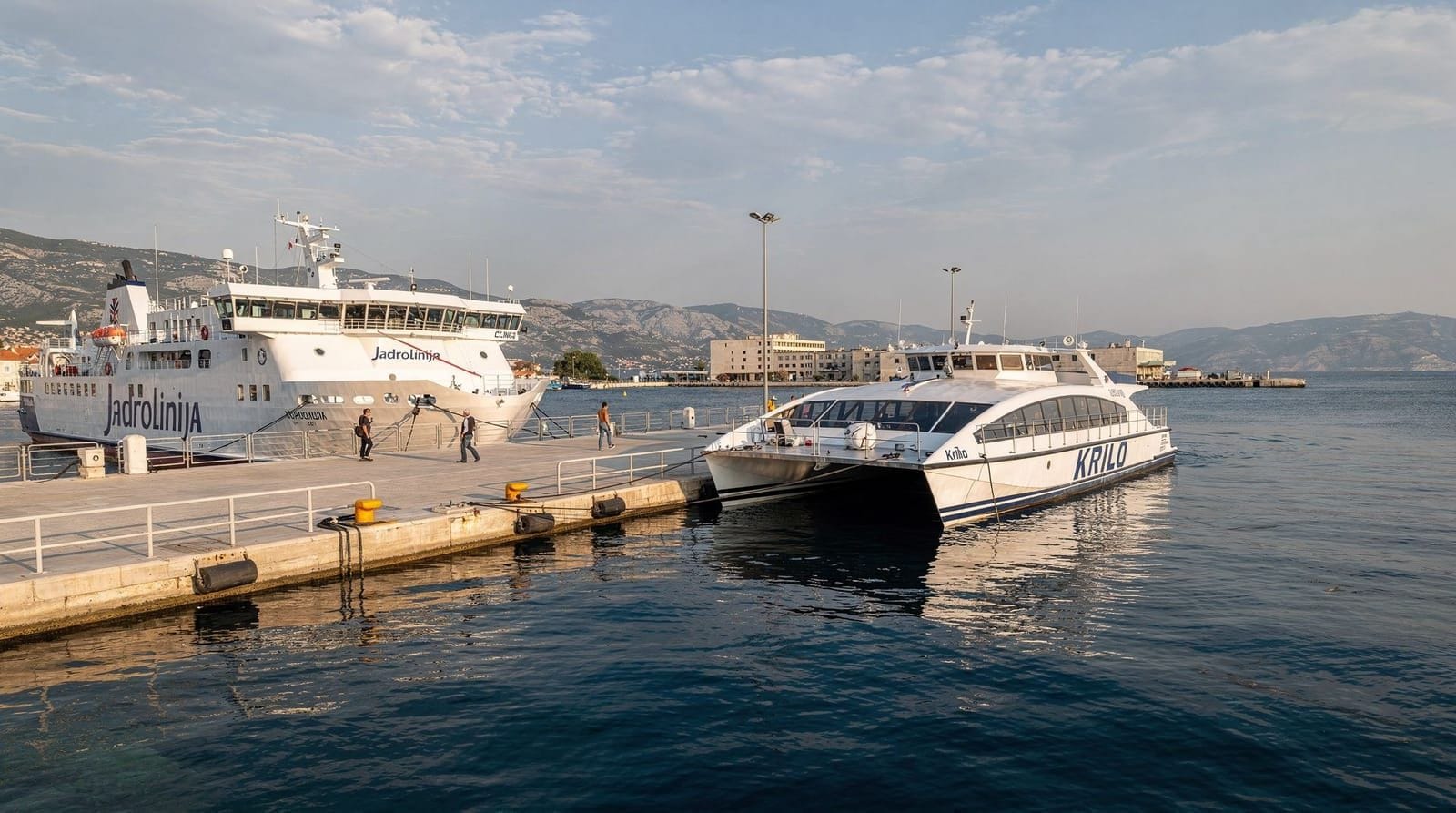
Krilo (Kapetan Luka) operates a competing catamaran on this corridor, sometimes with slightly different island stops. Compare both operators’ timetables for your travel date — Krilo occasionally offers a faster direct option while Jadrolinija’s version serves more stops.
Who it’s for: Travellers who want the best of the journey — island views, a morning on the sea, the sense of actually moving through Dalmatia rather than past it.
Important: This is the one-way ferry experience. To return Split–Dubrovnik by catamaran, you need to rebook — there is no same-day return.
Option 2: Bus
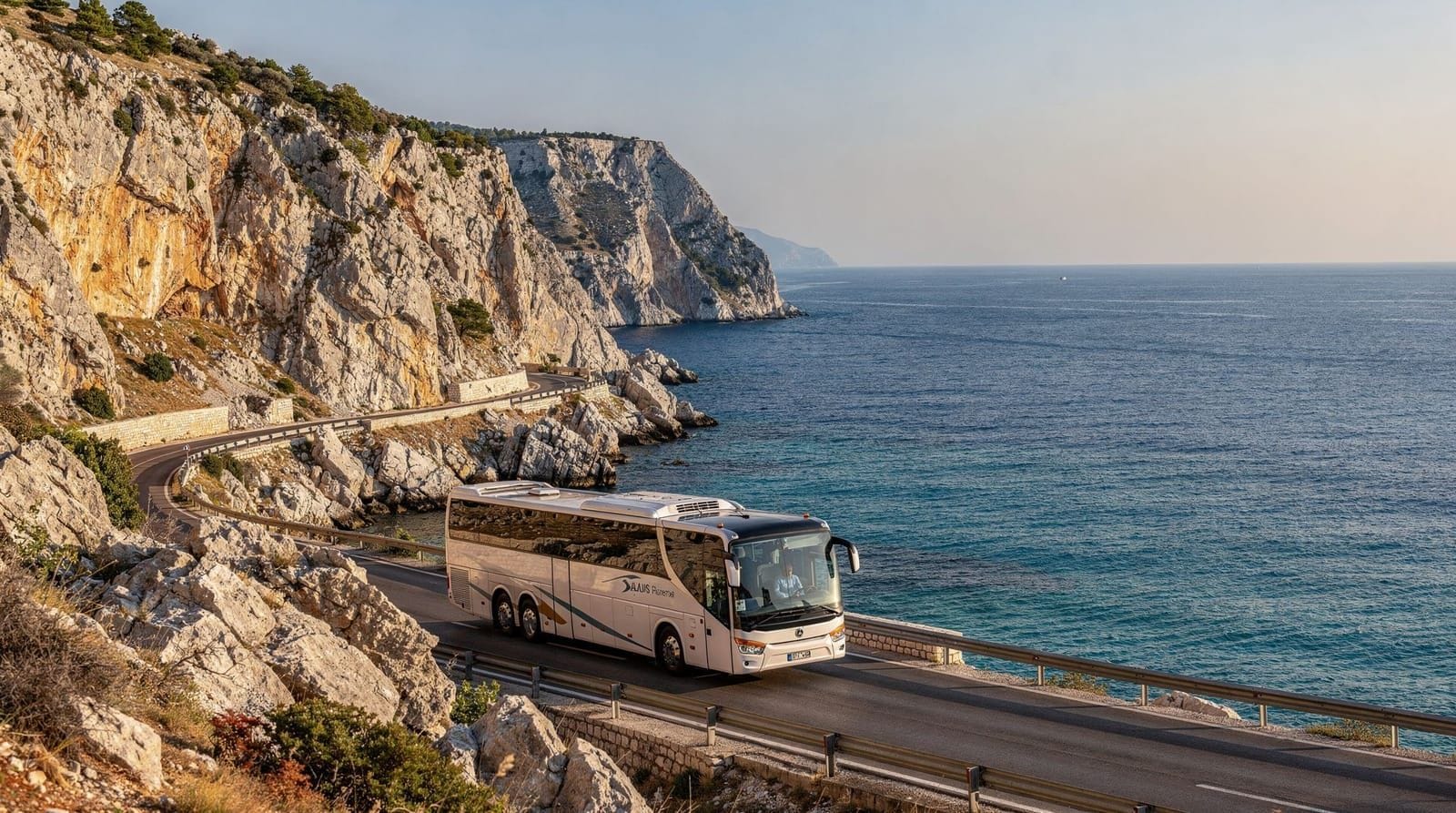
Croatia’s bus network is the backbone of public transport on the coast, and the Split–Dubrovnik route is one of the most frequent services in the country.
Journey time: 4–5 hours Cost: €15–€22 depending on the company and booking method Departures: Every 1–2 hours during the day; year-round Night buses: Yes — overnight services exist if you want to save on a night’s accommodation Terminal: Departs Split Bus Station (next to the ferry terminal); arrives Dubrovnik Bus Station (Gruž, walking distance from the Gruž ferry port and a 15-minute bus ride from the old town)
The Neum question
Some bus routes still pass through Neum — the narrow coastal strip of Bosnia and Herzegovina that interrupts the Croatian coastal road. This requires a passport check at the border in each direction, adding 30 minutes to 1 hour in peak summer.
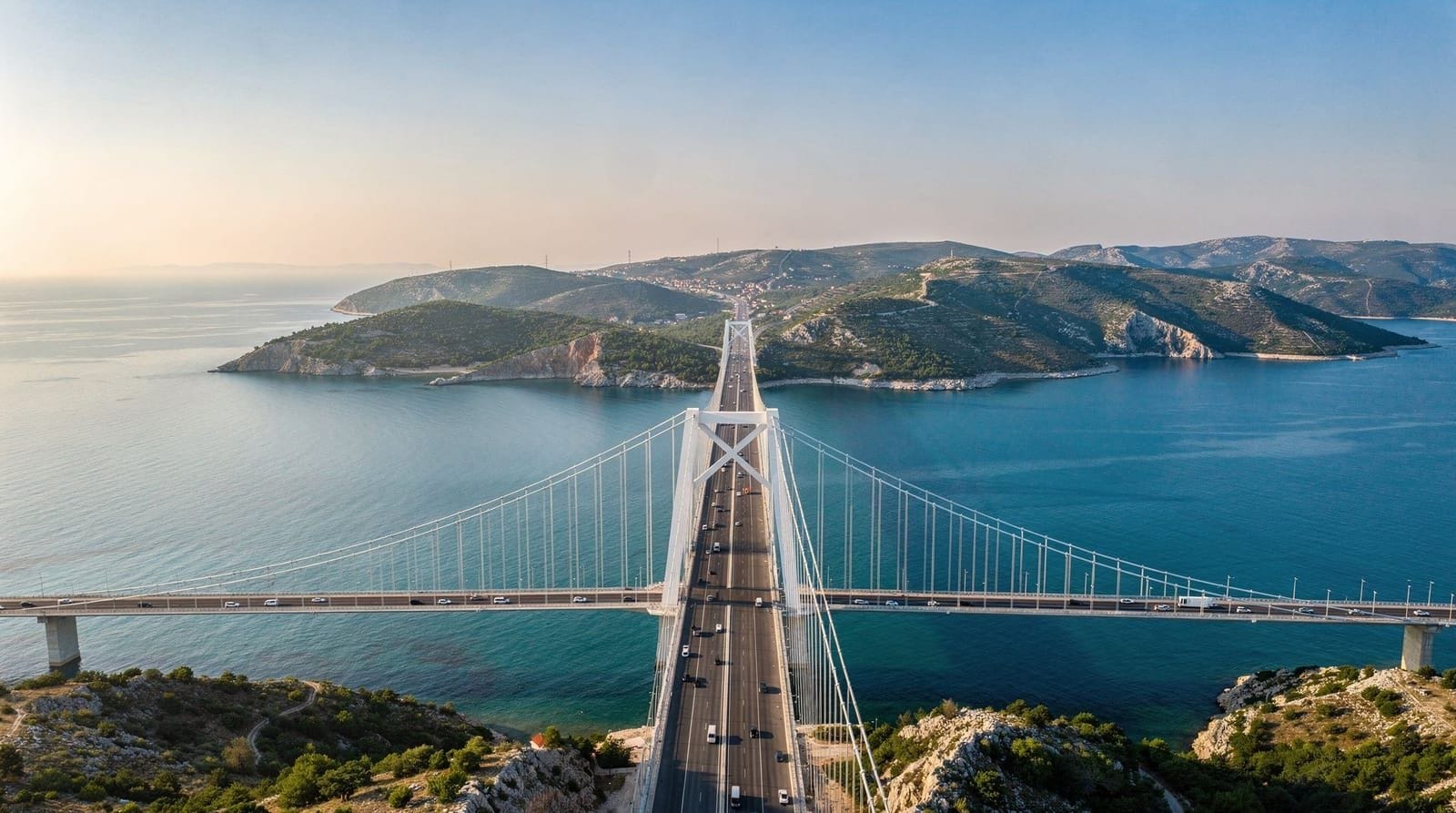
Since the Pelješac Bridge opened in 2022, some bus companies have updated their routes to use the bridge and bypass Neum. Check when booking — most operators now indicate whether the route is “via most Pelješac” (bridge, no border crossing) or “via Neum.” For full details on the bridge, see our Pelješac Bridge guide.
Who it’s for: Budget travellers, those without flexibility on timing, or anyone who needs year-round service and predictable schedules.
Option 3: Driving
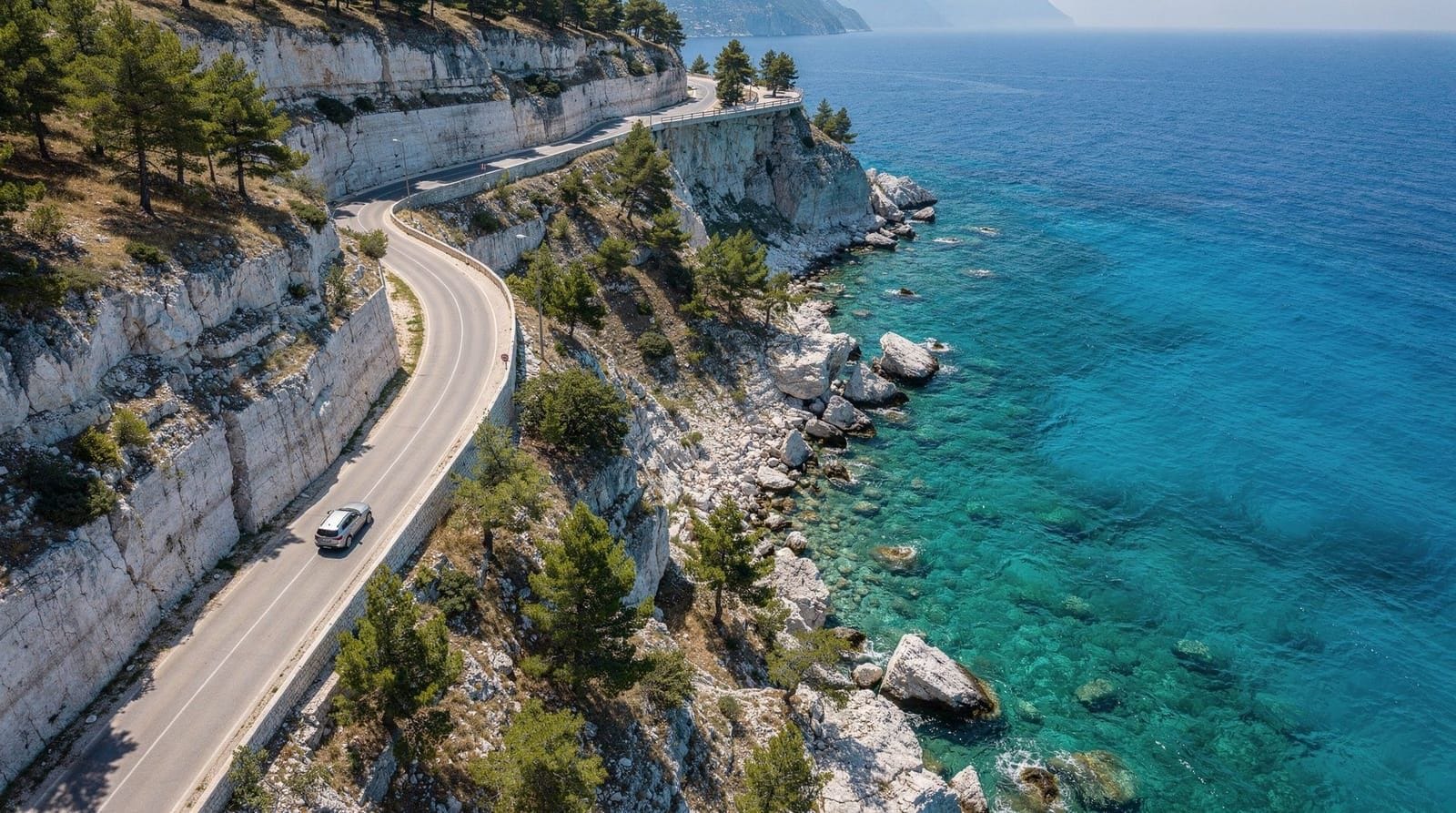
The coastal drive from Split to Dubrovnik is genuinely beautiful. The D8 Adriatic Highway hugs the coast, passing through Omiš, the Makarska Riviera, the Biokovo massif, and the Pelješac Peninsula.
Distance: ~230 km (coastal D8 route) or ~320 km (via A1 motorway then D8 south) Time: 3–4 hours in low season; 4–6 hours or more in July–August
The most practical routing for drivers:
- Via A1 + junction: Take the A1 motorway from Split south to the Ploče junction, then D8 along the coast to Dubrovnik. This avoids some of the slowest coastal road sections.
- The Pelješac Bridge: Since 2022, drivers can cross the bridge and bypass the Neum corridor entirely. This is now the standard route for anyone wanting to stay within Croatia’s borders — and it’s quicker than the old Neum crossing during summer queue periods.
- Via D8 coastal road: Pure scenic driving, but genuinely slow in July–August through Makarska and Baška Voda.
Parking in Dubrovnik: Plan this before you arrive. The old town car parks fill quickly. Ilijina Glavica park-and-ride is the recommended option — take the shuttle into the old town. See the Dubrovnik guide for details.
Who it’s for: Travellers who want to stop along the way (Makarska, Omiš, Brela beach), those with luggage that makes buses or catamarans uncomfortable, and anyone already driving a circuit.
Option 4: Private transfer
A private minibus or car transfer from Split to Dubrovnik is door-to-door — hotel pickup and hotel drop-off — typically taking 3–3.5 hours. Cost for a standard group: €80–€150 per car depending on group size and whether you include a Neum bypass (bridge route).
Many private transfer operators also offer en-route stops: the Pelješac Peninsula for wine, a beach at Brela, or Omiš for photographs of the Cetina gorge.
Who it’s for: Families with young children, groups with heavy luggage, or anyone who wants door-to-door comfort and flexibility without driving themselves.
Side-trip combinations
The Split–Dubrovnik route is also perfect for building in island overnight stops:
- Split → Hvar (1 night) → Korčula (1 night) → Dubrovnik by catamaran
- Split → Korčula (1 night) → Dubrovnik by catamaran
- Split → Mljet (1 night) → Dubrovnik (Mljet is the closest island to Dubrovnik with accommodation)
For a full itinerary structured around this approach, see the Dalmatian island-hopping 7-day itinerary.
If you want to experience the islands along this route as an organised day experience rather than managing individual ferry bookings, the private Hvar, five islands and blue cave tour from Split gives you a guided day at sea visiting the archipelago between the two cities.
Comparison table
| Method | Time | Cost (pp) | Cars | Best for |
|---|---|---|---|---|
| Coastal catamaran | 5–6 h | €27–€35 | No | Scenic travel, island hoppers |
| Bus | 4–5 h | €15–€22 | No | Budget, frequency |
| Drive | 3–5 h | Fuel + tolls | Yes | Flexibility, families |
| Private transfer | 3–3.5 h | €25–€50 pp | No | Comfort, door-to-door |
Making the most of the coastal road
If you’re driving (Option 3), the Split–Dubrovnik stretch is one of the great European coastal drives. These stops are worth building in:
Omiš (30 km south of Split): Where the Cetina river gorge meets the sea — a dramatic confluence of mountains and Adriatic. The fortress-crowned hilltop above town and the narrow gorge downstream are spectacular. The town also runs white-water rafting on the Cetina. 20 minutes off the main route.
Brela and Baška Voda: The Makarska Riviera’s best beaches. Brela’s Štupi beach is postcard-perfect — small pebbles, a rocky islet, pines growing to the waterline. A 20-minute stop turns into an hour.
Makarska: The largest town on the Makarska Riviera. Worth a coffee stop on the palm-lined Riva — the backdrop of the Biokovo massif rising 1,200 metres directly behind the waterfront is extraordinary.
Biokovo Skywalk: Just above Makarska, the road up to Biokovo Nature Park reaches a glass-floor viewpoint at 1,228 metres. The drive itself (around 30 minutes one way on a steep, winding road) is for confident drivers only. The views are some of the finest in the country.
Ston: At the base of the Pelješac Peninsula. The town has a staggering wall system — the longest medieval defensive walls in Europe after the Great Wall of China — and Croatia’s best oysters, grown in the sheltered bay. The drive from Ston along the Pelješac Peninsula ridge adds 40 minutes but passes through the Dingač wine country.
The journey in reverse: Dubrovnik to Split
All options work equally in reverse. The daytime coastal catamaran departs Dubrovnik’s Gruž harbour in the morning (check the current Jadrolinija timetable — departure is typically around 7–8 am) and arrives in Split by early afternoon. This is the optimal direction for travellers flying home from Split Airport: arrive Split mid-afternoon, collect luggage from storage, and have time for a final walk through Diocletian’s Palace.
Buses from Dubrovnik Bus Station (Gruž) to Split run every 1–2 hours. The first departure is typically around 6–7 am; the last departure around 8–9 pm.
Luggage logistics
Ferry (catamaran): Hold luggage is stored below deck; keep cabin bags with valuables. On a 5–6 hour crossing, you’ll want your day bag accessible.
Bus: Luggage goes in the hold below the bus. You get a receipt stub — keep it. At rest stops, the hold stays accessible but the driver loads and unloads.
Driving: Obviously flexible. One tip: if staying in Dubrovnik’s old town, the approach roads require leaving your car before the old-town gate. Book accommodation with clear instructions on where to park and collect your keys.
Arriving in Dubrovnik
Whether you arrive by sea (at Gruž harbour) or by bus (at the Dubrovnik Bus Station, also at Gruž), the arrival point is the same: the Gruž district, 3 km from the old town.
From Gruž to the old town:
- Bus No. 1A or 1B: Runs from Gruž to Pile Gate every 15–20 minutes. Buy a ticket at the kiosk outside the ferry terminal (€2.50 for a 90-minute ticket) — slightly cheaper than buying on the bus.
- Taxi: ~€10–€12 from Gruž to Pile Gate.
- Walk: 35–40 minutes along the waterfront if you have minimal luggage.
The walk along the harbour is pleasant and gives you a first view of the old town walls rising above the sea — particularly good at golden hour.
Practical logistics checklist
Before finalising your Split–Dubrovnik journey, work through this list:
If taking the catamaran:
- Check current Jadrolinija AND Krilo timetables for your date — both operators are seasonal and schedules change
- Book in advance for July–August (at least a week, ideally two)
- Confirm departure pier at Split ferry terminal (catamarans and car ferries use different piers)
- Plan your arrival at Gruž harbour in Dubrovnik — bus 1A/1B to Pile Gate, or taxi
- Confirm your accommodation can accept afternoon/early evening check-in (catamaran arrives 2–4 pm)
- Know that foot-passenger baggage goes in a hold below deck; keep valuables with you
If taking the bus:
- Confirm whether your service routes via Pelješac Bridge or Neum (important for non-Schengen passport holders)
- Download your e-ticket before departure — poor signal on mountain routes
- Bus station in Dubrovnik is at Gruž — same transport options to old town as catamaran arrival
- Night buses: confirm exact departure time and bring ear plugs, eye mask, neck pillow
If driving:
- Check the HAK road conditions app before departing (hak.hr) — real-time closures and delays
- Have cash and card available for toll plaza (€26+ for the A1 Zagreb–Split–Dubrovnik section)
- Navigate to Ilijina Glavica park-and-ride on approach to Dubrovnik — do not attempt old-town parking
- If routing via Pelješac Bridge (recommended): exit A1 at Ploče and follow signs for “Most Pelješac”
Why the journey matters
The Split–Dubrovnik route is not merely logistics — it is the central axis of Dalmatian travel, the thread connecting Croatia’s two most celebrated cities through one of the most beautiful archipelagos in the Mediterranean. How you make the journey shapes what you understand of the country.
The catamaran traveller arrives in Dubrovnik having watched the islands recede and the city walls appear from the sea — the view sailors saw for centuries, approaching the Republic of Ragusa. The bus traveller has watched the same landscape at pace, framed by windows, with the scale of the Biokovo mountains and the Pelješac ridge giving a different perspective. The driver has stopped at Brela, tested the temperature at the beach below the pines, and descended on Dubrovnik via a road that required patience.
All are valid. None are wrong. The choice depends on your circumstances. What matters is that you make the journey deliberately, knowing what it holds.
Budgeting the journey: a realistic comparison
For a couple travelling Split to Dubrovnik, the true cost gap between options is narrower than headline prices suggest once you factor in time. Two bus tickets run roughly €30–€44 total but consume most of a travel day. Two catamaran tickets cost €54–€70 and deliver a genuine sightseeing experience in that same time — arguably better value once you count what you’d otherwise pay for a boat tour. A private transfer at €80–€150 for the car works out similar per person to the catamaran for two people, but delivers door-to-door convenience and shaves 90 minutes to two hours off the total journey. Driving costs the least in absolute terms (fuel and tolls only) but requires a rental car you may not otherwise need.
Booking through a tour instead of self-organising
If you’d rather not juggle timetables and connections, a guided day tour is an alternative way to experience the Split–Dubrovnik stretch of coastline without committing to the full one-way journey. The private Hvar, five islands and Blue Cave tour from Split covers much of the same archipelago as the coastal catamaran in a single guided day, returning you to Split rather than continuing to Dubrovnik — a good option if you’re based in Split for several days and want to sample the island-hopping experience before deciding how to make the longer journey south.
Travelling with a baby or toddler
Families travelling with very young children generally find the drive (Option 3) or a private transfer (Option 4) the most manageable — both allow stops on demand for feeding, naps or nappy changes, which neither the bus nor the catamaran permits mid-journey. If choosing the catamaran, book seats with easy access to the deck rather than the enclosed lower cabin, and expect the 5–6 hour crossing to be considerably harder with a toddler than the shorter bus or drive options. See the Croatia with toddlers guide for broader family-travel planning across the country.
Weather disruption: what to know
The Adriatic coastal catamaran service is genuinely weather-dependent — a strong Bura (northeasterly wind) can cancel sailings, particularly in the exposed channels around Hvar and the open stretch toward Korčula. This happens most often in autumn and winter but occasionally in summer during unsettled spells. If your itinerary is tight, build in a buffer day, or choose the bus or drive (both far less weather-sensitive) if you’re travelling in the shoulder or off-season. Jadrolinija and Krilo both post service alerts on their websites; check the morning of travel if conditions look unsettled.
Frequently asked questions about Split to Dubrovnik
How long does the catamaran take from Split to Dubrovnik?
The Jadrolinija daytime coastal catamaran takes approximately 5–6 hours total, stopping at Hvar, Korčula (or Mljet) along the way. Departures are typically morning; you arrive in Dubrovnik's Gruž harbour mid-afternoon. Krilo operates a competing service on roughly the same corridor.How much does the Split to Dubrovnik catamaran cost?
Around €27–€35 for a foot passenger on the daytime coastal catamaran. Prices vary by operator and season. The catamaran does not carry cars.How long is the bus from Split to Dubrovnik?
Approximately 4–5 hours depending on the route (some go via the Pelješac Bridge, bypassing Neum; others still cross the border). Tickets cost €15–€22. Frequent departures, year-round.Is it quicker to fly from Split to Dubrovnik?
There are no direct domestic flights between Split and Dubrovnik. Flying would require a connection via Zagreb or an international hub, making it impractical.Does the bus go through Bosnia (Neum)?
Some buses still route through Neum in Bosnia, which adds a passport check and can add 30–60 minutes in summer queues. Since the Pelješac Bridge opened (2022), more routes bypass Neum entirely — check your ticket or ask the bus company.Can I take my car on the ferry between Split and Dubrovnik?
The daytime catamaran is foot-passenger only. The overnight Jadrolinija coastal ferry carries cars but is a slow 9–10 hour journey. Most drivers take the coastal road (D8) or A1/A3 motorway.How far in advance should I book the coastal catamaran?
In July–August, book at least a week ahead — the catamaran is popular and sells out. Outside peak season, a day or two in advance is usually fine, or buy at the port.
Top experiences
Bookable activities with verified prices and instant confirmation on GetYourGuide.
Top experiences
Best-rated activities across GetYourGuide and Viator.

Mostar and Herzegovina Tour with Kravica Waterfall from Split & Trogir
- Viator

Mostar & Kravice waterfalls full-day guided tour from Split
- Viator

Split airport to Split Private transfer to 8 pax (Door to Door any location)
- Viator

Zagreb to Split Group Transfer with Plitvice Lakes guided Tour
- Viator

Zadar: Zrmanja River Kayaking, with optional transfer from Zadar
- Viator

Mostar and Kravica Waterfall Discovery Day Trip from Split or Trogir
- Viator