Getting Around Croatia — Transport Options Compared
Split: Transfer to Zagreb with entry to Plitvice Lakes
What is the best way to get around Croatia?
It depends on your destination. Ferries are the only option to reach the islands. Buses are the backbone of mainland coastal travel (Split–Dubrovnik, Zagreb–Plitvice). A rental car is best for Istria, the Dalmatian hinterland and national parks. Trains work around Zagreb but are poor for the coast. For Dubrovnik, skip the car and use the bus or ferry.
Croatia is not a small country — from the northernmost point of Istria to the southernmost tip of Dubrovnik is over 600 km, and the ferry to the most remote islands adds another hour or two. Understanding the transport patchwork before you arrive prevents expensive detours and wasted days. This guide explains how each mode works, what it costs, and where each option makes sense.
| Islands | ferry — the only option |
| Split–Dubrovnik coast | bus (4–5hrs) or car via the Adriatic Highway |
| Zagreb–Split | bus, car (A1, ~3.5–4hrs) or scenic train (~5.5hrs) |
| National parks | organised tour or rental car |
| Dubrovnik and Zagreb old towns | on foot / tram — skip the car |
The big picture: what goes where
Mainland coast (Split, Zadar, Šibenik, Dubrovnik): Bus is the primary tool. Regular, cheap, comfortable intercity services connect all major Dalmatian cities. Car gives flexibility but adds parking headaches.
Zagreb and the interior: Combination of train (for Zagreb itself and the Zagreb–Split line), bus (for everywhere else), and car for rural areas like Slavonia and Zagorje.
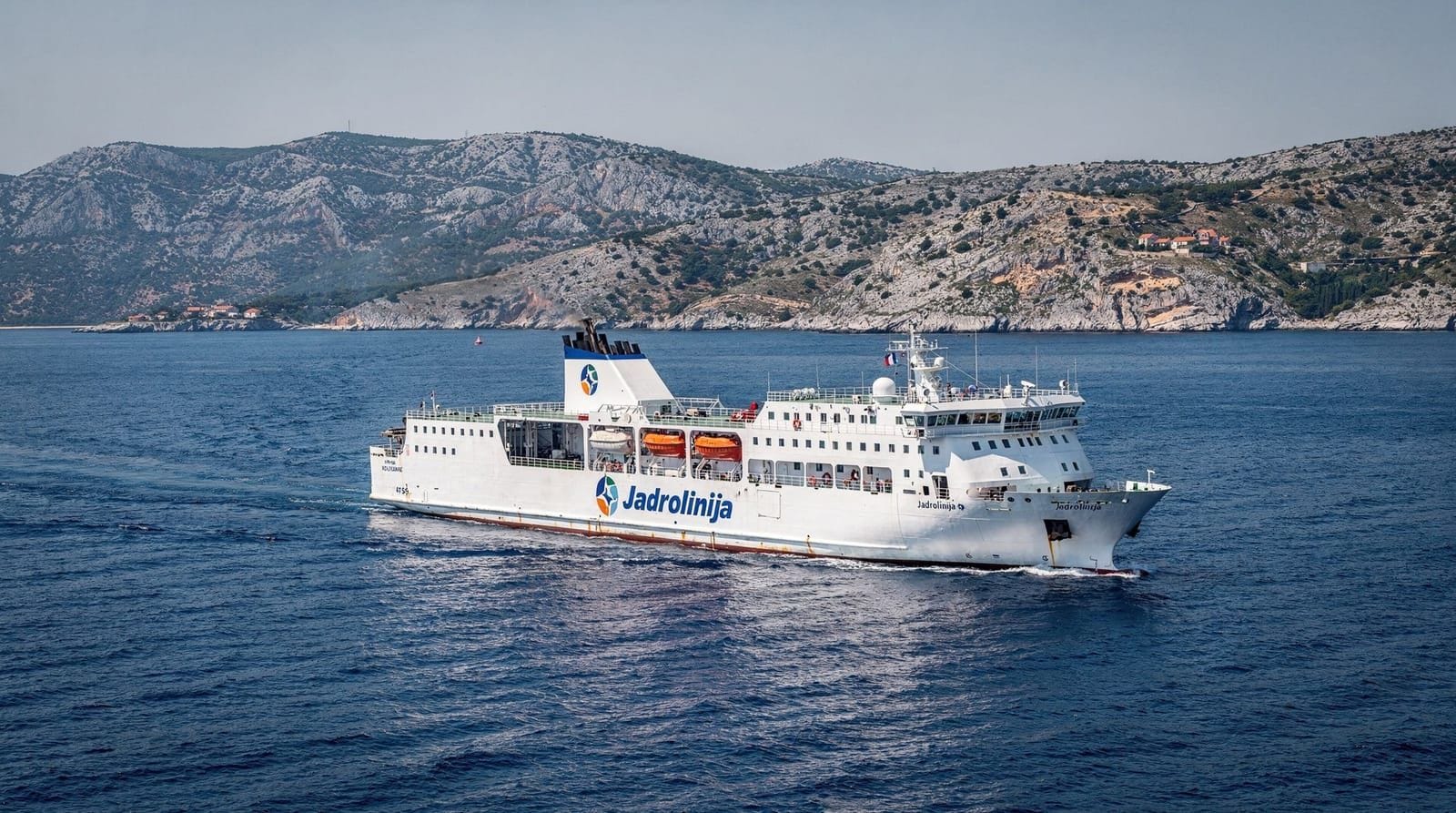
Islands: Ferry is the only option. Jadrolinija and private catamaran operators (Krilo, TP-Line) cover the main islands.
National parks: Organised tours from Split or Zadar are the easiest approach for Plitvice and Krka. Car is best for flexibility. Bus gets you to the park entrance on key routes.
Istria: Car or organised tour. The hilltop villages that define Istrian character (Motovun, Grožnjan, Roč) are not on any regular bus route.
Ferries: the island lifeblood
Croatia’s ferry network is the most extensive in the Adriatic — essential for the islands and genuinely enjoyable as a travel mode. Jadrolinija is the state operator running car ferries and catamarans to all major islands. Krilo and TP-Line compete on fast catamaran routes.
Key principles: car ferries carry vehicles; catamarans don’t. Foot passengers move freely; those with cars need advance booking in summer. The Croatia ferries guide covers routes, prices and booking in full. For the split between Jadrolinija and Krilo, see Jadrolinija vs Krilo.
Buses: the coastal workhorse
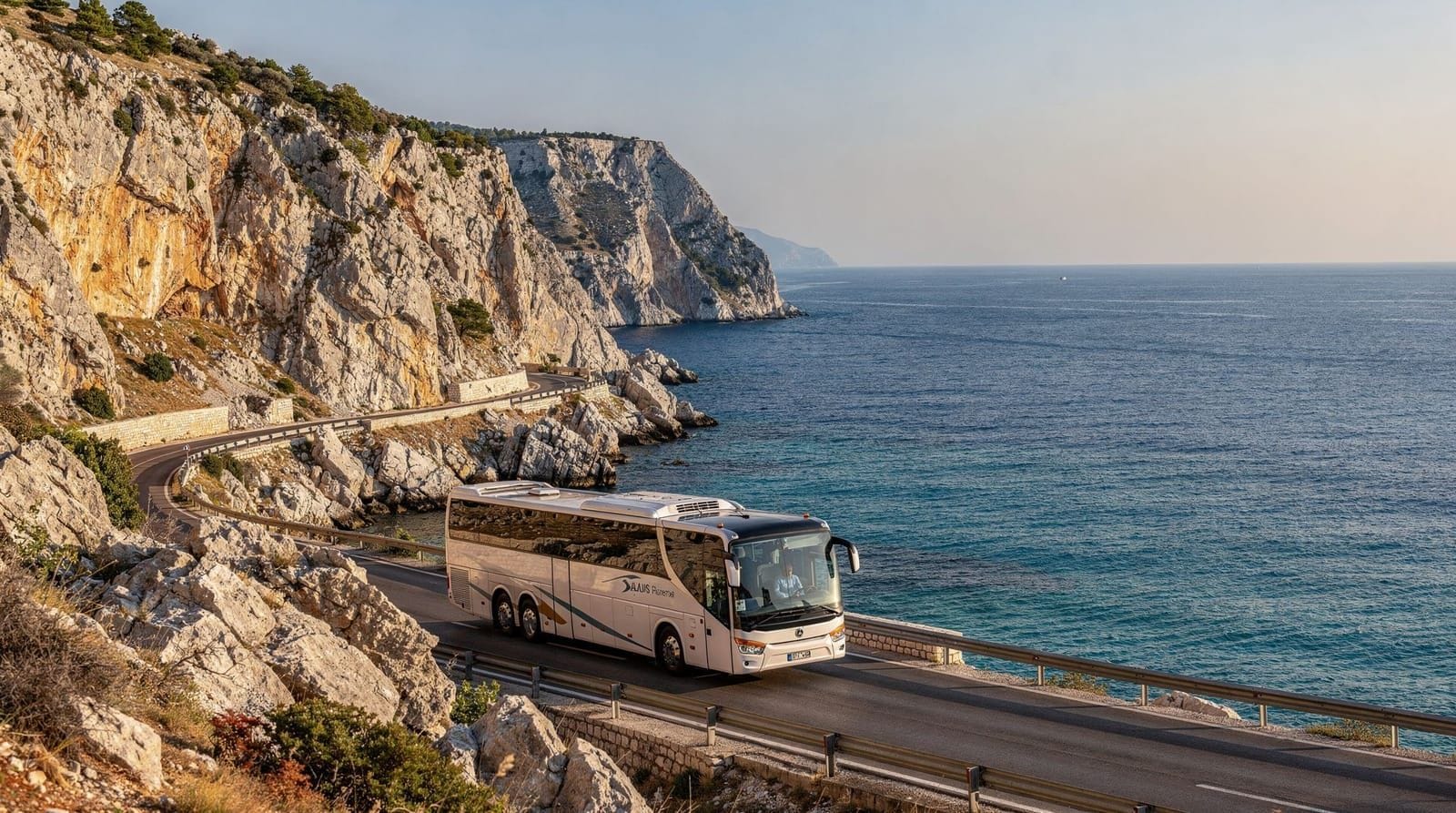
Croatia’s intercity bus network is excellent. State-of-the-art coaches (typically Flixbus-style comfort, though operated by Croatian companies like Arriva, Autotrans and Libertas) connect Zagreb with Split, Zadar, Šibenik, Dubrovnik and most smaller towns in between. In many cases buses are faster and more frequent than trains on the same corridor.
Key routes and approximate times:
- Zagreb → Split: 5–6 hours, €15–€25
- Split → Dubrovnik: 4–5 hours, €15–€22
- Zagreb → Zadar: 3.5–4 hours, €12–€20
- Split → Zadar: 2.5 hours, €10–€15
- Zagreb → Rijeka: 2.5–3 hours, €10–€15
Booking: The main Croatian bus portal is Flixbus (for some routes), GetByBus, or Vollo — or simply at the bus station. For a full breakdown, see the Croatia buses guide.
Trains: where they work and where they don’t
Croatia’s rail network (HŽ Infrastruktura) is useful in a limited zone:
Zagreb city area: Trams and light rail make Zagreb’s public transport excellent within the capital.
Zagreb → Split: A scenic rail journey (around 5.5–6 hours) that winds through karst canyons and Dalmatian gorges. Slower than the bus but genuinely beautiful. The train arrives at Split station (city centre), not the bus station.
Zagreb → Rijeka and Istria: Trains run to Rijeka; from there connections to Istria are limited.
The coast south of Split: No passenger rail. Absolutely no train to Dubrovnik — none ever built. The Adriatic coast lacks a coastal rail line. Anyone mentioning “taking the train along the coast” has not been to Croatia.
Car rental: the freedom option
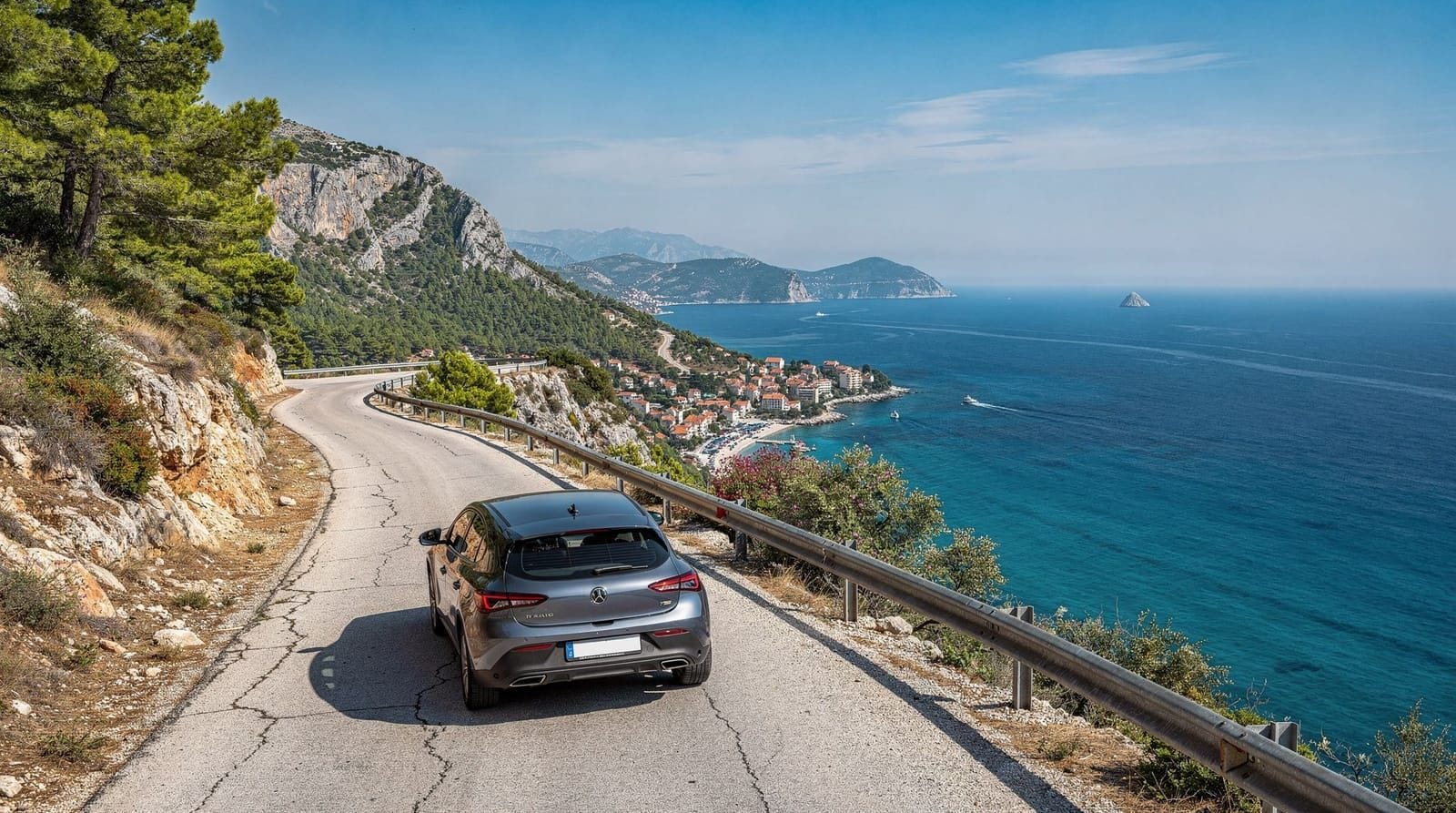
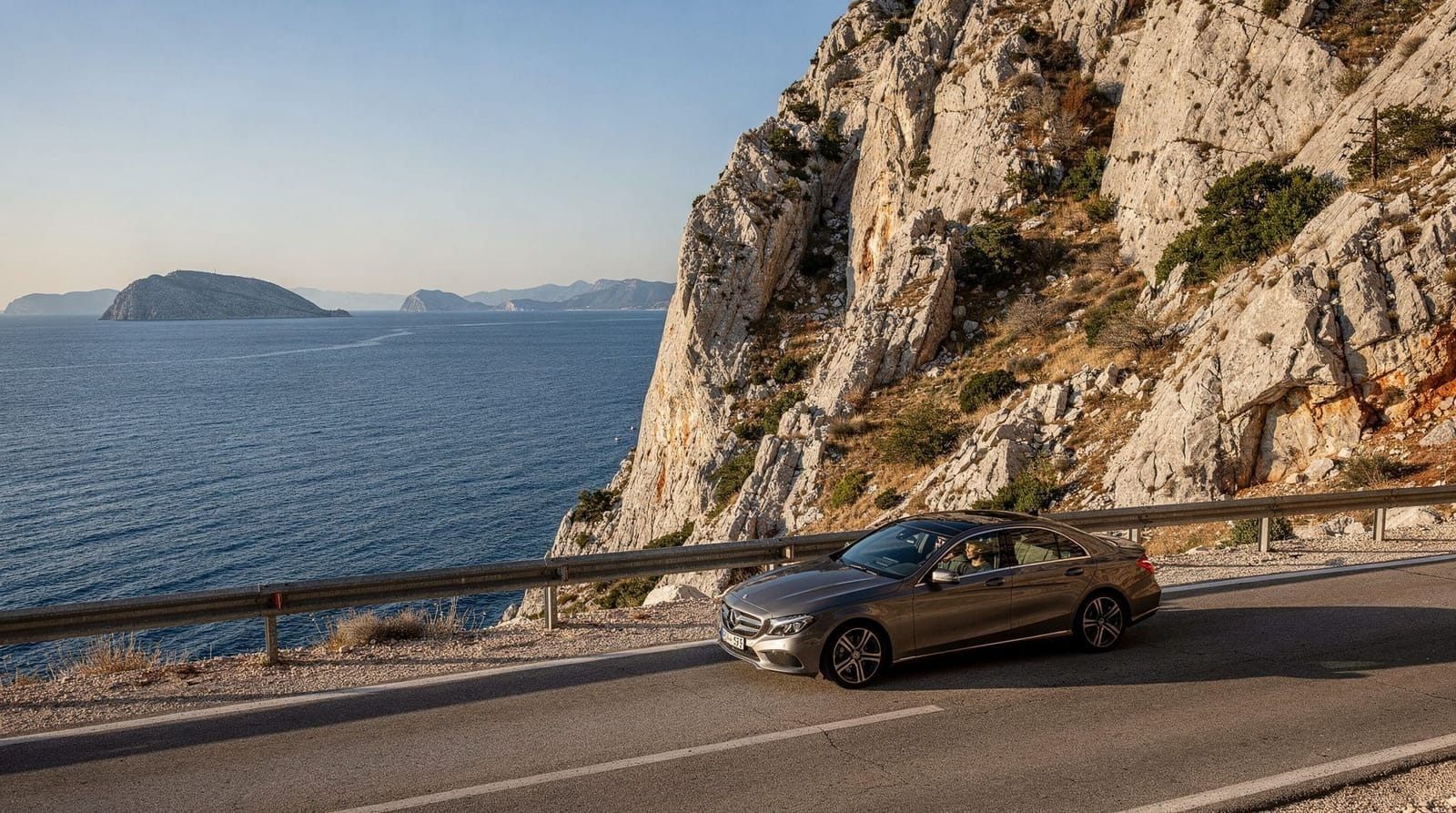
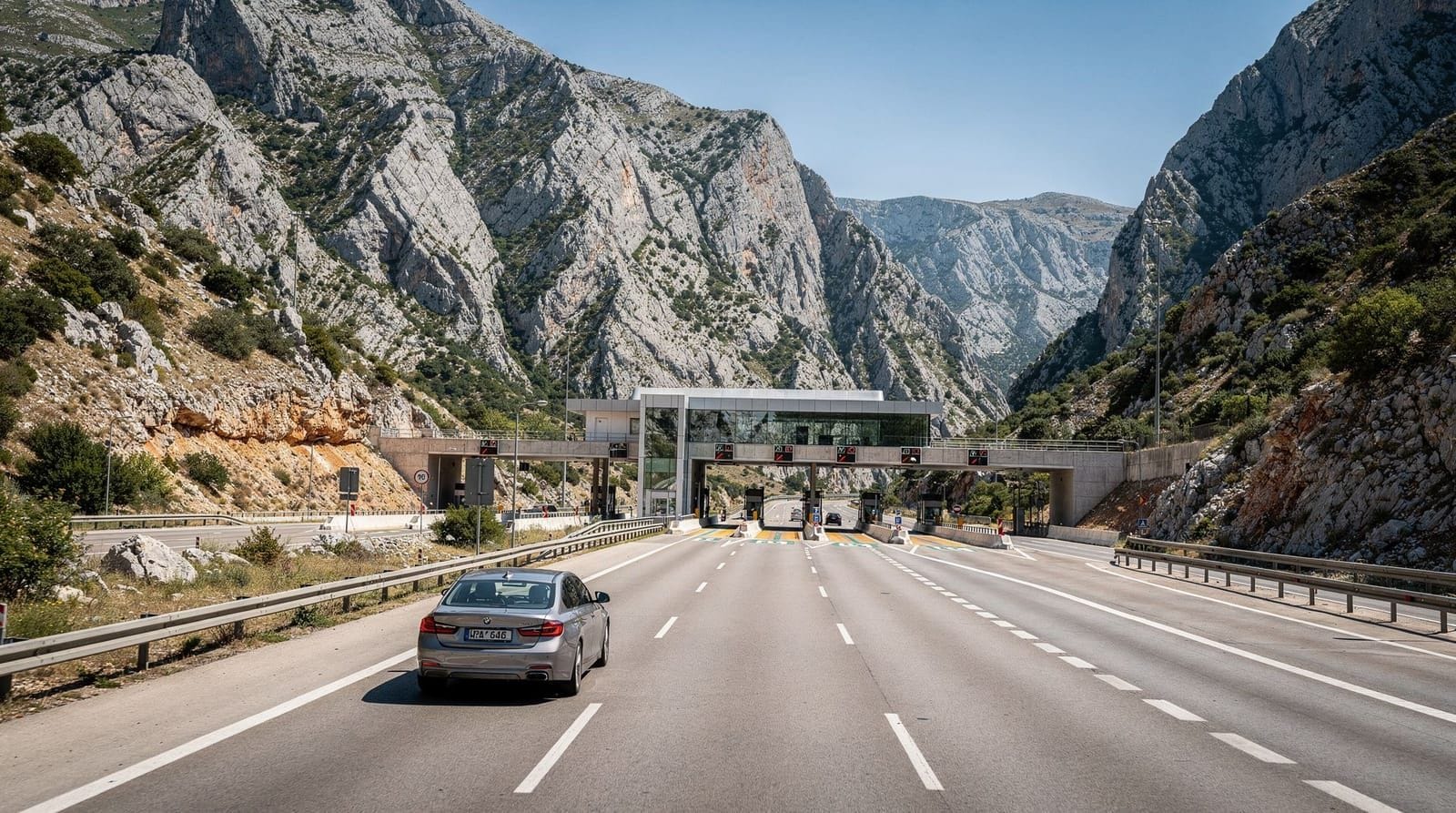
A rental car transforms access to Istria, the Dalmatian hinterland, Plitvice Lakes and Krka National Park. The A1 motorway (Zagreb–Split–Ploče) is a fast, comfortable drive; the Adriatic Highway (D8) is spectacular but slow in summer.
Costs: €30–€90/day depending on season and category. Insurance (SCDW / zero excess) adds €10–€20/day. Motorway tolls on Zagreb–Split run ~€26. Petrol is ~€1.55/litre. See the full renting a car in Croatia guide and driving in Croatia for all details.
Where a car makes less sense: Dubrovnik (parking nightmare), Hvar Town (car-ferry port is 20 km from town), Zagreb city sightseeing.
Private transfers
Scheduled shared shuttles and private transfers fill the gap between public transport and car rental — particularly useful for:
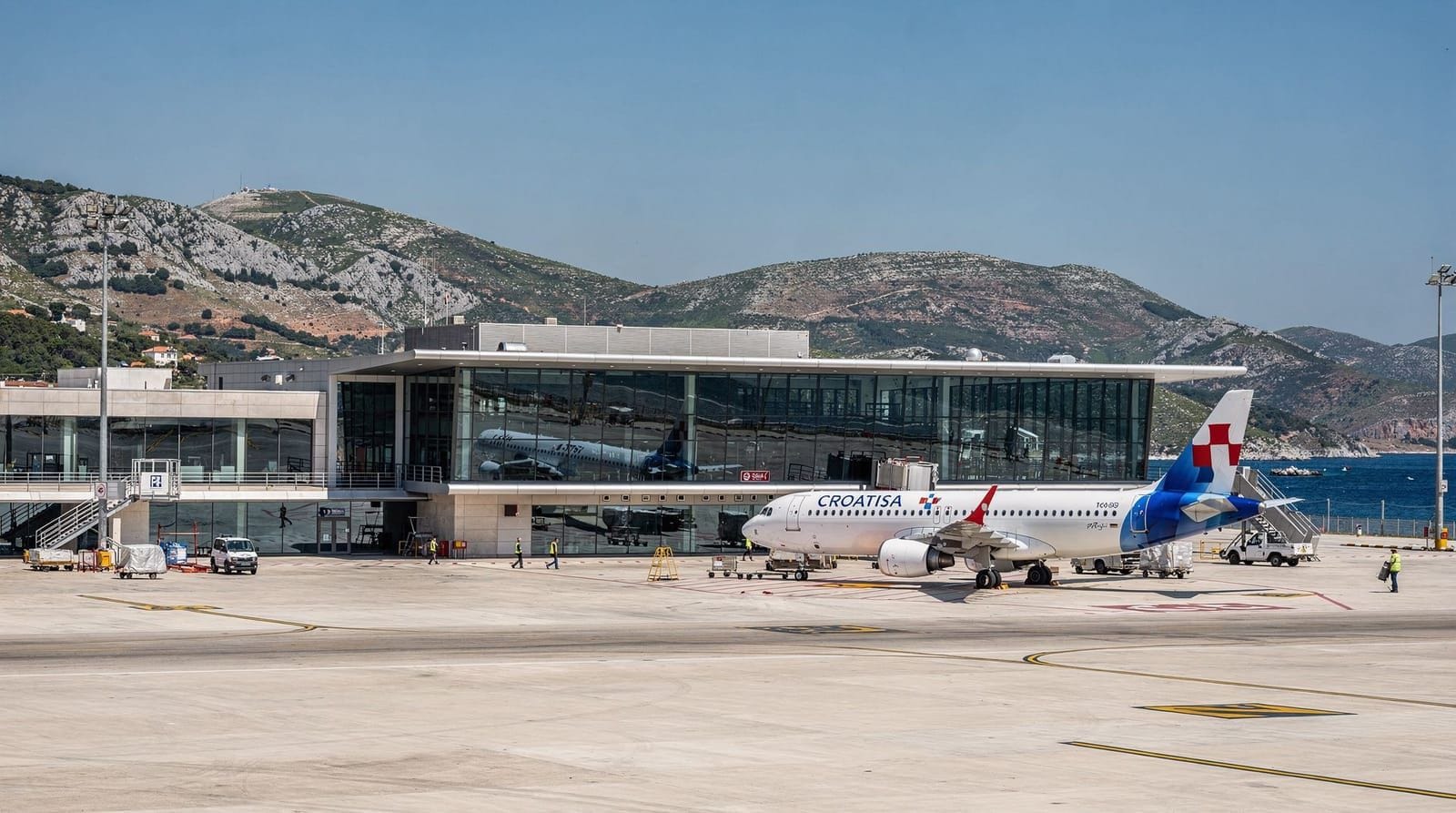
- Airport to hotel: All major airports have both official taxis and pre-booked private transfers. See our guides to Dubrovnik airport transfers and Split airport transfers.
- Plitvice Lakes: Some travellers combine a Plitvice stop with their Split–Zagreb transfer, dropping at the park and continuing by bus. This Split-to-Zagreb transfer with Plitvice entry makes that combination seamless. Or if starting from Zagreb: transfer from Zagreb with a Plitvice Lakes tour stop.
- One-way city connections: Split to Dubrovnik by private minibus (~€80–€120 for a group) is faster than the bus and door-to-door.
Taxis and ride apps
Standard metered taxis are available in all major tourist cities. Regulated rates apply; ask for the meter to be used. Bolt (rideshare app) operates in Zagreb, Split and Dubrovnik.
Approximate airport taxi rates:
- Dubrovnik Airport → Old Town: ~€30–€40
- Split Airport → Split centre: ~€25–€35
- Zagreb Airport → Zagreb centre: ~€30–€40
Within cities
Split: Almost everything in the old town is walkable from the ferry terminal. Local buses connect to suburbs. Grab a Prijevoz Split app for local routes.
Dubrovnik: The old town is pedestrianised. City buses connect Pile Gate to Gruž harbour and the bus station. A cable car rises to Mount Srđ. Taxis are plentiful but prices in Dubrovnik are high by Croatian standards.
Zagreb: Excellent tram network. The city centre, Gornji Grad (Upper Town) and most museums are within a 20-minute tram ride.
On islands: Hvar, Korčula and Brač have local bus services connecting ferry ports to main towns. Frequency is low — check timetables in advance. Water taxis serve some beach areas.
Water taxis and local boat services
Beyond scheduled ferries, Croatia has a thriving network of semi-formal water taxis and small-boat services that fill the gaps in the public schedule:
Hvar Town ↔ Pakleni Islands: Taxi boats depart from Hvar Town harbour every 20–30 minutes in summer to the Pakleni islands (Palmižana, Stipanska, Vinogradišće). Essential for beach access from Hvar Town; €5–€8 per person each way.
Dubrovnik ↔ Lokrum Island: Regular boat service from the old port to the uninhabited nature reserve. 15 minutes, €15 return. Mandatory for one of Dubrovnik’s best swimming and snorkelling experiences.
Korčula ↔ Orebić (Pelješac Peninsula): A 15-minute car-ferry crossing — the most convenient way to combine Korčula with the Pelješac wine villages. Short hop, runs regularly.
Barge connections in Šibenik fjord: The Krka river estuary north of Šibenik has small passenger boats connecting the national park entrance at Skradin to the Krka waterfalls — part of the park visit, included in the entry ticket.
Scooter and e-bike rental
In tourist towns like Hvar, Korčula and Rovinj, scooter and electric bike rental is widely available and practical. Scooters reach parts of island roads that buses don’t serve; e-bikes make hilly terrain manageable.
Scooter rental: €30–€50/day. A European driving licence covering mopeds (category A1 or A) is required. Maximum speed on island roads rarely exceeds 50 km/h in practice.
E-bikes: €20–€35/day. No licence required. Excellent for Istrian cycling routes or reaching island beaches. Growing availability in coastal towns.
Helmets are legally required for scooters; generally provided by rental companies. Check insurance coverage — many basic rentals leave you fully liable for damage.
Day trip transport from major bases
From Dubrovnik
Dubrovnik is surrounded by excellent day-trip destinations — all reachable by organised tour or independent transport:
- Elaphiti Islands: Jadrolinija ferry from Gruž (30–60 min) — excellent for a self-guided island day
- Kotor, Montenegro: Organised tour or private transfer (2 hours each way by road)
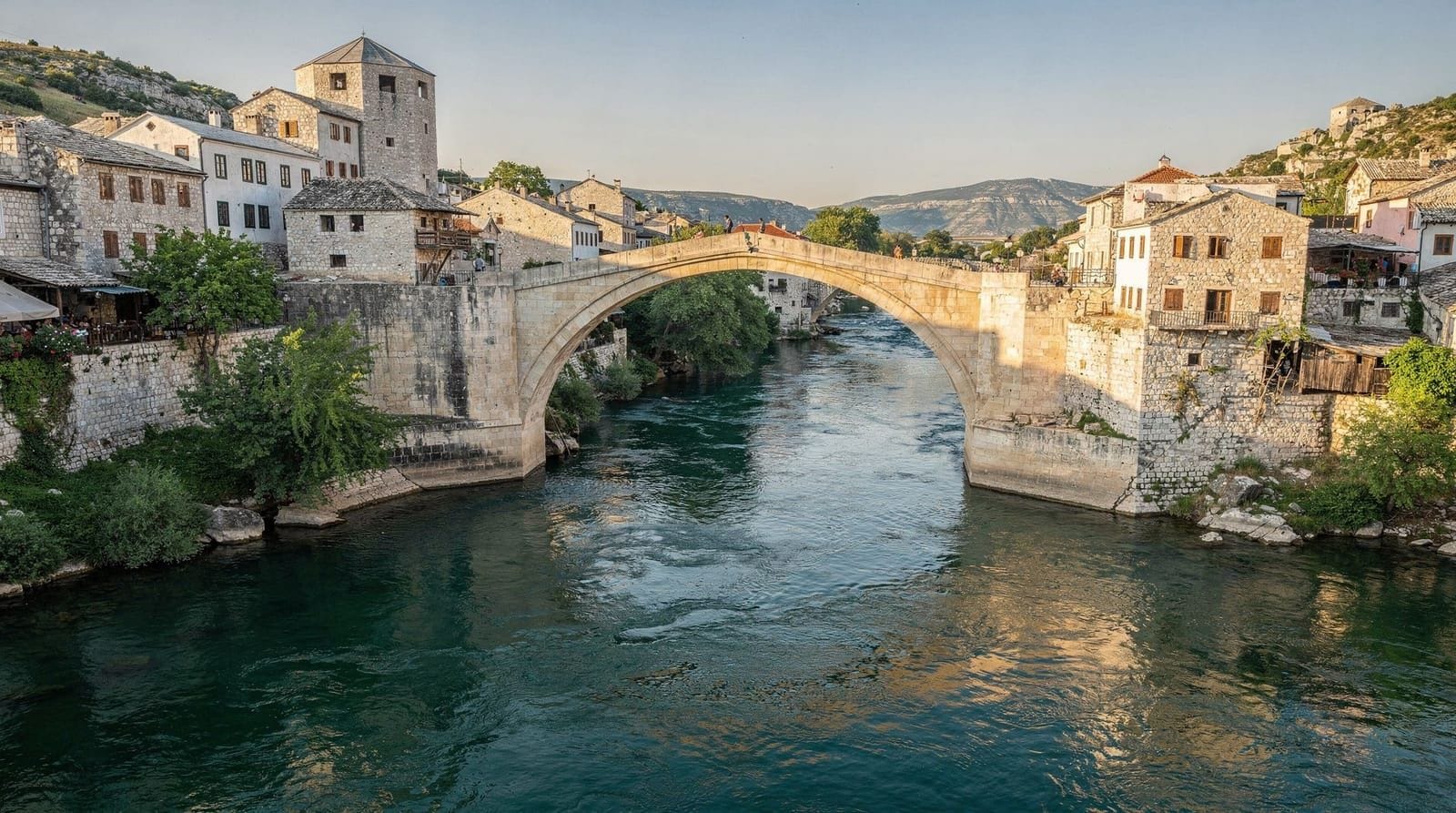
- Mostar, Bosnia: Organised tour or bus (3 hours each way) — see Mostar day trip
- Korčula: Catamaran (2 hours) — feasible day trip but better as an overnight
From Split
Split has the best day-trip transport of any Croatian city:
- Hvar, Brač, Vis: Jadrolinija ferries/catamarans (1–2.5 hours) — genuine half-day day trips
- Plitvice Lakes: Organised tour (4 hours round trip including driving) or bus
- Krka National Park: Bus (1.5–2 hours) or organised tour
- Trogir: City bus No. 37 (30 minutes, €3) — the easiest day trip in Croatia
From Zagreb
Zagreb is well-positioned for inland day trips:
- Plitvice Lakes: Bus (2 hours) or organised tour — half-day or full-day options
- Samobor: Local bus or car (30 minutes) — charming cream-cake town
- Zagorje (Trakošćan Castle): Bus or car (1 hour) — medieval castle above a lake
Fuel and EV charging
Croatia’s fuel network is comprehensive along main routes. For electric vehicles:
EV charging infrastructure (2026): NEXT-e (the main Croatian charging network) has fast chargers at A1 motorway service areas (every 50–70 km) and at major city car parks. DC fast chargers (50–150 kW) are available at major highway stops; slower AC chargers at city hotels and car parks.
Apps: NEXT-e app, Puni app (Croatian national network), and Google Maps show real-time charger availability. Plan charges at motorway stops — the island EV situation is limited (some fast chargers on Krk and Hvar main towns but not comprehensive).
Petrol: Unleaded 95 (€1.55/litre), diesel (€1.45/litre). INA is the dominant Croatian petrol brand; Shell, BP and Lukoil also operate. Open 24 hours at service areas; smaller stations may close at 8–10 pm.
Getting around Zagreb
Zagreb’s public transport system deserves its own section — it’s genuinely excellent for a capital of this size:
Trams: The backbone of the city. ZET (Zagreb Electric Trams) operates 15 tram lines covering the city centre, Gornji Grad, Donji Grad and outer residential areas. Day tickets are available. The most useful lines for tourists: 6, 11 and 12 cover the main central zone.
Funicular: The short funicular (uspinjača) connecting Donji Grad to Gornji Grad has been running since 1890 — one of the world’s shortest, climbing 66 metres in 60 seconds. Iconic, cheap (€0.66 one way) and fun.
Buses: Supplement the tram network for destinations outside the tram zone.
Taxis/Bolt: Reliable and reasonably priced within Zagreb. Bolt is active and competitive with fixed-rate options.
Frequency and planning tips
Croatia’s transport runs to time most of the year but is capacity-stressed in July–August. Key tips:
- Book buses and ferries ahead in peak summer — seats sell out on popular routes.
- Don’t over-schedule: Missing a ferry means a 1–2 hour wait on the next one; missing the last ferry to a small island means a night unexpectedly on the mainland.
- Check the Pelješac Bridge route: Any coach or car journey between Split and Dubrovnik may now bypass the Neum corridor via the bridge — specifically request this or check the operator’s route.
- Download offline maps: Mobile data is patchy on smaller islands and mountain areas. Apps like Maps.me and offline Google Maps are essential.
Which mode wins, by priority
| Priority | Best mode |
|---|---|
| Lowest cost | Bus (mainland) or car ferry foot passenger (islands) |
| Maximum flexibility | Rental car — see renting a car in Croatia |
| Speed between islands | Catamaran — see ferry vs catamaran |
| No stress in Dubrovnik or Zagreb old towns | On foot / tram, no car |
| Reaching Istria’s hill villages | Car or organised tour — public transport doesn’t reach them |
| Combining several stops in one day | Organised tour or private transfer |
Common transport mistakes worth avoiding
Even travellers who plan carefully trip up on a handful of predictable transport issues. Renting a car for a trip that’s mostly Dubrovnik and one island is the single most common waste of money — you’ll pay for parking headaches and an idle vehicle for days at a time; a mixed bus-and-ferry plan is usually both cheaper and less stressful, as covered in the first time in Croatia guide. Another frequent mistake is assuming the coastal train exists — there genuinely is none south of Split, so anyone planning a “scenic train down the coast” needs to switch to bus or car. And missing the last ferry or catamaran of the day to a smaller island is a classic error during a rushed island-hopping itinerary — always check the return schedule before you commit to a full day out.
Frequently asked questions about Getting Around Croatia
Is Croatia easy to get around without a car?
Yes, for the main destinations. Buses connect all major cities and many national parks; ferries link the islands to the mainland. The only places where a car makes a material difference are Istria's hilltop villages, remote Dalmatian hinterland areas, and off-grid national park exploration.How do I get from Zagreb to Split?
By bus (5–6 hours, €15–€25 — the most common option), by car via the A1 motorway (3.5–4 hours, around €26 in tolls), or by train (5–6 hours, slower and less frequent, but scenic through the Dalmatian canyon).Are trains useful in Croatia?
Useful around Zagreb and for the Zagreb–Split route (scenic but slow). Almost useless for the Adriatic coast — there is no coastal rail line south of Split. No train to Dubrovnik.How much does a bus from Zagreb to Dubrovnik cost?
Around €25–€40 depending on operator and booking time. The journey takes 8–10 hours; overnight buses are popular for saving on accommodation.Is Uber or a rideshare app available in Croatia?
Bolt operates in Zagreb and some larger cities. Standard taxis are regulated and available in all tourist areas. Apps include Cammeo (Zagreb) and local taxi companies with apps in Split and Dubrovnik. Prices are reasonable by Western European standards.Can I use a Eurail pass in Croatia?
Yes, Eurail passes are valid on Croatian trains (HŽ). However, the limited rail network makes this less useful than in Germany or France. Worth combining if already travelling by rail across Europe to Zagreb.How do I get to Plitvice Lakes from the coast?
By organised tour from Split, Zadar or Zagreb (most convenient), or by bus from Zagreb or Zadar to Plitvičko Jezero village. There is no train to Plitvice; the nearest station is in Gospić.
Top experiences
Bookable activities with verified prices and instant confirmation on GetYourGuide.
Top experiences
Best-rated activities across GetYourGuide and Viator.

Mostar and Herzegovina Tour with Kravica Waterfall from Split & Trogir
- Viator

Mostar & Kravice waterfalls full-day guided tour from Split
- Viator

Split airport to Split Private transfer to 8 pax (Door to Door any location)
- Viator

Zagreb to Split Group Transfer with Plitvice Lakes guided Tour
- Viator

Zadar: Zrmanja River Kayaking, with optional transfer from Zadar
- Viator

Mostar and Kravica Waterfall Discovery Day Trip from Split or Trogir
- Viator