Zadar Sea Organ: everything you need to know
Zadar: Roman ruins, old town walking tour and sea organ
What is the Zadar Sea Organ?
The Morske orgulje is a public art installation on Zadar's waterfront designed by architect Nikola Bašić and completed in 2005. Waves push air through 35 organ pipes embedded under marble steps, producing a continuous, unpredictable ambient sound. It has become one of Croatia's most distinctive modern landmarks.
A waterfront that plays itself
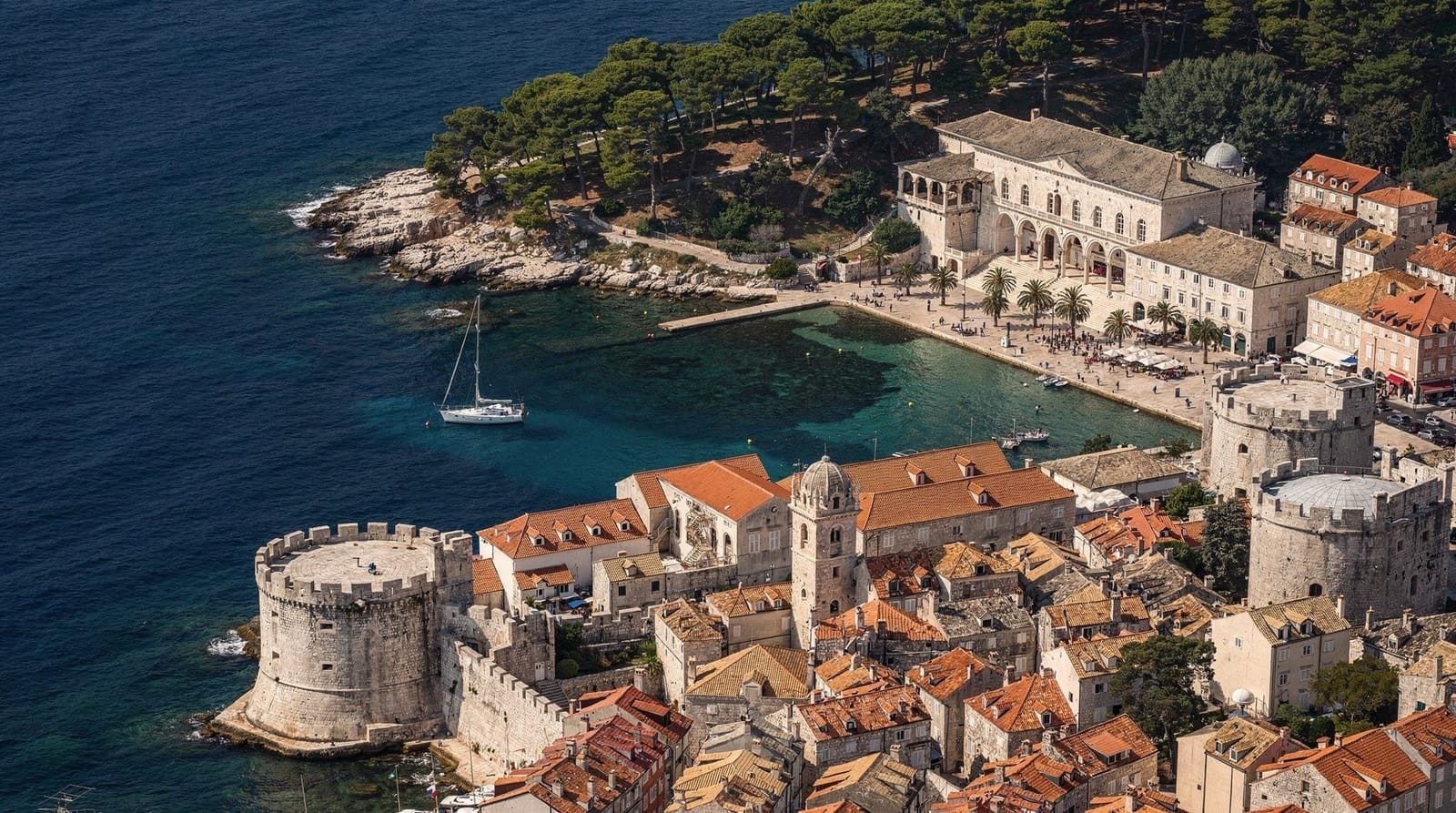
Zadar’s waterfront at the western tip of the old-town peninsula is one of the more unusual stretches of public space in the Mediterranean. Beneath the smooth marble steps that slope into the Adriatic, 35 polyethylene pipes — each 7cm in diameter, connected to a larger sound chamber — transform the movement of waves into sound. Air is compressed by water entering the pipes; it is released through apertures in the marble steps above. The result is the Morske orgulje: the Sea Organ.
It has been playing continuously since 2005, responding to weather and tide and the moods of the sea. No two moments are quite alike. Locals bring their children to sit on the steps in the evening; tourists from a dozen countries listen, record brief videos, and — almost invariably — sit longer than they planned.
| Where | Obala Petra Krešimira IV, western tip of Zadar’s old-town peninsula |
| Cost | Free, no ticket |
| Time needed | 20-30 minutes, longer at sunset |
| Getting there | Walkable from the old town in 10-15 minutes; Zadar Airport 10km away |
| Best time | Early evening with some wave action, timed with sunset for the Sun Salutation |
The design and how it works
Architect Nikola Bašić won a competition for the redesign of Zadar’s seafront promenade in the early 2000s and proposed something entirely outside conventional expectations for a public works commission: an instrument that plays itself.
The Sea Organ’s pipes are arranged in seven sections of five pipes each (35 total). The pipes are tuned to a pentatonic scale — which means that any combination of notes produced will be harmonically pleasing, avoiding the discordant intervals that could arise from random wave action on a chromatic scale. This was a deliberate design choice; the result is that the organ always sounds musical, never harsh or random.
Waves push seawater into the submerged pipe openings; the water compresses air through the organ pipes; the air exits through narrow channels cut into the marble steps. The apertures are barely visible — small slits in the stone — and the sound emerges as if from the stone itself. The volume and pitch shift constantly with wave height and direction.
The pipes are tuned to two chords (a minor and a major) that blend and shift as different waves activate different pipes. The effect is genuinely meditative — not in the forced way of designed “wellness” spaces, but in the way of any long, rhythmic natural sound.
The Sun Salutation (Pozdrav Suncu)
A short walk north along the promenade from the Sea Organ, Nikola Bašić completed his second major Zadar installation in 2008: the Pozdrav Suncu, or Sun Salutation.
This is a circular installation 22 metres in diameter set flush with the promenade paving. Its surface is a mosaic of three hundred multi-layered glass panels, beneath which are solar cells charging throughout the day. At sunset, the stored energy is discharged through LED lights embedded in the panels, producing patterns of coloured light that shift and pulse. The effect is strongest in the 30–60 minutes after sunset; the installation continues through the night at lower intensity.
The two installations — one sonic, one visual; one responding to water, one to light — create a promenade experience unlike any other on the Adriatic. Together they have reframed Zadar’s seafront as a destination in its own right rather than merely a transit point.
Zadar old town: three thousand years in a Roman grid
The Sea Organ is the contemporary hook, but Zadar’s old town is itself remarkable. The city has been continuously inhabited for at least three millennia; its Roman-period layout — a grid of streets meeting at a central forum — is still the skeleton of the modern old town.
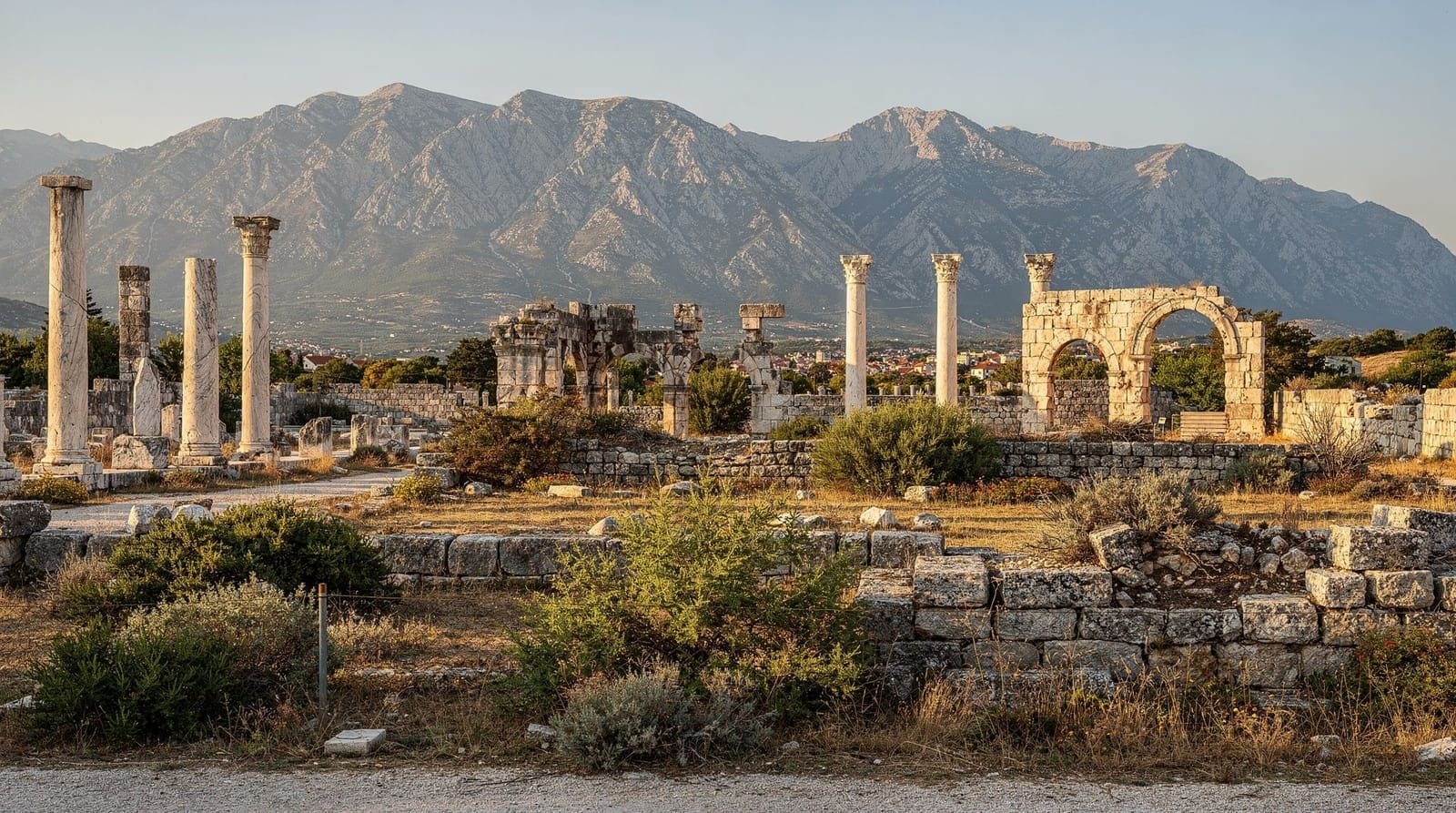
The Roman Forum (Rimski forum): Zadar’s forum is the largest preserved Roman forum on the eastern Adriatic coast. The original space measured approximately 90 metres by 45 metres and was flanked by temples, public buildings and colonnaded walkways. Today the space is open — used for markets, events and daily life — and several columns from the original colonnades survive. A column of shame (Stup srama), to which wrongdoers were publicly tied in medieval times, still stands. The forum is free to walk through.
Church of St. Donatus (Crkva Svetog Donata): Built in the 9th century on the foundations of a Roman building (capitals and column drums from the forum are incorporated into its structure), the circular pre-Romanesque church is one of the finest early medieval buildings in Croatia. It now serves as a concert venue — its circular form and bare stone interior produce remarkable acoustics for early music concerts in summer. Entry is around €3–5.
Cathedral of St. Anastasia (Katedrala Svete Stošije): A 12th-to-13th century Romanesque cathedral on the east side of the forum. Its west facade is the finest Romanesque facade in Croatia; the interior contains several notable pieces of ecclesiastical art. The campanile is climbable for views over the old town.
City Walls and the Land Gate: Zadar’s medieval and Venetian-era walls are well-preserved. The Land Gate (Kopnena vrata, 1543) is a triumphal arch built by the Venetians when they took control of the city — a Renaissance arch decorated with the winged lion of St. Mark. It now serves as the main entry point from the modern city to the old town.
Zadar as a base for the Dalmatian north
Zadar is underrated as a base for the northern Dalmatian region. From the city:
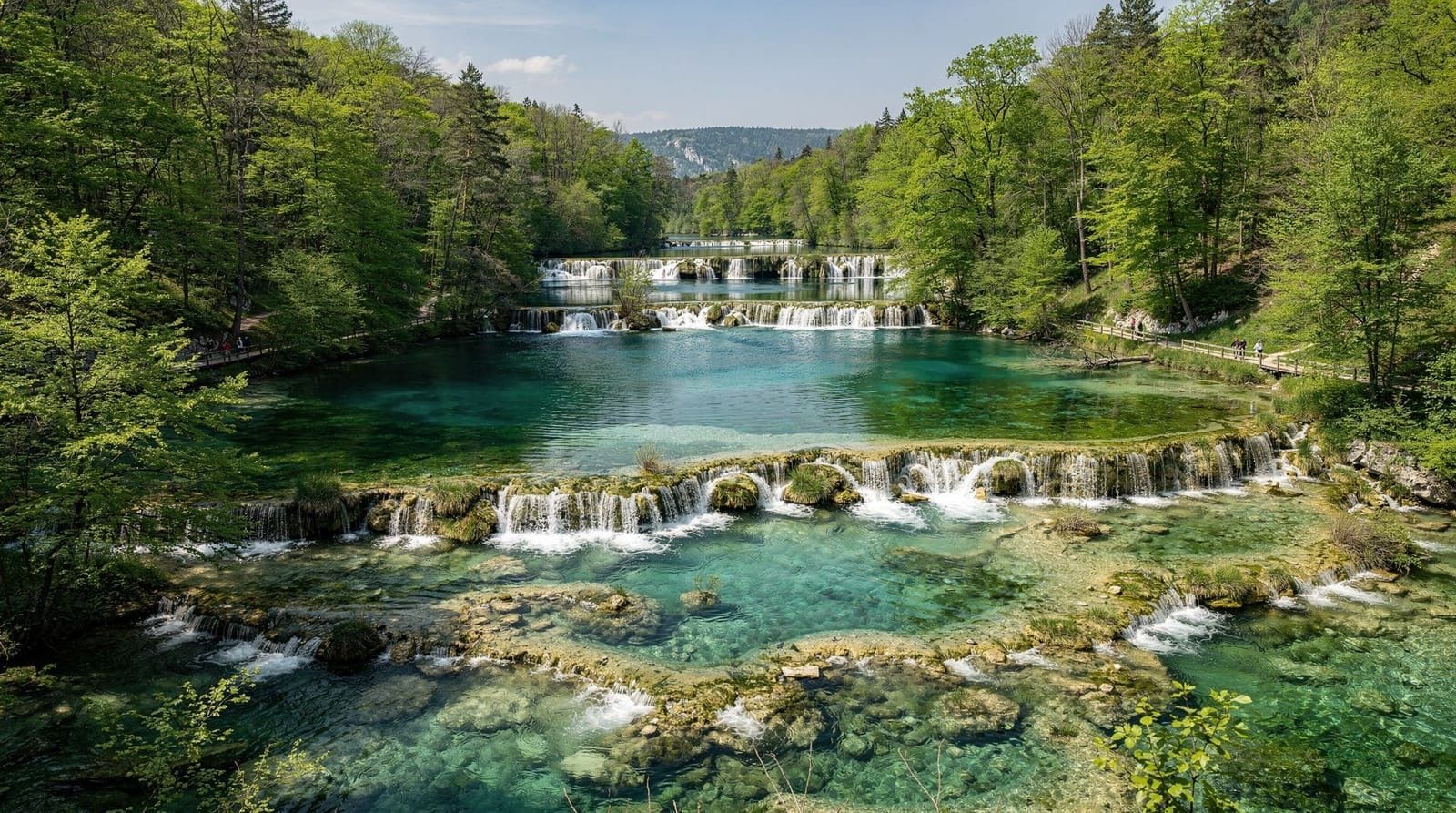
Plitvice Lakes National Park is 130km east — a 1.5 to 2-hour drive. Several organised day trips run from Zadar to Plitvice. See our Plitvice Lakes guide.
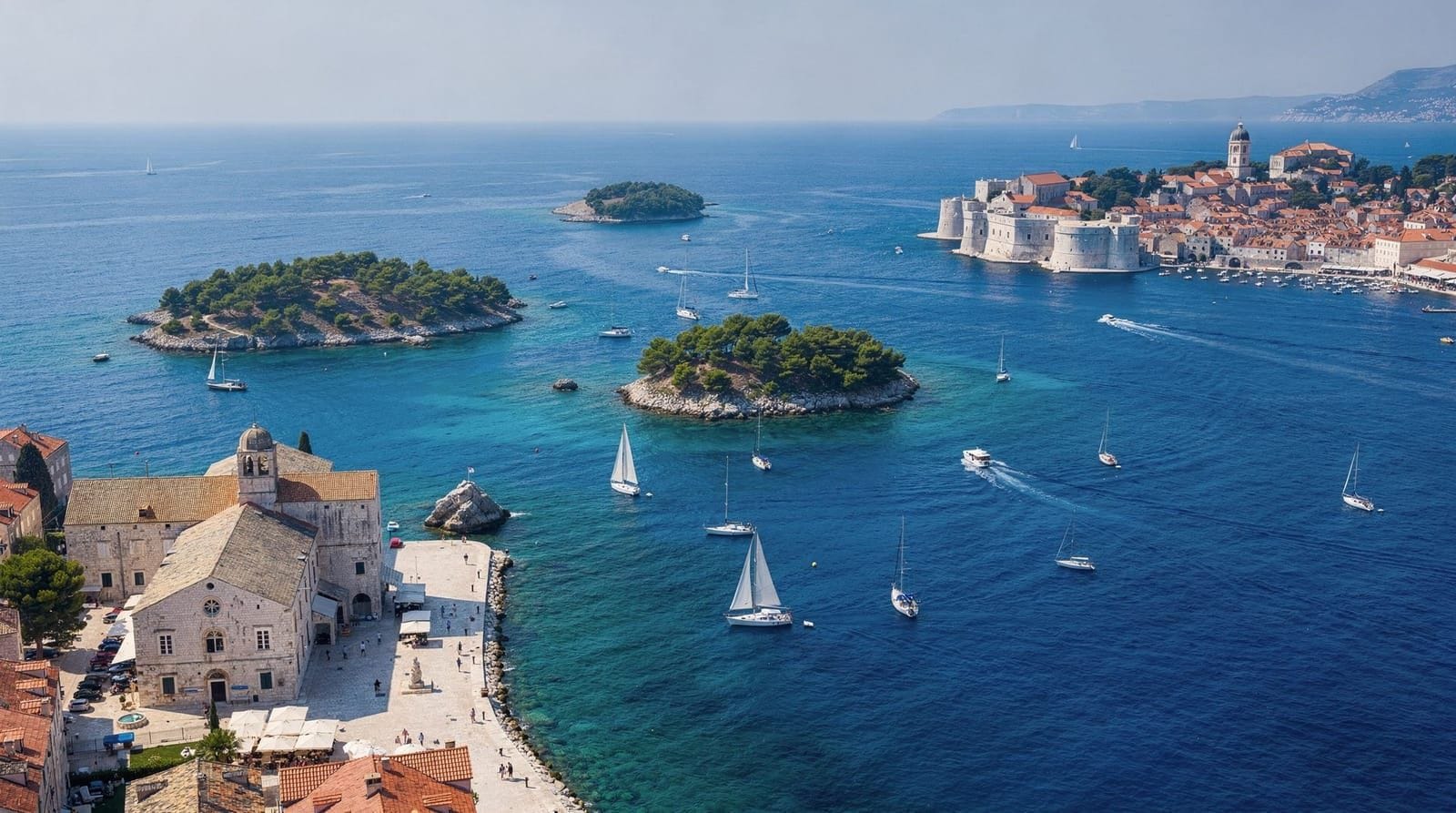
Kornati National Park (archipelago of 89 islands) is accessed by boat tours departing from the Zadar harbour. The Kornati — bare limestone islands without trees, rising from improbably blue water — are among the strangest landscapes in the Mediterranean.
The island of Pag is 50km north, connected by bridge. Pag Town is a 15th-century planned settlement designed as a miniature of Zadar’s Roman grid; the island is also known for its electronic music scene in summer (the Novalja area) and for Paški sir — the pungent sheep’s milk cheese that is one of Croatia’s great food products.
Ferry connections: Zadar is a Jadrolinija hub with regular services to Ugljan, Pašman, Dugi Otok, and catamaran connections further south.
Alfred Hitchcock and the Zadar sunset
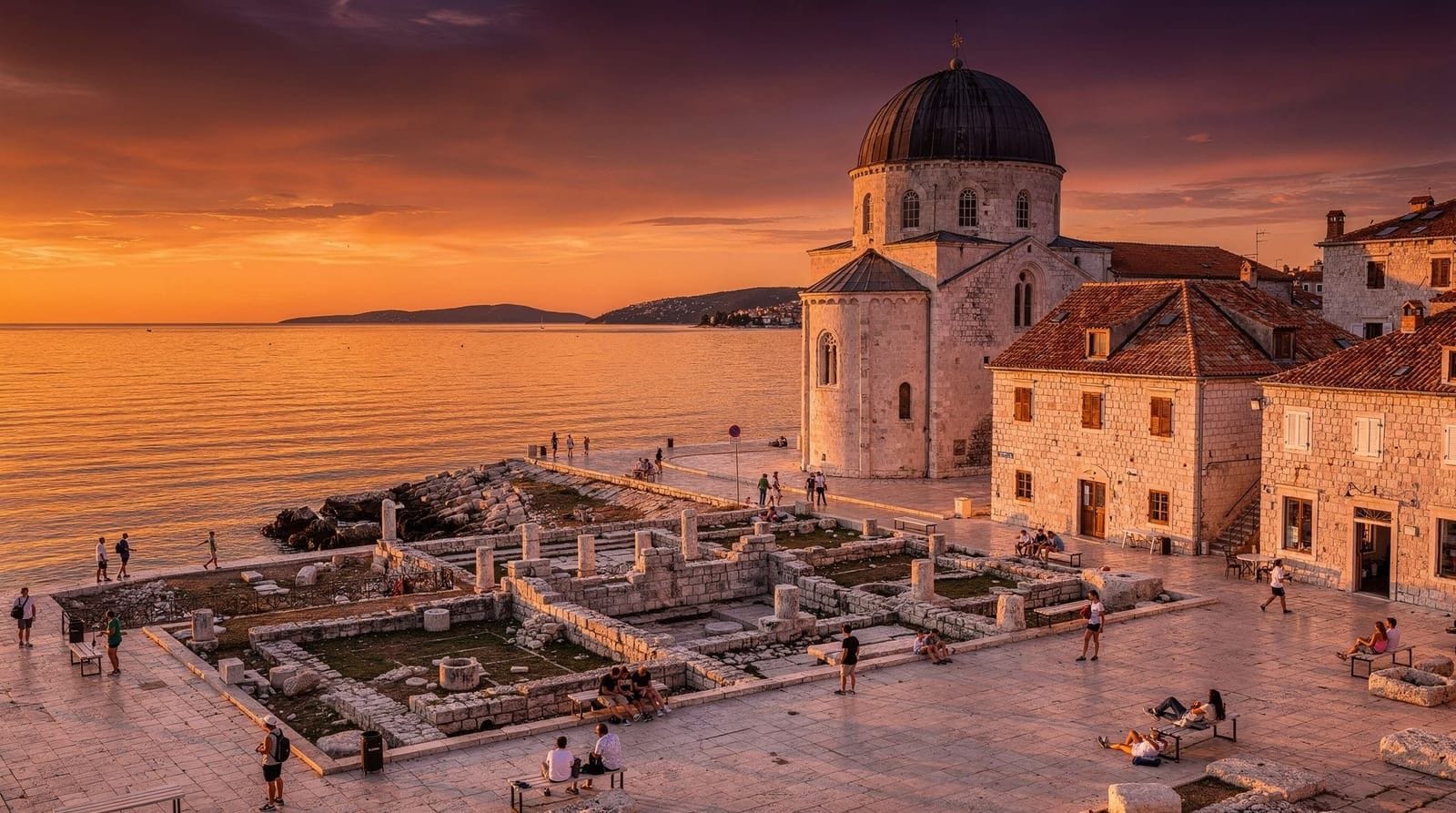
The attribution is sometimes questioned but widely cited: Alfred Hitchcock, visiting Zadar in the 1960s, reportedly declared that the sunset viewed from the old-town waterfront was “the most beautiful in the world.” Whether the quote is exactly right or not, the phenomenon it describes is real: the western orientation of the Zadar promenade, combined with the scattering of islands in the northern Dalmatian archipelago and the Adriatic’s particular quality of light, produces sunsets of unusual intensity. The Sea Organ and the Sun Salutation, both active in the evening, make the waterfront at sunset one of the most sensory experiences in Croatia.
Practical visitor information
Getting to Zadar: Zadar Airport (ZAD) is 10km from the city centre; Ryanair operates year-round flights from London Stansted and seasonal services from many European cities. Buses from Split (2 hours) and Zagreb (3.5 hours) are frequent. The old town is walkable from the bus station in 10–15 minutes.
When to visit: May–June and September are ideal — warm enough to enjoy the waterfront, fewer crowds than July–August. The Sea Organ is audible year-round; winter evenings on the promenade have their own particular atmosphere.
Where to stay: The old town peninsula has several small hotels and apartments within walking distance of the Sea Organ. Staying within the old town walls gives easy evening access to the promenade.
When to visit for the best experience
| Season | Sea and light conditions | Notes |
|---|---|---|
| May-June | Warm, moderate breeze, fewer crowds | One of the best windows overall |
| July-August | Warm, calmer seas often mean a quieter organ, busiest promenade | Book old-town accommodation well ahead |
| September | Warm days, good breeze, thinning crowds | A strong alternative to peak summer |
| Oct-April | Cooler, often windier seas mean a louder, more dramatic organ | Fewer people; bring a jacket for the evening |
For a fuller seasonal breakdown across the whole country, see the best time to visit Croatia guide.
Making the most of a Zadar stop
If you are passing through as part of a longer coastal trip, the Zadar destination guide and day trips from Zadar guide cover how to fit the Sea Organ, the old town and a Kornati or Plitvice excursion into a single stopover without rushing. For the wider historical context behind the Roman forum and Church of St. Donatus, the Croatia history guide is a useful companion read.
Zadar also works as an island-hopping launch point: ferries reach Kornati National Park and the island of Pag directly from the harbour, both covered in more depth in our island hopping guide.
Frequently asked questions about Zadar Sea Organ
What does the Zadar Sea Organ sound like?
It sounds like a continuous drone with shifting harmonics — something between an organ chord and a whale call, with the rhythm of the sea. The pitch and volume change with wave height, wind and tide. On calm days it murmurs; on rough days it becomes more insistent. There is no melody, no fixed tempo — just a harmonic response to the Adriatic.Is the Zadar Sea Organ worth visiting?
It is genuinely worth 20–30 minutes of your time — sitting on the steps, listening, watching the sea. Whether it is worth a trip to Zadar on its own is a different question: no. But combined with Zadar's old Roman town, its Roman forum, the Church of St. Donatus, and the Sun Salutation installation nearby, the waterfront area is one of the most interesting in coastal Croatia.When is the best time to hear the Zadar Sea Organ?
When there is some wave action — late afternoon or evening when the sea breeze picks up, or after a period of light wind. Completely calm days produce a quieter, more muted sound. The organ is most atmospheric at sunset, when the Sun Salutation installation next to it also activates. Alfred Hitchcock famously said Zadar's sunset was the most beautiful in the world; the Sea Organ adds a sonic dimension to that.Is the Zadar Sea Organ free?
Yes — the Sea Organ is a public installation on the promenade (Obala Petra Krešimira IV). There is no entry fee and no ticket; you simply walk along the waterfront and sit on the steps.What is the Sun Salutation next to the Sea Organ?
The Sun Salutation (Pozdrav Suncu) is a second Nikola Bašić installation, completed in 2008, located a short walk from the Sea Organ. It is a 22-metre circular mosaic of solar panels set into the pavement, which absorbs sunlight during the day and produces a light show at sunset — patterns of coloured light that shift and move. Together, the two installations represent light and sound responses to natural phenomena.What else is there to see in Zadar?
Zadar's old town is built on a peninsula with a remarkably intact Roman grid: the Forum (still the civic centre), the Church of St. Donatus (a circular pre-Romanesque church from the 9th century, built partly with Roman stone), the Cathedral of St. Anastasia (Sveta Stošija), the Romanesque campanile, the city walls, and the well-preserved old town lanes. The city also has good museums, excellent seafood restaurants, and Jadrolinija ferry connections to the islands.How far is Zadar from Split and Dubrovnik?
Zadar is approximately 160km north of Split (around 1.5–2 hours by road or catamaran) and 350km north of Dubrovnik (3.5–4 hours by road). It is a natural midpoint stop on a Dalmatian coast itinerary.Can I hear the Sea Organ from a restaurant or cafe nearby?
Faintly, from a few of the closest waterfront cafes on quiet evenings, but the sound is designed to be heard sitting on the marble steps directly above the pipes, not from a distance. For the full effect, walk down to the steps rather than listening from a table — it only takes a few minutes and there is no charge to sit there as long as you like.Does the Sea Organ ever stop working or get closed for maintenance?
Occasional maintenance closures happen, usually brief and unannounced, as the polyethylene pipes and mechanisms need periodic servicing after two decades of continuous wave exposure. It is a minor risk on any single visit; if you find it silent, the Sun Salutation nearby and the old town's Roman sites still make the walk worthwhile.
Top experiences
Bookable activities with verified prices and instant confirmation on GetYourGuide.
Top experiences
Best-rated activities across GetYourGuide and Viator.

From Zadar: Plitvice Lakes with Boat Ride & Zadar Old town tour
- Viator

3Hour ALL-INCLUSIVE Sunset Dolphin Watching from Medulin onSandra
- Viator

Dolphin Watching & Sunset Boat Tour With Drinks & optional Dinner
- Viator

Fantastic DOLPHIN & SUNSET TOUR with dinner ( Pula-NP BRIJUNI )
- Viator

Medulin :All-Inclusive Pirate Boat Dolphin Watching Sunset Cruise
- Viator

Zadar Highlights: Old Town, Sea Organ & Local Tastings
- Viator