Kornati National Park: islands, sailing and what to actually expect
Zadar: Trip to Kornati National Park
How do you visit Kornati National Park?
The only way to visit Kornati is by boat — there are no road connections to the park. Day trips depart from Zadar, Šibenik, Biograd and Murter, typically lasting 8–10 hours and visiting several islands, allowing swimming in clear water. Sailors with their own or rented boats can navigate the archipelago independently after paying the park entry fee.
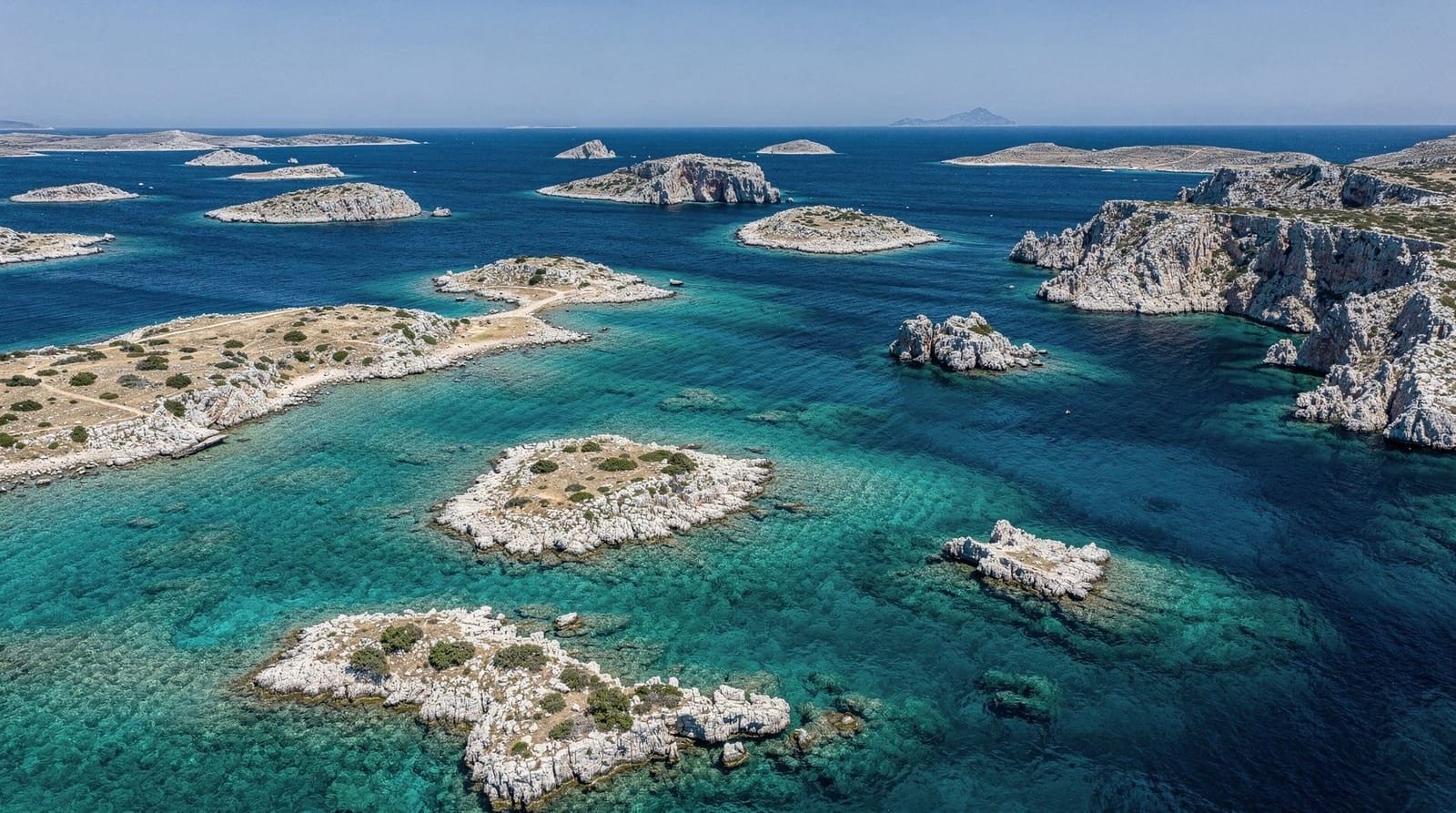
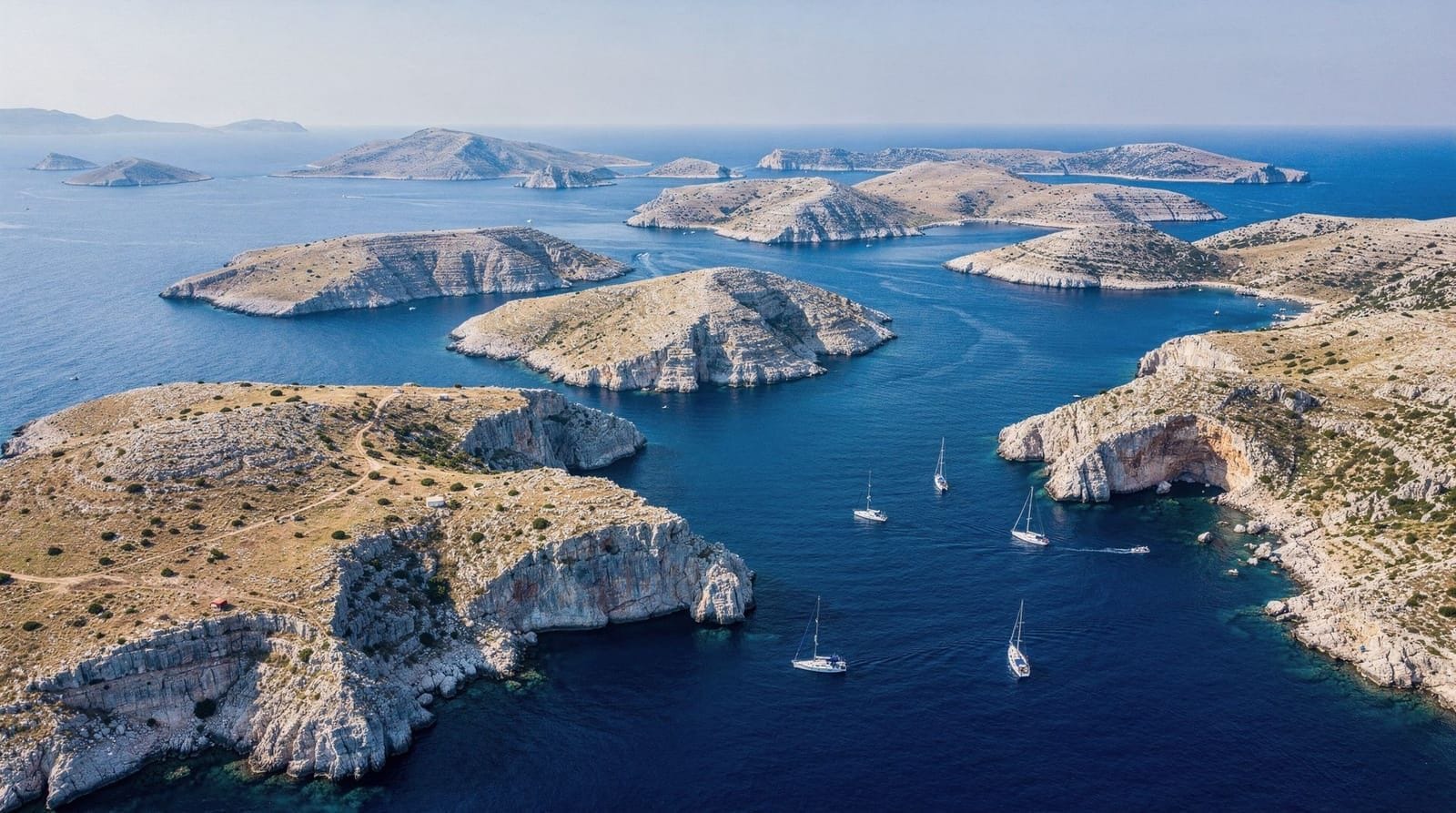
The Kornati archipelago sits in the central Dalmatian sea, between Zadar and Šibenik, and constitutes one of Europe’s most remarkable marine landscapes. Eighty-nine islands, islets and reefs crowd a 35 km stretch of Adriatic — no buildings except a handful of working fishing camps, no freshwater sources, no permanent residents and no roads. The islands’ upper surfaces are stony and bare, the result of centuries of grazing that stripped the original vegetation. The cliff faces that drop into the sea on the seaward side are among the most dramatic in the Adriatic.
| Where | Central Dalmatian Sea, between Zadar and Šibenik |
| Access | Boat only — day trip or sailing, no roads |
| Cost | Around EUR 60-90/person day trip; EUR 20-25/day for private boats |
| Time needed | Full day (8-10hrs) for a day trip |
| Best time | June or September |
The geology: bare rock and deep blue water
Kornati’s stark appearance is deliberate-looking but the result of history rather than design. The islands were once forested and cultivated; Venetian exploitation and later grazing by mainland families left the surface limestone exposed. The bare upper slopes and the extraordinary cliff systems on the open-sea side — the Krune cliffs reach heights of nearly 100 metres — give Kornati its otherworldly quality.
George Bernard Shaw, who visited in the early 20th century, is reported to have written that God created Kornati on the last day of creation “out of tears, stars, and breath” after running out of material. Whether or not the attribution is accurate, it captures how the islands affect visitors: austere, elemental and completely distinct from the lush green coast just visible on the mainland horizon.
The water quality is the park’s other great asset. Clarity in the Kornati channels regularly exceeds 30 metres visibility; in sheltered bays the bottom is visible at 10 metres depth without special effort. This is some of the clearest water in the Mediterranean.
How to visit: day trips versus sailing
Day trips from Zadar, Šibenik, Biograd na Moru and the island of Murter are the standard way to experience the park. Tours run from spring to autumn, typically departing around 8–9 am and returning by 6–7 pm. A good day trip includes:
- Several island stops for swimming
- A meal at one of the park’s konobe (traditional fish restaurants inside the park)
- A circuit of the main channel system to see the landscape from water level
- Guide information about the park’s ecology and history
The food at the park konobe is simple, fresh and often remarkably good — fresh fish grilled over a wood fire, sheep’s cheese from the islands, homemade wine. This is not a tour where lunch is an afterthought.
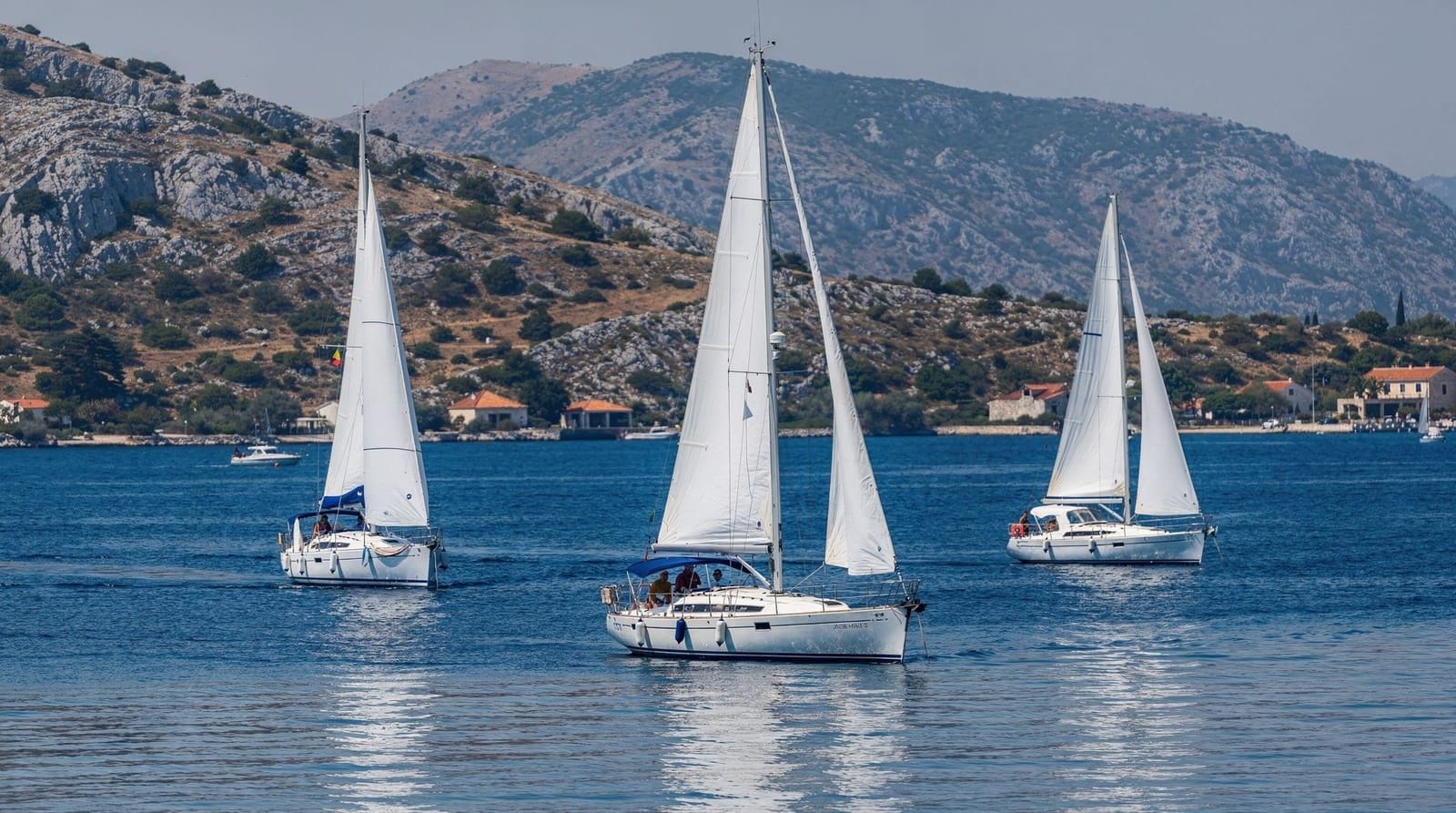
Sailing is the natural way to see the Kornati in depth. The park has moorings at several islands, and sailors pay park entry per person per day. A week-long sailing itinerary that includes the Kornati, the channel between Murter and the islands, and the northern Dalmatian coast is one of Croatia’s best maritime experiences. The Croatia sailing guide covers charter options from Split.
Entry fees and park rules
Entry to Kornati National Park is charged per person per day. Day-trip operators include the park entry in their ticket price (confirm when booking). For private boats:
- Daily rate per person: approximately €20–25
- Annual sailor pass: available at the park office in Murter
- Fishing within the park is prohibited except for recreational fishing with a park permit
- Anchoring on posidonia (seagrass) meadows is prohibited — park buoys are provided at main anchorages
- Spearfishing is prohibited throughout the park
The park authority is based in Murter; fees can be paid at the gate as your boat enters or pre-arranged online for planned itineraries.
Swimming and snorkelling
The Kornati offers excellent snorkelling throughout the channel system. Rocky shorelines host sea urchins, starfish, octopus and dense fish populations. The cliff systems on the seaward side, where the water drops steeply, are popular with divers — though scuba diving requires a permit obtained from the park authority.
Water shoes are advisable when entering from rocky shores; the limestone is sharp and sea urchins are present. Sandy-bottomed bays are rare in the park but do exist at a few sheltered spots.
What to eat in Kornati
The park contains a small number of fishermen’s camps that operate as restaurants in summer. These konobe serve food that is entirely context-dependent — the lamb and fish taste different when eaten on a wooden terrace above clear blue water on an otherwise uninhabited island. Expect:
- Grilled fish (mostly sea bream and bass, locally caught)
- Lamb roasted under a peka (iron bell cover)
- Sheep’s cheese from island flocks
- Prstaci (date mussels) — technically protected but sometimes appear; decline these as they are endangered
- Local wine
Reserve table space at the more popular konobe in advance through your day-trip operator if you want a guaranteed lunch stop.
The best islands in the park
The park’s most visited and scenically significant islands include:
Kornati island (the largest): The main island, about 35 km long, containing most of the working fishing camps and the best examples of the seaward cliff system.
Mana: A small island with dramatic steep sides, often circled by day-trip boats for the views.
Levrnaka: One of the few islands with a sandy beach — unusual in the archipelago and extremely popular with sailors looking for an overnight anchorage.
Statival: A favourite anchorage for sailors, with good depth and clear water.
Getting there
From Zadar: About 1.5 hours by fast day-trip boat. Zadar is the most common departure point for organised tours. Day trips from Zadar cover the range of options.
From Šibenik: Similar journey times; several operators depart from Šibenik marina.
From Murter: The closest town to the park and the base of the park authority. Murter is accessible by road from the mainland and is the best starting point for sailors who want to arrive at the park quickly.
Kornati and sailing: the bigger picture
If Kornati appeals to you primarily as a sailing destination rather than a day-trip spot, consider building an itinerary around island hopping the middle Dalmatian channel. The route from Split northward through Trogir, the Šibenik islands, Kornati and the Zadar archipelago is one of Croatia’s great sailing circuits and can be done in seven to ten days on a bareboat or skippered charter.
Day trip versus sailing: which fits your trip
| Day trip | Sailing | |
|---|---|---|
| Time commitment | One day | 3-10 days typically |
| Cost | EUR 60-90/person, all-inclusive | Boat charter + EUR 20-25/day park fee |
| Flexibility | Fixed route and schedule | Choose your own anchorages |
| Overnight in the park | No | Yes |
| Skill needed | None | Sailing/navigation experience or a skipper |
| Best for | First-time visitors, tight schedules | Repeat visitors, sailors, longer trips |
A day trip is the right call if this is your first look at the park or you are travelling with people who get seasick easily on longer passages — 8-10 hours on the water is already a full commitment for many visitors. Sailing rewards those who already know they love being on a boat and want the quieter, emptier anchorages that day-trip crowds never reach.
What day-trip boats actually skip
It is worth being honest about what an 8-10 hour day trip cannot show you. Sunset and sunrise over the bare limestone — arguably the most photographed moment in the park — happen outside day-trip hours entirely. The quietest anchorages, reachable only by boats that stay overnight, see none of the day-trip traffic and are noticeably calmer even in August. If the silence and scale of the place matter more to you than convenience, a multi-day sailing trip via Split or a Zadar-based charter is the only way to get it; a day trip remains an honest and worthwhile introduction, just not the full picture.
Frequently asked questions about Kornati National Park
How many islands are in Kornati National Park?
The park contains 89 islands, islets and reefs, covering an area of about 220 km² — making it the densest archipelago in the Mediterranean. The islands are largely uninhabited, barren on their upper surfaces, with dramatic cliff faces dropping to the sea.How much does it cost to visit Kornati National Park?
Day-trip boat tours from Zadar typically cost €60–90 per person and include park entry. For private boats, the park daily entry fee is approximately €20–25 per person. Annual passes for sailors are available at higher rates. Entry fees go directly to park maintenance and conservation.Can you swim in Kornati National Park?
Yes — swimming is permitted throughout the park and is one of the main attractions of a day trip. The water clarity in the Kornati archipelago is exceptional, with visibility often exceeding 30 metres. There are no jellyfish seasons to speak of and the underwater terrain is varied and interesting.Is Kornati worth visiting on a day trip?
Yes, though it is primarily a sailing and boating destination. Day trips give you a taste of the archipelago but cannot substitute for a multi-day sailing circuit. If you have a full week and enjoy being on the water, consider a liveaboard sailing option that bases itself in the Kornati.What is there to do on the Kornati islands?
Swimming and snorkelling in crystal-clear water, exploring the dramatic cliff geology (the Krune cliffs on the seaward side drop nearly 100m into the sea), visiting the handful of working fishing camps and small restaurants (konobe), and sailing between islands. There are no beaches, cultural sites or amenities beyond the fishing infrastructure.When is the best time to visit Kornati?
June and September offer the best conditions: clear water, warm temperatures (22–25°C), good wind for sailors, and manageable boat traffic. July–August is peak season — the anchorages are busy and day-trip boats numerous. October sees some of the year's calmest water but some operators scale back services.
Top experiences
Bookable activities with verified prices and instant confirmation on GetYourGuide.
Top experiences
Best-rated activities across GetYourGuide and Viator.

From Split: Plitvice Lakes National Park Guided Tour
- Viator

Krka Waterfalls Day Tour with Boat Ride from Split and Trogir
- Viator

Plitvice Lakes National Park Guided Day Tour from Split
- Viator

Krka National Park Tour with tour Guide & Wine tasting from Split & Trogir
- Viator

From Zadar: Plitvice Lakes with Boat Ride & Zadar Old town tour
- Viator

Mostar and Herzegovina Tour with Kravica Waterfall from Split & Trogir
- Viator