Kornati Islands Guide — Croatia's Most Dramatic Sailing Archipelago
Zadar: Trip to Kornati National Park
What are the Kornati Islands and how do you visit them?
The Kornati (Kornati) are an archipelago of 147 islands, islets and reefs in the northern Dalmatian Sea, most of which fall within Kornati National Park. The only practical way to visit is by boat — your own vessel (with park permit), a chartered sailboat or an organised day trip from Zadar or Šibenik. There are no ferries, no roads and no hotels on the islands. The landscape is extraordinary: bare white limestone cliffs and transparent sea.
An Archipelago Like No Other
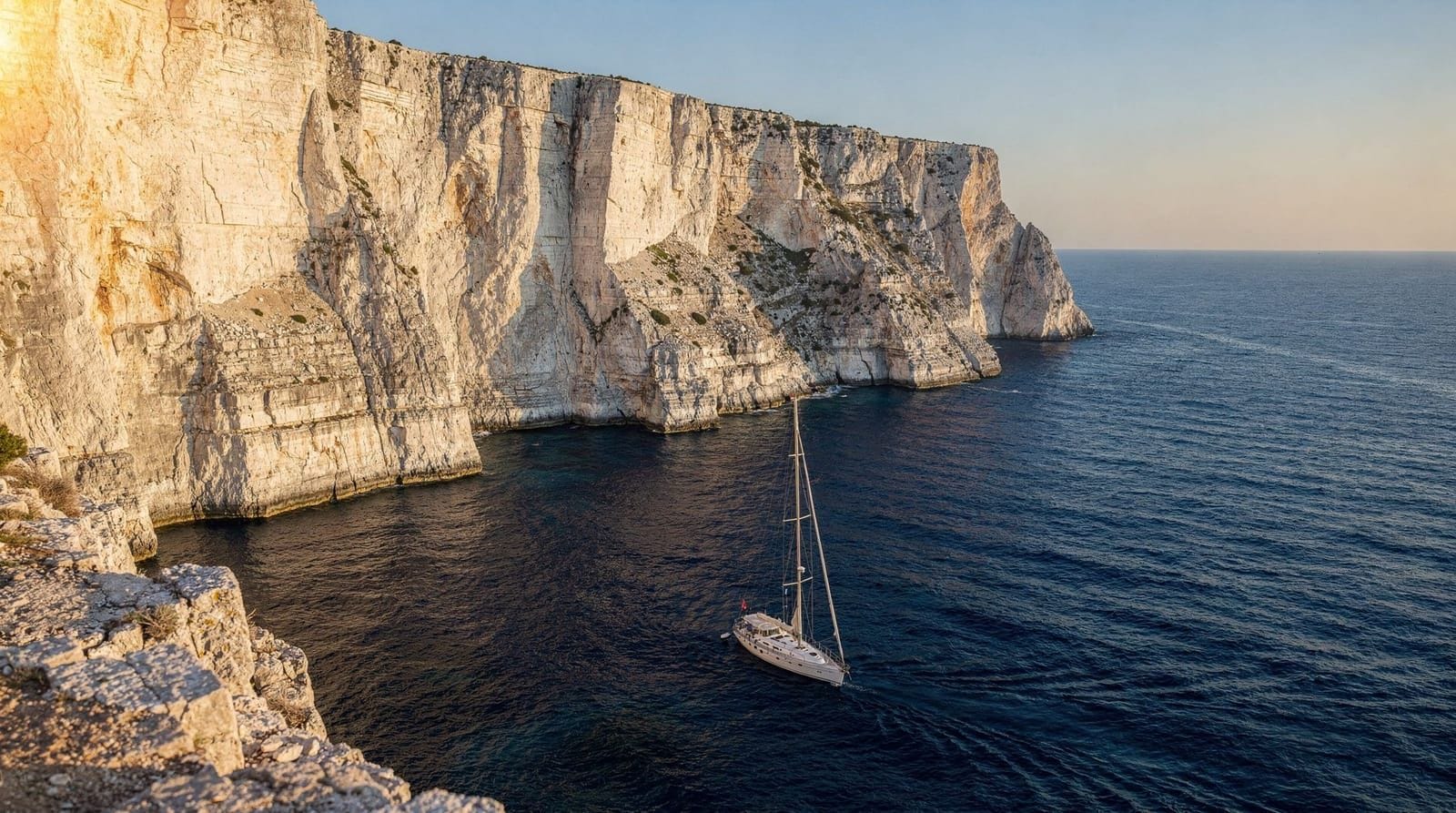
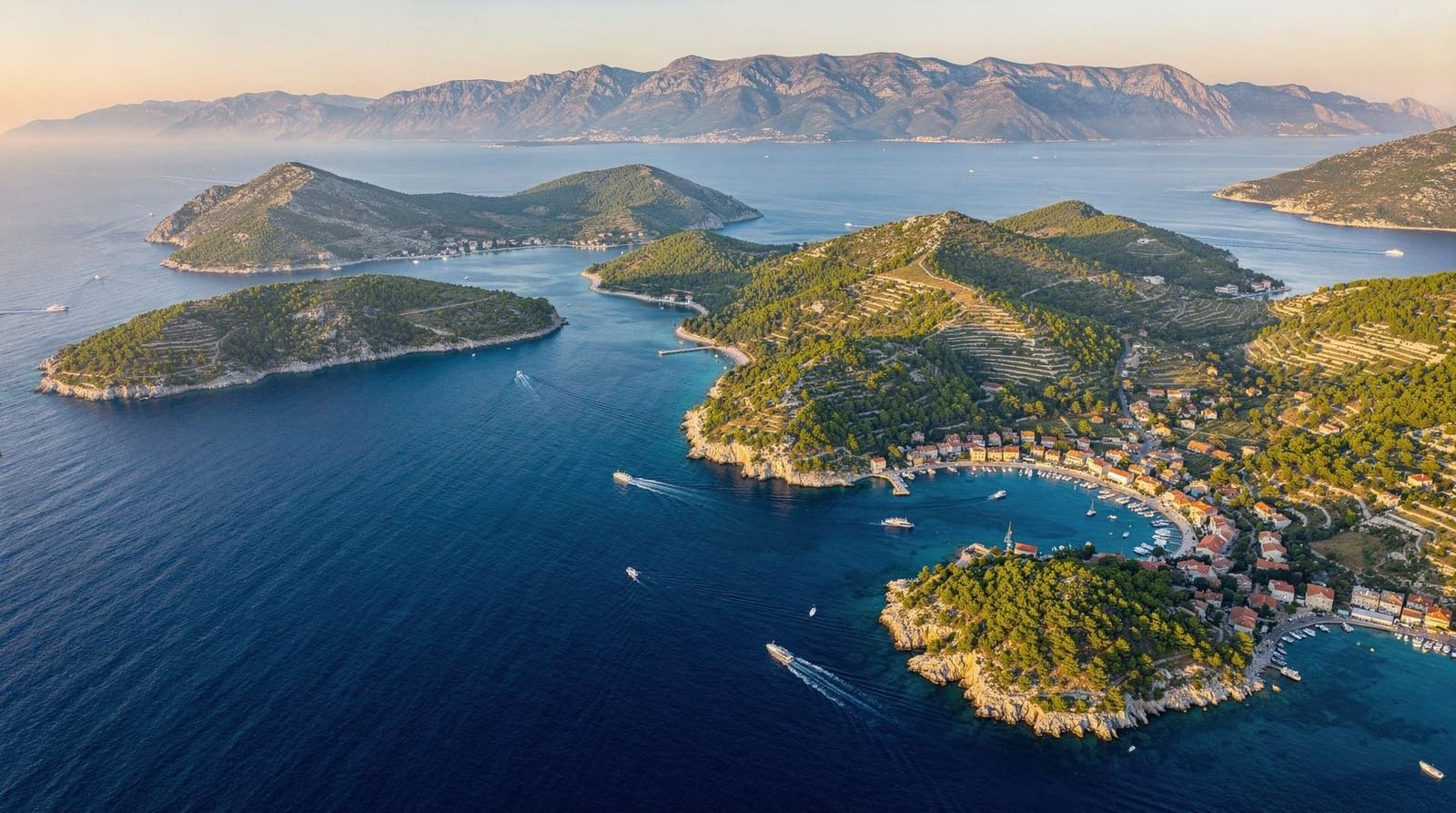
The Kornati Islands are, visually, unlike anything else in Croatia. Where the southern Dalmatian islands are green with pine and macchia, the Kornati are bare white and ochre limestone — 147 islands, islets and reefs scattered over 320 square kilometres of sea, most of them stripped to the rock by centuries of grazing and wood-cutting. From a boat or from the cliff edges, the colours are extreme: bleached limestone, vivid turquoise water, deep blue sky.
| Where | Northern Dalmatian Sea, between Zadar and Šibenik |
| Access | Boat only — day trip, charter or private vessel with permit |
| Cost | Around EUR 10-35/person for day trips; EUR 20-50/day permit for sailboats |
| Time needed | Half-day trip minimum; 2-3 days to sail properly |
| Best time | Late May-mid June and September |
George Bernard Shaw is supposed to have written that on the last day of Creation, God desired to crown his work, and so created the Kornati Islands out of tears, stars and breath. Whether the attribution is accurate or not, the sentiment captures something real. The Kornati are the most dramatic of all Croatian seascapes, and one of the Mediterranean’s great sailing destinations.
Geography and Location
The Kornati Islands lie in the northern Dalmatian Sea between Zadar and Šibenik. The nearest mainland access points are Biograd na Moru (south of Zadar) and Murter island (north of Šibenik). The largest island, Kornat, is about 35 km long and barely 2.5 km wide at its broadest — a narrow limestone ridge with cliffs on the southwestern (seaward) side reaching 100 metres.
Kornati National Park, established in 1980, covers the southern part of the archipelago — 109 islands within the park boundaries. The northern islands (Gornji Kornati) are outside the park, with fewer visitor controls and slightly less dramatic scenery.
Visiting Without a Boat
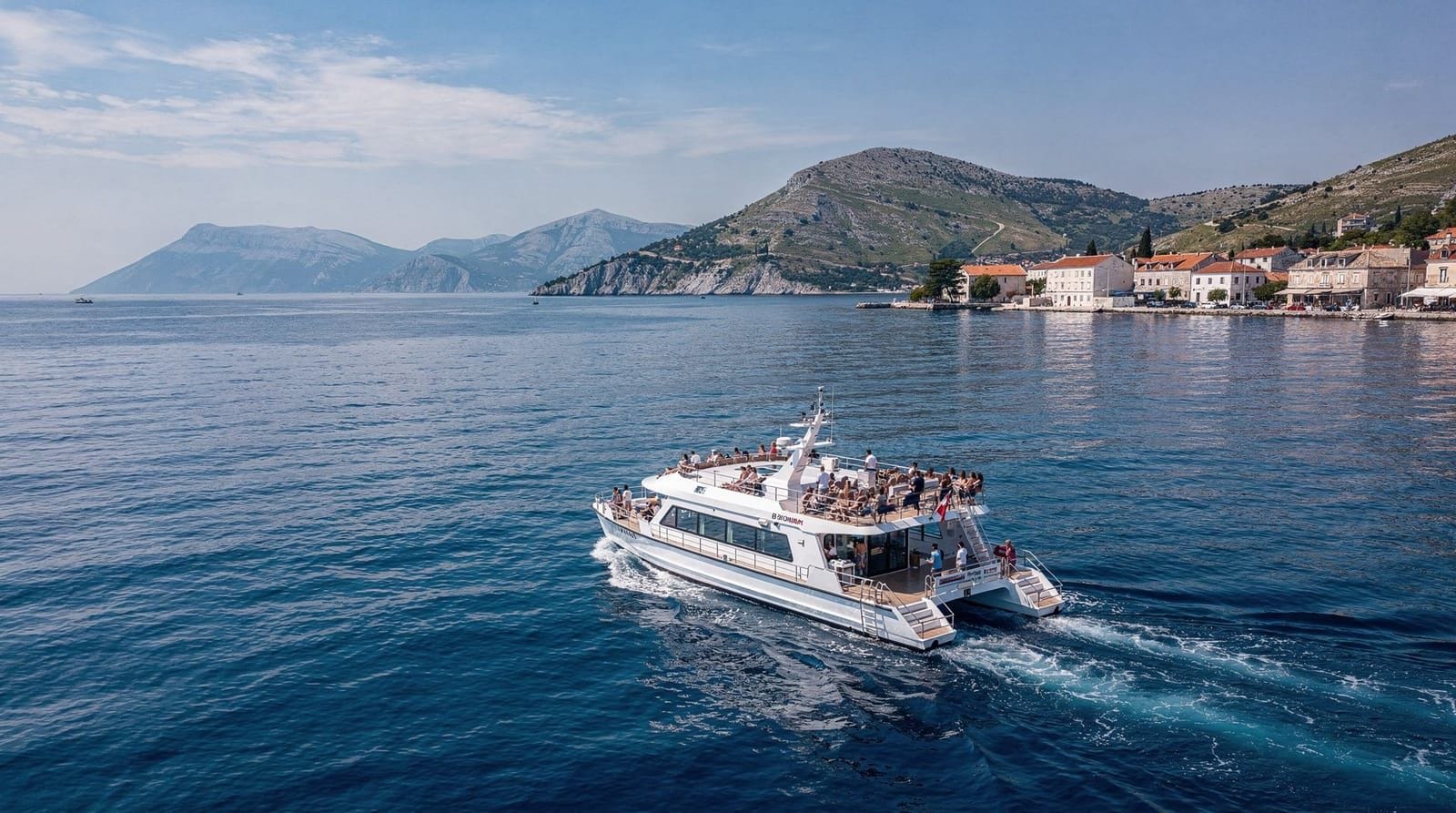
The most common way to visit the Kornati without your own vessel is an organised day trip from Zadar or Šibenik. These typically operate by motor vessel or catamaran, running approximately 8 am to 6 pm. The boats enter the park, cruise the most spectacular sections of cliffed coastline, anchor in a sheltered bay for swimming and lunch, then return to port.
The day trips give you the visual experience of the Kornati — the bare limestone, the transparent water, the sense of space — and a meal at a park konoba. What they do not give you is the ability to choose your anchorage, stay overnight in a cove as the sun sets, or explore the more remote sections of the park.
Bring a swimsuit, a towel, reef-safe sunscreen, and cash for park entrance fees or drinks at a konoba stop, since card machines are unreliable this far from the mainland. Most day-trip boats provide shade on deck but little else in the way of comfort — this is a landscape trip, not a luxury cruise, and the appeal is the scenery rather than onboard amenities. Departures from Zadar tend to run slightly longer than those from Šibenik because of the extra distance to the park boundary, so factor that into how much of the day you have left afterward.
Visiting by Sailing Boat
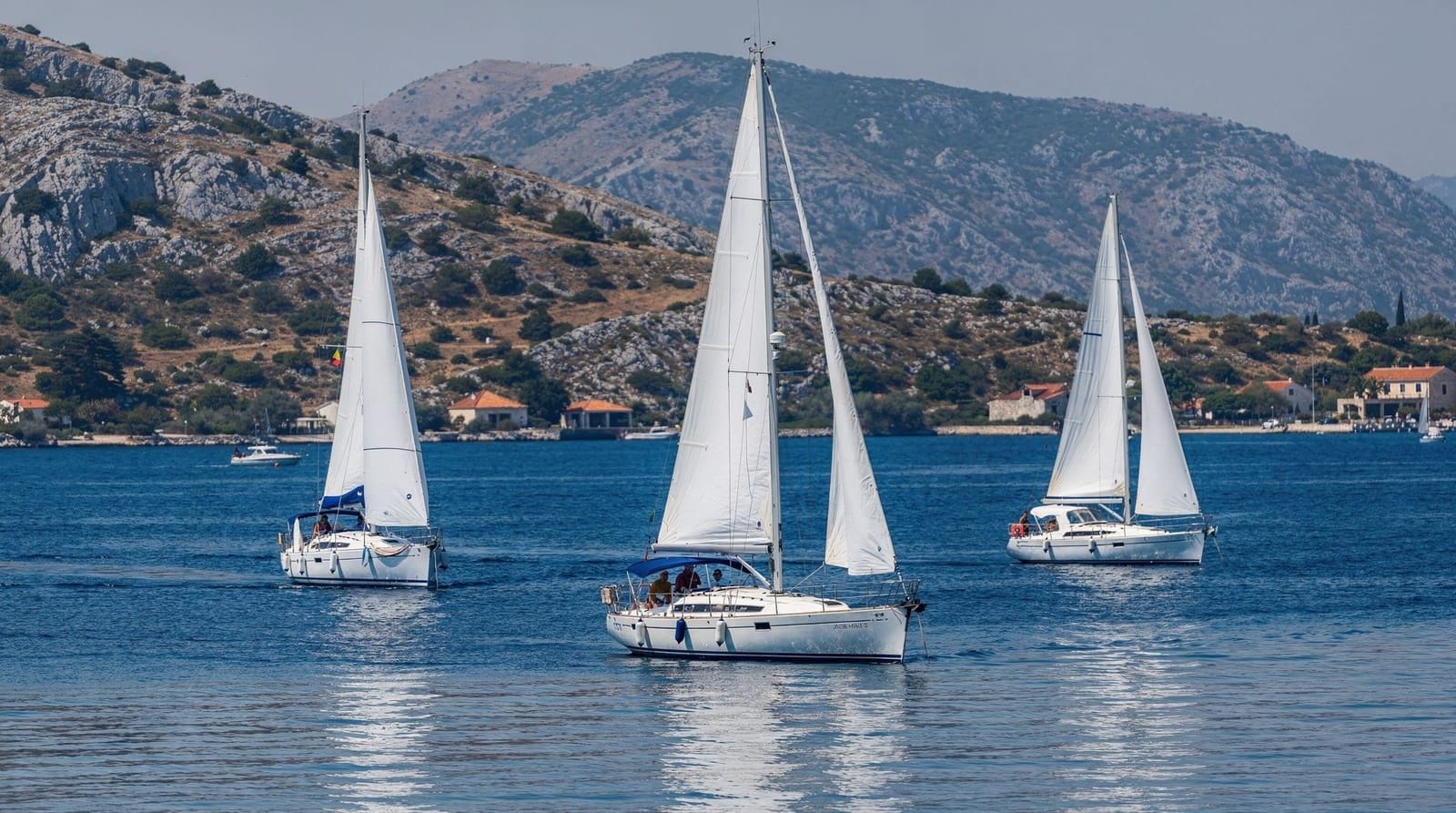
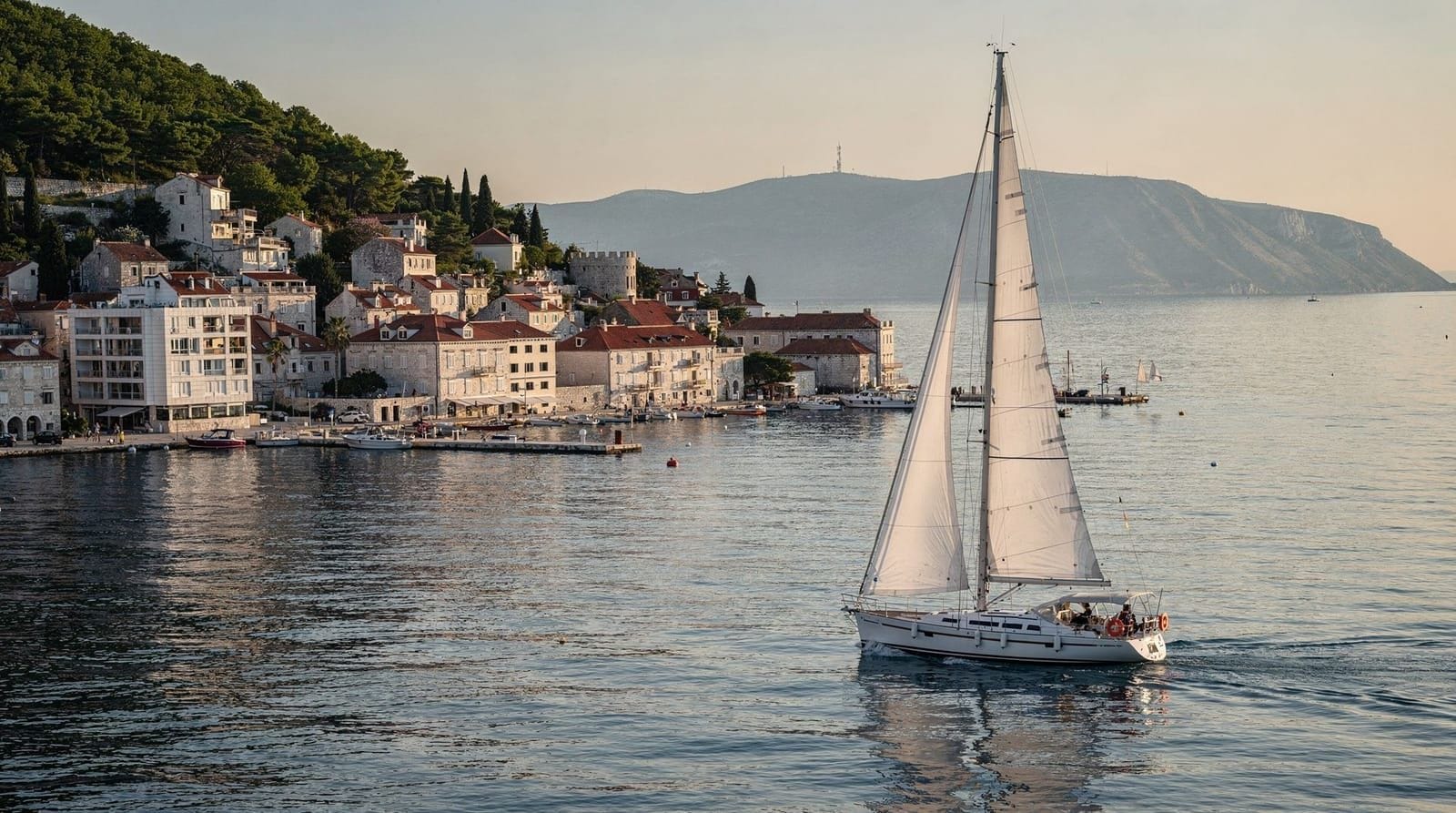
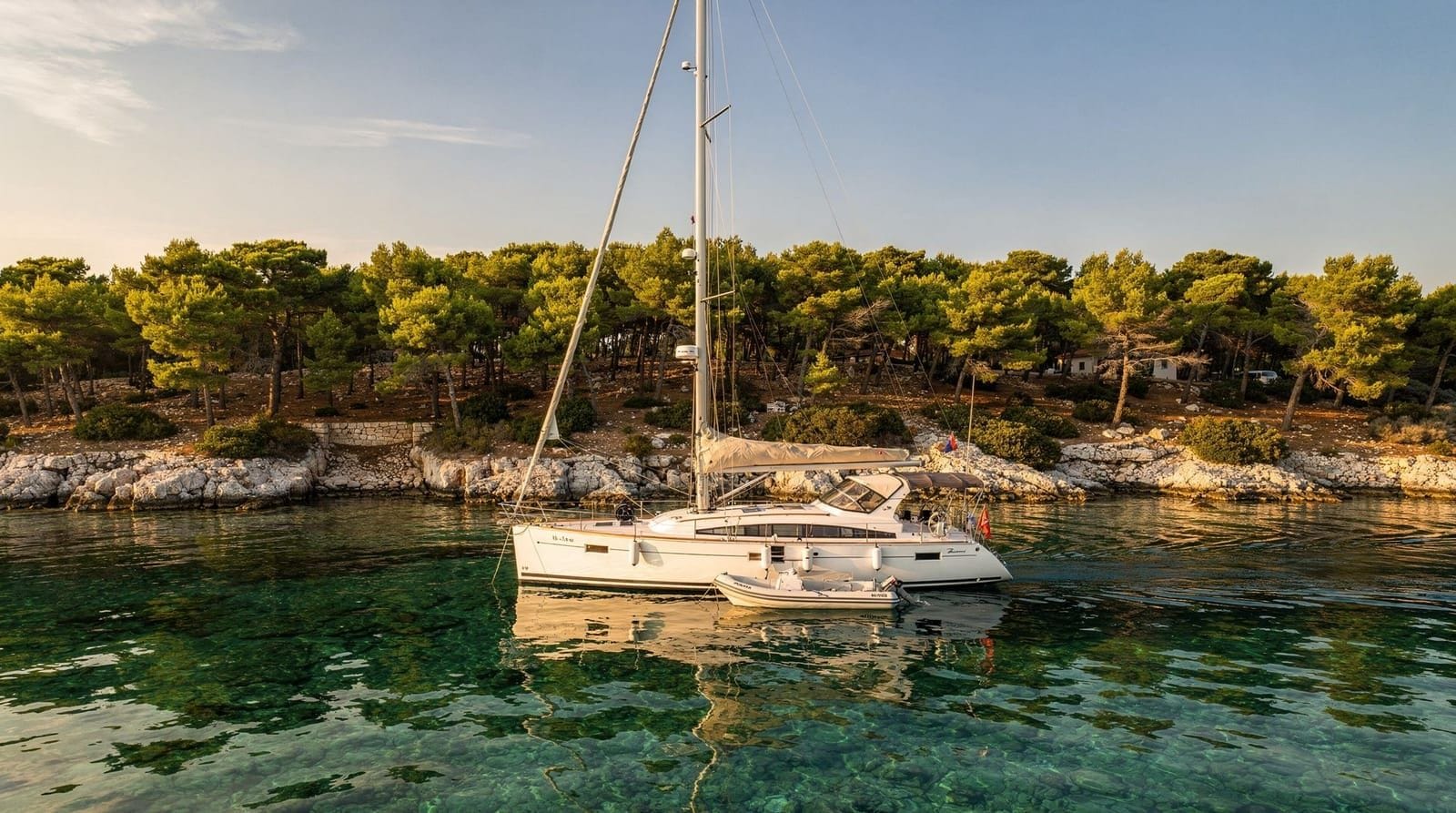
The Kornati are primarily a sailing destination — and this is the best way to experience them. On a sailboat, you can anchor independently in the smaller bays, spend nights in near-total silence, choose your route through the labyrinth of islands and stop at park konobas on your own schedule.
Park permit: Required for all vessels entering the park. Purchased at the park entrance points or online in advance. Fee depends on boat length. Have proof of payment ready for rangers who patrol the park regularly.
Approach routes: From Split, the Kornati are typically reached by sailing north — two to three days if you include Trogir and the Šibenik approach. From Zadar, the park entrance is about 25–30 nm. Most Kornati sailing itineraries are based from marinas in Biograd na Moru, Murter or Šibenik, which are the standard starting points for dedicated Kornati charters.
Key Anchorages
Ravni Žakan: One of the most popular anchorages in the park — a well-sheltered bay with a working konoba. Buoys available; also possible to anchor. Busy in summer; arrive before noon to secure a spot.
Kravljačica: A longer, narrower inlet on Kornat island — dramatic scenery, good shelter in most conditions, less crowded than Ravni Žakan.
Lavsa: A wide bay, popular with larger groups of boats. Clear water, konoba on the north shore. Mooring buoys and free anchoring space.
Mana: Home of the frequently photographed ruined film set — a fake Dalmatian village built for a Yugoslav-era war film and left to decay. The ruins sit on a clifftop above a dramatic bay. Worth the detour.
Sat: A deep cove on the western (seaward) side of Kornat island. Access requires careful navigation past shallows. Extraordinary views of the cliffs. Suitable for confident navigators.
Sailing Notes
Navigation in the Kornati requires attention. The chart shows 147 islands and reefs, and they are real — poorly charted rocks have damaged numerous keels over the years. Use electronic charts with up-to-date Kornati National Park overlay, cross-reference with paper charts (HHI — the Croatian Hydrographic Institute publishes detailed charts of the area), and never enter an unfamiliar bay without checking the chartplotter and looking over the bow.
The maestral (northwest afternoon sea breeze) is the dominant summer wind and makes for excellent afternoon sailing among the islands. The channels between islands can funnel and accelerate the wind — what shows as force 3 in open water may be force 4–5 in the narrow passages.
Night sailing in the Kornati is not recommended without specific local knowledge. Anchor before dark.
The Park Konobas
The Kornati konobas are a genuine part of the sailing experience. Seasonal, basic, excellent. A typical meal: sheep’s cheese with olive oil, grilled fish caught that morning, bread, local wine, no menu. Prices are moderate given the remoteness. Reservations are almost always required in July–August — some konobas turn away boats that arrive without calling ahead.
The konobas that are open in any given season vary. Contact Kornati National Park (www.np-kornati.hr) or the charter company for a current list before departure.
Landscape, Wildlife and Environment
The Kornati’s barren appearance is partly natural and partly historical. Medieval communities from Murter grazed sheep and goats throughout the islands for centuries, preventing forest regeneration. The result is the distinctive grey-white open landscape that now defines the park.
Below the waterline, the Kornati are a protected marine environment. The posidonia seagrass meadows support fish populations that have recovered significantly since the park’s establishment. Anchoring on posidonia is prohibited and rangers take violations seriously.
Wildlife: Peregrine falcon, shag and herring gull nest on the cliffs. Loggerhead sea turtles are occasionally sighted in the park waters. Moray eels, octopus and bream are visible underwater. Dolphins are regularly seen in the channels between islands.
The cliffs: The southwestern (seaward) face of Kornat island has cliff walls dropping 100 metres vertically into the sea — among the highest sea cliffs in the Adriatic. Sailing along the outside of these cliffs in calm conditions is one of the most spectacular passages in Croatian sailing. Do not attempt this in swell or strong south wind.
For more on the national park context, see the Kornati National Park guide. For the broader sailing planning, see the Croatia sailing guide.
Kornati vs the other national park islands
The Kornati are often mentioned alongside Croatia’s other national parks, but the experience is fundamentally different from a land-based park visit. There are no marked trails, no visitor centre with exhibits, and no way to “walk through” in an afternoon the way you might at Krka or Plitvice. Everything here is mediated by boat, wind and tide. If you want dramatic nature with minimal planning, a day trip covers the essentials; if you want to actually experience the silence of an empty anchorage at sunset, sailing is the only route in, and that means either chartering with a skipper or building real navigation confidence beforehand — see the bareboat vs skippered charter guide for which suits your experience level.
Combining Kornati with island hopping
Because the Kornati sit between Zadar and Šibenik, they slot naturally into a wider northern Dalmatian itinerary. Boats departing from Biograd na Moru or Murter can combine a Kornati day with stops at Vis further south, or with the broader island hopping itinerary that many first-time sailors in Croatia follow. If you are building a longer trip, the Croatia yacht charter guide covers boat selection, costs and provisioning for a multi-island route that includes a Kornati leg.
Frequently asked questions about Kornati Islands Guide
How much is the Kornati National Park entrance fee?
In 2026, the Kornati National Park fee is approximately €10–35 per person depending on the type of visit (day trip by organized tour vs independent sailing vessel). Vessels entering the park pay a fee based on boat length — approximately €20–50 per day for a 40 ft sailboat. Fees are collected at the park entrance points or by rangers.Can you visit the Kornati without a private boat?
Yes — organised day trips from Zadar and Šibenik run in summer, typically by motor vessel or catamaran. These give 3–4 hours in the park, a fish lunch on board or at one of the simple konobas on the islands, and a tour of the most dramatic coastline. It is not the same as sailing independently but it is the accessible option without a vessel.Are there any inhabitants on the Kornati Islands?
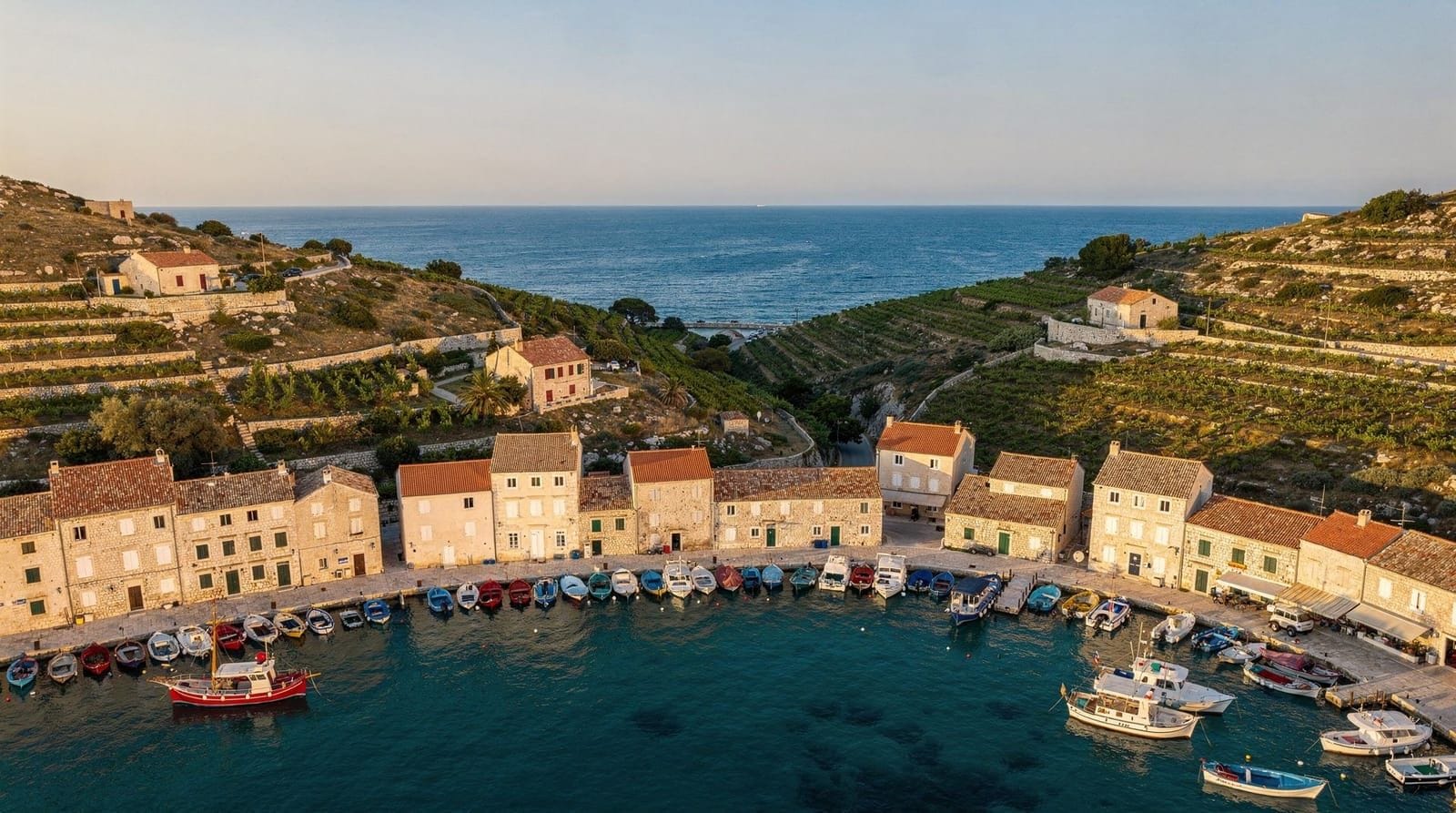
The Kornati are not permanently inhabited. About 150 families from Murter island own land and small stone cottages on the Kornati. They come seasonally, mainly to tend olives and sheep, and some run the simple fish restaurants (konobas) that serve sailors in summer. Outside summer these close entirely.Is the Kornati Islands sailing suitable for beginners?
The Kornati are not ideal for inexperienced sailors. Navigation among 147 rocks and reefs requires careful chart work and, ideally, a paper or electronic chart with the park superimposed. The anchorages are deep and holding can be variable. The park is better suited to intermediate or experienced sailors. A skippered charter is the right option for beginners who want the Kornati experience.What is the best time to visit the Kornati Islands?
May to mid-June and September are the best windows — the park is open, the weather is good and the anchorages are not overcrowded. July and August bring more visitors and the most popular anchorages (Ravni Žakan, Mrtovnjak) can be crowded. October is quiet but some konobas close by mid-month.Are there restaurants in the Kornati Islands?
Yes — about 30 simple konobas (traditional Croatian restaurants) operate on the Kornati in summer. They are seasonal and entirely basic: fresh fish, local sheep's cheese, olive oil, bread, wine. No menus, no elaborate service. Most require reservations, especially in July and August. Call ahead or ask the park office for which konobas are currently operating.What makes Kornati unique compared to other Croatian islands?
The landscape. The Kornati are geologically different from the inhabited Dalmatian islands further south — barren white limestone, almost no vegetation above sea level, dramatic cliffs dropping into the clear sea. George Bernard Shaw reportedly called them 'the crown of thorns'. The combination of this stark beauty and the complete absence of human infrastructure creates an experience found nowhere else in Croatia.
Top experiences
Bookable activities with verified prices and instant confirmation on GetYourGuide.
Top experiences
Best-rated activities across GetYourGuide and Viator.

Blue cave, Mamma Mia and Hvar, 5 islands speedboat tour
- Viator

Blue Cave and Hvar Tour - 5 Islands Tour from Split and Trogir
- Viator

Blue cave, Mama Mia and Hvar, 5 Island Speedboat Tour from Trogir
- Viator

Medulin-Kamenjak 5h boat trip ALL-INCLUSIVE drinks on Sandra Boat
- Viator

Medulin: All-Inclusive Kraken Boat Tour to Kamenjak Cave & Levan
- Viator

3Hour ALL-INCLUSIVE Sunset Dolphin Watching from Medulin onSandra
- Viator