Kornati National Park travel guide
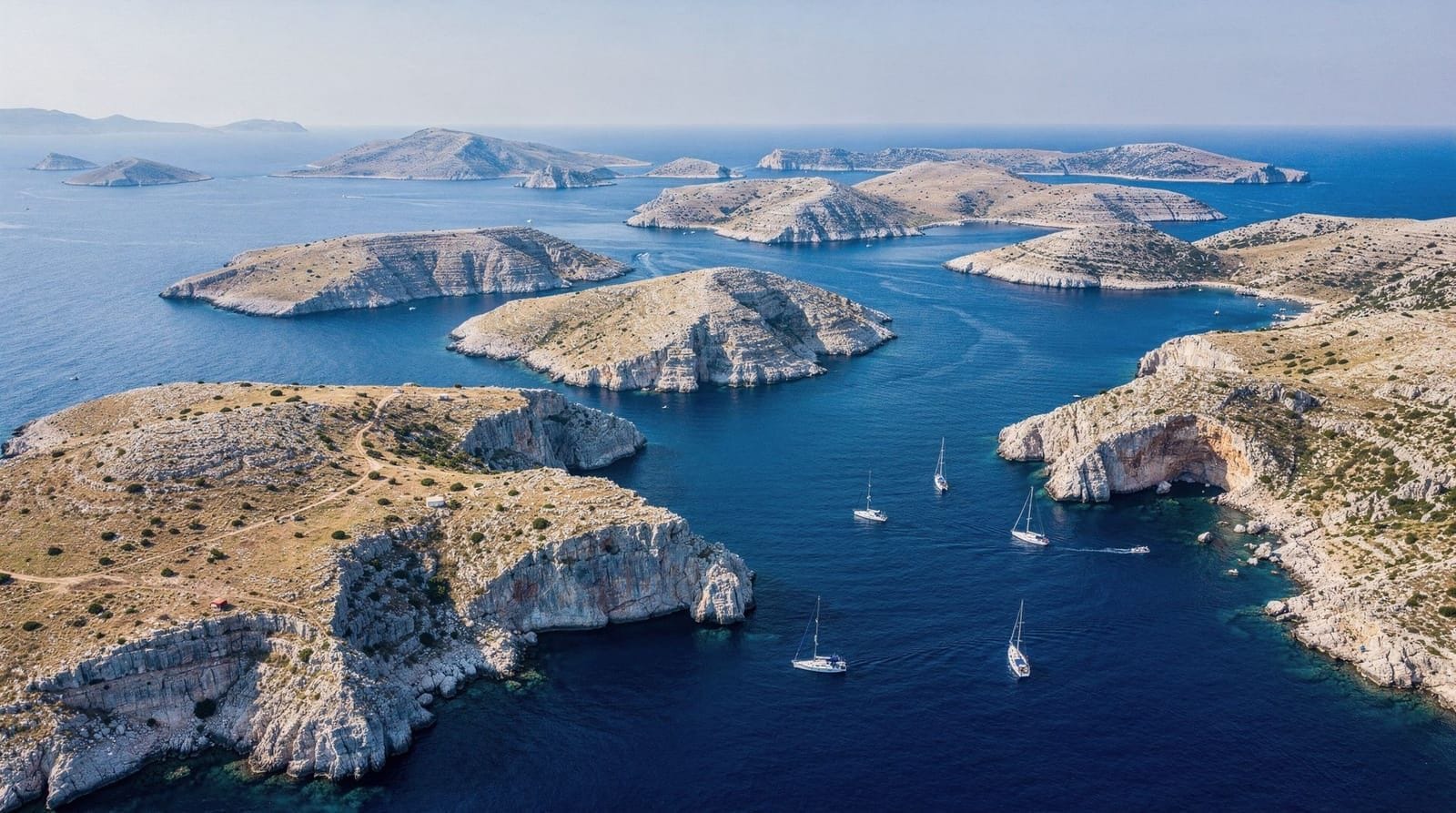
Kornati is 89 barren limestone islands — Croatia's most dramatic seascape, best explored by sailing boat or day-trip catamaran from Zadar or Šibenik.
Zadar: Trip to Kornati National Park
Quick facts
- Best time
- June–September
- Days needed
- 1 day (boat trip) to several days (sailing charter)
- Getting there
- Boat from Zadar, Šibenik, Murter, or Biograd; no public ferry
- Budget per day
- Day trip €60–€100; sailing charter (per person) €100–€200
George Bernard Shaw reportedly described the Kornati islands as something God created on the last day of creation — “out of tears, stars, and breath.” Whether or not Shaw actually said this (the attribution is disputed, but every restaurant on the Dalmatian coast uses the quote), the sentiment is accurate. The Kornati archipelago — 89 islands, islets, and reefs scattered across 320 square kilometres of the northern Dalmatian sea — is a landscape unlike anywhere else in Croatia: bare, bone-white limestone cliffs rising sheer from impossibly clear turquoise water, no permanent population, almost no vegetation, and a silence broken only by wind and seabirds.
This is not a national park with boardwalk trails and café facilities. Getting to Kornati requires either joining an organised boat day trip, chartering a sailing boat, or having access to a private vessel. But the effort is what makes it remarkable — these islands see a fraction of the visitors of Plitvice or Krka.
| Where | Northern Dalmatia, offshore from Zadar/Šibenik |
| Cost | Day trip ~€60–€100; sailing charter ~€100–€200/person |
| Time needed | 1 day (boat trip) to several days (sailing) |
| Getting there | Boat from Zadar, Šibenik, Murter, or Biograd; no public ferry |
| Best time | June–September |
The Kornati archipelago
The national park covers the outer Kornati archipelago — the innermost islands around the large island of Kornat are part of the park, while the Šibenski Kanal area to the north is a separate nature park (Telašćica, on the island of Dugi Otok). The two areas are often combined on longer sailing circuits.
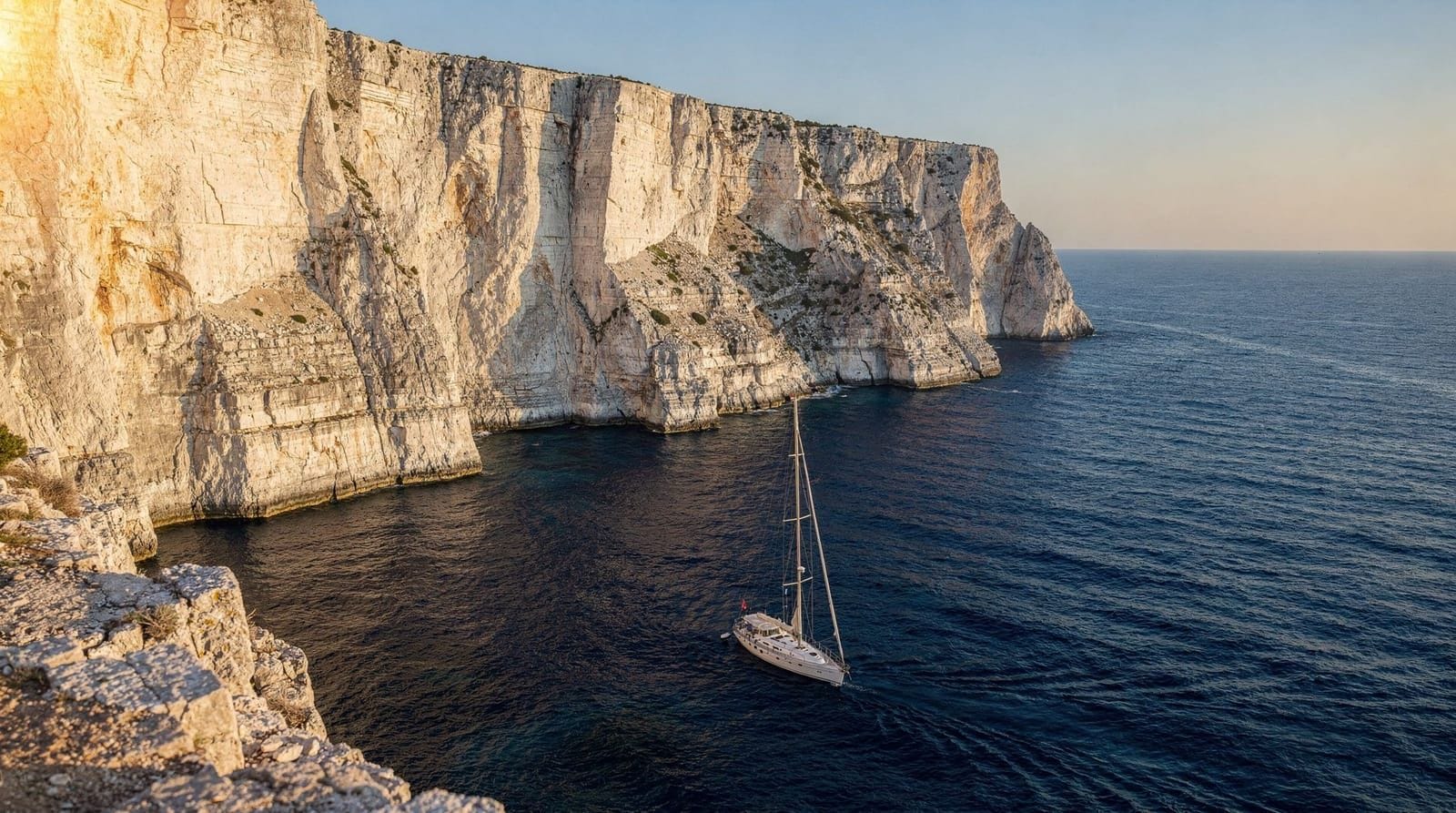
The defining geological feature is the klif — the dramatic western cliffs that drop vertically from the island ridges directly into the sea, creating underwater walls that continue to extraordinary depths. These walls are among the finest dive sites in the Mediterranean.
The islands are not entirely uninhabited in season: a dozen or so seasonal konobe (small restaurants) operate on the larger islands, typically accessible only by boat. Eating a simple grilled fish lunch on a Kornati island in June, with no road leading to it in any direction, is one of the more distinctive Croatian experiences available.
Day trips from Zadar and Šibenik
The most practical way to see Kornati for most visitors is a day-trip boat excursion from Zadar, Biograd na Moru, or Šibenik. These typically last 8–10 hours, cover several islands, include time for swimming and snorkelling, and often stop for lunch at one of the seasonal konobe on Kornat island.
What a day trip includes: Navigation through the outer archipelago, stops at 2–3 islands for swimming, usually a fish lunch, and often a visit to a sheltered cove with exceptional snorkelling. National park entry fee is usually included in the tour price.
What it does not include: Any real sense of the silence and solitude that Kornati’s scale offers — day trips necessarily involve a group boat and a schedule. For genuine immersion in the archipelago, a sailing charter is the answer.
Sailing Kornati
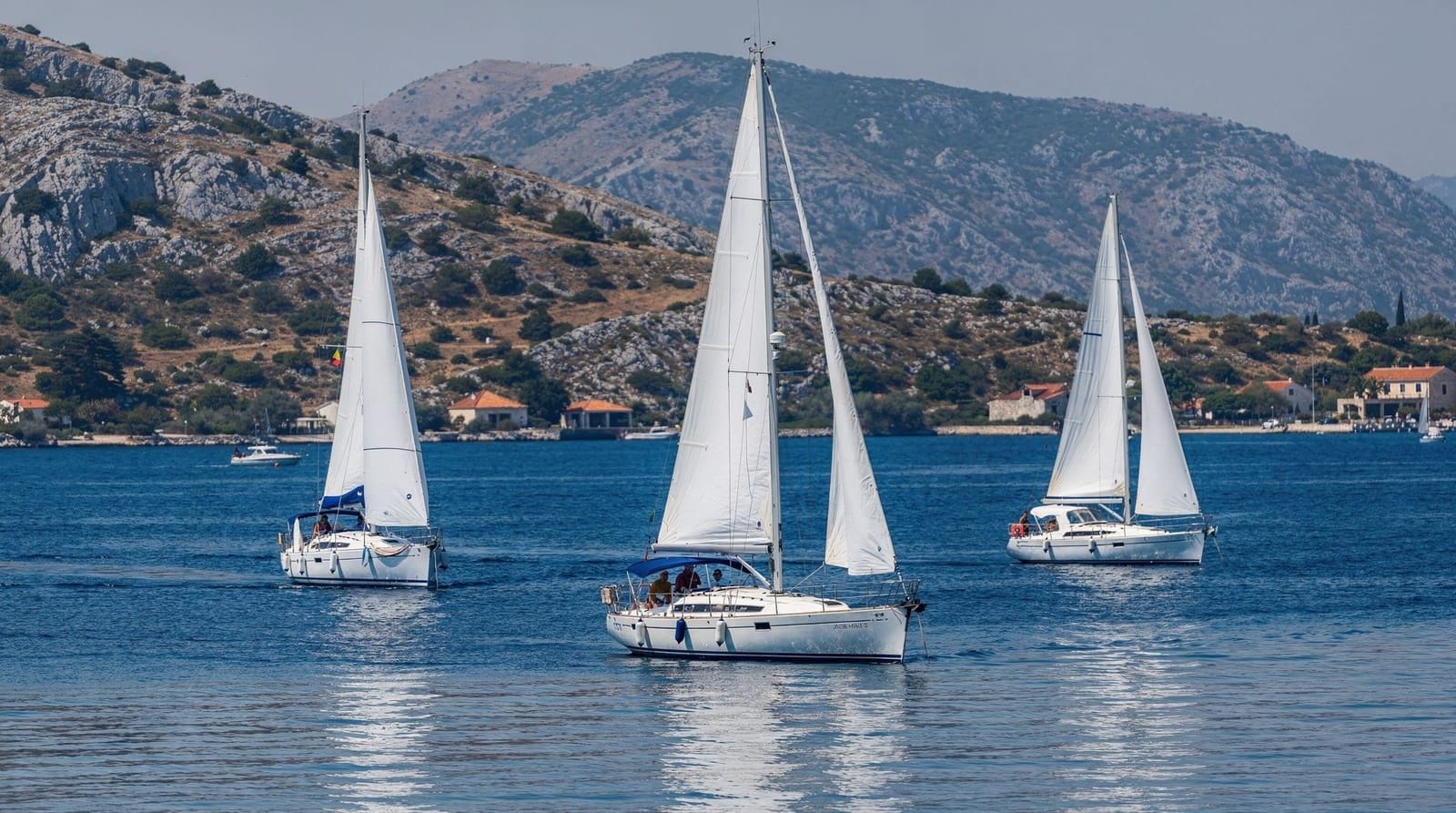
The Kornati archipelago is one of the top sailing destinations in the Mediterranean. Sailors rate it highly for the density of anchorages — a protected bay every few kilometres — the extraordinary clarity of the water, and the combination of drama and calm in the landscape.
Bareboat charter: Available from marinas at Šibenik, Vodice, Biograd, and Zadar. Experience requirements vary by vessel; Croatian certification or demonstrated offshore experience is typically required. A week-long charter covering Kornati plus Šibenik, Krka National Park, and the Zadar archipelago is a classic Dalmatian sailing itinerary. See the Croatia sailing guide.
Skippered charter: More accessible for those without sailing experience. The skipper handles navigation; guests focus on the experience.
Flotilla sailing: Organised groups sail together with a lead boat and guide — good for first-time charterers or those wanting social sailing.
Day trip logistics — what to expect
A Kornati day trip is a full day commitment — typically 8–10 hours from departure to return. Here is what to expect:
Departure: Most day-trip boats leave between 7:30 and 9:00am from the departure harbour (Zadar, Biograd, Murter, or Šibenik). Arrive 15 minutes early; boats depart on schedule.
Navigation to the park: From Zadar, the journey to the outer Kornati takes 1.5–2 hours by boat. From Biograd, 1–1.5 hours. You travel through increasingly dramatic scenery as the inhabited coast gives way to the bare limestone archipelago.
In the park: Typically 2–3 swimming stops in different coves; 2–4 hours of total water time. The boat anchors in sheltered bays and passengers swim or snorkel from the boarding ladder. The water is extraordinarily clear — visibility of 20–30 metres is normal.
Lunch: Most organised trips include a fish lunch at one of the seasonal konobe on Kornat island. These are simple stone buildings with basic facilities; the fish (whatever was caught that morning) and local wine are the menu. Budget €20–35 per person extra if not included.
Return: Usually back at the departure harbour by 6:00–7:00pm.
What to bring: Swimwear and a towel (essential), sun protection (the open boat and sea surface amplify UV significantly), water (enough for a full day — the park shops are limited), seasickness medication if you are susceptible (the outer Adriatic has swell), cash for the konoba lunch, and a dry bag for cameras and phones.
National park fees
Entering the national park area by private vessel requires a park entry ticket, purchased at the park office in Murter or Šibenik, or at the park ranger stations on Kornati. Day-trip boats handle this automatically. Private boats must pay per-vessel-per-day fees (ranging roughly €15–30 depending on boat length and season). Anchoring in designated zones only — certain bays and areas are protected.
Diving in Kornati
The underwater topography of Kornati — the vertical cliffs, the sea caves, the fields of Posidonia seagrass — makes it one of the best dive destinations on the Adriatic. Visibility is exceptional (often 30–40 metres). Dive operators in Šibenik, Vodice, and Murter run excursions into the park.
Key dive sites include the walls off the outer Kornati cliffs (colourful gorgonian fans and sponges), the underwater cave at Mešnjak, and the wreck of the Francesca da Rimini off the island of Kurba Mala.
Combined itinerary: Kornati and Šibenik
Kornati pairs naturally with Šibenik for visitors based in Split or Zadar who want to combine nature and culture in a single area.
Suggested two-day circuit:
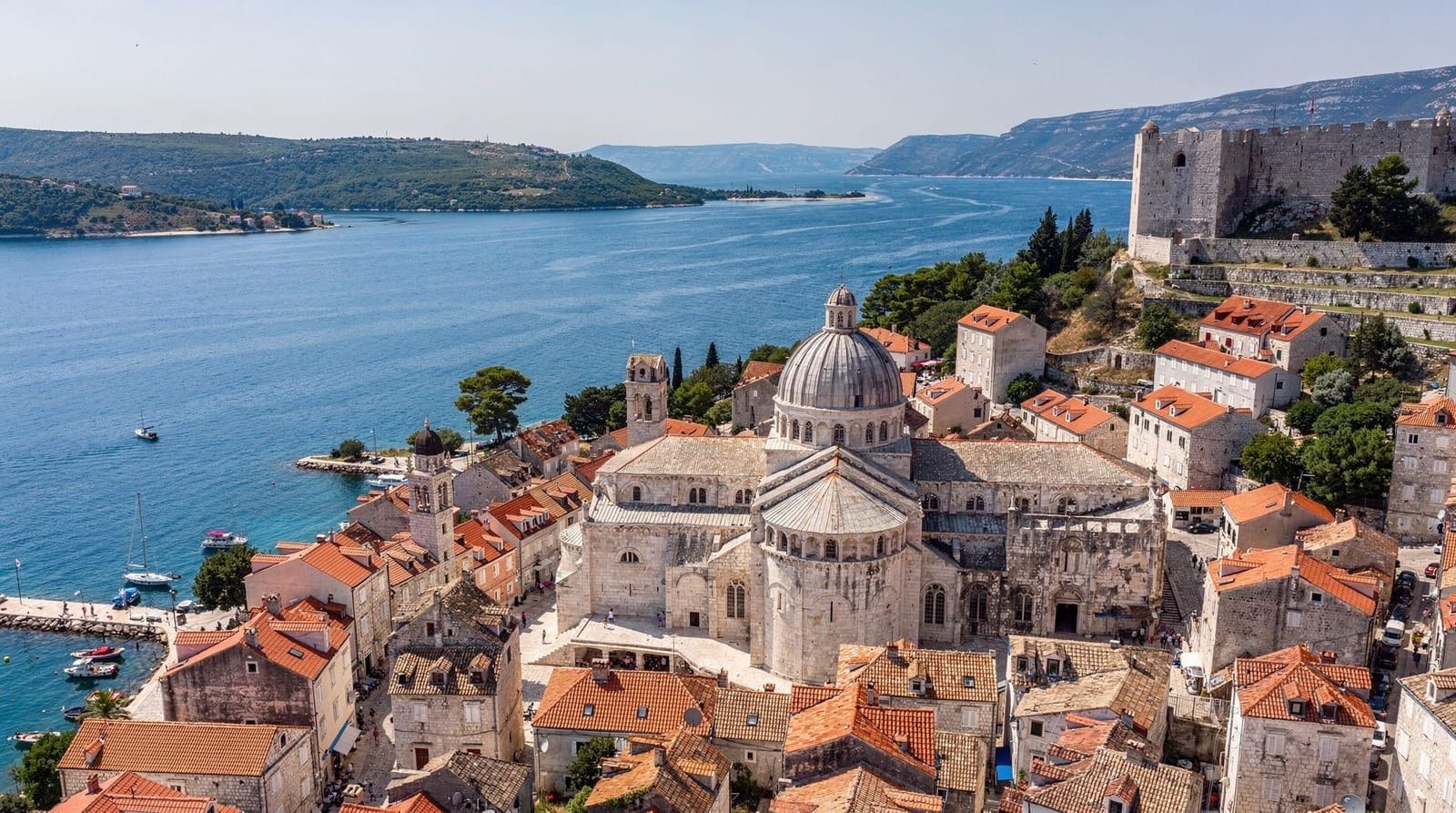
Day 1 — Šibenik: Morning: The old town lanes, the Cathedral of St James (UNESCO World Heritage, 15th century — the most extraordinary Gothic-Renaissance building in Croatia), the Church of St Barbara (Šibenik City Museum), and the Barone Fortress above the city. Afternoon: The waterfront, the narrow medieval lanes, and dinner at one of the good fish restaurants in the old port area.
Day 2 — Kornati day trip: From Šibenik or Vodice (25 km north), take an organised boat excursion into the Kornati archipelago (departures from Šibenik waterfront and from Vodice). Alternatively, combine Krka National Park (15 km from Šibenik) in the morning with an afternoon return, though this is a longer day.
This circuit is achievable from a Split base (90 minutes north to Šibenik) or a Zadar base (1 hour south to Šibenik) and covers some of the finest natural and architectural heritage in central Dalmatia.
Practical information
No public ferry: There is no scheduled ferry service to Kornati. All access is by private or chartered boat.
Water and supplies: Bring everything you need. The seasonal konobe do not supply emergency goods. In the park interior, fresh water is scarce (most konobe receive it by boat).
Weather: The Adriatic weather window for Kornati is reliable from June to September. The jugo (south wind) and bura (north/northeast) can both create short-notice rough conditions; sailing boats should have access to forecasts and a flexibility to wait for settled weather.
Mobile coverage: Limited within the park. Plan accordingly.
Photography guide
The Kornati archipelago presents photographers with one of the most distinctive landscapes in all of Croatia — the challenge is not finding beautiful images but managing the harsh light conditions and the need to work from a moving boat.
Best light: The Adriatic summer sky is intense, and the bare limestone reflects harshly under midday sun. Golden hour (7–9am and 5–7pm in summer) transforms the white cliffs into warm amber. The morning on a sailing charter — before 9am, with low-angle light raking the cliff faces — is often the best photography window of the day.
Key subjects:
- The western klif cliffs (the vertical faces dropping into the sea): best photographed from the sea, ideally from a dinghy at close range. The boat captain can position you for the right angle.
- The turquoise water over white limestone seabed in shallow anchorages: polarising filter essential to cut reflection and reveal the colour. This is the defining Kornati image.
- The konobe (seasonal restaurants) on Kornat island: the simplicity of a stone building on a bare hillside above the sea, with a single boat in the cove below, is distinctly Kornati.
- Underwater: the visibility (30–40 metres) and the gorgonian fan corals at 30–40 metre depths on the cliff walls make this one of the finest underwater photography locations in the Mediterranean.
Equipment: Wide angle (for the cliff scale), medium telephoto (for picking out details of the limestone textures and distant island profiles), and a waterproof housing or dry bag. On a sailing boat, spray is constant; protect equipment carefully.
Sailing Kornati — practical detail for first-timers
Sailing the Kornati is the pinnacle of a Dalmatian sailing trip, but it requires some planning and realistic expectations.
Anchorage planning: The park has designated anchorage zones. Popular bays (Ravni Žakan, Kravljačica on Kornat, some Lavsa bays) fill with yachts by early afternoon in July–August. Arrive before 1pm for the best berths. Some anchorages have mooring buoys (book through the park office or directly with the buoy operators); others are free anchoring with your own ground tackle.
The konobe: A dozen seasonal restaurants operate on the island of Kornat and a few others. They have no road access; supplies arrive by boat. The food is simple — fish of the day, lamb from the Kornat sheep that roam wild, local wine and olive oil — and very good. Most are open June–September; some May–October. Arrive by 12:30pm for lunch; evening service depends on the establishment.
Water and fuel: Fresh water is scarce in the park. Fill tanks before entering in Šibenik, Vodice, or Biograd. Fuel is available at Šibenik, Zadar, and the Kornati area marina at Murter — not within the park. Plan accordingly.
Park entry for private boats: The park entry ticket for private vessels is purchased at the park office in Murter (the gateway town for the southern archipelago) or from park rangers who patrol the anchorages. Daily fees range by boat length. The ticket covers a 24-hour period; multi-day tickets are also available.
The islands up close
Most day trips and sailing circuits focus on Kornat (the largest island, 35 km long), but the smaller islands have their own character.
Ravni Žakan: A shallow-water anchorage with one of the most beautiful turquoise bays in the archipelago. The flat limestone seabed in 2–4 metres of water gives the water an unreal clarity and colour. A konoba operates here in season.
Levrnaka: Considered by many sailors to have the finest beach in the park — a long stretch of white gravel in a sheltered bay with extraordinary water clarity and relative shelter from both north and south winds.
Mana: Known for its dramatic crescent bay with near-vertical interior cliffs — a famous anchorage used as a location in the 1962 film Winnetou and a visual landmark of the archipelago.
Telašćica: On the adjacent island of Dugi Otok (technically Telašćica Nature Park rather than Kornati National Park), the Telašćica bay is the finest natural harbour in the northern Dalmatian archipelago — 7 km long, sheltered, with the saltwater lake Mir and spectacular cliffs on the ocean side.
Kornati vs Krka vs Plitvice — Croatia’s parks compared
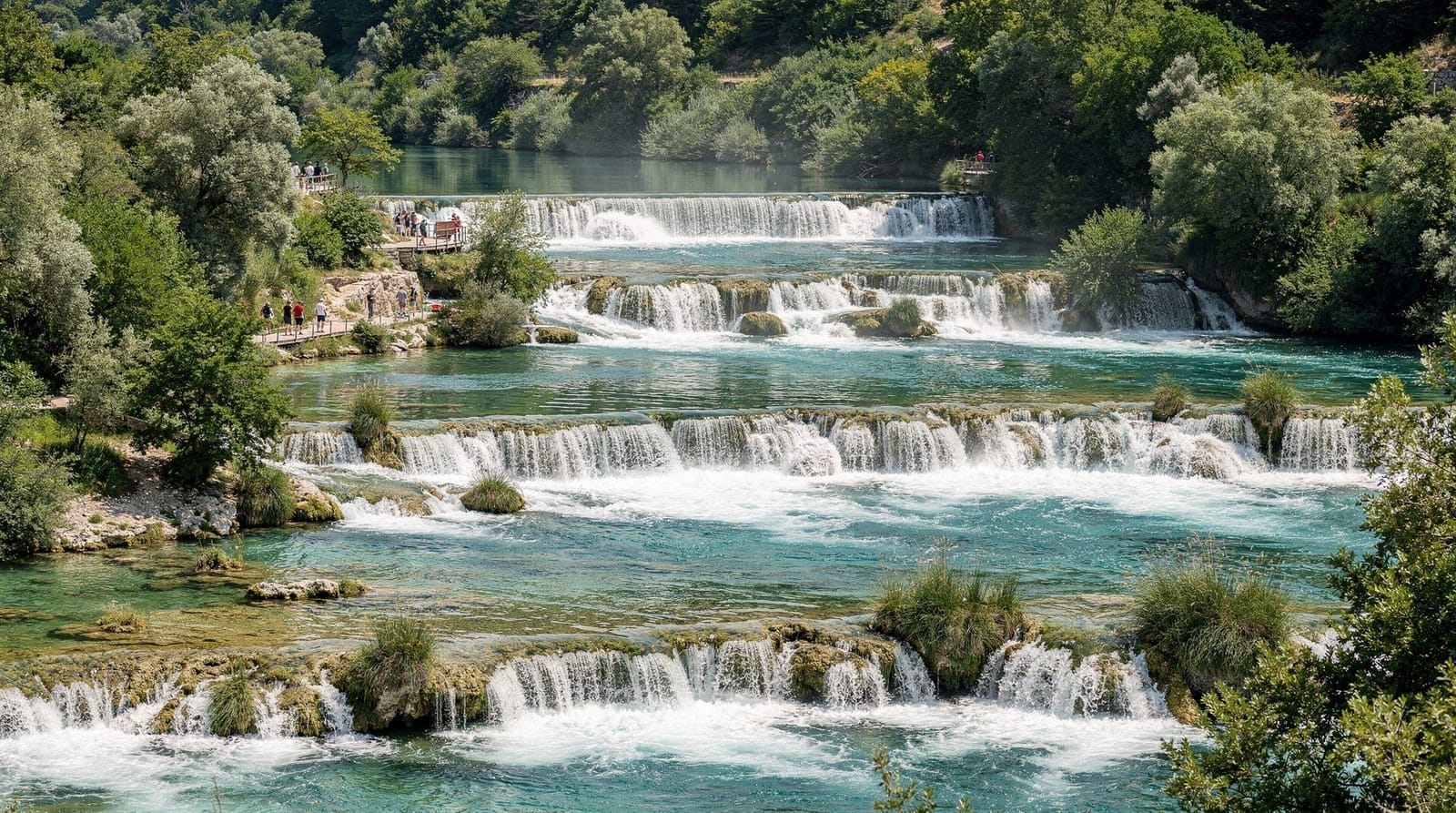
Kornati is unlike Croatia’s other flagship national parks and is easy to misjudge if you’re picturing waterfalls. Krka National Park and Plitvice Lakes are freshwater lake-and-waterfall parks with boardwalks and land-based visitor infrastructure — busy, accessible, and dramatic in a very different way. Kornati is a marine wilderness with no trails at all; the entire experience happens from a boat. If you want both in one trip, the two-day Kornati and Šibenik circuit above pairs naturally with a Krka day trip from the same base — see the Plitvice vs Krka guide for how the two freshwater parks compare to each other.
Money and connectivity in the archipelago
There are no ATMs or banks within the park — bring enough cash from Zadar, Šibenik, or Murter to cover the seasonal konoba lunch and any private-boat fees. See the money in Croatia guide for typical costs on the mainland before you depart. Mobile coverage is limited to non-existent once you’re among the outer islands, which is part of what makes Kornati feel genuinely remote — don’t rely on it for navigation or bookings once you’ve left port.
Choosing between a day-trip boat and a sailing charter
The decision between a group day-trip boat and a private sailing charter shapes the whole Kornati experience. A day trip is straightforward: a fixed departure time, a set itinerary of 2–3 islands, a shared boat with other travellers, and a return by early evening — ideal for anyone with a single free day and no sailing plans of their own. It costs a fraction of chartering and requires zero planning beyond booking a seat.
A sailing charter — bareboat if you’re qualified, skippered if not — opens up the archipelago properly: you choose your own anchorages, can linger in quiet coves the day boats never reach, and experience the silence that makes Kornati distinctive rather than a scheduled itinerary shared with forty other passengers. The trade-off is cost (multiple hundreds of euros per day, shared across a group) and the need for either sailing qualifications or a skippered booking arranged in advance. For most first-time visitors without their own sailing background, a day trip is the sensible starting point; those who fall for the archipelago on that first visit often come back for a multi-day charter.
Top experiences
Bookable activities with verified prices and instant confirmation on GetYourGuide.