Is Croatia expensive?
Is Croatia expensive to visit?
Croatia is mid-range by European standards — more expensive than Bulgaria or Albania, cheaper than France, Italy or the Nordic countries. In peak season (July–August) in Dubrovnik or Hvar it can feel expensive; in shoulder season (May, September, October) or in Zadar, Split or Zagreb it is very manageable.
The honest cost assessment
Croatia is more expensive than it was five years ago and significantly more expensive than a decade ago. The adoption of the euro in January 2023 was widely perceived — incorrectly or correctly — as a price-increase event. Summer tourism demand continues to grow. Dubrovnik and Hvar have priced themselves into the same tier as major western European resort destinations at peak season.
And yet: Croatia remains genuinely affordable if you make the right choices. Shoulder season versus peak. Zadar versus Dubrovnik. Konoba versus tourist terrace. These decisions affect your daily spend by 30–60%.
This guide breaks down what things actually cost in 2026 so you can plan realistically. For a per-day total rather than a category breakdown, see the Croatia daily costs and Croatia trip cost guides.
| Cheapest bases | Zadar, Split, Zagreb |
| Priciest bases | Dubrovnik, Hvar (peak season) |
| Best value months | May, June, September, October |
| Daily budget (frugal) | around €50–70/person |
| Daily budget (mid-range) | around €90–150/person |
Accommodation costs
Accommodation is the biggest variable and the most timing-dependent.
Dubrovnik (the most expensive)
| Category | May/October | July–August |
|---|---|---|
| Hostel dorm | €20–35 | €35–55 |
| Budget private room | €70–110 | €150–250 |
| Mid-range apartment | €100–160 | €200–400 |
| Good hotel (3–4★) | €150–250 | €300–600+ |
Split (more affordable than Dubrovnik)
| Category | May/October | July–August |
|---|---|---|
| Hostel dorm | €18–30 | €28–45 |
| Budget private room | €55–90 | €100–180 |
| Mid-range apartment | €70–130 | €150–280 |
| Good hotel | €100–180 | €200–400 |
Zadar (best value Dalmatian city)
| Category | May/October | July–August |
|---|---|---|
| Hostel dorm | €15–25 | €22–38 |
| Budget private room | €45–75 | €80–140 |
| Mid-range apartment | €60–100 | €110–220 |
Zagreb (year-round affordable)
| Category | Year-round |
|---|---|
| Hostel dorm | €18–30 |
| Budget private room | €50–80 |
| Mid-range hotel | €80–150 |
| Good hotel | €120–250 |
Food and drink costs
Coffee
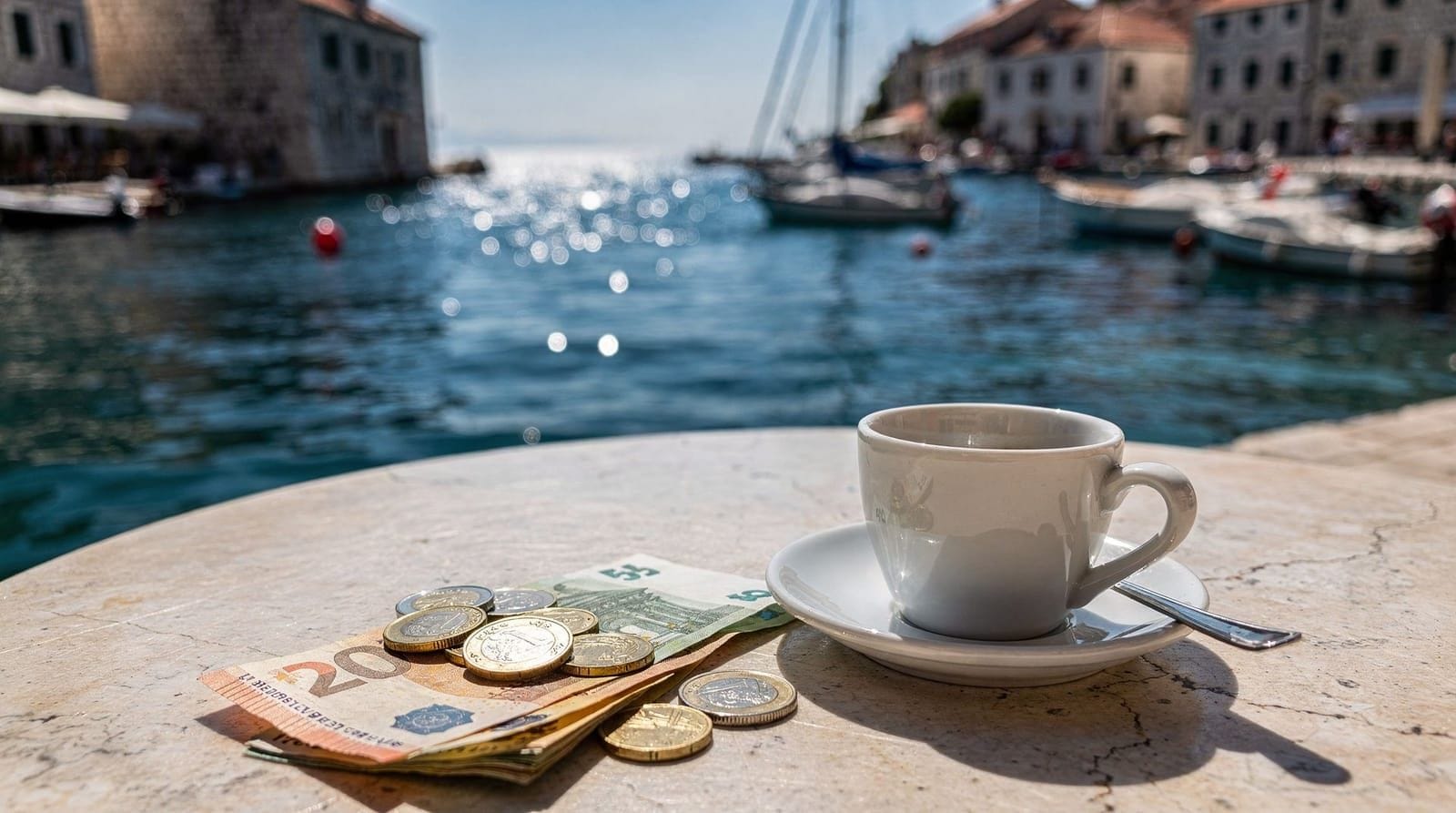
Croatia has a genuine café culture. An espresso (espresso or kava) in a local café runs €1.20–2. At a tourist seafront bar: €2–3.50. Croatian coffee culture is unhurried; ordering one coffee and sitting for an hour is perfectly normal and not frowned upon.
Meals
Bakery/street food:
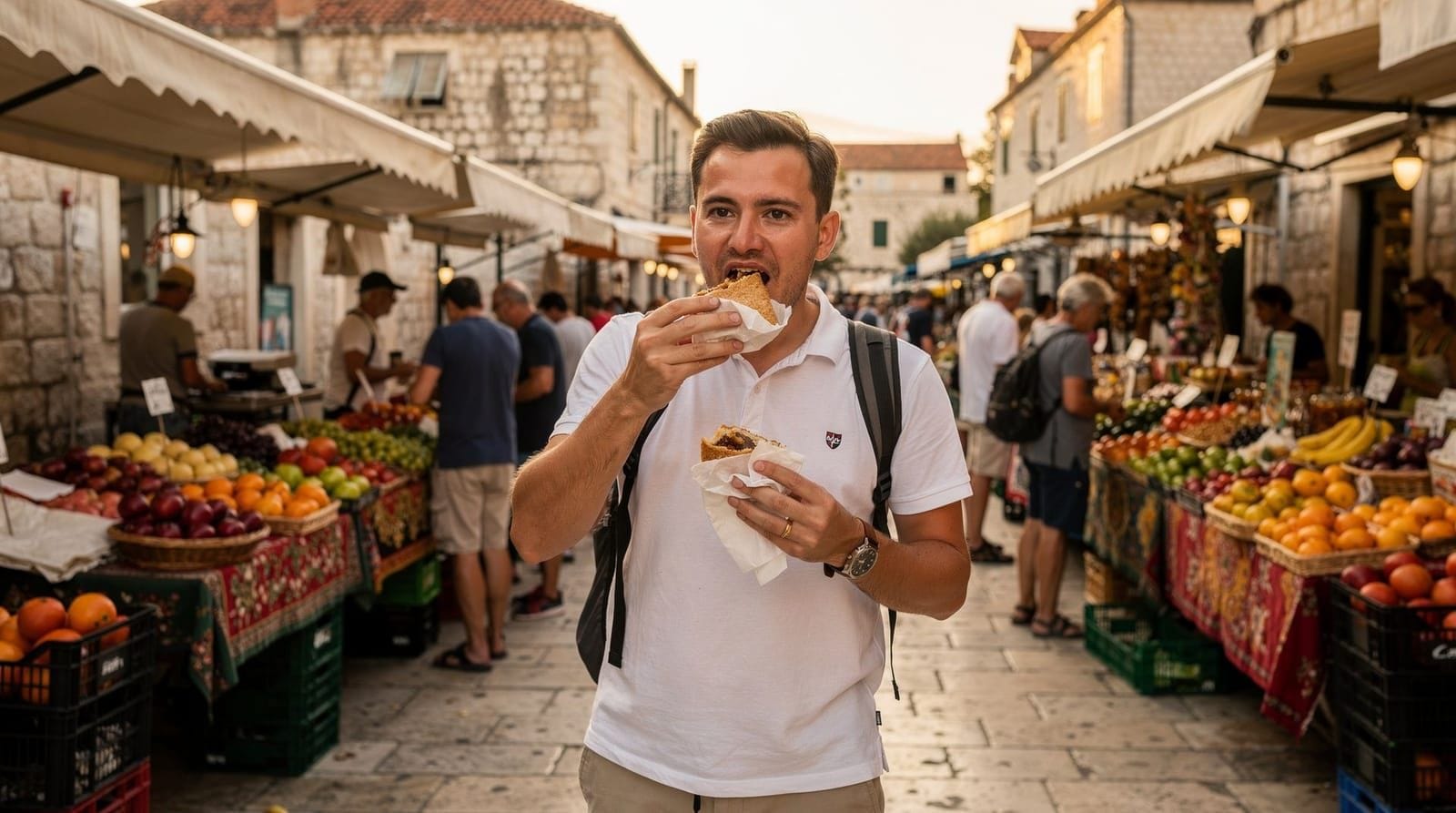
- Burek (phyllo pastry, cheese/meat/potato): €1.50–3
- Bread roll with filling: €2–4
- Pizza slice: €2–4
Konoba daily lunch menu (soup + main + dessert + drink): €10–18
Mid-range restaurant (per person, including drink): €18–35
Fine dining / tourist waterfront restaurant: €35–70+
Ice cream (sladoled): €1.50–3 per scoop
Local beer (0.5l, bar): €2.50–4 Tourist-area beer (bar, Hvar/Dubrovnik Old Town): €5–8 Bottle of local wine (restaurant): €12–25 Local wine (glass, restaurant): €3–6
Supermarket meal budget (bread, cheese, olives, tomatoes): €5–10
Fish and seafood
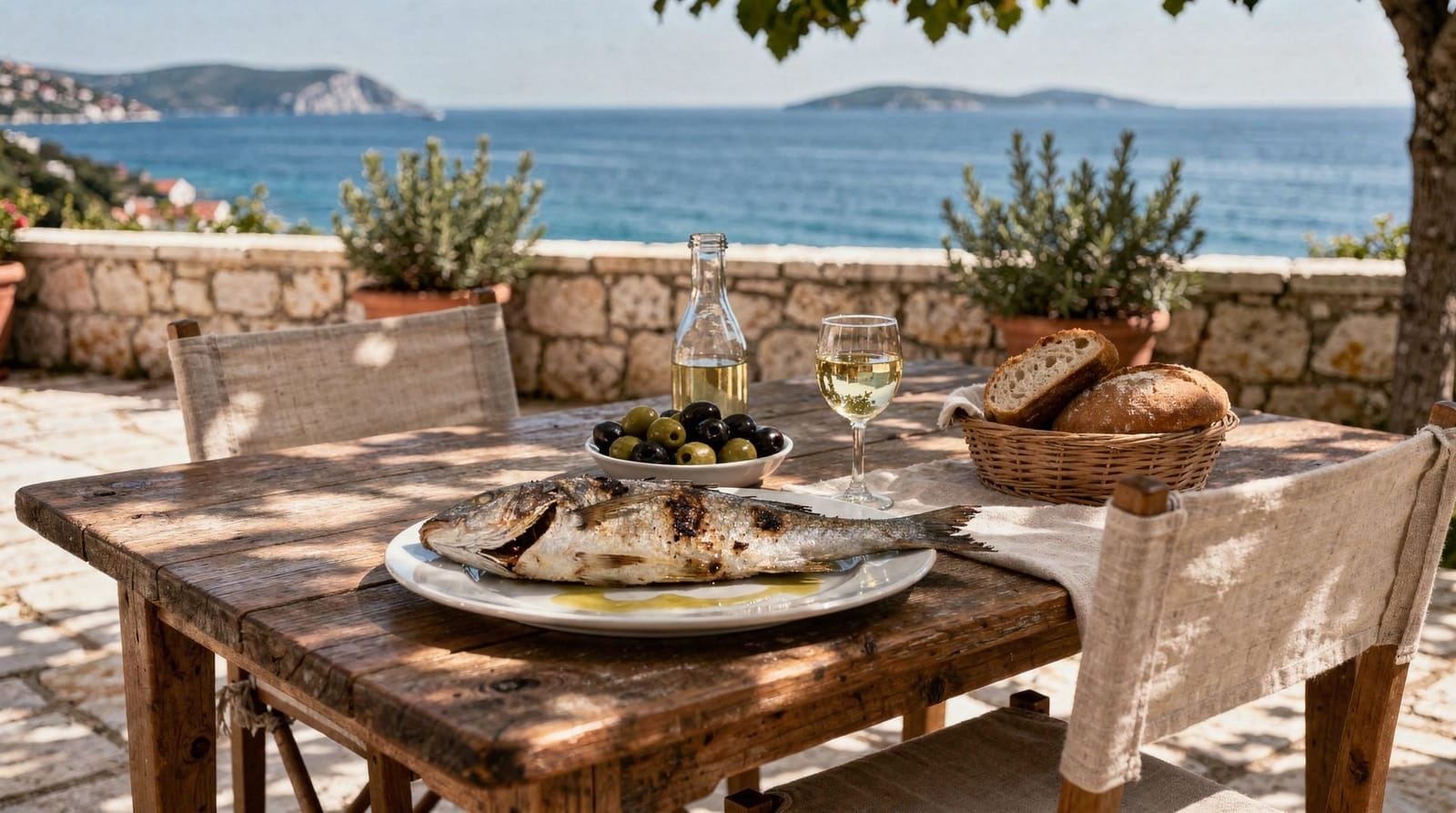
Fish is available at all quality levels. A grilled fish main (riba na žaru) at a good non-tourist konoba: €12–20. At a seafront Dubrovnik tourist restaurant: €25–40+. Fresh fish bought at a harbour market and cooked yourself (apartment kitchen): dramatically cheaper.
Transport costs
Buses:
- Zagreb–Split: €15–22 (5 hours)
- Split–Dubrovnik: €10–16 (4 hours)
- Zadar–Split: €8–12 (2 hours)
Ferries (foot passenger):
- Split–Hvar: ~€6 one way
- Split–Brač: ~€5 one way
- Split–Korčula: ~€12–15
- Dubrovnik–Elaphiti Islands: €8–12
Car ferry vehicle charge (in addition to passenger ticket):
- Split–Hvar: ~€20–30 for a standard car
- Split–Brač: ~€18–25
Car rental: €40–90 per day for a small car in shoulder season; €70–150 in peak season. Fuel ~€1.60–1.80/litre. Tolls Zagreb–Split: ~€26.
Taxi/rideshare: Reasonable within cities; airport transfers by taxi €20–40 (use bus or shuttle for €3–8 where available).
Local city transport: Tram in Zagreb: €1.30 per journey; day pass €4.
Activity and entry costs
Plitvice Lakes: €10–40 depending on season and category (higher in summer). The most expensive single entry cost most visitors encounter.
Krka National Park: €10–30 depending on season.
Dubrovnik City Walls: €35 per adult (2026 pricing; verify current rates).
Diocletian’s Palace underground chambers (Split): ~€12.
Museum of Broken Relationships (Zagreb): ~€6.
Sea kayaking (half day): €35–60 per person on a group tour.
Blue Cave + 5 islands day tour from Split: €50–80 per person on a group speedboat.
Wine tasting (Pelješac/Istria): €20–45 per person depending on wines and inclusions.
Where Croatia is good value
Compared to France or Scandinavia: Significantly cheaper. A restaurant meal that costs €40–50 in Paris or Copenhagen costs €20–25 in a good Croatian konoba.
Coffee culture: Croatian coffee is cheap and the café culture is one of the great pleasures of spending time here.
Wine: Croatian wine is good and not expensive. A bottle of Plavac Mali from Pelješac or Malvazija from Istria in a restaurant costs €12–25; local wine by the glass starts at €3.
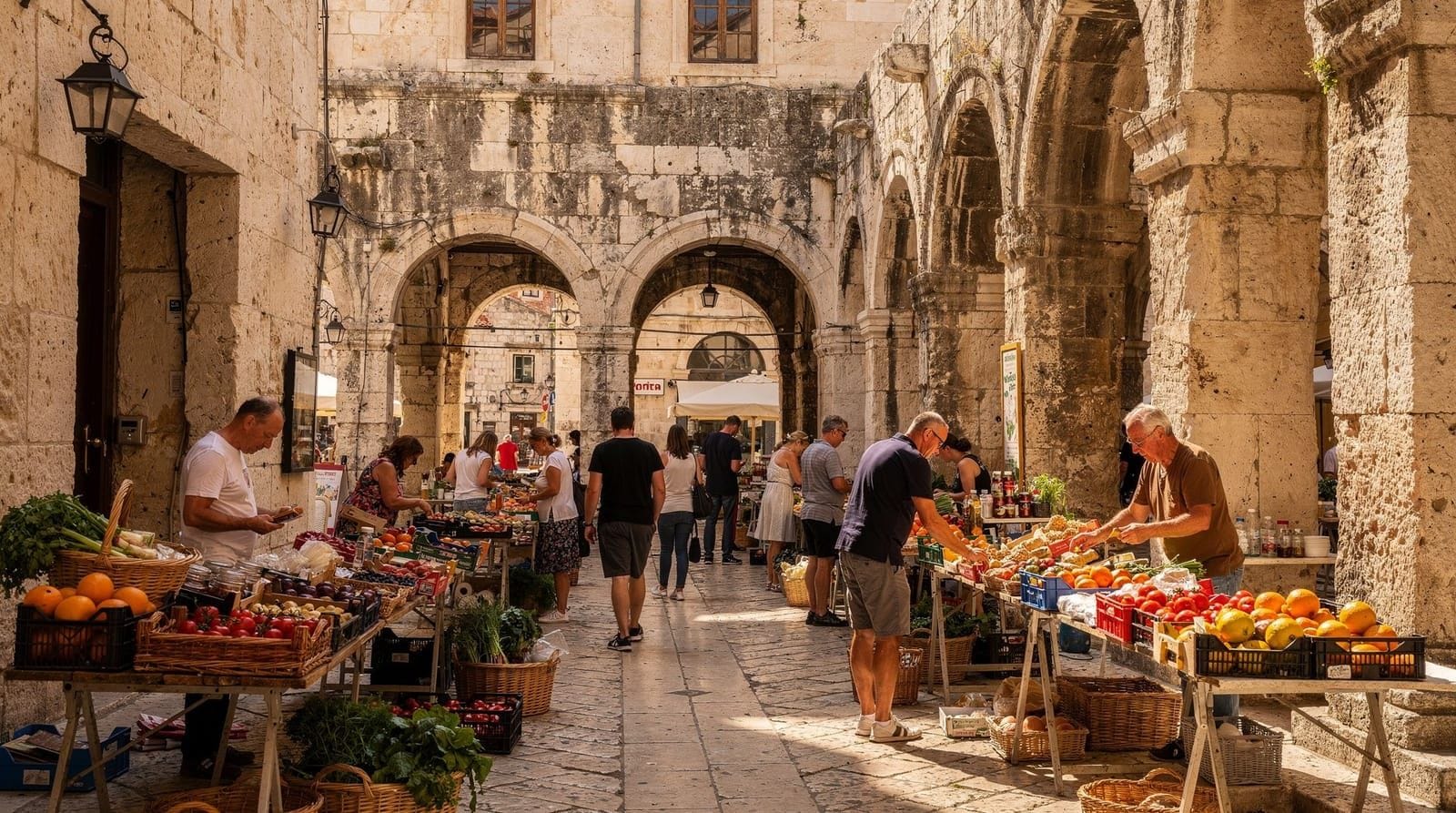
Markets: Fresh produce is cheap and good quality. Dalmatian olive oil, cheese, smoked meats and vegetables at local markets are excellent value.
Beaches: Free. No entry charge for the public beach stretches.
Where Croatia is not particularly cheap
Dubrovnik accommodation (peak season): Genuinely among the most expensive coastal accommodation in the Mediterranean.
Hvar town: The island market has priced itself at a premium. Restaurant and bar prices in Hvar town are the highest in Croatia outside Dubrovnik.
Activity mark-ups at tourist spots: Tours and rentals in high-tourist areas cost significantly more than the same services from less-visited bases.
International brands and tourist shops: Avoid; buy local.
The price-timing equation
The most important sentence in this guide: the same accommodation in Dubrovnik that costs €300 in August costs €120 in May.
Time your trip and your overall spend drops by 30–50% for accommodation. Restaurants, ferries and supermarkets do not change price by season (except some tourist-area restaurants close in winter).
For the full timing picture, see Croatia shoulder season and best time to visit Croatia.
Practical ways to cut costs without cutting the trip short
A few habits move the needle more than any single big decision:
- Base in Split or Zadar, day-trip to Dubrovnik or the islands. Accommodation is the single biggest cost driver, and both cities are well connected by bus and ferry. See day trips from Split for realistic options.
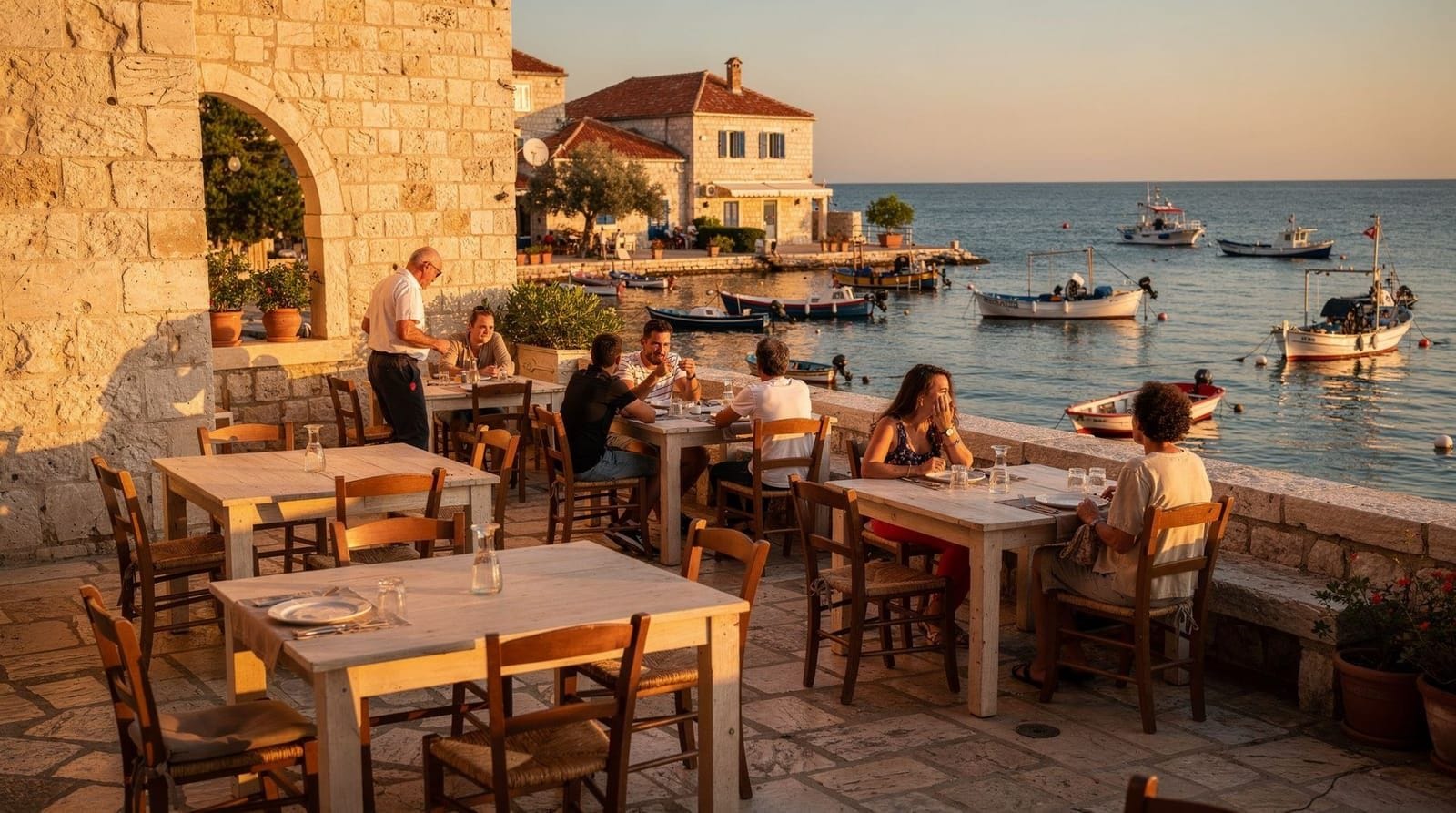
- Eat where locals eat. A konoba two streets back from the Stradun or the Riva serves the same fish for half the price of the terrace with the view.
- Self-cater breakfast and one meal a day. Markets in Split and Zadar sell excellent bread, cheese and produce; a simple lunch from a market costs a fraction of a sit-down meal.
- Buy ferry tickets in advance in peak season, not to save money directly, but to avoid being forced onto a pricier last-minute option when the cheap sailing sells out.
- Compare Split vs Dubrovnik as a base before booking — Split is consistently 20–35% cheaper for equivalent accommodation and puts you closer to the islands.
Is Croatia still worth it at these prices?
Most travellers come away feeling the spend was justified — the coastline, the old towns and the islands deliver an experience that genuinely competes with pricier parts of the Mediterranean. The is Croatia worth visiting guide weighs this question directly, beyond the cost breakdown here. The honest takeaway on money specifically: Croatia punishes peak-season, Dubrovnik-only, tourist-terrace trips, and rewards anyone willing to shift timing, base city or dining habits even slightly.
Frequently asked questions about Is Croatia expensive?
Is Croatia more expensive than Greece?
Comparable, with variation by destination. Dubrovnik is generally more expensive than most Greek destinations; Split and Zadar are comparable to mid-range Greek islands. For a fuller comparison, see our Croatia vs Greece guide.How expensive is Croatia compared to Italy?
Croatia is cheaper than most of Italy for equivalent experiences. Comparable to southern Italy or Sicily in the mid-range tier; Dubrovnik and Hvar approach northern Italian prices at peak season.Is Dubrovnik the most expensive city in Croatia?
Yes, by a meaningful margin. Accommodation in Dubrovnik's Old Town in July–August is the most expensive in Croatia. Split, Zadar and Šibenik are 20–35% cheaper for equivalent accommodation.Is eating out expensive in Croatia?
Depends entirely where you eat. A tourist restaurant on Dubrovnik's Stradun charges €20–30 for a main course. A local konoba (traditional tavern) 10 minutes' walk away charges €10–16 for a full daily menu. Markets, bakeries and self-catering are very affordable.Is Croatia cheaper than Spain?
Generally comparable, with variation by destination. Croatia's coastal tourist hotspots match or slightly exceed popular Spanish beach resort prices in peak season. Barcelona and Madrid are more expensive cities than Zagreb. Budget travel costs are similar.How much does a beer cost in Croatia?
A beer in a local bar or konoba runs €2.50–4. In a tourist seafront bar or club in Hvar or Dubrovnik: €5–8. In a supermarket: €1–2.Are ferries in Croatia expensive?
Foot-passenger ferry tickets are affordable (Split–Hvar foot passenger: €6 one way). Car ferries add a vehicle charge (€25–35 for a standard car on the Split–Hvar route in peak season). Speedboat and private boat tours are a significant premium.
Top experiences
Best-rated activities across GetYourGuide and Viator.

Mostar and Herzegovina Tour with Kravica Waterfall from Split & Trogir
- Viator

3Hour ALL-INCLUSIVE Sunset Dolphin Watching from Medulin onSandra
- Viator

Dolphin Watching & Sunset Boat Tour With Drinks & optional Dinner
- Viator

Fantastic DOLPHIN & SUNSET TOUR with dinner ( Pula-NP BRIJUNI )
- Viator

Medulin :All-Inclusive Pirate Boat Dolphin Watching Sunset Cruise
- Viator

Mostar & Kravice waterfalls full-day guided tour from Split
- Viator