First time in Croatia: what to know before you go
Split: Group walking tour of old city and Diocletian's Palace
What should I know before visiting Croatia for the first time?
Croatia is beautiful but can feel overwhelming in high season — parking is a nightmare in Dubrovnik, crowds on Hvar peak in July and August, and prices have risen sharply. Base yourself in Split for flexibility, book ferries and popular accommodation well ahead, and aim for late May–June or September if you can shift your dates.
Croatia is one of those countries that looks simple on a travel poster and reveals layers of complexity once you start planning. The coast is beautiful; that part is accurate. But first-time visitors regularly underestimate distances, overestimate what fits in a week, and arrive in Dubrovnik in August unprepared for what confronts them. This guide is written to give you a realistic picture — not to put you off, but to help you plan a trip you actually enjoy rather than one you merely survive.
| Best base | Split — ferry hub, more affordable, less crowded than Dubrovnik |
| Minimum time | 7–10 days for one region done properly |
| Book ahead | Dubrovnik/Hvar stays, car ferries, popular tours (6–8 weeks peak) |
| Daily budget | around €85–150 per person, mid-range, peak season |
| Biggest first-timer error | trying to fit Dalmatia and Istria into under two weeks |
What Croatia is actually like
The first thing to understand is that Croatia is long and narrow. The coast stretches roughly 600 km from Istria in the northwest to Dubrovnik in the south, but those 600 km take 5–6 hours to drive on a good day in shoulder season, and considerably longer in August when the coastal road becomes a slow procession of rental cars, campervans and buses. The country is not small.
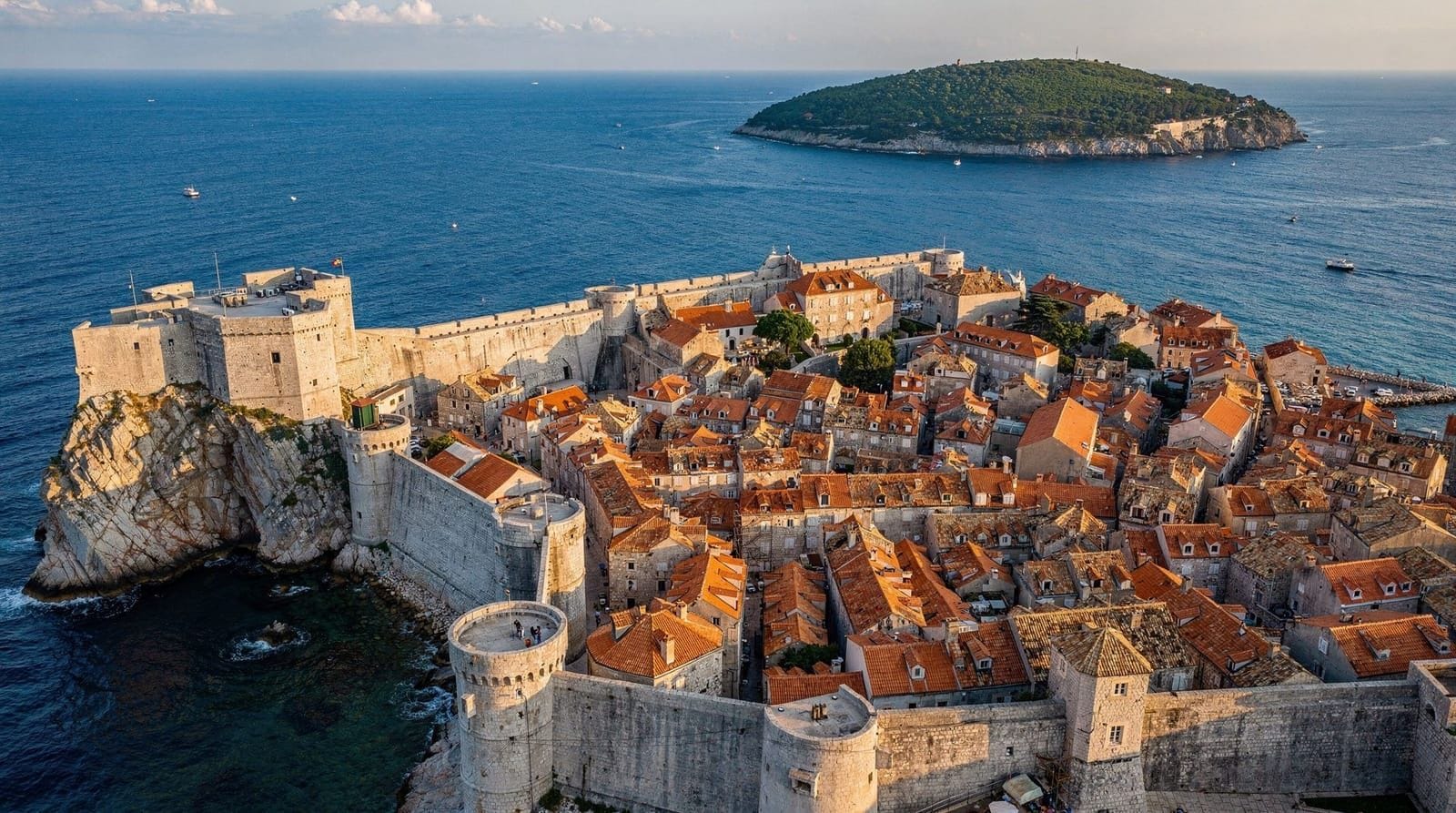
The second thing: the Adriatic coast is genuinely as beautiful as the photographs suggest, but much of it is densely visited in peak season. Dubrovnik received over 1.5 million visitors in recent years — for a city whose Old Town holds perhaps 1,500 residents. That is not a comfortable ratio in July. The walls, the alleyways and the Stradun are all extraordinary, but visiting them at 11:00 on a Tuesday in August is a different experience from visiting at 08:30 or 19:00.
The third thing: prices have risen sharply. Croatia joined the euro zone in January 2023 and has seen consistent inflation in tourist areas since. A mid-range dinner for two with wine in Dubrovnik now costs €70–100 without much effort. Hvar marina restaurants can be higher. The interior, smaller coastal towns and Zagreb remain meaningfully cheaper.
The five mistakes most first-timers make
1. Trying to see too much in too little time
The classic itinerary mistake: Dubrovnik, then ferry to Hvar, then Split, then Plitvice, then maybe Zagreb, all in eight days. This is technically possible in the sense that you can physically move between those places in eight days. What you will not do is rest, adjust to the heat, slow down at a konoba, or actually understand any of the places you have passed through. Pick fewer places and give yourself more time in each. The how many days in Croatia guide has specific minimum-day recommendations per destination.
2. Underestimating ferry logistics
Ferries do not run on the same timetable year-round. In January, some island routes operate twice a day. In August they run far more frequently but the car ferry spots fill up days ahead. Walk-on passengers rarely miss ferries, but if you are driving a rental car to an island, book ahead. Also note: not all islands accept rental cars — check your rental agreement before booking a car ferry to Hvar (most operators prohibit taking their vehicles to islands on ferries, and Hvar’s rental fleet is separate). The ferries guide covers all of this.
3. Driving into Dubrovnik’s Old Town
There is no parking inside the Old Town. There is very limited paid parking outside it. In summer, the queues for the Pile Gate car parks back up for kilometres. If you are staying in or near the Old Town, arrange parking with your accommodation in advance. Many visitors end up parking at Gruž harbour or the cable car car park and walking or taking a bus.
4. Arriving in Dubrovnik when cruise ships do
Between approximately 09:00 and 15:00, multiple large cruise ships disgorge thousands of visitors into a walled city that is perhaps 500 metres long. The Stradun becomes genuinely uncomfortable; photo spots are queued; the walls are shoulder-to-shoulder. This is not a small inconvenience — it fundamentally changes the experience. Either be there before 09:00, or build a day around it: take a boat excursion to the Elaphiti Islands during peak hours, then return to the Old Town in the early evening.
5. Booking the cheapest hotel without checking location carefully
In Split and Dubrovnik especially, accommodation described as “city centre” or “near the old town” can mean a 20-minute walk with luggage, uphill, in 35°C heat. Check exact locations on a map. In Dubrovnik, accommodation inside the Old Town itself is atmospheric but means hauling bags up steep stone steps. Outside but close (Ploče, Lapad, Babin Kuk) can be more practical. In Split, accommodation within or directly beside Diocletian’s Palace is genuinely central and worthwhile if the budget allows.
The best bases for first-time visitors
Split — the most practical first base
Split is Croatia’s second city and the functional heart of the Dalmatian coast. Diocletian’s Palace — where around 3,000 people live inside a 4th-century Roman imperial retirement complex — is one of the world’s most extraordinary inhabited archaeological sites, and exploring it takes a full day.
More practically, Split is the ferry hub: boats to Hvar, Brač, Vis, Korčula and numerous smaller islands all depart from here. The city itself has excellent restaurants, a good market, a proper beach (Bačvice) and a range of accommodation from hostels to design hotels. It does not have Dubrovnik’s concentration of tourist numbers and has a more lived-in feel.
A guided walking tour of Diocletian’s Palace in Split is worth doing on arrival day — it unpacks what you are actually looking at and provides context that makes independent exploration of the palace far more rewarding.
Dubrovnik — unmissable but plan carefully
Dubrovnik is not optional on a first trip — the Old Town is among the finest preserved medieval cities in Europe and the walls are a genuinely spectacular walk. But it works better as a 2–3 day destination than an ongoing base, unless you specifically want to day-trip into Montenegro or Bosnia-Herzegovina.
A walking tour of Dubrovnik’s Old Town sets up your visit well — the history of the Ragusan Republic is more interesting than most visitors realise.
Istria — the alternative for a different Croatia
If you want to avoid the peak Dalmatian crowds, Istria is the counter-programme. Rovinj is one of the most photogenic towns in Croatia; Pula has a remarkably well-preserved Roman amphitheatre; Motovun sits on a hill above truffle country. The food is excellent and the pace is slower. Istria pairs well with a Ljubljana day trip into Slovenia.
First-timers often assume Istria is a lesser alternative to Dalmatia rather than a genuinely different region worth its own trip. It isn’t lesser — it’s calmer, greener and built around food and wine rather than beaches and islands. If your first Croatia trip is really about escaping crowds and slowing down, Istria deserves serious consideration over the default Dubrovnik-Split-Hvar circuit, even though it’s less photographed on social media.
Zagreb — worth more than a transit stop
Many first-timers treat Zagreb purely as an airport, flying in and heading straight to the coast. That’s a reasonable choice if your time is genuinely limited, but the capital rewards even a single day: the Upper Town’s cobbled streets, the Dolac market, and a coffee-and-people-watching culture that rivals Vienna’s. If your flights route through Zagreb anyway, a one- or two-night stopover at the start or end of the trip costs little in logistics and adds a genuinely different Croatian city to the itinerary.
What to prioritise if your time is short
5–6 days: Choose one region. Dalmatia: Split (2 nights) + one island (Hvar or Brač, 2 nights) + Dubrovnik (2 nights). Do not attempt the national parks as well — you will not enjoy any of it properly. Istria: Rovinj (2 nights) + Pula (1 night) + Ljubljana or Zagreb (2 nights) works as a clean circuit.
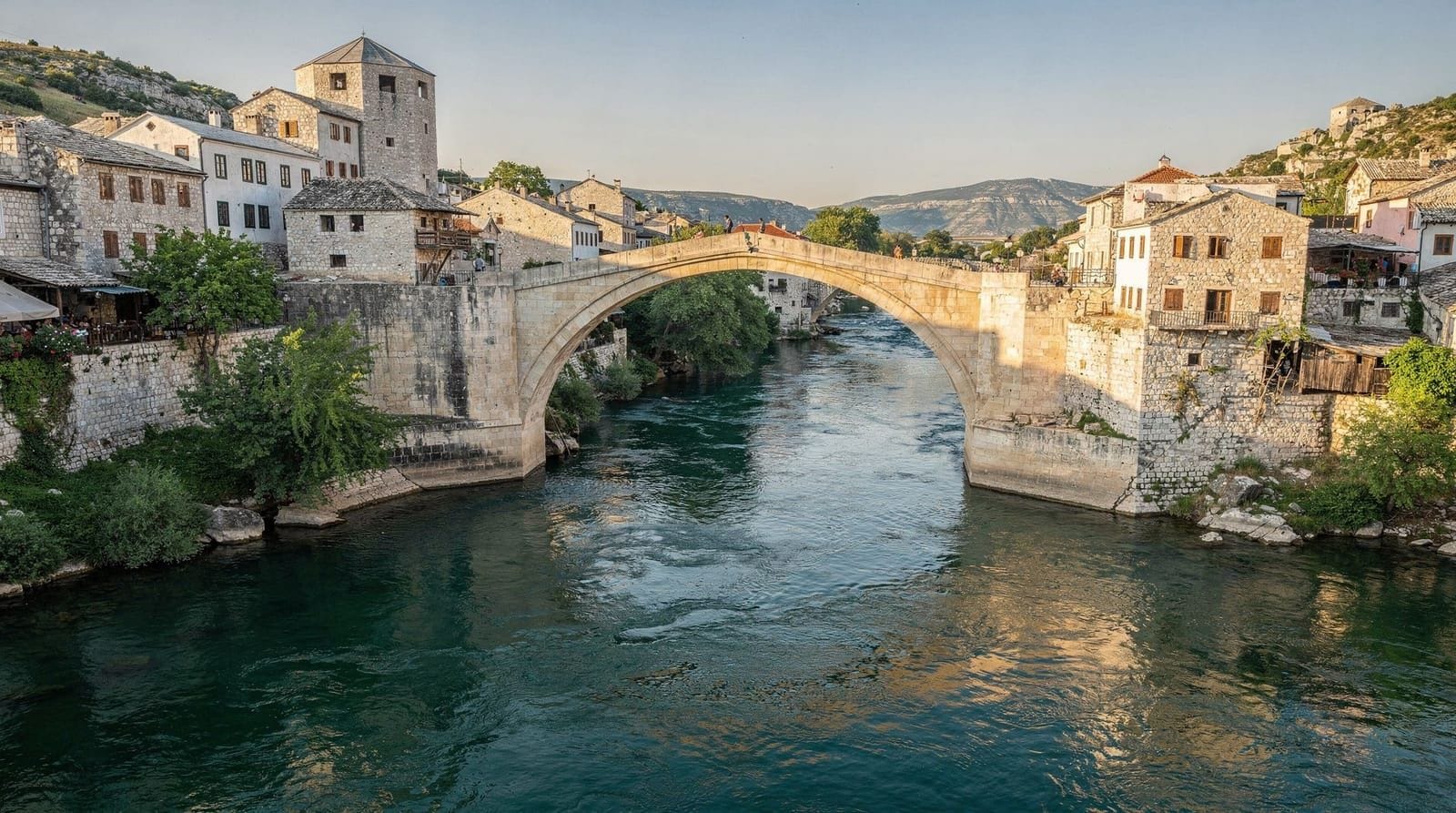
7–10 days: See the how many days in Croatia guide for specific day-by-day breakdowns. At 10 days, you can comfortably do Split + islands + Dubrovnik + a day trip to Mostar or Kotor.
What to skip: The Krka vs Plitvice question comes up constantly. Plitvice Lakes are the more dramatic park, but they are inland and take a full day from the coast. Krka National Park is closer to Split, smaller, and (at some areas) allows swimming near the waterfalls. If you are based in Split and have one day for a park, Krka is the more practical choice.
The honest “skip” for 2026
Cruise-ship-hour Dubrovnik. There is no reason to be walking the Stradun between 10:00 and 14:00 in July and August. This is the single most avoidable negative experience in Croatian tourism. Sleep in; have a long breakfast; go to the beach; take a boat; return at 17:00 when the ships are gone and the light is extraordinary. The Old Town genuinely transforms.
What Croatia actually costs
Croatia is no longer a budget destination, and first-timers who have not checked prices recently are often surprised. Since adopting the euro in January 2023, prices in tourist areas have risen visibly. A mid-range trip — private room or 3-star hotel, sit-down meals at local restaurants, one or two tours — now costs €85–150 per person per day in peak season. Dubrovnik and Hvar in July are at the top of that range and sometimes beyond it.
The sharpest shock is accommodation. A private room in Dubrovnik Old Town in August runs €130–180 per night for something decent. A similar room in Šibenik or Omiš costs €60–90. The destination, not just the category, drives the cost.
Food is more forgiving if you eat well. One step back from any waterfront, prices drop 30–40% and quality invariably improves. The standard guidance — find the restaurant with a handwritten specials board and a table of locals — holds true in Croatia more than almost anywhere else in the Mediterranean.
For a full line-by-line breakdown of what to budget, the Croatia trip cost guide covers accommodation, food, ferries and activities with 2026 figures.
The right booking order
Booking Croatia in the right sequence prevents the most common frustration: arriving to discover that the accommodation you wanted is full, the ferry car spot is gone or the Blue Cave tour is sold out.
Step 1: Book flights first. Obvious, but the flight choice shapes everything else. If you are flying into Split and out of Dubrovnik (the most practical routing for Dalmatia), lock that open-jaw booking in early — these are the seats that sell out fastest in summer. If you must do a return, Split airport (SPU) is the better choice for flexibility.
Step 2: Book Dubrovnik and Hvar accommodation immediately after flights. These two destinations have the tightest availability in summer. Hvar in particular has a limited accommodation stock for a destination that receives enormous demand in July and August. Booking 6–8 weeks ahead in peak season, and 3–4 weeks ahead in June and September, is not excessive — it reflects actual market conditions. Everywhere else on the Dalmatian coast is more forgiving.
Step 3: Book car ferry slots if you are bringing a rental car or your own vehicle to an island. Car ferry bookings for the Split–Stari Grad (Hvar) route fill up in peak season, sometimes days ahead. Note that many rental companies prohibit taking vehicles to islands — read your rental agreement before booking a car ferry. Walk-on passenger spaces are almost never an issue and can be decided on the day.
Step 4: Book popular guided tours. Plitvice Lakes day trips from Split or Zadar, the Blue Cave and five-island tours from Split, and the Mostar day trips from Dubrovnik all sell out in summer. Book 2–3 weeks ahead in July and August. In shoulder season, a few days ahead is usually sufficient.
Step 5: Book higher-end restaurants. A handful of the most sought-after restaurants in Dubrovnik and Split book out weeks ahead in peak season. If you have a specific restaurant on your list, check and book. Everything else can be decided on arrival.
Everything else — walk-on ferry tickets, local restaurant choices, day excursions, beaches — needs no advance booking. The spontaneity of arrival-day decisions is one of the pleasures of travelling Croatia. The planning burden is concentrated in a handful of high-demand points.
For a full planning sequence, the Croatia itinerary planning guide walks through the process step by step.
Croatian hospitality and etiquette
Croatia is an easy country for English-speaking visitors — English is widely spoken in tourist areas, and patience with non-Croatian speakers is generally high. A few basics that help you connect better and avoid inadvertent offence.
Language basics worth knowing
Learning even a handful of words opens doors. Croatians notice and appreciate the effort, even when they switch immediately to English in response.
- Bok (pronounced as written) — hello, hi, bye. Informal and universal.
- Dobar dan — good day. More formal, used with older people or in shops.
- Molim — please (also means “you’re welcome”).
- Hvala (HVAH-lah) — thank you. One of the most useful words you will use.
- Živjeli (ZHIV-yeh-lee) — cheers. Essential at any table with wine or beer. Say it before the first sip and make eye contact — skipping the eye contact is considered bad luck in Croatia, and locals will comment on it.
- Koliko košta? — how much does it cost?
- Gdje je…? — where is…?
You will not be expected to hold a conversation in Croatian, but using hvala and bok consistently signals respect and is universally well received.
Dress codes in churches and monasteries
Croatia takes church etiquette seriously. Shoulders and knees should be covered when entering any church, cathedral or monastery — this applies to men and women. In Dubrovnik’s Franciscan Monastery and Split’s Cathedral of Saint Domnius, you will be turned away in vest tops and shorts without a cover-up. Carry a light scarf or shirt in your bag — it takes up no space and prevents an embarrassing moment at the door.
Konoba dining culture
The konoba is the social heart of coastal Croatian life. These are small, typically family-run restaurants — often in someone’s converted outbuilding or terrace — serving local food at honest prices. The culture around them is unhurried and communal. A few notes:
Meals at a konoba are slow by design. Dishes arrive when they are ready; pace is dictated by the kitchen, not the customer. This is not poor service — it is a different relationship with time. A two-hour lunch at a konoba is entirely normal and something to lean into rather than resist.
Fish is almost always priced by weight. Always ask the weight and per-kilo price before ordering; a 700g sea bass at €22/kg is €15.40, but a 1.1 kg grilled fish at the same rate is €24.20. The menu price listed is per kilo, not per fish, and portions vary.
Raki (rakija) — a fruit brandy — often arrives unbidden at the end of a meal as a complimentary gesture from the host. Drinking it is a courtesy. Refusing it is fine but explain that you do not drink spirits; the gesture is hospitality, not pressure.
The Stradun restaurant row in Dubrovnik, the marina restaurants in Hvar, and any restaurant with laminated photos on the menu are not konobas — they are tourist restaurants at tourist prices. Two streets away from any of those waterfront rows, better food at lower prices is almost always available.
Money, connectivity and small practicalities
Croatia uses the euro (€) — the kuna was retired in January 2023, so no currency conversion headaches remain. Cards are accepted almost everywhere, including small konobas and market stalls, but carry €20–40 in cash for the rare exception, parking machines and small islands where card readers can be unreliable. Tipping is appreciated but not obligatory: rounding up or adding 10% for good service in restaurants is standard; taxi drivers and tour guides welcome a similar gesture but won’t expect it. See tipping in Croatia for the full picture by service type.
An eSIM or local SIM is worth sorting before or on arrival — Croatian mobile coverage is excellent along the coast and on all the main islands, patchier only in remote hiking areas. The full options, including EU roaming rules for visitors from within the bloc, are covered in the Croatia eSIM guide. Public wifi in cafés and accommodation is reliable in tourist areas, so this is a convenience rather than a necessity.
Common first-timer mix-ups worth knowing about
A few things catch first-time visitors off guard beyond the five mistakes above: assuming Croatia and Montenegro (or Bosnia and Herzegovina) share a currency or border-free travel — they do not, and a day trip to Kotor or Mostar means bringing a passport and expecting a short border check; the entry requirements guide covers what EU, UK and other passport holders need. If you’re planning to rent a car, note that cross-border trips to Bosnia or Montenegro usually need advance notice to the rental company for insurance reasons. Assuming all beaches are sandy — most of the Croatian coast is pebble or rock, which is worth knowing before you pack (or skip) beach shoes; see pebble vs sand beaches for what to expect. And assuming taxis use meters everywhere — in smaller towns, agree the fare before getting in, or use a ride-hailing app where available.
Frequently asked questions about First time in Croatia
Is Croatia good for first-time visitors?
Yes, Croatia is well set up for independent travellers. English is widely spoken, the ferry network is reliable and most sites are easy to visit without a tour. The main challenges are managing peak-season crowds and understanding that distances are longer than they look on a map.Is Split or Dubrovnik better for a first visit?
Split is generally the better base for first-timers: it has more accommodation options at different price points, better ferry connections to multiple islands, and is less crowded than Dubrovnik. Dubrovnik is unmissable but works better as a destination than a base.Do I need to book things in advance in Croatia?
In July and August, yes — book accommodation, car ferries and popular guided tours several weeks ahead. In shoulder season (June, September) you can be more spontaneous, though accommodation in Hvar and Dubrovnik fills quickly regardless of time of year.How do I avoid the cruise ship crowds in Dubrovnik?
Be in the Old Town before 9:00 or after 18:00. Cruise ships dock mid-morning and passengers clear out by late afternoon. The walls are best visited at opening (8:00) or in the last two hours before closing.Is Croatia expensive for first-timers?
More so than it was five years ago. Budget for €85–150 per person per day for a comfortable mid-range trip in peak season — less on the coast outside Dubrovnik and Hvar, more if you stay in old-town boutique hotels. See the full breakdown in our Croatia trip cost guide.What should I pack for Croatia?
Light cotton clothes for the coast, a layer for evenings, solid walking shoes (cobblestones in every old town), water shoes for rocky shore swimming, high-SPF sun cream, a reusable water bottle and a small day pack. Tap water is drinkable everywhere.Can I visit both Dubrovnik and Istria in one trip?
Only comfortably with 12+ days and a car. Dubrovnik to Rovinj is roughly 5–6 hours of driving. Trying to combine both in under a week means spending most of your time on motorways. Pick one region and explore it properly.
Top experiences
Bookable activities with verified prices and instant confirmation on GetYourGuide.
Top experiences
Best-rated activities across GetYourGuide and Viator.

From Zadar: Plitvice Lakes with Boat Ride & Zadar Old town tour
- Viator

Mostar and Herzegovina Tour with Kravica Waterfall from Split & Trogir
- Viator

3Hour ALL-INCLUSIVE Sunset Dolphin Watching from Medulin onSandra
- Viator

Dolphin Watching & Sunset Boat Tour With Drinks & optional Dinner
- Viator

Fantastic DOLPHIN & SUNSET TOUR with dinner ( Pula-NP BRIJUNI )
- Viator

Medulin :All-Inclusive Pirate Boat Dolphin Watching Sunset Cruise
- Viator