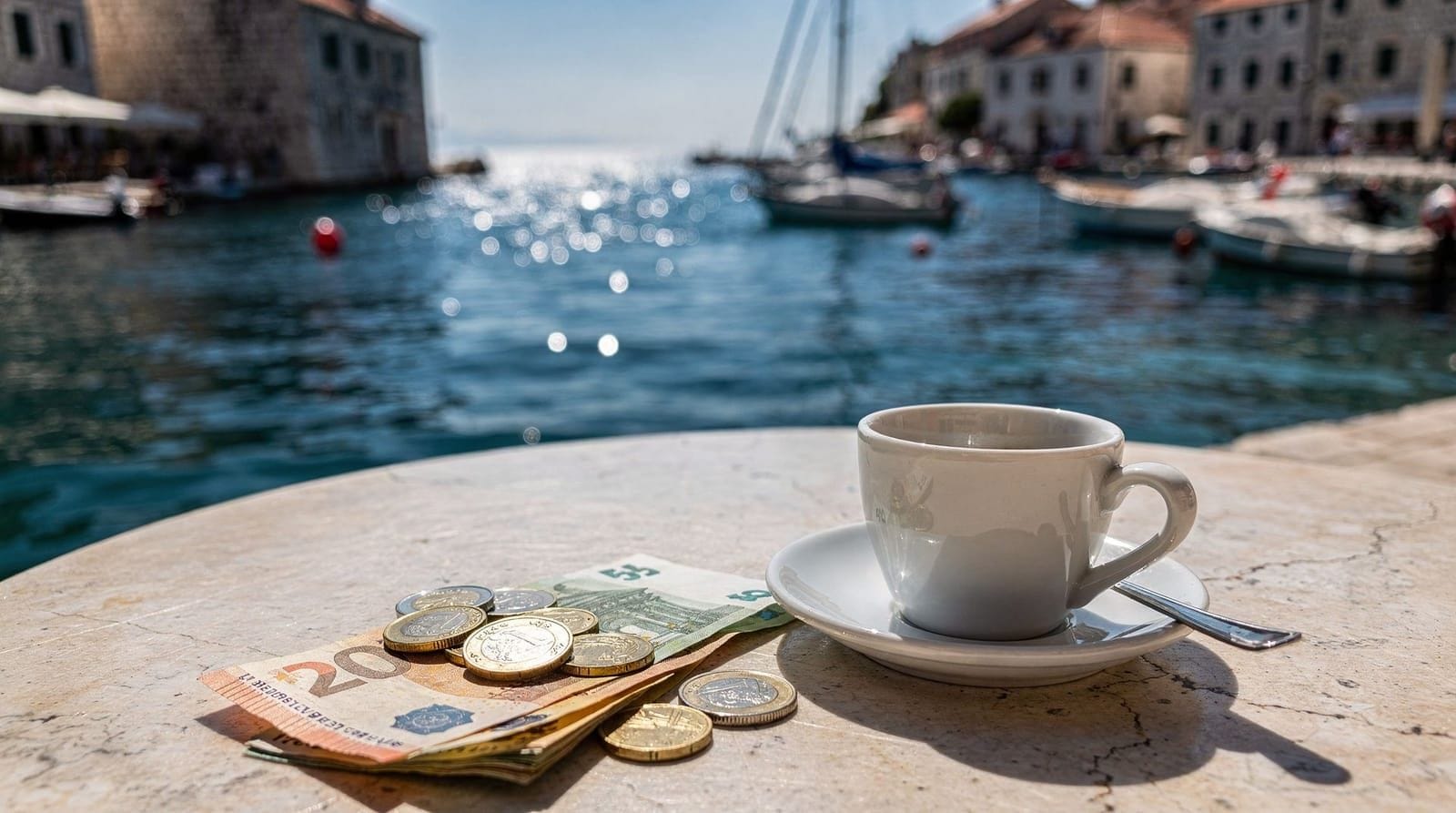
Croatia on a budget
Can you travel Croatia on a budget?
Yes — on around €45–65 per person per day you can do Croatia well: a hostel or shared apartment, konoba meals, bus travel and free beaches. The main variables are timing (shoulder season saves 30–40% on accommodation) and destination choices (Zadar and Šibenik cost less than Dubrovnik and Hvar).
| Backpacker daily budget | around €45–65/person |
| Cheapest months | April, October, February–March |
| Cheapest cities | Zadar, Šibenik, Zagreb |
| Avoid on a budget | Dubrovnik/Hvar in July–August |
| Cheap eat | konoba daily menu, around €10–16 |
| Cheap transport | intercity bus over car rental |
The honest budget picture
Croatia has a reputation for being expensive — and in July–August in Dubrovnik or Hvar, it can be. But it is far from the most expensive European coastal destination, and with a few strategic choices, it is entirely possible to have a great Croatian trip on a genuine budget.
The factors that most determine your total spend are: when you go, where you go, and how you eat. Get those right and Croatia is affordable. Ignore them and you will overspend.
Budget frameworks
| Style | Daily budget (per person) | What it includes |
|---|---|---|
| Backpacker | €45–65 | Hostel dorm (€15–35), konoba lunch, self-catering or cheap meals, bus/ferry travel, occasional entry fee |
| Budget independent | €65–100 | Private room in guesthouse or apartment (€30–60), one proper restaurant meal daily, ferries, some tours |
| Mid-range | €85–150 | Apartment or 3★ hotel, two meals out, island ferries, selected activities |
| Comfort | €150–250+ | Good hotels, fine dining, tours, flexibility |
The remainder of this guide focuses on the backpacker and budget independent range.
Timing: the single biggest saving
Accommodation in Dubrovnik in August: €200–400+ for a double room. The same property in May or October: €90–150. That saving — applied across a week — funds the flights.
The optimal budget windows:
- October (first two weeks): Coast still viable, sea still 20–21°C, prices 30–50% below August
- May: Everything open, 20–30% below peak, Plitvice at maximum waterfall
- April: Cheapest viable coastal month — cool, some businesses just opening, but available
For full seasonal context, see best time to visit Croatia and Croatia shoulder season.
Cheap destinations in Croatia
Zadar is Croatia’s most underrated coastal city — a real working town with a beautiful old city on a peninsula, a compact UNESCO-area, and prices 20–30% below Split and Dubrovnik. Excellent ferry connections to the northern Dalmatian islands. Street food, markets and affordable restaurants.
Šibenik sits between Split and Zadar and has a UNESCO-listed cathedral and old town without the tourist premium of its more famous neighbours.
Split is substantially cheaper than Dubrovnik — the same quality of accommodation costs 20–30% less. Diocletian’s Palace is free to enter (the archaeological chambers have a ticket; the living street and alleyways are free).
Rijeka and the Kvarner — Croatia’s third city is genuinely affordable and largely off the tourist trail. Good transport connections to the Kvarner islands.
Zagreb — see below for why the capital is a budget-friendly destination.
Where NOT to budget-travel: Dubrovnik and Hvar in July–August. These are the most expensive spots at the most expensive time. If your budget is tight, avoid them in peak season or visit for a day trip rather than basing yourself there.
Korčula and Vis are worth a specific mention as mid-tier value islands — cheaper than Hvar for accommodation and dining, with a similarly beautiful old town (Korčula) or a genuinely undeveloped feel (Vis), without the budget compromise of skipping the islands entirely.
Budget accommodation
Hostels: Croatia has a good hostel network, particularly in Split, Dubrovnik, Zagreb, Zadar and the main islands. Expect €15–30 for a dorm bed in a good hostel; most include a kitchen for self-catering.
Private rooms in family guesthouses (sobe): The traditional Croatian accommodation style — a room in a family home. Often excellent value at €25–50 per person outside peak season; look for “sobe” signs in smaller towns and on the islands. Book direct where possible; booking platforms add commission.
Apartments: For two or more people, a self-catering apartment can be extremely cost-effective — particularly outside the summer peak. A one-bedroom apartment that costs €150/night in August may be available for €60–80 in May.
Camping: A solid network of campsites along the coast and on many islands, typically €10–15 per person per night for tent camping. The Dalmatian coast campsites are generally good quality.
Budget-avoid: Dubrovnik Old Town hotels (some of the most expensive in Croatia). Book in the suburbs and walk in, or visit as a day trip from Split.
Cheap eating in Croatia
The gap between expensive and cheap eating in Croatia is larger than in many western European countries. A seafront tourist restaurant in Dubrovnik’s Old Town might charge €25–30 for a main course. A local konoba two streets back might offer a three-course daily menu for €12.
The konoba
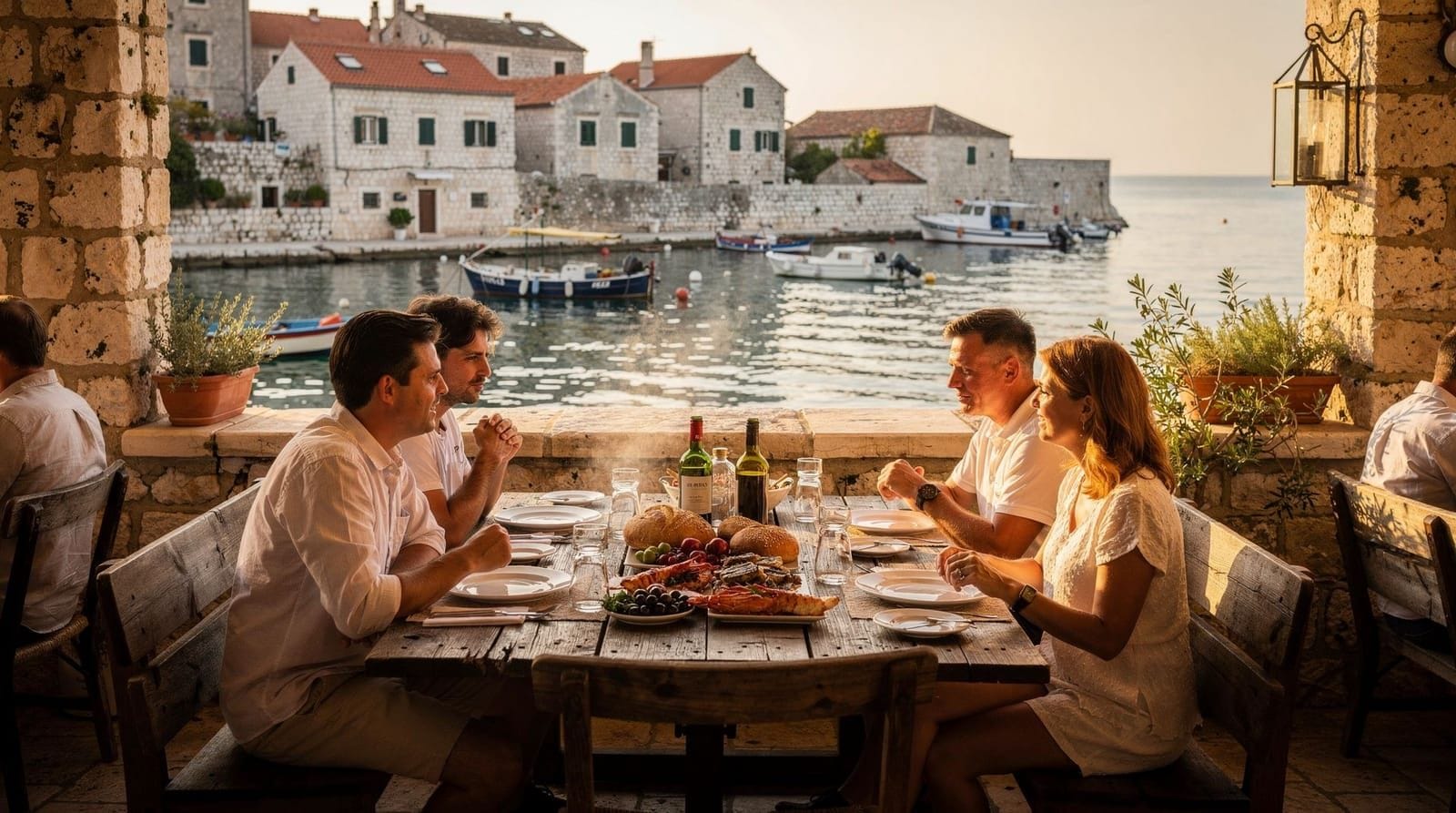
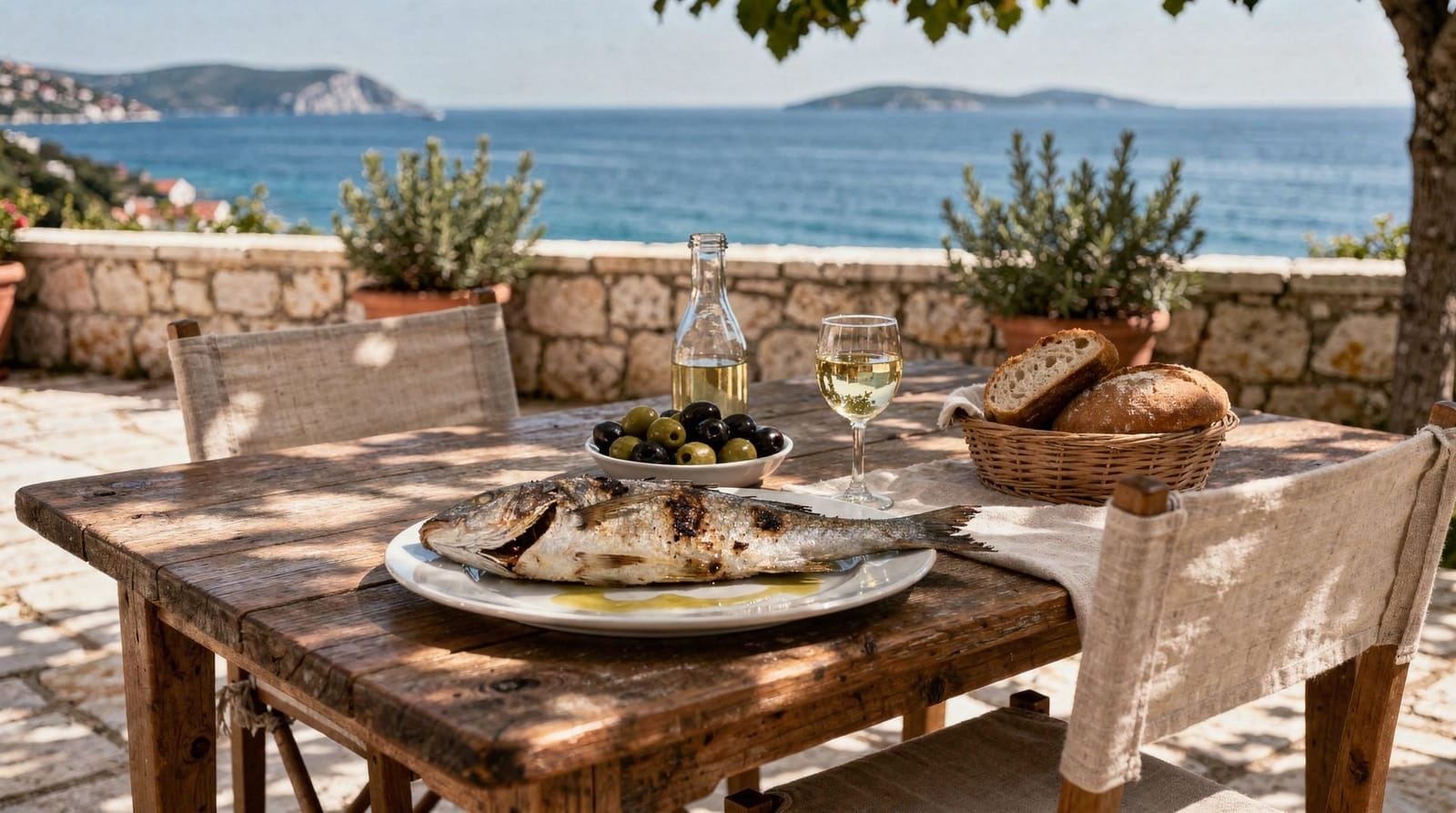
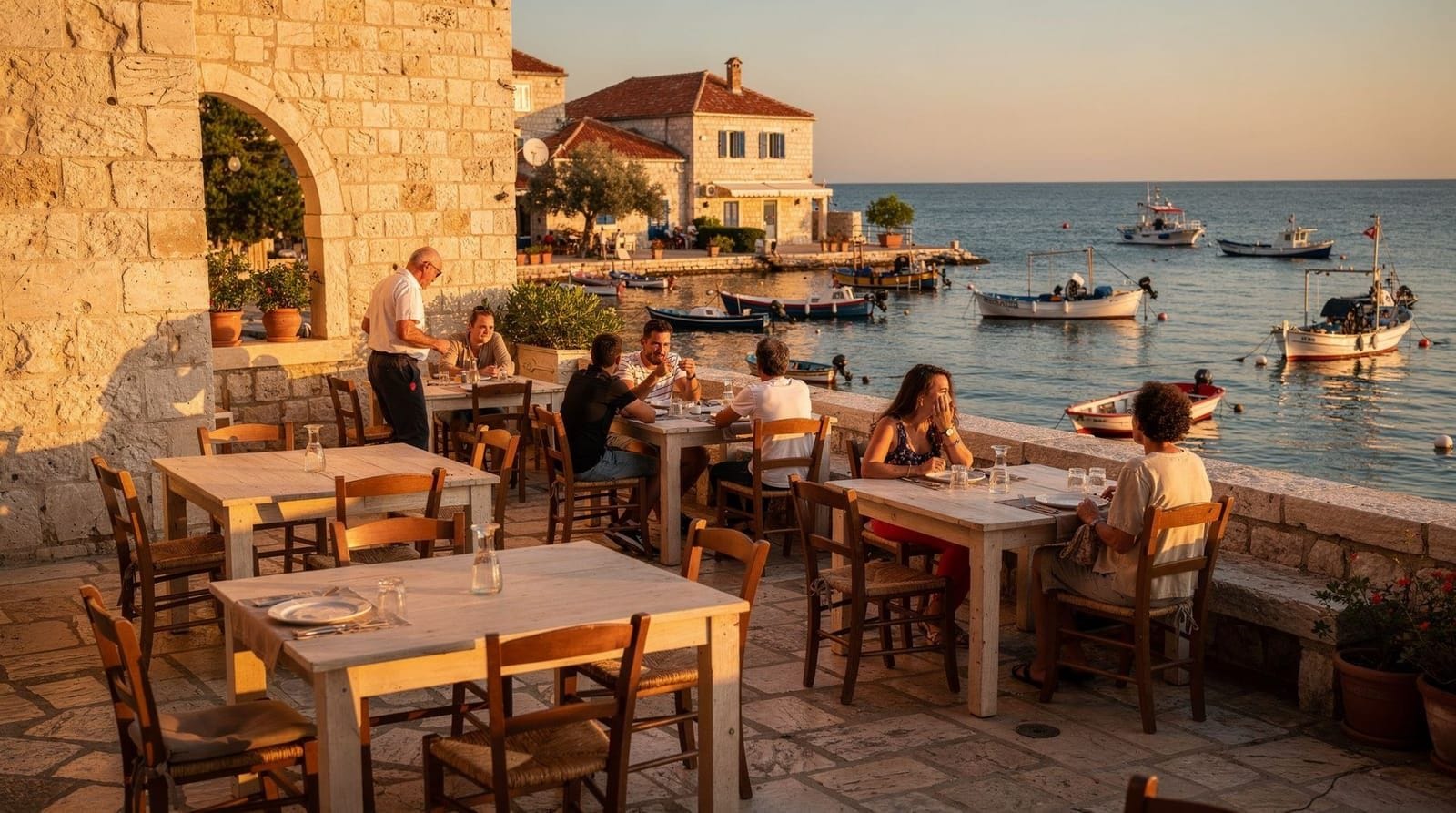
The traditional Croatian tavern (konoba) is your primary budget tool. Most konobas offer a daily lunch menu (ručak) — typically soup, main course (often grilled fish or meat), dessert and a small drink — for €10–18. The food is usually honest and good; the setting is often excellent.
Rule of thumb: the further from the sea view and the tourist promenade, the better the price-to-quality ratio.
Bakeries (pekara)
Croatian bakeries are excellent and cheap. Burek (phyllo pastry with meat, cheese or potato filling) is the breakfast and snack hero: €1.50–3 for a substantial portion. Strukli in Zagreb, soparnik in Dalmatia, various local pastries — all cheap, filling and good.
Markets (tržnica / pijaca)
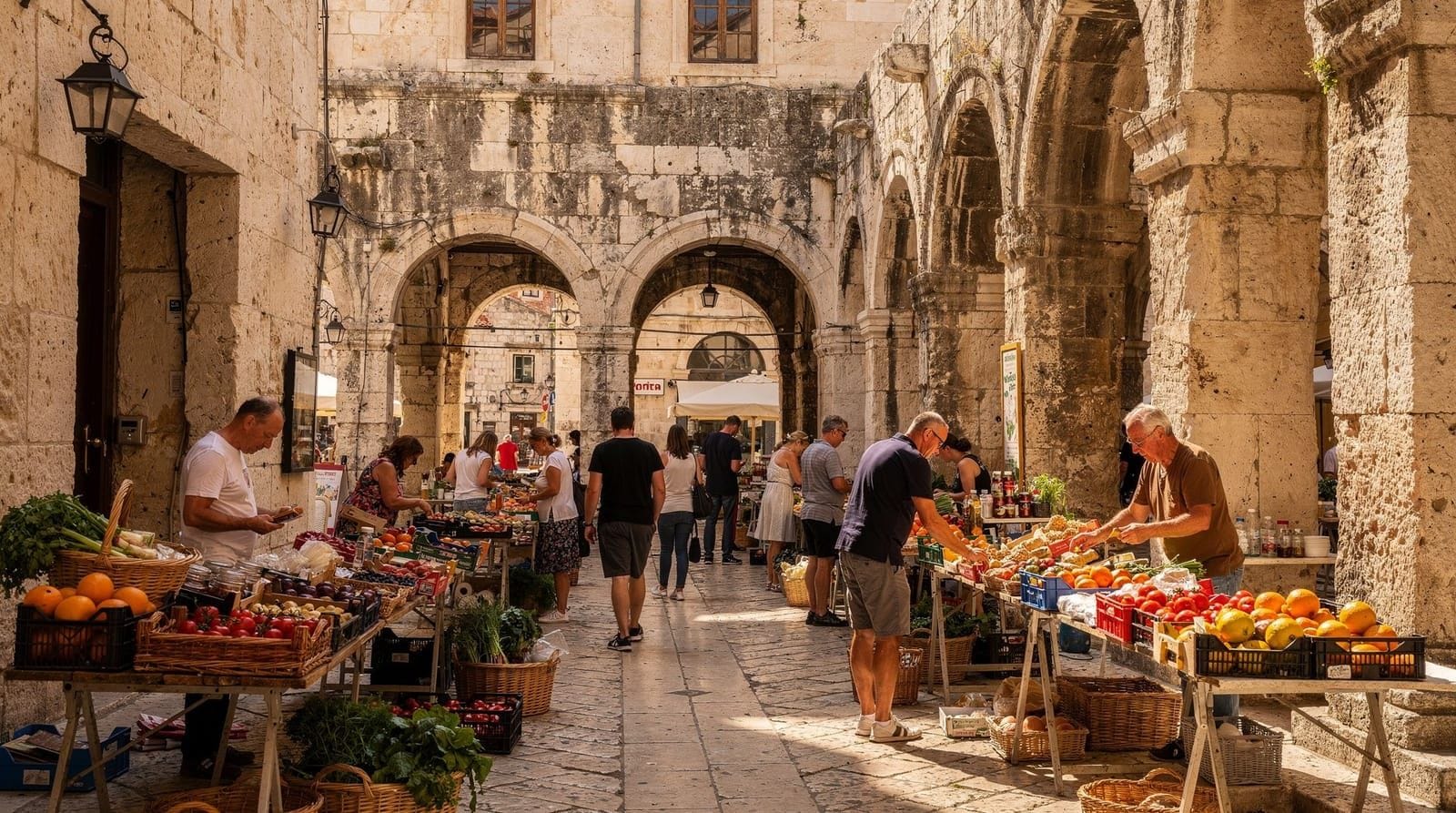
Every Croatian town of any size has an outdoor market selling vegetables, fruit, cheese, olives, cured meats and sometimes fish. Buy from the market, supplement from a bakery, and eat as a picnic on the nearest sea wall. This is genuinely how many Croatians eat daily.
Supermarkets
Konzum (major chain), Spar, Lidl and Tommy are widespread. Supermarket shopping for breakfast and lunch (with one restaurant meal daily) is the most effective way to manage food budget. Look for prepared foods sections in larger branches.
What costs what
| Item | Price range |
|---|---|
| Burek at bakery | €1.50–3 |
| Coffee (espresso) | €1.20–2 |
| Beer (local, in a bar) | €2–4 |
| Pint of tap water (restaurant) | €2–3 |
| Supermarket sandwich | €2–4 |
| Konoba daily menu | €10–16 |
| Restaurant main course (mid-range) | €12–22 |
| Local wine (bottle, konoba) | €10–18 |
Cheap transport
Buses are Croatia’s budget traveller backbone. The national bus network is extensive, comfortable and cheap. Key routes:
- Zagreb–Split: €15–22, ~5 hours
- Split–Dubrovnik: €10–15, ~4 hours (via Neum corridor or Pelješac Bridge route)
- Zadar–Split: €8–12, ~2 hours
- Zagreb–Zadar: €10–16, ~3.5 hours
See the Croatia buses guide for details.
Ferries (foot passenger): Jadrolinija foot-passenger tickets are affordable:
- Split–Hvar: ~€6 one way
- Split–Brač: ~€5 one way
- Dubrovnik–Elaphiti Islands: €7–10
What to avoid on a budget:
- Car rental (useful but expensive, adds fuel and parking costs)
- Private transfers (airport taxis are convenient but add up)
- Speedboat tours (beautiful but a significant premium over regular ferries)
Airport transport: Most airports have bus services to the city centre (€3–8) — far cheaper than taxis (€20–40+). Split airport has a regular bus service; Dubrovnik airport has a shuttle bus.
Splitting costs on a group trip: Many of Croatia’s biggest single expenses — a private boat charter, a rental car for Istria, a group tour — become genuinely affordable when split three or four ways. A €300 half-day private boat charter is €75 per person for a group of four, cheaper than four separate group-tour tickets in some cases, and gives you the flexibility a shared group boat doesn’t. Worth doing the maths on group activities before defaulting to the cheapest individual option.
Free activities in Croatia
Croatia is genuinely good for free experiences:
Free beaches: The vast majority of Croatian beaches are public and free. Rocky coastline swimming is free everywhere. Avoiding paid beach clubs is easy — just find the nearest stretch of public shore.
City walls interiors (Split): Diocletian’s Palace outer walls, the main courtyard and most of the alleyways are free. You pay only for specific underground chambers.
Old Towns: Trogir, Šibenik, Zadar old towns are free to walk.
Zadar’s Sea Organ: The acoustic installation on Zadar’s western sea wall — one of Croatia’s most unusual public art pieces — is free to visit and listen to.
Zadar’s Greeting to the Sun: The solar-powered light installation adjacent to the Sea Organ. Free.
Zagreb Museum of Broken Relationships: Not free (around €6), but it is good value and free for children under 12.
Zagreb Upper Town: Free to explore; only paid entry for specific museum buildings.
Hiking: Biokovo Nature Park, coastal paths, the trail networks around Istria — most hiking is free (some specific areas within national parks have entry fees).
Beaches at national parks: Note that Plitvice and Krka charge entry (€10–40 depending on season and category) — this is worth budgeting for; both are exceptional.
Budget tips for specific costs
Dubrovnik: If Dubrovnik is on your list, base yourself in Split (4 hours by bus, €10–15) and do Dubrovnik as a long day trip. Or stay in Cavtat (8km south of Dubrovnik, accessible by local bus €3 or ferry) which costs 30–40% less. For more, see Is Croatia expensive?.
Hvar: The island of Hvar is expensive; the town of Hvar is the most expensive part. Stay in Stari Grad (the island’s quieter old town, 20 minutes away by bus) or on Brač and visit Hvar for a day. The price gap between a Hvar town harbourfront room and an equivalent Stari Grad room can be 40% or more in peak season for a near-identical island experience.
Plitvice: Entry fees are seasonal (€10–40). Go in April or October for lower-tier pricing and fewer crowds. The park is worth paying for.
Activities: Guided tours from Split and Dubrovnik to national parks, caves and islands range widely. Group tours are significantly cheaper than private; public ferries and self-guided access are cheaper still. A group day trip from Split to the Blue Cave and 5 islands (including a stop on Hvar) typically runs €50–80 — better value than private alternatives.
Zagreb on a budget
Zagreb deserves special mention as Croatia’s best-value destination for an extended stay. As Croatia’s capital and a genuine European city, it has a full range of affordable accommodation, a student population that sustains cheap eating and coffee culture, and most major museums with reasonable entry fees (many free on certain days).
A Zagreb budget day: breakfast at a market hall or bakery (€3–5), coffee on Tkalčićeva Street (€1.50), free exploration of the Upper Town and lower city, lunch at a student canteen or konoba daily menu (€8–12), afternoon at the Museum of Broken Relationships or Mimara (€5–8), dinner at a local restaurant (€12–18 for a main with a beer). Total: €35–50.
A sample 10-day budget itinerary
A realistic budget-independent route (€65–100/day per person) that hits the highlights without the Dubrovnik/Hvar premium: Days 1–2 in Zagreb (guesthouse or hostel, museum and market culture), Days 3–4 in Split (apartment, free palace exploration, a Krka day trip), Days 5–6 on Brač or Vis (cheaper than Hvar, ferry foot passenger, sobe accommodation), Day 7 in Zadar (old town, Sea Organ, affordable restaurants), Days 8–10 in Dubrovnik — but book a room in Cavtat or the Split-side suburbs and bus in, rather than paying Old Town rates. Buses cover every leg of this route; a rental car adds cost without adding much value here. See the Croatia buses guide and the Croatia ferries guide for booking specifics.
Free (or nearly free) alternatives to paid national parks
If Plitvice or Krka’s entry fees don’t fit your budget on a given day, Croatia has genuinely free alternatives that deliver a similar feel. Coastal hiking paths around Cavtat, Rovinj and most Dalmatian towns are free and scenic. Wild swimming from rocks anywhere along the coast costs nothing and is how most Croatians actually swim. Trogir and Šibenik old towns deliver UNESCO-level architecture without an entry fee. None of these replace Plitvice’s waterfalls exactly, but they’re a legitimate way to build a lower-cost day into a trip that also includes one or two paid highlights.
Frequently asked questions about Croatia on a budget
How much does a budget trip to Croatia cost per day?
A genuine budget traveller (hostel dorm, self-catering or cheap konoba meals, bus and ferry travel) can manage €45–65 per person per day. This covers accommodation (€15–35 for a hostel dorm), food (€15–25), transport, occasional entry fees and some activities.What are the cheapest places to stay in Croatia?
Zadar, Šibenik and the smaller islands (Brač, Vis) cost significantly less than Dubrovnik and Hvar. In general: the Kvarner coast (Rijeka, Krk, Rab) is better value than Dalmatia. Istria (outside Rovinj's old town) is reasonable. Inland Croatia (Zagreb, Slavonia) is the cheapest.What is the cheapest way to travel between Croatian cities?
Buses are the budget backbone — Zagreb–Split costs around €15–20; Split–Dubrovnik around €10–15. Ferries to the islands have affordable foot-passenger prices (Split–Hvar is around €6 one way). Avoid car rental unless essential for a specific itinerary.Can I eat cheaply in Croatia?
Yes, if you choose well. Konobas (traditional taverns) typically serve a daily menu (ručak) for €10–15 including a drink. Bakeries (pekara) sell burek and pastries for €1–3. Supermarkets are excellent for picnic provisions. Seafront tourist restaurants are significantly more expensive.Are Croatian beaches free?
The vast majority of Croatian beaches are public and free. Sunbed and umbrella rental on popular beaches is optional (typically €5–10/day each). Wild swimming from rocks is free and the norm for locals.When is the cheapest time to visit Croatia?
October and April–May on the coast offer the best value with facilities still open. February–March are cheapest of all but many coastal businesses are closed. Shoulder season (May–June, September–October) is the best balance of value and viability.Is Zagreb expensive?
Zagreb is considerably more affordable than the Dalmatian coast — a meal in a good restaurant costs €10–18, a beer is €2–3, accommodation is available from €20 (hostels) to €80 (mid-range hotel). It is one of Central Europe's more affordable capital cities.
Top experiences
Best-rated activities across GetYourGuide and Viator.

Mostar and Herzegovina Tour with Kravica Waterfall from Split & Trogir
- Viator

3Hour ALL-INCLUSIVE Sunset Dolphin Watching from Medulin onSandra
- Viator

Dolphin Watching & Sunset Boat Tour With Drinks & optional Dinner
- Viator

Fantastic DOLPHIN & SUNSET TOUR with dinner ( Pula-NP BRIJUNI )
- Viator

Medulin :All-Inclusive Pirate Boat Dolphin Watching Sunset Cruise
- Viator

Mostar & Kravice waterfalls full-day guided tour from Split
- Viator