Croatia trip cost: honest budget breakdown for 2026
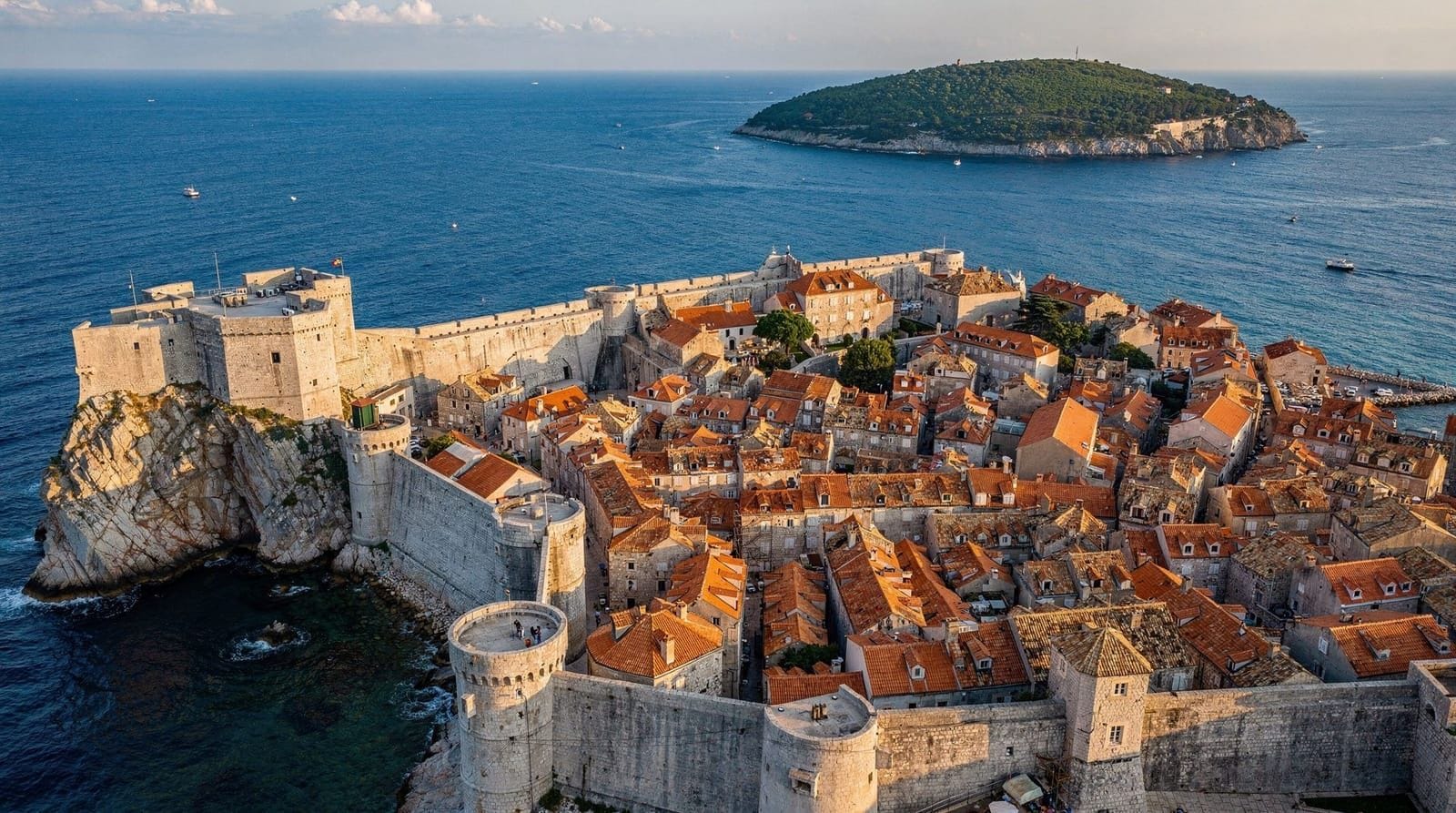
Dubrovnik: City walls walking tour
How much does a trip to Croatia cost per day?
Budget travellers can manage €45–65 per day in low and shoulder seasons. Mid-range travellers spending comfortably should budget €85–150 per day. Luxury travel in Dubrovnik and Hvar in July–August runs €250–600 or more. July–August Dubrovnik costs roughly 50% more than the same trip in June or September.
| Backpacker | €45–65/day |
| Mid-range | €85–150/day |
| Luxury | €250–600+/day |
| Cheapest months | May, October |
| Best value months | June, September |
| Peak surcharge | July–August, up to 50% more than shoulder season |
Croatia has changed its price position significantly over the past decade. The country that many European travellers once associated with bargain beach holidays is now a mid-to-upper-priced European destination in peak season. The adoption of the euro in January 2023 removed the mild friction that previously discouraged price comparison; what was hidden behind a kuna exchange rate is now clearly visible in EUR.
The following breakdown is based on actual 2026 costs. It is written to help you set a realistic budget, not to optimise aggressively toward the cheapest possible experience.
The daily budget tiers
Backpacker: €45–65 per day
This is genuinely achievable but requires consistent effort: hostel dorms, self-catering breakfasts, one cooked meal at a konoba away from the waterfront, bus transport, no paid tours, and staying in the less expensive sections of the coast (Zadar, Šibenik, Omiš rather than Dubrovnik or Hvar marina).
At this budget: you skip most boat tours, avoid the highest-profile restaurants and book accommodation several weeks ahead to secure the best hostel prices. Feasible, but you will feel the limits clearly in Dubrovnik.
Mid-range: €85–150 per day
A comfortable mid-range trip: private room or 3-star hotel, sit-down lunch and dinner at neighbourhood restaurants, daily coffees and gelato, occasional guided tour or ferry trip, public transport plus an occasional taxi. This is the budget most European travellers working with reasonable but not unlimited funds should plan around.
At this budget: you can eat well, choose accommodation by location rather than just price and join one or two notable tours without anxiety. In June or September this feels relaxed; in July and August in Dubrovnik or Hvar you will notice the prices edging toward the upper end.
Luxury: €250–600+ per day
Five-star hotels, waterfront restaurants, private boat charters, spa treatments, business class ferries. In Dubrovnik’s Old Town boutique hotels during August peak, the nightly rate alone accounts for €300–500 of this figure.
Accommodation costs in detail
| Type | Low/shoulder season | July–August peak |
|---|---|---|
| Hostel dorm (Split, Zagreb) | €20–28 | €30–40 |
| Budget private room (sobe) | €50–70 | €75–110 |
| 3-star hotel | €80–120 | €120–200 |
| 4-star hotel | €130–200 | €200–380 |
| Boutique old-town hotel | €180–280 | €280–450+ |
| Luxury waterfront (Dubrovnik) | €350–600 | €500–900+ |
The destination matters as much as the category. A 3-star hotel in Šibenik costs around what a hostel private room costs in Dubrovnik’s Old Town in August. Zadar, Omiš, Makarska and Trogir are consistently cheaper than Dubrovnik, Hvar and Split for equivalent accommodation.
Self-catering apartments are excellent value for families or groups staying 3+ nights — a two-bedroom apartment often costs less than two hotel rooms and enables the most significant daily saving: breakfast and some dinners at home rather than in restaurants.
Food and drink costs
Budget eating
A pastry and coffee at a bakery (pekara): €2.50–4. Burek (cheese or meat pastry) from a street bakery: €2–3. A large pizza at a local pizzeria: €10–13. Cheap lunch set at a konoba away from the waterfront: €12–18 including a drink.
Mid-range eating
A proper two-course lunch at a neighbourhood konoba: €18–28 per person including a glass of local wine. Dinner at a good restaurant with wine: €35–60 per person. Fresh fish is priced by weight — always ask; a 500g fish can easily be €20–30 before sides.
Tourist waterfront restaurants
Avoid wherever possible. A waterfront Dubrovnik dinner with fish and wine for two: €100–160 is not unusual. The food is invariably inferior to what you will find two streets back for half the price. Ask locals or hotel staff where they eat; every town has good unpretentious restaurants that travellers walk past in favour of the postcard view.
Drinks
Coffee (espresso): €1.50–2.50. Beer (0.5L local draught, Karlovačko, Ožujsko): €3–5 at a bar or café. Local wine by the glass: €3–7. Craft beer in Split or Zagreb: €5–8. Water is free from taps (safe throughout Croatia) — carry a refillable bottle.
Transport costs
Ferries
Walk-on passenger fares (Jadrolinija, one way):
- Split to Supetar (Brač): €5–7
- Split to Stari Grad (Hvar, car ferry): €7–9
- Split to Hvar Town (fast catamaran): €10–14
- Split to Vis: €12–15
- Dubrovnik to Šipan (Elaphiti): €5–7
- Dubrovnik to Korčula (fast catamaran): €20–30
Car on ferry adds approximately €20–35 depending on vehicle size and route. See the Croatia ferries guide for full route pricing.
Bus
Comfortable and affordable. Split to Dubrovnik: €15–22 one way. Zagreb to Split: €25–35. Zadar to Split: €12–18. Long-distance buses are air-conditioned and reliable.
Car hire
Varies significantly by season and provider. Compact car in shoulder season: €35–55 per day including basic insurance. July–August peak: €55–90+ per day. Petrol: approximately €1.50–1.65 per litre. Motorway tolls (autocesta) add €15–30 for Zagreb to Split. See renting a car in Croatia for insurance advice — do not skip the full collision damage waiver.
Flights
Highly variable. Budget carriers (Ryanair, easyJet, Wizz Air) serve Split (SPU), Dubrovnik (DBV), Zadar (ZAD) and Zagreb (ZAG) from most European hubs. London to Split in June: €80–150 return. July–August peaks to DBV: €200–350+ return from UK.
Activities and entrance fees
Dubrovnik city walls: €35 per adult (one of the more expensive single attractions in Croatia — worth it, but factor it in).
A guided walls tour is marginally more expensive but provides historical context that makes the circuit significantly more meaningful.
Plitvice Lakes entrance: €10–40 depending on season (the park uses dynamic pricing, higher in July–August). A day trip from Split avoids the complexity of transport.
A Krka waterfalls day trip from Split typically costs €50–70 all-in including transport and entrance — good value versus self-driving and paying separately.
Krka National Park entrance: €30–40 in peak season.
A Zagreb food tour covers the city’s best market, bakeries and local specialities and costs approximately €45–60 per person — one of the better-value guided experiences in Croatia.
Other common activities:
- Kayaking half-day (Dubrovnik): €50–70
- Blue Cave tour (from Split): €80–100
- Game of Thrones tour (Dubrovnik or Split): €35–55
- Boat charter (private, half-day): €200–600+ depending on vessel size
Most expensive vs best-value destinations
Most expensive
Dubrovnik tops the list consistently. Old-town accommodation, waterfront restaurants and the sheer demand from summer tourism make it Croatia’s priciest destination by a significant margin. Hvar marina (as distinct from villages elsewhere on the island) has comparable restaurant prices in summer and some of the most expensive cocktail bars in Croatia.
Best value
Šibenik is one of the most underrated destinations in Dalmatia — a genuine medieval city, UNESCO Cathedral, good local restaurants and accommodation costs that lag well behind Split and Dubrovnik. A 3-star hotel in Šibenik in August costs what a budget guesthouse costs in Dubrovnik.
Zadar is similarly underpriced relative to its quality. The old town is attractive, the Sea Organ is memorable, and the food scene has improved considerably. Omiš and Makarska are cheaper alternatives to Split for base accommodation with ferry access to islands.
Zagreb in June or September: the capital is genuinely good value. Museum entry fees are modest, the café and restaurant scene is excellent and more affordable than the coast, and accommodation is competitive.
Hidden costs to budget for
Most trip-cost guides cover the obvious categories — accommodation, food, transport. The costs below are the ones that catch travellers off guard because they are not prominently advertised, not factored into budget calculators and not visible until you are in the middle of paying them.
Tourist tax (boravišna pristojba)
Croatia charges a tourist accommodation tax at almost every municipality. This is a per-person, per-night charge added to your accommodation bill — it is separate from the room rate and is not always included in the price shown on booking platforms.
Rates vary by destination and category: most municipalities charge €1.00–2.00 per person per night for adults; children under 12 are typically exempt or pay a reduced rate. Zagreb, Split, Dubrovnik and Hvar are in the higher bracket; smaller towns and rural areas tend to be at the lower end.
Practical impact on a 7-night trip for two adults: €14–28 in additional cost that does not appear in the advertised accommodation price. This is not a scam — it is a legitimate local charge — but it catches travellers who build a budget from headline prices without reading the booking small print.
Ferry car supplement
Bringing a car on a Jadrolinija car ferry adds a vehicle charge on top of the walk-on passenger fares. This varies by route and vehicle size, but as a general guide:
- Split to Supetar (Brač): approximately €18–26 for a standard car
- Split to Stari Grad (Hvar): approximately €22–32 for a standard car
- Split to Vis: approximately €30–42 for a standard car
- Dubrovnik area routes: comparable or slightly higher
On a round-trip island visit with a car, add €30–65 per island crossing pair. Visiting two islands with a car adds €60–130 in ferry car supplement to your budget — before driver and passenger walk-on fares. This is the primary reason why many travellers choose to leave cars in Split’s long-stay parking (around €8–12/day) and travel to islands walk-on, renting scooters or bicycles on the island itself.
Note also: many rental car companies explicitly prohibit taking their vehicles on car ferries to Croatian islands. If your rental contract prohibits island ferry travel and you take the car anyway, you void your insurance coverage entirely. Read the rental contract before booking ferry car spots.
Peak-season parking in Split and Dubrovnik
Parking in Croatia’s walled cities in summer is expensive, scarce and stressful.
Dubrovnik: There is no parking inside the Old Town walls. The nearest paid parking is at Pile Gate (the main entrance), where rates in peak season reach €3–5 per hour, with a maximum around €30–40 per day. The queue for the Pile Gate car park in July and August backs up for kilometres on the coastal road — some travellers queue for 45 minutes to park. Alternative: the cable car car park (Žičara) is further away and often less congested; the Gruž harbour area has paid parking at slightly lower rates. The most practical solution for Old Town visits from accommodation outside the city: use the local bus (Line 4 from Pile or 1A from Gruž).
Split: Diocletian’s Palace and the Riva area have paid parking in the surrounding streets at €1.50–2.50/hour. The underground car park at the City Hall (Trg Republike) charges approximately €1.50/hour. Day-long parking in the centre costs €15–25. The better option for multi-day stays: park at the long-term facilities near the ferry port (€8–12/day) and walk or take a tram into the old town.
Practical tip: If you are renting a car for the Dalmatian coast portion of your trip, consider whether you actually need it in the cities. Renting a car for the national park legs (Plitvice, Krka) and the inland stretches, then dropping it before arriving in Split or Dubrovnik, is often both cheaper and less stressful than navigating summer city parking.
Entrance fees: what they actually cost
Entrance fees to Croatia’s major attractions add up to more than most budgets anticipate. Major single-item costs:
- Dubrovnik city walls: €35 per adult. This is the highest-profile single attraction entry fee in Croatia. It is widely considered worth it, but factor it in explicitly — it is not a small sum for a single attraction.
- Plitvice Lakes National Park: Dynamic pricing by season. Off-season (October–May): €10–15. Shoulder season (June, early September): €20–25. Peak season (July–August): €35–40 per adult. Prices include park access across all zones; the electric train and shuttle boat are included.
- Krka National Park: €30–40 in peak season (similar dynamic pricing to Plitvice).
- Šibenik Cathedral of St James: No entrance fee to the UNESCO cathedral itself, but the old town entrance at Barone Fortress museum is approximately €7.
- Diocletian’s Palace cellars (Split): €10–12 for the underground archaeological exhibition.
- Split city walls walk (Sustipan): Free.
- Lokrum Island (from Dubrovnik): Ferry to Lokrum is approximately €15 return and includes island entry. The peacocks are included.
- Game of Thrones sites: Walking tours (Dubrovnik or Split filming locations) are typically €35–55 per person as a guided experience.
For a couple doing the full Dalmatia-and-parks itinerary: Dubrovnik walls (€70), Plitvice (€70–80), Krka (€60–80) and Lokrum (€30) alone add €230–260 in entrance fees before any other activities. Budgeting €300–400 per couple for entrance fees on a 10-day trip is realistic.
Tipping norms
Tipping in Croatia is not obligatory but is socially appreciated and has become more expected in tourist-heavy areas. The standard approach:
- Restaurants: 10% when satisfied with service. In tourist waterfront restaurants it is common; at local konobas, rounding up the bill or leaving a couple of euros is more typical and equally appreciated.
- Taxi and rideshare: Rounding up is standard; 10% for longer rides.
- Guided tours: €5–10 per person for a half-day tour; €10–20 for a full day. This is discretionary but meaningful for local guides whose income depends partly on tips.
- Hotel housekeeping: €2–3/night for a mid-range hotel is appreciated; more common in higher-end accommodation.
- Bars and cafés: Not expected at the bar for a coffee; leaving change is common.
Some tourist-oriented restaurants in Dubrovnik have begun adding a service charge (servisna naknada) to bills — typically 10–15%. Always check the bill; if a service charge is included, tipping additionally is not expected.
Total tipping budget estimate for a week’s mid-range trip for two: €60–100.
The cost of not booking ahead
This is the most significant hidden cost and the hardest to quantify until you are facing it. In peak summer (July–August), last-minute accommodation in Dubrovnik and Hvar can be three times the price of the same room booked six weeks earlier — or simply unavailable at any price.
Concrete examples of the last-minute penalty:
- A standard private room (sobe) in Dubrovnik booked 8 weeks ahead in August: €120–150/night. The same room searched last-minute: €200–280/night — if available at all.
- Hvar Town apartment with sea view, booked 10 weeks ahead: €140/night. Last-minute in peak season: often fully booked; what remains is €200+ or inconveniently located.
- Car ferry to Hvar in August, booked day-before: car spots sold out. Alternatives involve renting a car separately on the island (more expensive) or abandoning the car in Split (additional parking cost).
- Plitvice Lakes day tour from Split on a July weekend, tried day before: fully booked. Alternatives are self-driving (€30+ in petrol, parking, and park entrance separately) or skipping Plitvice.
The practical lesson: booking flexibility is not free in Croatia in peak season. The cost of spontaneity is real and often substantial. The first-time Croatia guide covers the correct booking sequence to avoid this.
Season premium: the July–August markup
The price differential between shoulder and peak season is one of the most dramatic in Europe for Croatia. Some concrete examples:
- A private room in Dubrovnik Old Town: €80/night in June, €150/night in August.
- A mid-range restaurant dinner near Hvar’s harbour: €45/person in June, €65+/person in August.
- A small boat charter from Hvar: €350/day in May, €600+/day in August.
- Ferry car spots on the Split–Hvar route: book 2–3 days ahead in June, 2–3 weeks ahead in August.
The sea temperature difference between June and August is 4–5°C — from around 21°C to 26°C. The crowd and price difference is far more significant. June and September remain the clearest cost-to-experience recommendation for most travellers.
Money-saving strategies
Eat like locals: The single highest-impact saving. One street back from any waterfront, prices drop 30–40% and food quality is usually better. Look for restaurants with handwritten specials boards and a local clientele.
Book ferries ahead: Not for savings per se (fares are fixed), but avoiding the penalty of missing a car ferry and having to wait hours or take an expensive taxi fixes a real cost risk.
Self-cater some meals: If you are renting an apartment, breakfast at home (local bread, cheese, olive oil from the market) saves €15–20 per person per day versus café breakfasts.
Visit Dubrovnik in shoulder season: The city walls, the Old Town and Lokrum are not less beautiful in June than in August; they are significantly more enjoyable. The cost saving over a 3-night stay easily funds additional travel elsewhere.
Skip the tourist menus: Fixed-price tourist menus (often €20–25 for two courses) are never a bargain in Croatia — they represent the least interesting food at the second-highest price. À la carte at an unpretentious konoba is better value.
Walk: Croatian old towns are small. Taxis and tuk-tuks from gates to restaurants in Dubrovnik are unnecessary; everything within the walls is at most a 10-minute walk.
Comparing Croatia’s cost to neighbouring destinations
Travelers weighing Croatia against alternative Mediterranean or Balkan destinations often ask how the numbers stack up:
| Destination | Mid-range daily budget | How it compares |
|---|---|---|
| Croatia (Dalmatia) | €85–150 | Baseline |
| Greece (mainland/lesser islands) | €70–130 | Slightly cheaper outside Santorini/Mykonos |
| Greece (Santorini, Mykonos) | €150–300+ | Notably more expensive than Croatia |
| Montenegro | €55–100 | Cheaper across most categories |
| Slovenia | €90–160 | Broadly comparable, Ljubljana slightly pricier |
| Italy (Amalfi/Cinque Terre) | €150–280 | Significantly more expensive |
| Albania coast | €40–75 | Notably cheaper, less developed tourist infrastructure |
Croatia sits in the middle of this range — more expensive than its Balkan neighbours (Montenegro, Albania, Bosnia), broadly comparable to Slovenia and non-island Greece, and consistently cheaper than Italy’s most famous coastal destinations. The Croatia vs Greece guide covers this comparison from a broader trip-planning angle, not just cost.
Cost by traveler type
Solo travelers face a real cost penalty: hotel single supplements can add 30–60% to a room rate, making hostels and private apartments the better value option. See the solo travel guide for a fuller breakdown — a realistic solo budget runs €45–200/day depending on style, broadly similar to the per-person figures above but with less flexibility to split costs.
Couples benefit from splitting accommodation and some activity costs, which is why the mid-range €85–150/day figure works comfortably for two people sharing a room, effectively lowering the true per-person accommodation cost versus a solo traveler.
Families should budget for larger accommodation (self-catering apartments are usually better value than multiple hotel rooms), child-friendly activity substitutions (many attractions offer family tickets), and slightly higher food costs from eating out more often. See the family itinerary guide and Croatia with kids guide for destination-specific family budgeting.
Groups of 3–4 friends sharing a car and apartment get the best per-person value in Croatia — splitting a rental car, fuel and tolls, and a larger apartment, brings costs down meaningfully below solo or couple travel on a per-person basis. The motorway tolls guide has the specific route costs if a shared road trip is part of the plan.
Region-by-region cost index
| Region | Relative cost | Notes |
|---|---|---|
| Dubrovnik | Highest | Old Town accommodation and dining carry a significant premium |
| Hvar (town) | Very high | Comparable to Dubrovnik in peak season |
| Split | High-moderate | Popular but with more mid-range options than Dubrovnik |
| Zadar | Moderate | Genuinely underpriced relative to quality |
| Šibenik | Moderate-low | One of Dalmatia’s best-value bases |
| Istria (Rovinj, Poreč) | Moderate | Slightly cheaper than Split in most categories |
| Zagreb | Low-moderate | Cheapest major city, excellent value |
What flights add to the total
The figures throughout this guide exclude international flights, which vary enormously by origin and season. For rough planning:
- UK to Croatia: €60–150 return in shoulder season on budget carriers; €150–300+ in July–August.
- Continental Europe to Croatia: Often cheaper still, €40–120 return depending on the route and season.
- North America to Croatia: Typically requires a connection through a European hub; €600–1,200 return depending on season and how far ahead you book.
- Australia to Croatia: Among the most expensive routes, typically €900–1,600+ return via a Middle Eastern or Asian hub.
For long-haul travelers, the flight cost can rival or exceed the entire on-the-ground trip cost for a week’s stay — a reason many North American and Australian visitors extend their Croatia trip to 2–3 weeks or combine it with a wider European itinerary to amortise the flight cost.
Currency and payment practicalities that affect your budget
Since Croatia adopted the euro in January 2023, currency exchange friction has largely disappeared for eurozone travelers, but a few practical points still affect your real spending:
Card payment fees: Most UK and non-EU cards charge a foreign transaction fee (typically 1–3%) on EUR purchases unless you specifically use a fee-free travel card. Over a week’s spending, this can add €10–30 — worth avoiding with the right card before you travel.
Cash withdrawal strategy: Withdraw larger amounts less frequently from bank-branded ATMs to minimise flat withdrawal fees, rather than making several small withdrawals. Most Croatian bank ATMs charge a flat fee regardless of the amount withdrawn, so one €200 withdrawal costs the same fee as one €50 withdrawal.
Dynamic Currency Conversion (DCC): Both card terminals and ATMs will sometimes offer to charge you in your home currency instead of EUR. Always decline this and choose EUR — the DCC exchange rate is reliably worse than your card issuer’s rate.
Full daily budget examples
Budget traveller, June, Šibenik: Hostel dorm €25, breakfast bread and fruit from market €3, lunch konoba two courses €16, coffee €2, dinner pizza and beer €14, Krka park entrance €30 (spread over day trip). Total: approximately €55/day including park day on that day, €30 on other days.
Mid-range traveller, September, Split + Hvar: Hotel Split €110/night, Hvar private room €90/night, breakfast at café daily €10, lunch €22, dinner with wine €45, ferry Hvar day trip €10, occasional activity. Total: approximately €120/day averaged across the trip.
Luxury traveller, August, Dubrovnik: Boutique Old Town hotel €380/night, dinner for two at top restaurant €150, city walls tour €70, day boat to Elaphiti €80 per person, cocktails €40. Total: approximately €420–500/day per person.
Frequently asked questions about Croatia trip cost
Is Croatia expensive compared to other European destinations?
Croatia is no longer cheap by historical standards and has become noticeably more expensive since adopting the euro in January 2023. It is broadly comparable to southern Spain or Portugal in mid-range travel costs, and significantly more expensive than its Balkan neighbours. Dubrovnik and Hvar in peak season rival the French Riviera.How much does accommodation cost in Croatia?
Hostel dorms in Split or Zagreb: €20–35 per night. Budget private rooms (sobe): €50–80. Mid-range hotels: €90–160 per night. Boutique hotels in Dubrovnik or Hvar old town: €180–350+. Luxury waterfront hotels: €350–800+. Prices are 30–50% higher in July–August than May–June or September.How much does food cost in Croatia?
A konoba lunch (2 courses + water): €15–25 per person. Waterfront tourist restaurant dinner: €35–60+ per person. Burek or bakery snack: €1.50–3. Coffee: €1.50–2.50. Grocery shopping for a day's meals: €10–18. Cooking in an apartment saves significant money over a multi-day stay.How much do ferries cost in Croatia?
Walk-on passenger fares: Split to Brač or Hvar: €5–8 one way. Split to Vis: €10–13. Dubrovnik to Elaphiti Islands: €5–10. Car ferries add vehicle costs. Fast catamarans are 30–50% more expensive than car ferries. Book online for marginal savings.What is the cheapest time to visit Croatia?
May and October are the cheapest months with some businesses open. June and September offer the best cost-to-experience ratio: weather and sea are excellent, crowds are manageable and prices are meaningfully below peak. November through March the coast is largely quiet, prices are very low but many businesses close.How much spending money do I need for a week in Croatia?
A comfortable mid-range week in Croatia (accommodation, food, transport, a few tours) costs approximately €900–1,400 per person, excluding flights and car hire. Dubrovnik adds significantly to this. Shoulder season (June, September) brings this down by 20–30%.Is tipping expected in Croatia?
Tipping is not obligatory but appreciated. Around 10% is the norm when you are satisfied with service. Rounding up a bill is common and perfectly acceptable. In tourist-heavy restaurants, some add a service charge — check the bill.
Top experiences
Bookable activities with verified prices and instant confirmation on GetYourGuide.
Top experiences
Best-rated activities across GetYourGuide and Viator.

From Zadar: Plitvice Lakes with Boat Ride & Zadar Old town tour
- Viator

Mostar and Herzegovina Tour with Kravica Waterfall from Split & Trogir
- Viator

3Hour ALL-INCLUSIVE Sunset Dolphin Watching from Medulin onSandra
- Viator

Dolphin Watching & Sunset Boat Tour With Drinks & optional Dinner
- Viator

Fantastic DOLPHIN & SUNSET TOUR with dinner ( Pula-NP BRIJUNI )
- Viator

Medulin :All-Inclusive Pirate Boat Dolphin Watching Sunset Cruise
- Viator