Croatia waterfalls: the complete guide to every major cascade
Split: Krka waterfalls tour
Which waterfall in Croatia is the most impressive?
Veliki Slap at Plitvice Lakes is Croatia's tallest single drop at 78 metres and the most dramatic visually. The Skradinski Buk complex at Krka National Park is wider and more theatrical as an overall scene. Both are worth visiting — they look nothing like each other.
Croatia’s karst landscape — porous limestone that channels water through fissures, underground rivers and sudden surface cascades — produces some of southern Europe’s most striking waterfall scenery. The same geology that carved Dubrovnik’s white stone palaces and the Dalmatian coast’s sea caves also built the terraced lakes of Plitvice and the broad curtain of Skradinski Buk. This guide covers every significant waterfall site in Croatia, with practical access information and honest comparisons to help you decide which ones to prioritise.
| Best single drop | Veliki Slap, Plitvice — 78m |
| Best for swimming | Kravice, Bosnia (near Split/Dubrovnik) |
| Entry cost | Plitvice €10–40; Krka €30–35 (season-dependent) |
| Getting there | Bus from Zagreb (Plitvice) or Split/Zadar (Krka); most day trips include transport |
| Best season | Late March–June for maximum flow |
Plitvice Lakes: the UNESCO centrepiece
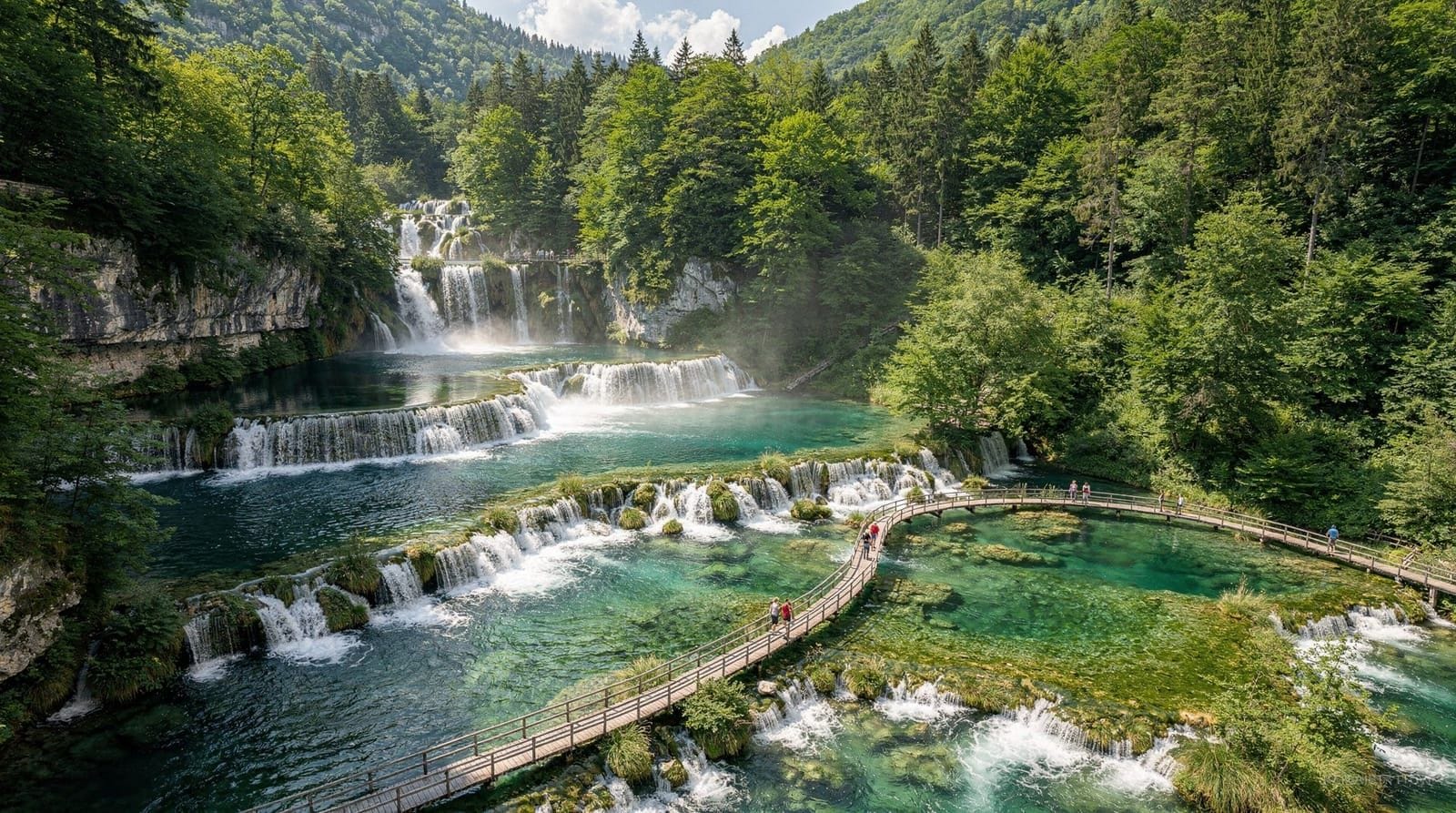
Plitvičke jezera National Park contains Croatia’s most famous waterfall cluster — sixteen interconnected lakes stepping down through a karst valley, each feeding into the next via travertine barriers and cascades. The falls are not the result of a single geological event; they have been constructed over millennia by the same bacterial and calcium carbonate process that continues today.
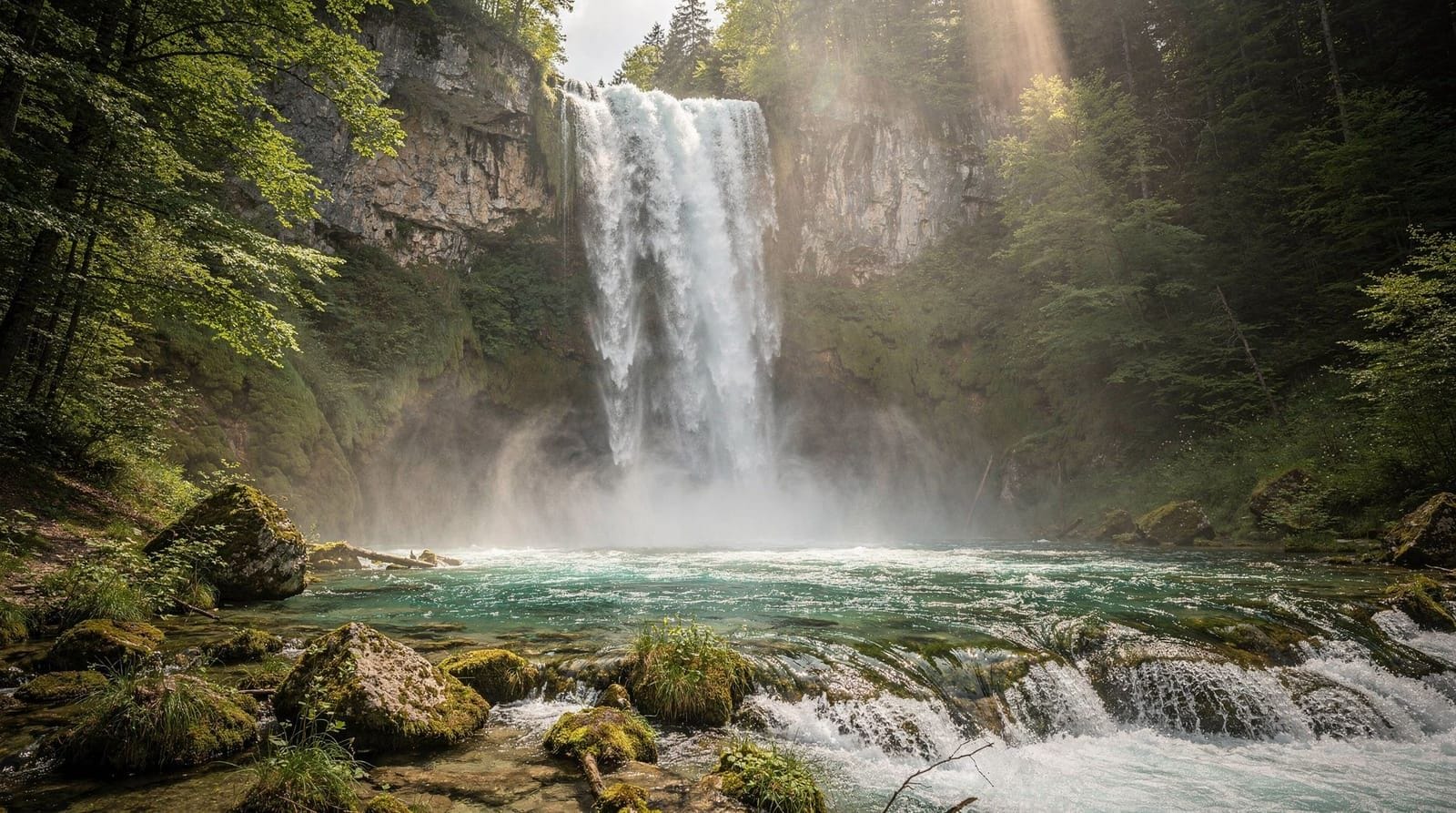
Veliki Slap (Great Waterfall) is the headline drop: 78 metres, making it the tallest waterfall in Croatia and one of the largest in Europe. It sits at the edge of the Lower Lakes zone and is visible from boardwalk viewpoints as well as from below. In spring it roars; in late summer it narrows.
The broader Lower Lakes experience — where the boardwalks run at water level between cascades — is the visual centrepiece of Croatia’s nature tourism. No swimming is permitted anywhere in the park. Entry costs €10–40 depending on season; online booking is essential in July and August.
Read the full Plitvice Lakes guide for route details, exact prices and crowd management strategies.
Krka National Park: the swimming alternative
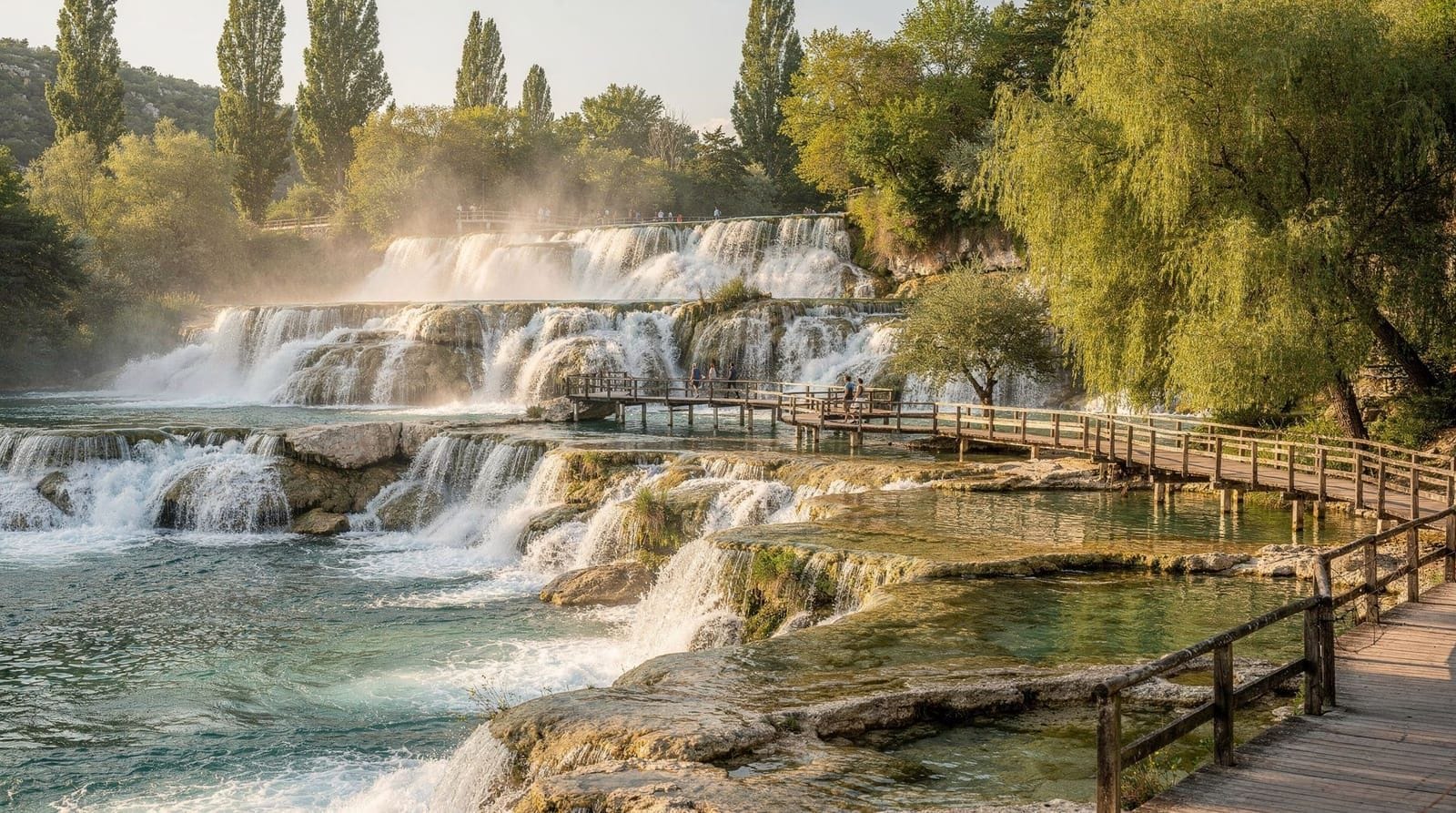
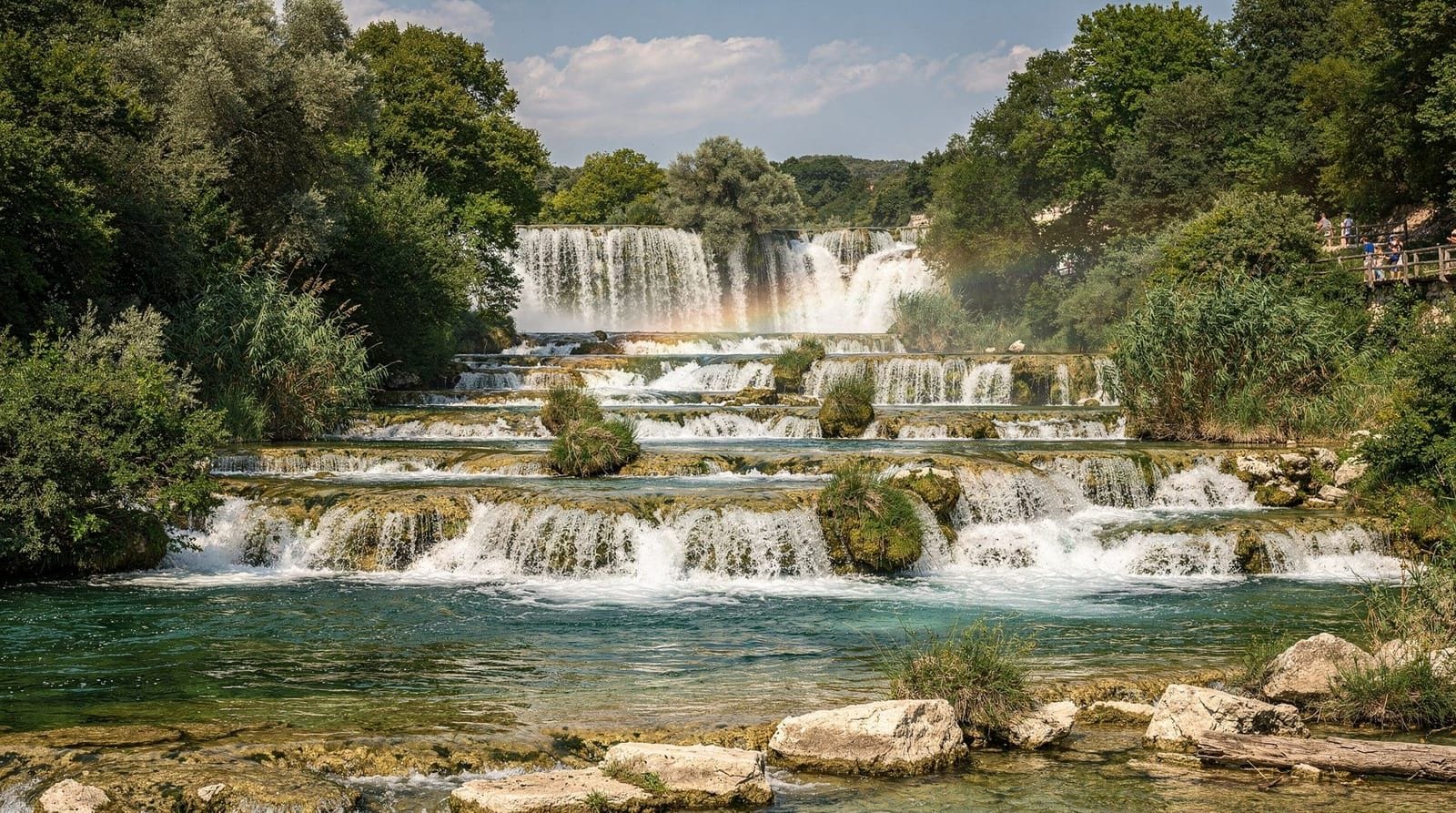
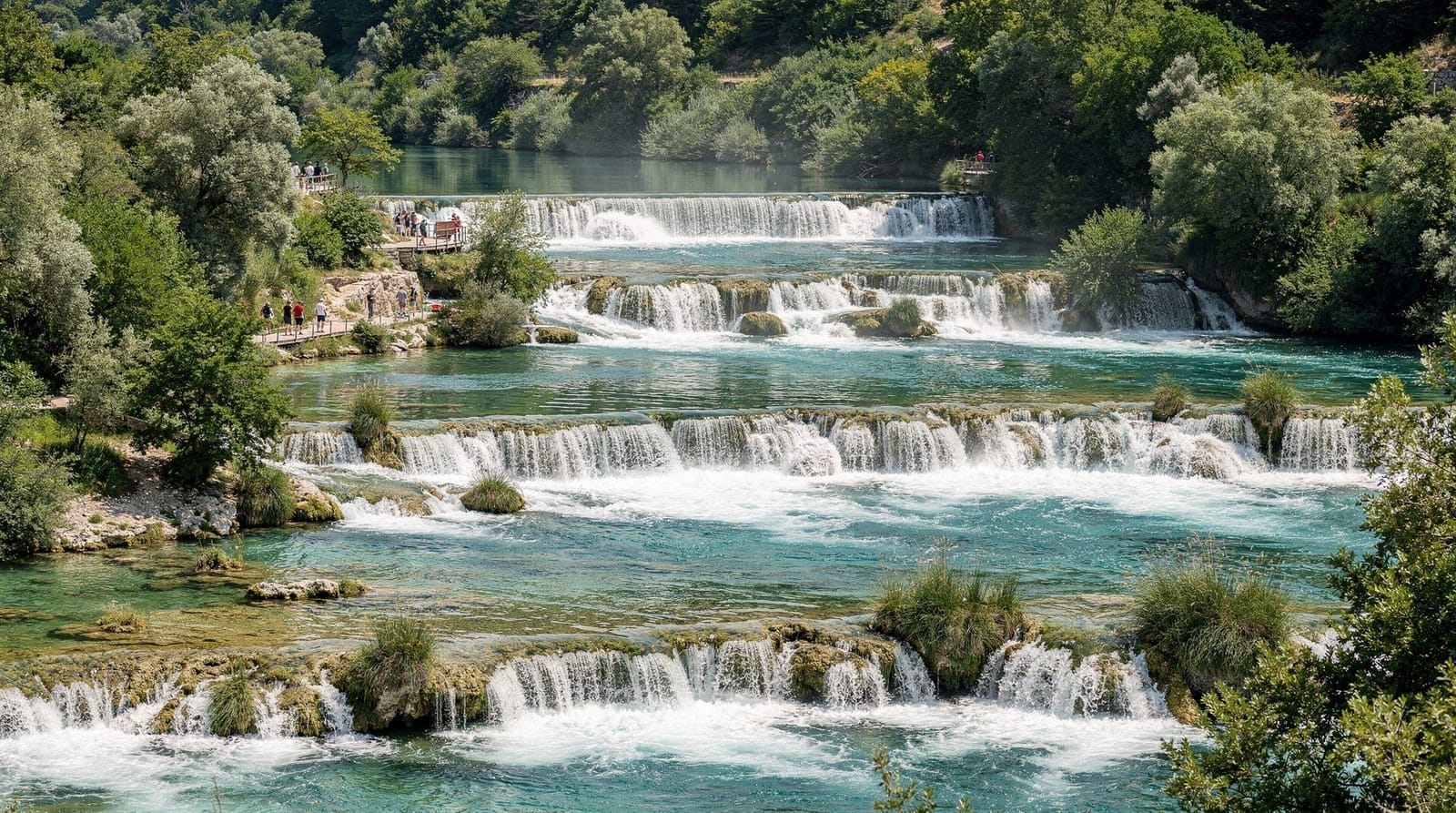
Krka National Park is the other pillar of Croatia’s waterfall landscape. The Krka river drops 242 metres along its course from the Dinaric Alps to the Adriatic — most dramatically at Skradinski Buk, a 800-metre wide arrangement of seventeen travertine steps near the town of Skradin, and at Roski Slap upstream.
The historical distinction between Plitvice and Krka was swimming: Krka allowed it under the main falls, Plitvice never did. That distinction has largely collapsed. The park authority restricted swimming at Skradinski Buk from 2021 onwards to protect the travertine ecosystem. Designated swimming areas downstream exist but the experience is different from the old days. Krka is still worth visiting — the falls are spectacular and the boat trip to Visovac island monastery is excellent — but arrive with updated expectations.
Entry costs €30–35 in high season; an all-sites ticket including Roski Slap and Visovac boat is around €60. The park is most easily reached from Split or Zadar.
Read the full Krka National Park guide for access options, route details and swimming status.
Roski Slap: Krka’s quieter upper falls
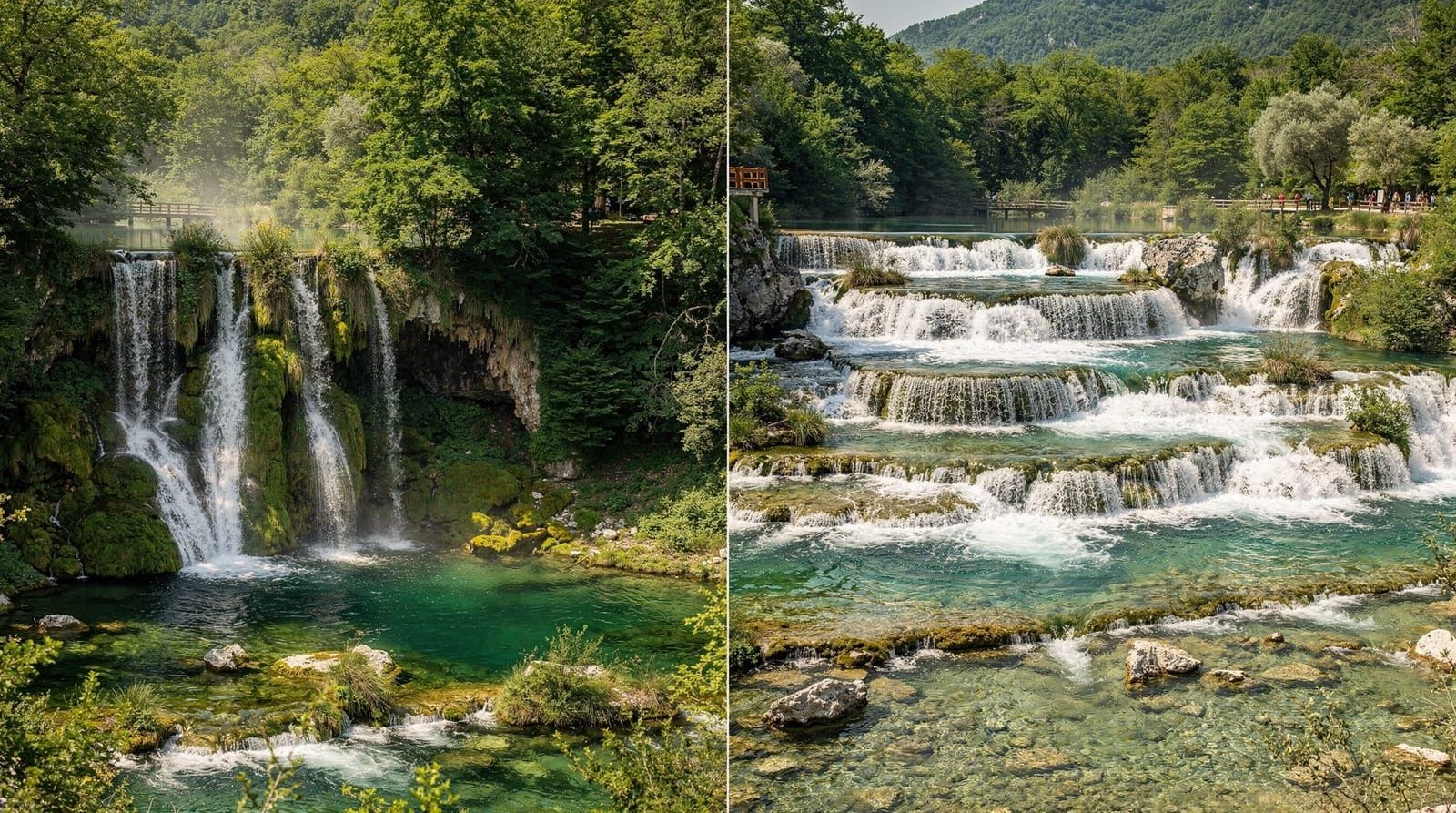
Within Krka National Park, Roski Slap is the second major cascade complex. Sitting further up the Krka valley, it is less visited than Skradinski Buk but often preferred by those who have done the lower site before. The surrounding area has historic watermills, a quieter ambiance and a different geological character — more of a horseshoe formation than the broad staircase of Skradinski Buk.
Reaching Roski Slap requires either driving to the upper park entrance or taking the park boat from Skradinski Buk. The all-sites park ticket covers this journey.
Rastoke: the watermill village
Near the town of Slunj, about 30 km north of Plitvice Lakes, the village of Rastoke sits at the confluence of the Slunjčica river with the Korana. The Slunjčica here fans out over travertine shelves, powering historic watermills and flowing around and through the old stone houses. It is a working village, not a park, and entry is free or involves a small fee for certain sections.
Rastoke is often combined with Plitvice on day trips from Zagreb — a logical pairing since it adds character without much extra driving. The scale is intimate: this is not a grand national park but a charming human-scale interaction between a river and the settlement that grew up using its energy.
Kravice, Bosnia: swimming still permitted
Strictly speaking Kravice (Kravica) is in Bosnia and Herzegovina, not Croatia — but it is less than two hours from Split and appears on virtually every Croatia waterfall itinerary. The falls drop about 25 metres into a large pool where swimming is permitted and widely enjoyed. The setting is lush green karst, quite different from the Adriatic coast.
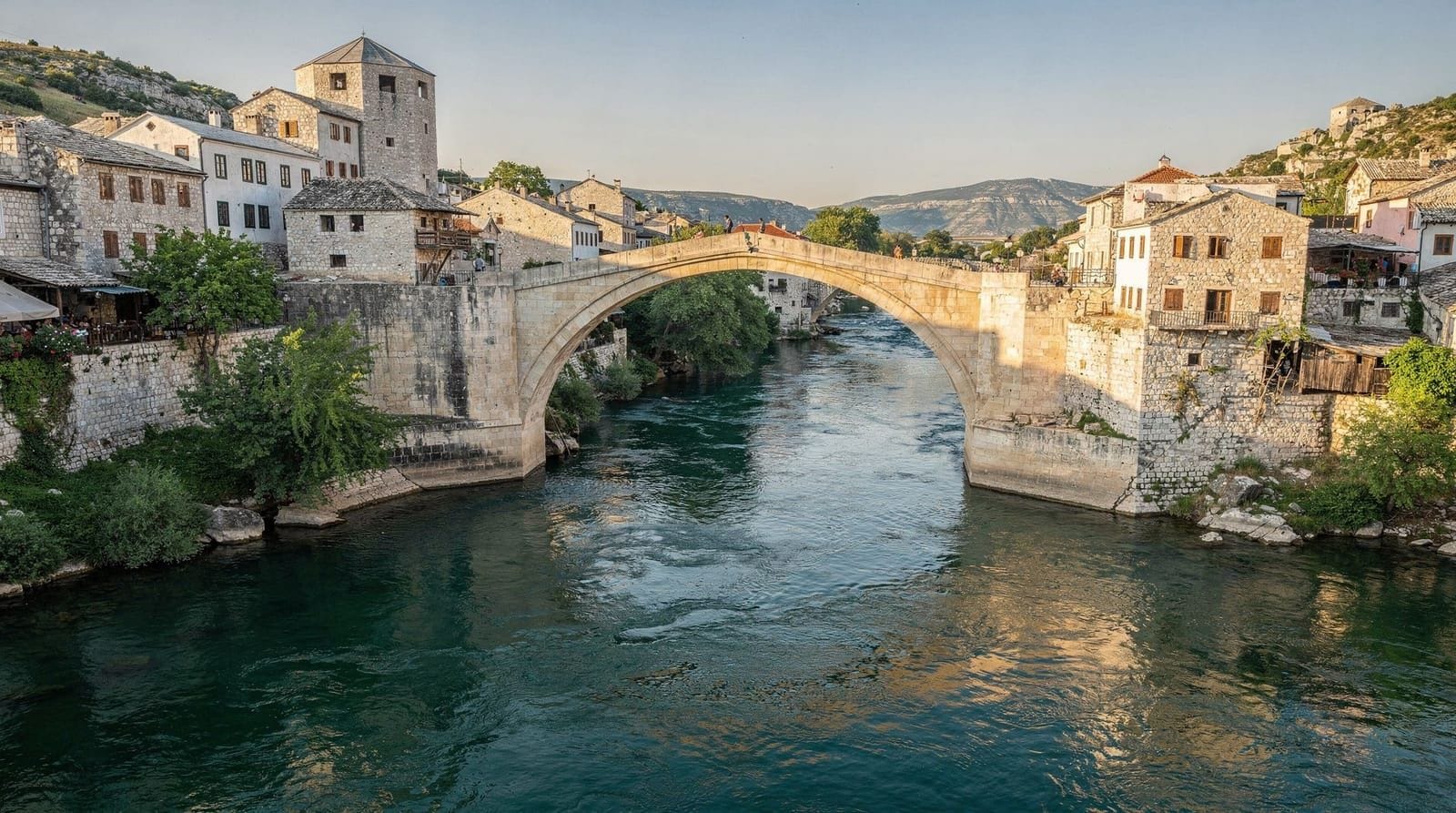
Kravice is typically visited as part of a Mostar day trip — an entirely sensible combination given the proximity. Passport required for border crossing. In summer the pool gets crowded but remains a genuinely refreshing stop after the heat of Mostar’s old town.
Toplica Canyon: the hidden cascade near Paklenica
Paklenica National Park near Zadar is primarily known for rock climbing and hiking, but the canyon system contains small waterfall cascades in the upper Velika Paklenica gorge. These are not dramatic single drops — they are mountain stream falls within a dramatic limestone gorge — but hikers reaching the upper canyon in spring after rain will find running water in multiple sections.
The falls at Paklenica are not accessible without a solid hike (several hours from the park entrance), but for those combining hiking with waterfall interest, the gorge is one of the most dramatic in Croatia.
Cetina River gorge: falls by raft
The Cetina river runs from its source inland to the Adriatic near Omiš. The middle section of the river passes through a dramatic gorge and includes a series of small falls and rapids. These are best seen from a river raft — rafting on the Cetina is one of Croatia’s most popular adventure activities, typically run as a half-day tour from Omiš or Split.
The falls within the gorge are not as large as Krka or Plitvice but the experience of passing them at water level, in a raft, through a limestone canyon is different in character from any boardwalk visit.
Velebit mountain falls
The Velebit massif — Croatia’s largest mountain range, running parallel to the Dalmatian coast — contains seasonal cascades in its higher valleys, particularly in the Zavižan area and around the Paklenica river systems. These are specialist territory, reached on hiking trails with no visitor infrastructure. The falls exist in spring and early summer and dry to trickles by August.
Velebit Nature Park information covers access for those interested in the highland landscape.
Plitvice vs Krka: which should you choose?
This is Croatia’s most common waterfall question. The honest answer is that they are different experiences that do not fully substitute for each other:
Choose Plitvice if: You are coming from Zagreb or the northern coast, have a full day, want UNESCO significance and the most dramatic visual scenery, and are not primarily motivated by swimming.
Choose Krka if: You are based in Split or Šibenik, want a shorter day trip, prefer a coastal driving context, or are combining with a Šibenik visit.
See both if: You have more than a week in Croatia and are visiting multiple regions. They are 120 km apart; not double-dippable in a single day but manageable across a multi-day itinerary.
The full Plitvice vs Krka comparison breaks this down in more detail.
Planning a waterfall itinerary
If waterfalls are a focus of your Croatia trip, the national parks and waterfalls route itinerary offers a structured approach. A practical self-drive circuit might include:
- Zagreb arrival
- Plitvice Lakes (full day from Zagreb or overnight in Mukinje)
- Rastoke/Slunj (morning stop en route south)
- Šibenik or Zadar base (2 nights)
- Krka National Park (day trip from Šibenik or Zadar)
- Coast onward
This covers both headline parks and a bonus site without excessive driving.
Practical tips that make or break a waterfall visit
Footwear matters more than people expect. Boardwalks at Plitvice and Krka get genuinely slippery from spray, and the Kravice pool area is loose gravel and mud at the entry points. Proper closed shoes with grip beat sandals, even in summer heat.
Arrive at opening. Both Plitvice and Krka issue timed-entry tickets in peak season, but the crowd density on the boardwalks by midday in July–August is a real factor in how much you enjoy the visit — not just a queueing inconvenience. An 8am entry at either park is a completely different experience from an 1pm one.
Combine with a swim day if visiting Kravice. Since Plitvice and the main Skradinski Buk pool at Krka don’t allow swimming, pack a swimsuit specifically for the Kravice leg of a Mostar day trip if that’s on your itinerary — it’s easy to forget when the rest of the day is sightseeing-focused.
Rain changes everything, for the better. Unlike most travel, a rainy day is genuinely good news at Croatia’s waterfall sites — the flow increases and the crowds thin. Don’t cancel a Plitvice or Krka day because of forecast rain; bring a light waterproof and go.
Photography. Overcast days actually produce better waterfall photos than harsh midday sun — the diffused light avoids blown-out highlights on the white water and keeps the travertine’s turquoise colour visible. Early morning or late afternoon light at Plitvice’s Lower Lakes viewpoints is the classic postcard shot; at Krka, the best angle on Skradinski Buk is from the lower boardwalk looking back toward the falls, not from the viewing platform above.
For further detail on getting between the coast and these inland parks, the Croatia national parks overview and getting around Croatia guide both cover transport logistics beyond what’s included here.
Frequently asked questions about Croatia waterfalls
Where are the best waterfalls in Croatia?
The top waterfall sites are Plitvice Lakes (Veliki Slap and sixteen interconnected lake-falls), Krka National Park (Skradinski Buk and Roski Slap), Kravice in Bosnia just across the border from Metković, and the Rastoke mills near Slunj. Smaller falls exist in Paklenica canyon and in the Velebit mountains.Can you swim at Croatia's waterfalls?
It depends on the site. Swimming at Plitvice is completely prohibited. Swimming at the main Skradinski Buk falls at Krka is now restricted — designated areas exist downstream. Kravice waterfalls in Bosnia still allow swimming and are very popular on summer day trips from the Dalmatian coast.When are Croatia's waterfalls at their most powerful?
Late March through early June, when snowmelt from the Dinaric Alps and spring rain combine to push maximum water volume through the karst systems. By August, flow is reduced though the turquoise colour is often more intense. Autumn (September–October) offers a good balance.Are Croatia's waterfalls accessible without a car?
Plitvice and Krka are both reachable by bus from Zagreb and Split respectively. Many day trips from coastal cities include transport. Kravice is most easily reached on an organised tour from Split or Dubrovnik.How close are Plitvice and Krka to each other?
About 120 km by road — not close enough for a comfortable single-day visit to both. Most visitors choose one based on their base. From Split, Krka is much easier; from Zagreb, Plitvice is the obvious choice.Are there any secret or lesser-known waterfalls in Croatia?
Yes. Rastoke near Slunj (often combined with a Plitvice visit) has a charming watermill village built over the Slunjčica river. The Toplica gorge near Paklenica has small cascades. Cetina river canyon near Omiš has falls visible from rafting trips. These are far less visited than the national park sites.
Top experiences
Bookable activities with verified prices and instant confirmation on GetYourGuide.
Top experiences
Best-rated activities across GetYourGuide and Viator.

From Split: Plitvice Lakes National Park Guided Tour
- Viator

Krka Waterfalls Day Tour with Boat Ride from Split and Trogir
- Viator

Plitvice Lakes National Park Guided Day Tour from Split
- Viator

Krka National Park Tour with tour Guide & Wine tasting from Split & Trogir
- Viator

From Zadar: Plitvice Lakes with Boat Ride & Zadar Old town tour
- Viator

Mostar and Herzegovina Tour with Kravica Waterfall from Split & Trogir
- Viator