Plitvice Lakes guide: boardwalks, tickets and honest crowd advice
Zagreb: Plitvice Lakes full-day guided tour
Is Plitvice Lakes worth visiting?
Yes — the sixteen turquoise lakes and interconnected waterfalls are genuinely spectacular and unlike anything else in Europe. Book tickets online weeks in advance for summer, arrive at gate opening (7 am) to beat crowds, and consider May, June or September for the best balance of colour and manageable visitor numbers.
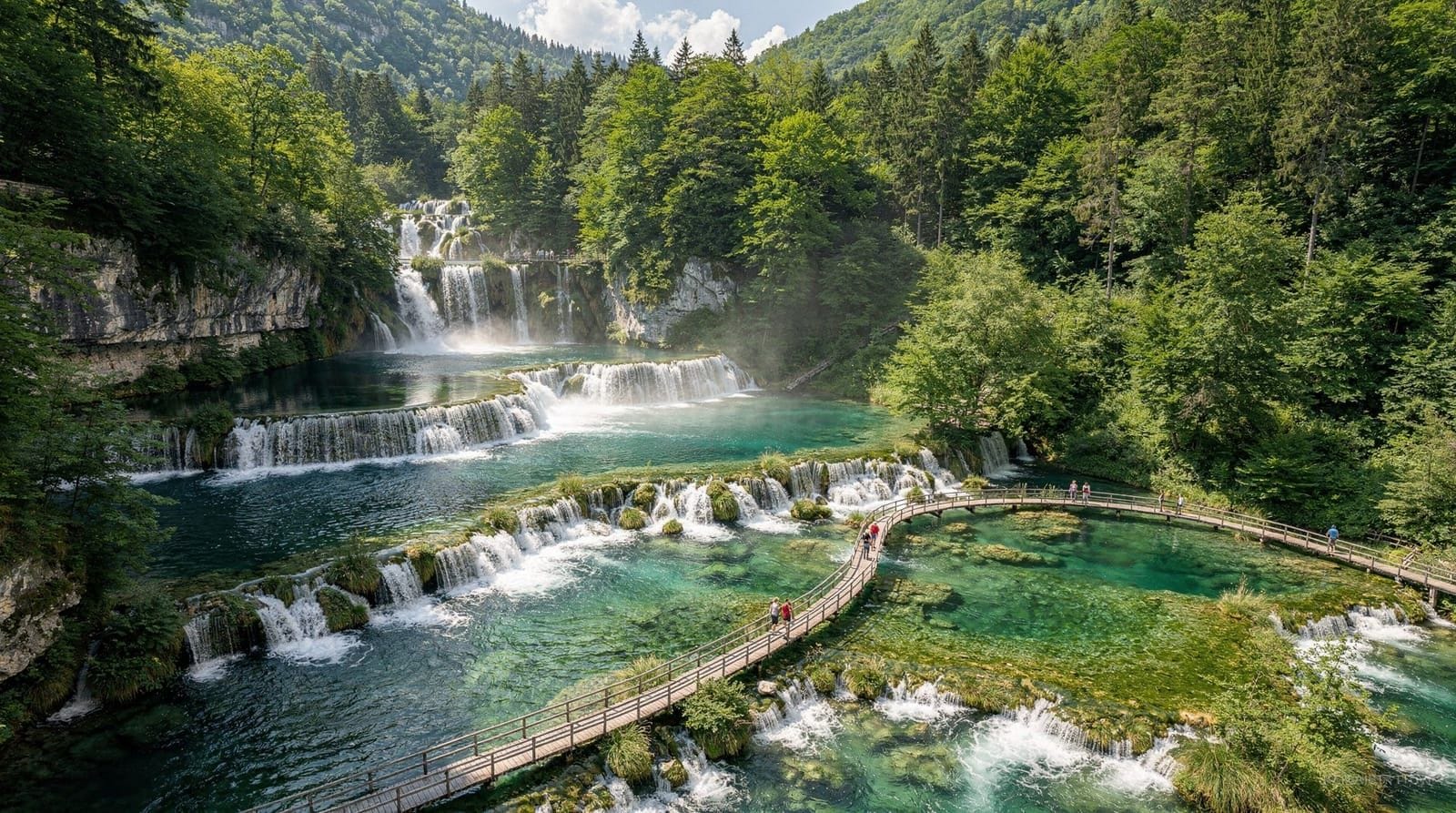
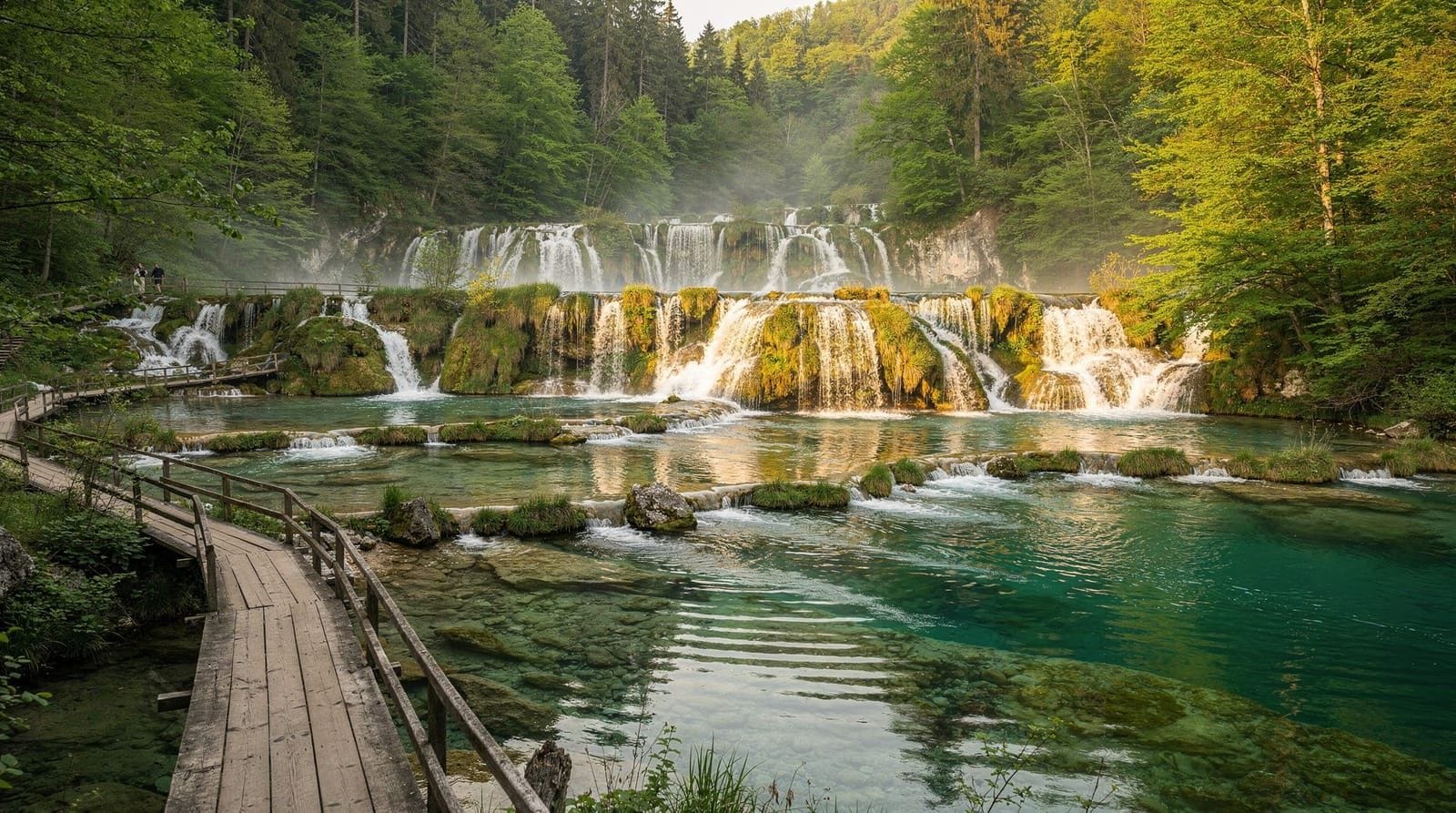
Croatia’s single most photographed landscape is not a beach or a walled city. It is a chain of sixteen terraced lakes in a limestone karst valley, connected by waterfalls that drop through the rock in shades that shift from emerald to cobalt depending on the light. Plitvička jezera National Park has been a UNESCO World Heritage Site since 1979, and the designation is deserved — but it also means the park gets more than 1.3 million visitors a year, most of them in a nine-week summer window. This guide explains what you actually need to know: prices, routes, logistics and the honest reality of visiting in peak season versus shoulder season.
| Where | Lika region, between Zagreb and the Dalmatian coast |
| Cost | €40 peak season (Jun–Sep), €10–23 low/mid-season |
| Time needed | 3–4 hrs minimum, 4–6 hrs for the full loop |
| Getting there | Bus/car from Zagreb (~2hrs), Zadar (~1.5–2hrs) or Split (~3.5hrs) |
| Best time | May–June or September–October |
Sixteen lakes, two zones and one essential boat
The park divides naturally into the Upper Lakes (Gornja jezera) and Lower Lakes (Donja jezera), connected by a short electric boat crossing at Kozjak — the largest lake, spanning 82 hectares. The two zones have different characters.
The Upper Lakes are wide, open and forested around the edges. Waterfalls here are broad and shallow, tumbling over travertine barriers that the park has been building for thousands of years. The travertine — a calcium carbonate deposit formed by the interaction of water and moss — is what gives the falls their sculptural, frozen look. Walking the upper section feels calmer and less frenetic than the lower zone.
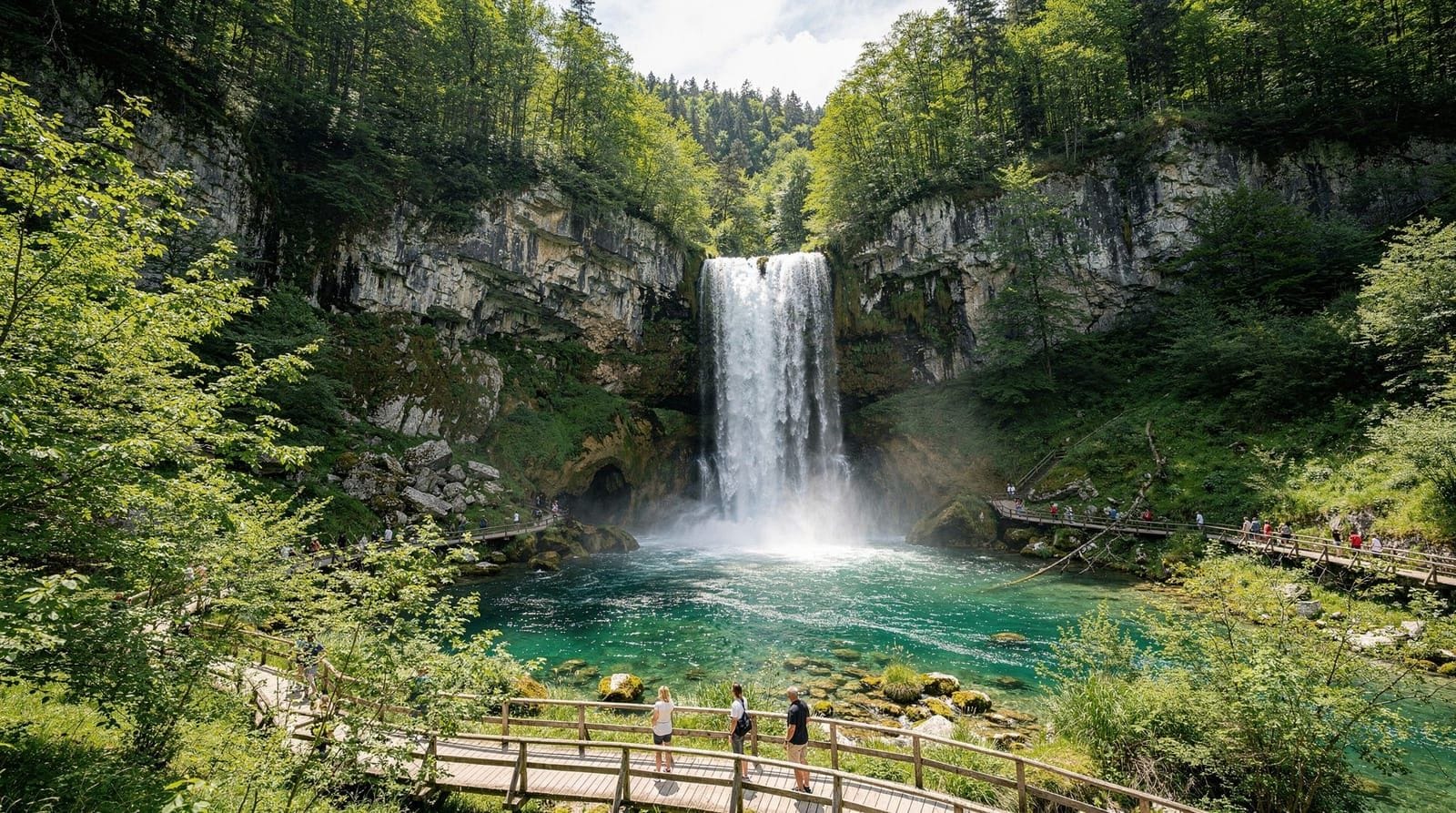
The Lower Lakes are the classic image: a tight, cliff-shadowed canyon where water cascades in theatrical curtains from one lake to the next. The most famous single falls, Veliki Slap (the Big Waterfall), drops 78 metres and is visible from several viewpoints. The boardwalks here pass directly over the water, which turns visiting the lower section simultaneously magical and deeply crowded by mid-morning in July.
The park’s electric boat crosses Kozjak lake in about twenty minutes and is included in all entry tickets. A panoramic train shuttles between the main entrance areas and the upper zone parking. Both are worth using, both have queues in peak season.
Ticket prices and entry gates
There are two main entrance gates: Entrance 1 (Ulaz 1) serves the Lower Lakes and is the most popular. Entrance 2 (Ulaz 2) serves the Upper Lakes, is slightly quieter in the morning and is often the better choice if you want to start with the upper zone and work down to the lower.
Official ticket prices for 2026 (per adult):
- Peak season (June 1 – September 30): €40 for a full day
- Mid-season (April–May, October): €23–30 depending on the month
- Low season (November 1 – March 31): €10
Children under 7 enter free. Students and seniors may receive reductions; check the park’s official website before purchasing.
Book online well in advance for any visit between late June and late August. The park imposes daily entry caps and sells out its online quota days — sometimes weeks — ahead. Walk-up tickets at the gate are issued only after online reservations, and frequently the gate simply has nothing left. Disappointment is not rare.
Routes: which one fits your time
The official park maps show lettered routes (A through K), but the meaningful decision is between a short circuit and a full-park loop.
Route A (3–4 hours, ~4 km): Lower Lakes focus with the electric boat. Good for families, shorter visits or summer days when you want to finish before the midday heat and crowds peak. Includes Veliki Slap viewpoints and the boat crossing.
Route B (4–5 hours, ~5 km): Adds more of the Lower Lakes with additional waterfall viewpoints before the boat crossing.
Route H (10–12 km, 4–6 hours): The full park. Covers the Lower Lakes, boat crossing, train ride and a thorough circuit of the Upper Lakes. The most rewarding option for first-time visitors who have a full day and are in reasonable physical shape. Recommended in May, June and September when conditions are pleasant.
Route K (5–6 hours, ~8 km): A popular middle option that includes both zones without the full Upper Lakes circuit.
| Route | Distance | Time | Best for |
|---|---|---|---|
| A | ~4 km | 3–4 hrs | Families, short visits, summer heat |
| B | ~5 km | 4–5 hrs | A bit more of the Lower Lakes |
| K | ~8 km | 5–6 hrs | Both zones without the full Upper circuit |
| H | 10–12 km | 4–6 hrs | Full park, first-time visitors with a full day |
For hikers who want to extend the day beyond the boardwalks, the hiking in Croatia guide covers trail options in the wider Lika and Velebit region.
The crowd reality: what summer actually looks like
In July and August, Plitvice is not a peaceful nature walk. By 9 am on a summer day, the main boardwalk through the Lower Lakes is shoulder-to-shoulder. By 11 am, photography requires waiting. By noon, the electric boat has a queue measured in tens of minutes.
This is not a reason to skip the park — the landscape is still extraordinary — but it changes how you experience it. Strategies that genuinely help:
- Arrive before 7 am for the first boat crossing of the day. The light is better anyway.
- Start at Entrance 2 (Upper Lakes) in summer — fewer visitors start there, and you work your way down to the Lower Lakes as the morning progresses.
- Visit on a weekday rather than a weekend; coach parties tend to peak on Saturdays.
- Book September rather than August — the same park, far fewer people, and the travertine dries to a warm amber colour as the vegetation turns.
Getting there
From Zagreb (130 km, about 2 hours): Both public buses (from Autobusni kolodvor Zagreb) and guided day trips operate year-round. Buses run several times daily; journey time is roughly 2–2.5 hours. Driving via the A1 motorway is comfortable and adds flexibility.
From Split (240 km, about 3.5 hours): More of a commitment but very common. Day trips typically leave Split around 6–7 am and return by 8–9 pm.
From Zadar (130 km, about 1.5–2 hours): The closest major coastal city to the park, making it an excellent base for those who want to day-trip here.
For a base-by-base breakdown of timing and tour options, see the dedicated Plitvice day trip guide, and check day trips from Zagreb or day trips from Split if you’re weighing Plitvice against other options from the same base.
How Plitvice compares to Krka
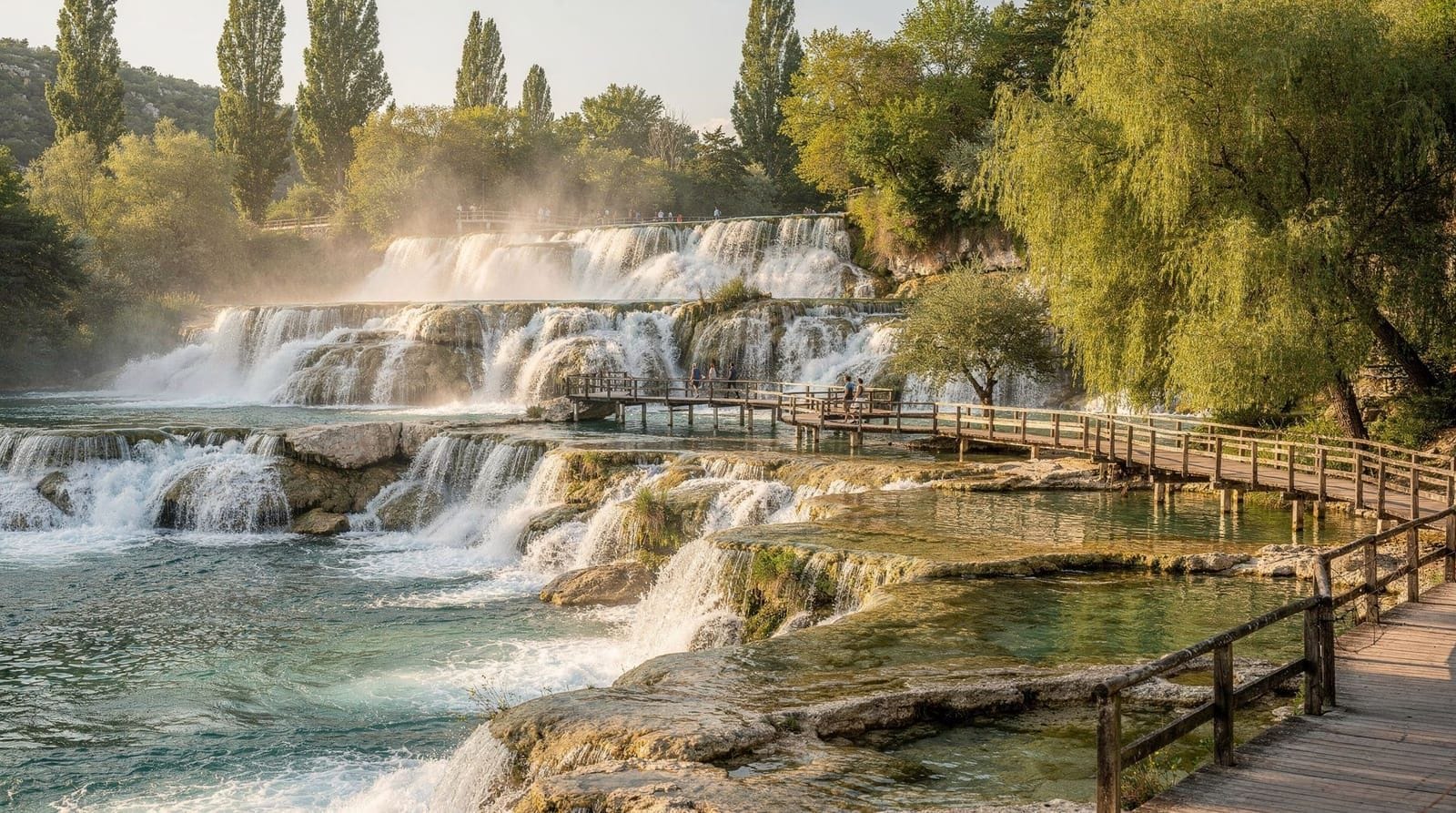
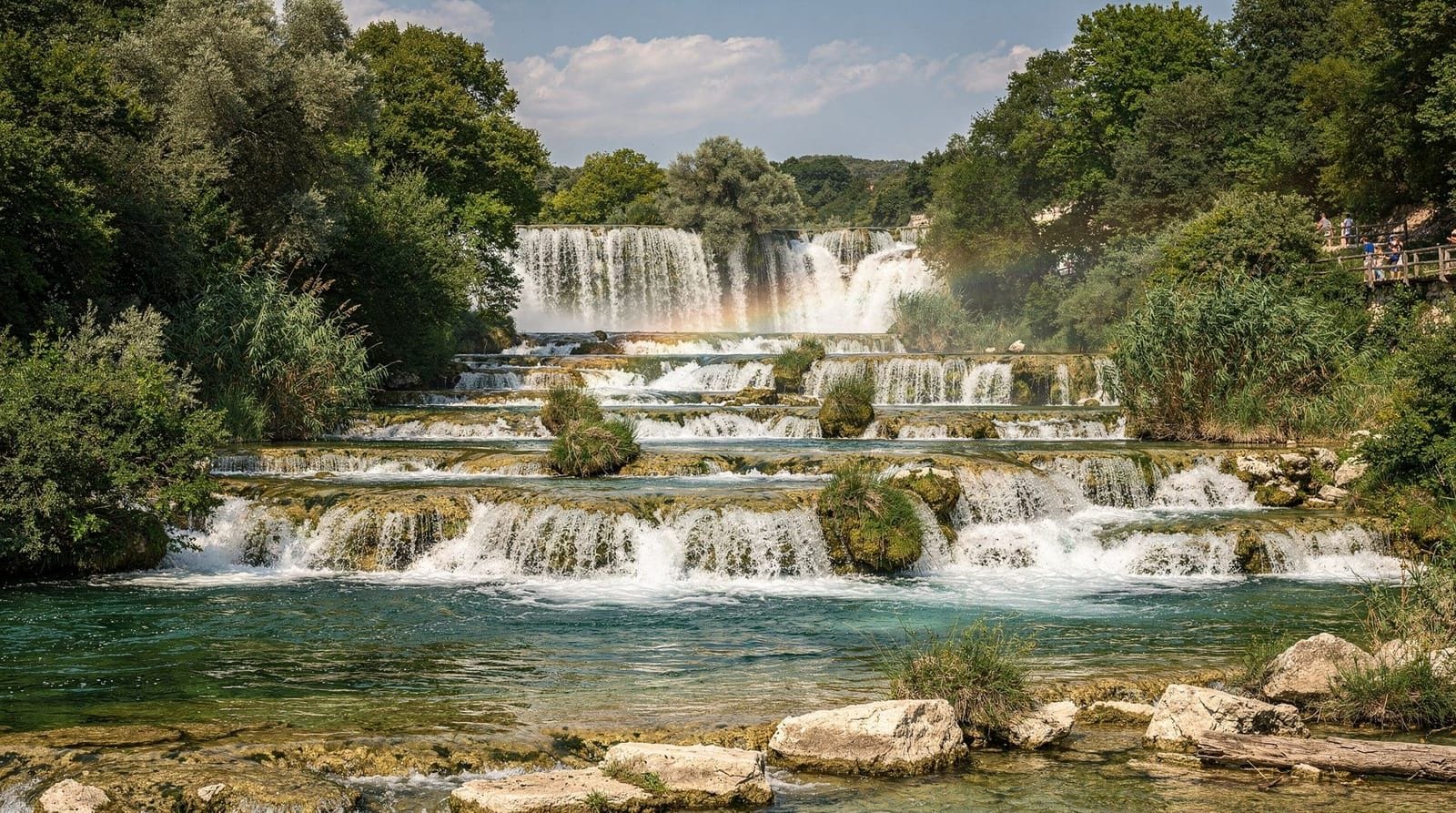
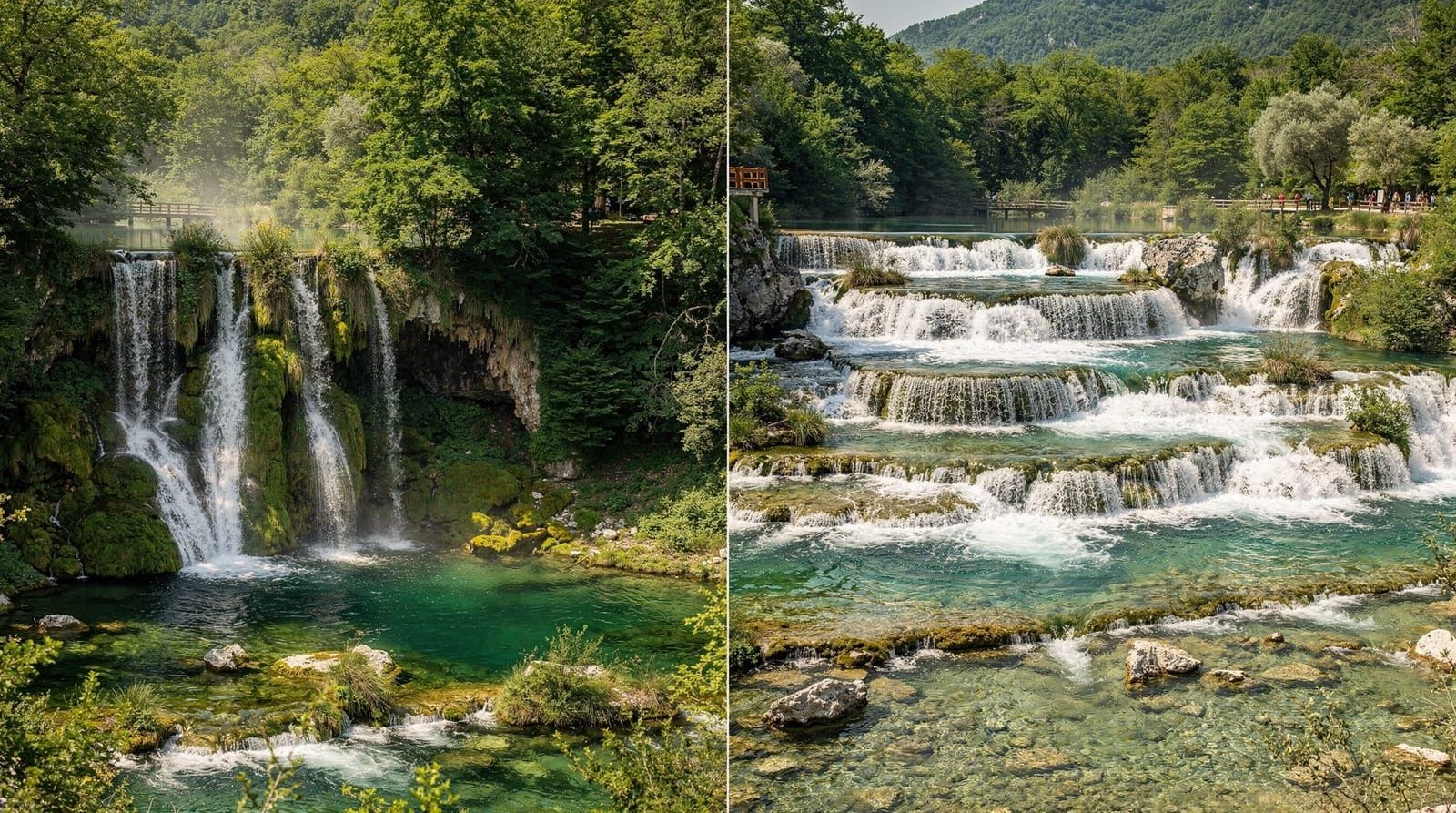
Croatia has two major waterfall national parks, and visitors with limited time often have to choose. Krka National Park is smaller, closer to the coast (particularly from Split or Šibenik) and generally quicker to visit, but Plitvice’s lake system and colour range are more dramatic and varied. Neither park permits swimming any longer. The Plitvice vs Krka guide walks through the decision in detail if you can only fit in one, and the Croatia national parks overview puts both in the context of the country’s wider protected areas. If you have time for a longer route through several of Croatia’s waterfall destinations, the national parks and waterfalls itinerary and the general Croatia waterfalls guide are both useful planning references.
Seasonality at a glance
Spring (March–May): Snowmelt swells the waterfalls to their maximum flow — the falls in April and early May are the most powerful you will see all year. The park is green, relatively uncrowded and the price is €10–23. Cold mornings, warm afternoons.
Early summer (June): Arguably the sweet spot. Water levels are still good, temperatures comfortable (25–28°C), the park is open for full routes and crowds haven’t yet hit peak. Online booking still recommended but not as critical as July.
Peak (July–August): Maximum heat (sometimes over 30°C), maximum crowds, maximum prices. Book weeks ahead online. Arrive at opening time or not at all.
Autumn (September–October): Stunning. The travertine shifts colour as the season changes, visitor numbers drop sharply after mid-September, and the air is cool enough for comfortable walking. Water levels start declining but are still adequate for the main falls. This is many guides’ preferred season.
Winter (November–March): The park transforms into ice formations and frozen cascades after hard frosts — genuinely beautiful and very uncrowded. Some routes may be closed, the boat does not always operate, and the temperature can be near zero. Low ticket prices and a completely different atmosphere.
What to bring and practical notes
The boardwalks are generally even and suitable for most fitness levels. A few stretches involve steps. The surface becomes slick when wet, so avoid smooth-soled footwear. There is no food sold on the boardwalk itself — eat before entering or buy from the cafes at the entrances. Carry water. Toilets are located at the entrance gates and at the boat dock.
Drones are not permitted inside the park. Photography is unrestricted for personal use but the light inside the canyon (Lower Lakes) is harsh from 10 am to 3 pm — morning or late afternoon light is much better for images.
There is no accommodation inside the park boundaries. The nearest options are in Mukinje and Rastovača villages, or slightly further in Slunj. Most visitors day-trip from Zagreb or the coast. Staying overnight nearby, rather than day-tripping, is the single best way to beat the crowds: you can be at the gate for opening, ahead of every coach arriving from Zagreb or the coast that same morning.
Frequently asked questions about Plitvice Lakes guide
How much do Plitvice Lakes tickets cost?
Adult tickets in high season (June 1–September 30) cost €40 for a full-day pass; in low season (October 1–May 31) the price drops to €10–23 depending on the month. Children under 7 enter free. Buy online at np-plitvicka-jezera.hr to guarantee entry — walk-ups are frequently turned away in July and August.Which route is best at Plitvice Lakes?
Route H (the full park loop, 10–12 km, 4–6 hours) is the most complete experience and covers both the Upper and Lower Lakes. For a shorter visit, Route A (3–4 hours) focuses on the spectacular Lower Lakes with the big Veliki Slap waterfall. Both include the electric boat and panoramic train.Can you swim at Plitvice Lakes?
No. Swimming, paddling and touching the water is strictly prohibited throughout Plitvičke jezera National Park. The ecosystem is extremely sensitive and the park authorities enforce the ban. For swimming near waterfalls in Croatia, visit Krka National Park instead.When is the best time to visit Plitvice Lakes?
May and early June for maximum waterfall flow (snowmelt) and spring colour with manageable crowds. September and October for autumn foliage and far fewer visitors. Avoid peak July–August if possible — the park imposes daily entry caps and sells out online days in advance.How do I get to Plitvice Lakes from Split?
By bus from Split bus station (roughly 4.5 hours, from €15 one-way) or on a guided day trip that handles the transport. Driving takes around 3 hours via the A1 motorway. From Zagreb, it is roughly 2 hours by bus or car.Is Plitvice Lakes accessible for families with young children?
Largely yes — the boardwalks are flat and wide enough for pushchairs on many sections, and the electric boat adds interest. The upper lake section involves more elevation change. Route A is the most family-friendly option. Young children get in free.What should I wear to Plitvice Lakes?
Comfortable walking shoes or trainers — the boardwalks can be slippery when wet, so avoid sandals with poor grip. In summer, bring sunscreen, a hat and a water bottle. A light layer helps in the shaded canyon sections even in August.
Top experiences
Bookable activities with verified prices and instant confirmation on GetYourGuide.
Top experiences
Best-rated activities across GetYourGuide and Viator.

From Split: Plitvice Lakes National Park Guided Tour
- Viator

Krka Waterfalls Day Tour with Boat Ride from Split and Trogir
- Viator

Plitvice Lakes National Park Guided Day Tour from Split
- Viator

Krka National Park Tour with tour Guide & Wine tasting from Split & Trogir
- Viator

From Zadar: Plitvice Lakes with Boat Ride & Zadar Old town tour
- Viator

Mostar and Herzegovina Tour with Kravica Waterfall from Split & Trogir
- Viator