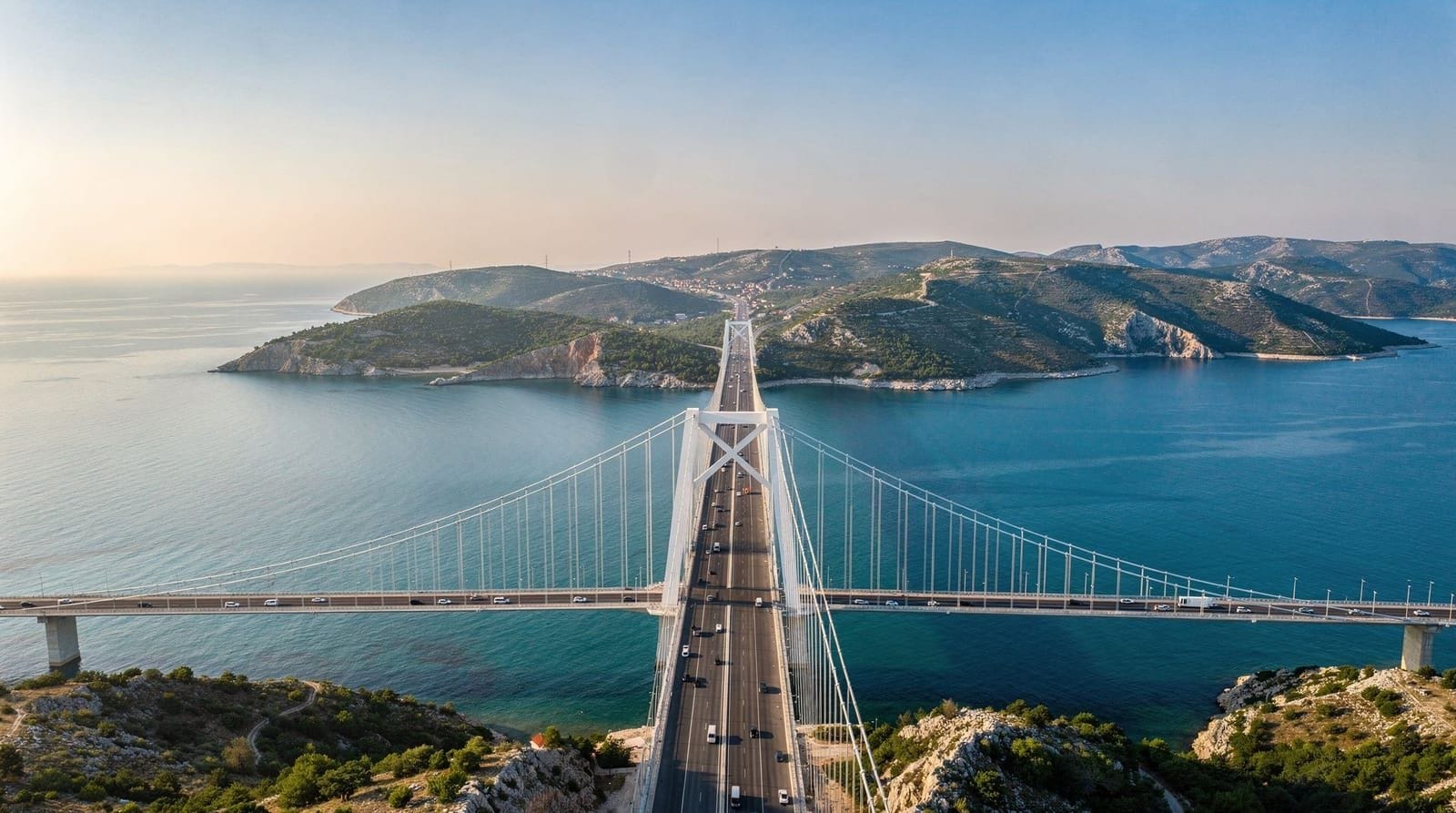
Croatia Motorway Tolls Explained 2026
How do toll roads work in Croatia?
Croatia uses a distance-based ticket system on its motorways (autoceste) — no vignette sticker. You collect a ticket at the entry toll plaza, drive to your destination, and pay at the exit based on the distance travelled and your vehicle category. Payment is by cash or card. Zagreb to Split costs around €26 for a car.
Croatia’s motorway network is modern, fast and well-maintained — the result of significant infrastructure investment over the past two decades. Understanding how the toll system works before you arrive saves confusion at the plaza and prevents an unpleasant surprise at the exit. Here is everything you need to know.
| System | Distance-based ticket, no vignette |
| Payment | Cash or card at exit |
| Zagreb → Split | Around €26 (Category I car) |
| Coastal road (D8) | Toll-free |
| ENC electronic tag | Optional, worth it for frequent crossings |
| Lost ticket | Charged maximum possible toll |
How the toll system works
Croatia’s motorways (autoceste) use an open ticket system (zatvoreni sustav naplate). This means:
- Entry: Pull up to the entry toll booth, take a paper ticket from the machine (or let the barrier read your ENC transponder). The ticket records your entry point.
- Drive: Use the motorway normally. There are no intermediate toll stops.
- Exit: At the exit toll booth, hand in the ticket (or the machine reads it). The computer calculates the distance between entry and exit and charges accordingly. You pay by cash or card.
- Barrier lifts: Drive on.
The system is logical and straightforward. The main things to remember: keep your ticket on the dashboard, and have your payment ready — the plazas have multiple lanes, including fast-flow ENC-only lanes that are closed to cash/card payers.
Key route tolls (passenger car, Category I, 2026 estimates)
| Route | Distance (motorway) | Approximate toll |
|---|---|---|
| Zagreb → Split (A1) | ~390 km | ~€26 |
| Zagreb → Rijeka (A6/A7) | ~140 km | ~€9 |
| Zagreb → Dubrovnik (A1 + A3 + D8) | ~600 km (motorway portion) | ~€30 (motorway sections only) |
| Zagreb → Zadar (A1) | ~285 km | ~€19 |
| Split → Ploče (A1 extension) | ~75 km | ~€6 |
| Zagreb → Osijek (A3 + A5) | ~280 km | ~€14 |
| Rijeka → Pula (A8/A9) | ~95 km | ~€8 |
Note: These are 2026 estimates based on published per-km rates. Prices are set by the Croatian government and typically increase slightly each year. Check the official Croatian motorway operator website (HAC — Hrvatska autocesta) for the most current rate tables.
Vehicle categories
The toll rate multiplies according to vehicle height and whether you’re towing:
| Category | Vehicles | Multiplier |
|---|---|---|
| I | Passenger cars up to 1.3m height, no trailer | Baseline |
| IA | Motorbikes | Below baseline (~0.5×) |
| II | Cars 1.3–1.9m, cars + trailer | ~1.5–2× |
| III | Vehicles 1.9–3.0m, coaches | Higher |
| IV–VI | Heavy goods vehicles | Highest |
If you’ve rented a large SUV or you’re travelling with a roof box or bike rack that pushes the vehicle height above 1.3m, you’ll likely fall into Category II. Staff at entry toll booths can advise if uncertain.
The ENC electronic toll tag
ENC (Elektronička Naplata Cestarine) is Croatia’s equivalent of France’s Liber-t or the UK’s M6 Toll transponder. A small device mounted on the inside of your windscreen is read automatically as you drive through designated ENC-only lanes — faster, no stopping, no cash needed.
Who should get one: Long-stay visitors, travellers planning multiple motorway crossings, or anyone who finds fumbling for cash at toll plazas stressful. Not worth the hassle for a single Zagreb–Split drive.
How to get one: Available at HAC motorway offices, some petrol stations and online pre-registration. Requires a deposit and is linked to a credit card or prepaid account.
Rental cars: Most standard rental cars in Croatia do not come with an ENC device. If you want one, specifically request it from the rental company at pick-up (a small daily fee applies) or get your own from HAC.
Krk Bridge toll
The Krk Bridge — connecting the mainland to Krk island in the Kvarner Gulf — has its own separate toll, currently around €3–€4 for a passenger car in each direction. Paid at the toll booth on the bridge. Card accepted.
Tips for using Croatian toll roads
Queue strategy: During summer peak hours (Saturday 10 am–2 pm and return Sunday afternoon), motorway entry points near Split and Dubrovnik experience queuing. ENC lanes are always faster. Avoid peak times if flexibility allows.
Do not lose your ticket. This cannot be overstated. If you lose it, you pay the maximum toll for your vehicle category — potentially twice what your actual journey would cost. Keep it in the cupholder or visor until exit.
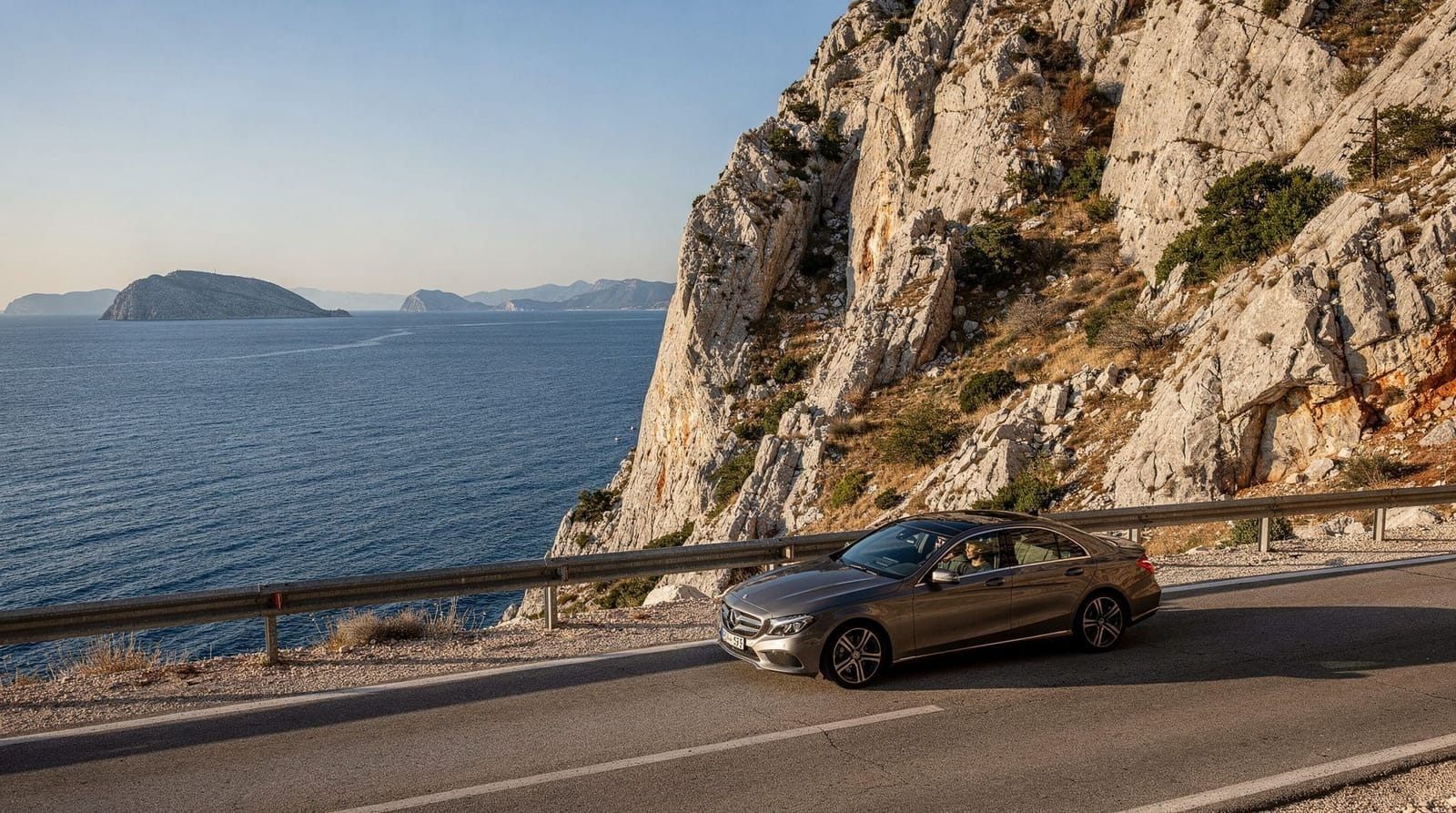
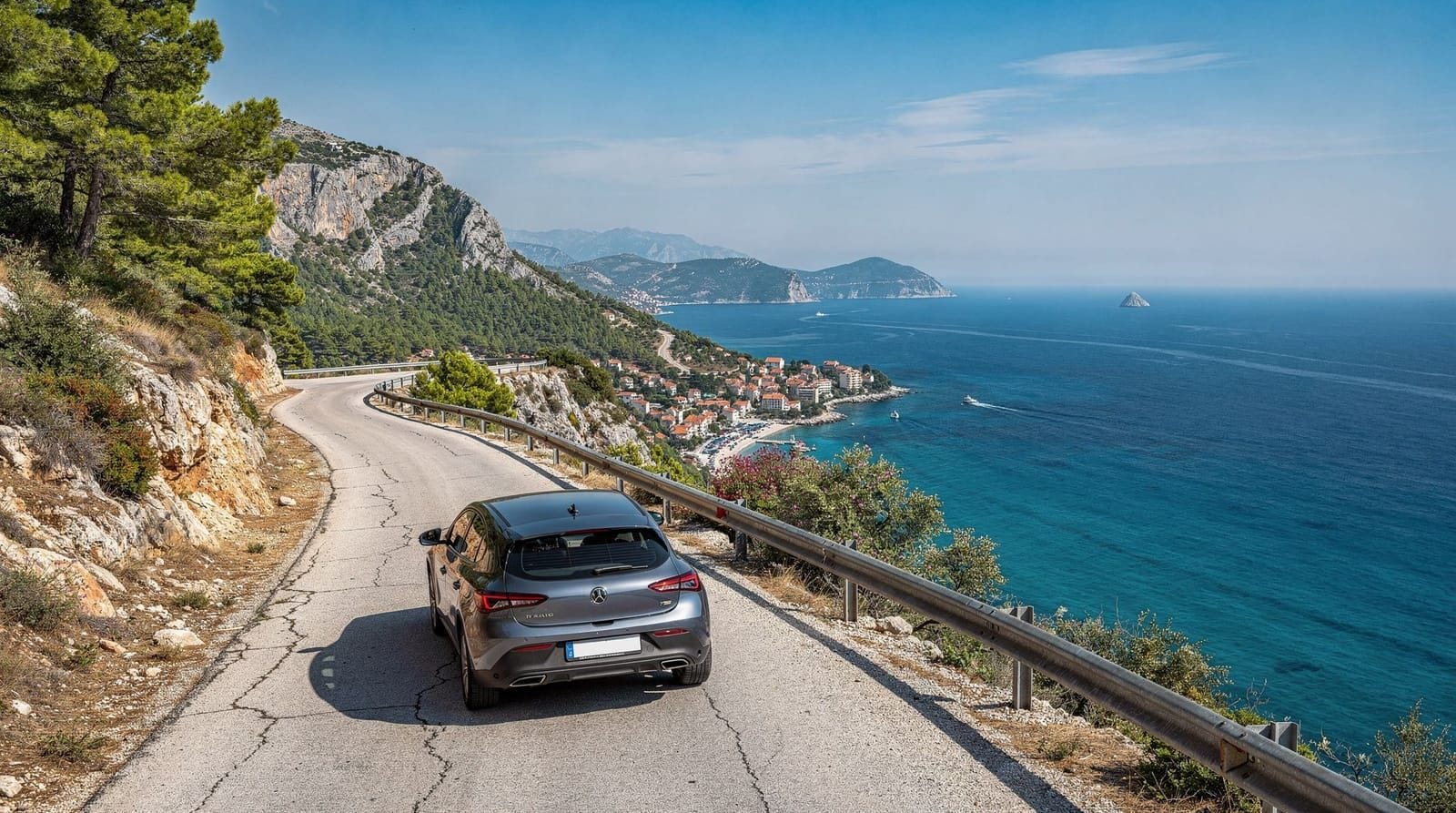
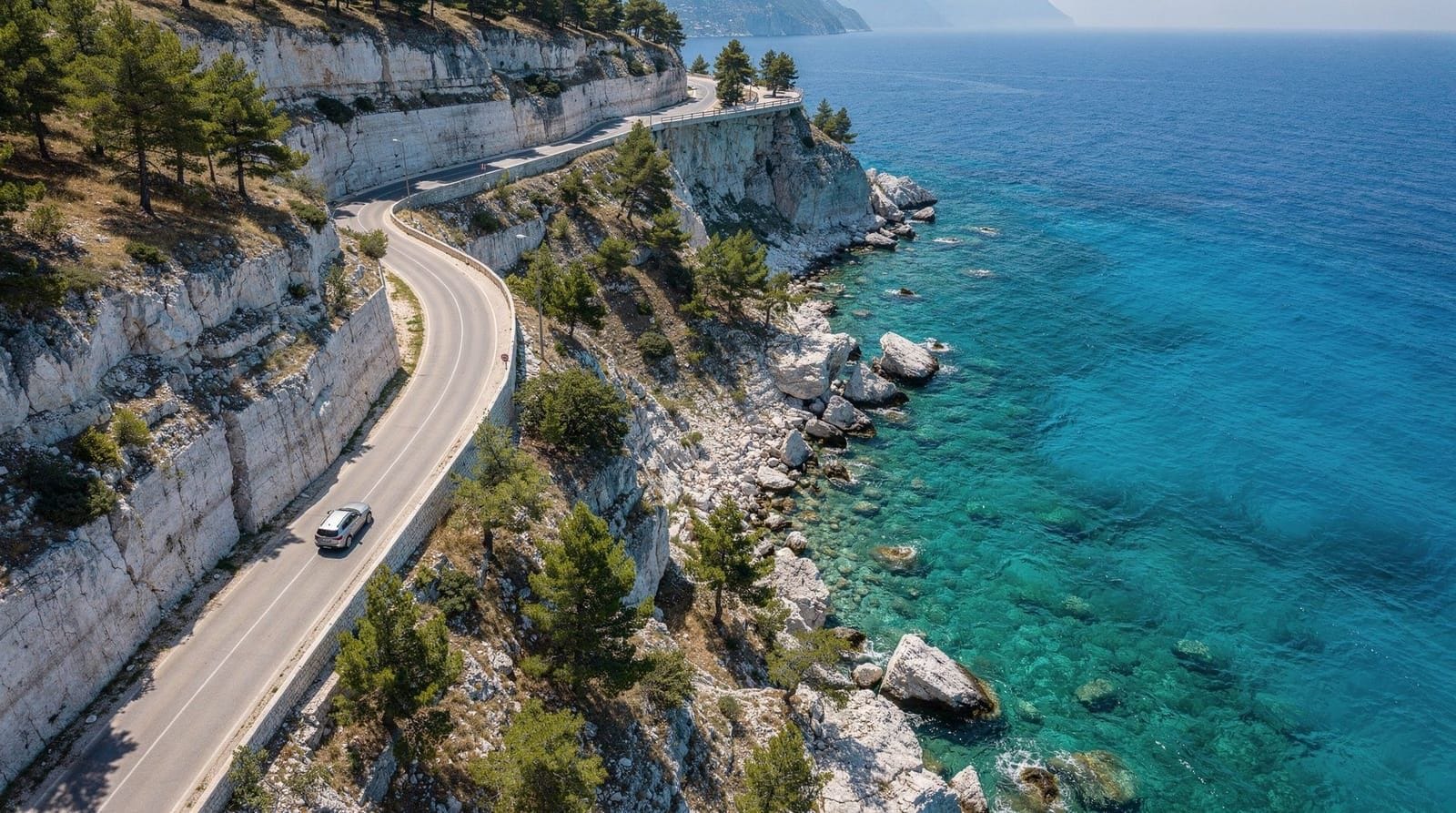
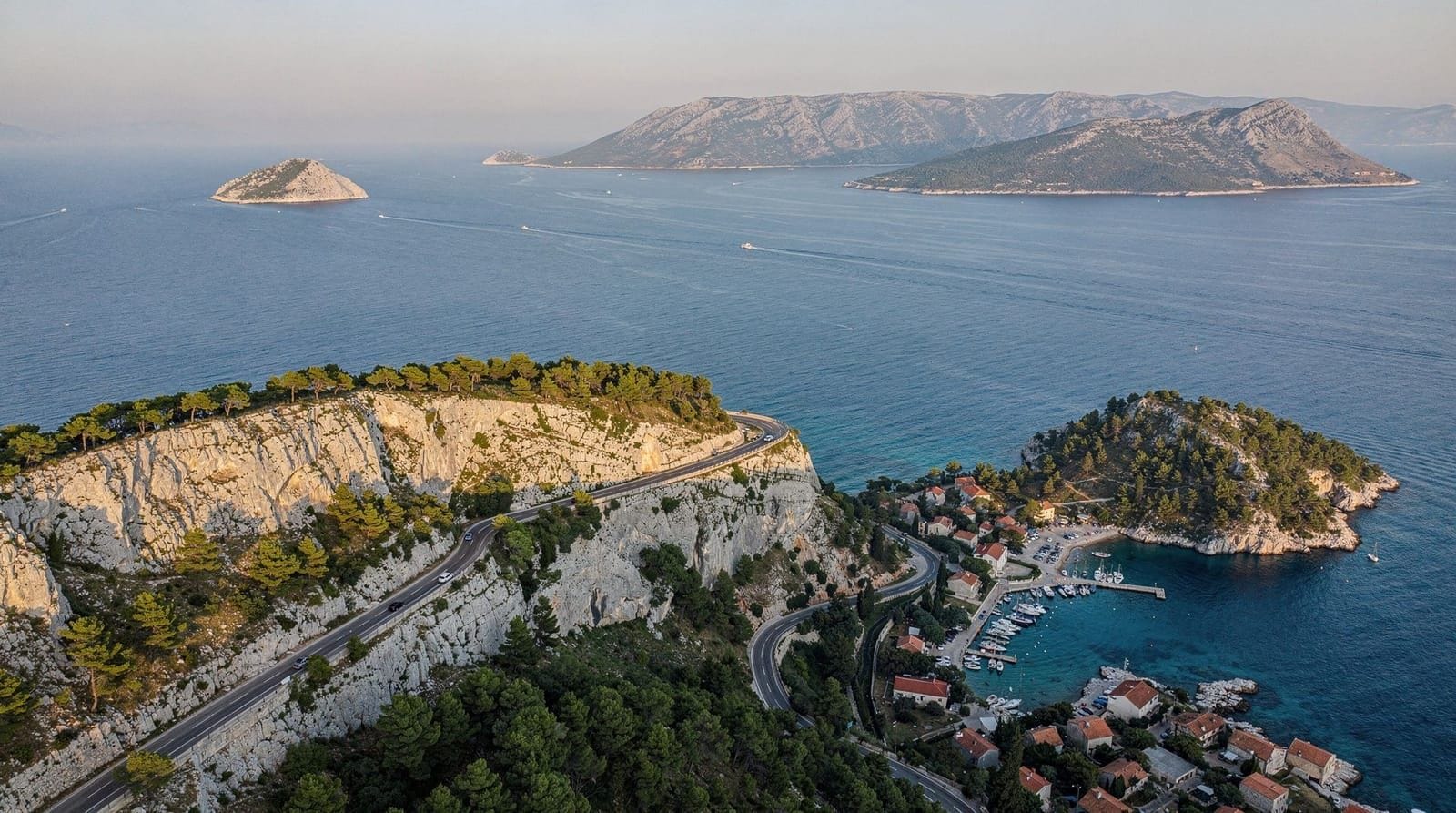
Going toll-free: The Adriatic Highway (D8 / Jadranska magistrala) is entirely toll-free and runs along the coast between Rijeka and Dubrovnik. It’s spectacular but slow in summer — 40–60 km/h average speed through towns and at peak times. Many drivers use the A1 motorway to bypass congestion and join the D8 for scenic sections.
Petrol on motorways: Service areas (odmorišta) on the A1 are frequent and well-stocked — fuel, food, coffee, WCs. Prices are slightly higher than in towns but not outrageous. Petrol stations alongside the D8 coastal road are adequate; fill up before heading to islands.
What about Slovenia’s vignette?
If you’re driving from Croatia into Slovenia (common from Istria), note that Slovenia uses a vignette (e-vignette since 2022). A 7-day e-vignette costs around €15.50 for a car. Buy it online before travel or at the border crossing. Unlike Croatia’s ticket system, the Slovenian motorway network requires this upfront payment regardless of distance driven.
The honest picture
Croatian tolls are reasonable by European standards. The €26 for Zagreb–Split on a fast, modern motorway is comparable to similar distances in France or Spain. The system is user-friendly once you understand it, payment is easy by card, and the road quality justifies the cost. The one genuine frustration is the queuing in peak summer — mitigated by either an ENC tag or carefully planned travel timing.
Toll costs by vehicle category (Zagreb–Split reference)
For the A1 Zagreb–Split route, here is how costs vary by vehicle type:
| Vehicle | Category | Approximate toll |
|---|---|---|
| Car, SUV (up to 1.3m height) | I | ~€26 |
| Motorbike | IA | ~€13 |
| Car with trailer, campervan | II | ~€40–€50 |
| Small coach, vehicle >1.9m | III | ~€60–€70 |
| Large coach / HGV | IV–VI | Higher |
The height of your vehicle matters more than most drivers realise. A standard car with a roof rack loaded with luggage may push over the 1.3m threshold and move into Category II pricing. Roof boxes and roof tents can have the same effect. If uncertain, measure before arrival — or ask at the toll booth, where staff can advise and adjust your classification.
Motorway service areas (odmorišta)
The A1 motorway has modern service areas at regular intervals. These are not just petrol stations — they’re proper rest stops with:
- Full-service petrol stations (unleaded, diesel, AdBlue, some EV charging)
- Restaurants and cafes (often a sit-down restaurant and a fast-food kiosk)
- Shop and convenience store
- Clean toilets (usually well-maintained)
- Play areas at some stops
The quality of A1 service areas has improved substantially over the past decade. You can get a decent coffee and a grilled sandwich without leaving the motorway. Petrol prices are typically 5–10 cents per litre more expensive than off-motorway stations — a small premium for the convenience.
Notable service areas: Lučko (Zagreb exit), Ogulin, Sveti Rok (dramatic views), Maslenica (overlooking the bridge to the Zadar riviera), Dugopolje (Split approach).
Alternative toll-free routes
If you want to drive Zagreb–Split without paying motorway tolls, the alternative is the old state road network — primarily the D1 through Karlovac, Vojnić, and Knin. This route:
- Takes 6–8 hours (versus 3.5–4 hours on the A1)
- Is toll-free but has many twists, turns and villages
- Passes through the former battlefield regions of the Homeland War — historically significant for those interested in recent history
- Is genuinely scenic in sections through Gorski Kotar and the Lika plateau
For pure efficiency, the A1 with its €26 toll is by far the better choice. The old road makes sense only if you specifically want a slow route through the interior or have unlimited time.
ENC tag setup: step by step
If you’re spending more than a week in Croatia and plan multiple motorway drives (e.g., Zagreb to Split and back, plus an Istria trip), an ENC tag pays dividends:
- Register online at the HAC (Hrvatska autocesta) ENC portal or visit a HAC motorway office (at major entries and rest areas)
- Provide vehicle registration and a credit or debit card for the account
- Receive the transponder (a small OBD-style or windscreen-mounted device)
- Activate the account with a deposit (typically €25–€50, refundable)
- Use dedicated ENC lanes (marked with a yellow diamond sign) — pass through without stopping
Monthly statements show all crossings and amounts charged. At the end of your stay, return the device and reclaim your deposit at a HAC service point, or leave it active for future visits.
Rental car ENC: Ask the rental company if the car has an ENC device — more common on long-term lease/corporate vehicles than standard tourist rental cars. If the car has one, your crossings will be billed to the account linked to it, and you’ll be invoiced by the rental company.
Istria motorway tolls
Istria has its own motorway network (BINA-ISTRA operated), including the Istrian Y (Ipsilon motorway) connecting Pula, Poreč and Rovinj to the main A8/A9 network.
Istrian Y tolls (passenger car):
- Rovinj → Umag (coastal section): ~€4
- Pula → Pazin (central section): ~€5
- Istrian Y junction → Rijeka: ~€8
The Učka Tunnel toll (~€5) is separate and applies to the main A8/A9 route regardless of the Istrian network.
Total cost for a Pula → Zagreb drive via the motorway: approximately €15–€18 (Istrian Y + Učka tunnel + A6 Zagreb approaches). Still significantly cheaper than the same journey in Western Europe.
Driving the A1 in practice: what to expect at toll plazas
For first-time users of the A1, the entry and exit experience goes like this:
Entry: As you join the motorway, there are multiple lanes at the toll booth. Most are unmanned (machine only). Pull up to the machine, press the button (or it detects your vehicle), and a ticket is printed. The ticket shows your entry point code, date/time and vehicle category. Take the ticket — the barrier lifts after a few seconds.
Machine vs manned: Some entry points have manned booths alongside machines. The manned booths are typically for trucks, ENC enquiries and cases where the machine malfunctions. Standard cars always use the automated lane.
ENC lanes: Marked with a yellow diamond “ENC” sign, these are for transponder-equipped vehicles only. Do not enter an ENC lane without a transponder — your vehicle won’t be recognised and you’ll trigger an alarm.
Exit: Pull up to the booth, insert your ticket into the machine (or hand it to the operator if manned). The display shows the amount due. Pay by card (recommended — insert, wait for authorisation, barrier lifts) or cash (exact change is faster; give the note and wait for change from the machine).
Receipt: Press the button for a receipt or collect it automatically at card payment. Most ENC lanes issue no paper receipt; the transaction is recorded digitally.
Common delays: The main delay at Croatian toll plazas is travellers who haven’t prepared their payment (searching for cash, finding a card). Having a credit card in hand at exit is the fastest approach. During peak July–August, manned booths at the Lučko (Zagreb) and Dugopolje (Split approach) exits can have 5–10 minute queues on Friday and Saturday afternoons.
HAC (Hrvatska autocesta) and AZM
HAC — Hrvatska autocesta d.o.o. — operates the A1, A6, A7 and other national motorways. Their website (hac.hr) lists:
- Current toll rates per category
- Road condition reports
- ENC registration and account management
- Traffic cameras and congestion updates
AZM — Autocesta Zagreb-Macelj — operates the A2 motorway connecting Zagreb to the Hungarian border. Different operator, separate toll system, but compatible with ENC tags.
For real-time traffic and incidents, the HAK (Croatian Automobile Club) website (hak.hr) is the go-to resource — includes waiting times at border crossings, active road closures, and seasonal driving conditions.
Comparing toll cost with alternatives
For travelers weighing a rental car against buses, trains or flights between Croatia’s main hubs, tolls are just one part of the total cost picture:
| Route | Car (fuel + toll, one way) | Bus fare | Notes |
|---|---|---|---|
| Zagreb → Split | ~€60–75 (fuel + €26 toll) | €25–35 | Bus often cheaper for a solo traveler |
| Zagreb → Rijeka | ~€30–40 (fuel + €9 toll) | €15–20 | Comparable; car offers flexibility |
| Zagreb → Zadar | ~€45–55 (fuel + €19 toll) | €18–25 | Bus competitive for one or two people |
| Split → Dubrovnik | ~€40–50 (fuel, mostly toll-free D8) | €15–22 | Similar travel time either way |
For a solo or two-person trip sticking to the main coastal towns, buses are often cheaper once tolls and fuel are added to a rental. A car earns its cost back once you’re detouring to national parks, inland towns or islands not well served by public transport — Plitvice, Krka and Istria’s hill towns in particular.
For groups of three or four, the calculation flips quickly: split four ways, the fuel-plus-toll cost of a Zagreb–Split drive is usually cheaper than four individual bus tickets, and you gain the flexibility to stop at service areas, viewpoints and smaller towns along the way that a bus timetable simply skips.
Tolls in context: planning a driving itinerary
Tolls are one line item in the wider cost and logistics of driving in Croatia. If you’re comparing a road-trip itinerary against island-hopping by ferry, factor tolls alongside fuel, parking (scarce and pricey in Split and Dubrovnik old towns) and the rental car insurance you’ll need. For a car-based route through the interior and coast, the Croatia road trip itinerary gives a sense of how driving days and toll costs stack up across a full trip.
Two common route decisions come up repeatedly:
Split to Dubrovnik: the A1 doesn’t run the full distance — south of Ploče, you’re on the D8 coastal road (toll-free but slower). See Split to Dubrovnik for the full route breakdown, including the Pelješac Bridge, which bypasses the old Neum (Bosnia-Herzegovina) border crossing entirely. The Pelješac Bridge guide covers this in detail — no toll applies on the bridge itself.
Zagreb to Split: the most toll-heavy standard route in the country, and the one most drivers ask about. See Zagreb to Split for the fastest routing and realistic driving times, and the Croatia airports guide if you’re comparing driving against flying between the two cities plus a rental car at the other end.
Also worth considering: if your trip is coast-only with no interior legs, you may not need the motorway (and its tolls) at all — getting around Croatia compares driving against ferries, buses and trains for a coast-focused itinerary.
What the toll money pays for
Croatia built much of its motorway network rapidly between 1990 and 2015, largely funded by EU funds and infrastructure bonds. The toll revenues fund:
- Ongoing maintenance and winter road clearing
- Debt service on construction bonds
- HAC operations and staff
- Future motorway expansion (the A11 Zagreb–Sisak, A12 Zagreb–Varaždin extensions are ongoing)
The A1 is regarded as one of the better-maintained motorways in southeastern Europe — road surface quality is generally high, emergency laneways are clear, and lighting is adequate at key interchanges.
Frequently asked questions about Croatia Motorway Tolls Explained 2026
Is there a motorway vignette in Croatia?
No. Unlike Austria, Slovenia or Switzerland, Croatia does not use a vignette (sticker) system. You pay per journey based on distance at entry and exit toll booths.How much are tolls from Zagreb to Split?
Approximately €26–€28 for a passenger car in 2026. The A1 motorway is the main route; the toll covers the full distance from Zagreb to Split (around 390 km via motorway).What is the ENC tag in Croatia?
ENC (Elektronička Naplata Cestarine) is Croatia's electronic toll system — a transponder mounted on the windscreen that deducts tolls automatically. It saves time at toll plazas but requires registration and a deposit. Useful for frequent or long-stay visitors; rental cars typically don't have it pre-installed.Can I pay Croatian tolls by card?
Yes, credit and debit cards are accepted at most Croatian toll plazas. Cash (euros) is also accepted. Some older remote plazas may have limited card options; carry some cash as backup.What vehicle categories are used for Croatian tolls?
Vehicles are categorised I–VI. Category I (standard passenger car up to 1.3m height without trailer) is most visitors. Motorbikes, larger SUVs with roof boxes that exceed 1.3m, campervans and cars towing trailers move into higher categories and pay more.Are there tolls on the coastal road (D8)?
No. The Adriatic Highway (D8) is a state road and toll-free. Tolls apply only on motorways (autoceste) — A1, A2, A3, A6, A7 etc. The Krk Bridge has a separate toll.What happens if I lose my toll ticket?
If you lose the entry ticket, you pay the maximum possible toll for that category of vehicle — calculated as if you entered at the furthest possible point from your exit. Keep the ticket safe in the car.
Top experiences
Best-rated activities across GetYourGuide and Viator.

Mostar and Herzegovina Tour with Kravica Waterfall from Split & Trogir
- Viator

Mostar & Kravice waterfalls full-day guided tour from Split
- Viator

Split airport to Split Private transfer to 8 pax (Door to Door any location)
- Viator

Zagreb to Split Group Transfer with Plitvice Lakes guided Tour
- Viator

Zadar: Zrmanja River Kayaking, with optional transfer from Zadar
- Viator

Mostar and Kravica Waterfall Discovery Day Trip from Split or Trogir
- Viator