Sailing from Split — Routes, Day Trips and How to Get on the Water
Split: Half-day sailing tour with swim stop, snacks and wine
What are the best sailing destinations from Split?
Split is the starting point for the central Dalmatian sailing circuit. The most popular short-haul destinations are Šolta (1–2 hours), Hvar (2.5–3 hours), Brač (2 hours), and the Pakleni Islands (reached after Hvar). For a full week, the classic route extends to Vis, Korčula and beyond. Day sailing tours from Split reach the Pakleni Islands and Hvar in one day.
Split as Croatia’s Sailing Capital
Split has more charter companies, more marina berths and more sailing boats per square kilometre than any other city in Croatia. The ACI Marina Split — immediate neighbour to Diocletian’s Palace and the ferry terminal — is the largest marina in the country, and the cluster of charter offices around it represents most of Croatia’s boat charter market.
| Where | ACI Marina Split, next to Diocletian’s Palace |
| Cost | Around €50–130/person for day tours; €70–120/night berth for charters |
| Time needed | Half-day (4–5hrs) to a full week charter |
| Getting there | Walkable from Split old town / ferry terminal |
| Best time | June–September for the maestral; May/late Sept for fewer crowds |
The reasons are straightforward: Split is where the Dalmatian island chain begins. From Split, you can reach Šolta in 90 minutes, Hvar in under three hours, Vis in four. The Pakleni Islands — one of the most beautiful sailing anchorage areas in the Adriatic — are a half-day sail away. The Kornati Islands to the north are two days’ sailing. The entire central Dalmatian sailing circuit begins and ends here.
Day Sailing Tours from Split
Not everyone chartering a week’s sailing holiday — and a day sailing tour from Split is a legitimate way to experience the Adriatic under sail without the logistical complexity of a full charter.
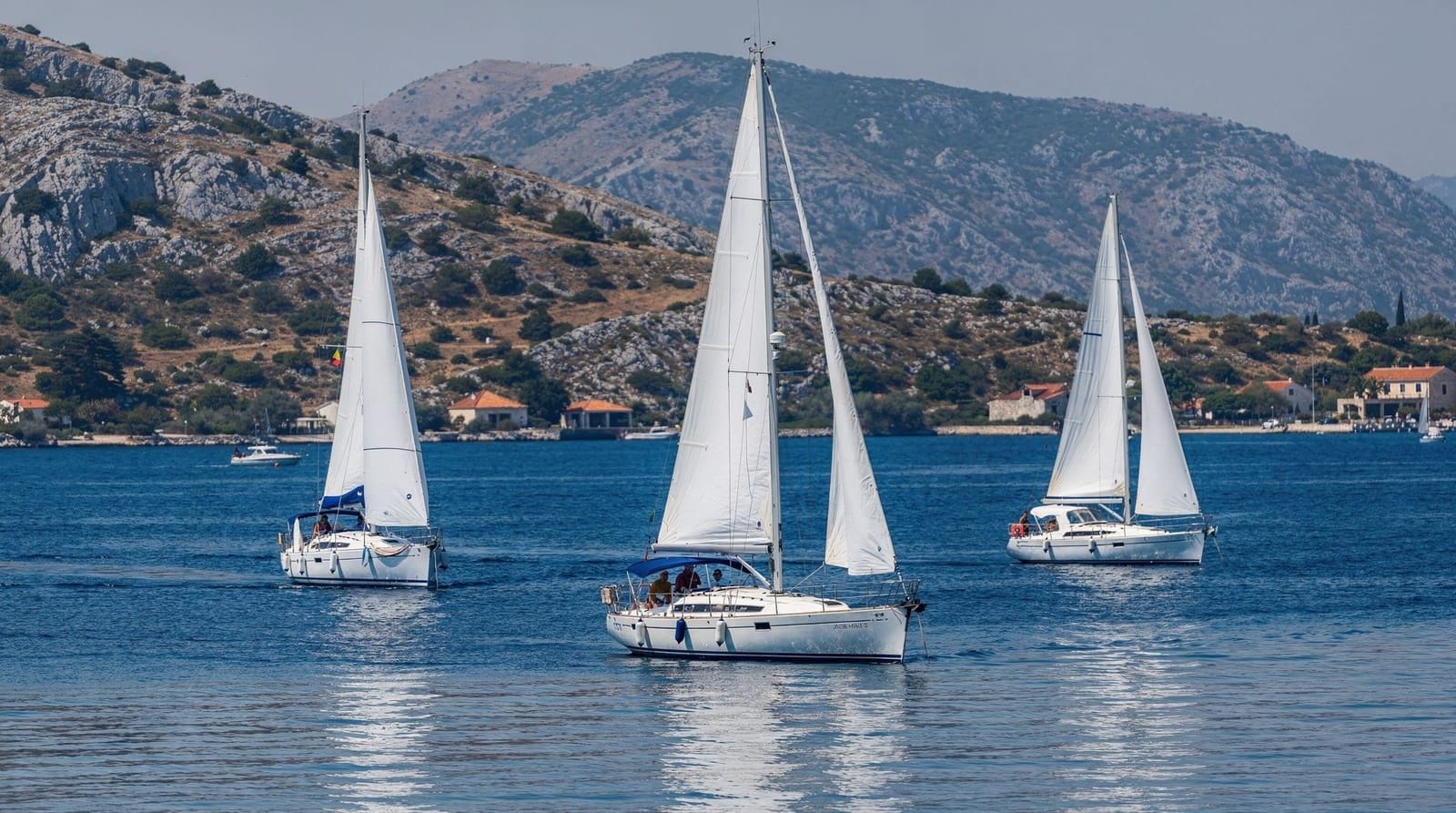
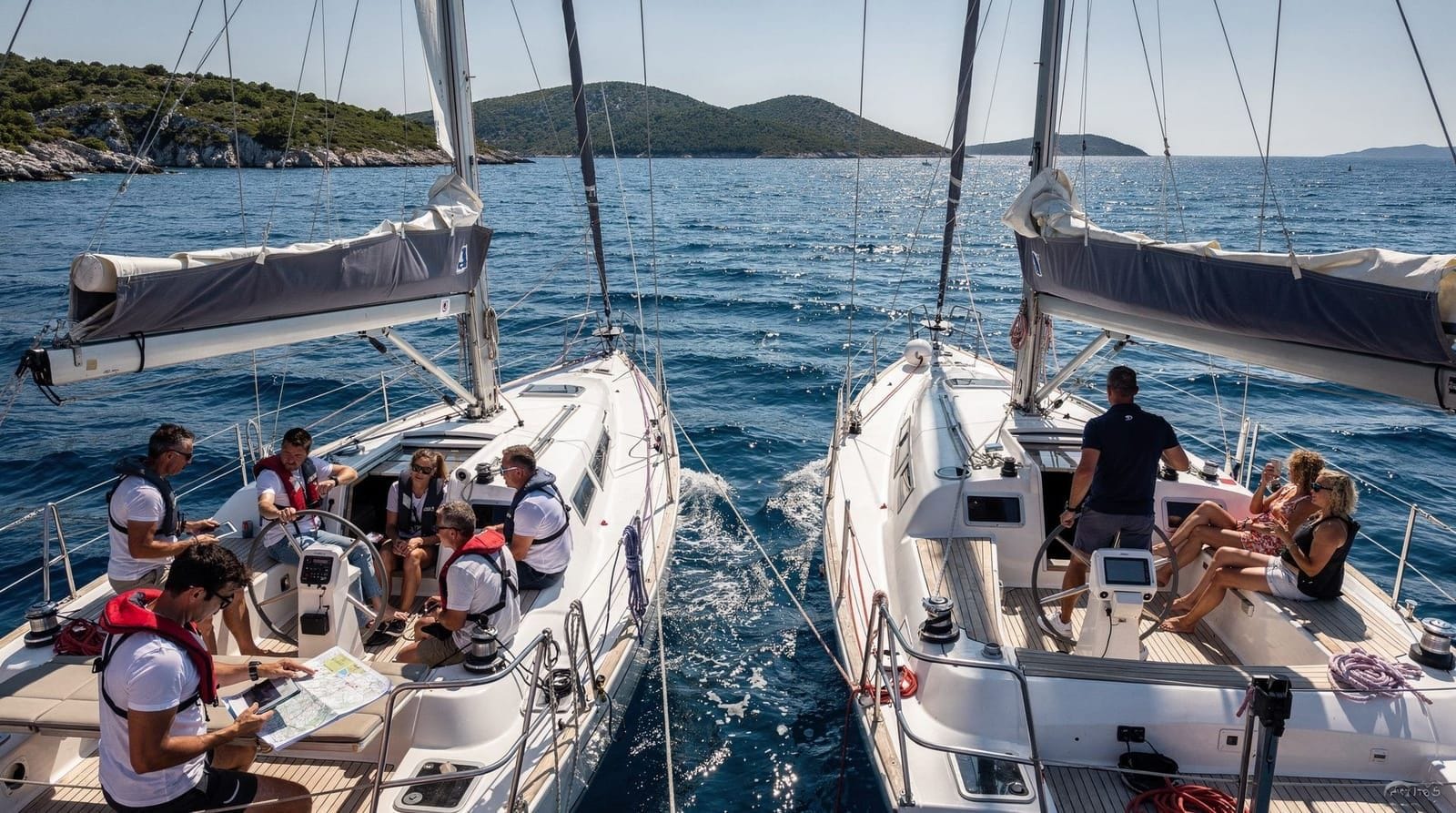
Half-day sailing tours: Typically 4–5 hours, departing Split morning or afternoon. Usually sail to the Pakleni Islands or the Brač–Šolta area, with a swim stop and snacks. Genuine sailing rather than a motor trip — expect to pull on ropes and experience the boat under sail. Prices approximately €50–80 per person.
Full-day sailing tours: 7–9 hours, departing Split early morning. Typically reach Hvar, the Pakleni Islands (Palmižana for swimming and lunch) and return to Split by evening. Some operators include Šolta as an additional stop. The more organised versions include a meal ashore; others bring food aboard. Prices approximately €80–130 per person.
The Classic Charter Routes from Split
Southern Route — 7 Days
The canonical Split sailing week covers the central Dalmatian islands. See the Croatia sailing guide for a full day-by-day breakdown. Key passages:
Split to Šolta (Maslinica or Rogač): 15–20 nm, 3–4 hours. A gentle opening passage. Maslinica has a beautiful small harbour; Rogač is more functional but convenient.
Šolta to Hvar Town: 15–20 nm, 3–4 hours on a good maestral afternoon. Arrive Hvar marina — book ahead in July and August. The marina is at the foot of the old town.
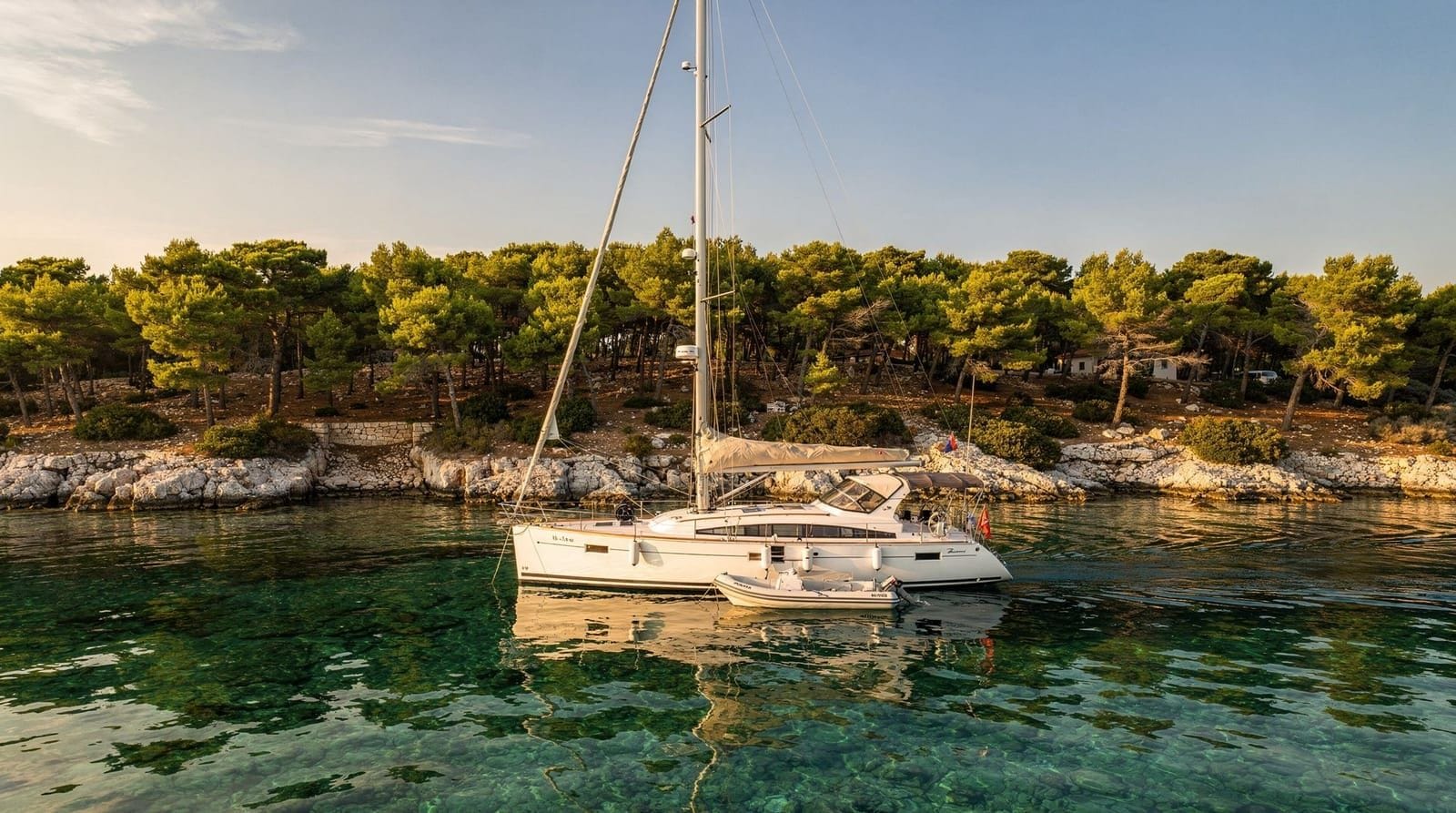
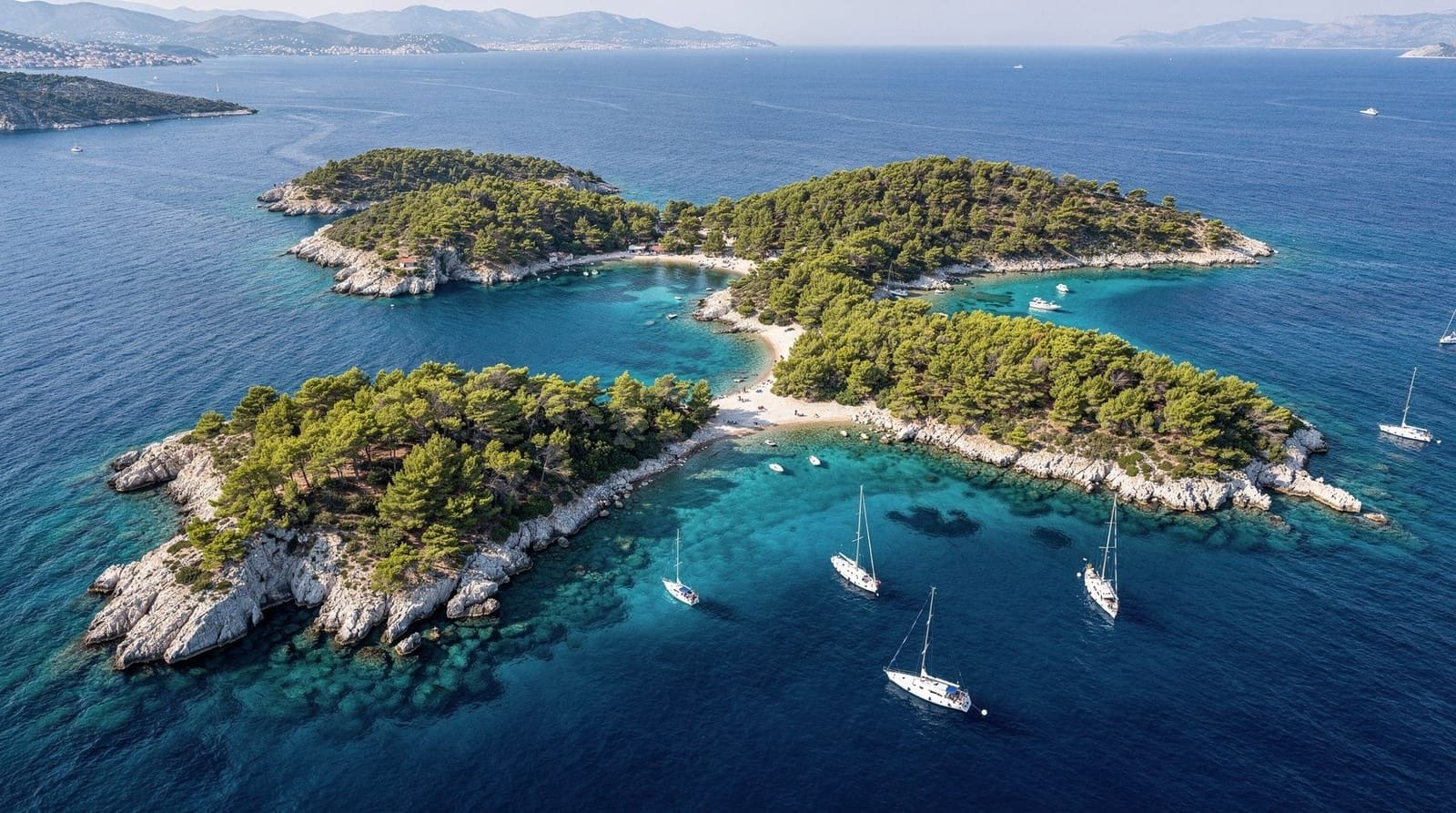
Hvar to Pakleni Islands: 3–5 nm, under an hour. Anchor or take a mooring buoy at Palmižana, Vinogradišće or Stipanska. The Pakleni Islands are the social heart of Hvar-area sailing.
Pakleni to Vis or Komiža: 25 nm, 5–6 hours with maestral. This is the first proper passage of the week — open water south of the island chain. Good sailing in typical summer conditions.
Vis to Brač (Bol): 20 nm, 4 hours. Zlatni Rat beach within walking distance of Bol harbour.
Bol to Split: 25 nm, 5 hours. Morning departure, comfortable return.
Northern Route — Kornati Focus (7 Days)
Split to Trogir: 6 nm, under 2 hours. Worth an overnight in the UNESCO old town.
Trogir to Šibenik: 30 nm, 6 hours. Passing the Drveník islands and the Šibenik channel.
Šibenik to Kornati entrance (Mana Bay or Lavsa): 20 nm, 4–5 hours. Enter the park, pay fees, anchor.
3–4 days in the Kornati: Explore the archipelago at leisure. Key stops: Ravni Žakan (konoba), Lavsa, Mana (the ruined film village), the western cliffs of Kornat.
Return via Murter and Biograd: North exit from the park and return to Split via coastal route.
ACI Marina Split — Practical Notes
Location: Immediately west of the Split ferry terminal, adjacent to the old town. Walking to Diocletian’s Palace: 10 minutes. Walking to supermarkets for provisioning: 10–15 minutes.
Berths: Approximately 350 in the water. Fuel dock on the outer mole. Water and electricity at every berth. Shower blocks and laundry available. Chandlery (marine shop) with basic parts.
Booking: ACI marinas can be reserved online at aci-marinas.com. In peak season (July–August), berths book out. If you arrive without a reservation, the harbourmaster will find you space or direct you to a nearby anchorage. Priority goes to reservations.
Peak week reality: In late July and August, ACI Split operates at near-full capacity. Arriving boats line up to enter. The harbour is noisy with generators and radios. This is why experienced Dalmatian sailors prefer to spend as few nights as possible in large marinas during peak season — anchoring in coves is free, quieter and often more beautiful.
Cost: Approximately €70–120 per night for a 40 ft boat including electricity and water in peak season. Cheaper in shoulder season.
Winds and Weather Planning
The Split sailing area is dominated by the maestral in summer — see the Croatia sailing guide for a full wind breakdown. What is specific to Split:
The bura channel effect: The Velebit Channel north of Split is a known bura acceleration zone. Wind that is force 4 in the open sea can be force 6–7 in the channel during a bura event. Plan northbound passages carefully in unsettled weather.
Sea states from Split: The passage from Split toward Vis and Komiža crosses open water once you clear the island chain — moderate swells can build in a south wind (jugo). Check the Adriatic forecast (DHMZ — Croatian Meteorological Institute, or Windfinder) before the open-water passage.
Local knowledge: The passage between the islands (the Split–Hvar channel, Hvar–Vis) is well-sheltered. The Šolta and Brač channels are also protected. The exposure comes when sailing south of Vis or west of the islands in the open Adriatic.
For Day-Trippers Who Don’t Sail
If you want the sailing experience without chartering or joining a group tour, several options exist in Split:
The five-island boat tours: These are motor vessel tours (not sailboats) that visit five islands in a day — see the Blue Cave guide for a full description. They cover the same geography as a sailing day trip but faster and without the sailing experience itself.
Private speedboat hire: A speedboat with driver for a half or full day. Expensive but fully flexible — you direct where you want to go. Popular for small groups wanting beach-hopping on their own schedule.
Provisioning for a Sailing Week
Split is the best place to provision for the sailing week — once you leave the city, options narrow and prices rise.
Konzum Brodarica: Large supermarket near the ferry terminal. Walk from ACI Marina: 15 minutes. Good range of Croatian wines, cheese, cured meats, produce.
Green market (Pazar): The open-air market near Diocletian’s Palace sells fresh vegetables, fruit, herbs and local products. Excellent for provisioning fresh produce before departure.
Buying in advance: Stock enough for at least 3 days — Šolta and Vis have small shops, but choice is limited and prices are higher. Hvar has a better supermarket. Allocate provisioning time on your arrival day.
Wine: Croatia has excellent wines for boat provisioning — Plavac Mali from Hvar and Korčula, Pošip white from Korčula, Malvazija from Istria. Split wine shops near the market are well-stocked. Buy enough for the week — corkage-free in your own cockpit.
Bareboat vs skippered charter from Split
Deciding how to charter is the first real decision for anyone planning a week on the water from Split. See the bareboat vs skippered guide for the full breakdown; the short version:
| Bareboat | Skippered | |
|---|---|---|
| Who it suits | Experienced sailors, ICC/licence holders | First-timers, families, those who want to relax |
| Cost | Boat charter only | Boat charter + skipper fee (~€150–250/day) |
| Local knowledge | You navigate and plan | Skipper knows anchorages, weather, mooring spots |
| Flexibility | Full control of itinerary | Itinerary is a collaboration with the skipper |
| Stress level | Higher — you’re responsible for the boat | Lower — skipper handles docking and hazards |
Most first-time Split charterers underestimate how much local knowledge matters — knowing which coves are sheltered from a building jugo, or which marina still has space in August, is the difference between a relaxing week and a stressful one. A skipper for even the first two or three days, with the option to take over yourself later in the week, is a popular middle ground.
Chartering with children
Split-based sailing weeks work well for families, provided the itinerary is realistic. Shorter daily passages (2–3 hours rather than 5–6), frequent swim stops, and anchorages with a beach or shallow water for children to play in matter more than covering distance. The Pakleni Islands and Šolta are particularly good family anchorages — calm, shallow, close to Split, with tavernas ashore. A skippered charter is strongly recommended with young children aboard, both for safety and so parents aren’t managing sail trim and supervision simultaneously.
Frequently asked questions about Sailing from Split
Can I do a sailing day trip from Split without chartering a full boat?
Yes. Multiple operators offer half-day and full-day sailing tours from Split — you join a small group on a sailing boat rather than chartering the whole vessel. These tours typically sail to the Pakleni Islands and Hvar or to Šolta and Brač, with a swim stop and food included. They provide a genuine sailing experience at a fraction of the charter cost.How far is Hvar from Split by sailing boat?
Hvar Town is approximately 25–30 nautical miles from Split. Sailing at 5–6 knots with a good maestral, that is 5–6 hours. Direct catamaran takes 1 hour as a passenger. On a sailing charter, a common approach is to motorsail if the wind is light, or make the passage in stages — stopping at Šolta first, then sailing to Hvar the next day.What is the ACI Marina Split like?
ACI Marina Split is the largest marina in Croatia with around 350 berths. It is located immediately southwest of the old town ferry terminal, walkable to Diocletian's Palace. It has full facilities — fuel, water, electricity, shower blocks, laundry, chandlery, repair services, a restaurant and charter company offices. It is busy in peak season; reserve your berth ahead if arriving in July or August.What permits do I need to sail from Split?
A Croatian nautical travel permit (issued by the charter company with the boat), a crew list (popis posade) filed with harbour authorities before departure, and proof of ICC or national sailing licence. If you plan to enter national parks (Kornati, Mljet), you need to purchase park entrance permits on arrival at the designated entry points.Is it better to sail north or south from Split?
The classic southern route (Hvar, Vis, Korčula) is the most popular and the best-developed for charter sailing — more marinas, more restaurants, more infrastructure. The northern route (Trogir, Šibenik, Kornati) is wilder, more dramatic in landscape and less crowded. Both have genuine merit. Most first-time charterers go south; Kornati devotees return north.When does the maestral wind blow from Split?
The maestral (northwest afternoon sea breeze) is the dominant sailing wind of the Dalmatian summer. In Split, it typically establishes mid-morning and builds through the afternoon to force 3–4 (15–20 knots). It dies after sunset. This pattern makes afternoon passages from Split south toward Hvar excellent sailing — the wind is behind or across you.Can I sail to Italy from Split?
Croatia to Italy is a viable extended sailing route — Ancona is approximately 160 nm from Split across the open Adriatic. This passage requires offshore experience, proper weatherrouting and a full overnight crossing. It is beyond the scope of most charter holidays but done routinely by experienced sailors on longer crossings.
Top experiences
Bookable activities with verified prices and instant confirmation on GetYourGuide.
Top experiences
Best-rated activities across GetYourGuide and Viator.

Blue cave, Mamma Mia and Hvar, 5 islands speedboat tour
- Viator

Blue Cave and Hvar Tour - 5 Islands Tour from Split and Trogir
- Viator

Blue cave, Mama Mia and Hvar, 5 Island Speedboat Tour from Trogir
- Viator

Medulin-Kamenjak 5h boat trip ALL-INCLUSIVE drinks on Sandra Boat
- Viator

Medulin: All-Inclusive Kraken Boat Tour to Kamenjak Cave & Levan
- Viator

3Hour ALL-INCLUSIVE Sunset Dolphin Watching from Medulin onSandra
- Viator