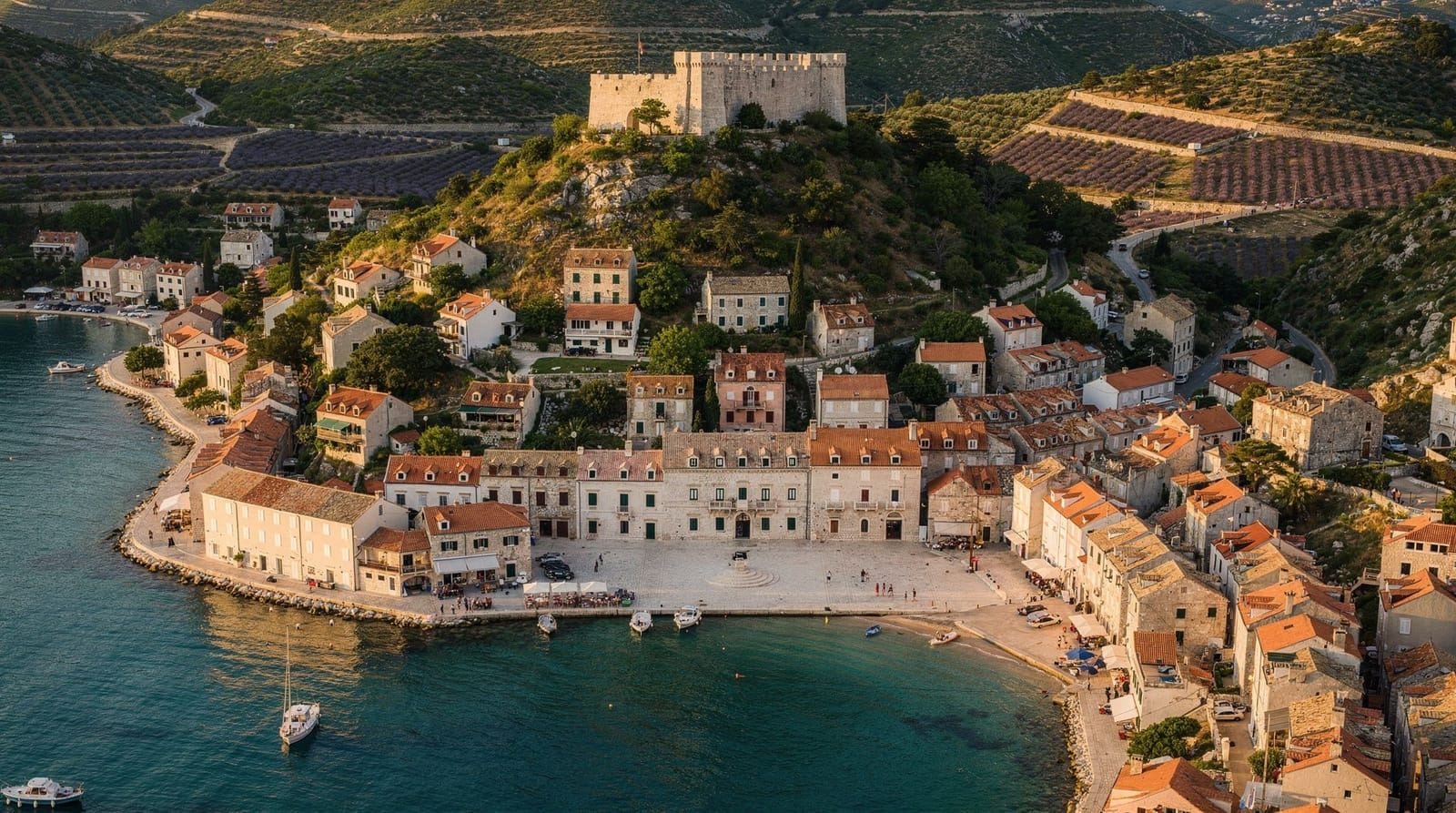
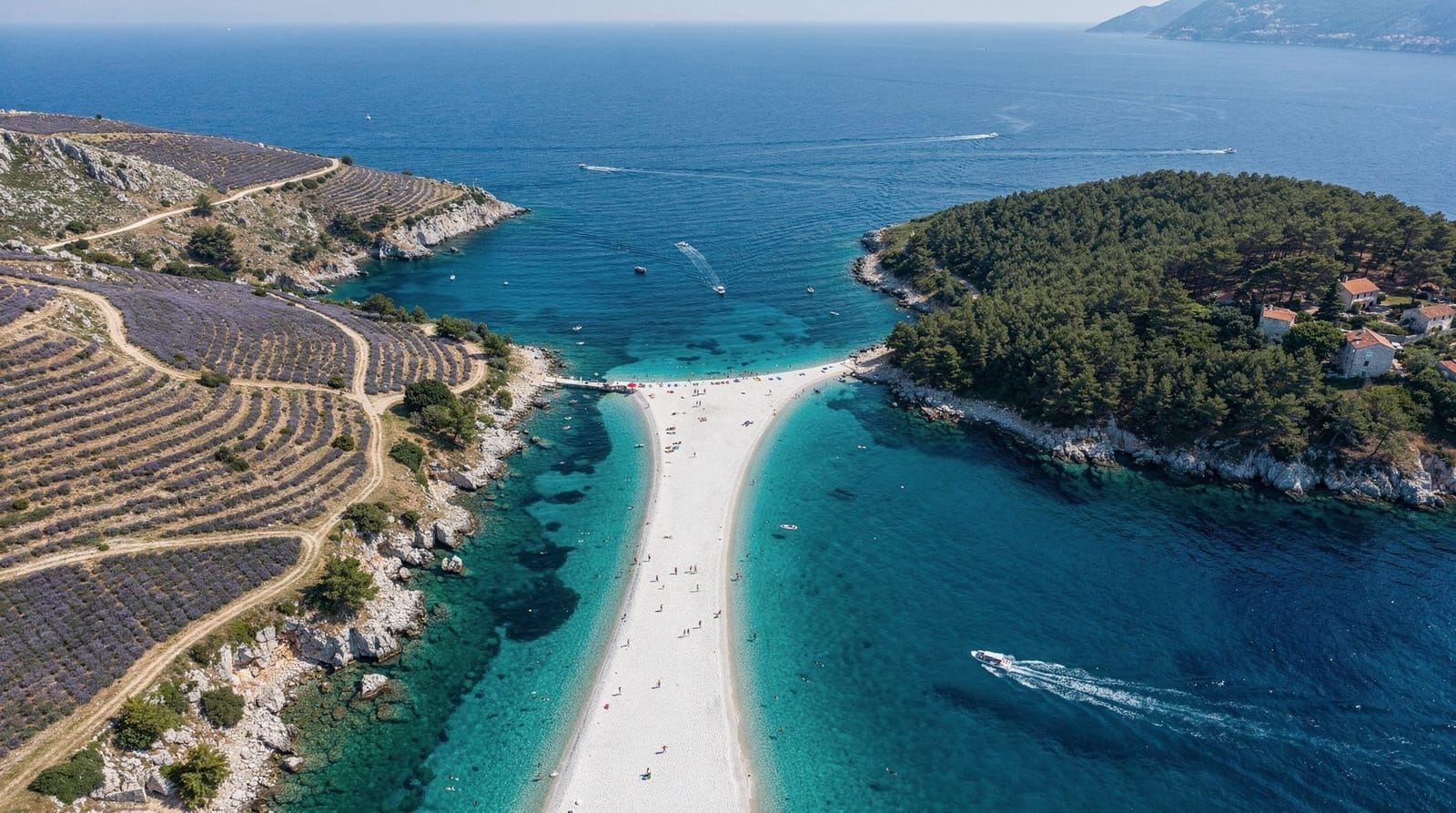
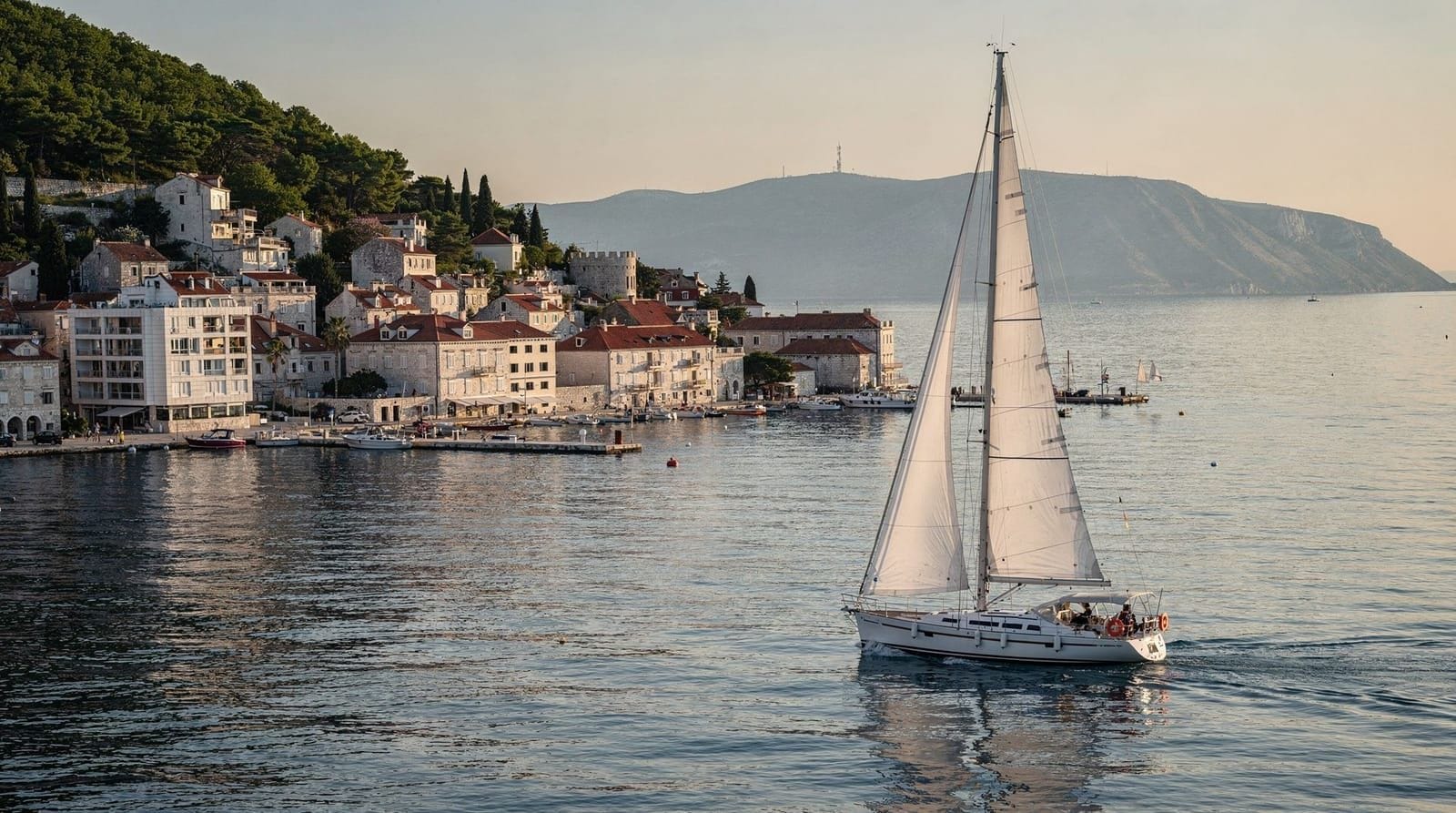
Pakleni Islands Guide — Hvar's Best-Kept Not-So-Secret
Hvar: South Hvar and Pakleni Islands private boat tour
What are the Pakleni Islands and how do you get there?
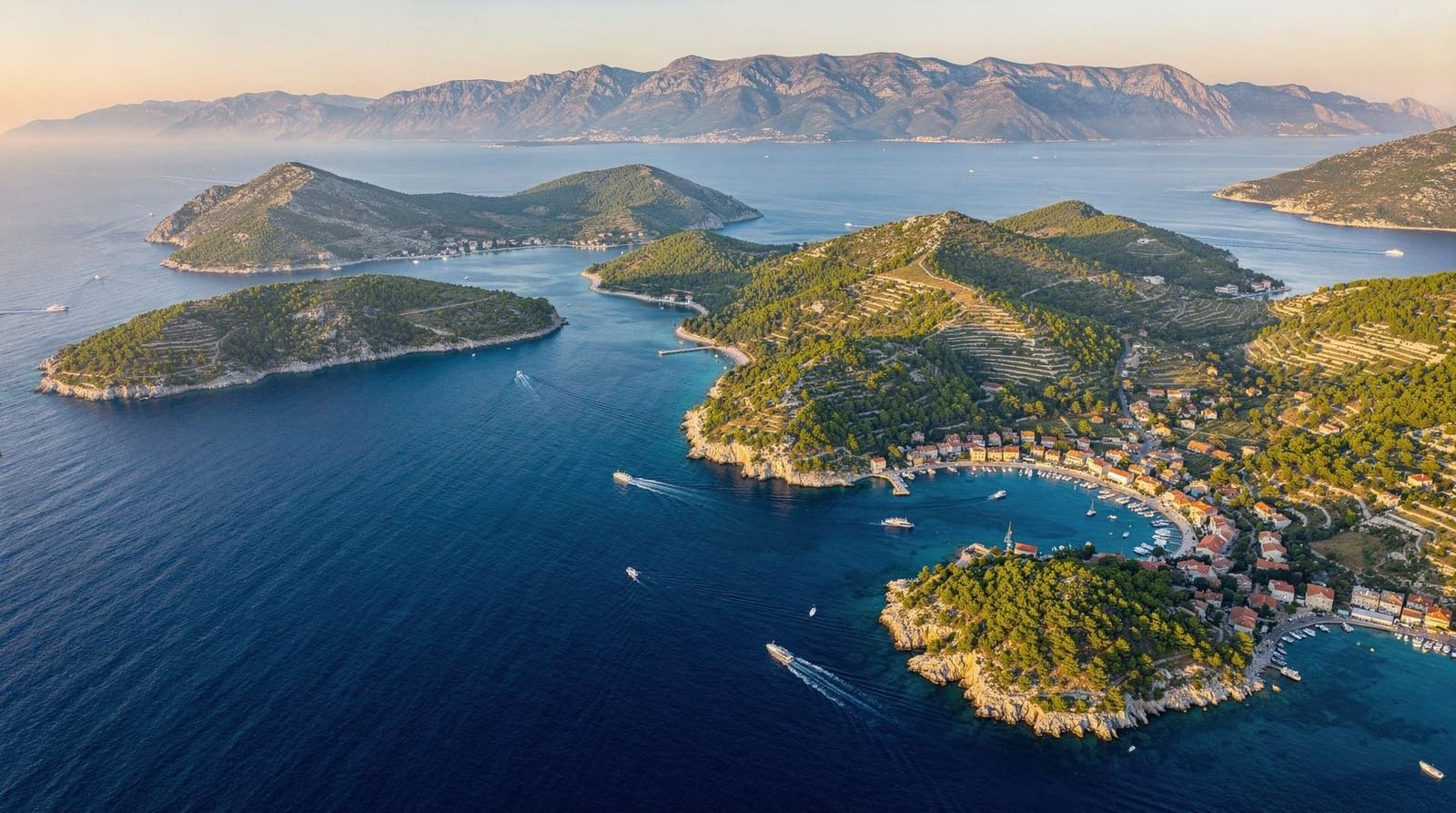
The Pakleni Islands (Paklinski otoci) are a chain of small pine-covered islands just offshore from Hvar Town, reached by water taxi in 5–15 minutes. The main stops are Palmižana (beach bars, restaurants, mooring for yachts), Stipanska and Vinogradišće. Water taxis depart from Hvar Town harbour regularly in season. Entrance to the islands is free — you pay only for moorings or restaurant consumption.
| Where | Just offshore from Hvar Town, southern Dalmatia |
| Cost | Free entry; water taxi around €4–6 each way; buoys around €15–25/night |
| Time needed | Half-day minimum, full day or overnight for sailors |
| Getting there | Water taxi from Hvar Town harbour, 10–15 min |
| Best time | June or September for the balance of warmth and quiet |
What Are the Pakleni Islands?
The Pakleni Islands — Paklinski otoci in Croatian — are a chain of about a dozen small islands lying immediately to the southwest of Hvar Town. They stretch for roughly 10 kilometres along the southern coast of Hvar, separating the town from the open Adriatic. The name is often translated as “Islands of Hell” but in reality derives from paklina — a type of pine pitch once collected here and used to waterproof boats.
The islands are covered in dense Aleppo pine forest, scented in summer with the resin that gave them their name. The coastline is a sequence of rocky coves and pebble beaches with clear turquoise water. There are no permanent inhabitants to speak of, no hotels, no roads and no cars. What there is: a handful of excellent restaurants and beach bars, mooring for hundreds of yachts, and the best swimming in the Hvar area.
For visitors staying in Hvar Town, the Pakleni Islands function as the beach that Hvar Town itself lacks — the town has a waterfront but no real swimming beach, and the Pakleni are the obvious solution, ten minutes away by water taxi.
Palmižana, Vinogradišće or Stipanska — Which One?
| Island/Bay | Vibe | Best for | Facilities |
|---|---|---|---|
| Palmižana | Lively, scenic, busiest | First-timers, Meneghello lunch | Restaurant, pontoons, beach bar |
| Vinogradišće | Calmer, easier anchoring | Swimming without crowds | Limited, seasonal beach club |
| Stipanska | Quietest, most westerly | Escaping the Palmižana crowd | Very limited |
The Main Islands and Anchorages
The Pakleni Islands are technically an archipelago of multiple islets, but three main stops concentrate most visitors and boats.
Palmižana (Sveti Klement)
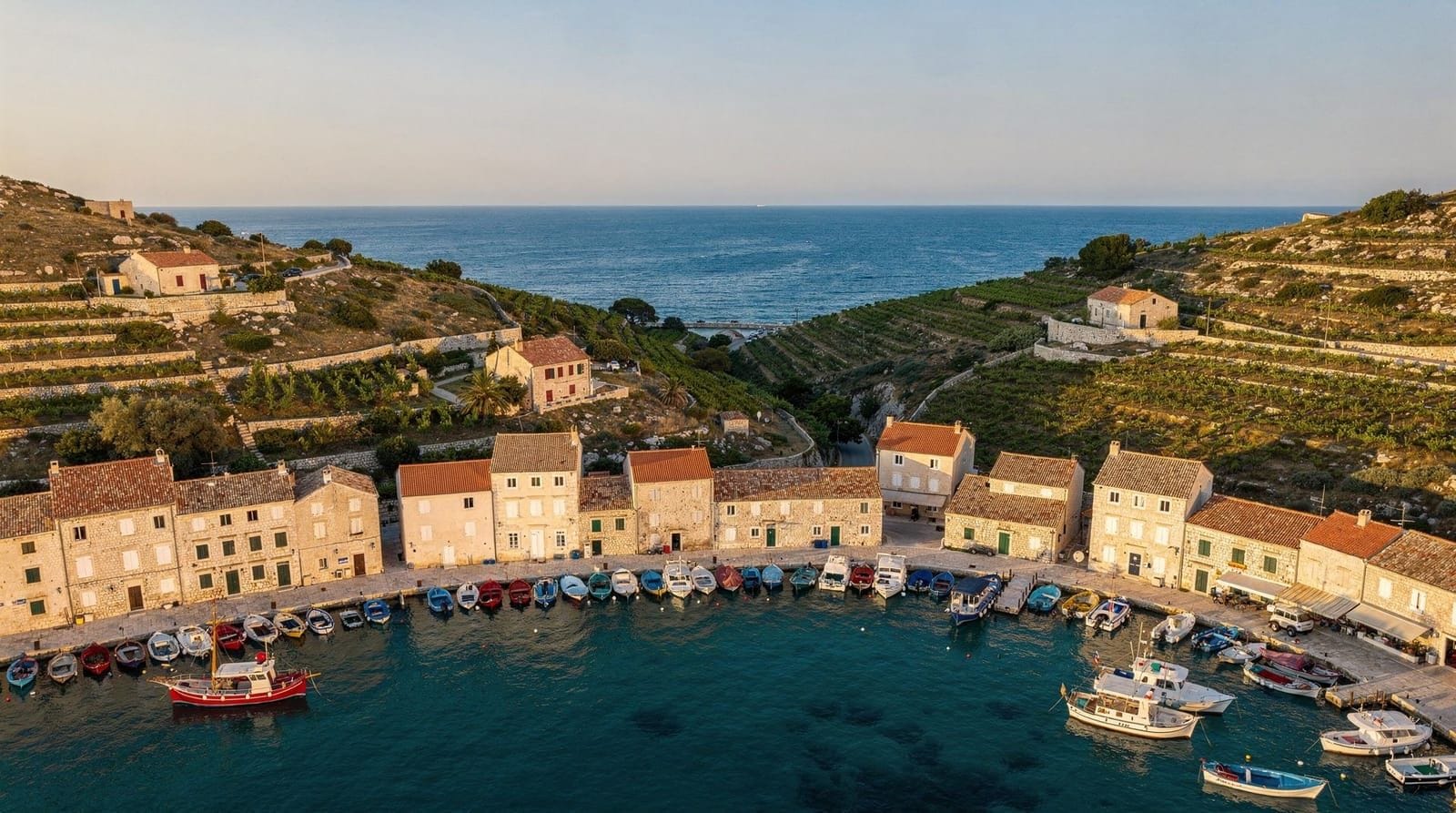
The largest and most visited island. Palmižana refers both to the bay and to the settlement — a cluster of stone buildings around the famous Meneghello restaurant, a handful of small villas and a pontoon infrastructure that accommodates dozens of yachts.
The beach at Palmižana is pebble and rock, with clear water in a sheltered bay. It is attractive but compact — in August it is genuinely crowded, with every mooring buoy taken, day-trippers arriving by water taxi and the restaurant fully booked. In June or September the same cove is peaceful.
Meneghello is the headline experience — stone terrace, pine trees, excellent grilled fish, Hvar wine, prices to match the setting. Book ahead for July and August.
Getting there: Water taxi from Hvar Town, 10–15 minutes, €4–6 per person each way. Multiple operators at the harbour.
Vinogradišće (Marinkovac)
Slightly less visited than Palmižana, Vinogradišće on the island of Marinkovac is a calmer alternative with good swimming and easier free anchoring. The famous Carpe Diem Beach Club operated here for years — check current status as operators on the Pakleni change seasonally.
Stipanska
The most westerly of the easily accessible Pakleni, Stipanska is quieter still — a good anchorage for boats wanting to escape Palmižana’s crowds while staying close to Hvar. Limited facilities, excellent swimming.
How to Get There
Water taxi from Hvar Town: The simplest option for day-trippers. Taxis depart from the main harbour from approximately 8 am. Return taxis run until late evening in peak season. No advance booking required — buy your ticket at the harbour. The crossing to Palmižana takes 10–15 minutes.
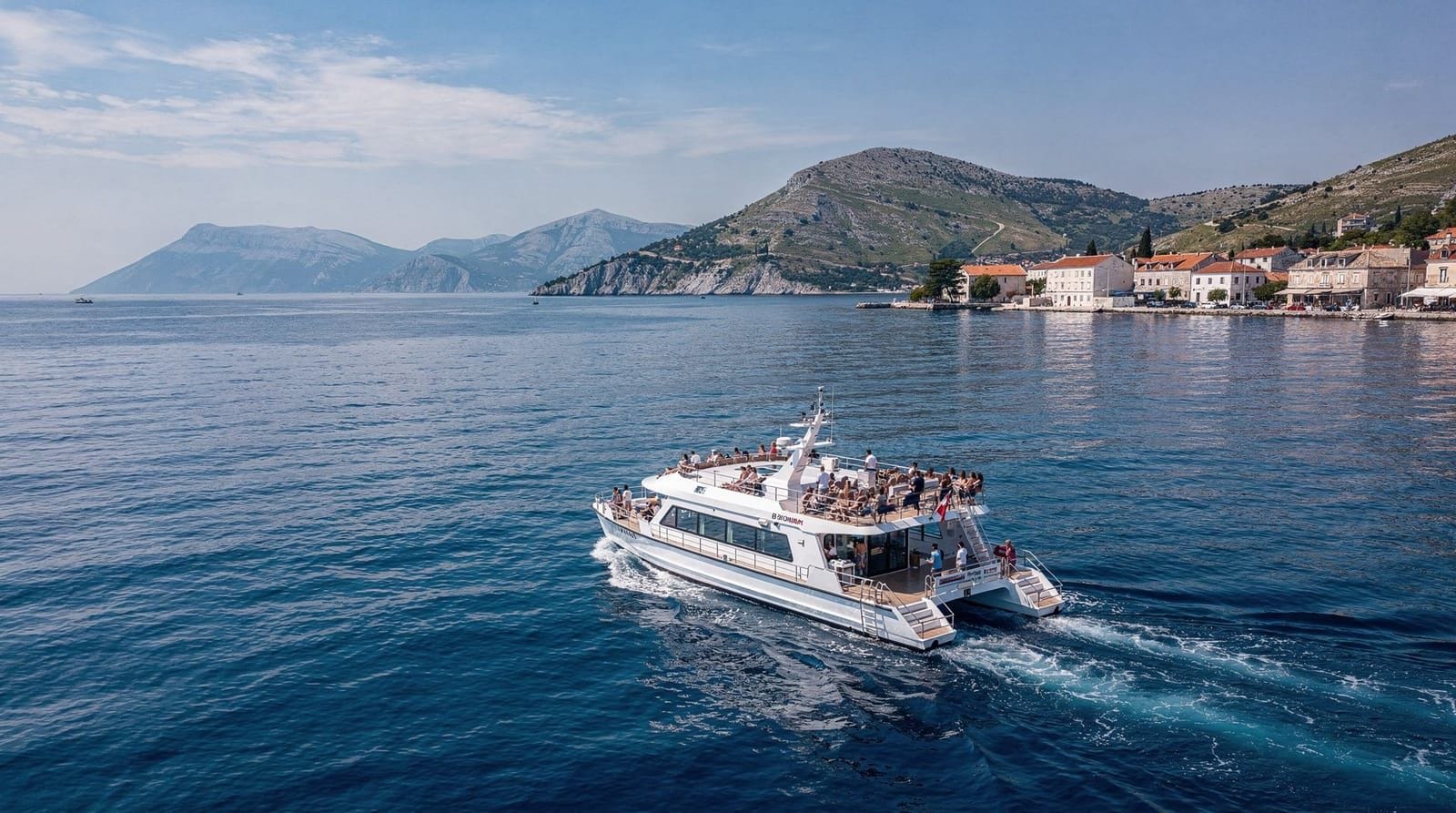
Private boat tour from Hvar: Several operators offer half-day or full-day private boat tours that cover the Pakleni Islands plus other locations — often combining Pakleni with the southern Hvar coast coves, Vis or the Blue Cave. These give more flexibility to choose your swimming spots rather than being deposited at Palmižana.
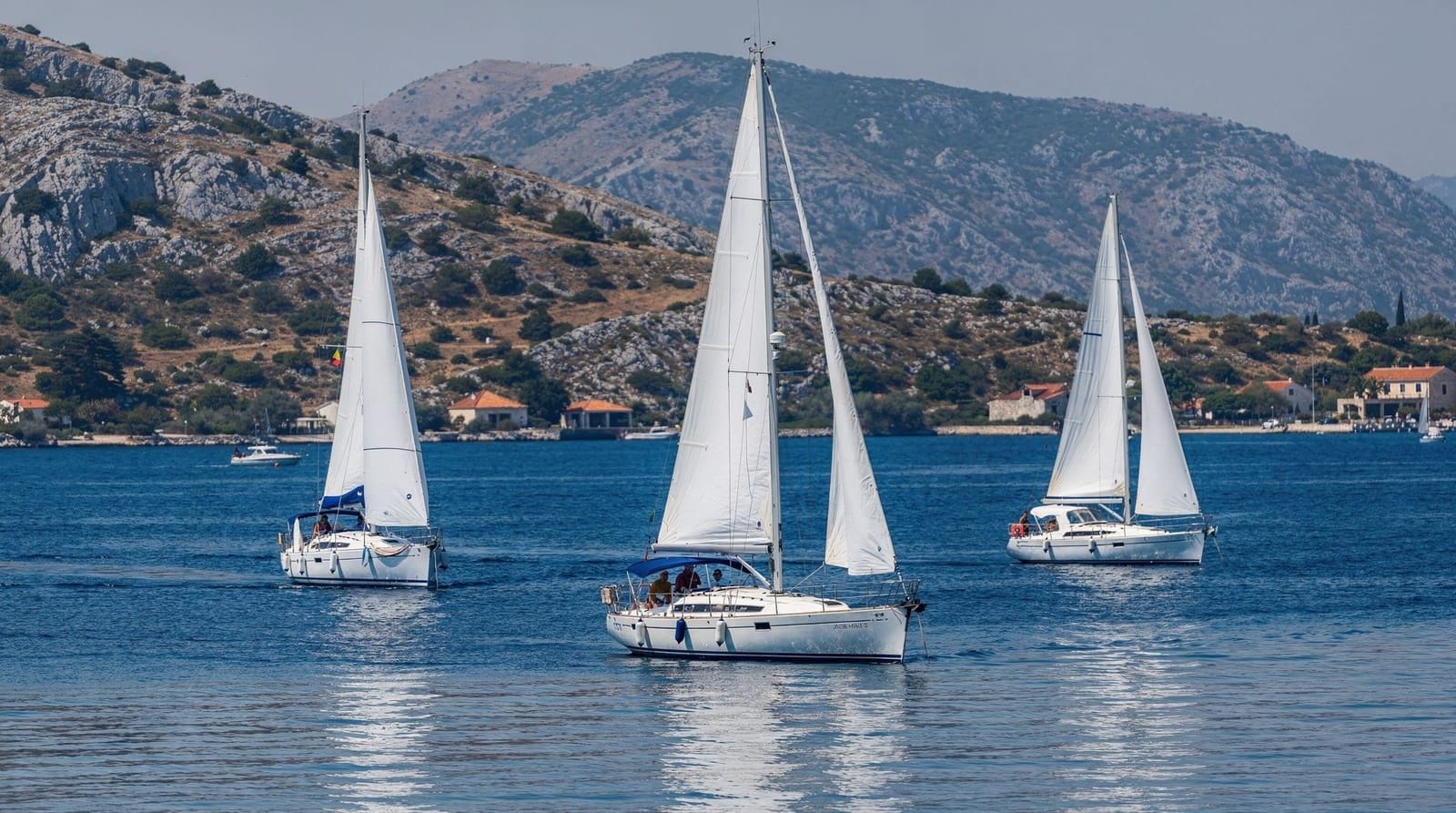
On your own charter yacht: The Pakleni are a natural first night out from Split or Trogir and a regular stopover on any central Dalmatian sailing route. The mooring buoys at Palmižana can be reserved in advance through the marina (recommended for July–August). Free anchoring is possible further from the main settlement in 4–10 metres.
Day tour from Split: Some of the organised day tours from Split that include Hvar also stop at the Pakleni Islands. These typically give you 1–2 hours swimming time before moving to the next stop. Not the best way to experience the islands but viable if your time is limited.
Honest Assessment of Crowds
The Pakleni Islands are one of Croatia’s open secrets — very well known among sailors and regular Croatia visitors, appearing on every Hvar travel itinerary. This means:
July–August: Palmižana is seriously crowded. The mooring buoys are taken by 1 pm. The restaurant queues are long. The water taxi service runs constantly but the cove itself feels overfull. It remains beautiful — the pine trees, the water colour, the general setting — but the experience is diminished by volume.
June and September: Palmižana is busy but manageable. Meneghello has tables. The water taxis are not packed. Vinogradišće and Stipanska are genuinely quiet.
May and October: Near-deserted. The restaurants are open (check ahead, some close for maintenance). Water taxis run but with reduced frequency. The water is still warm enough to swim from late May. Probably the best time to see the islands as they are meant to be.
The Pakleni Islands reward those who arrive early in the day (before 10 am) or visit in shoulder season. They do not disappoint in absolute terms — the scenery and swimming quality is real — but matching your expectations to the season matters.
For Sailors: Practical Anchoring Notes
The Pakleni Islands are one of the busiest sailing destinations in Croatia. A few practical notes:
Depth: Most main anchorages are 4–12 metres. Sandy/muddy bottom in the main bays, reasonable holding. Rocky areas near shore — check the chart.
Wind shelter: The Pakleni are well-sheltered from the maestral (northwest summer wind) by the bulk of Hvar Island behind them. They are less sheltered from the jugo (south wind). In a south wind, the bays become uncomfortable.
Mooring buoys at Palmižana: Paid buoys at €15–25 per night (approximately, 2026 rates). Managed by the Meneghello family. Can be reserved in advance — recommended for late July to early August. Come mid-afternoon if you want a buoy without reservation.
Med mooring on the quay: A small quay in Palmižana takes a few boats stern-to. Very limited space; arrival order determines availability.
Free anchoring: Possible in Vinogradišće and towards Stipanska. Hold your anchor position and check the set — sandy patches between rock give reasonable holding.
Night anchoring: The Pakleni Islands are a legitimate overnight stop. Nights in the bays are calm in normal summer conditions. The ambience — stars, pine scent, silence except for the anchor chains — is one of the best arguments for sailing Croatia.
Beyond the Beach Bars
The Pakleni Islands are not only beach bars and restaurants. A few things worth knowing:
Walking paths: Sveti Klement (the main island) has rough paths through the pine forest. The island is about 6 km long; exploring on foot takes you away from the beach bar crowd completely within 20 minutes. There’s minimal shade off the main pine-covered stretches, so carry water and sun protection if you plan to walk any real distance, and wear proper shoes rather than sandals on the rougher sections.
Nature protection: The Pakleni Islands are classified as a nature park. The pine forest is protected; collecting plants, disturbing wildlife or anchoring on posidonia seagrass is prohibited. The clear water around the islands reflects the relatively good environmental protection.
Nudist bays: Several coves on the Pakleni Islands, particularly on the seaward (south) side of Sveti Klement, are traditionally frequented by naturists. No formal designation — just established local custom. Jerolim and Stipanska have the most established FKK sections; the full picture of Croatia’s naturist coast, including etiquette, is in our naturist beaches guide.
Comparing the Pakleni to Other Island Options
If you’re weighing whether to base yourself on Hvar for the Pakleni or look further afield, Vis offers a genuinely different, quieter island experience a longer ferry ride away, while Brač and Korčula compete for a similar slice of your Dalmatian itinerary. For sailors planning a longer route, the Croatia sailing guide and the island hopping itinerary both treat the Pakleni as a natural first or second stop out of Split.
What to Bring for a Day Trip
Water shoes matter more here than at most Croatian beaches — much of the coastline is rock and pebble rather than sand, and swimming access is often directly off rocks or pontoons. Bring your own snorkelling gear if you want it, since there’s no rental on the islands themselves; Hvar Town has dive and snorkel shops near the harbour. Cash is useful for the water taxi and smaller beach bars, though the main restaurants take cards. A dry bag is worth packing if you’re moving between swimming spots by taxi, since transfers are open-air and occasionally splashy.
For the broader Hvar context — the town, the old town, the lavender countryside — see the Hvar destination guide. For sailing routes that include the Pakleni as an overnight stop, see the Croatia sailing guide.
Frequently asked questions about Pakleni Islands Guide
Is Palmižana beach worth visiting?
Yes, but manage expectations. Palmižana is a rocky and pebble cove on Sveti Klement island with clear turquoise water, pine shade and a famous beach bar (Meneghello). It is beautiful. In July and August it is also packed with yachts stern-to the pontoons and day-trippers from Hvar. Come in June or September for the same cove at a fraction of the crowd.How much does the water taxi cost from Hvar to the Pakleni Islands?
Water taxis from Hvar Town harbour to Palmižana cost approximately €4–6 per person each way in 2026 (prices vary by operator). The journey takes 10–15 minutes. Taxis run regularly from around 8 am until late evening in peak season. Multiple operators compete; the price is similar across them.Can I swim at the Pakleni Islands?
Yes — the water around the Pakleni Islands is exceptionally clear, typically 23–25°C in peak summer. Most swimming is from rocks and pontoons rather than sandy beaches. Vinogradišće has good swimming access. The sea floor is often rocky — water shoes are useful if you are sensitive to sharp surfaces.Are the Pakleni Islands good for snorkelling?
Very good. The water is clear enough to see the seabed in 6–8 metres without difficulty. Rocky reef areas around the islands hold fish, sea urchins and occasional octopus. No equipment rental on the islands — bring your own or rent in Hvar Town before taking the water taxi.Can I anchor my boat in the Pakleni Islands?
Yes. The Pakleni Islands are one of the most popular sailing anchorages in Dalmatia. Palmižana has mooring buoys and pontoons (paid, book ahead for July–August). Vinogradišće and Stipanska offer more free anchoring options. Arrive by early afternoon in peak season to find a spot. Depths range from 4–12 metres in the main anchorages.Is there a national park fee for the Pakleni Islands?
No. The Pakleni Islands are not a national park and there is no entrance fee. You pay for moorings if using pontoons, and obviously for food and drink if visiting a restaurant. The nature park status protects the islands' pine forests and sea, but does not levy visitor admission.What is the Meneghello restaurant like?
Meneghello at Palmižana is one of the most famous restaurant settings in Croatia — a stone terrace under pine trees, overlooking the moored yachts, serving fresh fish and local wine. It is genuinely excellent and genuinely expensive. Book ahead in July and August; walk-ins are possible earlier in the season.
Top experiences
Bookable activities with verified prices and instant confirmation on GetYourGuide.
Top experiences
Best-rated activities across GetYourGuide and Viator.

Blue cave, Mamma Mia and Hvar, 5 islands speedboat tour
- Viator

Blue Cave and Hvar Tour - 5 Islands Tour from Split and Trogir
- Viator

Blue cave, Mama Mia and Hvar, 5 Island Speedboat Tour from Trogir
- Viator

Medulin-Kamenjak 5h boat trip ALL-INCLUSIVE drinks on Sandra Boat
- Viator

Medulin: All-Inclusive Kraken Boat Tour to Kamenjak Cave & Levan
- Viator

3Hour ALL-INCLUSIVE Sunset Dolphin Watching from Medulin onSandra
- Viator