Risnjak National Park: Croatia's quiet mountain park near Rijeka
Zagreb: Plitvice Lakes full-day guided tour
What is Risnjak National Park known for?
Risnjak is Croatia's most forested national park, set in the Gorski Kotar mountains between the Adriatic coast and Zagreb. It is named after the Eurasian lynx (ris) — a resident large carnivore. The park protects one of the most intact montane forest ecosystems in the region, with hiking to the 1,528 m summit and among the quietest trails in any Croatian national park.
Of Croatia’s eight national parks, Risnjak receives the fewest visitors. That is partly because of its location — the Gorski Kotar mountains between Rijeka and Zagreb feel off the main tourist axis — and partly because it doesn’t offer the obvious headline attraction of Plitvice’s lakes or Krka’s waterfalls. What it offers instead is something increasingly valuable: genuine montane wilderness, one of the most intact forest ecosystems in southeastern Europe, confirmed populations of brown bear, grey wolf and Eurasian lynx, and trails that you can walk for hours without encountering another person.
| Where | Gorski Kotar, near Čabar — 1hr from Rijeka, 1.5–2hrs from Zagreb |
| Cost | Around €4–8 entry, cheapest Croatian national park |
| Time needed | 2–3hrs for the Leska trail; 4–5hrs for the summit |
| Getting there | Car effectively required — no direct public bus |
| Best time | May–June and September; open year-round |
For travellers who care about natural systems rather than curated landscapes, Risnjak is the most interesting park in Croatia. It is also the cheapest to enter.
The landscape: forest and karst
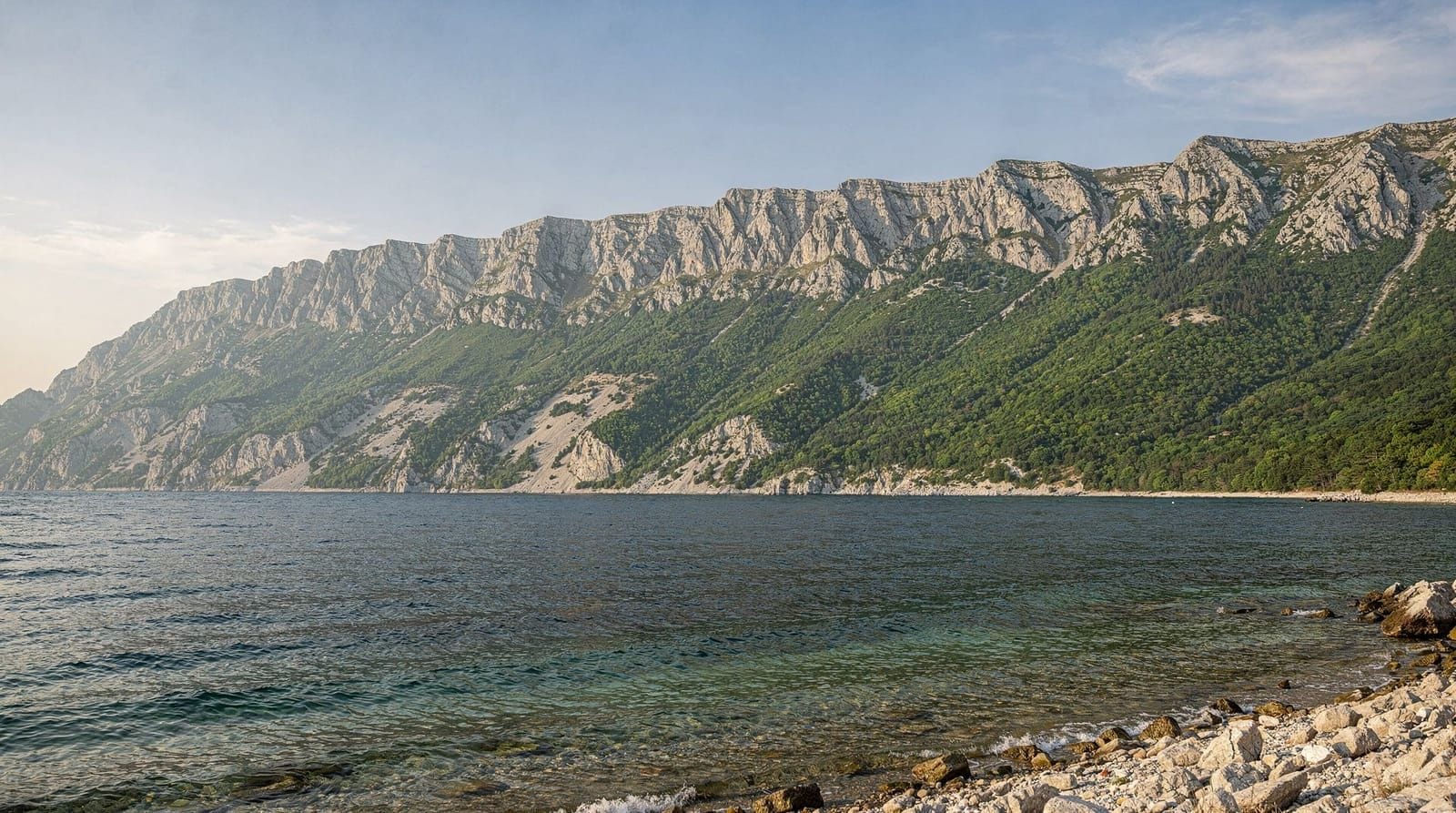
Gorski Kotar translates roughly as “highland district” — a useful description of a region that sits at elevations between 600 and 1,500 metres, receives significantly more precipitation than the Adriatic coast, and is dominated by dense beech, fir and spruce forest. It is the opposite in character from the bare limestone of Velebit and Biokovo — here, rock surfaces that are naked on the coast are draped in deep forest.
The park’s geological foundation is karst limestone, as everywhere in coastal Croatia, but the higher rainfall and forest cover create a very different surface expression. Karst sinkholes (vrtače) appear throughout the forest floor, some of them deep enough to accumulate cold air and support communities of alpine plants at much lower elevations than they would normally reach. The Kupa river has its source just within the park boundary — a spring emerging from a karst sinkhole in a beech forest glade, one of the park’s quieter wonders.
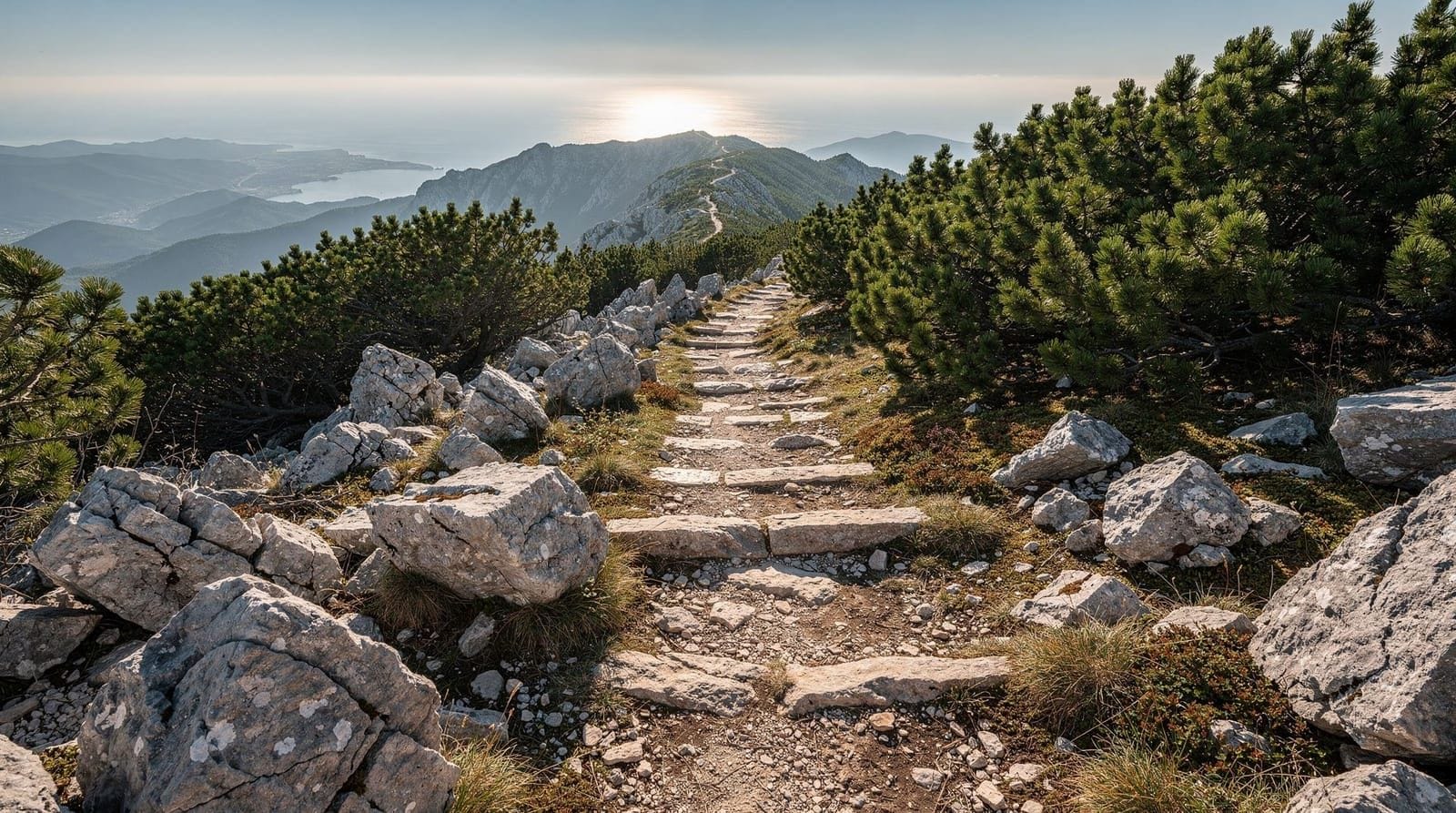
Risnjak peak (1,528 m) is the highest point in the park, not a dramatic pinnacle but a rounded, forested summit with selective viewpoints cut through the trees. On clear days, the Kvarner coast and the Velebit range are visible.
The Leska educational trail
The park’s most accessible trail is a 4.2 km loop from the Bijela Vodica entrance. It passes through mixed forest with educational panels covering the park’s ecology, geology, traditional human activities (charcoal burning, winter logging) and wildlife. The trail is marked and has benches, observation points and a simple animal-watching platform.
Time: 2–3 hours at a gentle pace. Suitable for most fitness levels; not a pushchair trail (uneven terrain) but manageable for children aged 7 and above. No technical difficulty.
The trail passes a karst sinkhole with a visible temperature inversion effect — measurably cooler air at the bottom than the surrounding forest — and the Kupa river source near the end of the loop.
Risnjak summit: the main hiking objective
The summit trail to Risnjak (1,528 m) from Bijela Vodica is approximately 10 km return with about 800 m of elevation gain. Allow 4–5 hours. The route follows marked trails through beech forest for most of its length, opening to more exposed terrain in the upper section.
The summit has a mountain hut (Schlosserovo sklonište) and limited views obscured by trees in some directions — the summit experience is about the process of getting there rather than a panoramic destination payoff. The ridge sections just below the summit have the best outlook.
Difficulty: Moderate to strenuous. Good fitness required; appropriate footwear essential (the trail is rocky in sections and slippery when wet). Navigation is straightforward on marked trails; no technical scrambling.
Mountain hut: The hut at the summit provides basic refreshments in season and emergency shelter year-round. Overnight stays require advance booking through the park authority or Croatian Mountaineering Association.
Wildlife: what actually lives here
Risnjak’s wildlife profile is the most complete of any Croatian national park:
Eurasian lynx (Ris): The park’s namesake and symbol. Reintroduced to the Dinaric region from Slovakia in 1973 after local extinction in the 1960s. The Dinaric lynx subpopulation (covering Croatia, Slovenia and parts of the western Balkans) is small and has faced genetic bottleneck problems. Camera trap studies show consistent presence in and around Risnjak. Day hikers almost never see them; footprints in snow or mud are the most commonly encountered sign.
Brown bear: Croatia has one of the largest brown bear populations in Europe (estimated 800–1,000 animals). Gorski Kotar is core bear habitat. Sightings are uncommon for casual visitors but the population is healthy and tracks are routinely found. Bears are not aggressive toward humans unless threatened or with cubs — standard European bear behaviour applies.
Grey wolf: Croatian wolf numbers are increasing under protection. Risnjak is within the established wolf range. Howl-listening events are organised by some wildlife tourism operators in the region.
Large ungulates: Roe deer, red deer and wild boar are all common and regularly seen on forest trails, particularly at dawn and dusk.
Birds: The forest supports white-backed woodpecker (an indicator of healthy old-growth forest), black woodpecker, Ural owl, eagle owl and various forest passerines. The park is notable for birdwatchers as one of the better white-backed woodpecker sites in the region.
The Gorski Kotar climate
Risnjak’s altitude and inland position create a climate quite different from the Adriatic coast:
- Summer: Measurably cooler than the coast (often 5–10°C lower). Average July temperatures around 15–18°C at park altitude. Thunderstorms are frequent in afternoon. This is a genuine escape from coastal heat.
- Winter: Heavy snow (the area receives among the highest snowfall in Croatia) makes some trails impassable without winter equipment. Cross-country skiing operates from the park area. The park stays open year-round.
- Spring: Variable — snow lingers on the summit into May in cold years. Forest floor flowering begins in April.
- Autumn: The best season for many visitors — stable weather, forest colour (September–October), good visibility and essentially no crowds.
Practical information
Getting there: Car is effectively required. From Rijeka, take the A6/D3 toward Delnice and follow signs for Čabar and Bijela Vodica. From Zagreb, take the A1 south then connect to the A6 east (Karlovac direction) and north to Gorski Kotar. The journey from Rijeka is about 50 km (approximately 1 hour); from Zagreb about 120 km (1.5–2 hours).
Entry fees (2026): Adults approximately €4–8. One of the cheapest parks to enter in Croatia. The entry ticket covers the Leska trail and park access.
Park information centre: At Bijela Vodica, with trail maps, wildlife information and parking.
Best accommodation base: Čabar (the nearest significant town) or Delnice. Rijeka is a 1-hour drive and has the full range of urban accommodation.
Risnjak compared to Croatia’s other national parks
Risnjak is easy to overlook next to Croatia’s headline parks, but the comparison clarifies what it actually offers:
| Park | Headline feature | Crowds | Entry cost |
|---|---|---|---|
| Risnjak | Montane forest, wildlife, solitude | Very low | €4–8 |
| Plitvice Lakes | Cascading travertine lakes | Very high | €40+ (peak season) |
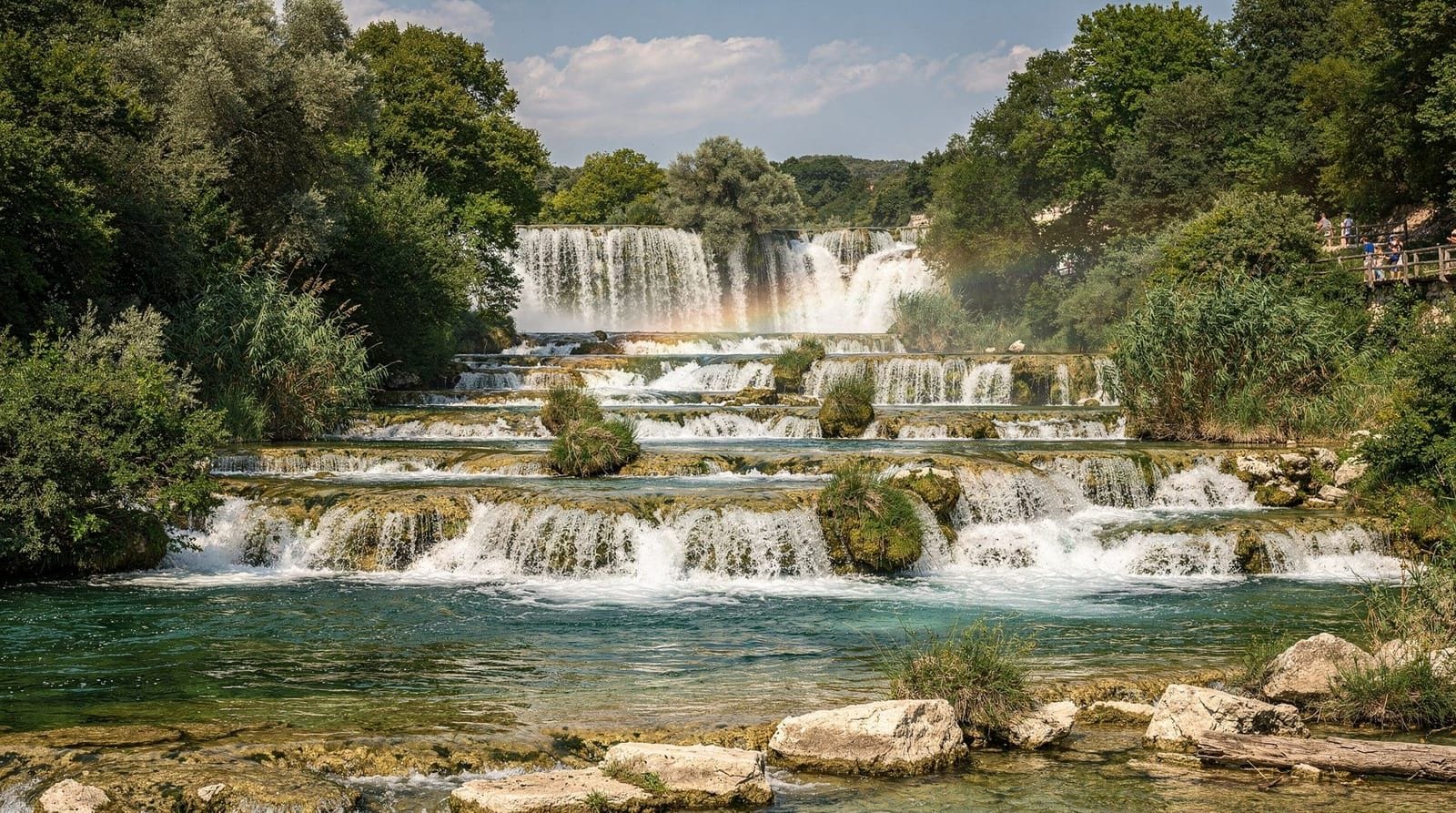
| Krka National Park | Waterfalls, swimming | High | €20–30 |
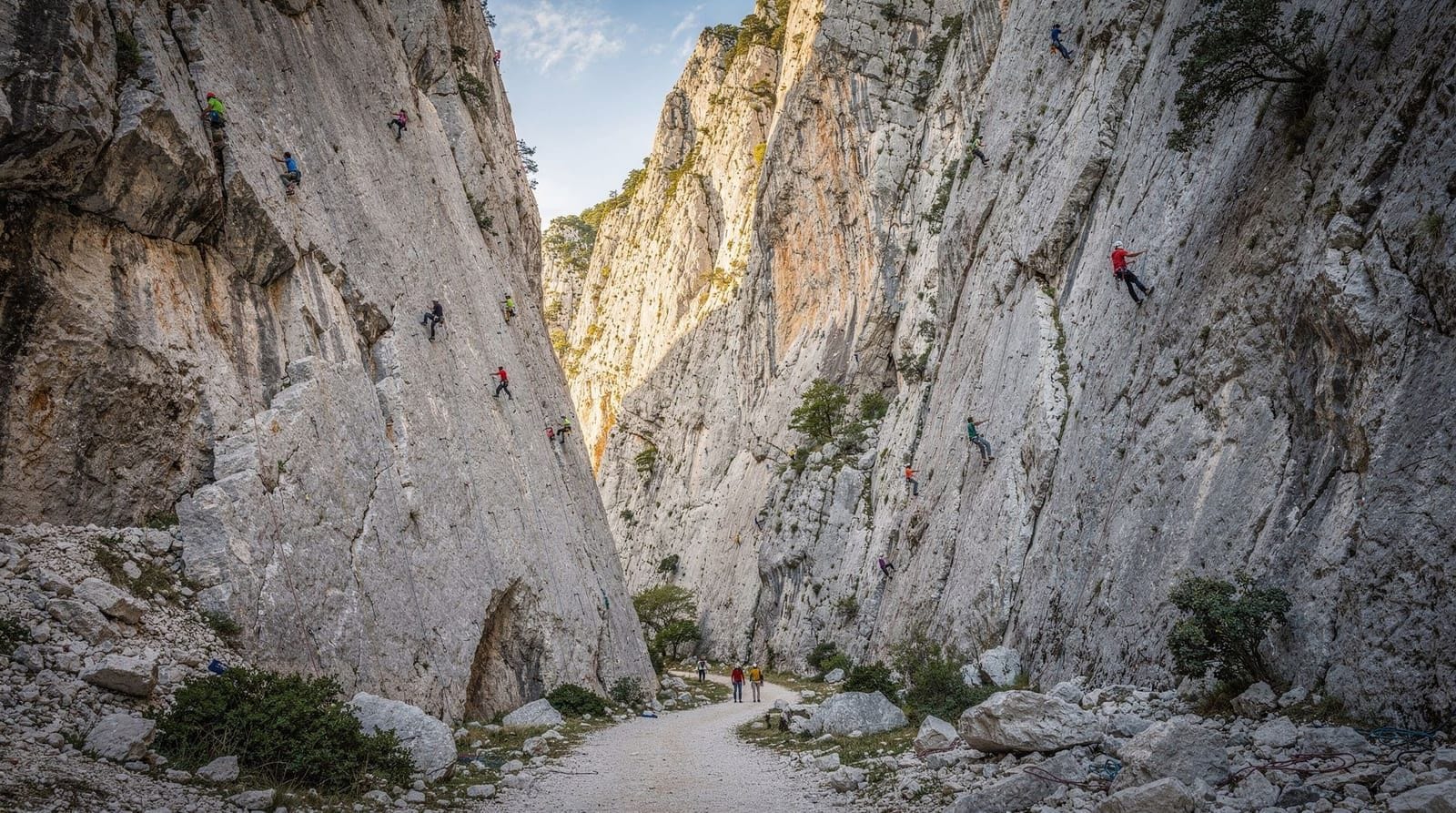
| Paklenica | Limestone canyon, climbing | Moderate | €10–12 |
| Velebit Nature Park | Wild mountain range, hiking | Low | Free/minimal |
If your Croatia itinerary already includes Plitvice or Krka and you want genuine contrast rather than another set of waterfalls, Risnjak and Velebit are the two parks that deliver it.
What to pack for a Risnjak hike
Gorski Kotar’s weather shifts faster than the Adriatic coast, and the forest cover means conditions can differ noticeably between the trailhead and the summit. Bring proper hiking boots (the Risnjak summit trail is rocky and slippery when wet — trainers are not adequate), a waterproof/windproof layer even in summer (afternoon thunderstorms are common), at least 1.5 litres of water per person for the summit hike (no reliable water sources en route), and a paper map or downloaded offline map, since mobile signal is unreliable in the forest interior. For the Leska educational trail, standard walking shoes are sufficient given the well-maintained, gentle terrain.
Combining Risnjak with other destinations
Risnjak pairs naturally with Rijeka as a city base — the coastal city and the mountain park are a strong contrast and neither competes with the other. From Rijeka, it is also possible to combine a morning in Risnjak with an afternoon on the Opatija Riviera or a boat trip to Krk.
For those doing a northern Croatia circuit, Risnjak connects to Plitvice Lakes via Delnice and Karlovac — a full day of driving through the Gorski Kotar interior with intermediate stops.
The Croatia national parks guide compares Risnjak to the other seven parks.
Frequently asked questions about Risnjak National Park
How do you get to Risnjak National Park?
The main park entrance (Bijela Vodica) is near the town of Čabar in Gorski Kotar. From Rijeka, drive via Delnice (about 50 km, approximately 1 hour). From Zagreb, it is about 120 km via the A1/A6 motorway and then local roads (about 1.5–2 hours). There is no direct public bus to the park — a car is effectively required.How much does Risnjak National Park cost?
Adult entry in 2026 is approximately €4–8, making it one of the cheapest national parks in Croatia. Children receive discounted rates. The Leska educational trail is the most accessible route and is marked for independent visitors. Overnight stays at the mountain hut require separate booking.Can you see lynx in Risnjak National Park?
Sightings are very rare. The Eurasian lynx is one of Europe's most secretive large mammals and actively avoids humans. Camera trap studies confirm a resident population in and around Risnjak, but day hikers almost never see them. Footprints and scratch marks are more commonly noticed by experienced wildlife watchers.What hiking routes are in Risnjak National Park?
The Leska educational trail (4.2 km loop, 2–3 hours, relatively easy) is the most accessible route and covers diverse habitats. The Risnjak summit trail (about 10 km return, 4–5 hours, moderate-strenuous) leads to the highest point at 1,528 m. Multi-day routes connect Risnjak to the broader Gorski Kotar trail network.Is Risnjak good for families with children?
The Leska trail is manageable for children aged 7 and above. The summit trail is more demanding and less suitable for young children. The park's animal observation hides and educational panels make the Leska circuit engaging for curious children even without wildlife sightings.What is the best time to visit Risnjak?
May and June for wildflowers and reasonable trails; September for clarity and autumn colour beginning. Summer (July–August) in Gorski Kotar is significantly cooler than the coast — a genuine advantage if you are seeking relief from coastal heat. The park remains open year-round; winter brings deep snow and cross-country skiing.
Top experiences
Bookable activities with verified prices and instant confirmation on GetYourGuide.
Top experiences
Best-rated activities across GetYourGuide and Viator.

From Split: Plitvice Lakes National Park Guided Tour
- Viator

Krka Waterfalls Day Tour with Boat Ride from Split and Trogir
- Viator

Plitvice Lakes National Park Guided Day Tour from Split
- Viator

Krka National Park Tour with tour Guide & Wine tasting from Split & Trogir
- Viator

From Zadar: Plitvice Lakes with Boat Ride & Zadar Old town tour
- Viator

Mostar and Herzegovina Tour with Kravica Waterfall from Split & Trogir
- Viator