Sailing Day Tours from Split: Full-Day, Half-Day, and Sunset Cruises Compared
Split: Full-day sailing tour to Solta and Brac
| Where | departs Split, routes to Šolta, Brač, Hvar or nearby coast |
| Cost | around €40-130 per person for group formats, €150-300+ private |
| Time needed | half-day (3-4 hrs), full-day (9am-6/7pm) or sunset (2.5-3 hrs) |
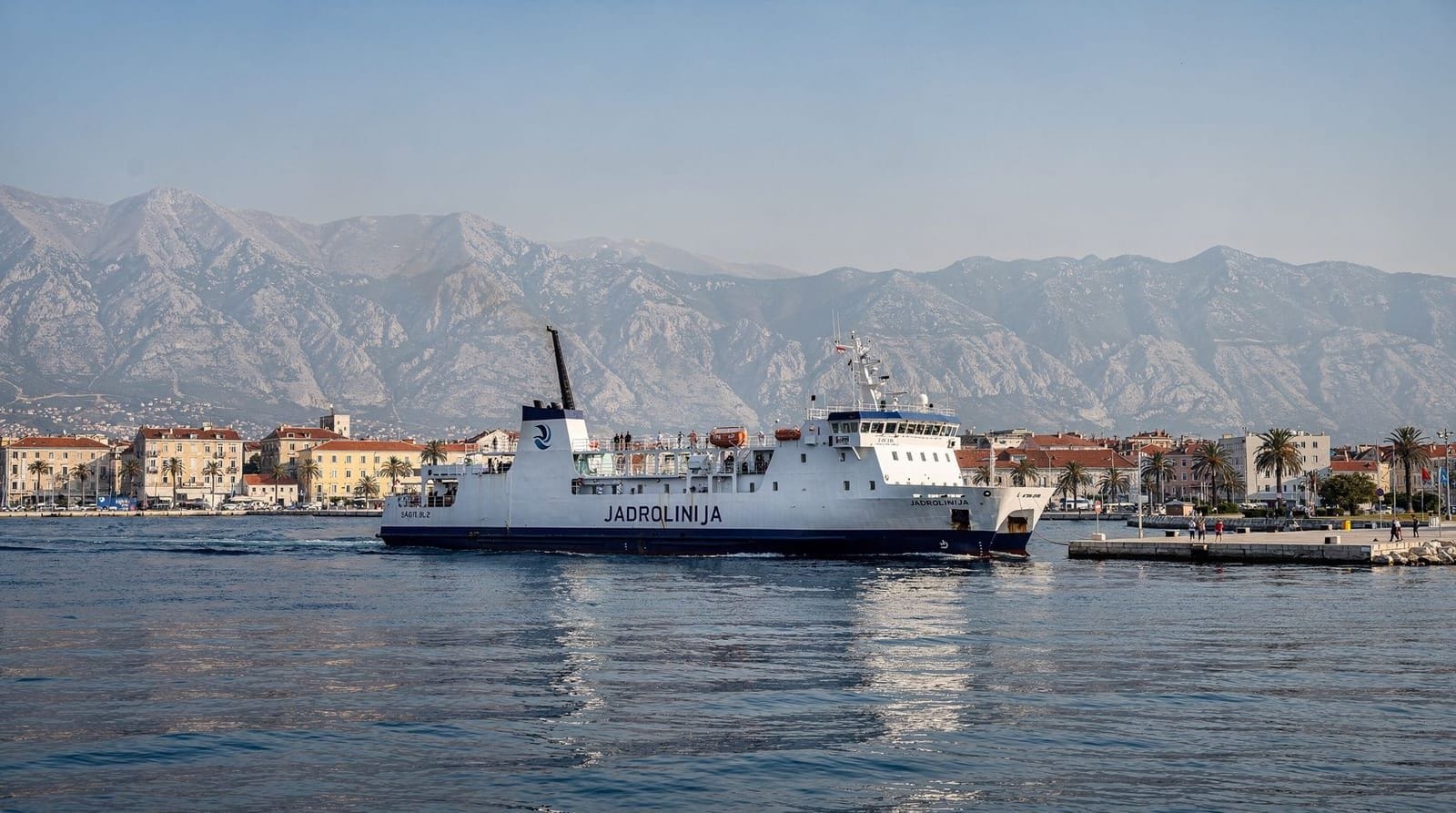
| Getting there | boat departs Split ferry terminal or Bačvice pier, no transfer needed |
| Best time | May-June and September for calmer water and fewer boats in the coves |
One day on the Adriatic — what you are actually choosing between
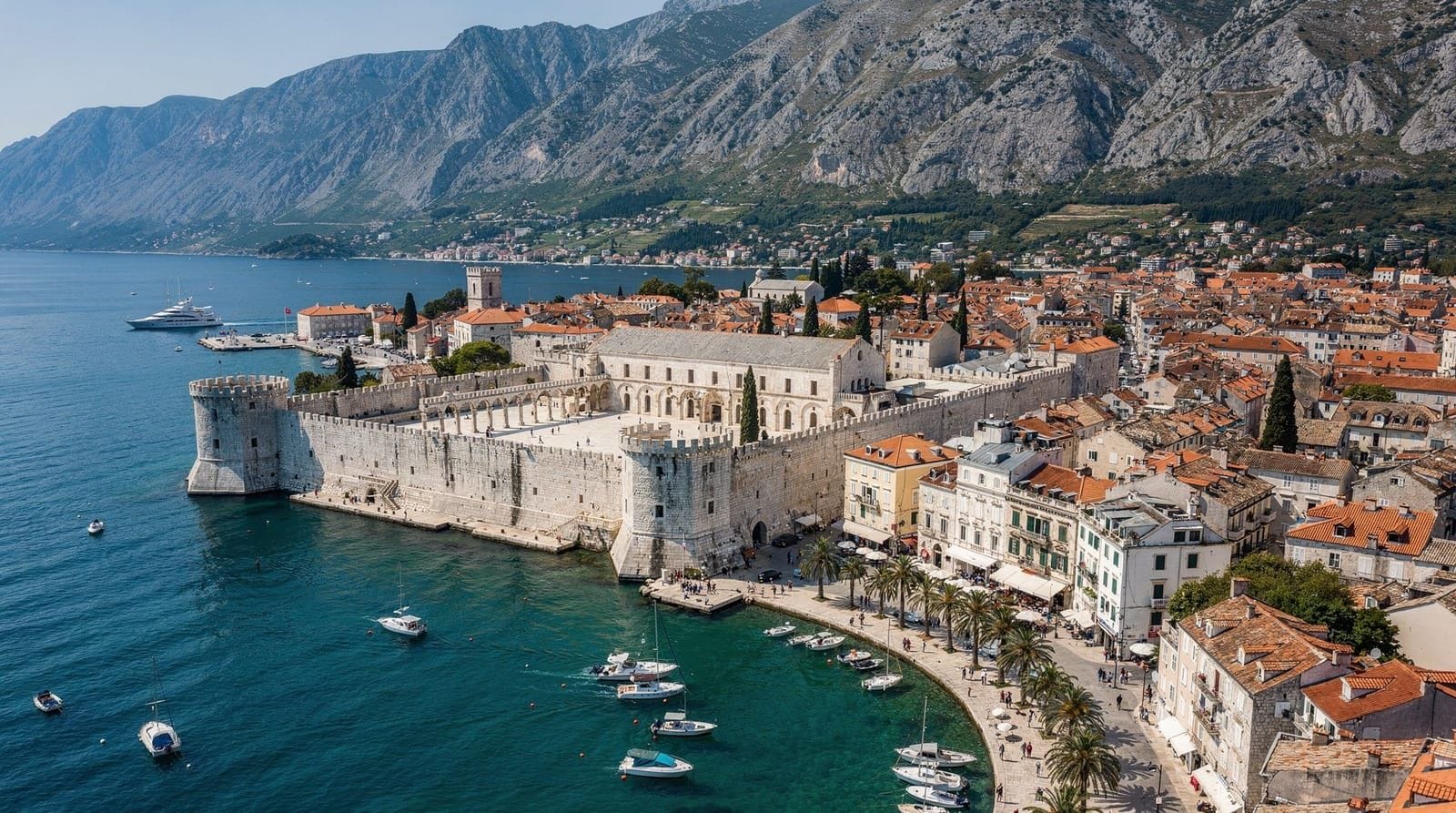
The Dalmatian coast stacks up its islands close enough that you can reach three of them in a single day from Split. That proximity is both the appeal and the problem. Because it is so easy to run a boat tour out of Split, the market is saturated: dozens of operators, a bewildering range of itineraries, price points that span from €40 to well over €300 per person, and a lot of marketing language that obscures more than it reveals. “Full-day sailing” sounds like a consistent product. It is not. The difference between a genuinely good day on the water and an overpriced, overcrowded booze cruise is real, and it largely comes down to choosing the right format for what you actually want.
This page compares the four main categories — full-day island tours to Šolta and Brač, all-inclusive Hvar and Pakleni Islands tours, half-day swim-stop options, and sunset cruises — with honest assessments of who each format suits. It also addresses the questions that most booking platforms sidestep: whether these are actually sailing, how crowded the routes get, and what the refund situation looks like when the weather turns.
If you are considering something longer than a day, the Croatia sailing guide and the sailing week from Split itinerary cover bareboat charters, skippered options, and multi-day routing in detail. But for a single day on the water from Split, read on.
What these tours include — and what they do not
Almost every sailing day tour from Split follows the same structural template: you board in the morning from the Split ferry terminal or the Bačvice pier, the boat heads out to one or more islands with swim stops and a short snorkel, you eat something around midday, and you are back in port by 6pm or 7pm. Within that framework, the variables that actually matter are: the route, the boat, the food, the group size, and the atmosphere on board.
What is typically included:
Swim stops are universal. Dalmatian water clarity is not a marketing claim — visibility of 15–20 metres is routine, and even without snorkelling gear it is worth getting in. Full-day tours usually build in two or three stops; half-day tours offer one. Most operators include basic snorkelling equipment at no extra charge, though the quality varies. If you are serious about snorkelling, bringing your own mask makes a difference.
Food falls into two categories. Budget and mid-range tours (roughly €60–90) provide snacks — usually fresh fruit, bread, local cheese, perhaps cold cuts — along with water, soft drinks, and wine or beer. Better operators serve a proper cooked lunch, often grilled fish or a fish stew, on board or at a konoba (tavern) on the island. The all-inclusive formats at the higher end include unlimited alcohol from departure, which shapes the atmosphere accordingly.
What is almost never included: port fees, any additional food or drinks beyond the stated package, and transport to the departure point. The Split ferry terminal is walkable from the old town, but confirm the exact meeting point when you book.
What to pack: sunscreen (reapplied through the day — the reflected glare off the water is stronger than it feels), a hat that will not blow off, a light cover-up for the boat ride itself since the wind picks up once you are underway, and a towel unless the operator specifies one is provided. Motion sickness tablets are worth carrying even if you rarely need them; the crossing to Hvar in particular can be choppy in an afternoon breeze. Cash in small denominations covers extras — a beer beyond the included package, a tip for the crew, or the snorkel-gear deposit some smaller operators still charge.
Group size and boat type: boats on the Split sailing market range from 10-passenger catamarans to 40-plus-passenger party boats, and the number matters more than most listings make clear. Smaller boats reach coves faster, anchor more easily in quieter spots, and give a noticeably calmer atmosphere at swim stops. Larger boats have more onboard facilities — shaded decks, proper toilets, sometimes a bar — but the swim stops feel busier and the group dynamic skews toward whatever crowd the operator markets to. If the listing does not state passenger capacity, it is worth asking before booking, particularly for the Hvar route where the largest boats operate.
The sailing question:
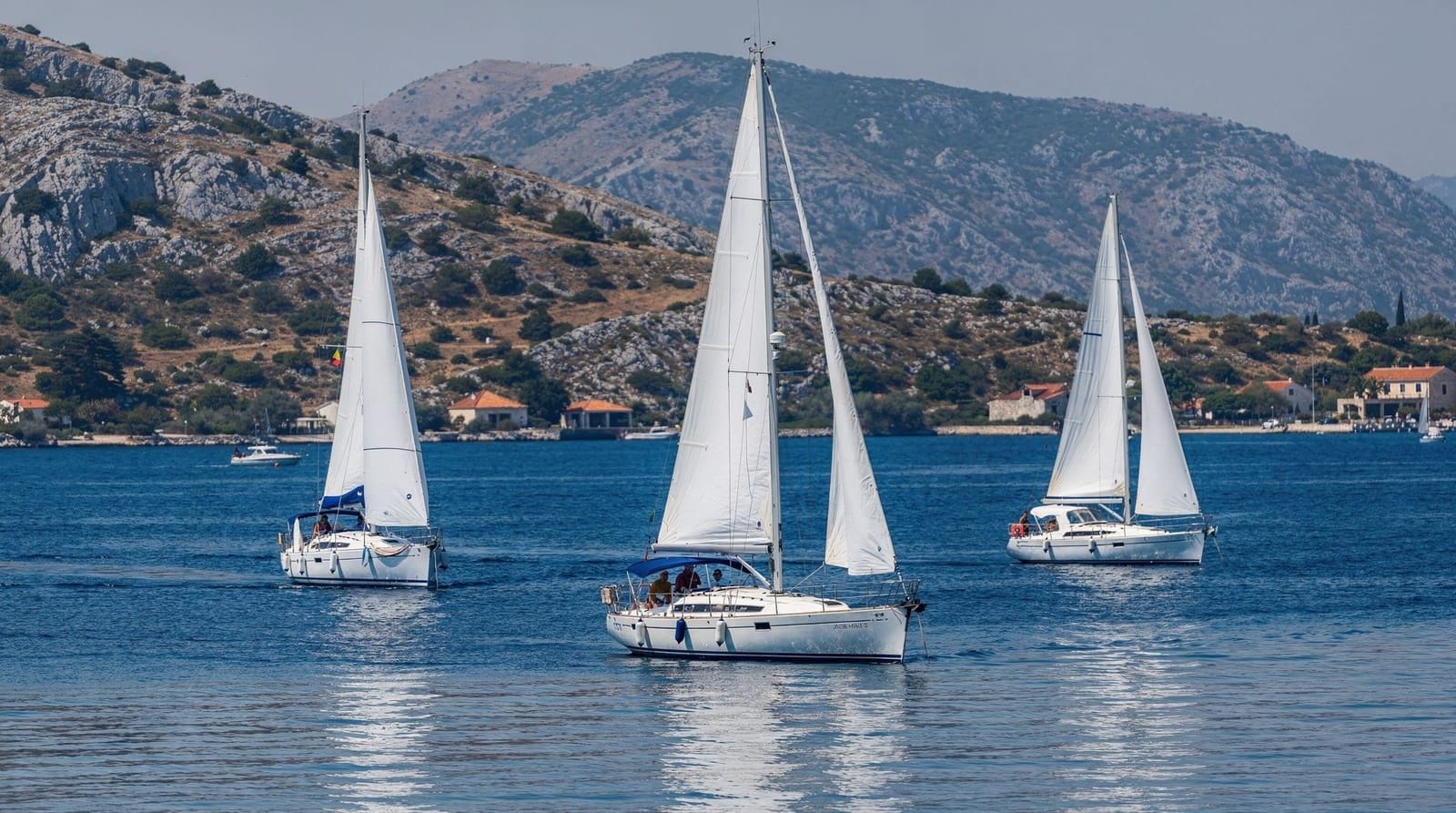
This deserves direct treatment. The words “sailing tour” appear constantly in operator listings, but the majority of day tours from Split are motorised. The boat has a mast; it uses an engine. This is not a scandal — it makes logistical sense given fixed itineraries and return times — but if you came to Croatia specifically to feel the boat heel under canvas, you need to ask operators explicitly whether the tour involves actual sailing, and for how much of the route. Some smaller operators do sail when conditions allow; it is not a guarantee. For a deeper look at the distinction between motor and sail options across different charter formats, bareboat vs skippered sailing is a useful read.
Full-day to Šolta and Brač: the quieter choice
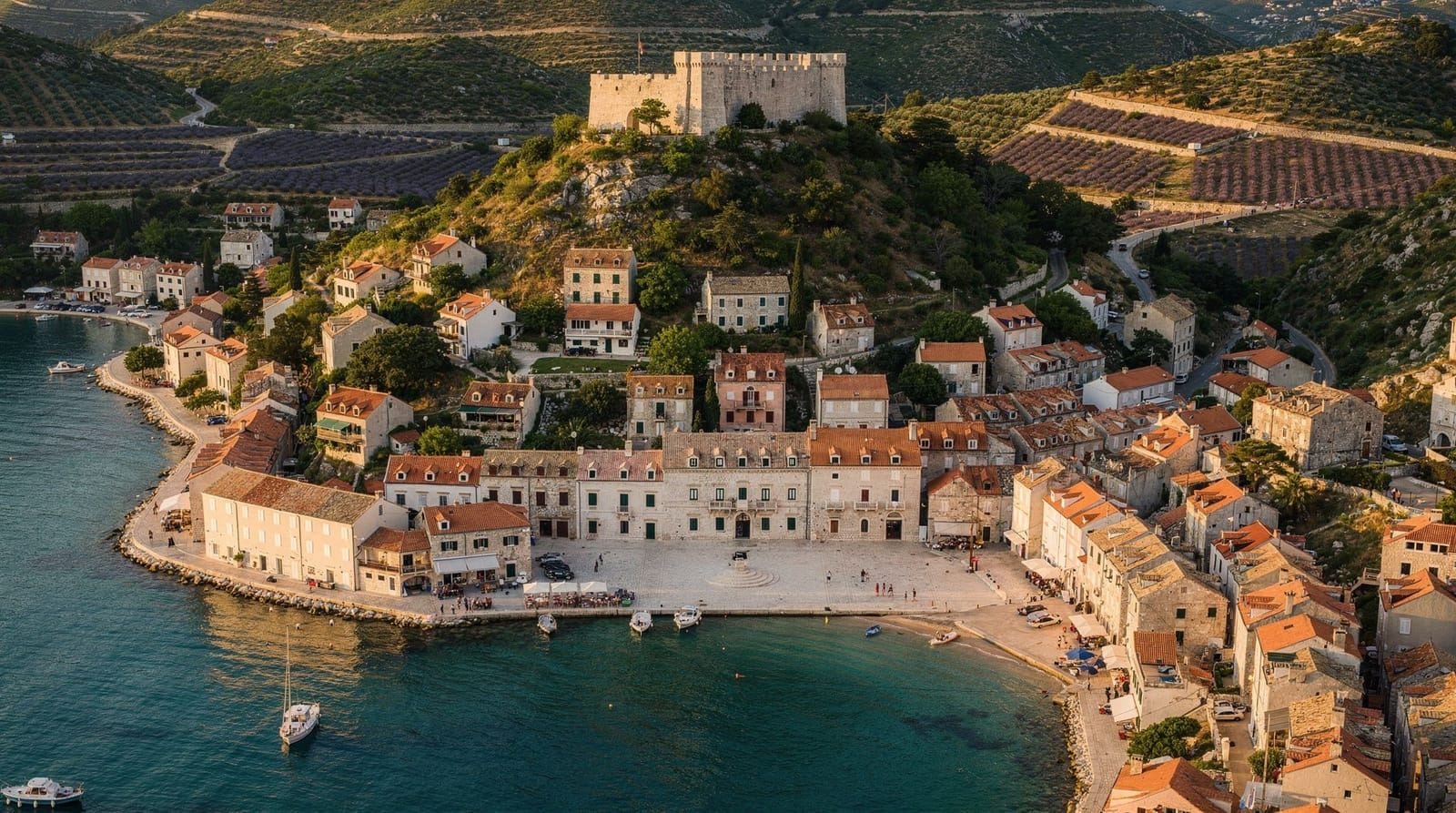
Full-day sailing tour to Šolta and Brač is the option that tends to attract people who want an actual island experience rather than a party. Brač is Croatia’s largest Dalmatian island and the source of the white limestone used to build Diocletian’s Palace — it has genuine character beyond its tourist infrastructure. Šolta is smaller and markedly less visited, its village of Stomorska a working fishing port that has not yet been reworked for Instagram. A tour that covers both gives you the contrast of a well-known island and an overlooked one in the same day.
What to expect: Departure is typically 9am or 9:30am. The crossing to Šolta takes around an hour depending on conditions. You get a swim stop in a cove — usually near Maslinica on Šolta’s western tip — followed by a move to Brač, where Milna or Bol is a common stop. Lunch is served on board or at a local restaurant. Return to Split is between 5pm and 7pm.
The honest picture: This is the least crowded of the main route options. You will share the coves with other charter boats, but not the relentless queues of boats that gather around Hvar in high season. The pace is more relaxed, and the boats tend to be smaller — 12 to 20 passengers rather than the 40-plus that some Hvar-route catamarans carry. If your priority is actually swimming in clear water without 15 other boats anchored around you, and eating something decent at noon, this is the format that most consistently delivers.
Price range: €60–90 per person for a group tour. Private full-day options run higher, typically €150–300 depending on boat size and group.
Hvar, Pakleni Islands, Brač, and Šolta all-inclusive: the scenic party boat
The Hvar route is the most scenic sailing route from Split by most measures. The approach to Hvar town through the Pakleni Islands — a string of pine-covered islets whose name translates loosely as “hell” but refers to the tar-producing pine resin historically harvested there — is genuinely beautiful. The water inside the Pakleni archipelago is calm, clear, and sheltered. On paper, this is the premium experience.
All-inclusive Hvar, Pakleni, Brač, and Šolta boat tour combines these stops into one long day, with unlimited food and drink from the moment you board. The value equation looks strong until you register what “unlimited alcohol from 9am” does to the atmosphere on a boat carrying 30–40 strangers.
What to expect: This format is the dominant product on the Split tour market and most of the boats running it know their audience. Departures are around 9am–10am, the first stop is usually a Pakleni cove for swimming, then Hvar town for a brief walk and lunch, then Brač or Šolta on the return leg. You are back in Split by 6pm–7pm.
The honest picture: The Pakleni Islands are genuinely worth visiting — for a more focused guide on the archipelago and how to make the most of it, see Pakleni islands guide. But the all-inclusive boat format is not the best way to experience them. The boats are large, the music is loud, and the crowd skews towards people for whom the drinking is the point rather than the scenery. If you are travelling as a couple, or want a calm day, this is the wrong format. If you are travelling in a group of friends in your twenties who want a day out on the water with open bar, it is efficient and well-priced for what it is.
The Hvar route is also significantly busier than the Šolta-Brač route. In July and August, the coves in the Pakleni Islands fill up with charter boats quickly. You will be swimming alongside dozens of other groups. For a clearer-eyed comparison of what Hvar vs Brač vs Korčula actually offers independent of the tour format, that guide is worth reading before you commit to a route.
Price range: €70–130 per person including food and unlimited drinks. Higher-end versions use smaller boats (under 20 passengers) and serve better food; the price difference is worth it if the atmosphere matters to you.
Half-day with swim stop and snacks: the budget option
The half-day format — typically three to four hours, one or two coves, snacks and wine included — exists to serve people on tight schedules or tight budgets. It is honest about what it is. You are not visiting an island in any meaningful sense; you are going to a cove, swimming, eating some cheese and bread, and coming back. On a day when you have already planned something for the afternoon, or when you simply want to be in Adriatic water for a few hours without committing to a full day, this format is completely reasonable.
Half-day tours from Split usually run in two slots: morning (9am–1pm) and afternoon (2pm–6pm or later). The afternoon slot in summer is worth avoiding if you are sensitive to heat — mid-afternoon on an open boat with no shade can be brutal.
Price range: €40–70 per person. Some operators pitch this as a standalone product; others sell it as an add-on to a Split city day. It is straightforward to find and not worth overthinking. If the conditions are right and the price is right, it delivers what it says.
Sunset cruise from Split: three hours, different criteria
The sunset cruise is a different product entirely. It is not really competing with the full-day tours — it is a 2.5 to 3-hour evening excursion that leaves Split in late afternoon, travels along the coast or to a nearby bay, and returns after dark. The appeal is atmospheric rather than exploratory.
Done well, a sunset cruise from Split is excellent. Watching the Diocletian Palace and the Meštrović Gallery recede as the boat clears the harbour, with the late-afternoon Adriatic light flattening out and the islands silhouetted to the west, is a legitimately memorable experience. The format suits couples, families with older children, or anyone who has already seen the islands by day and wants a different perspective.
Sunset cruise from Split typically includes a glass or two of wine or sparkling, sometimes light snacks. Group sizes are usually smaller than the full-day party boats. The pace is slow by design.
The honest picture: Three hours is not long enough to reach any of the main islands. You are cruising the channels between the mainland and the closer islands — Čiovo, the Brač channel — rather than arriving anywhere. Manage expectations accordingly. For anyone who has already spent a full day at sea, this is unnecessary. For someone who has been in Split for a couple of nights and has not yet been on the water at all, the sunset cruise is the most efficient way to fix that.
Price range: €50–80 per person including drinks. Private options are available and significantly more expensive.
Timing the departure matters as much as picking the operator. In midsummer, sunset falls late — often after 8:30pm — which pushes the return into full darkness and a cooler evening breeze worth having a layer for. In shoulder season, sunset comes earlier and the light on the water is arguably softer, though the sea can be a touch cooler for anyone tempted to swim on the way.
How to choose and how to book
The matrix is simpler than it looks once you filter by what you actually want from the day.
If you want quiet water, fewer tourists, and an authentic island stop: book the Šolta-Brač full-day. If you want Hvar’s scenery without the party atmosphere: look for a small-group tour (under 15 passengers) that lists Hvar and Pakleni as the route but does not market itself as all-inclusive or open-bar. They exist and they are worth the premium. If you want maximum value and minimum commitment: the half-day is fine. If you want a romantic evening and already have daytime plans: the sunset cruise is the right call.
| Format | Price | Duration | Best for |
|---|---|---|---|
| Šolta & Brač full-day | €60-90 | 9am-5/7pm | quieter coves, authentic villages, actual island time |
| Hvar & Pakleni all-inclusive | €70-130 | 9/10am-6/7pm | scenic route, group-of-friends open-bar atmosphere |
| Half-day swim stop | €40-70 | 3-4 hrs | tight schedule or budget, no real island stop |
| Sunset cruise | €50-80 | 2.5-3 hrs | couples, an evening add-on rather than a full day |
For context on all the day-trip options from Split — not just boat tours — day trips from Split covers the full range including inland and overland options. If you are considering island-hopping across multiple days, Dalmatian island hopping in 7 days is the relevant itinerary, and best islands near Split helps with the prioritisation question.
On booking platforms, read the recent reviews carefully for the specific boat, not just the operator. Reviews mentioning noise levels, actual sailing time versus motoring time, and the quality of the food give you a much clearer picture than star averages. Cancellation policies vary: most reputable operators offer a full refund or free rescheduling if they cancel due to weather; make sure the same policy applies if you need to cancel.
Browse private tours and day trips from Split if none of the group formats fits — private charters give you full control over the route, pace, and atmosphere, and for groups of four or more the per-person price gap narrows considerably.
For timing, best time to visit Croatia is useful context — peak season (July–August) means busier coves and higher prices across all formats; shoulder season (May–June and September) offers calmer water, lower prices, and meaningfully less crowding, particularly on the Hvar route.
If a Day on the Water Isn’t Enough
For travellers who fall in love with a single day at sea and want more, the natural next step is a multi-day sailing trip rather than repeating single-day tours. The sailing week from Split itinerary covers a full week of island-hopping under a skippered or bareboat charter, and the Croatia sailing guide explains the practical differences between chartering your own boat and joining an organised flotilla. If islands rather than sailing per se are the draw, comparing Hvar vs Brač directly is useful before committing a whole week to one base.
Compare alternative tours
Frequently asked questions about Sailing Day Tours from Split
Are Split sailing tours actually sailing, or motorised?
Most are motorised — they use engine power to move between stops rather than sail. If you specifically want to travel under canvas with sails up, ask the operator directly before booking. True sailing tours exist but are less common.What is the difference between the Šolta-Brač route and the Hvar-Pakleni route?
The Šolta and Brač route is quieter and less frequented — you'll encounter fewer tourist boats and more authentic fishing villages. The Hvar and Pakleni route is more scenic in terms of dramatic coastline but significantly busier, especially in July and August.Is the all-inclusive Hvar tour good value?
It depends on your tolerance for a party atmosphere. All-inclusive usually means unlimited beer and wine, which attracts a younger crowd and a louder boat. The scenery is excellent; the vibe is not for everyone. If you want a relaxed day, this is not the tour to book.Can I go swimming on all the tours?
Yes — swim stops are a standard feature of almost every sailing day tour from Split. Full-day tours typically include two or three stops; half-day tours usually have one. Water clarity in the Dalmatian islands is exceptional.What should I bring on a sailing day tour?
Sunscreen, a hat, a towel, and cash for any extras. Some boats provide snorkelling gear; others charge a small fee. Wear shoes you can slip off easily for boarding. Motion sickness tablets if you are sensitive — the crossing to Hvar can be choppy.What happens if the tour is cancelled due to weather?
Reputable operators will cancel in genuinely dangerous conditions and offer a refund or rebooking. Bura (north wind) can create rough seas with little warning. In summer, the main risk is afternoon thunderstorms — most tours are back in port before they develop.Is a sunset cruise from Split worth it?
For couples or anyone wanting a relaxed evening on the water, yes. Three hours is enough to clear the harbour, watch the Diocletian Palace recede, and enjoy the Adriatic light. It is not a substitute for a full day at sea but it is an excellent standalone experience.