Zagreb vs Split: Croatia's capital vs its coastal city
Zagreb: Walking tour with funicular ride
Should I visit Zagreb or Split?
Zagreb if you want a proper Central European capital city — museums, café culture, farmers' markets, Advent/Christmas markets, and a year-round destination that works in any season. Split if you want the Adriatic lifestyle, island day trips, beach access and the Roman heritage of Diocletian's Palace. Most Croatia itineraries include both, but if you must choose: Zagreb for city culture, Split for coast and islands.
Croatia’s two faces
Every country has a capital-versus-coast tension in its travel narrative. Croatia’s version is particularly pronounced: Zagreb and Split are not just geographically separated (410 km and a mountain range between them) but culturally distinct — two cities with different histories, different climates, different relationships to the tourist economy, and different answers to the question of what a Croatian city is.
Zagreb is Central European — a Habsburg capital of wide boulevards, art nouveau facades, café culture, trams and an intellectual life rooted in university culture. Split is Mediterranean — a port city that grew up inside and around a Roman emperor’s retirement palace, with a waterfront promenade, Adriatic light and a proximity to the islands that defines its psychology.
Understanding the difference helps you decide how to structure a Croatia trip.
| Setting | Zagreb: continental capital / Split: Adriatic port city |
| Cost | Both moderate; Split rises sharply in July-August |
| Time needed | 2-3 days for either city alone; both together needs 5+ days |
| Getting there | ZAG or SPU airport; A1 motorway or bus/train between them, about 4-6 hours |
| Best time | Zagreb: Nov-April / Split: May-September |
Zagreb: the underrated capital
Zagreb is the city that Croatia’s own tourism industry consistently undersells. With 800,000 people and the country’s main university, national institutions, arts scene and business life, Zagreb has more going on year-round than any other Croatian city — yet it receives a fraction of the visitors that Dubrovnik and Split attract.
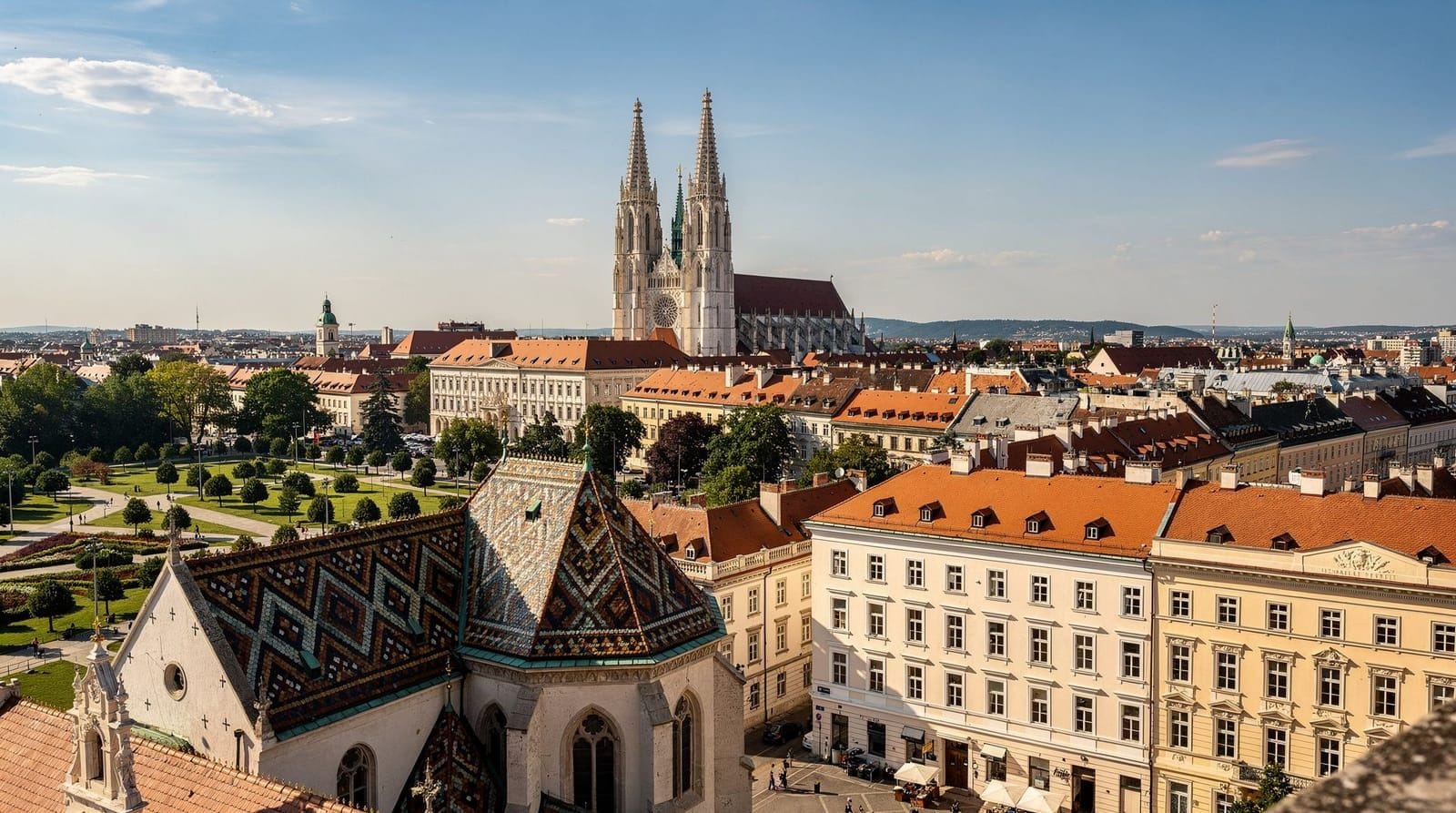
The old town. Zagreb’s Gornji Grad (Upper Town) clusters around the Cathedral (currently under renovation following a 2020 earthquake) and the Dolac market — Croatia’s most famous produce market, running every morning in the square below. The colourful tilework of St Mark’s Church, the Lotrščak Tower (noon cannon fired daily), the Strossmayr promenade viewpoint, and the funicular connecting upper and lower towns are the essential walk.
The museums. Zagreb punches above its weight in museum quality. The Museum of Broken Relationships (genuinely one of Europe’s most original museums), the Archaeological Museum, the Croatian National Museum of Natural Sciences, the Mimara (art collection, eclectic but large), and the Technical Museum are all worth time. For a capital of a country this size, the museum infrastructure is impressive.
The café culture. The špica — Zagreb’s term for the weekend morning coffee ritual on Tkalčićeva street and the café terraces of the Lower Town — is one of the city’s most charming social institutions. Croatians take their coffee seriously (filter coffee is almost never served; espresso and kava s mlijekom are the default), and the Saturday morning scene on Tkalčićeva is genuinely enjoyable.
The food market. Dolac market is the beating heart of Zagreb’s food culture — fresh vegetables from the continental interior, cheese from the Lika plateau, and the occasional farmer selling forest mushrooms. Around it, the lower market sells olives, dried figs and the Croatian products that the supermarkets homogenise. Arrive by 08:30–09:00 before the best produce is gone.
Zagreb Advent. From late November through New Year, Zagreb’s Christmas market is consistently voted among Europe’s most beautiful. The transformation of Strossmayer Square, the ice rink, the mulled wine stalls and the illuminated old town make it worth specifically timing a visit. This is Zagreb at its most compelling.
Split: the living Roman city
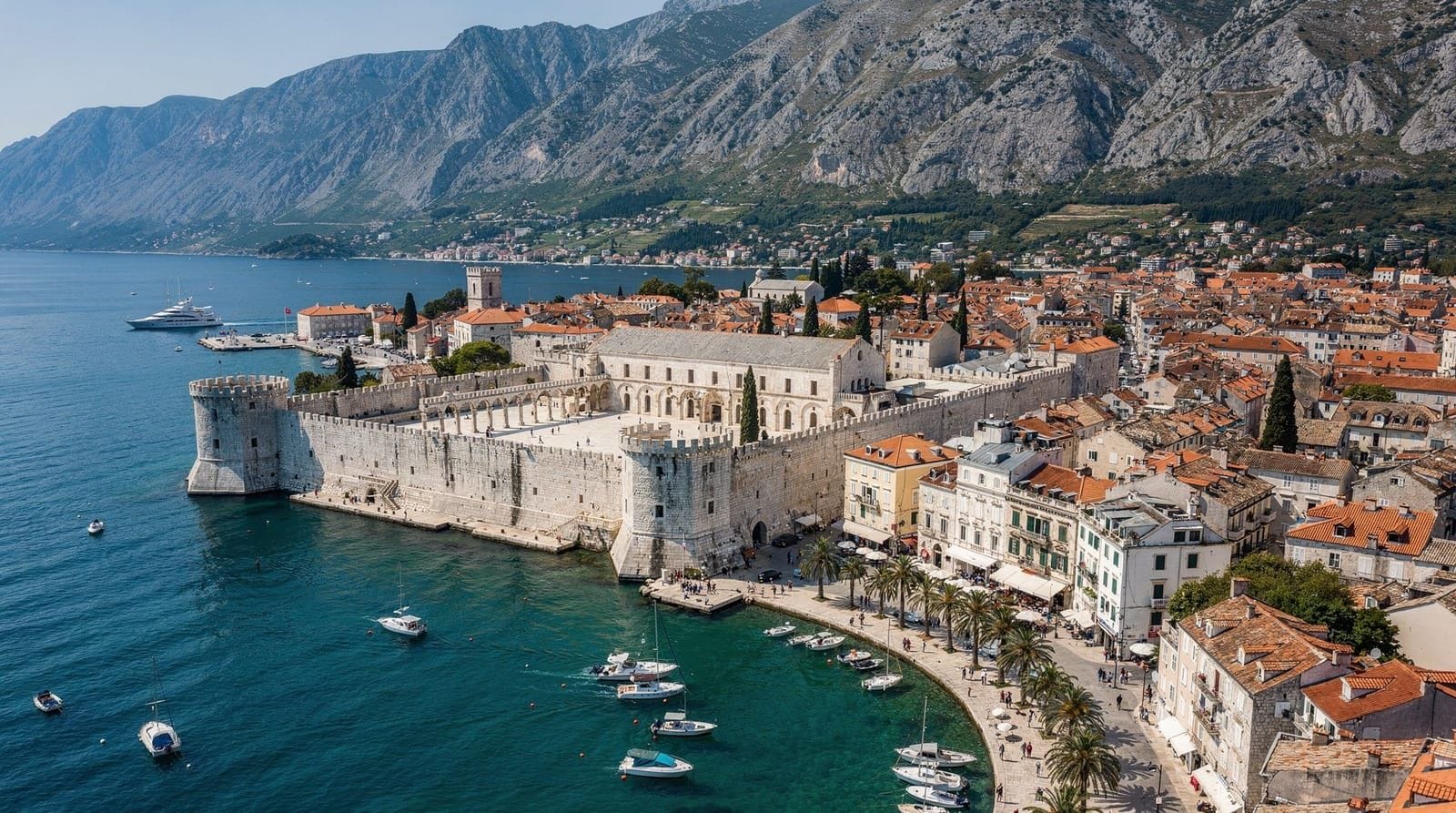
Split is the second city of Croatia and the largest city on the Adriatic coast. Its defining feature — one of the most remarkable in any European city — is that approximately 3,000 people live within the walls of a late-Roman emperor’s retirement palace. Diocletian’s Palace (built 295–305 AD) is not a museum; it is a neighbourhood. People live in flats carved from Roman cellars; restaurants operate in colonnaded courtyards; laundry dries above 1,700-year-old columns.
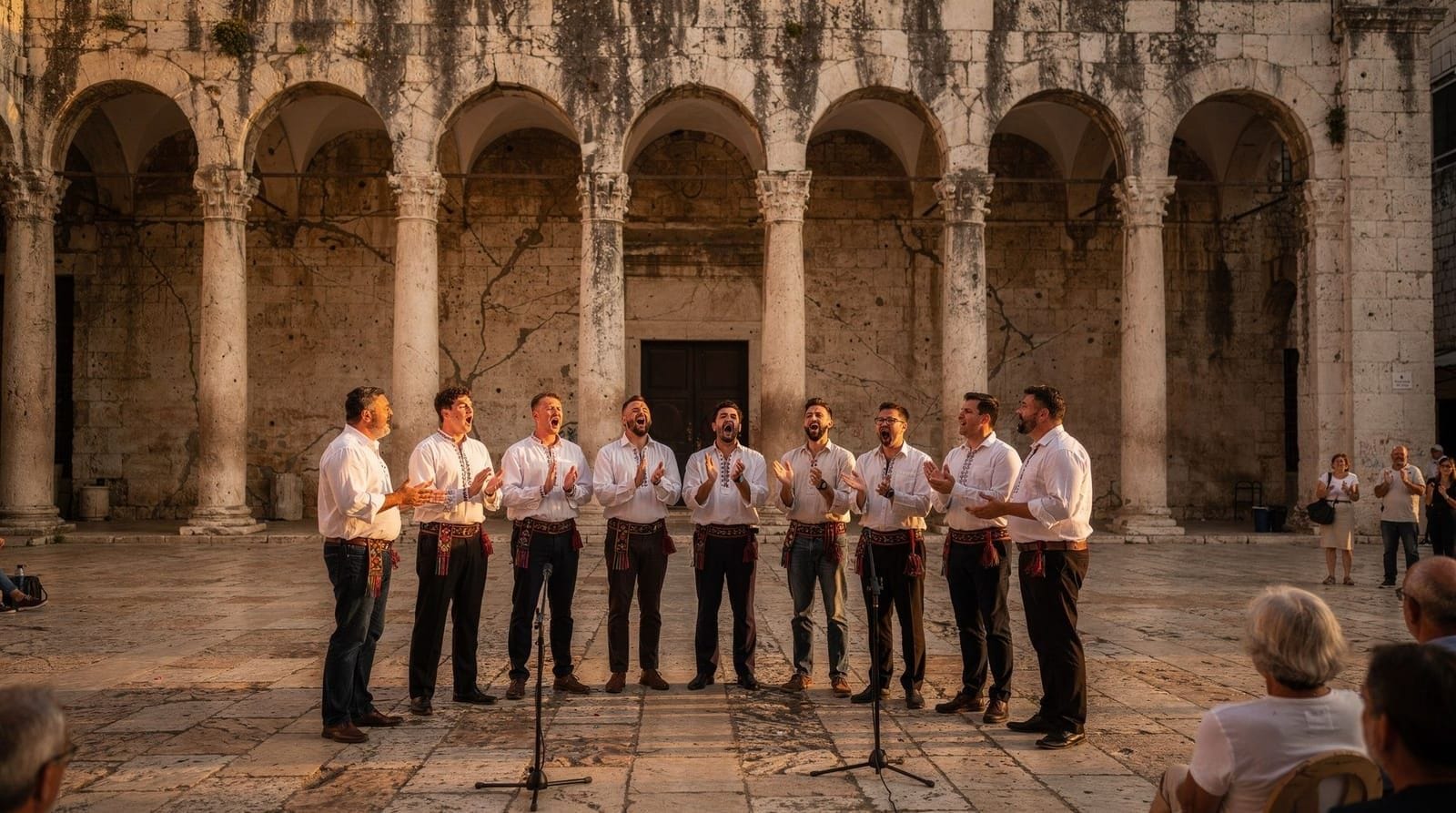
Diocletian’s Palace. The palace’s interior is Croatia’s most extraordinary heritage site. The Peristyle — the central colonnaded courtyard — is where Diocletian once held audiences; now it holds café tables and evening concerts. The Cathedral of St Domnius (converted from Diocletian’s own mausoleum) faces a baptistry converted from a pagan temple. The cellars (excellent for Game of Thrones fans — this is where Daenerys kept her dragons) are accessible on a guided tour.
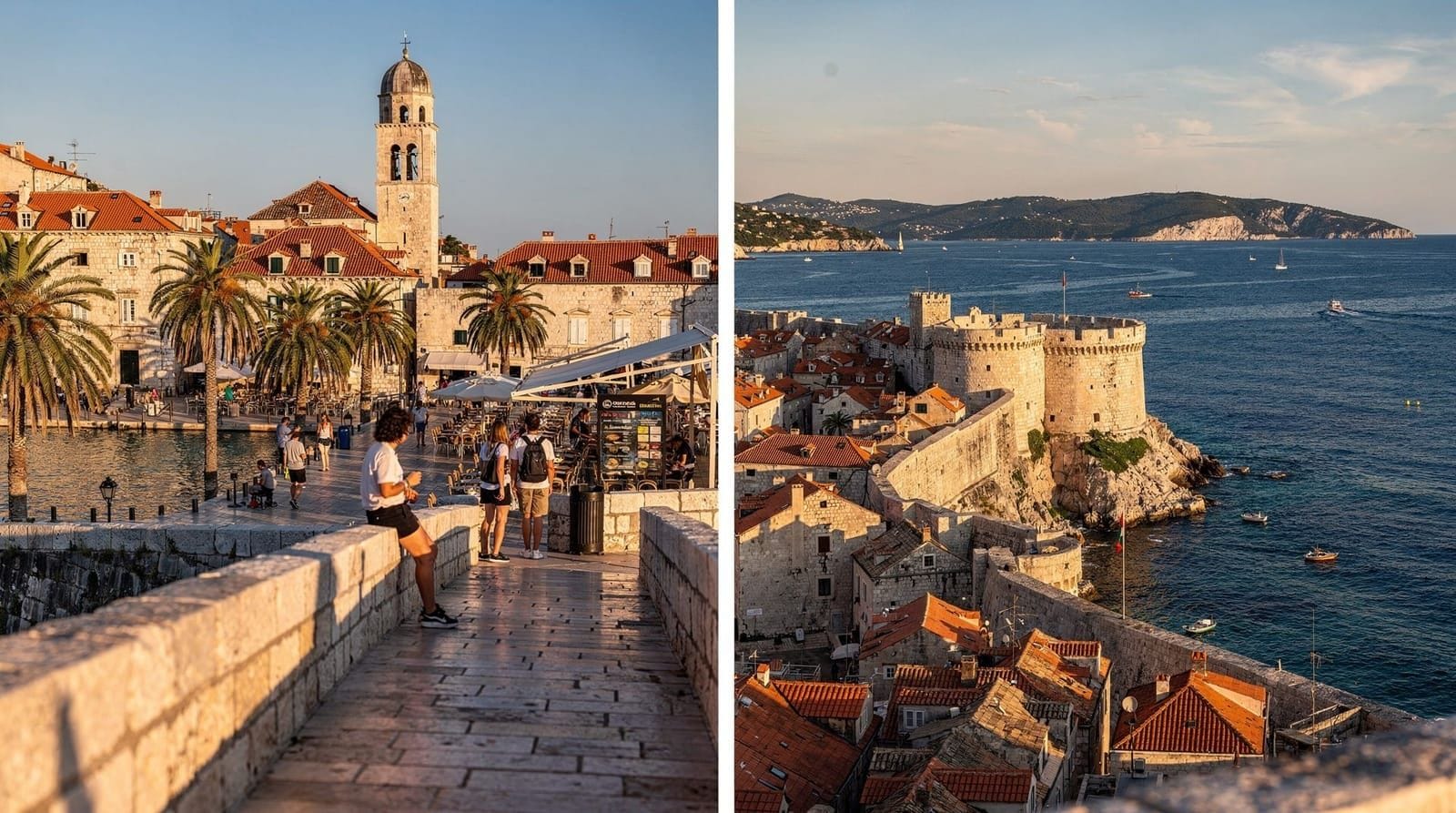
The Riva. Split’s waterfront promenade — one of the Mediterranean’s finest — runs along the harbour front outside the palace walls. At sunset, the entire city gravitates here. The light on the white stone is exceptional.
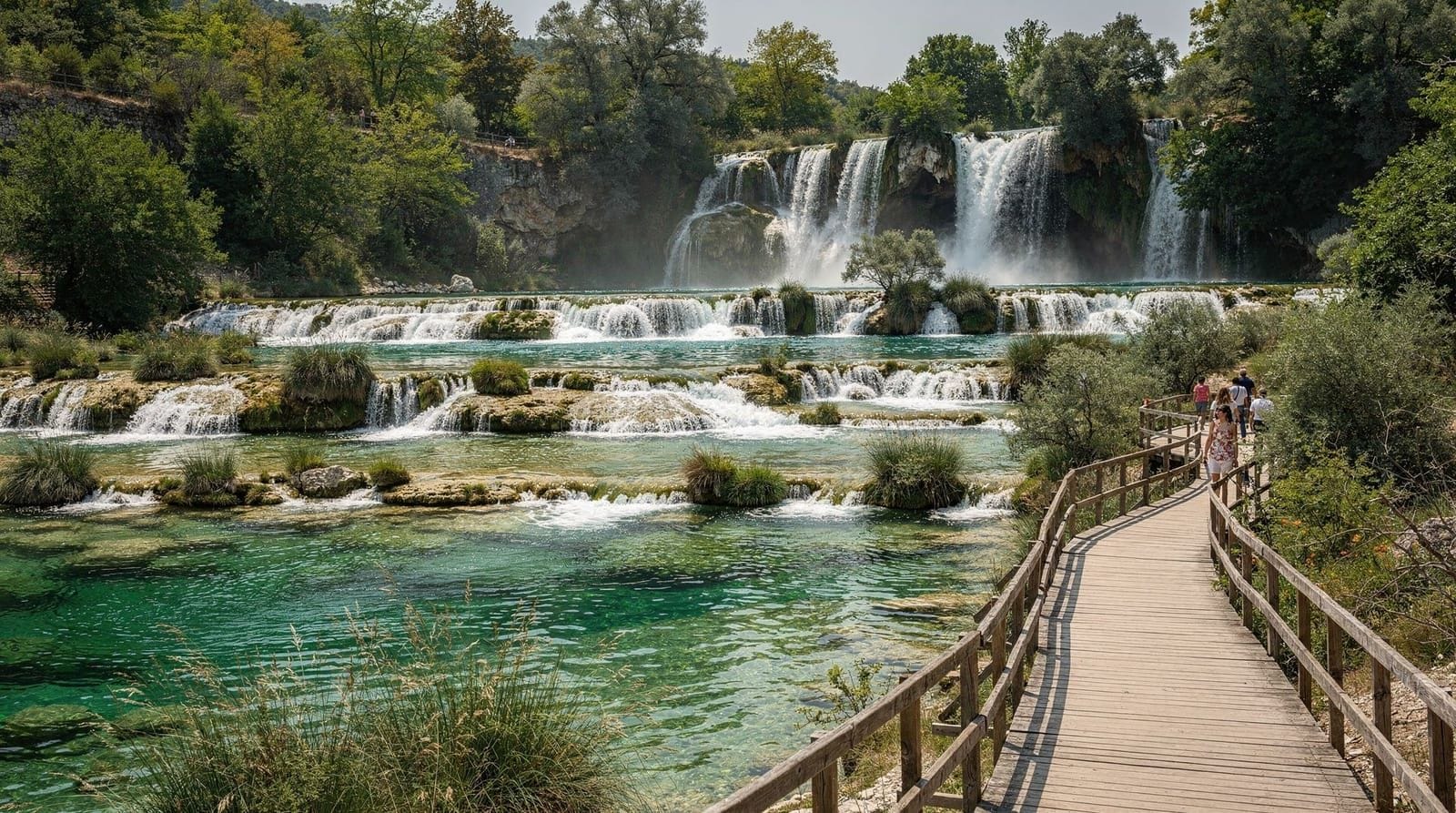
Day-trip access. As a base, Split has no peer on the Adriatic coast. Hvar in 50 minutes, Brač/Zlatni Rat in 1 hour, Krka waterfalls in 1.5 hours, Cetina rafting in 40 minutes, Plitvice Lakes in 2.5 hours — nowhere else in Croatia gives you this range of day-trip options.
Side-by-side comparison
| Factor | Zagreb | Split |
|---|---|---|
| Setting | Continental capital, landlocked | Adriatic port, mountains behind |
| Summer | Good but hot, quieter | Excellent — beach culture peaks |
| Winter | Excellent (Advent markets) | Quiet, some closures |
| Beaches | None | Bačvice 10 min walk |
| Island access | None (2–4 hours to coast) | Excellent (Hvar, Brač, Vis) |
| Museum scene | Strong — capital-level | Limited |
| Food | Broader range, sophisticated | Seafood-forward, excellent quality |
| Nightlife | Year-round, domestic scene | Strong summer, party culture |
| Crowds | Manageable year-round | High in July–August |
| Cost | Moderate year-round | Moderate; higher in peak summer |
| Day trips | Plitvice, Zagorje, Ljubljana, Samobor | Islands, Krka, Cetina, Biokovo |
| Airport | ZAG (major hub, year-round) | SPU (well-connected, seasonal surge) |
Combining both cities: how to structure it
Most Croatia itineraries of 8+ days include both. The logical flow depends on direction:
Option 1: Zagreb first, Split second. Fly into ZAG, 2 nights Zagreb, drive south stopping at Plitvice Lakes (full day), arrive Split on day 4. Then Split base for islands and day trips. End in Dubrovnik or fly home from Split.
Option 2: Split first, Zagreb second. Start on the coast (island-hopping, Dubrovnik), work north to Split, then overland to Zagreb via Plitvice as the trip’s final cultural stop.
Option 3: Different airports. Fly into one airport and out of the other to avoid backtracking — very efficient on 10–14 day trips.
Which city for which month?
| Month | Best city | Reason |
|---|---|---|
| January–February | Zagreb | Advent aftermath, low prices, cosy café culture |
| March–April | Zagreb | Mild, museums, farmers’ markets reopening |
| May | Split (and Zagreb) | Shoulder season — both excellent |
| June | Split | Adriatic season begins, excellent weather |
| July–August | Split | Peak season; Zagreb is hot and quieter |
| September | Split | Best-kept secret month — warm, uncrowded |
| October | Zagreb | Autumn culture, food markets, affordable |
| November–December | Zagreb | Advent season — Zagreb’s best months |
A typical day’s budget, side by side
| Expense | Zagreb (per person) | Split (per person, peak summer) |
|---|---|---|
| Coffee | €2-3 | €2.50-3.50 |
| Lunch | €10-15 | €12-20 |
| Dinner with wine | €20-30 | €25-45 |
| Museum/attraction entry | €5-10 | €8-15 (Diocletian’s cellars) |
| Mid-range hotel | €90-160/night | €90-160/night (higher in August) |
Outside peak summer, Split’s premium narrows considerably and the two cities land close together on a daily budget — see the Croatia daily costs guide for a fuller national breakdown.
Which suits solo travellers, couples and families
Solo travellers: Both cities have strong hostel scenes; Zagreb’s is more social year-round, Split’s benefits from easy island day trips that naturally group travellers together.
Couples: Split’s sunset Riva walk and island day trips suit a romantic short break; Zagreb’s café culture and Advent season (for a December trip) suit a slower city break.
Families: Split’s Bačvice beach and flatter old town generally make logistics easier with young children; Zagreb’s museums and funicular are a strong wet-weather or winter alternative. For structured planning either way, see the Croatia with kids guide.
Getting between the two
If your itinerary includes both, the Zagreb to Split guide covers bus, train, car and private transfer options in detail, including how to fit in a stop at Plitvice Lakes along the way.
Frequently asked questions about Zagreb vs Split
Which city is better in summer?
Split wins in summer — the Adriatic beach culture, island access, the Riva waterfront, the events calendar and the evening energy of Diocletian's Palace all peak from June to September. Zagreb in summer is pleasant but not its strongest season — the continental interior gets hot (often 30–35°C), universities are on break and the city is quieter. Istria and the coast pull Zagreb's tourist crowd in summer.Which city is better in winter?
Zagreb, clearly. The Zagreb Advent Christmas market (consistently rated among Europe's best) runs from late November through New Year — the capital transforms with ice rinks, mulled wine, illuminated squares and a genuine festive atmosphere. Split in winter is quiet, with some businesses on the islands closed and the Riva more windswept than sun-soaked. Zagreb is a year-round destination; Split is primarily a warm-season one.Is Zagreb or Split more expensive?
Split is slightly more expensive in the tourist core, particularly in summer, when the coastal premium applies. Zagreb is more expensive than smaller Croatian cities but notably cheaper than Split in July–August. Year-round, Zagreb offers good value for a Central European capital — comparable to Ljubljana, cheaper than Vienna or Prague. Outside peak season (May, June, September), Split prices drop considerably.Which city has better food?
Zagreb has a broader and more sophisticated restaurant scene — a genuine capital food culture with everything from Michelin-recommended restaurants to excellent street food, farmers' market produce, and a wine bar scene that champions Croatian wines. Split has excellent seafood-focused dining along the Riva and in the Diocletian's Palace restaurants; the quality is high but the range narrower. For a comprehensive food and drink experience, Zagreb edges ahead.Does Zagreb have good day trips?
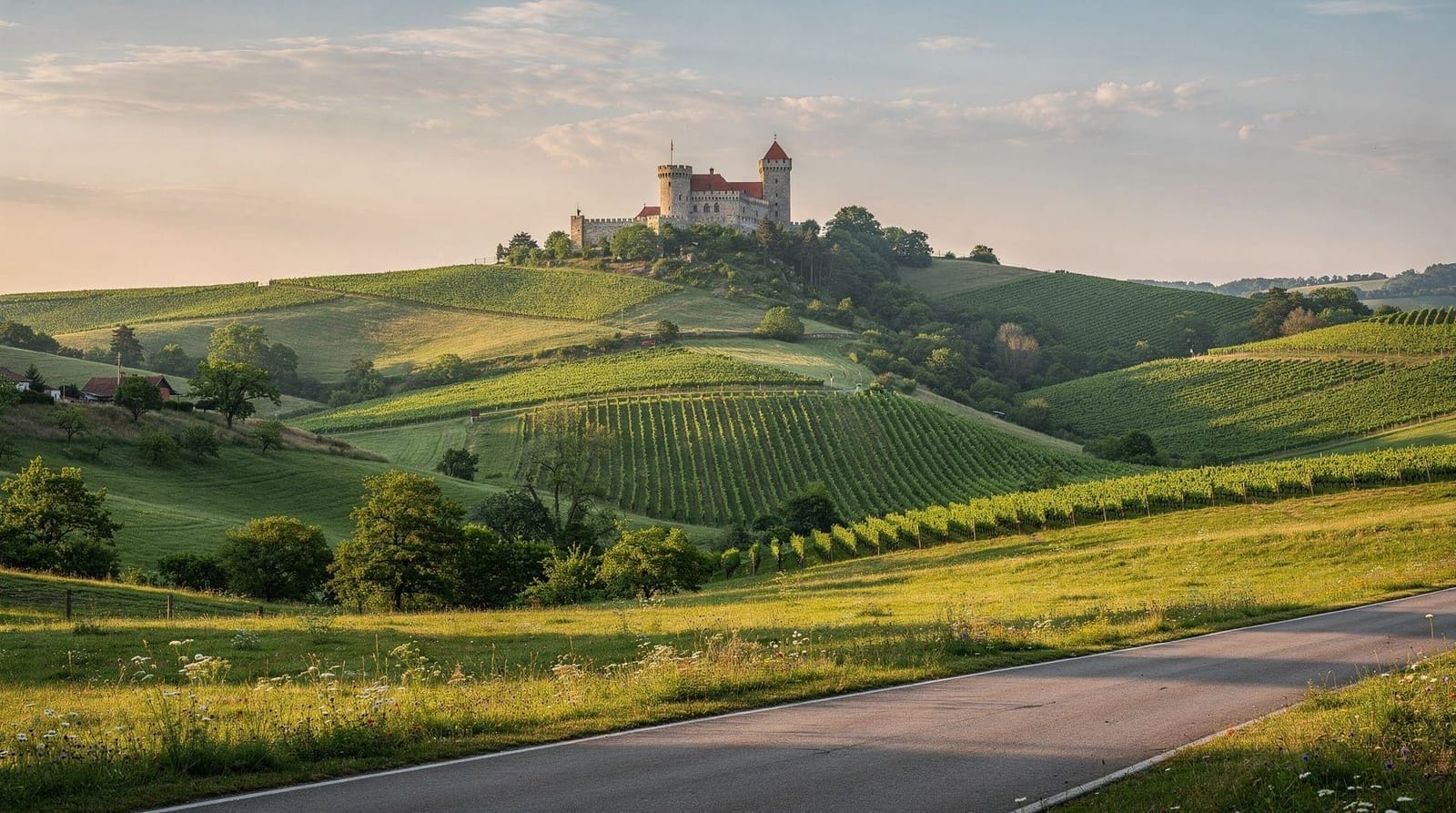
Yes — Zagreb is positioned well for Plitvice Lakes (2–2.5 hours south), the Zagorje castle region (1 hour north, including the lake-reflected Trakošćan), Samobor (30 minutes west, known for kremšnite cream pastry and wine), and Slovenia's Ljubljana and Lake Bled (2 hours each). For sheer day-trip variety, Split wins on the coast (Hvar, Brač, Krka, Cetina), but Zagreb's inland options are underrated.Which city is better for a first visit to Croatia?
Split, slightly, because it gives you both the Roman heritage and the Adriatic coast — and it's the best base for seeing the rest of Dalmatia in a short time. Zagreb rewards visitors who appreciate city culture and museum depth, but a traveller with limited time who hasn't been to Croatia before will get a more complete sense of the country's appeal from Split. Zagreb shines more on repeat visits.How far apart are Zagreb and Split?
Approximately 410 km by road (A1 motorway) — about 4–4.5 hours driving. By bus: approximately 5 hours, several departures daily. By train: the scenic but slow Zagreb–Split railway takes 5.5–6 hours and is not practical for tight itineraries. Many itineraries combine both cities by flying into one and out of the other, with an overland connection via the coast or Plitvice.Which city is better for a solo traveller?
Both work well, but for different reasons. Zagreb has a stronger hostel and social scene with year-round events, making it easier to meet other travellers outside summer. Split has a similarly strong hostel network plus the added draw of easy island day trips, which tend to be very social. Solo travellers on a short trip often prefer Split for the coastal energy; those staying longer or visiting off-season often prefer Zagreb.Which city is better for families with children?
Split edges ahead for families thanks to Bačvice beach a short walk from the old town, gentle island day trips, and a flatter old town for strollers. Zagreb works well for families too, especially with the Museum of Broken Relationships, the funicular and Zagreb Advent's ice rinks, but lacks Split's easy beach access.
Top experiences
Bookable activities with verified prices and instant confirmation on GetYourGuide.
Top experiences
Best-rated activities across GetYourGuide and Viator.

Blue cave, Mamma Mia and Hvar, 5 islands speedboat tour
- Viator

Blue Cave and Hvar Tour - 5 Islands Tour from Split and Trogir
- Viator

Blue cave, Mama Mia and Hvar, 5 Island Speedboat Tour from Trogir
- Viator

From Zadar: Plitvice Lakes with Boat Ride & Zadar Old town tour
- Viator

Hvar, Brač & Pakleni islands cruise with lunch & drinks from Split & Trogir
- Viator

Blue Cave & Vis Island speedboat tour from Hvar
- Viator