Dalmatian cuisine: a deep guide to food along Croatia's Adriatic coast
Split: Small group food tour with private option
What makes Dalmatian cuisine different from the rest of Croatia?
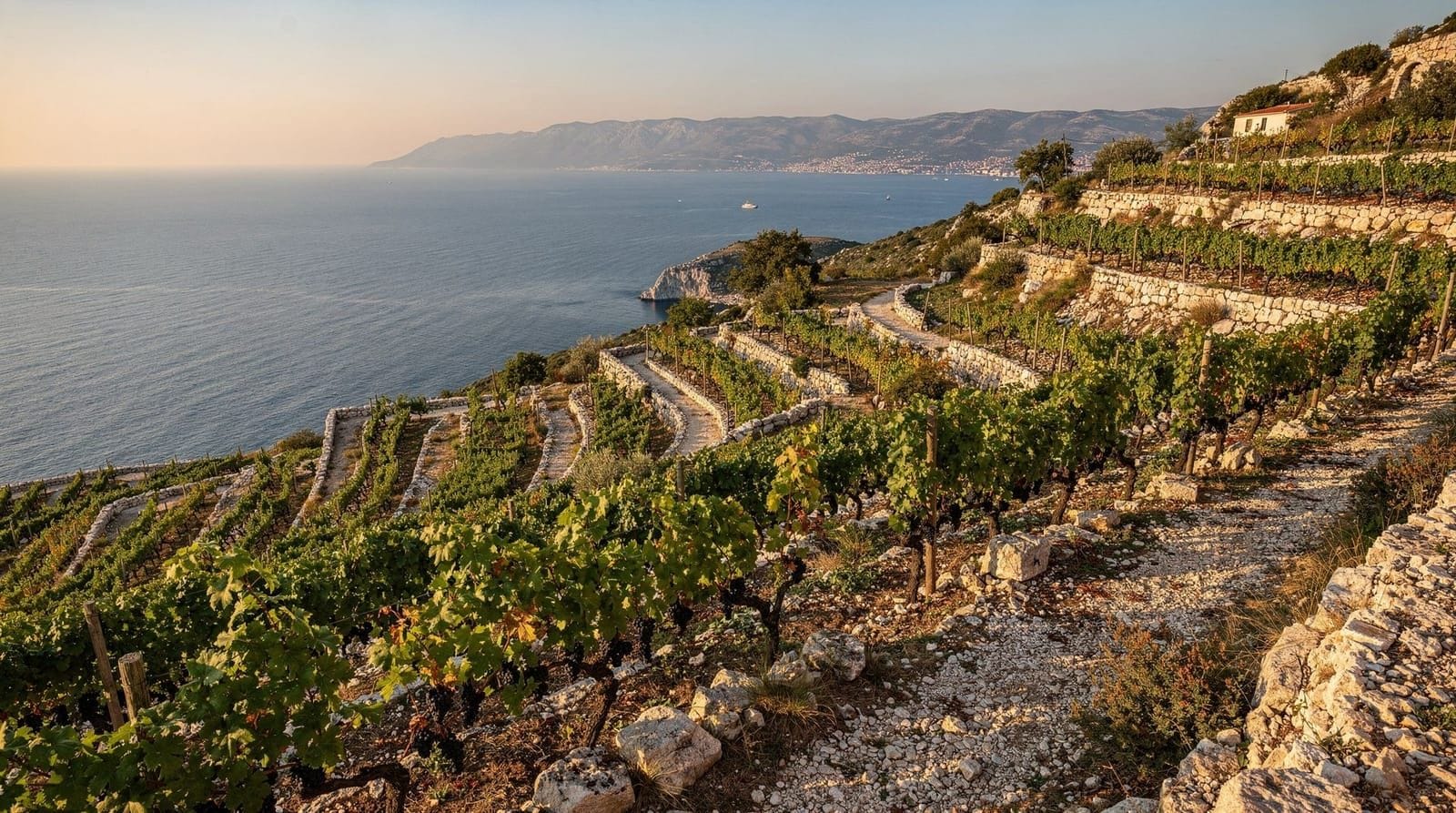
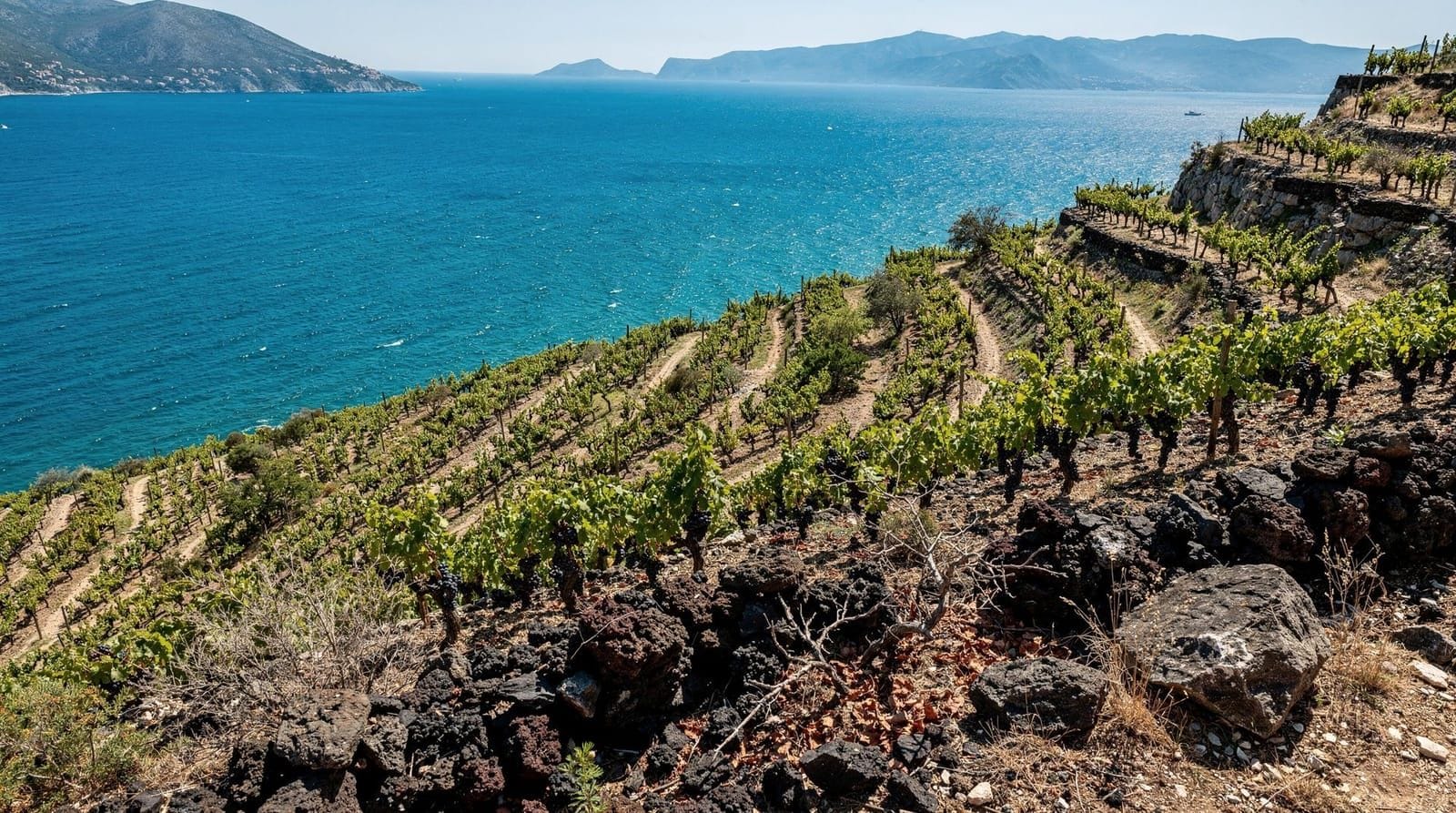
Dalmatian food sits at the intersection of the Adriatic sea, the rocky Dinaric hinterland, and centuries of Venetian rule. The result is a cuisine defined by restraint: good olive oil, fresh fish cooked simply, slow-braised meat when it matters, and very little pretension. The coast leans Mediterranean — grilled sea bass, octopus salad, black squid-ink risotto, buzara mussels. Inland Dalmatia adds lamb, dried figs, and smoked meats. What binds it all is quality ingredients and the conviction that you should not rush a meal.
The Adriatic table: what Dalmatian food is really about
Dalmatia runs for roughly 600 kilometres along Croatia’s coastline, from Zadar in the north to the Bay of Kotor in the south. Across that stretch, the food changes in accent but not in spirit: good olive oil on everything, fish bought the same morning it was caught, meat that was raised on hillside scrub and cooked slowly enough to become something different, and wine poured generously from unlabelled bottles. This is not a cuisine of complexity for its own sake. It is a cuisine of very good ingredients treated with respect.
Three forces shaped what people eat here. The Mediterranean gave the geography — long summers, dry limestone hills, an Adriatic sea rich with fish and shellfish. The Venetians gave 350 years of rule, which left its mark on cooking techniques, some vocabulary (brudet from brodetto, gregada from graciada), and an enduring preference for quality over quantity. The hinterland — the Dalmatian zagora, the rocky inland plateau — gave the pastoral counterweight: smoked lamb, hard cheese, dried figs, rakija, and a culture of eating together for several hours at a time.
Understanding the coastal-hinterland divide is essential. On the coast, the pantry is Adriatic: fresh fish and shellfish, olive oil from Brač or Kaštela, capers from Vis, sea salt, anchovy paste, blitva (Swiss chard). Inland, even just 20 kilometres from the sea, the food shifts: lamb and goat dominate, smoke is used heavily for preservation, and the vegetables are hardier. In a single drive from Split up to the Sinj plateau you cross two culinary worlds.
| Where | Split, Dubrovnik, Hvar, Šibenik and the Dalmatian coast/islands |
| Cost | Daily menu (dnevna ponuda) around EUR 10–15; à la carte EUR 25–60+ |
| Signature dishes | Pašticada, brudet, crni rižot, octopus salad, Paški sir |
| Booking | Reservations recommended in Hvar, Dubrovnik Old Town, Split Varoš in summer |
| Best time | Year-round; fish markets busiest early morning, konobas fill from 8pm |
The Dalmatian pantry
Before the dishes, the ingredients. Olive oil from the Dalmatian islands and coast is serious: Brač produces oil from the Oblica cultivar, fruity and slightly peppery; Hvar and Kaštela also have notable groves. Local extra-virgin olive oil is available at markets and direct from producers for EUR 12–18 per litre, far cheaper than the same quality in a Dubrovnik tourist shop.
Masline — olives — appear at every meal, from the bread basket to the cheese plate. You will encounter small, wrinkled black olives preserved in oil and herbs, large green olives in brine, and olive pastes sold in jars at markets. The morning fish market (ribarnica) in Split at Pazar, just outside the east gate of Diocletian’s Palace, opens around 6am and closes when the fish runs out — usually by 10am. The same applies in Zadar and Dubrovnik.
Srdela — anchovy — appears in many forms: fresh and grilled in summer, salt-packed in jars year-round, as a paste stirred into sauces, or fried whole as a cheap and excellent snack. A plate of fresh fried anchovies (fritule od srdelica) at a konoba on the island of Vis costs EUR 8–12 and is one of the most satisfying things you can eat in Dalmatia.
Sir (cheese) is produced across Dalmatia but the prestige item is Paški sir from the island of Pag. The sheep on Pag graze on coastal scrub — wild sage, dried grasses, halophyte plants — seasoned by constant sea spray from the bora wind. The milk has a distinctive aromatic quality. The cheese is pressed into wheels, rubbed with olive oil and ash, and aged from three months (mild, semi-firm) to over a year (hard, crystalline, intensely flavoured). Paški sir carries EU PDO status and is sold at serious cheese shops and markets across the region for EUR 25–45 per kg. Trogirski sir, made around Trogir, is less famous but equally worth seeking.
Smoked meats from the zagora — pršut (air-dried ham, hung in sea air), smoked lamb ribs, kulen-style sausages — appear on starter platters at konobas throughout the region. The Dalmatian pršut is leaner and saltier than Istrian versions, matured in sea air rather than just cold smoke.
Key dishes of the Dalmatian table
Pašticada — the Sunday dish
If you ask any Split native what dish defines home cooking, the answer is almost always pašticada. It is a labour of love: a large piece of beef (usually round or rump) studded with garlic cloves and lard, marinated overnight in red wine vinegar, then slow-braised for three to four hours in a sauce built from wine, prune jam, dried figs, tomato, onion and spices. The vinegar tenderises the meat; the fruit and wine create a deep, sweet-sour glaze.
Pašticada is traditionally served with homemade njoki (gnocchi) — not the light Italian kind but denser potato dumplings that absorb the sauce. It is the centrepiece of Christmas, Easter, weddings and any occasion serious enough to justify most of a day in the kitchen. At Konoba Fetivi in Split you can eat an excellent version for EUR 20–25. It is not a tourist dish — it is what Dalmatians cook for each other.
Brudet and brodetto — the fisherman’s stew
Brudet (or brodetto — the Italian root word signals the Venetian inheritance) is made differently in every fishing village, but the principle is fixed: mixed fish and shellfish cooked together in a wide shallow pan with tomato, vinegar, olive oil and garlic, served over polenta or with bread to mop up the sauce. You do not stir brudet. You do not add cream. You eat it from the pan it was cooked in.
Good brudet uses the catch of the day — scorpionfish (škorpaena), conger eel (ugor), sea bream, shellfish — not a single variety. This is poor-fisherman cooking elevated to something genuinely excellent. Order it at waterfront konobas in Makarska or Omiš, where the fishing tradition is still active.
Gregada — Hvar’s gentler fish stew
Gregada is Hvar’s answer to brudet: entirely different in character. It is a white stew — no tomato — made with one or two varieties of firm fish (grouper, conger eel), potatoes, white wine, olive oil and fresh herbs, cooked slowly until the potatoes break down slightly and thicken the broth. The result is pale, aromatic, delicate. At Konoba Menego on Hvar it is one of the menu anchors, priced around EUR 18–22 per portion.
Salata od hobotnice — octopus salad
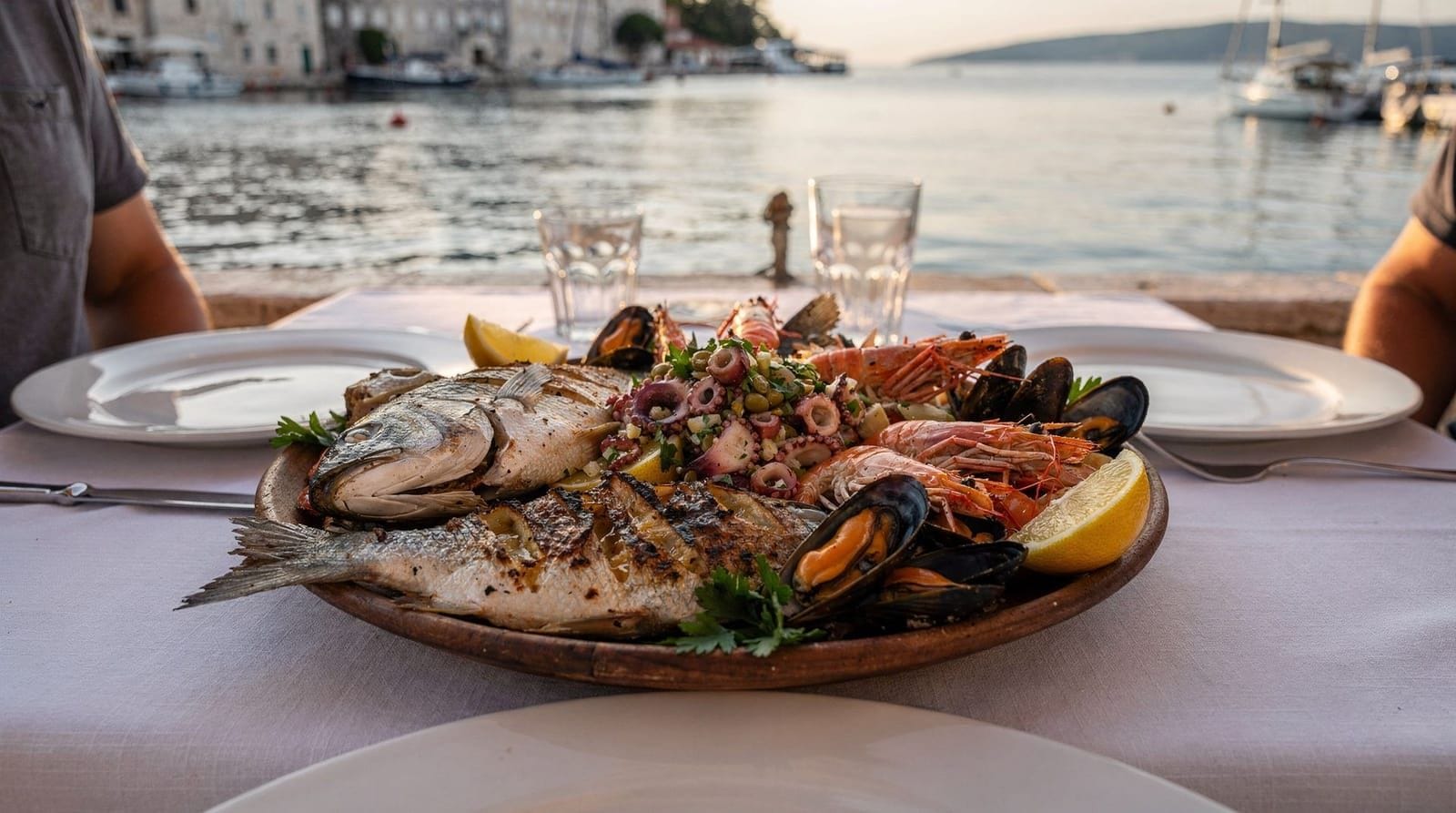
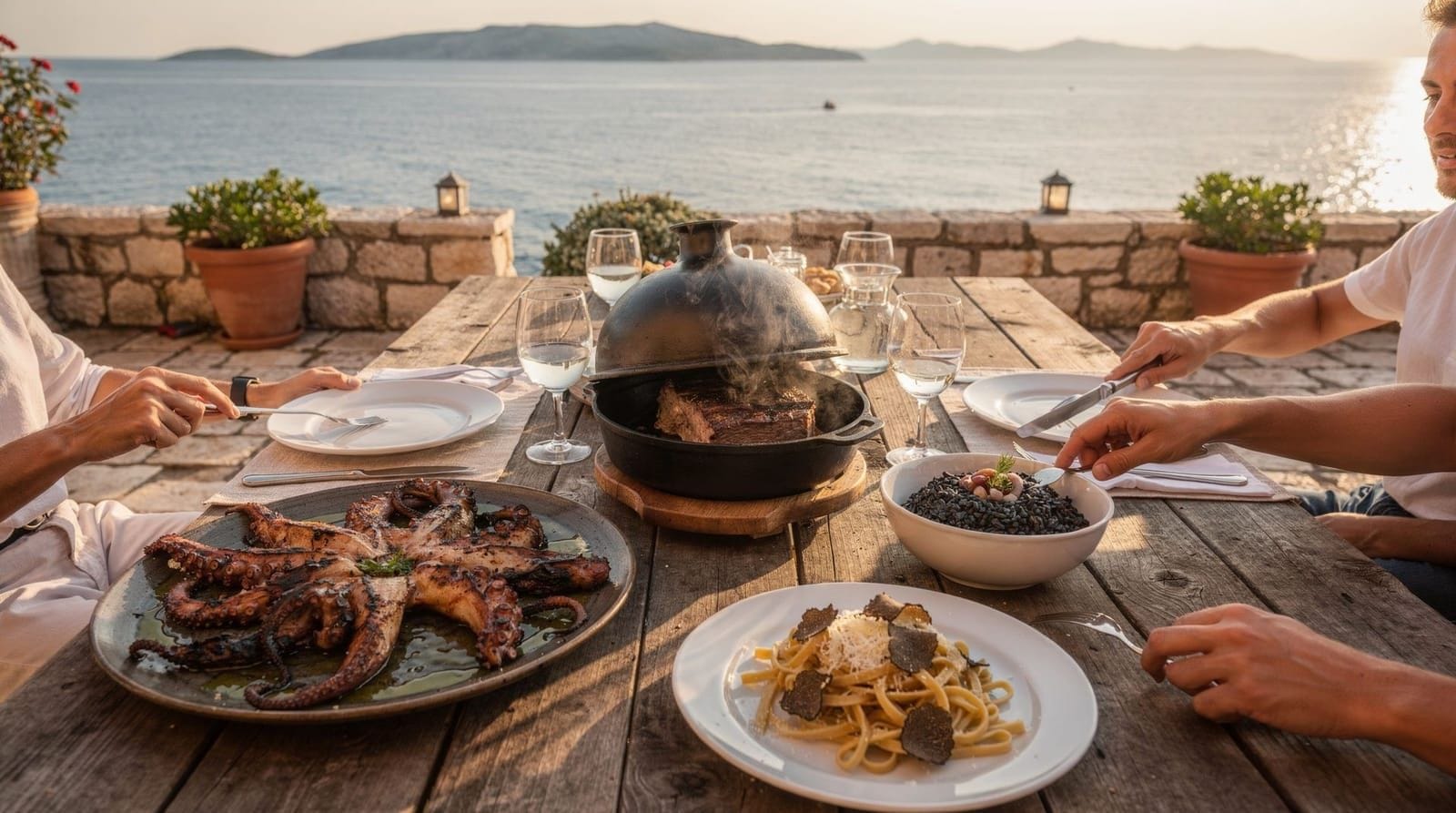
This is the dish that appears on every Dalmatian terrace in summer and is worth ordering every time if it is made properly. Octopus is cooked slowly until tender — traditionally by boiling, more recently by sous-vide at upscale restaurants — then sliced and tossed with olive oil, lemon, capers, red onion and fresh parsley. The quality hinges entirely on the octopus: fresh, locally caught, cooked to the right texture. It should be tender but not mushy, seasoned well but not overwhelming. Expect EUR 12–18 for a starter portion.
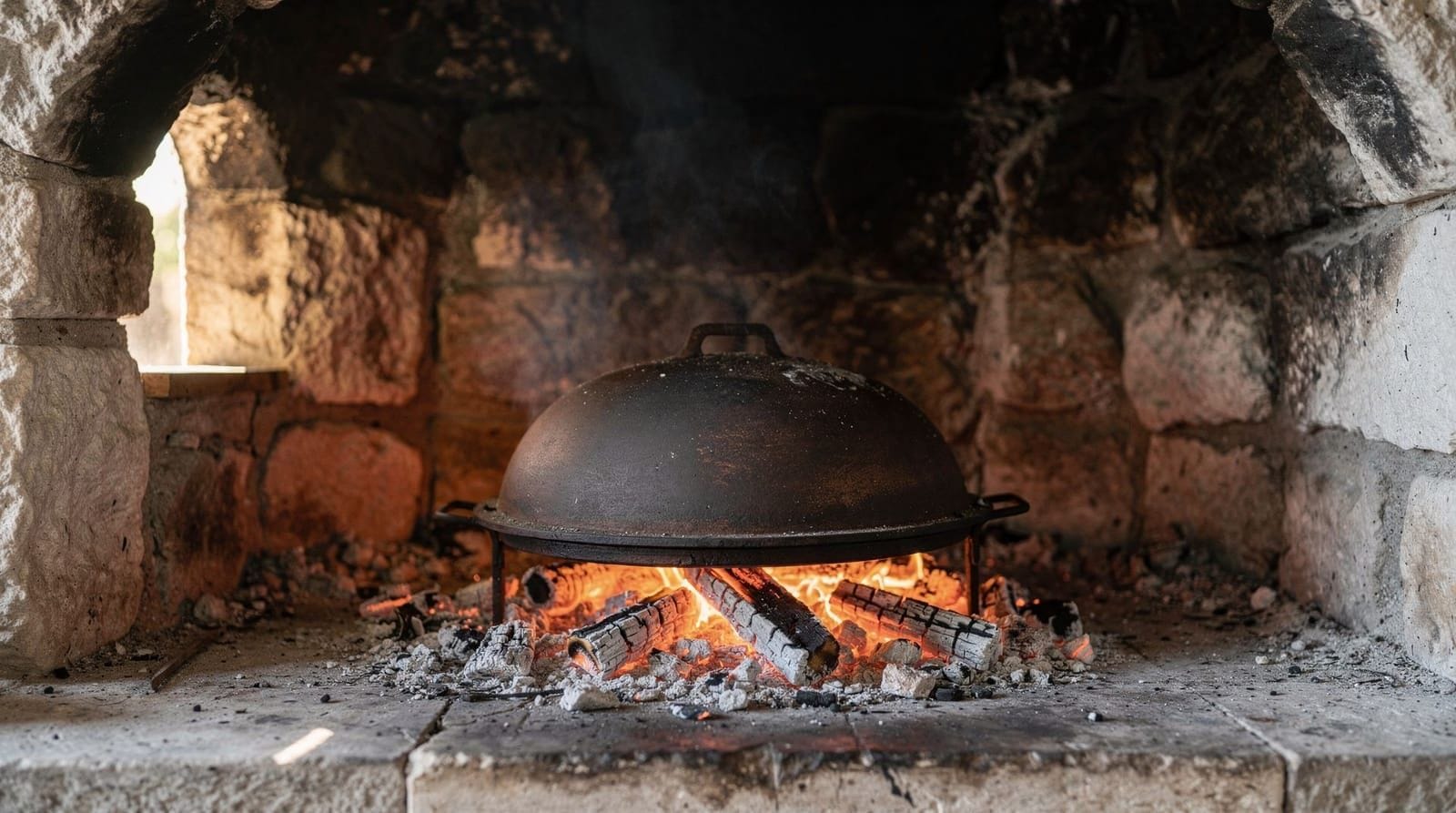
For peka — the other great Dalmatian method for cooking octopus and meat — the octopus is placed under an iron bell (peka), covered with embers, and cooked for two hours until the liquid reduces to a concentrated glaze. It must be ordered at least 24 hours in advance.
Crni rižot — black squid-ink risotto
Black risotto (crni rižot) is Croatia’s most visually dramatic dish: arborio rice cooked with cuttlefish ink, onion, white wine and olive oil until deeply dark and intensely flavoured. It is not the Italian arborio-cream-parmesan version — Croatian crni rižot is drier, more concentrated, with a brininess that speaks directly of the sea. It is commonly served with a side of blitva (see below) or simply with good bread.
The dish is found across Dalmatia but Šibenik and its surroundings produce particularly good versions. At restaurant level, expect EUR 14–20. A sign of quality: the rice should be al dente, not overcooked to mush, and the portion should be generous.
Blitva — the side dish of Dalmatia
Blitva is Swiss chard and potato, boiled together, drained, and dressed with olive oil and garlic. It appears alongside almost every fish or seafood dish as the default vegetable accompaniment, replacing the salad you might expect. It is simple, slightly bitter from the chard, enriched by good oil, and completely ubiquitous. If you are vegetarian, a generous plate of blitva with Paški sir is a perfectly satisfying meal in itself.
The morning fish market
The experience of buying or simply observing at a Dalmatian fish market is worth setting an alarm for. Split’s Pazar market opens at 6am, and by 8am the ribarnica — the fish hall on the lower level — is in full swing. Vendors display the night’s catch in boxes of ice: whole sea bass, gilthead bream, scorpionfish, squid in various sizes, cuttlefish, mussels from local farms, fresh anchovies in season. Everything is labelled with origin (EU law requires it) — look for “Jadransko more” (Adriatic Sea) as the catch designation.
Zadar’s market, near the harbour on the eastern edge of the old town, is smaller and less touristy. Dubrovnik’s Gunduličeva Poljana market is more produce than fish, but worth visiting for olives, cheese, dried figs and local honey.
Olive oil: Brač, Hvar, and the Kaštela valley
Dalmatian olive oil is produced on most of the larger islands and along the coast between Split and Trogir. The Kaštela valley, now almost entirely absorbed into the Split urban sprawl, was historically the most productive olive oil region of central Dalmatia — some of the gnarled trees in the terraced groves are estimated at over a thousand years old.
Brač produces the most exported oil, primarily from the Oblica cultivar — a Croatian-endemic variety yielding a fruity, low-acidity oil well suited to raw application on salads and bread. Hvar oil, from smaller producers, tends to be more intense and peppery. On Vis, olive oil production is limited but among the most distinctive in Dalmatia, with strong aromatic character from the island’s endemic wild herbs.
At markets and producer shops, good local extra-virgin oil costs EUR 10–18 per 500ml. It is one of the best value food souvenirs available in Croatia.
Paški sir from Pag: what EU PDO actually means here
The EU Protected Designation of Origin on Paški sir is not bureaucratic box-ticking — the designation reflects a genuinely terroir-driven product. Pag island is the most barren major island in the Adriatic: bare limestone, minimal vegetation, extremely harsh bora wind that strips moisture from the landscape and deposits sea salt on every surface. The sheep that produce the milk for Paški sir eat what grows in this environment — wild sage, dried grass, halophyte coastal plants — and drink from brackish springs. The milk is richer in fat and more aromatic than sheep’s milk from lusher pastures.
The cheese is made in small dairy operations across the island, with cooperatives and independent producers selling aged wheels at the market in Pag town and direct from farms. A young Paški sir (three to six months) is semi-firm and mild; a well-aged wheel (twelve months or more) is as hard as Parmigiano-Reggiano, crystalline in texture, with an intensity that can stand alone as a course. It is superb with a glass of aged Plavac Mali from Ston.
Sweet Dalmatia: honey, rozata, and hinterland pastries
Hvar lavender honey is the most distinctive sweet souvenir of Dalmatia. The island’s lavender fields, cultivated intensively from the 1920s and now partly reduced, produce a honey that is pale, floral and distinctively aromatic — immediately recognisable as lavender without being medicinal. It is sold direct from producers at Hvar town market and in small shops across the island for EUR 10–15 for 250g.
Rozata is the Dubrovnik dessert: a crème caramel made with rose liqueur (ružina vodica) and sometimes a splash of maraschino, set in individual ceramic ramekins and turned out with a caramel glaze. It is softer and more floral than the French original — the rose gives it a perfumed quality that divides opinion but rewards an open mind. It is found at most Dubrovnik konobas and pastry shops; a good version costs EUR 5–7.
Fritule — small fried dough balls flavoured with lemon zest, rum and sometimes pine nuts — are the Dalmatian version of the Italian zeppole, sold at carnival, Christmas markets and increasingly year-round at market stalls. They are best eaten warm, dusted with powdered sugar, from a paper bag.
You can find full coverage of Croatian sweets in the Croatian desserts guide.
Eating out: konoba etiquette and the daily menu
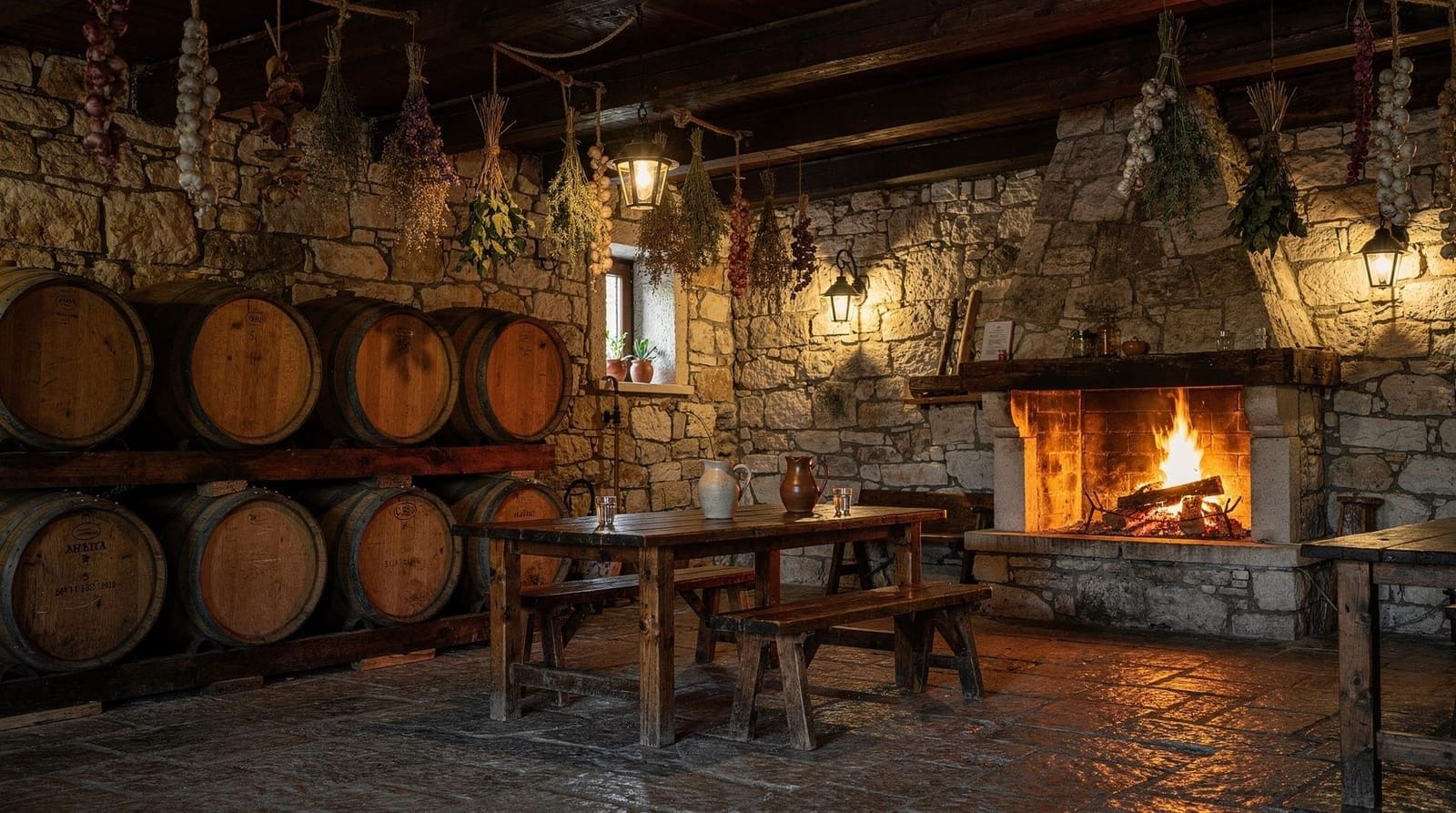
A konoba is the correct Dalmatian restaurant format: a family-run dining room (sometimes a converted house, sometimes a stone terrace under a vine canopy), limited menu focused on what is fresh that day, and an atmosphere of unhurried hospitality. The word means approximately what osteria means in Italy. For more on navigating konoba culture, the konoba guide covers everything in depth.
The dnevna ponuda (daily menu) is the best-value option wherever you see it: typically a starter (soup or salad), a main (often a simple grilled fish or meat dish), and sometimes a glass of house wine, all for EUR 10–15. It is not glamorous but it is honest.
Fish is almost always priced by the kilogram — not by portion, not by dish, by weight. A whole sea bass or bream of 400–500g is a standard single portion. Ask the waiter to confirm the weight before it goes to the grill. Shared platters of mixed grilled fish for two people (miješana riba) are common and good value at EUR 50–70 for two.
Dalmatian restaurants open late by northern European standards — dinner before 7pm is considered early, most konobas fill properly from 8pm. Reservations are worth making in summer in Hvar, Dubrovnik Old Town and Split’s Varoš neighbourhood.
Markets and produce beyond fish
Fish markets get most of the attention, but Dalmatia’s produce markets are just as revealing. Split’s Pazar, right beside the fish hall, sells fruit, vegetables, herbs, cheese and honey from small producers across the region — arrive by 9am for the best selection before the midday heat sends stallholders home. Dubrovnik’s Gunduličeva Poljana market inside the walls is smaller but well stocked with olives, dried figs, lavender products from Hvar and local honey, and makes a good stop before or after visiting the Old Town. Šibenik and Zadar both have smaller, less touristy markets worth a wander if you are passing through, particularly for dried fruit, rakija and homemade jams that rarely make it onto restaurant menus.
Buying direct from a producer, whether olive oil, wine or cheese, is consistently cheaper than buying the same product in a gift shop, and it is one of the more satisfying souvenirs to bring home from a trip built around this guide.
Seasonal eating: what’s best when
Dalmatian food follows the calendar more closely than many visitors expect. Fresh anchovies and sardines peak in the warmer months when the shoals move close to shore, making a plate of fried srdela at its cheapest and best from late spring through early autumn. Truffle season in nearby Istria runs autumn through winter, and some Dalmatian menus bring truffle dishes onto the menu in that window too, though it is far less central here than in Istria. Fig and pomegranate desserts appear from September, around the same time as the grape harvest that feeds the Croatian wine guide’s Dalmatian reds. Winter is quieter on the coast — fewer restaurants open, but the ones that do lean harder into slow-cooked dishes like pašticada and peka, since there is more time in the kitchen and less pressure to turn tables quickly.
Where to eat across Dalmatia
In Split: Konoba Fetivi (Ul. Antuna Gustava Matoša, Varoš neighbourhood) is where Split locals eat pašticada without apology or tourist pricing. Sperun, also in Varoš, has been reliable for traditional Dalmatian dishes for over 20 years. Both require reservations in summer.
In Dubrovnik: Restaurant 360 is the prestige address — contemporary Croatian cuisine in the walls of the old city, with wine pairings and a full tasting menu at EUR 80–120 per person. For more accessible but still serious food, Konoba Dubrava in the upper town serves traditional dishes without the Old Town premium.
In Hvar: Konoba Menego is the reference for traditional island cooking — gregada, grilled lamb, local wine from unlabelled bottles, and the unhurried pace of an island that has not yet forgotten how to eat properly.
In Šibenik: The city’s restaurant scene is underrated. The stone lanes of the old town around the Cathedral of St James conceal several good konobas focused on the fresh catch from the Šibenik channel and Kornati archipelago.
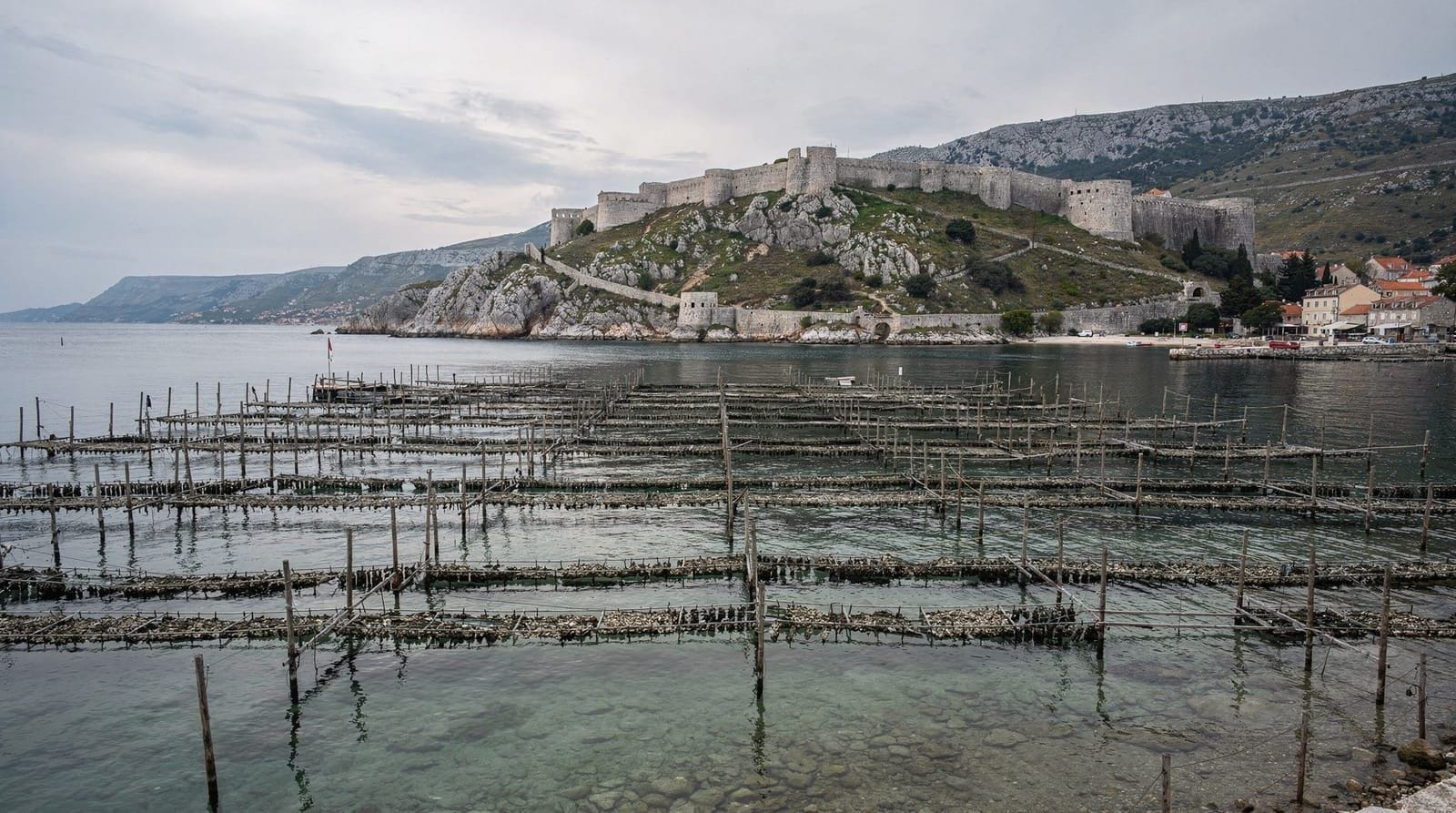
For seafood beyond the Dalmatian mainstream, including the oysters of the Pelješac peninsula, the oysters of Ston guide is the essential companion. For wine to accompany this food, the Dingač and Postup guide covers the best Pelješac reds in detail.
Dalmatian cuisine as a reason to travel
Food tourism in Croatia often defaults to Dubrovnik’s photogenic Old Town restaurants, where the views are magnificent and the prices match. The real Dalmatian food experience is elsewhere: at a small konoba in the Varoš neighbourhood of Split at 8pm on a Tuesday, with a plate of pašticada and a carafe of house Plavac Mali; at the Pazar fish market at 7am watching a vendor fillet a conger eel; at a farmhouse above Makarska being served lamb braised under a peka with potatoes and root vegetables, with homemade rakija before and Plavac Mali throughout.
This is a cuisine that rewards patience and curiosity. It is not highly instagrammable. It does not need to be. It is excellent, honest food made from ingredients that are in many cases unique to this stretch of Adriatic coast, produced by people who have been doing this for several generations and have no interest in changing what works.
Regional dishes at a glance
| Dish | Region | Style | Typical price |
|---|---|---|---|
| Pašticada | Split & central Dalmatia | Slow-braised beef, sweet-sour sauce | EUR 18–25 |
| Brudet | Makarska, Omiš, mainland coast | Tomato-based fisherman’s stew | EUR 15–22 |
| Gregada | Hvar | White fish stew, no tomato | EUR 18–22 |
| Crni rižot | Šibenik and wider Dalmatia | Squid-ink risotto | EUR 14–20 |
| Rozata | Dubrovnik | Rose-liqueur crème caramel | EUR 5–7 |
Pairing food with the rest of a Dalmatian trip
Food is rarely the only reason to visit a place, but in Dalmatia it is a good reason to structure your days around it. In Split, plan the Pazar fish market for early morning, then use our day trips from Split guide for the afternoon, returning for a Varoš dinner. In Dubrovnik, pair a food-focused evening with the day trips from Dubrovnik guide for how a Pelješac wine-and-oyster day complements the city’s restaurants. If Hvar is on your route, our Hvar vs Brac guide helps decide how many nights to give the island — enough to eat properly at Konoba Menego without rushing. And if you are choosing where to base a longer stay around food and wine specifically, the Croatian wine guide and the Croatia wine tasting overview both pair naturally with everything on this page.
Frequently asked questions about Dalmatian cuisine
What is pašticada and where can I eat it?
Pašticada is Dalmatia's Sunday dish — beef marinated in vinegar and lard overnight, then slow-braised for three to four hours in a sauce of red wine, prune jam, dried figs, and tomato. The result is intensely flavoured, almost melting, served with homemade gnocchi. It is the centrepiece of weddings and celebrations across Split and central Dalmatia. You will find it at traditional konobas in Split (Konoba Fetivi is reliable), rarely on tourist menus in Dubrovnik where simpler dishes dominate. Expect to pay EUR 18–25 for a full portion.How is fish priced in Dalmatian restaurants?
Fish in Dalmatia is almost always priced by weight — typically EUR 7–12 per 100g for whole fresh fish, which means a standard portion of sea bass (brancin) or gilthead bream (orada) runs EUR 20–35 depending on size and restaurant. Always ask the waiter to show you the fish and confirm the weight before it goes to the grill. Menus listing fish at a fixed price are usually working from frozen stock.What is brudet and how does it differ from gregada?
Both are fisherman's stews, but brudet (also called brodetto) is the southern and central Dalmatian version — a darker, tomato-and-vinegar-based stew made with mixed fish and shellfish, cooked hard and fast in a wide pan, traditionally served over polenta. Gregada is the Hvar variant: lighter, white, made with one or two types of fish (usually grouper or conger eel) and potatoes, no tomato, very little seasoning beyond olive oil and herbs. Gregada is more delicate; brudet is bolder.What is Paški sir and why is it expensive?
Paški sir (Pag cheese) holds EU PDO status and is made exclusively on the island of Pag from the milk of sheep that graze on scrubby coastal vegetation seasoned by salt spray and bora wind. The result is a hard, sharp, crystalline cheese with a distinctive aromatic quality. Aged versions (over 12 months) are comparable to aged pecorino. Prices range from EUR 25–45 per kg depending on age. It is one of the few Croatian food products with genuine international recognition.What should I order for dessert in Dalmatia?
Rozata is Dubrovnik's answer to crème caramel — made with local rose liqueur and sometimes maraschino, softer and more floral than the French original. In Split and central Dalmatia you will often find homemade fritule (fried dough balls with lemon zest and rum) at markets and during carnival season. Hvar lavender honey drizzled over sheep's cheese is a common ending to a konoba meal. Šibenik is the home of Bajadera, Croatia's most famous chocolate-hazelnut confection.Is Dalmatian food expensive?
It depends entirely on where and how you eat. A dnevna ponuda (daily menu) at a local konoba — soup, main, sometimes a glass of house wine — typically costs EUR 10–15 and represents the best value in Dalmatia. The same meal ordered à la carte in a tourist-facing restaurant in Hvar or Dubrovnik's Old Town can reach EUR 60 per person. Fish markets in Split, Zadar and Dubrovnik sell cooked street snacks and fresh produce at honest prices. The rule of thumb: the further from the waterfront, the cheaper.What wine should I order with Dalmatian food?
Plavac Mali is the right answer for red meat dishes — particularly pašticada and lamb. Dingač and Postup from the Pelješac peninsula are the prestige expressions; local konobas pour cheaper but often excellent unlabelled house Plavac Mali. With fish, go for Pošip from Korčula or Grk from Lumbarda — both are dry, textured whites with enough body to stand up to grilled fish and seafood stews. House white (bijelo vino) at a konoba is usually worth ordering.Should I book a food tour or just eat at konobas on my own?
Both work well, and they suit different trips. A guided food tour in Split or Dubrovnik is the fastest way to taste a wide range of dishes with context and no research required, and it removes the guesswork of finding the honest, non-touristy konoba. Eating independently rewards a slower trip: use the konoba etiquette in this guide, look for the dnevna ponuda, and eat where locals eat, generally a short walk from the waterfront. Many visitors do a food tour early in the trip, then eat independently for the rest using what they learned.What should vegetarians expect from Dalmatian cuisine?
Dalmatian food is fish- and meat-forward, but vegetarians eat reasonably well with some planning. Blitva (Swiss chard and potato with olive oil), grilled vegetables, fresh salads, Paški sir and other cheeses, bread with olive oil and tapenade, and pasta dishes without meat are all widely available. Ask directly, since some vegetable sides are cooked in the same stock as meat dishes. Konobas with a daily menu are usually happy to substitute a vegetable side for the fish or meat main.
Top experiences
Bookable activities with verified prices and instant confirmation on GetYourGuide.
Top experiences
Best-rated activities across GetYourGuide and Viator.

Krka National Park Tour with tour Guide & Wine tasting from Split & Trogir
- Viator

Dolphin Watching & Sunset Boat Tour With Drinks & optional Dinner
- Viator

Fantastic DOLPHIN & SUNSET TOUR with dinner ( Pula-NP BRIJUNI )
- Viator

Dubrovnik Guided Group Tour with Ston Oyster tasting from Split & Trogir
- Viator

Zadar Highlights: Old Town, Sea Organ & Local Tastings
- Viator

Zadar: Luxury Island Boat Tour, Snorkeling & Unlimited Wine
- Viator