What Is a Konoba? Croatia's Traditional Taverns Explained
Split: Small group food tour with private option
What is a konoba in Croatia?
A konoba is a traditional Croatian tavern, usually family-run, set in a stone building with an open fireplace and wooden tables. The menu focuses on local, seasonal ingredients — grilled fish, peka (slow-cooked meat or seafood under an iron bell), and house wine. They are the beating heart of Croatian food culture, found in every region from Istria to Dalmatia.
Few things in Croatia will stop you mid-bite like a first meal in a genuine konoba. The room is dim, the ceiling is low stone, candles gutter on wooden tables, and the smell of woodsmoke mingles with garlic, rosemary and the sea. You ordered something called peka two hours ago and it has just arrived in a blackened iron pot. Nobody is rushing you. The carafe of Plavac Mali is almost gone. This is what Croatian food culture actually looks like — and it has almost nothing to do with the sanitised tourist menus lining the waterfronts.
| What | Family-run traditional tavern, stone walls, open fire |
| Cost | Around EUR 35-55/person for a full meal with wine |
| Reservations | Needed for peka (24hrs ahead); walk-in fine otherwise |
| Cash or card | Bring cash — many still prefer it |
| Best regions | Dalmatia (fish, peka), Istria (truffles, Malvazija) |
The roots of the Croatian tavern tradition
The word konoba comes from the Latin canaba, meaning a shed, cellar or storehouse. In the centuries before refrigeration, families across the Dalmatian coast and Istrian peninsula used cool stone rooms — typically below ground level or carved into hillsides — to store wine, cured meat, olive oil and preserved fish. Over time, these cellars became gathering places. Neighbours dropped in, wine was poured, food was shared, and the konoba quietly evolved from a storage room into a social institution.
By the twentieth century the term had formalised into something recognisable as a restaurant, but the ethos remained the same: family ownership, a short menu built around what was available, no pretension, and an assumption that you had time to stay. This is a tradition shared across the broader Adriatic — the Slovenian klet, the Italian osteria, the Montenegrin konoba — but the Croatian version carries its own distinct character, shaped by the Dalmatian obsession with quality ingredients and the Istrian love of produce grown or foraged close to home.
Today the konoba sits at the intersection of living tradition and genuine pride. The best ones have been run by the same family for three or four generations. The grandmother still makes the desserts. The grandfather oversees the wine. The son or daughter does the service. You are not eating at a restaurant concept — you are eating in someone’s home, and that changes everything about the experience.
What a real konoba looks like
Walk past a tourist-facing restaurant on any Croatian waterfront and you will notice certain things: laminated menus with photographs, a member of staff standing outside to wave you in, a wine list led by international brands, and portion sizes calibrated for speed rather than satisfaction.
A genuine konoba almost never has any of these things.
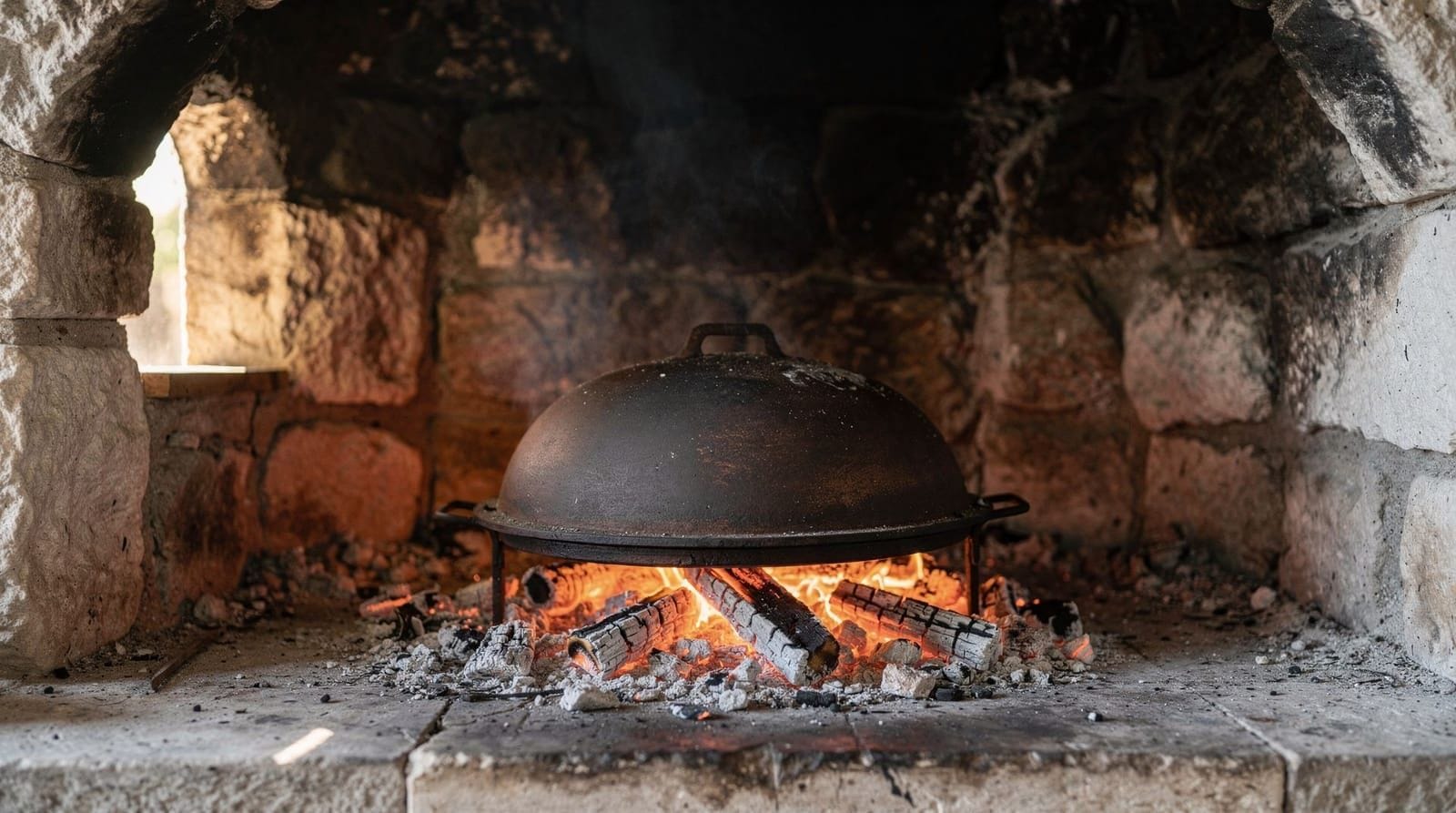
The entrance is often understated — a wooden door in a stone wall, a hand-painted sign, a single terrace table. Inside, expect rough stone walls, exposed wooden beams and furniture that has been in service for decades. Open fireplaces or wood-burning ovens are common; in winter they are the primary heat source, and in summer they are still used for roasting. The acoustics are low and warm. Lighting is usually candlelight or simple bulbs. There are no background playlists.
The menu will typically be short — four or five starters, six or eight mains, a couple of desserts if you are lucky. More importantly, there will usually be a dnevna ponuda: a handwritten daily specials board that tells you what the kitchen is actually working with today. In coastal konobes this reflects the morning’s fish market; in inland restaurants it follows the season and whatever the surrounding farms and forests have produced.
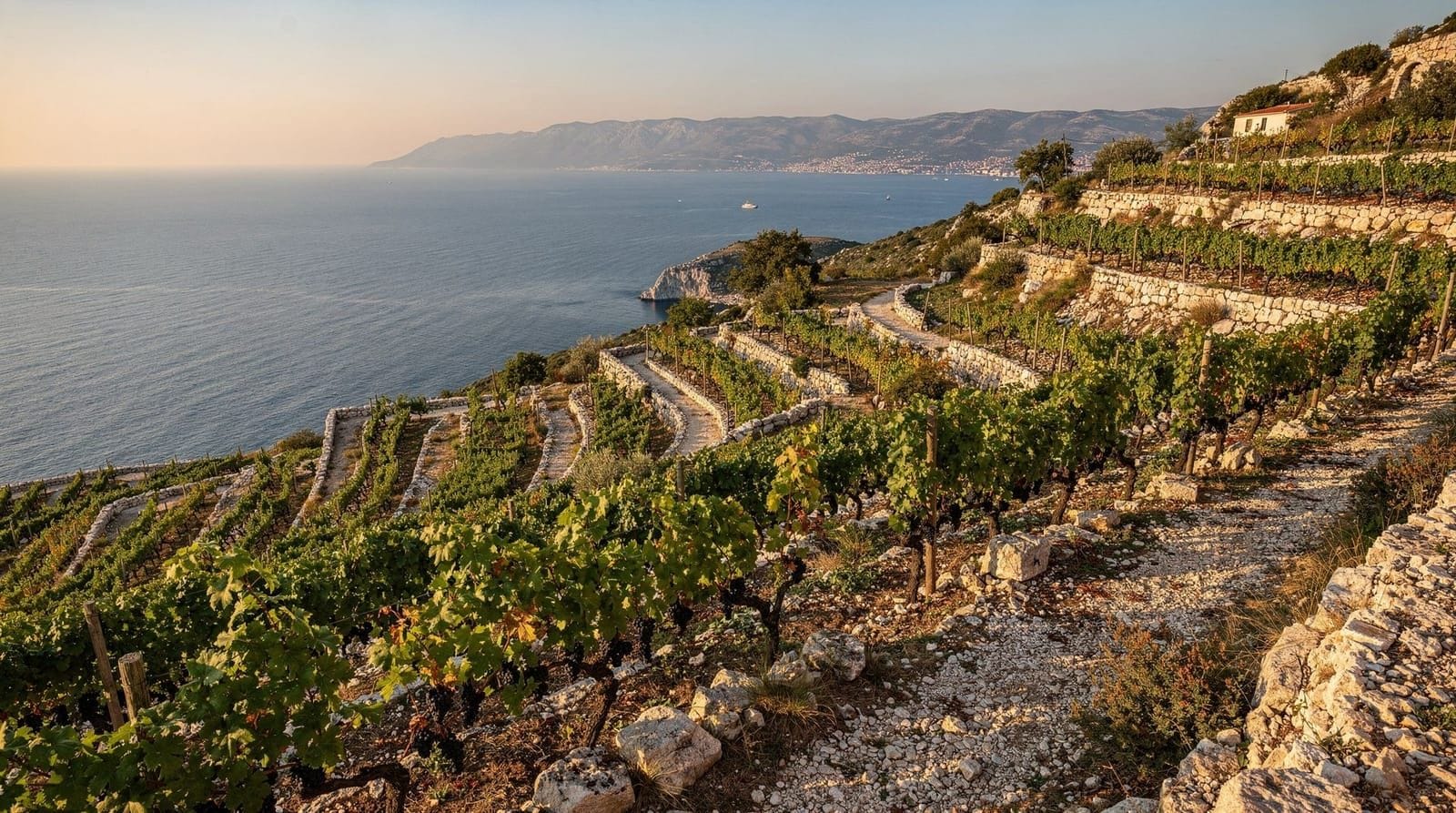
The wine list is almost always local. A good konoba takes pride in this. In Dalmatia you will see Plavac Mali, Pošip, Grk and Debit. In Istria it is Malvazija Istarska, Teran and Muškat. These are not concessions to regional pride — they are simply the wines that work with the food on the table, because they have been grown in the same soil.
How to spot a tourist trap versus the real thing
This is the practical question every visitor to Croatia needs to answer, and the answer is easier than it looks once you know what to check.
Look for the dnevna ponuda. Any restaurant that prints its menu once a year and never changes it is not drawing on fresh, seasonal supply. A genuine konoba updates what it offers based on what the market had that morning. The daily specials board is the single clearest signal of a kitchen that cares.
Watch for the word domaće. It means homemade, and Croatian cooks use it with specificity. Domaće kruh (homemade bread), domaće vino (house wine), domaće prsut (house-cured ham). This is not a marketing term here — it is a literal claim, and kitchens that make it tend to back it up.
Check the fish pricing. Authentic konobes near the coast almost always price whole fish by the kilogram, not by portion. The waiter will tell you the weight of the fish before cooking, then confirm it. This is actually a pro-consumer practice: you know exactly what you are paying for. Tourist-facing restaurants often price by portion, which makes comparison harder.
Ask where the fish came from. A good waiter at a real konoba can tell you. Nabava — the daily purchase from the harbour or market — is something serious kitchens track. If nobody knows or the answer is vague, the fish may be frozen or imported.
The menu should not have photographs. This sounds like a small thing, but laminated photo menus signal a kitchen designed for volume and visual reassurance rather than quality. They are rarely wrong, but they are rarely right either.
Avoid places with touts. No genuinely confident konoba needs someone standing outside the door actively recruiting customers. If a staff member approaches you on the street, move on.
Finally, look at who is eating there. If the room is full of locals — construction workers at lunch, families on a Sunday afternoon, fishermen eating after the morning catch — you have found the right place.
What to order: a practical menu guide
The Croatian food guide covers the full national cuisine, but konobes specialise in a specific set of dishes, and knowing what they are will help you order well.
Prsut and sir. Start with cured ham and local cheese. Dalmatian prsut is air-dried over months on the Dinaric winds — salty, dense and quite different from Italian prosciutto. It is typically served with paški sir (hard sheep’s cheese from the island of Pag) or a softer cow’s milk cheese. This is the standard opening at any serious konoba and costs EUR 8-14 depending on portion.
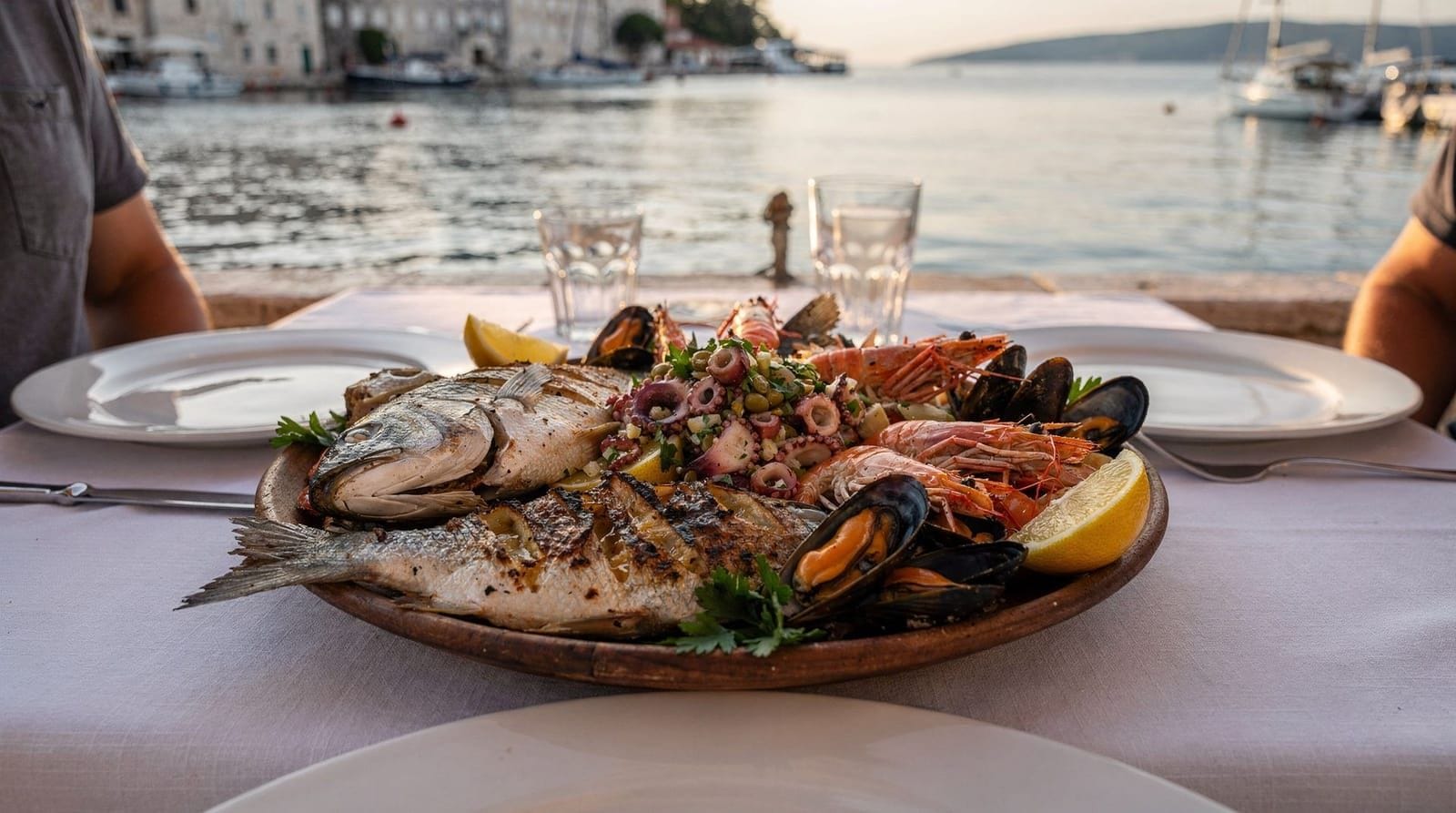
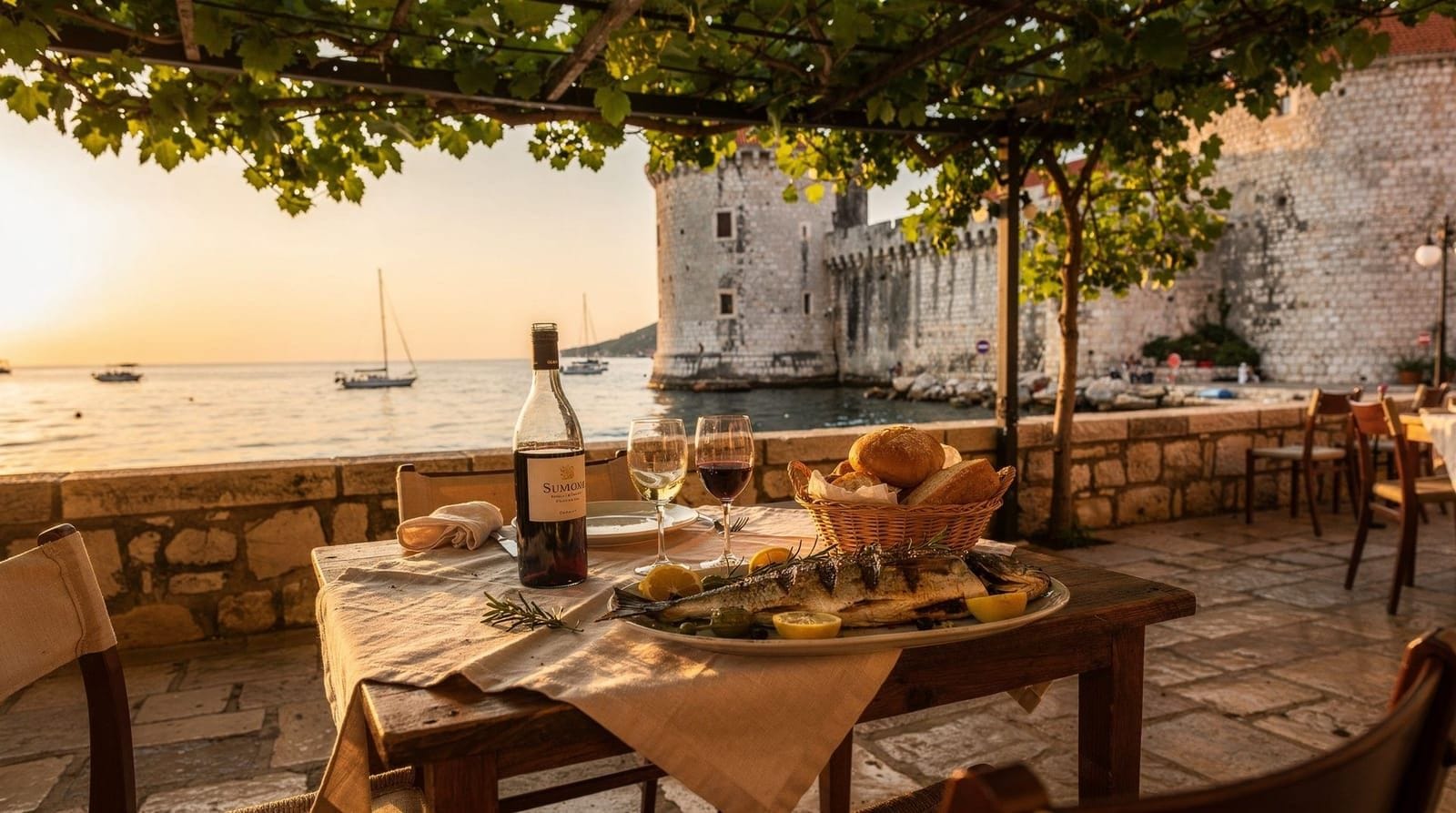
Grilled fish (riba na žaru). The default main at a coastal konoba. The fish will typically be whole — brancin (sea bass), orada (sea bream), or whatever the dnevna ponuda specifies. It arrives simply grilled with olive oil, lemon and fresh herbs. Sides come separately: blitva na lešo (Swiss chard with garlic and oil) and kuvan krumpir (boiled potatoes) are the standard accompaniments and cost EUR 3-5 each. A whole fish runs EUR 18-28 per kilogram; most fish served at a konoba weigh between 400 and 700 grams. Budget accordingly.
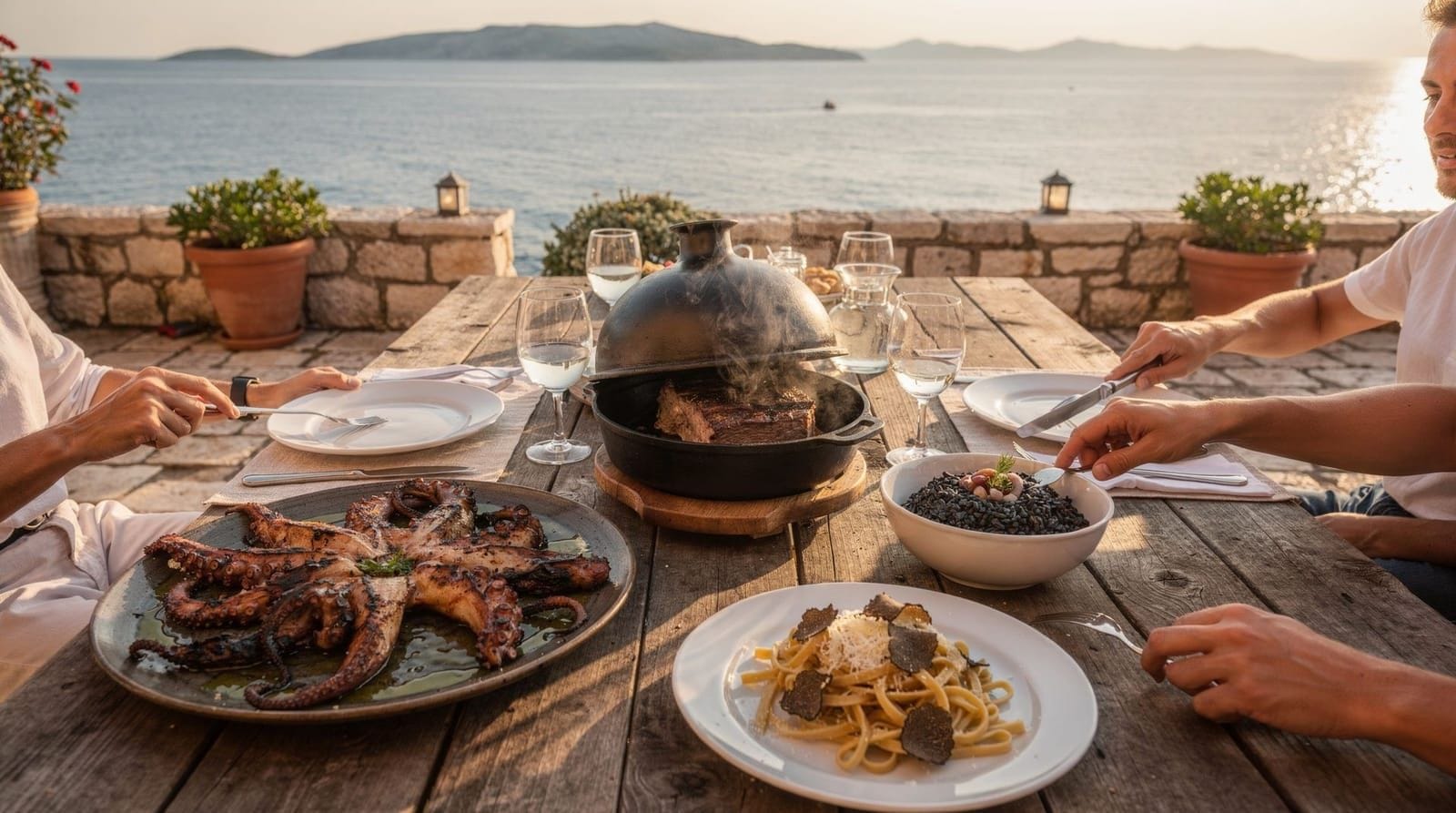
Peka. The ceremonial dish of Dalmatian cooking. Lamb, veal, octopus or a mixed seafood combination is slow-cooked for two hours or more under the peka bell — a cast-iron dome buried in embers — with vegetables, wine and herbs. The result is extraordinarily tender, with every ingredient absorbing the flavours of everything around it. You must order peka 24 hours in advance; do not turn up expecting to order it on the day. Prices run EUR 18-28 per person. The full guide to peka in Croatia explains the tradition in more detail.
Gregada. A lighter alternative to peka, particularly common on the island of Hvar. White fish is slow-cooked with potatoes, olive oil, garlic and white wine in a covered clay pot. Delicate and deeply satisfying. EUR 16-22.
Brodet. The fisherman’s stew found across Dalmatia — a mix of whatever fish and shellfish the day brought, cooked slowly with tomatoes, wine and onion. Each village has its own interpretation. Served with polenta or bread. EUR 14-20.
Slow braises. In autumn and winter, konobes lean towards braised lamb shanks, slow-cooked veal cheeks and wild boar. These dishes take hours and are usually listed on the dnevna ponuda rather than the main menu. Prices EUR 16-24.
For more detail on what the sea contributes to Croatian plates, the Croatian seafood guide is worth reading before you arrive on the coast.
The wine question
A meal at a konoba without local wine is a missed opportunity. Croatia’s wine culture is quietly remarkable — it has more than 130 indigenous grape varieties, most of them found nowhere else on earth, and the quality from serious producers is genuinely high.
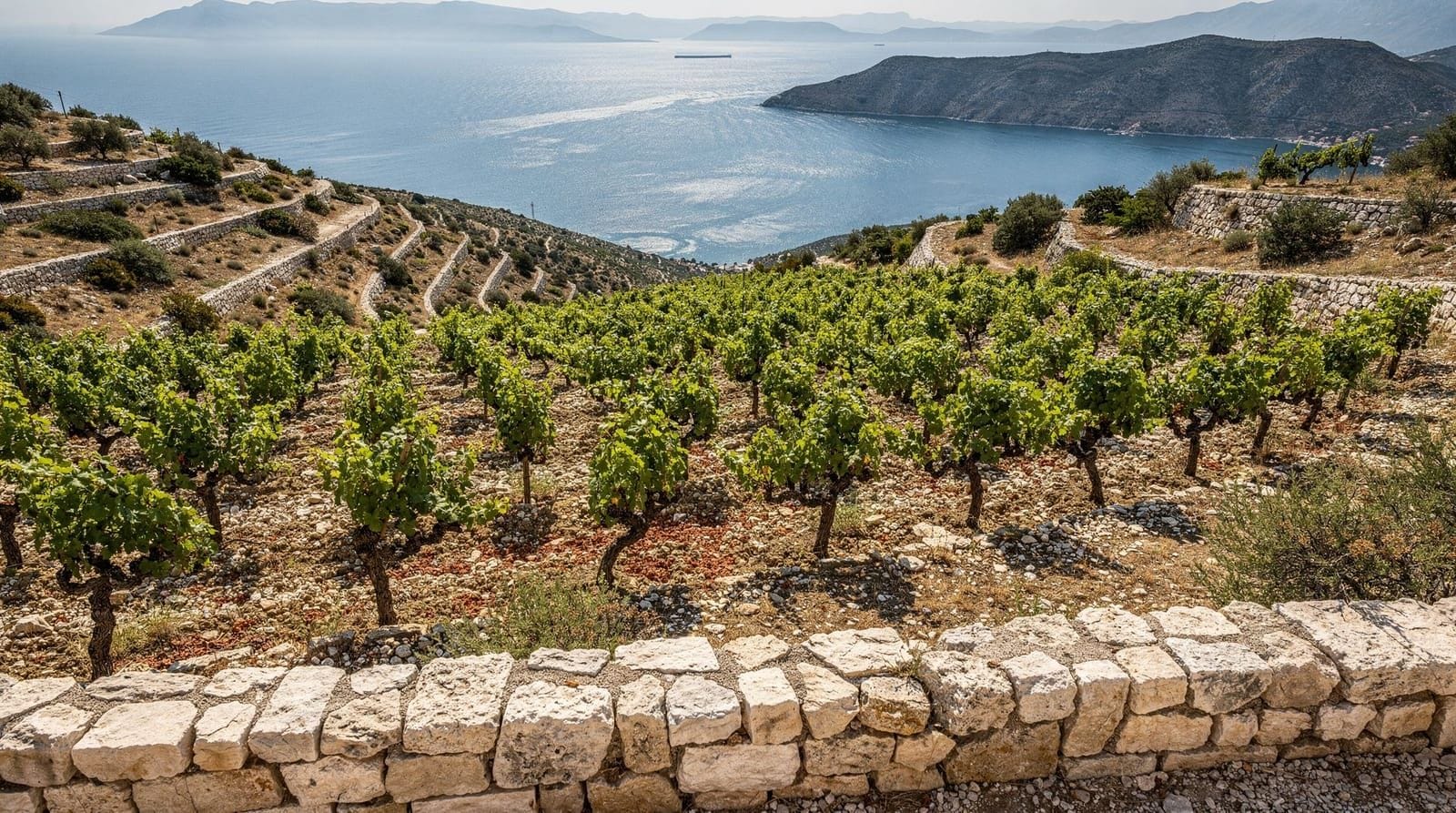
In Dalmatia, Plavac Mali is the dominant red — a thick-skinned, high-alcohol grape that produces wines ranging from rustic and earthy to concentrated and age-worthy. The finest examples come from the Pelješac peninsula, particularly the Dingač and Postup appellations. Order a carafe of house Plavac Mali at a good konoba and you will likely be drinking something from a local cooperative or small producer — drinkable, honest, and priced at EUR 8-14 for half a litre.
For white wine, Pošip from Korčula is the prestige option — floral, structured and capable of real complexity. Grk is rarer and more unusual, a naturally oxidative style from the same island. Both pair beautifully with grilled fish.
In Istria, Malvazija Istarska is the flagship white: aromatic, with stone-fruit notes and a saline finish that works perfectly with the region’s truffle-laden cooking. The guide to Istrian Malvazija covers the grape and its producers in detail.
On Korčula, the local wine culture deserves its own exploration — the island has a winemaking tradition stretching back to ancient Greece.
Ask your waiter what they are pouring from the barrel or the house label. These unlisted wines are often the most interesting thing on the table.
Five konobes worth seeking out
Konoba Fetivi, Split. Tucked into the upper town above Diocletian’s Palace, Fetivi has earned a reputation as one of the most honest kitchens in Split. The menu is short, the produce is market-fresh, and the peka is done properly. Reservations essential in summer. Mains EUR 15-26.
Konoba Matejuška, Split. Near the small harbour of the same name, this is a longtime local favourite for grilled fish and seafood risotto. Unpretentious, reliable, and consistently full of people who know what they are doing. Mains EUR 14-24.
Konoba Bako, Korčula Town. A family operation that has been running for decades in the old town of Korčula. The fish is excellent, the house wine is local, and the stone terrace overlooking the channel is one of the more pleasant places to spend an evening in Dalmatia. Mains EUR 16-26.
Konoba Bota Šare, Dubrovnik. Finding a genuine konoba in a tourist city like Dubrovnik takes effort, but Bota Šare — a short walk from the Old Town — delivers the real experience. The black risotto (crni rižot) is a benchmark version, and the wine list is serious. Mains EUR 16-28.
Taverna Rustica, Rovinj. In Rovinj, one of Istria’s most visited towns, Taverna Rustica maintains the konoba spirit with a menu that rotates around seasonal Istrian produce: truffles in autumn, asparagus in spring, local fish and Malvazija throughout. The interior is a converted stone cellar. Mains EUR 14-24.
What to expect from the experience
Pace. A konoba meal moves slowly. This is by design, not neglect. Starters may take 20 minutes to arrive; if you ordered peka, the main event will take longer. Relax. Order wine. Talk. The kitchen is not ignoring you — it is cooking properly.
No printed dessert menu. In most genuine konobes, dessert is whatever was made that day. The waiter will tell you verbally: perhaps a rozata (a Dalmatian flan with rose-water), perhaps a fritule (small fried doughnuts with rum and orange zest), perhaps simply a slice of home-baked cake with almonds. Ask what they have. If the answer is nothing, the meal was still worth it.
Bring cash. Not all konobes accept cards. Even those that do sometimes prefer cash for smaller bills. There are no penalties for paying by card where it is accepted, but having euros in your wallet is always the safer approach.
Water. Still or sparkling water is charged separately — typically EUR 2-4 for a 0.5L bottle. Some konobes will offer a jug of tap water if you ask, particularly in Istria.
Digestif. At the end of the meal in Dalmatia, many konobes will bring an unsolicited small glass of travarica (herb grappa) or loza (grape grappa) with the bill. This is a gesture of hospitality, not an upsell — it is typically complimentary. Do not refuse it.
Eating well in Croatia’s different regions
The konoba tradition plays out differently depending on where you are in Croatia.
In Split and central Dalmatia, konobes are defined by the sea: fish, shellfish, octopus, and the slow-cooked peka that the region has made its own. Day trips from Split into the Dalmatian hinterland lead to a different register — lamb, smoked meats, aged cheese — where the konoba becomes more alpine in spirit.
In the islands — Hvar, Brač, Vis and Korčula — konobes often sit in quiet stone villages away from the harbourside tourist strip. The short taxi or walk to find them is always worth it. Vis in particular has built a reputation for exceptional food, with a handful of family-run spots that rank among the finest eating in the whole Adriatic.
Around Dubrovnik and the Dubrovnik Riviera, the pressure of mass tourism has pushed some konobes towards compromise. But the villages of the Pelješac peninsula and the small island of Mljet still have genuinely unpretentious spots, and Ston — famous for its oysters — has a handful of konoba-style restaurants where you can eat oysters straight from the channel alongside grilled fish and local Plavac Mali.
Istrian konobes occupy a slightly different world. The influence of Italian cuisine — risotto, handmade pasta, truffles — is strong, and the wine culture (centred on Malvazija and Teran) is distinct from Dalmatia. Towns like Motovun in the interior have wonderful small taverns hidden in medieval stone streets. The comparison between the two major regions is worth understanding before you travel — the Istria vs Dalmatia guide maps out the differences.
Using food tours to find the right places
One of the practical challenges of eating authentically in Croatia is that the best konobes are often invisible to tourists: no booking platforms, minimal social media presence, word-of-mouth clientele. A guided food tour led by a local expert sidesteps this problem and delivers context alongside the meal.
In Split, a small-group food tour is one of the most efficient ways to move through several konoba-style establishments in a single afternoon — tasting prsut, local cheese, grilled fish and wine at spots your guide has vetted over years of eating.
The Real Split Food Tour takes a deeper approach, moving through the city’s markets, konoba kitchens and neighbourhood wine bars to build a picture of how Split actually eats — not just the tourist waterfront, but the residential streets above Diocletian’s Palace where the locals go.
In Dubrovnik, where tourist pressure is at its most intense, a guided food tour is arguably even more valuable — it cuts through the noise and takes you directly to the places that the local community still endorses.
Practical vocabulary for ordering
A short glossary of Croatian terms that will help you navigate a konoba menu with confidence:
- Dnevna ponuda — daily specials
- Domaće — homemade
- Nabava — daily market purchase (usually fish or produce)
- Riba na žaru — grilled fish
- Riba na lešo — poached fish (lighter, delicate)
- Peka — slow-cooked under the iron bell (order 24 hours ahead)
- Brodet — fisherman’s stew
- Gregada — white fish slow-cooked with potatoes, oil and wine
- Prsut — air-cured Dalmatian ham
- Sir — cheese
- Blitva — Swiss chard (standard side dish)
- Crni rižot — black risotto made with cuttlefish ink
- Vino kućno — house wine (usually the best value option)
- Karaf — carafe (ask for a quarter, half or full litre)
- Račun, molim — the bill, please
Budget planning
A realistic budget for a full konoba meal — starter, main with two sides, half-litre house wine, water and coffee — lands at EUR 35-55 per person at a mid-range establishment. You can eat for less (EUR 20-30) if you skip wine or opt for simpler dishes. You will pay more (EUR 60-80) at the handful of established konobes that have earned regional recognition and price accordingly.
The Croatia on a budget guide has more detail on managing costs across the country, including where to eat well without overspending.
Lunch is almost always cheaper than dinner at the same establishment. The dnevna ponuda at midday often represents genuine value: a two-course set with wine for EUR 18-25 is not unusual at a village konoba away from the main tourist circuits.
Vegetarian and vegan options
Croatian cuisine leans heavily on meat and fish, but a konoba is not a hard place to eat vegetarian, and often a rewarding one. Blitva na lešo (Swiss chard with garlic and olive oil), grilled vegetables, fresh bread with olive oil, and a range of cheese plates are on nearly every menu. Manestra — a thick vegetable and bean soup, more common in Istria — is often vegetarian by default; ask before ordering, as some versions include ham hock. Vegan diners have a harder time: cheese and honey turn up in unexpected places, and a genuine peka is never vegan since it is usually cooked with meat or seafood stock even in vegetable versions. Your best strategy is to ask directly — dobar dan, imate li nešto bez mesa i mliječnih proizvoda? (“do you have anything without meat or dairy?”) — most owners will improvise something from what is in the kitchen that day, which is very much in the konoba spirit.
How to order like a local
Do not order everything at once. A konoba meal unfolds in stages: start with a shared plate of prsut and cheese and a carafe of wine, decide on mains only once you have seen what the dnevna ponuda actually offers, and leave dessert as an open question until the waiter tells you what is available that day. Sharing is normal and expected — Croatians rarely order one dish each and eat in isolation; a table of four will typically order two or three mains and a couple of shared sides, then work through them together. If you are unsure what to choose, ask the waiter directly what they would eat themselves; in a genuine konoba this question is welcomed rather than deflected, and the answer is usually whatever is freshest that day rather than the most expensive item on the menu.
Reservations and timing
Peka absolutely requires a phone call or in-person visit 24 hours ahead — the dish physically cannot be rushed, and no kitchen will start it on demand. For everything else, reservations are advisable in July and August, especially in high-traffic towns like Split, Dubrovnik and Hvar, where the handful of genuinely good konobes fill up by 7pm. Outside peak season, walking in works fine almost everywhere, including on quieter islands like Vis and Mljet. If you cannot get a table at a well-known spot, ask the owner for a recommendation nearby — konoba owners tend to know each other and will point you somewhere genuine rather than let you wander into a tourist trap.
Tipping and paying
Tipping is not obligatory in Croatia but is genuinely appreciated, and at a konoba it is often the clearest way to acknowledge good, unhurried service. Rounding up the bill or adding 10% is standard practice for a satisfying meal; leaving nothing is not considered rude, but it is unusual if the service was attentive. Bills rarely arrive unprompted — asking for “račun, molim” (the bill, please) is expected, since rushing you out the door would contradict the whole point of the place. Splitting the bill is common among locals and never causes friction, though very small konobes may prefer one card or cash payment per table rather than several partial payments.
Dalmatia versus Istria: two konoba traditions
| Dalmatia | Istria | |
|---|---|---|
| Signature dish | Peka, grilled fish, brodet | Truffle pasta, maneštra, boškarin beef |
| House wine | Plavac Mali (red), Pošip (white) | Malvazija Istarska (white), Teran (red) |
| Setting | Stone coastal towns, island villages | Hilltop medieval towns, green interior |
| Influence | Adriatic, Venetian-Dalmatian | Strong Italian influence (pasta, risotto) |
| Typical meal cost | EUR 30-50/person | EUR 30-55/person (truffle dishes push higher) |
The Istria vs Dalmatia guide compares the two regions beyond the table, but at the konoba level the difference mostly comes down to what the surrounding land and sea provide — and both traditions reward the same approach: order the dnevna ponuda, drink the house wine, and do not rush.
Frequently asked questions about What Is a Konoba? Croatia's Traditional Taverns Explained
How do I know if a konoba is authentic or a tourist trap?
Look for a handwritten dnevna ponuda (daily specials board), the word domaće (homemade) on the menu, and a wine list that includes local labels rather than just international brands. Genuine konobes rarely have laminated photo menus or touts outside the door. If the fish is priced by the kilogram and the waiter can tell you where it was caught, you are in the right place.How much does a meal at a konoba cost?
Budget EUR 12-25 for a main course at most konobes. A grilled whole fish runs EUR 18-28 per kilogram depending on species. A house carafe of local wine is typically EUR 8-15. Add a starter of smoked ham and cheese and you are looking at a complete meal for EUR 30-45 per person.Do konobes take credit cards?
Many do, but a significant number — especially smaller, family-run spots in villages and islands — still prefer cash. Always ask before you sit down. Cash also tends to be appreciated and sometimes unlocks the unlisted dessert or a complimentary digestif.What is peka and do all konobes serve it?
Peka is a slow-cooking method where lamb, octopus, veal or vegetables are placed in a heavy iron pot and covered with a domed lid, then buried under embers and cooked for two or more hours. Not all konobes serve it, and those that do almost always require 24-hour advance notice. It is one of the most rewarding dishes in Croatian cuisine.What wine should I order at a konoba?
In Dalmatia, order house Plavac Mali (red) or Posip (white). In Istria, Malvazija Istarska is the classic white. On Korcula, ask for Grk or Posip. A good konoba will always offer local wine by the carafe — typically one-quarter, half or full litre. Avoid places where the only wine is imported.What does dnevna ponuda mean?
Dnevna ponuda means 'daily offer' or 'daily specials'. It is a chalkboard or handwritten insert listing what the kitchen has prepared that day, usually based on the morning's market or catch. Ordering from the dnevna ponuda is the single best way to eat seasonally and authentically at any Croatian tavern.Is it rude to linger at a konoba?
Absolutely not — the opposite is true. Rushing a meal is considered poor form in Croatian dining culture. A konoba is designed for long, unhurried meals. Nobody will hover over you waiting to clear the table. Order in stages, linger over wine, and wait for your host to bring the bill when you ask for it.
Top experiences
Bookable activities with verified prices and instant confirmation on GetYourGuide.
Top experiences
Best-rated activities across GetYourGuide and Viator.

Krka National Park Tour with tour Guide & Wine tasting from Split & Trogir
- Viator

Dolphin Watching & Sunset Boat Tour With Drinks & optional Dinner
- Viator

Fantastic DOLPHIN & SUNSET TOUR with dinner ( Pula-NP BRIJUNI )
- Viator

Dubrovnik Guided Group Tour with Ston Oyster tasting from Split & Trogir
- Viator

Zadar Highlights: Old Town, Sea Organ & Local Tastings
- Viator

Zadar: Luxury Island Boat Tour, Snorkeling & Unlimited Wine
- Viator