Istria, Zagreb and Slovenia: 8-Day North Croatia Circuit
Pula: Arena entry ticket and guided tour
The north: Istria, Zagreb and Slovenia
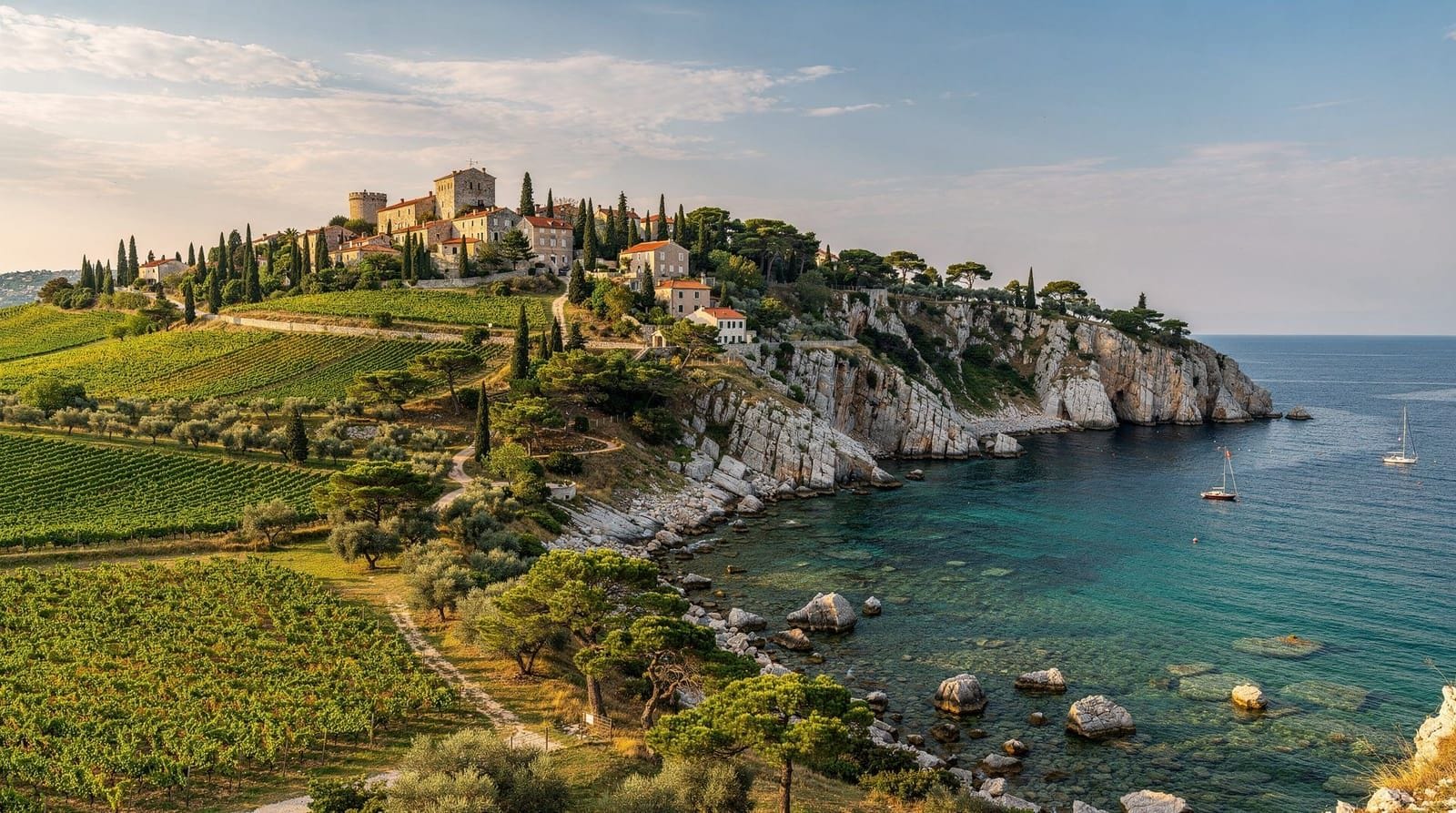
This is Croatia for people who have done the Dalmatian coast already — or who simply prefer culture, food and hilltowns over beach crowds. The north is looser, more Mitteleuropean, and less visited than the south. Istria has genuinely world-class food (truffles, olive oil, Malvazija wine) and stunning Venetian-influenced old towns. Zagreb is one of the most underrated capital cities in Europe. And Slovenia — just across the border — offers two of the most beautiful landscapes on the continent.
This circuit starts and ends in Zagreb, meaning one return flight is all you need. A car is essential for most of the route.
Slovenia border note: Croatia and Slovenia are both in the Schengen Area, so there are no passport checks at the Croatia–Slovenia border (only the occasional random spot-check). Your rental car will need to be permitted for travel to Slovenia; most companies allow this without extra fees, but confirm in advance.
| Where | Zagreb, Plitvice, Istria, Ljubljana, Lake Bled |
| Cost | Around €90–150 per person per day mid-range, plus €40–60 total tolls |
| Time needed | 8 days is comfortable; 6 days is possible by cutting Motovun or a Zagreb day |
| Getting there | Zagreb Airport (ZAG), rental car essential for most of the route |
| Best time | April–June or September–October for weather and lighter crowds |
Day-by-day at a glance
| Day | Focus | Base |
|---|---|---|
| 1 | Arrive Zagreb, Upper and Lower Town | Zagreb |
| 2 | Drive via Plitvice Lakes to Rovinj | Rovinj |
| 3 | Rovinj and Poreč’s Euphrasian Basilica | Rovinj |
| 4 | Motovun and Istria’s truffle country | Rovinj |
| 5 | Drive to Ljubljana, Slovenia | Ljubljana |
| 6 | Lake Bled, drive back to Zagreb | Zagreb |
| 7 | Zagreb full city day | Zagreb |
| 8 | Optional Pula detour, depart | Zagreb or Pula |
Day 1: Arrive Zagreb — the capital
Fly into Zagreb Airport (ZAG), 15 km southeast of the city. Pick up your rental car at the airport; it is the most practical starting point.
Zagreb rewards an immediate commitment. Skip the first day drive and spend it in the city. Zagreb has two distinct halves: the medieval Upper Town (Gornji Grad) on the hill, with the Cathedral, St. Mark’s Church (its tiled roof is one of Croatia’s most-photographed images) and the Lotrščak Tower; and the 19th-century Lower Town (Donji Grad) below, with tram-laced boulevards, excellent museums and a café culture that feels Central European in the best sense.
Zagreb’s Museum of Broken Relationships (Muzej prekinutih veza) is genuinely one of the best small museums in Europe — a collection of objects from failed relationships, each with a written story. Odd on paper; moving in practice.
Where to sleep (Zagreb, 1 night): Hotel Jägerhorn (Upper Town, historic charm), Hilton Zagreb (Lower Town, mid-range comfort), Esplanade Zagreb (Art Deco landmark, splurge), or guesthouses in the Upper Town lanes.
Day 2: Drive to Istria via Plitvice
Leave Zagreb early. The A1 motorway south to Karlovac, then the older road west through Slunj and into the Plitvice area, takes about 1.5 hours from Zagreb.
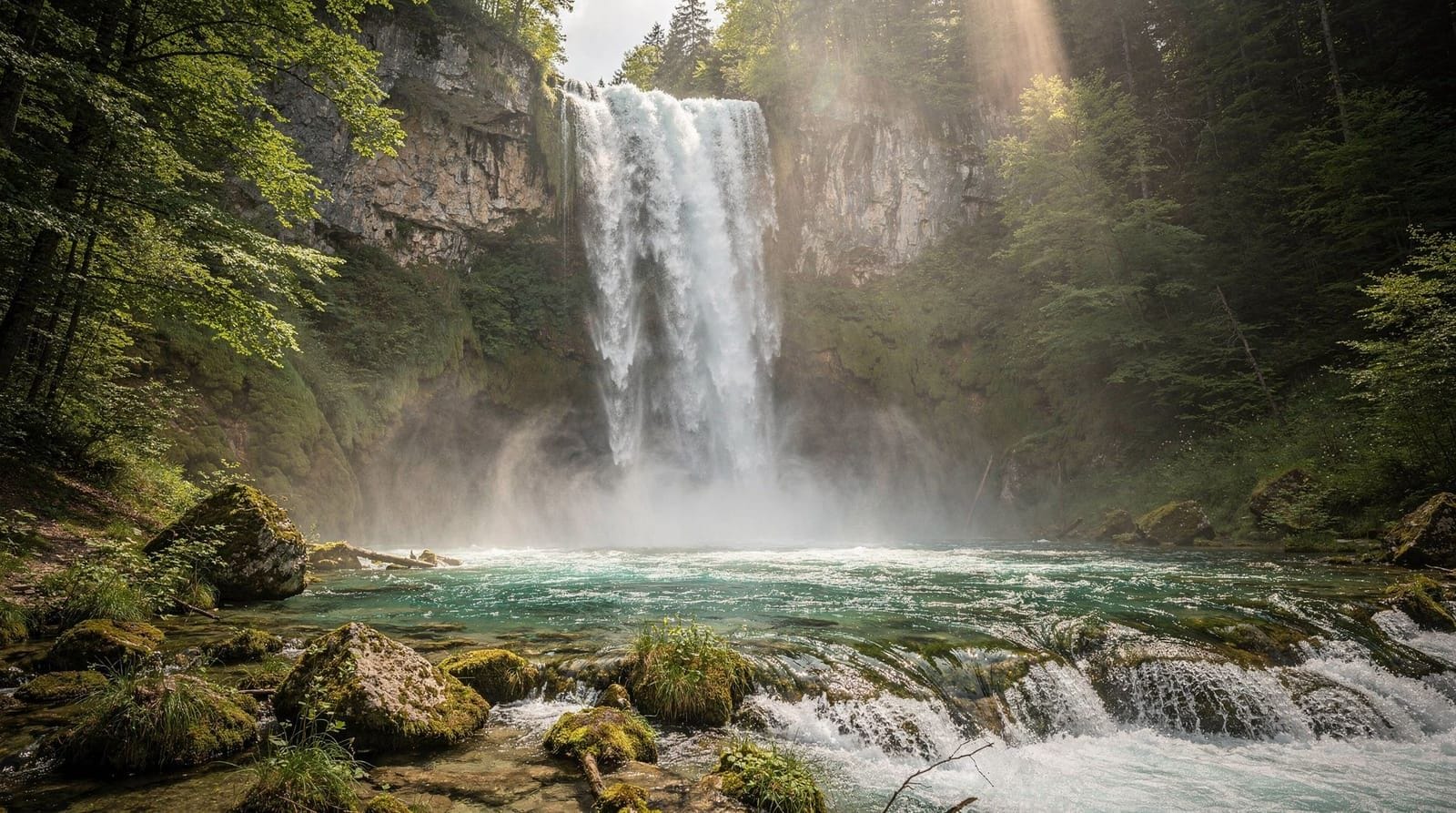
Plitvice Lakes National Park is non-negotiable on this route. Arrive by 09:00 (the car parks fill by 10:00 in summer). Spend 3–4 hours on the wooden boardwalks threading between the 16 terraced lakes, under and beside the waterfalls. The lower lakes are the most dramatic; the upper lakes are larger and less visited. Entry €25–40 depending on season; the boat across the largest lake and the shuttle train within the park are included.
After Plitvice, drive west toward Istria via the A1 motorway to Rijeka, then the Istrian motorway south (A8/A9). Total drive from Plitvice to Rovinj: about 2.5 hours.
Where to sleep (Rovinj, 2 nights): Hotel Lone (design hotel, splurge), Hotel Amarin, or guesthouses and apartments in and near the old town.
Day 3: Rovinj and Poreč
Rovinj is Istria’s most photogenic coastal town — a peninsula of coloured old houses topped by the Baroque Church of St. Euphemia, whose 60-metre campanile is visible from the sea. The old town’s marble lanes are car-free; the morning light on the harbour is exceptional.
In the afternoon, drive 35 km north to Poreč for one of Croatia’s most important Byzantine monuments: the Euphrasian Basilica, a 6th-century church with extraordinary gold mosaics in the apse. It is a UNESCO World Heritage Site and entirely overshadowed by the beachier reputation of the town around it. Worth an hour or two.
Return to Rovinj for dinner. Istrian cuisine here is excellent — fresh pasta with truffles, seafood risotto, local Malvazija wine.
Day 4: Motovun and the truffle heartland
Drive into the Istrian interior — 50 km east from Rovinj. Motovun is a medieval hilltop village above the Mirna River valley, surrounded by the oak forests where Istrian truffles (both white and black) are hunted. The village itself is small and beautiful; the views from the walls across the valley are superb.
Read our Istrian truffles guide for background on the truffle economy and how to book a hunt (October–January for white truffles; year-round for black). Even outside truffle season, every restaurant in Motovun serves truffle-based dishes and the local olive oil is exceptional.
Other notable hilltowns in the area: Grožnjan (an artists’ colony), Oprtalj, and Buzet (self-styled truffle capital). Drive back to Rovinj or continue north toward Ljubljana.
Day 5: Drive to Ljubljana, Slovenia
From Rovinj or Motovun, drive north to Ljubljana (about 2–2.5 hours from Rovinj via Trieste/Rijeka, or 2.5–3 hours from Motovun). This is one of the most beautiful drives in the region — the Istrian coast transitions to the Karst plateau, then the Slovenian Alps.
Ljubljana is small by capital city standards — population 300,000 — and is one of the most liveable and beautiful cities in Europe. The castle hill above the old town, the riverside promenade, and the Triple Bridge (Tromostovje) are the architectural highlights. The covered market along the Ljubljanica River is excellent for local food.
An organised day tour from Zagreb covers Ljubljana plus Lake Bled if you prefer not to drive, though the driving gives you more flexibility.
Where to sleep (Ljubljana, 1 night): Antiq Palace Hotel (boutique, old town), Hotel Cubo, or apartments near Prešeren Square.
Day 6: Lake Bled, then drive to Zagreb
Lake Bled is 55 km northwest of Ljubljana (45 minutes). The lake, the cliff-top castle, and the tiny island with its church are justifiably famous — but they are also very busy in summer. Go early (before 09:00) for the best light and before the tour coaches arrive. The walk around the lake takes about 1.5 hours. The kremšnita cream cake at the Park Hotel café is the obligatory local treat.
Bled is the single reason most people visit Slovenia. It lives up to the photos, despite the crowds. Morning there, then drive back southeast toward Zagreb (2.5 hours from Bled).
Optional: En route from Bled to Zagreb, the Zagorje region north of Zagreb has medieval castles, including Trakošćan (perched above a lake) and Veliki Tabor. A quick detour adds an hour but is worthwhile.
Day 7: Zagreb — full city day
Return to Zagreb after two nights away and give the capital a proper second look. The Lower Town museums are world-class for a city this size: the Mimara (European art collection), the Zagreb City Museum, and the Contemporary Art Museum in the new city district.
The Dolac market (Upper Town side, mornings only) is Croatia’s most celebrated food market — fresh produce, cheese, štrukli pastries and an authentic local vibe. The Ban Jelačić Square is the city’s heart; the funicular (world’s shortest, 66 m) connects it to the Upper Town.
Zagreb’s restaurant scene has improved dramatically in recent years. For dinner: Vinodol for Croatian classics in a courtyard; Boban for grill in the centre; Mundoaka Street Food for something more casual.
Day 8: Drive to Pula (optional) or depart Zagreb
Option A: Return your rental car and fly from Zagreb Airport. One return flight, simple exit.
Option B: Drive south to Pula (2.5 hours), return the car there, and fly from Pula Airport (PUY) — useful if Pula has a direct connection to your home city. Pula has good seasonal links to the UK and Western Europe.
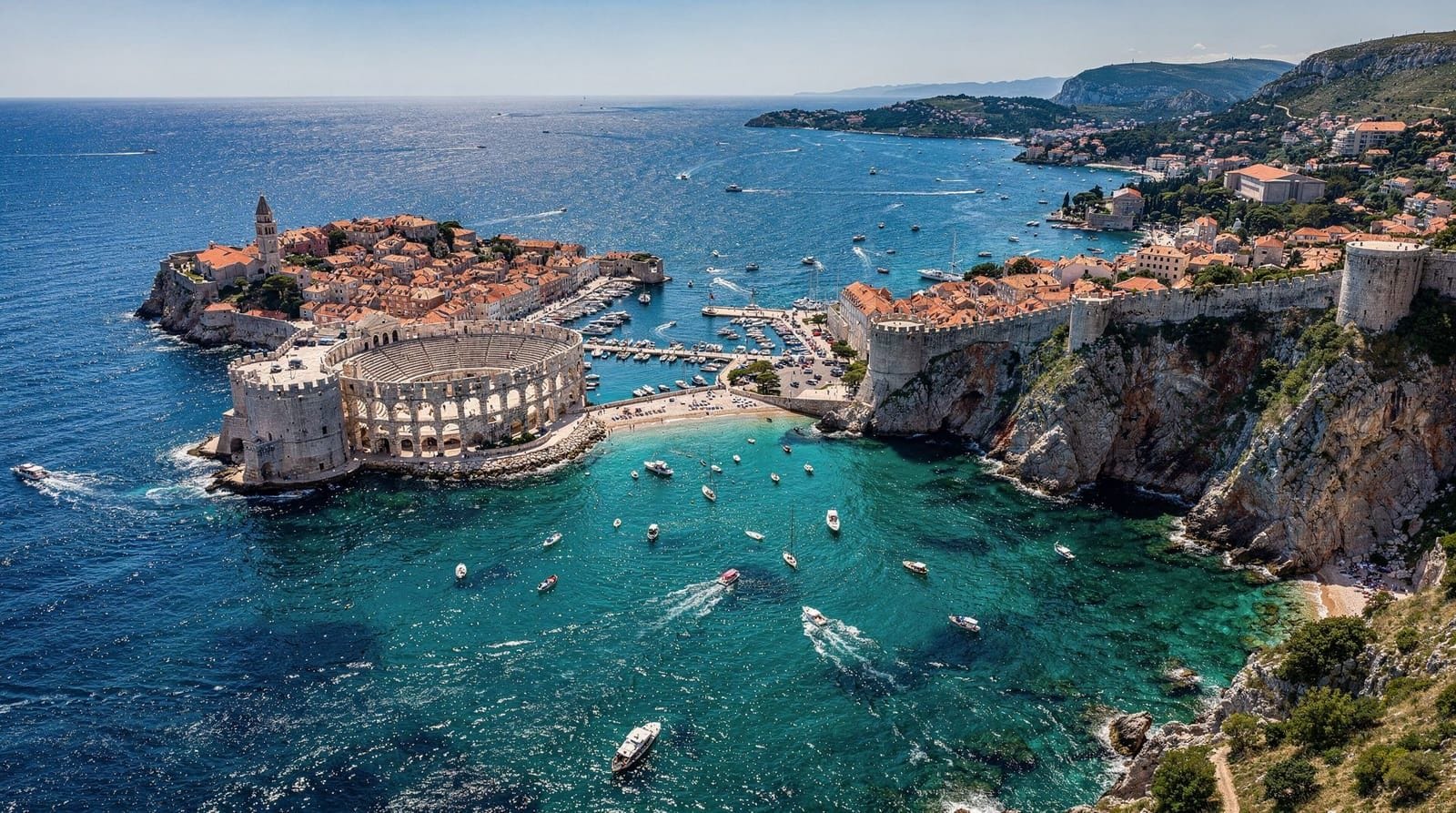
If you arrive in Pula with time to spare: the Roman Arena is the must-see (one of the world’s best-preserved amphitheatres), along with the Temple of Augustus on the Forum and the Triumphal Arch of the Sergii. Two to three hours covers Pula’s highlights comfortably.
Practical information for this 8-day circuit
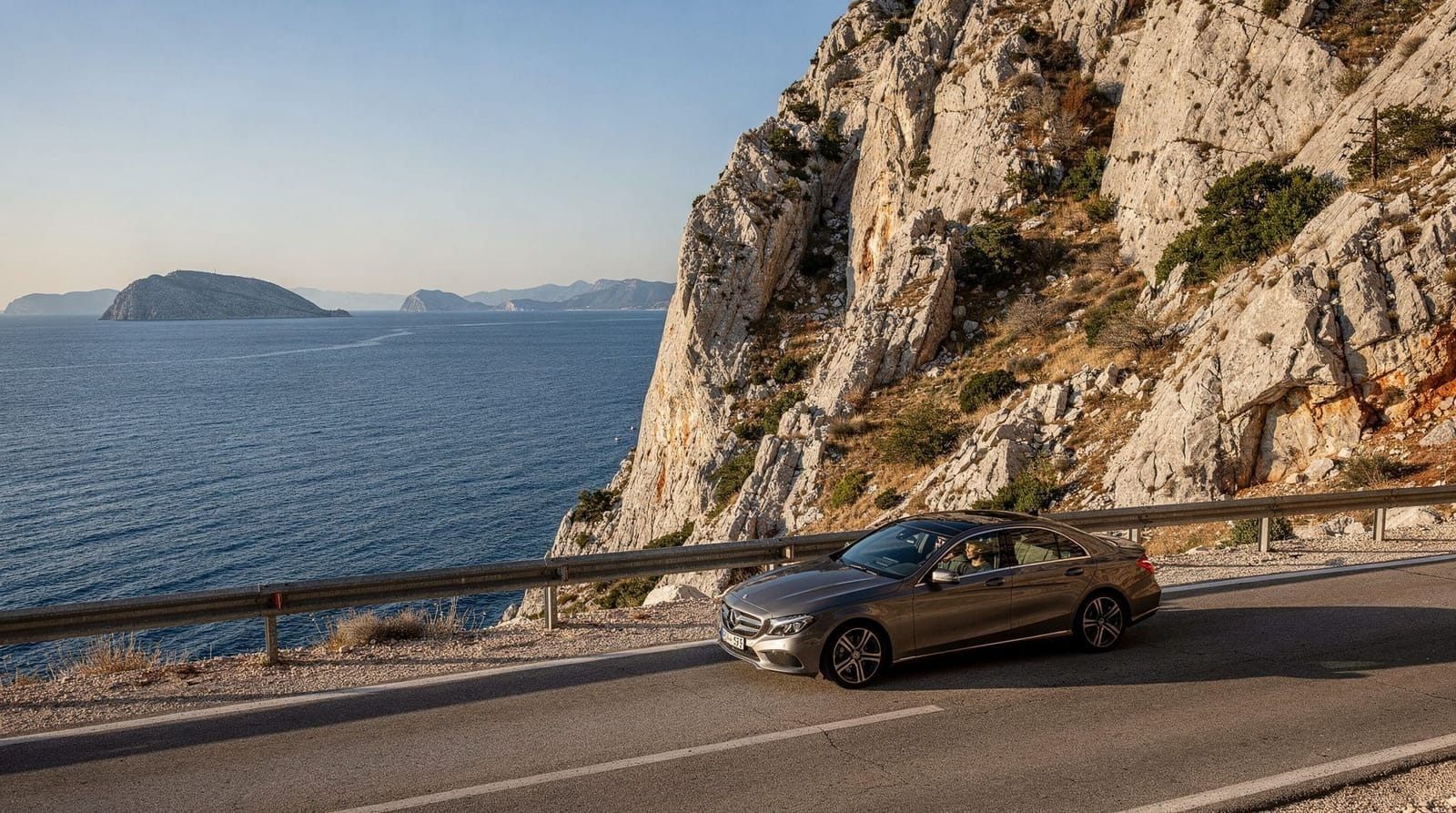
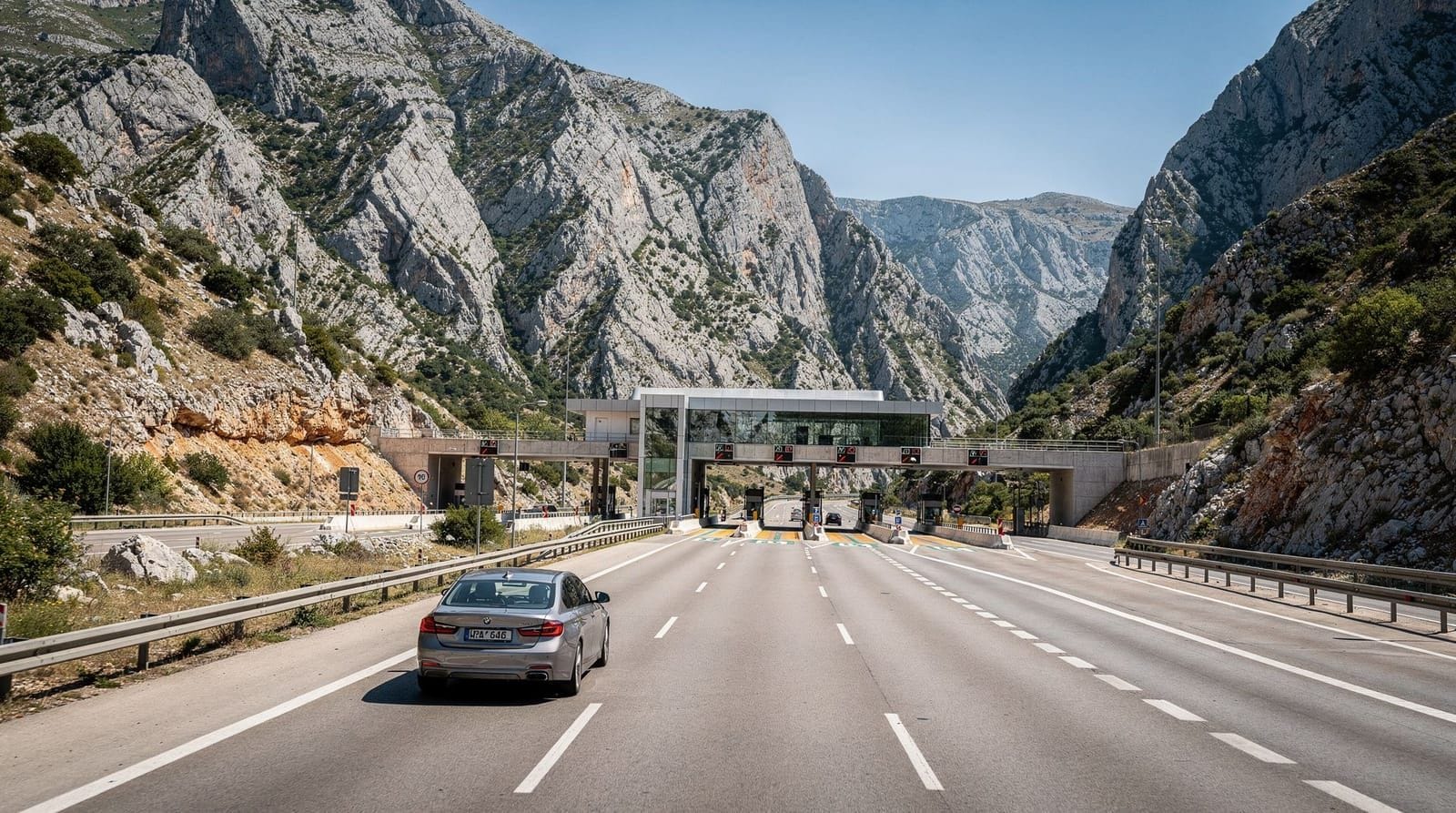
Transport: Rental car throughout. Motorways (autoceste) are fast and well-maintained; the toll system uses distance-based tickets (take ticket, pay at exit). Total tolls for the full circuit: approximately €40–60.
Slovenia driving: No special documentation needed if staying within the Schengen Area, but confirm with your rental company. Slovenia requires a motorway vignette (weekly cost around €15) for its motorway network.
Fuel: Petrol stations are plentiful; prices broadly similar to Western Europe.
Best season: April–June and September–October. Plitvice is most spectacular in spring (snowmelt waterfalls) and autumn (colour). Summer (July–August) works but both Plitvice and Bled are extremely crowded. Truffle season (Istria): October–January for white truffles.
Shortening to 6 days
If eight days isn’t realistic, the easiest cuts are the second Zagreb day (Day 7) and the Motovun detour (Day 4) — both are rewarding but not essential the way Plitvice, Rovinj, Ljubljana and Bled are. Dropping both brings the circuit to 6 days without losing the headline sights. For drivers weighing whether this circuit or a beach-focused route suits them better, the Istria vs Dalmatia guide lays out the trade-offs, and driving in Croatia covers rental and road rules in more depth than this itinerary’s practical section.
Toll roads and driving logistics
Croatia’s motorway toll system is distance-based: take a ticket entering the motorway, pay based on distance at the exit. Cards and cash both work at toll booths. Budget €40–60 total for the full circuit’s tolls. The Croatia tolls explained guide has current pricing by route if you want to estimate more precisely before you go. Slovenia works differently — a vignette (sticker) is required for its motorway network rather than per-trip tolls, purchased at petrol stations near the border for around €15/week.
Combining with a longer Croatia trip
This northern circuit pairs naturally with more time on the Dalmatian coast if your schedule allows — the 14-day Croatia itinerary shows how the north and south combine into a single longer trip rather than two separate visits. If you’re deciding which single region to prioritise on a shorter trip instead, that comparison is worth reading before committing to the north-only route described here.
Frequently asked questions about Istria, Zagreb and Slovenia
Is a car essential for this circuit, or can I do it by public transport? A car is strongly recommended — the route through Istria’s hilltowns, the Plitvice detour and the Zagorje castles are difficult or impractical without one. Public transport connects Zagreb, Ljubljana and Pula reasonably well, but Motovun, Plitvice’s early-morning arrival advantage and flexible stops are much easier self-driven.
Can I do this circuit in the opposite direction, starting in Istria? Yes — the route works equally well reversed (Pula/Rovinj first, then Plitvice, Zagreb, Ljubljana, Bled), particularly if you can fly into Pula and out of Zagreb, or vice versa. Choose based on which airport has better connections from home.
Top experiences
Bookable activities with verified prices and instant confirmation on GetYourGuide.