Accessible Croatia: wheelchair and mobility travel guide
Is Croatia accessible for wheelchair users?
Croatia presents real challenges for wheelchair users and people with limited mobility: virtually all historic old towns have cobblestones and steps, Dubrovnik's city walls are not accessible, and many island streets are steep and uneven. However, Split's Riva waterfront, Zagreb's lower town, modern hotels and some beaches with matting do work well. Planning ahead and managing expectations is essential.
Croatia is honest in its complexity for travellers with disabilities or reduced mobility. The country’s most celebrated assets — medieval old towns, island hillside villages, waterfalls in national parks — are built from or embedded in landscapes that predate accessible design by many centuries. Cobblestones, steps and uneven terrain are not occasional inconveniences; they are structural features of the places most visitors come to see.
This guide does not soften that reality. Instead, it identifies where Croatia genuinely works for wheelchair users and mobility-impaired visitors, what specific sites are and are not accessible, and how to plan a trip that plays to the country’s strengths rather than fighting its limitations.
| Most accessible city | Zagreb — flat lower town, low-floor trams |
| Most accessible beach | Bačvice, Split — matting and beach wheelchairs |
| Hardest major sight | Dubrovnik city walls — steps only, no lift |
| Best island choice | Krk — bridge-connected, no ferry needed |
| Airport assistance | Book at time of flight booking under EU Regulation 1107/2006 |
The honest picture: what works and what does not
What works:
- Modern hotel rooms (larger properties have accessible rooms meeting EU standards)
- The Riva waterfront in Split — flat, wide, fully accessible
- Zagreb’s lower town and main tram lines
- Large Jadrolinija ferries (with advance notice for boarding assistance)
- Selected beaches with matting and mobility equipment
- The underground cellars of Diocletian’s Palace (lift access)
- Pula’s amphitheatre (partially accessible ground level)
- Zadar waterfront and Sea Organ area
What does not work:
- Dubrovnik’s city walls circuit — not accessible; involves continuous steps
- Most medieval old-town interiors (Trogir, Šibenik, Korčula, Hvar Town) — steep lanes and steps
- Plitvice Lakes’ most visited routes — boardwalks can be narrow; the upper lakes are more accessible than lower, but the full circuit involves significant terrain
- Fast catamarans — narrow gangways, steps on boarding
- Virtually all island village centres
- Parking and traffic management in peak-season old towns
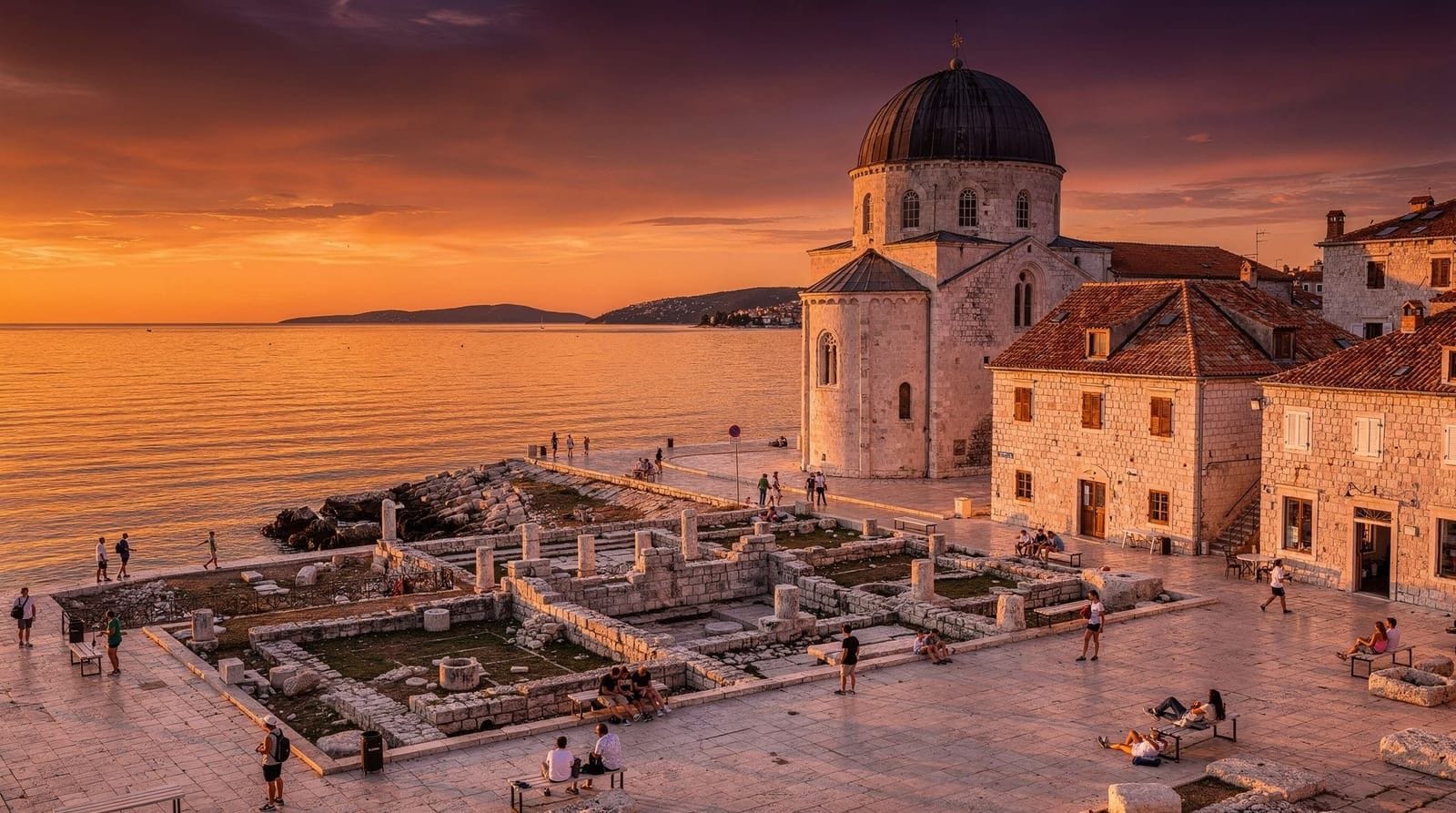
The key principle for planning: distinguish between the waterfront and the old town. In most Croatian coastal cities, the waterfront or Riva promenade is accessible (built for promenading). The medieval old town behind it — invariably uphill, invariably cobbled — is a different proposition.
Split — the most accessible major destination
Split is the most mobility-friendly of Croatia’s major coastal cities. Several factors combine to make this so.
The Riva promenade runs the length of the old town’s seaward face — a broad, flat, palm-lined esplanade with cafés, shade and a full kilometre of pavement suitable for wheelchairs and mobility aids. You can sit here, eat, watch ferries and enjoy the city without entering the old town at all.
Diocletian’s Palace is partially accessible. The palace cellars (podrum) beneath the peristyle have a lift, making the underground exhibition accessible to wheelchair users. Parts of the peristyle itself are reachable, though the surface is large sett cobblestones that are manageable at slow pace with assistance. The residential lanes within the palace walls are uneven, but the core sites — the mausoleum (now Cathedral of Saint Domnius) and the vestibule — can be approached reasonably closely.
Bačvice beach has beach matting extending into the sea and is one of the better accessible beach options in Dalmatia. The nearby beach promenade is flat and café-rich.
For accommodation, Split has a good range of modern hotels with accessible rooms. Self-catering apartments in the old town often involve steps; choose ground floor or specify in advance.
Dubrovnik — beautiful but challenging
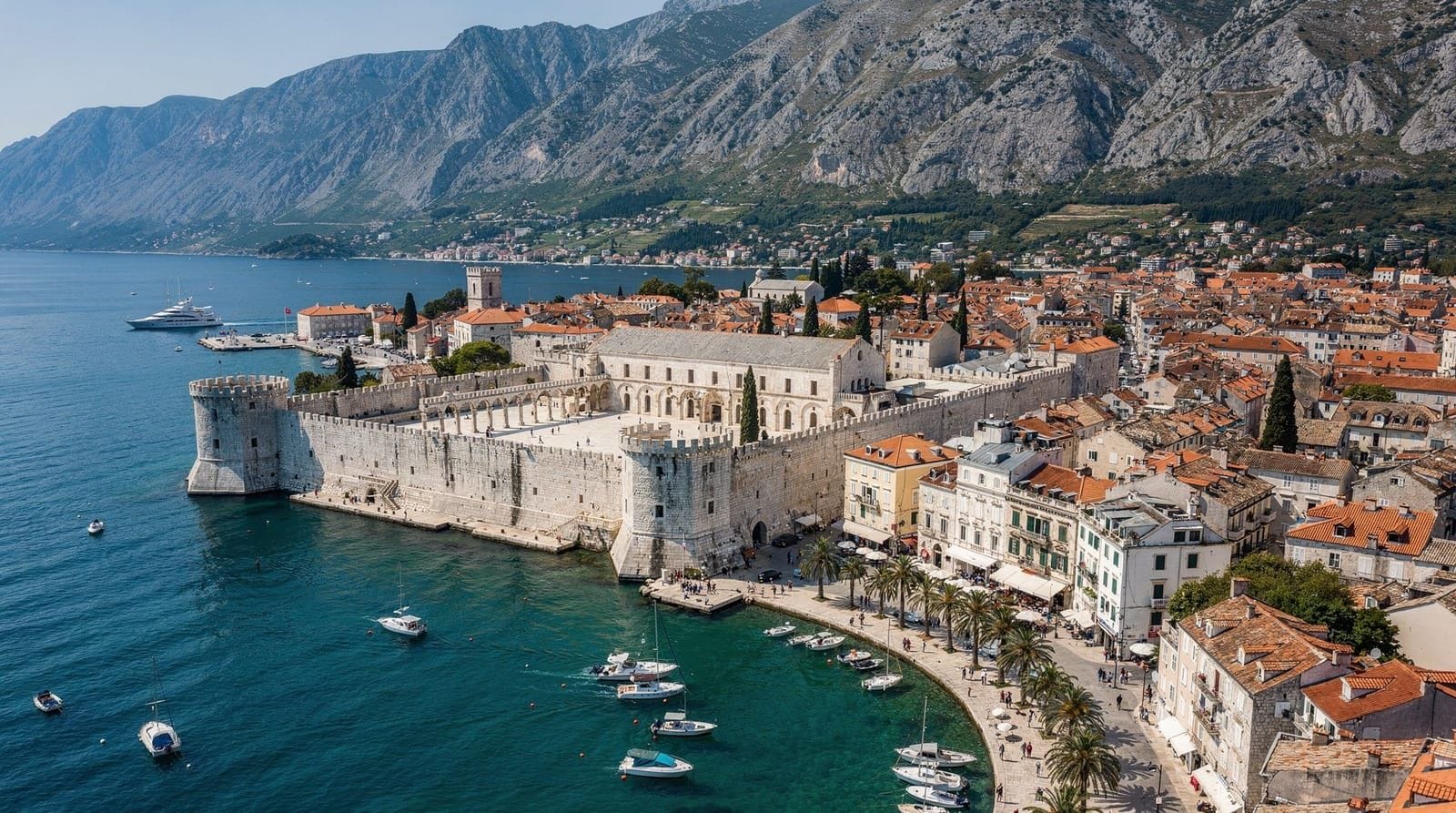
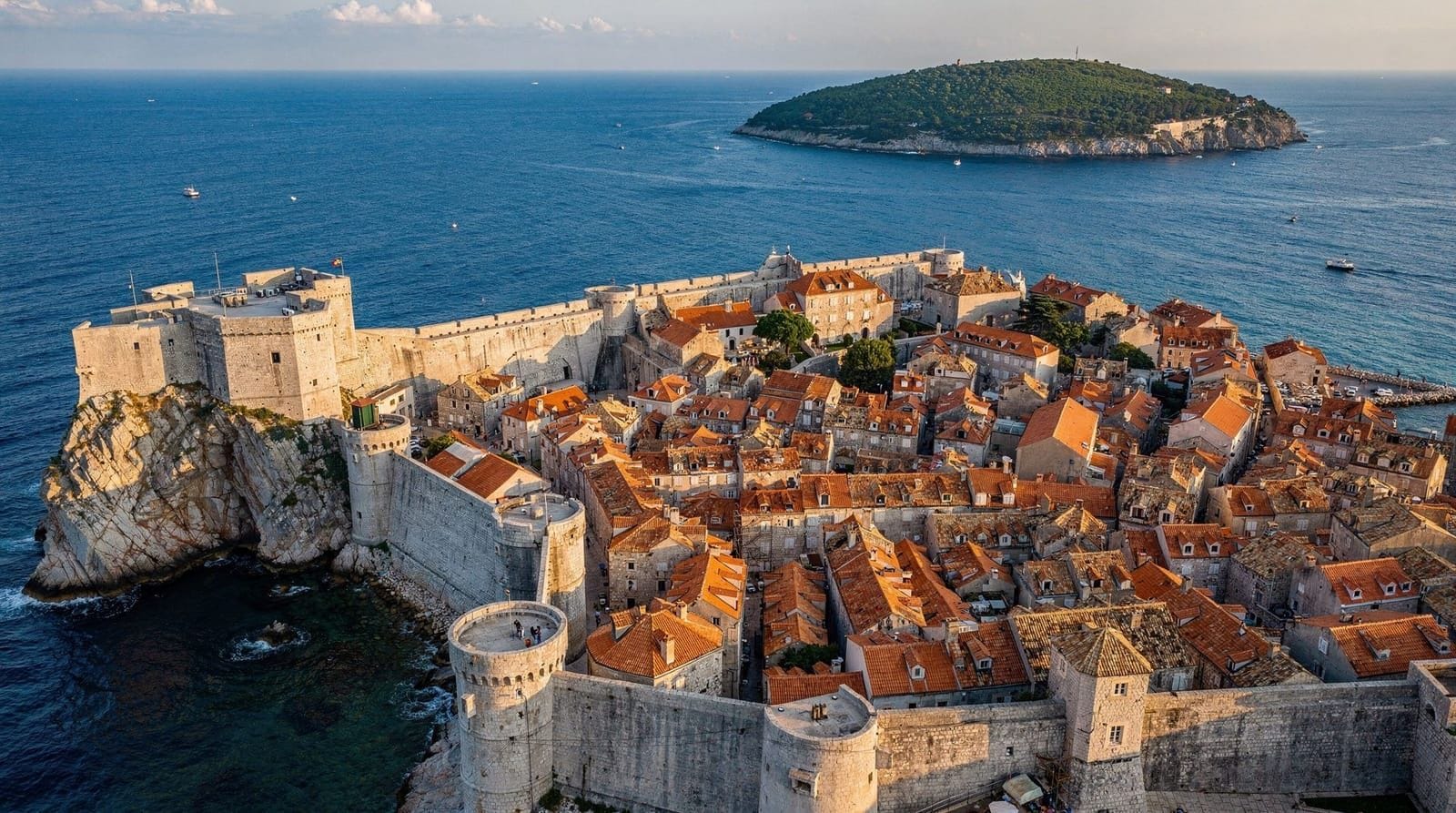
Dubrovnik is among the most visited cities in Croatia and also one of the most difficult for mobility-impaired visitors. The Old Town was built on a limestone spur; virtually all streets beyond the Stradun involve steps, gradients or both.
The Stradun (Placa) — the main east-west artery of the Old Town — is relatively flat and has a smooth limestone surface. It is accessible from the Pile Gate end (west) and the Ploče Gate end (east), though both gate approaches involve some steps or ramps of varying quality. The Stradun itself allows a wheelchair user to traverse the core of the Old Town, access some ground-floor cafés and reach the Franciscan Monastery.
The city walls are not accessible. The wall circuit involves long staircases at entry points and continuous uneven walkway surfaces. There is no lift or ramp access to the wall level. This is one of the headline experiences of Dubrovnik that wheelchair users cannot access in the conventional way.
The cable car to Mount Srđ has an accessible lower station with a lift. The cable car cabin is large enough for most wheelchair users with assistance.
Accessibility varies significantly by accommodation location in Dubrovnik. Hotels in Lapad and Babin Kuk (the hotel zone west of the Old Town) tend to have better accessible facilities than Old Town accommodation and are on flatter ground. The Old Town itself is largely inaccessible for anything beyond the Stradun.
Zagreb — the most accessible Croatian city
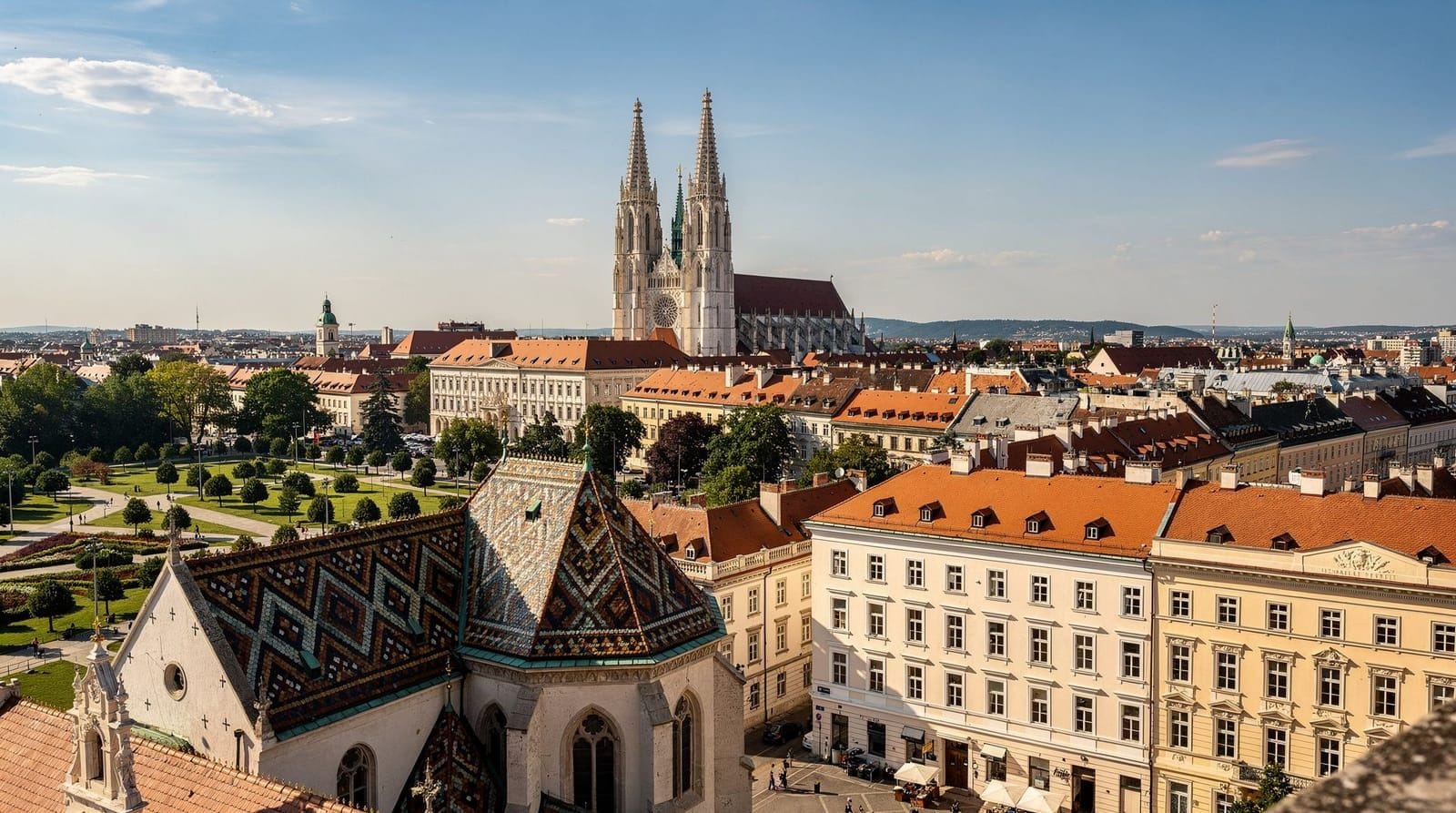
Zagreb is consistently the most accessible city in Croatia for wheelchair users and people with reduced mobility. The lower town (Donji Grad) was built in the 19th and early 20th century on a grid layout with wider streets and pavement that is manageable for wheelchairs.
Public transport: Zagreb’s tram network has introduced low-floor trams on most main routes, making city transit accessible without a car. Buses also have low-floor models on many lines. The main train station is accessible. For getting between cities without driving, see the guide to getting around Croatia for how accessible transport options compare nationally.
The funicular (uspinjača) connecting the lower and upper towns is short (66 metres) and rides have been noted by disabled travellers as accessible in practice, though the cabin is narrow. The upper town itself (Gornji Grad) has cobblestones and uneven surfaces.
The main sights in the lower town — Dolac market (partly accessible on the lower level), the Cathedral (accessible ground floor), Ban Jelačić Square, the Museum of Arts and Crafts and the Croatian National Theatre — are all reachable on relatively flat ground. The museums in the lower town have varying levels of accessibility; the Museum of Contemporary Art in Novi Zagreb is among the most modern and accessible.
Comparing the main destinations
If you can only choose one or two bases, this comparison sets expectations before you book anything.
| Destination | Old town access | Flat/waterfront area | Best for |
|---|---|---|---|
| Split | Partial — Riva is flat; palace lanes are cobbled | Riva promenade, about 1km flat | A single accessible base close to ferries and the airport |
| Zagreb | Upper town cobbled; lower town flat | Donji Grad grid, low-floor trams | A city break without needing a boat or car |
| Dubrovnik | Stradun flat; walls and side lanes not accessible | Stradun only | Seeing the Old Town at ground level, without the walls |
| Krk | Krk town centre manageable | Bridge-connected, no ferry; beaches with matting | An island stay without ferry logistics |
| Zadar | Old town mostly flat; Roman ruins uneven in patches | Riva and Sea Organ promenade | A quieter coastal city with the Sea Organ at sea level |
Ferry travel and accessible islands
Jadrolinija car ferries: The main vehicle ferries operated by Jadrolinija have accessible facilities on most routes — accessible toilets, vehicle deck boarding (which avoids the gangway entirely for passengers travelling in vehicles). The important step is to contact Jadrolinija at least 48 hours ahead to arrange boarding assistance. The ferry staff are generally helpful when informed in advance.
Fast catamarans (Krilo, KSC) are substantially less accessible. The gangways are narrow, the boats have multiple steps internally, and the sea motion makes movement on board difficult. If you rely on a wheelchair or walking aid, car ferries are strongly preferable to catamarans.
Island accessibility: Most island town centres — Hvar Town, Korčula Town, Stari Grad — involve cobblestones and steps. Some accessible beach options exist on the larger islands, but island travel generally requires significant prior research and flexibility. The islands most often cited as having some accessible infrastructure are Krk (the largest island, connected to the mainland by bridge) and Lošinj.
Krk is the most practical island choice for mobility-impaired travellers: it is connected to the mainland by bridge (no ferry required), has relatively flat terrain in Krk town, and several beaches with matting. The town of Malinska on Krk has been noted for beach accessibility work.
Accessible beaches
Croatia has made meaningful progress on beach accessibility over the past decade, driven partly by EU cohesion fund investment and partly by a recognition within the domestic tourism sector that accessible infrastructure expands the market. The standard provision is blue flag beach matting (thick rubber matting — sometimes called staze, or beach pathways — extending from the promenade across the sand and into the water) combined with beach wheelchairs (wide-wheeled, buoyant chairs that can be pushed into the sea for assisted bathing) available on loan from lifeguard stations or beach services.
The quality and availability of this infrastructure varies significantly between locations and from season to season. Equipment is sometimes not deployed until late June and is occasionally out of service for maintenance. Always confirm current provision with the local tourist office before planning a beach day around a specific location.
Confirmed beaches with accessibility infrastructure in recent seasons:
- Bačvice, Split — one of the best-known accessible beaches in Dalmatia. Beach matting, beach wheelchairs for loan from the lifeguard service, accessible WC facilities nearby. The beach is shallow (picigin is played in knee-deep water here), making sea entry gentle.
- Borik beach, Zadar — large beach in the hotel zone north of the old town with matting and beach wheelchair service. The flat promenade leading to Borik is itself wheelchair-accessible.
- Špadići beach, Poreč — on the Istrian coast, one of the better-equipped accessible beaches in the region. Matting, beach wheelchair loan, accessible facilities.
- Omiš beach area — several beaches around Omiš and the lower Cetina river mouth have installed matting in recent seasons. The beach promenade in Omiš town is flat. The Omiš area is underrated as a base on this section of the coast.
- Krk island beaches — Baška and Malinska on Krk have both received accessibility investment. Baška’s beach is long and shallow with matting; the flat path leading to it from the village is manageable. Malinska has a beach wheelchair service and is often cited by visitors as one of the most practically accessible beaches in the Kvarner area. Krk’s bridge connection to the mainland (no ferry required) makes logistics considerably simpler.
- Several Split city beaches — beyond Bačvice, Kasjuni beach on the western side of Marjan Hill has matting deployed in summer. The route from Split city centre to Kasjuni requires transport; the beach itself has accessible infrastructure.
The OSMI project: Croatia’s national accessibility improvement initiative, coordinated through the Ministry of Tourism and Sustainable Development and part-funded by EU structural funds, has driven the installation of accessible beach infrastructure at multiple locations around the coast. The project’s scope includes not only beach matting but also improved pedestrian paths to beach access points, accessible parking and facility upgrades. OSMI reports are updated periodically and can be accessed through the Croatian National Tourist Board’s accessibility portal.
Accessible boat tours: A limited number of operators offer adapted boat excursions for visitors with mobility impairments. Standard day trip boats — particularly the fast catamaran-style vessels — are not suitable for wheelchair users due to gangway access and onboard steps. However, some operators offer larger, flat-decked boats or vessels with wheelchair boarding ramps, particularly in Split and on Hvar. The Accessible Croatia NGO (accessible-croatia.com) can advise on current operators and can sometimes help arrange bookings. Enquire specifically about: gangway width and gradient, onboard WC provision, and whether beach or water entry is possible from the vessel.
National parks
Krka National Park: The Skradinski Buk area near the park entrance has some accessible pathways and a lift to the main viewing platform. The swimming area below the falls is reachable on foot from accessible parking but involves some uneven surfaces. It is significantly more accessible than Plitvice.
Plitvice Lakes: The lower lakes routes are more accessible than the upper lakes; boardwalks can be navigated with motorised wheelchairs or light manual chairs on some sections. The park operates an electric train between zones that wheelchair users can use. However, the full park experience involves terrain that is not fully accessible, and overcrowding on the main routes in summer makes navigation more difficult. An early-morning visit in shoulder season is the most practical approach.
Accommodation
Croatian hotels must meet EU accessibility standards if built or substantially renovated since Croatia joined the EU in 2013. Larger chain hotels (Hilton, Radisson, Sheraton, local chains like Valamar and Plava Laguna) reliably have accessible rooms, roll-in showers and appropriate bathroom fittings — verify specifics when booking.
Smaller boutique hotels and private room (sobe) accommodation varies enormously. Old-town boutique properties often involve steps on arrival; ask specifically about step-free access from street to room before booking.
Self-catering apartments can be ideal for accessible travel (own bathroom, cooking flexibility, no restaurant logistics) but require careful vetting. Confirm: ground floor or lift access, bathroom configuration, and entry steps.
Practical planning tips: airports, transport and logistics
Split Airport (SPU): Split Airport has an accessible arrivals process. Assistance for passengers with reduced mobility must be requested at the time of booking with your airline — not at the airport on the day. Most European carriers use the EU Regulation 1107/2006 system, which requires notification at booking to guarantee assistance. At Split Airport, assistance is provided by the airport’s own accessibility service: wheelchair assistance from aircraft to arrivals hall, priority passport control lanes and adapted ground transportation to the main terminal. Accessible WC facilities are available in the terminal. The drop-off and short-term parking area has accessible bays close to the entrance.
Zagreb Airport (ZAG): Zagreb’s Franjo Tuđman Airport is the most modern of Croatia’s main airports and has the most comprehensive accessibility infrastructure. The terminal has level access from the car park, accessible check-in desks, accessible security lanes, and ambulift vehicle boarding for passengers who cannot use the aircraft stairs. Request assistance at booking and reconfirm 48 hours before departure. Zagreb Airport’s accessible facilities include dedicated WC in landside and airside areas, assistance from kerb to gate, and electric carts for longer terminal distances.
Dubrovnik Airport (DBV): Dubrovnik Airport is more limited in size and in accessibility infrastructure than Split or Zagreb. Assistance is available but the facility is smaller and peak summer congestion (August arrivals) can create delays. Pre-notify your airline at booking. The arrival hall has a step at the main entrance from the aircraft stand — ambulift boarding is available if arranged in advance. Adapted ground transport connects the airport to Dubrovnik city (approximately 20 km); the AirportSplit shuttle bus that serves DBV has limited accessibility — confirm with the operator before booking.
Pre-notifying your carrier: The critical practical step for any traveller requiring mobility assistance in Croatian airports is to pre-notify your airline at the time of booking, not on arrival. EU regulation 1107/2006 guarantees assistance for passengers with reduced mobility at EU airports, but it requires advance notice. Use IATA mobility codes (WCHR — wheelchair to ramp; WCHS — cannot climb steps; WCHC — fully immobile) when booking to communicate your specific needs. Confirming again 48 hours before departure is recommended.
Accessible taxis and transfers: Accessible taxis (adapted vehicles with ramp or tail-lift) are available in Zagreb and Split, but with limited fleet size — book in advance through accessible transport services rather than hailing standard taxis. Uber operates in Zagreb and Split but standard vehicles are not accessible. Zagreb taxi companies (Radio Taxi Zagreb) can arrange accessible vehicles with advance notice. In smaller towns and on islands, accessible vehicle availability is often zero — factor this into your planning.
Wheelchair hire in Croatia: If you prefer to travel with a lightweight travel wheelchair and hire a standard electric or power wheelchair locally, hire services exist in Zagreb and Split. Availability is limited and must be arranged well in advance. The Accessible Croatia NGO can advise on current providers. Do not assume you can hire an electric wheelchair on arrival without pre-booking weeks ahead.
What to pack and prepare before you go
A few items make a disproportionate difference in Croatia specifically, given the terrain described above. Puncture-resistant or all-terrain wheelchair tyres are worth considering if your usual chair has narrow, smooth tyres — cobblestones and gravel paths near beaches and national parks are hard on standard casters. A lightweight folding ramp (even a short one) helps with the odd single step at cafés, konobas and some apartment entrances that would otherwise be a dead end. Pack printed copies of your travel insurance policy and any medical letters in English, since not every pharmacy or clinic outside the main cities will have English-speaking staff, and having documentation to hand speeds things up considerably.
If you use a power wheelchair or scooter, check your airline’s battery-type rules well before departure — lithium battery restrictions vary and airlines sometimes require advance notice of battery specifications rather than just the chair itself. Confirm this at the same time as requesting boarding assistance, since it is a separate approval in some cases. Finally, download offline maps of your destination: mobile signal is generally excellent in Croatia’s cities but patchier on some islands and in national parks, and knowing exactly which route avoids steps is more useful than a live map that assumes you can take any staircase.
Practical resources and planning tools
- Accessible Croatia NGO (accessible-croatia.com): destination guides, transport advice and can connect you with local guides and accessible accommodation. One of the most useful single resources for pre-trip planning.
- Croatian National Tourist Board (croatia.hr): publishes accessibility information for major destinations. The “Accessible Croatia” section includes destination-by-destination summaries and beach infrastructure updates.
- Local tourist offices (turistička zajednica): each destination has one; they can advise on beach matting, accessible transport and current infrastructure. Office quality varies; larger destinations (Split, Dubrovnik, Zadar) have more detailed information.
- Jadrolinija: call the main reservations line to request boarding assistance and confirm accessibility on specific routes. Do this at least 48 hours ahead; more for peak summer travel.
- EU Regulation 1107/2006: the legal framework guaranteeing airport and airline assistance for passengers with reduced mobility across EU airports including all Croatian international airports. Knowing this regulation exists gives you standing to request assistance if it is not forthcoming.
Restaurants, cafés and everyday life
Coastal Croatia lives outdoors, which generally works in your favour: most restaurants and cafés along the Riva-type promenades in Split, Zadar and Zagreb’s Ban Jelačić Square area have street-level terrace seating with no steps to negotiate. Toilets are the more common obstacle — many older konobas (taverns) and old-town restaurants have WCs down a flight of stairs in a converted cellar. Phoning ahead to ask “Je li WC pristupačan?” (is the toilet accessible?) or simply “step-free toilet?” in English is normal practice and staff are generally happy to check before you arrive. Larger modern restaurants, hotel restaurants and beachfront terraces are the most reliable choice if step-free facilities matter throughout the meal, not just at the entrance.
Staff attitudes across Croatia are, on the whole, helpful and pragmatic rather than fluent in formal accessibility protocol — expect willingness to move furniture, offer an arm on uneven ground, or fetch a menu outside rather than polished ramps and signage. This is worth factoring into expectations: infrastructure is inconsistent, but the human response to a clearly stated need is usually good.
Money, insurance and getting the logistics right
Accessible travel in Croatia is rarely more expensive in itself, but the workarounds often are: private accessible transfers, adapted vehicle hire and larger hotel rooms all carry a premium over the budget end of the market covered in the Croatia daily costs guide. Build this into your budget rather than discovering it on arrival.
Travel insurance deserves particular attention for mobility-impaired travellers — policies vary considerably in how they treat pre-existing conditions, mobility equipment (wheelchairs, scooters) and medical evacuation. Read the Croatia travel insurance guide before buying a policy, and disclose equipment and conditions accurately rather than assuming standard cover applies. If you plan to self-drive to reach flatter routes and accessible parking directly at sights, the renting a car in Croatia guide covers what to expect from standard rental fleets, which — as noted above — rarely include adapted vehicles as standard stock.
Frequently asked questions about Accessible Croatia
Can wheelchair users visit Dubrovnik Old Town?
The Stradun (main street) is relatively flat and manageable, but the lanes off it and the city walls circuit are not wheelchair accessible. Dubrovnik's terrain is hilly and most of the medieval street network involves steps or steep gradients. The cable car to Mount Srđ has a lift at the base station and is accessible to many wheelchair users.Is Diocletian's Palace in Split accessible?
Partially. The underground cellars have a lift for wheelchair access and parts of the peristyle are reachable. The old town above ground has significant cobblestone areas, but the broad Riva promenade directly beside the palace is flat, wide and fully accessible. Split is generally more manageable than Dubrovnik for mobility-impaired visitors.Are ferries in Croatia accessible?
Large Jadrolinija car ferries have wheelchair-accessible facilities on most routes — accessible toilets and vehicle deck boarding. Call Jadrolinija ahead of travel to confirm accessibility on your specific route and to arrange boarding assistance. Fast catamarans are less accessible due to narrow gangways and lower deck space.Are there accessible beaches in Croatia?
A growing number of Croatian beaches have installed blue flag beach matting (staze) and beach wheelchairs available for loan. Notable accessible beaches include Bačvice in Split, Borik in Zadar, and several beaches along the Istrian coast. The local tourist board website for each area lists which beaches have accessibility infrastructure.Is Zagreb accessible?
Zagreb's lower town (Donji Grad) is largely accessible — flat streets, tram connections with low-floor trams on main routes, and modern pavement. The upper town (Gornji Grad) involves steep streets and a funicular; the upper town itself has cobblestones. The funicular is accessible and offers upper-town views without the climb.What resources exist for accessible travel in Croatia?
The Croatian National Tourist Board publishes accessibility information. The Accessible Croatia NGO (accessible-croatia.com) provides destination guides and can help arrange accessible accommodation and transport. Local tourist offices can advise on beach matting and equipment loans.Can I hire a wheelchair-accessible vehicle in Croatia?
Wheelchair-accessible vehicle hire is available but limited — arrange this well in advance through specialist mobility vehicle hire companies operating in Croatia. Standard rental car companies rarely have adapted vehicles. Accessible taxis are available in Zagreb and Split but limited in smaller towns.
Top experiences
Best-rated activities across GetYourGuide and Viator.

From Zadar: Plitvice Lakes with Boat Ride & Zadar Old town tour
- Viator

Mostar and Herzegovina Tour with Kravica Waterfall from Split & Trogir
- Viator

3Hour ALL-INCLUSIVE Sunset Dolphin Watching from Medulin onSandra
- Viator

Dolphin Watching & Sunset Boat Tour With Drinks & optional Dinner
- Viator

Fantastic DOLPHIN & SUNSET TOUR with dinner ( Pula-NP BRIJUNI )
- Viator

Medulin :All-Inclusive Pirate Boat Dolphin Watching Sunset Cruise
- Viator