Split vs Dubrovnik: which Croatian city should you visit?
Split: Group walking tour of old city and Diocletian's Palace
Should I visit Split or Dubrovnik?
Visit Split if you want a living city with a beach, lower prices, better day-trip options and fewer crowds. Visit Dubrovnik if the walled Old Town, Game of Thrones locations and dramatic seaside setting are the non-negotiable image in your head. Most travellers who have time visit both — they are genuinely different experiences. If you can only choose one, Split is the better value; Dubrovnik is the more iconic.
The question every Croatia visitor asks
Split or Dubrovnik? It is the most common planning question about Croatia, and it is rarely asked with enough nuance. The two cities are both extraordinary, both on the Adriatic, both UNESCO-listed — and genuinely different in character, cost, crowd level and what they offer a traveller.
This guide compares them honestly. Not to declare a winner — both deserve to be visited — but to help you choose where to base yourself, how much time to allocate, and whether your trip profile suits one more than the other.
At a glance
| Factor | Split | Dubrovnik |
|---|---|---|
| Setting | Bustling port city, Diocletian’s Palace as living quarter | Compact walled Old Town on a cape above the sea |
| Cost | Moderate — €€ | High — €€€€ |
| Crowds | High in summer, less intense than Dubrovnik | Very high; Old Town concentration effects |
| Beach access | Good (Bačvice, islands nearby) | Limited (small beaches, rocky cape) |
| Day trips | Excellent — Hvar, Brač, Krka, Plitvice, Cetina | Good — Kotor, Mostar, Elaphiti Islands |
| Nightlife | Strong | Upscale but limited |
| UNESCO status | Diocletian’s Palace | Old Town |
| Airport | Split Airport (SPU), well-connected | Dubrovnik Airport (DBV), well-connected |
| Local life | Authentic — a proper city | Tourism-dominated in Old Town |
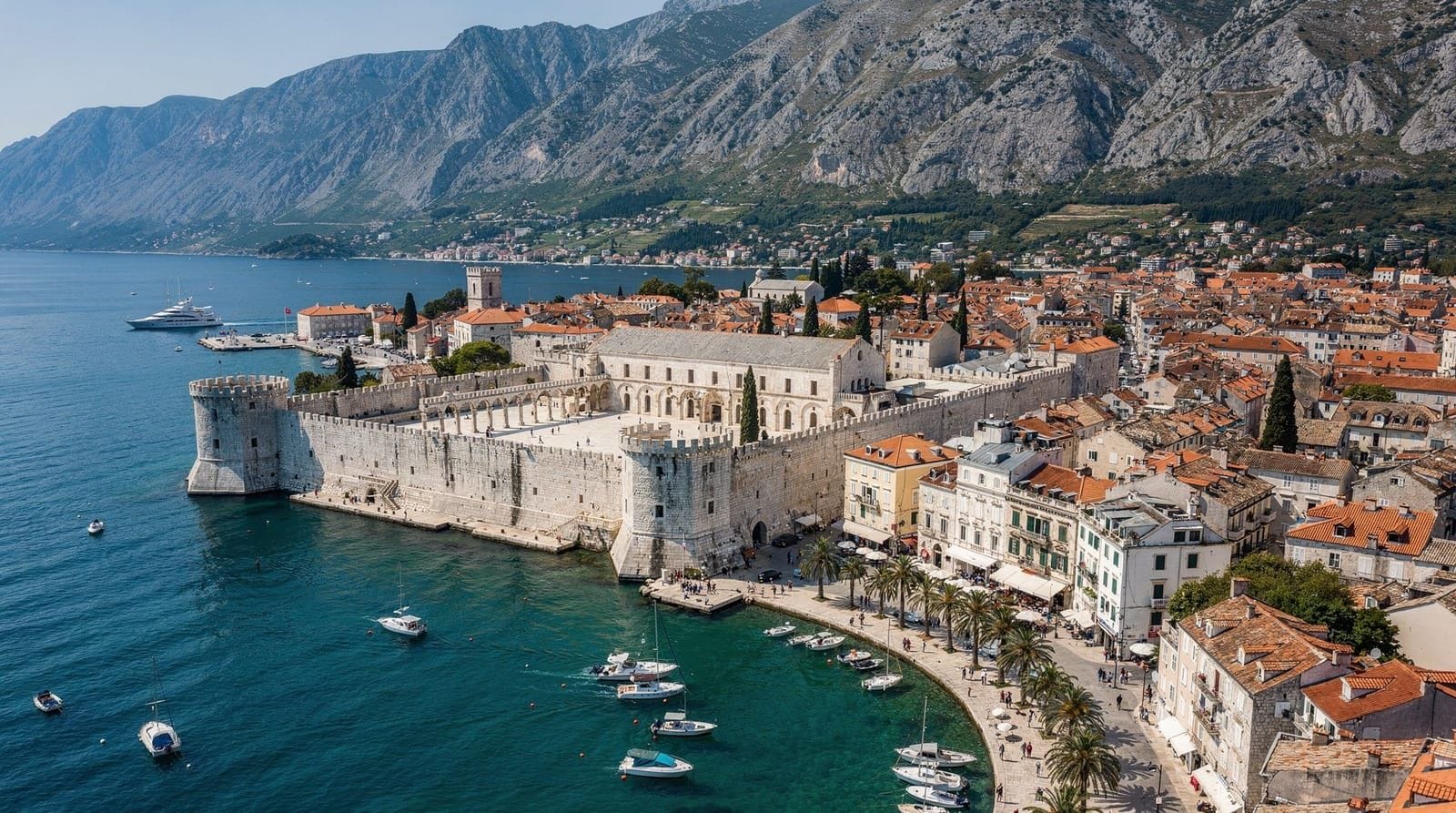
Split: the living city
Split is Croatia’s second city — a working port with a genuine urban life that continues alongside, not despite, its enormous tourism industry. The core of the city is Diocletian’s Palace: a late-Roman emperor’s retirement complex built in the 4th century that was gradually inhabited, built over, and lived in by generations of Spalatini (Splićani). Today, people live in ancient Roman walls; bars open in colonnaded courtyards; laundry dries from windows that overlook 1,700-year-old columns.
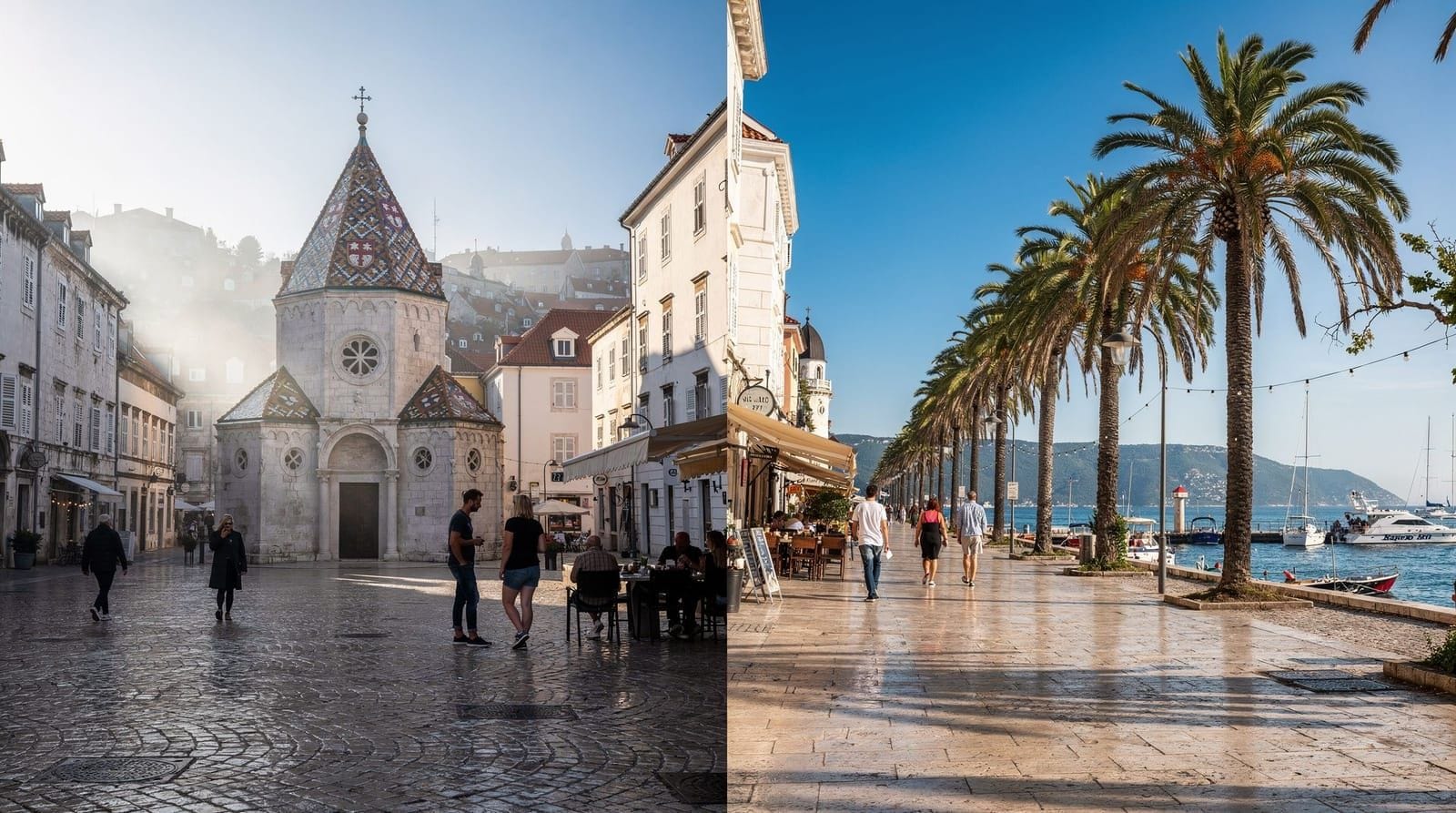
This “lived-in” quality is Split’s defining characteristic. Walk the Peristyle in the evening and you find locals as well as tourists; the fish market opens at dawn for the neighbourhood, not for visitors; old men play cards in doorways of vaulted cellars. The city’s energy is grittier and more real than the polished finish of Dubrovnik.
The Riva. The palm-lined waterfront promenade is Split’s social centre — a kilometre of cafés, people-watching and sea views. At sunset, the entire city seems to be here.
Bačvice beach. Ten minutes’ walk from the old town, Bačvice is a proper sandy beach (unusual on a pebble-dominated coast) with its own culture — the game of picigin (keeping a ball out of the water in the shallows) has its roots here and is played daily in season.
Day-trip hub. Split’s position at the centre of the Dalmatian coast makes it unbeatable as a base. Hvar by fast ferry (50 minutes), Brač and the Zlatni Rat beach (1 hour), Krka waterfalls (1.5 hours by car or tour), Cetina rafting (40 minutes) — no other Dalmatian city has this density of options within a half-day radius.
Dubrovnik: the iconic city
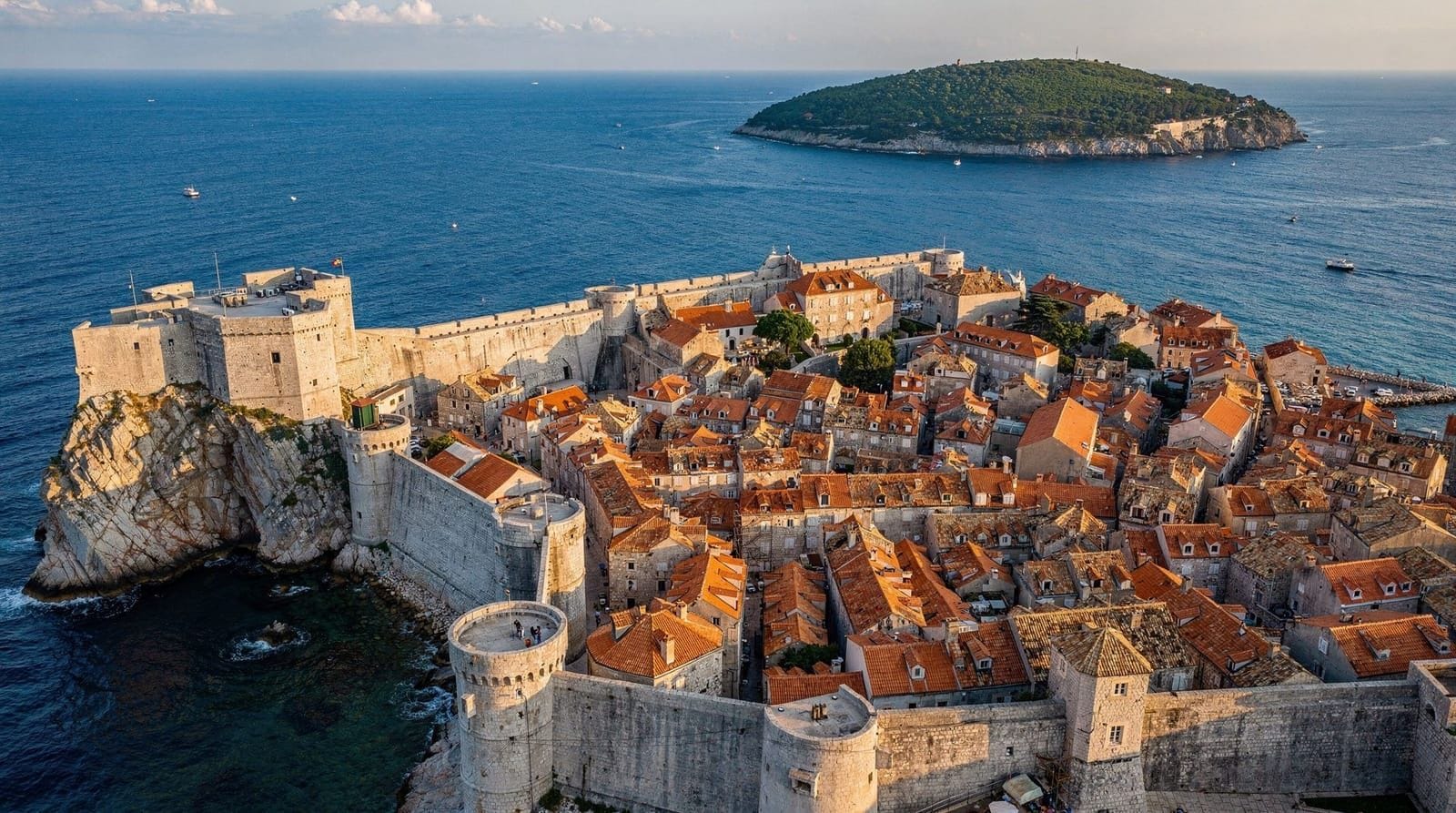
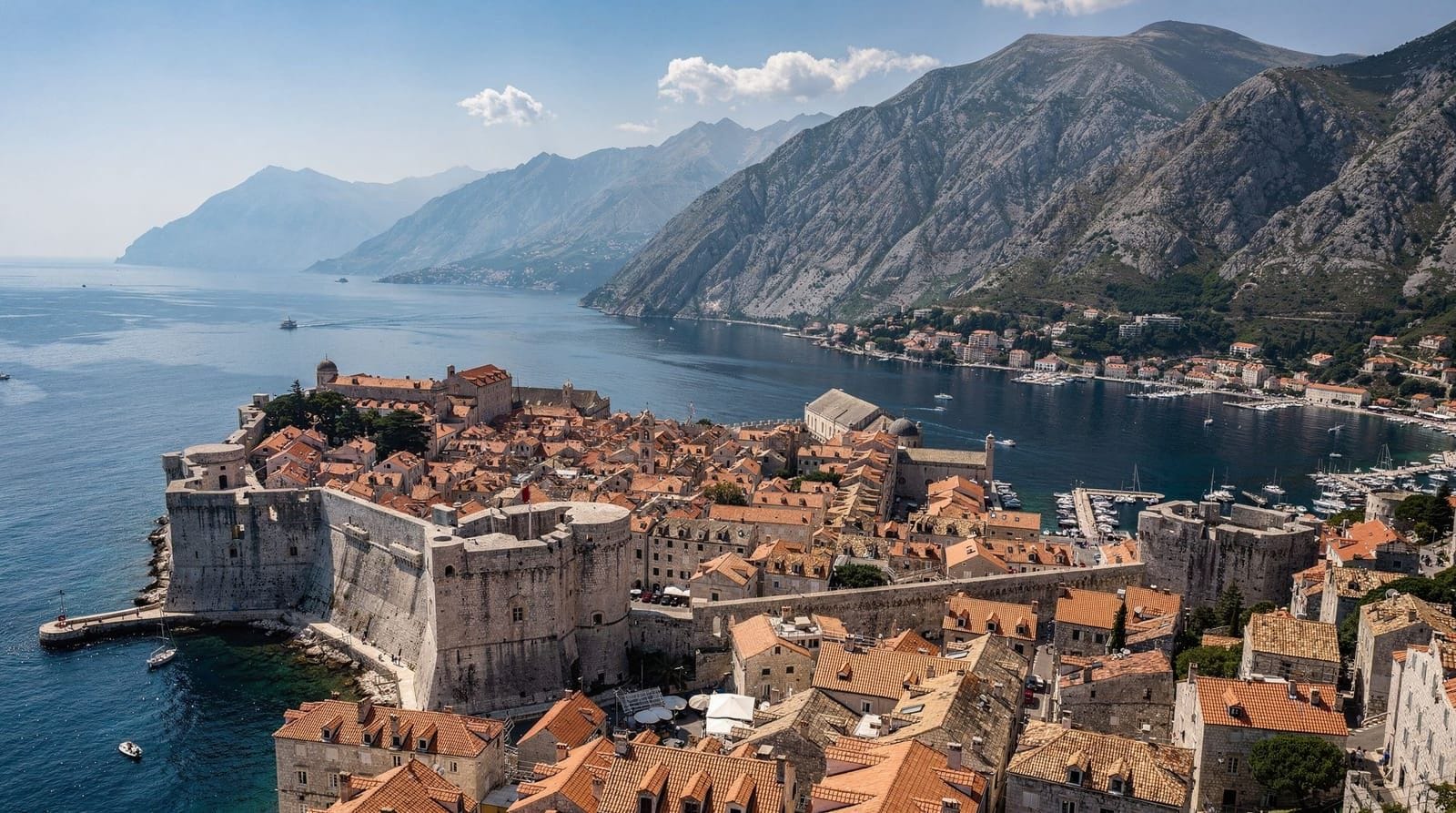
Dubrovnik is, by most assessments, one of the most beautiful cities in the world. Bernard Shaw called it “the pearl of the Adriatic.” The Old Town sits on a rocky cape, entirely enclosed by medieval walls that run along the cliff edge above the sea. Inside: limestone-paved streets, Baroque churches, Renaissance fountains, no cars, no noise except your own footsteps. From the city walls walk, the view in every direction — rooftops, sea, islands — is extraordinary.
The fame has a cost. In peak summer, Dubrovnik receives more than 8,000 cruise-ship visitors per day in addition to hotel guests. The Old Town streets — never wide — can feel uncomfortably crowded between 10:00 and 16:00. The price of a coffee on the Stradun can feel like a transaction with the tourist economy rather than with Croatia.
The answer is to be strategic. Dubrovnik in the early morning (06:30–09:00, before the cruise ships disgorge) is magical. September and October, when cruise season thins, restore the city’s dignity. The walls walk at sunset, the cable car at dawn, kayaking beneath the fortifications at 07:30 — Dubrovnik rewards those who work around the crowds rather than ignoring them.
The city walls. Walking the 2-km circuit of medieval walls is the non-negotiable Dubrovnik experience. Go early morning or late afternoon to avoid peak heat and crowds.
Game of Thrones locations. Dubrovnik stood in for King’s Landing throughout Game of Thrones. The Jesuit staircase (Walk of Shame), Fort Lovrijenac (Red Keep), Minčeta tower (House of the Undying) and Lokrum island (Qarth) are all identifiable. Full GoT guide.
Cost comparison: the numbers
Dubrovnik is genuinely more expensive than Split — not marginally, but significantly.
Accommodation.
- Budget hostel: Split €20–35, Dubrovnik €30–50 (dorm bed, high season)
- Mid-range hotel (double, peak): Split €80–150, Dubrovnik €150–300
- Upscale hotel (double, peak): Split €150–300, Dubrovnik €300–700+
Eating.
- Coffee: Split €1.50–2.50, Dubrovnik €2.50–4.00
- Lunch (pizza or grilled fish): Split €10–15, Dubrovnik €14–22
- Dinner (seafood restaurant): Split €20–40 per person, Dubrovnik €35–70+ per person
Activities.
- City walls entry: Dubrovnik ~€35 (2026 pricing); Split — Diocletian’s Palace is free to enter (individual sites charge)
- Day tours: broadly similar between cities, but Dubrovnik’s isolation means fewer budget options
The real cost differential. A couple spending three nights in each city will typically spend 40–60% more in Dubrovnik than in Split for equivalent experiences. For budget travellers, this is significant; for those choosing once-in-a-lifetime experiences, the premium may be worth it.
Day trips: the decisive difference
This is where Split wins comprehensively and deserves to be the longer base.
From Split. The network of fast ferries, local catamarans, day tours and your own car opens up the entire central Dalmatian coast and islands:
- Hvar — fast ferry 50 min. Party island, lavender hills, Renaissance town.
- Brač and Zlatni Rat — ferry 1h to Bol. Croatia’s most photographed beach.
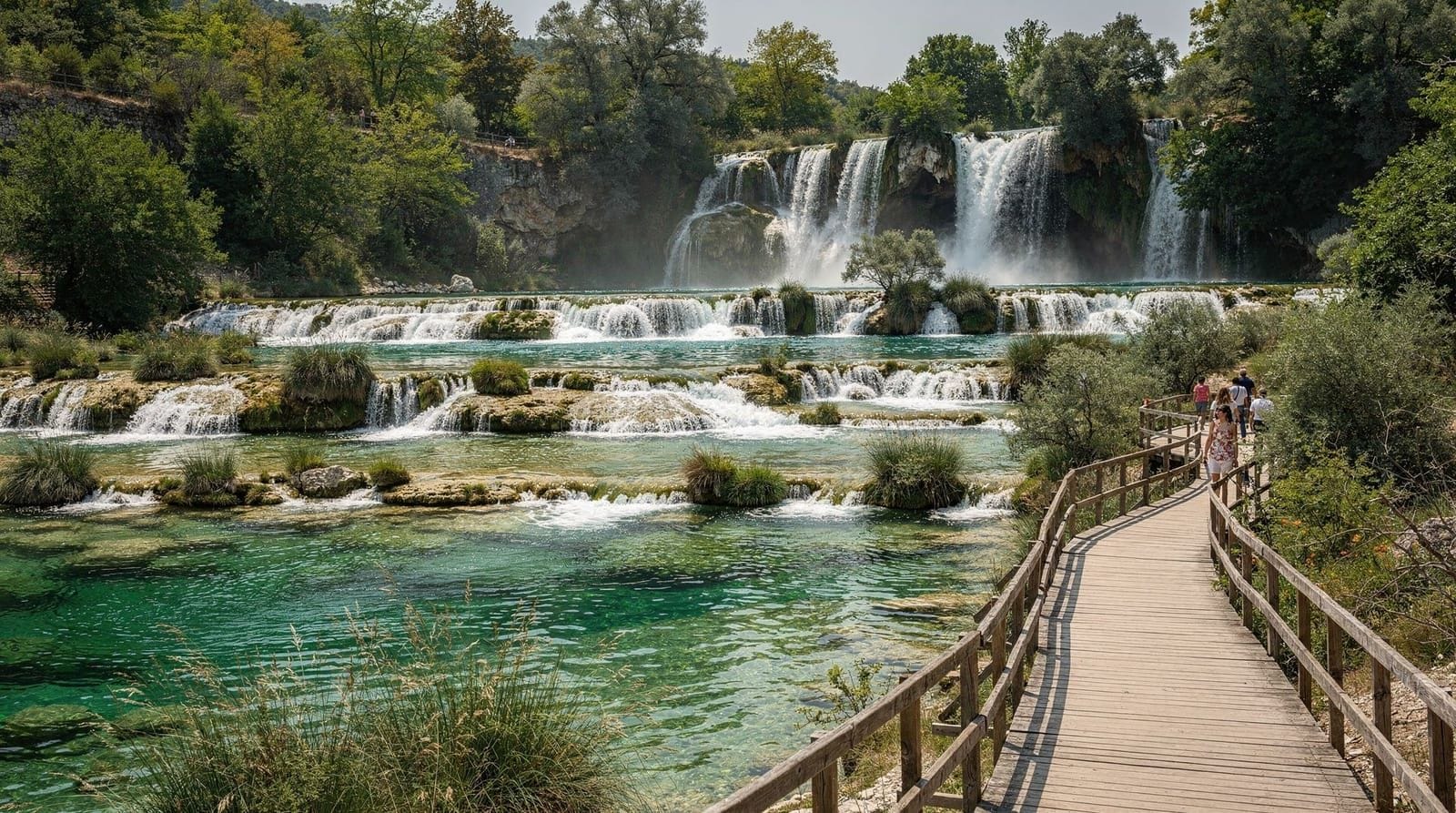
- Krka National Park — car/tour 1.5h. Travertine waterfalls, boat cruise.
- Cetina rafting — 40 min to Omiš. Best white water on the Dalmatian coast.
- Biokovo Skywalk — 1h to Makarska. Glass-floor view over the coast.
- Plitvice Lakes — 2.5h. UNESCO waterfall landscape.
- Dubrovnik itself — 3h by fast catamaran.
From Dubrovnik. Excellent but fewer and mostly requiring a full day:
- Kotor (Montenegro) — 2h. UNESCO bay town, dramatic setting.
- Mostar (Bosnia) — 3h. Ottoman bridge, old bazaar.
- Elaphiti Islands — 30–45 min by boat. Quiet islands, good swimming.
- Hvar — possible by catamaran in peak season.
Split is the better strategic base for those who want to see the most of Croatia in a limited time.
Verdict by traveller profile
Choose Split if:
- You want the best value-to-experience ratio
- Day trips and island access matter to you
- You want a mix of local life and tourism
- You have young children (better facilities, more space, Bačvice beach)
- You want adventure activities nearby (Cetina, Biokovo, Paklenica)
- You’re travelling on a budget
Choose Dubrovnik if:
- The iconic walled city image is what you came to Croatia for
- Game of Thrones is a serious interest
- You’re on a romantic trip and want Old Town dining and atmosphere
- You have 3–4 nights and want depth over breadth
- Montenegro (Kotor) or Bosnia (Mostar) are on your itinerary
Visit both if:
- You have 10+ days in Croatia
- You want to understand the difference between the two city characters
- You’re doing the Split to Dubrovnik coastal drive
Which city is better for solo travellers?
Both cities are safe and well set up for solo travel, but the experience differs. Split’s larger scale and genuine local life make it easier to find affordable hostels, casual bars and a social atmosphere without the tourist-only feel; the Riva and Bačvice beach areas are natural places to meet other travellers. Dubrovnik’s Old Town, while beautiful, is smaller and more geared toward couples and organised tour groups — solo travellers sometimes find it a quieter, more contemplative experience rather than a social one. Free walking tours operate in both cities and are a reliable way to meet people regardless of which you choose.
How much time to allocate each city
If you’re building a first-time Croatia itinerary, the common mistake is splitting time evenly. A more realistic split for most travellers: 3–4 nights in Split (enough time for the old town plus at least one island day trip) and 2–3 nights in Dubrovnik (enough for the walls, Old Town and one excursion like Kotor or the Elaphiti Islands). Travellers prioritising beaches and island life should tilt further toward Split; those whose trip is anchored around the walled-city image or Game of Thrones locations should tilt toward Dubrovnik.
Weather and seasonality: does it differ between the two?
Split and Dubrovnik share broadly the same Adriatic climate, but Dubrovnik — further south — runs slightly warmer and more humid in summer, and its exposed coastal position makes it more prone to sudden Jugo (southerly) wind and short intense storms. Split’s position, sheltered somewhat by the islands offshore, sees marginally calmer conditions overall. In practice the difference is minor enough that it shouldn’t drive your city choice; both are excellent May through September, with June and September offering the best balance of warmth and lower crowds in either city.
Transport links: which city is the better hub
Split’s position at the midpoint of the Dalmatian coast makes it a stronger transport hub — better bus connections north to Zagreb and Plitvice, better ferry connections to more islands, and a more central position for a broader Croatia trip. Dubrovnik is more of an endpoint: excellent for its immediate region (Montenegro, Bosnia, nearby islands) but less central for exploring the rest of Croatia. If your trip includes northern Croatia (Zagreb, Istria, Plitvice) alongside Dalmatia, structuring the itinerary with Split as the pivot point and Dubrovnik as the southern endpoint — as covered in the Split to Dubrovnik guide — is the most efficient routing.
Frequently asked questions about Split vs Dubrovnik
Is Split or Dubrovnik more expensive?
Dubrovnik is significantly more expensive than Split — often 30–50% higher for accommodation and food. A mid-range double room in Dubrovnik's Old Town costs €150–250+ per night in peak season; the equivalent in Split is €80–150. Restaurant meals in Dubrovnik's tourist core are €15–25+ per main course; in Split's centre €10–18. Dubrovnik is one of Europe's most expensive coastal cities in summer. Split is more affordable across the board.Which city has better beaches?
Split has better beach access and variety. Bačvice beach (10 minutes' walk from the old town) is famous for the game picigin; the Kaštela coast and islands (Brač, Hvar) are accessible by ferry from Split harbour. Dubrovnik has Banje Beach (pleasant, east of the Old Town) and the beaches below the cliffs near Lokrum — but the city's rocky cape setting limits beach access compared to Split. For beach holidays, the islands and Makarska Riviera (accessed via Split) are far superior to Dubrovnik.Which has better day trips — Split or Dubrovnik?
Split has significantly better day-trip options. Within 1.5 hours: Hvar, Brač (Zlatni Rat), Krka waterfalls, Cetina rafting, Biokovo, Omiš. Within 3 hours: Plitvice Lakes, Dubrovnik itself. Dubrovnik has excellent day trips (Kotor, Mostar, Elaphiti Islands, Hvar by catamaran) but fewer of them and more dependent on boat or road. For day-trip variety, Split wins clearly.Which city is less crowded?
Split is less crowded in relative terms, though it is still very busy in July–August. Dubrovnik has introduced visitor caps on its Old Town and the cruise-ship surges create concentration effects where crowds are intense in the medieval streets. Split's Old Town (Diocletian's Palace) is also busy, but the city is larger and has more breathing room. For crowds: Dubrovnik is the more intense experience. Both are significantly better in May, June and September.Is Split or Dubrovnik better for families?
Split is generally better for families — more space, a proper urban fabric with local life, a beach within walking distance of the centre, lower prices, and better day-trip connections (Cetina rafting for older children, Krka day trip for all ages). Dubrovnik is more compact and can feel overwhelming for young children on hot summer days. Both are safe and well-served with good restaurants.Can you visit both Split and Dubrovnik on the same trip?
Yes — and most visitors to Croatia do. The two cities are 230 km apart on the coastal road (3–4 hours) or 3 hours by catamaran in season. A typical 10–14 day Croatia trip bases several days in Split (islands, day trips), then travels south to Dubrovnik for 2–3 nights. The Split to Dubrovnik route is Croatia's classic coastal drive, with stops at Makarska and the Pelješac peninsula.Which city has better nightlife?
Split has better nightlife for most travellers. The Riva (waterfront promenade) and the bars within Diocletian's Palace run until late; the Bačvice area has beach bars that continue until dawn in summer. Dubrovnik has a more upscale bar scene (rooftop bars, wine bars) but the scale is smaller and the tourist concentration is intense in the Old Town. For a party scene, Split is the clear winner on the Dalmatian coast; Hvar (accessible from Split) is the regional party island.
Top experiences
Bookable activities with verified prices and instant confirmation on GetYourGuide.
Top experiences
Best-rated activities across GetYourGuide and Viator.

Blue cave, Mamma Mia and Hvar, 5 islands speedboat tour
- Viator

Blue Cave and Hvar Tour - 5 Islands Tour from Split and Trogir
- Viator

Blue cave, Mama Mia and Hvar, 5 Island Speedboat Tour from Trogir
- Viator

From Zadar: Plitvice Lakes with Boat Ride & Zadar Old town tour
- Viator

Hvar, Brač & Pakleni islands cruise with lunch & drinks from Split & Trogir
- Viator

Blue Cave & Vis Island speedboat tour from Hvar
- Viator