Croatian culture: customs, traditions and how things work
Dubrovnik: Old town walking tour
What is Croatian culture like?
Croatian culture is deeply shaped by its layered history — Venetian, Habsburg and Mediterranean influences dominate the coast; Central European and Slavic patterns are stronger in the interior. Catholicism plays a significant social role; family and community ties are important; hospitality is genuine. Coast and interior Croatia are culturally quite distinct from each other.
A country with two distinct personalities
Croatian culture is not one thing. The country is too geographically and historically varied for a single cultural profile to hold. The Dalmatian fisherman who starts his day with a shot of homemade rakija on the waterfront and the Zagreb lawyer eating dinner at 9pm in a wine bar share a language and a passport; their daily rhythms, reference points and social expectations have more than a little divergence.
Understanding that the coast and the interior are culturally different — and that Istria differs from Dalmatia which differs from Slavonia — is the most useful single insight a visitor can have. It explains the slight bemusement when inland Croatians and coastal Croatians encounter each other, and it makes the regional texture of a Croatian trip considerably richer.
| Dominant religion | Roman Catholic (~86%) |
| Language | Croatian (Hrvatski), Latin alphabet |
| Coast temperament | Polako — relaxed, present-focused |
| Interior temperament | More Central European — punctual, formal |
| National obsession | Football (Vatreni), especially since 2018 |
Catholicism and public life
Croatia’s Catholic identity is not merely nominal. Around 86% of the population identifies as Catholic in census data; the Church’s influence in public discourse is significant — it was a visible actor in the 2013 constitutional marriage referendum and in debates around education and bioethics.
Religious feast days are national holidays and genuinely observed: Christmas (Božić), Easter (Uskrs), the Assumption (Velika Gospa, 15 August), and All Saints’ Day (Svi sveti, 1 November) are major celebrations. Easter is perhaps the most culturally significant: elaborate processions in Dalmatian cities, the blessing of Easter food baskets, the specific Easter foods (ham, horseradish, decorated eggs).
For visitors, this means some practical adjustments: shops and businesses may be closed on religious holidays; church services may affect access to cathedral interiors at certain times; religious events in small towns (processions, festivals) are worth witnessing as genuine local culture rather than tourist performance.
The Dalmatian coast has a particularly vivid tradition of religious processions. Dubrovnik’s Feast of St. Blaise (3 February) and the Korčula Moreška sword dance are two examples of the overlap between religious tradition and community performance culture.
The concept of ‘polako’
The word polako — “slowly,” “take it easy” — is the cultural philosophy of the Dalmatian coast. It is not laziness; it is a deliberate prioritisation of present enjoyment over hurried efficiency. A konoba meal on the coast that takes three hours is not a service failure; it is the meal working as intended.
This extends to time generally. Meeting times on the coast have a 15-minute cultural margin that is understood by all parties. Plans are held loosely. The sea will be there tomorrow. This attitude produces genuine relaxation in visitors who surrender to it; it produces mild irritation in those who cannot.
The interior of Croatia (Zagreb, Zagorje, Slavonia) is significantly more Central European in its relationship to time — punctual, organised, efficient. The cultural meeting of these two temperaments is one of the more entertaining dynamics in Croatian public life.
Food as social institution
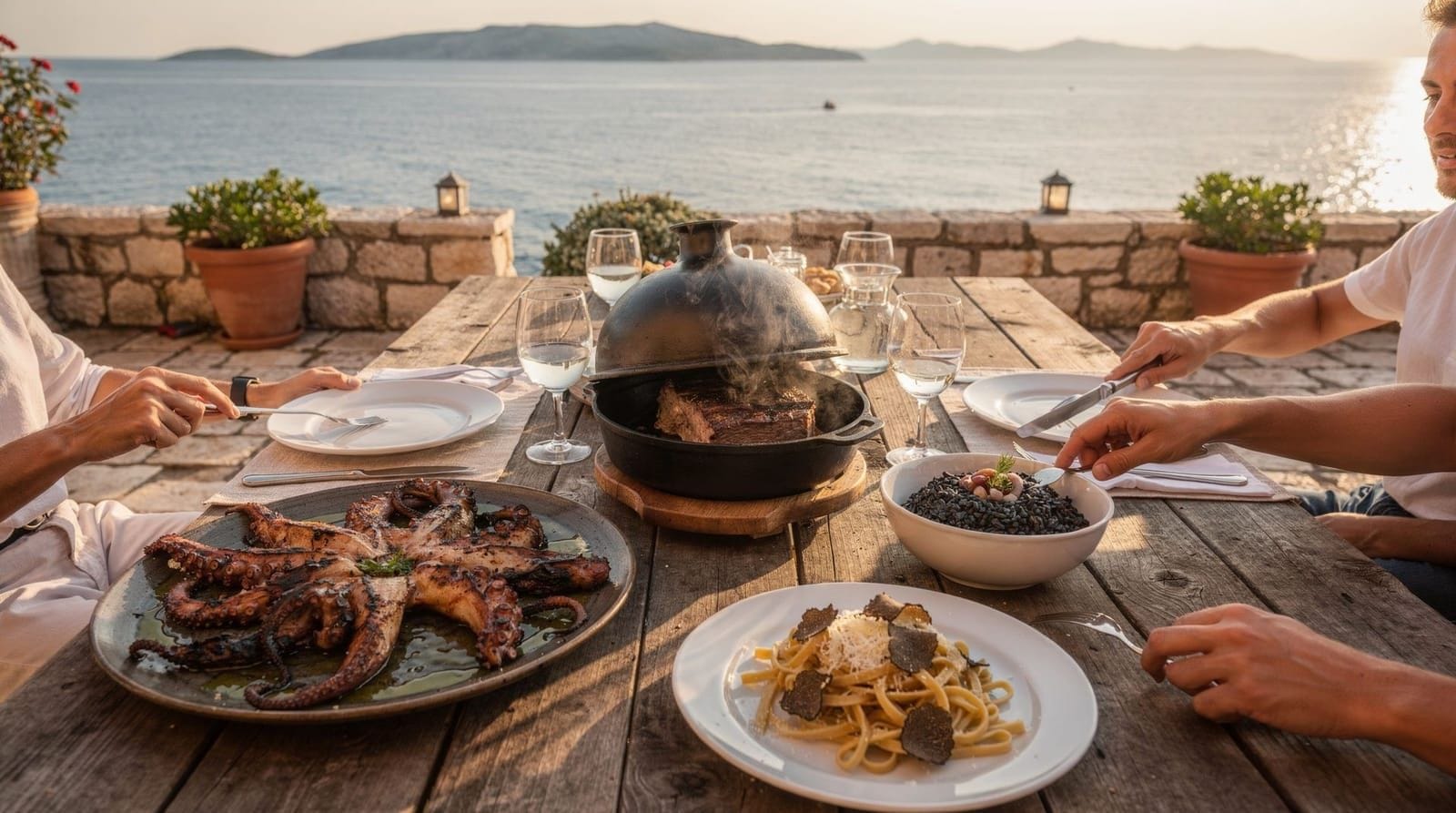
Croatian eating is social eating. Meals are not fuel stops — they are occasions. Lunch (ručak) is the main meal of the day, traditionally in the early afternoon; dinner (večera) is lighter and eaten later on the coast (9pm is not unusual in summer). The Sunday family lunch is an institution in which multiple generations gather and the table is not cleared until the afternoon is well advanced.
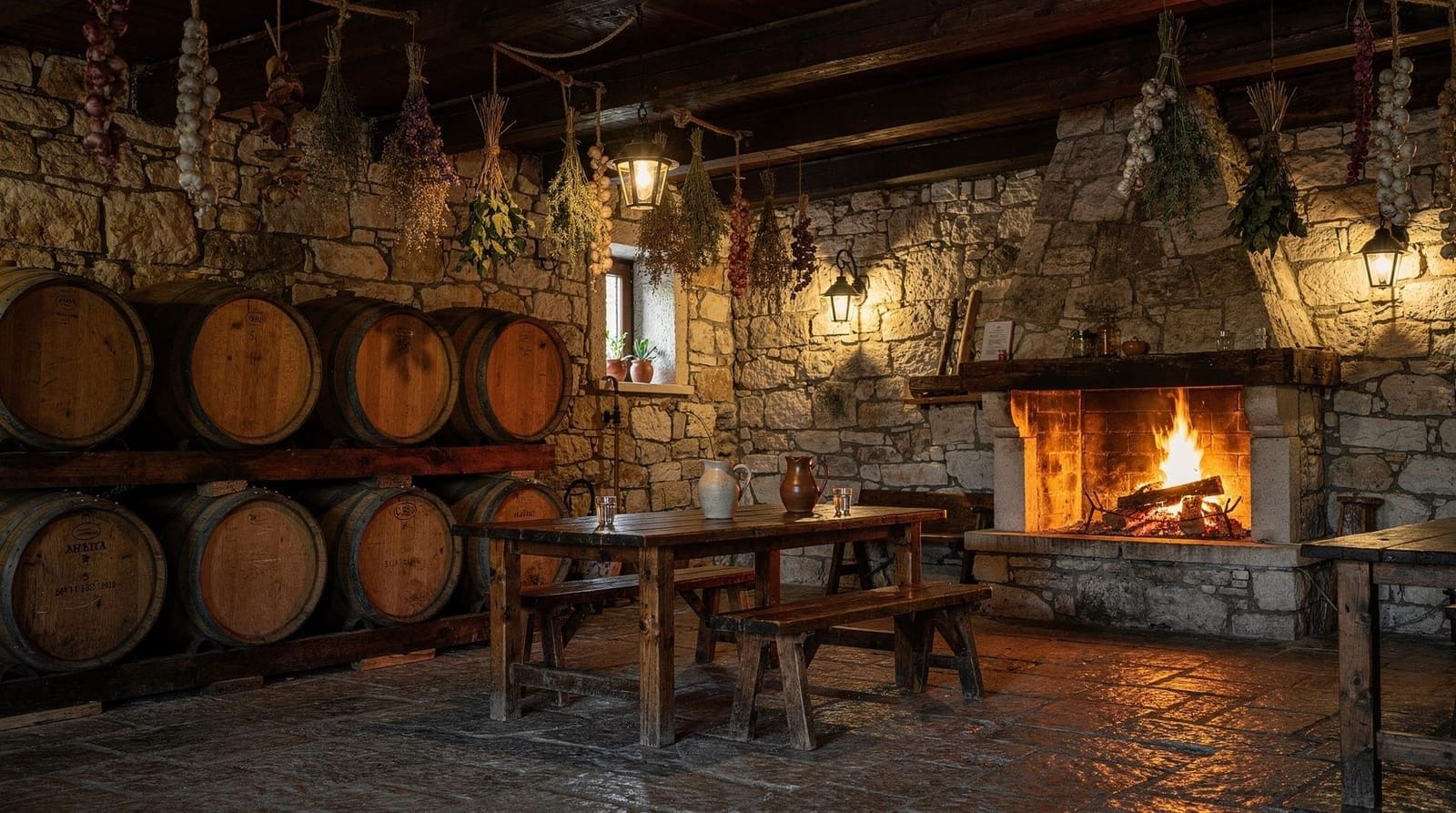
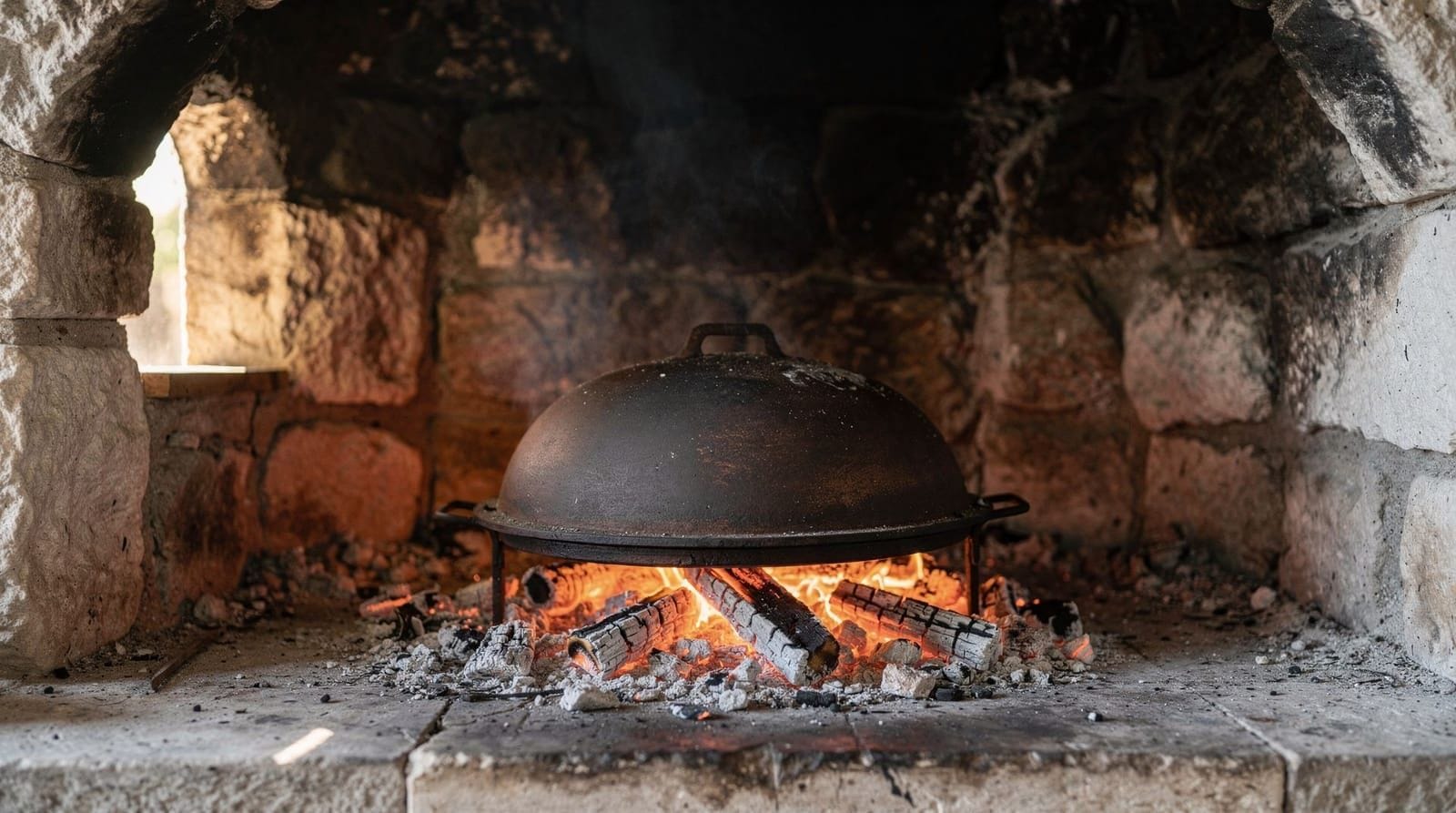
The konoba — a traditional Dalmatian tavern — is the most authentic venue for this social eating culture. A good konoba has no printed menu or a very short one; the food is what the cook prepared that morning. Conversation with the owner about what to eat is normal. Sharing dishes is expected. The pace is unhurried.
See our full Croatian food guide and konoba guide for the specifics of what to eat and where.
Klapa: a cappella singing as cultural identity
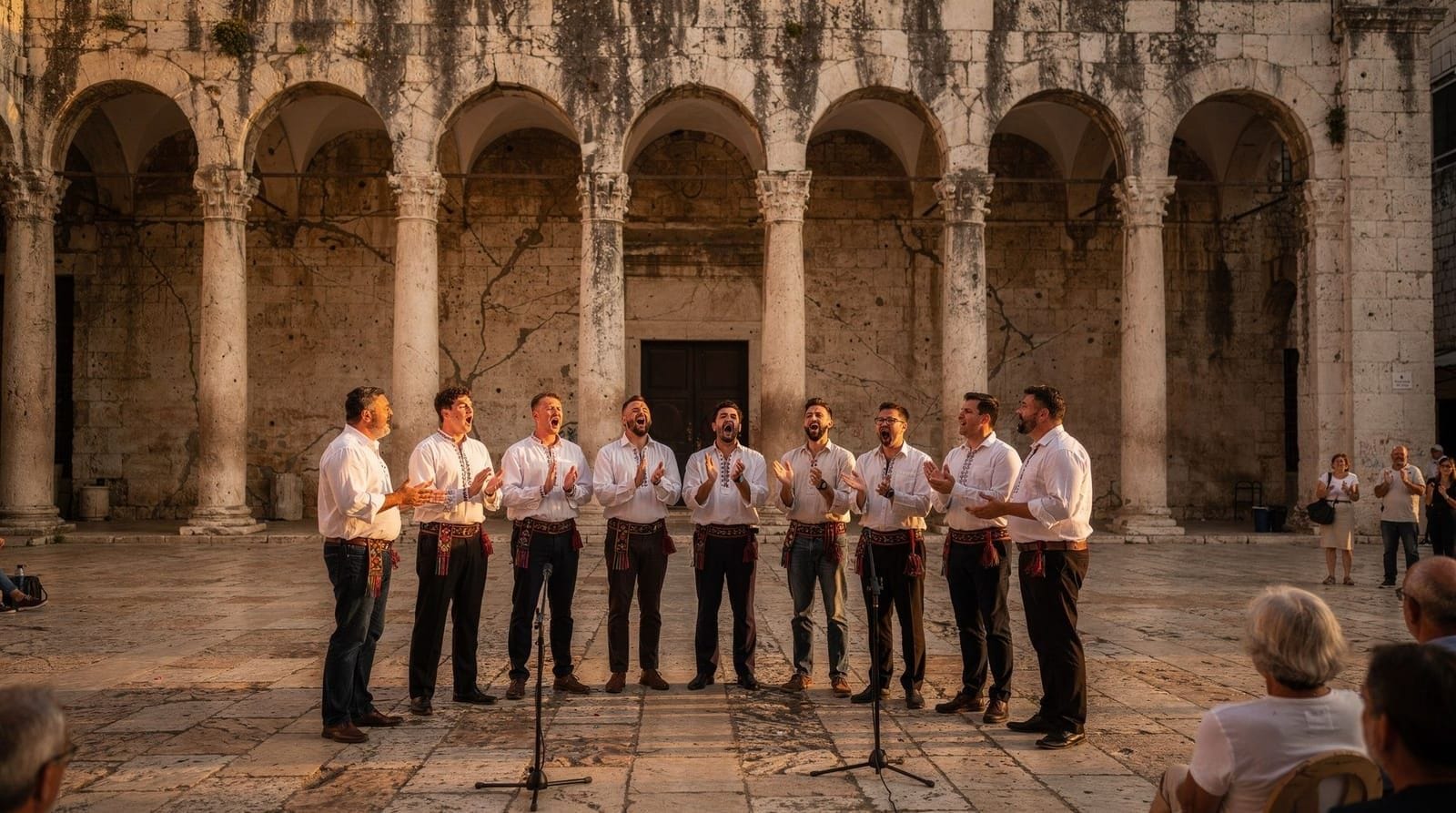
The klapska glazba — the Croatian tradition of male a cappella singing in close harmony — is one of the most distinctive cultural expressions of the Dalmatian coast. In 2012, UNESCO added it to its Representative List of the Intangible Cultural Heritage of Humanity.
A klapa is a group of male singers (traditionally 4–16 voices) performing without instruments in harmonies based on the natural Dalmatian musical scale. Themes are typically the sea, love, wine, the homeland, homesickness. Performances range from formal concerts to spontaneous evening singing in a konoba — it is a living tradition, not a folklorically preserved one.
The Omiš Klapa Festival (July) is the most significant competitive event; dozens of klapas from across the region compete. Hearing an informal klapa performance — a group of men singing at a table after dinner — is one of the genuinely memorable experiences of the Dalmatian coast.
Language and pride
Croatian (Hrvatski) is the first language of the vast majority of Croatia’s 3.9 million people. It is a South Slavic language, written in the Latin alphabet, closely related to Serbian and Bosnian. The distinction between “Croatian” and “Serbian” as separate languages is partly linguistic (some vocabulary differences, the Cyrillic vs. Latin script distinction, some phonological variation) and substantially political — the same spoken language was called “Serbo-Croatian” in Yugoslavia and is now officially three separate national languages.
Croatians are generally proud of their language and sensitive to its political dimension. Referring to Croatian as “Serbo-Croatian” to a Croatian interlocutor will produce a correction, politely or otherwise. English is spoken widely in the tourist zones — very widely along the coast among anyone under 50, and adequately in most service contexts in Zagreb.
Croatian uses diacritical marks — č, ć, š, ž, đ — that are important for correct pronunciation. Šibenik is “Shee-beh-nik”; Trogir is “Troh-gheer”; Hvar is “Hvar” (not “Huh-var”). Making the effort with diacritical pronunciation will be appreciated.
Rakija: the social lubricant
Rakija — a fruit brandy distilled from plums, grapes, quince, pears or other fruits — is the universal social drink of Croatia and the broader Balkans. It is drunk at all hours and all occasions: as a morning digestive, before a meal, after a meal, at celebrations, in mourning.
Croatian rakija production is mostly domestic — every village and many families have a still. Commercial brands exist (Pelinkovac, Vinjak, Maraska maraschino liqueur from Zadar) but the best rakija is usually homemade. Offering rakija to a guest is a gesture of hospitality; accepting is the socially expected response.
The strongest rakija (lozovača, distilled from grape marc) reaches 50–60% alcohol. Many local variants include added herbs, honey (medica) or other flavourings. Šljivovica (plum brandy) is the most internationally known variety.
Ties between community and place
Croatia has a strong tradition of zavičaj — attachment to one’s home village or town — that persists even through urbanisation. Dalmatians who have moved to Zagreb for work frequently return to the coast for August. Island communities maintain traditions and festivals even as permanent populations decline. Family names are often tied to specific villages; knowing someone’s surname can indicate geographical origin.
This place-attachment produces genuine local pride that can be useful for visitors — asking about a town’s specific specialities, local food traditions or local saints’ days will generally produce enthusiastic responses.
The coast in summer: mass tourism and its discontents
Croatia’s tourism industry has grown dramatically — from around 10 million arrivals per year in the 1990s to over 20 million by the mid-2020s. Dubrovnik, Hvar and Split in particular receive visitor numbers that are large relative to their resident populations.
The cultural relationship between Croatians and mass tourism is complex. Tourism money is significant for the economy; tourism-driven noise, congestion and price inflation is a genuine irritant for residents. In Dubrovnik, much of the old town has effectively become short-term rental accommodation with few permanent residents. Hvar Town in August is described by its own inhabitants in terms that resemble complaints about a festival that has overstayed its welcome.
Visiting in shoulder season (May–June, September–October) — when tourist numbers are lower and interactions with locals more genuine — produces a significantly different cultural experience than the July–August peak.
History behind the culture: why the regions differ
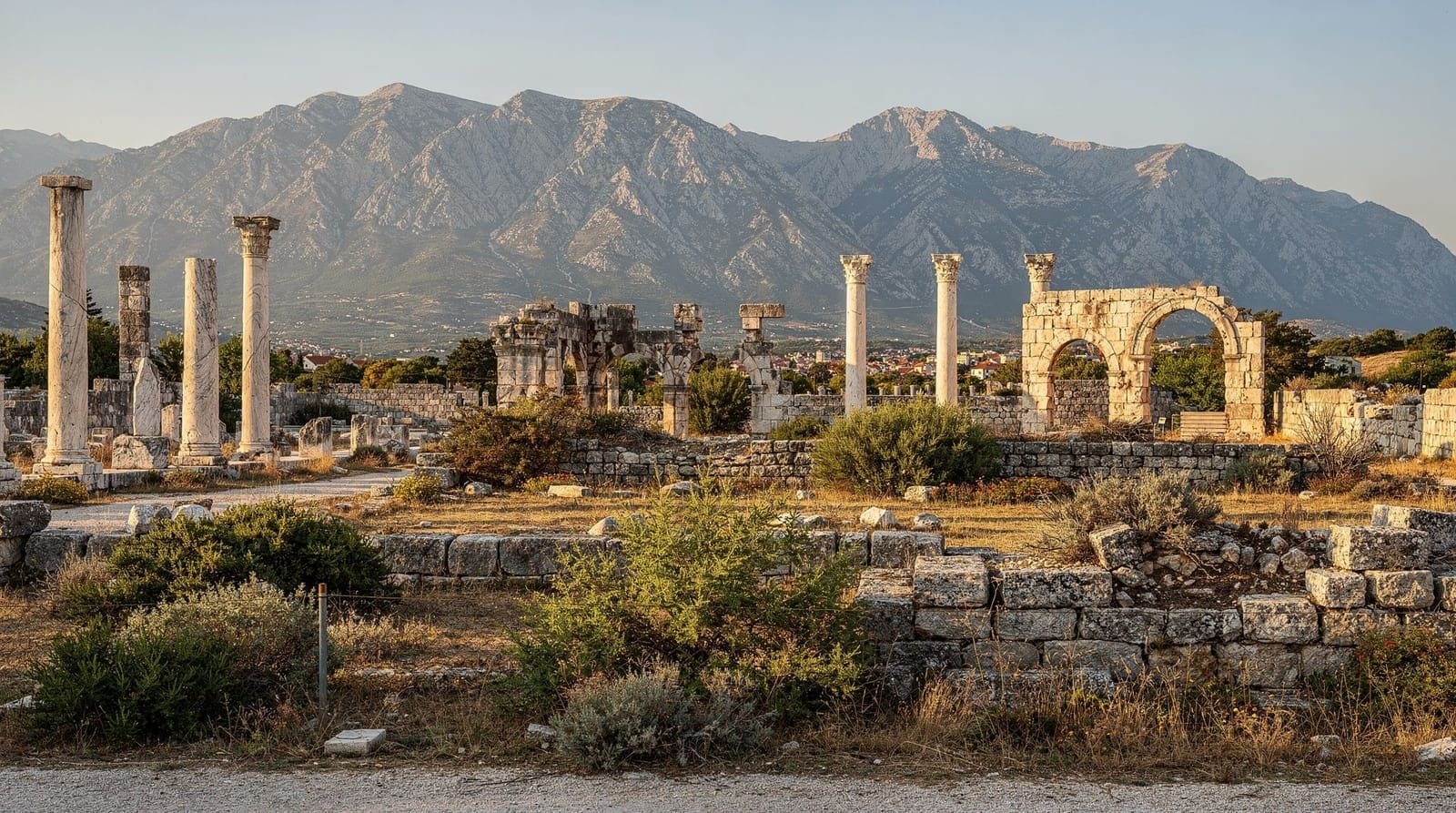
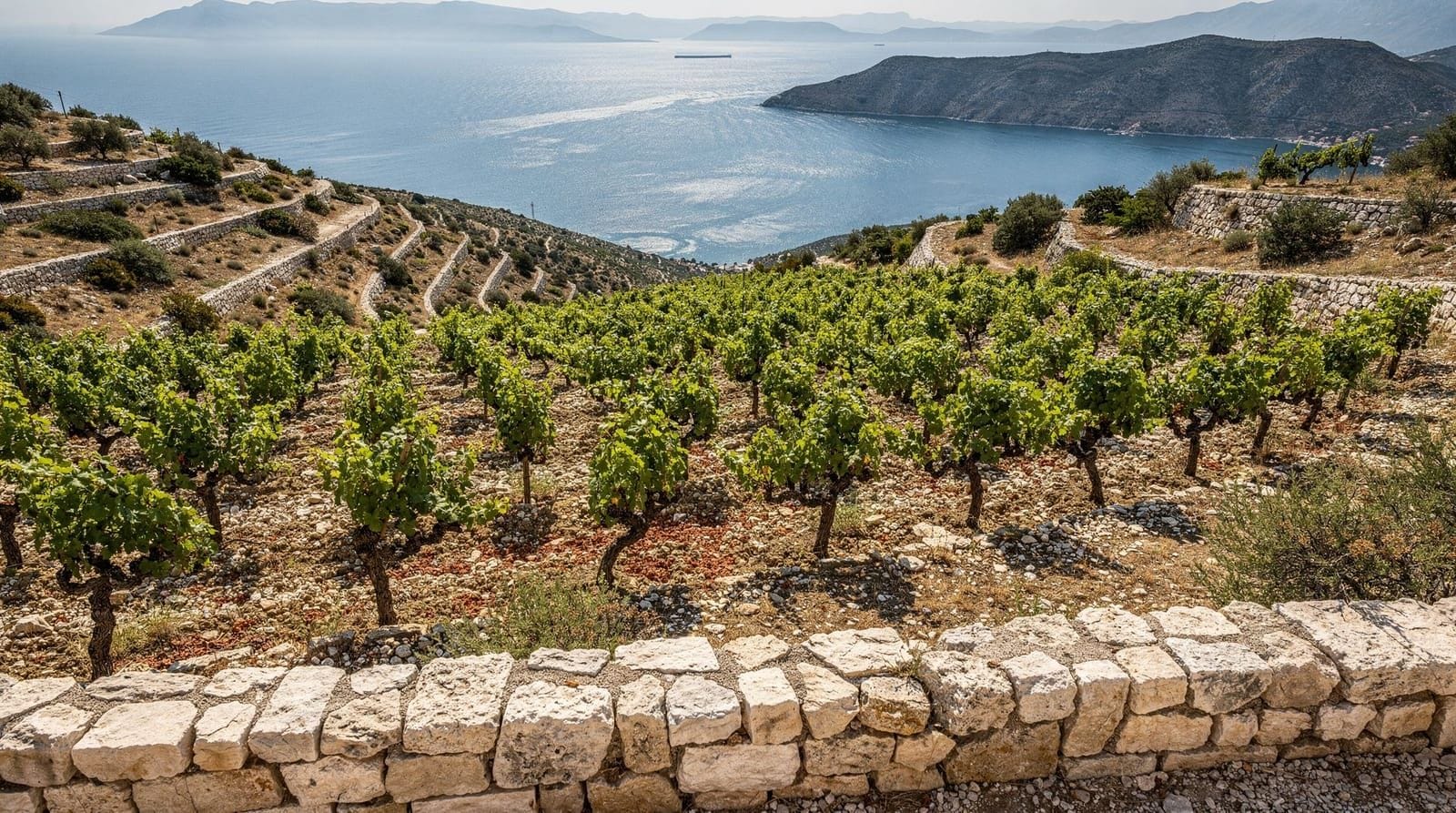
Understanding Croatia’s cultural patchwork requires a little history. The Dalmatian coast spent centuries under Venetian rule, which is why the architecture, the food, the espresso culture and even the local dialect carry unmistakable Italian influence in cities like Split, Dubrovnik and Zadar. Istria was Venetian and then Italian territory until 1947, which is why it feels culturally closer to northeastern Italy than to inland Croatia in food, wine and pace of life.
The interior — Zagreb, Zagorje, Slavonia — developed instead under Austro-Hungarian rule, absorbing Central European habits: the grand kavana, formal architecture, a more Germanic sense of punctuality and bureaucratic order. Slavonia in the far east carries additional layers from its proximity to Hungary and the Ottoman frontier, visible in its spicier, paprika-forward food tradition.
This layered history is why a single trip covering the coast and Zagreb can feel like visiting two related but distinct countries. Croatia history goes deeper into the political and historical background if this context interests you beyond the cultural surface.
Etiquette basics worth knowing before you arrive
Greetings: A handshake is standard on first meeting; among friends, a light cheek kiss (usually two, sometimes three) is common. Wait to be guided rather than assuming.
Dress in churches: Croatia’s churches — many of them working parish churches, not just tourist sites — expect covered shoulders and knees. This applies year-round, including on hot summer days when visitors are tempted to dress for the beach.
Visiting someone’s home: Bringing a small gift (a bottle of wine, chocolates, flowers) is the expected courtesy. Refusing offered food or rakija can register as a mild social misstep; a polite acceptance, even a small one, is the better move.
Tipping: Not obligatory, but rounding up 10% at sit-down restaurants is standard practice. See tipping in Croatia for the specifics by venue type.
For more on the practical side of a visit — money, language basics and common first-time mistakes — honest Croatia advice and money in Croatia cover the ground this cultural overview doesn’t.
Frequently asked questions about Croatian culture
What religion do Croatians follow?
Croatia is predominantly Roman Catholic — around 86% of the population identifies as Catholic. The Church plays a significant role in public life: religious holidays are national holidays, church attendance is higher than Western European averages, and religious symbols appear in schools, public buildings and hospitals. However, actual church attendance has been declining, particularly among younger urban Croatians.What is Croatian hospitality like?
Hospitality is taken seriously — the concept of offering food and drink to guests is culturally embedded, particularly in rural and coastal communities. Refusing offered food or drink can cause mild offence; accepting and expressing appreciation is the expected social script. In formal visits (particularly to someone's home), arriving with a small gift (wine, chocolate, pastry) is common.What are the main Croatian cultural traditions?
Key traditions include: klapska glazba (a cappella Dalmatian folk singing, UNESCO Intangible Heritage), the Sinjska alka (equestrian tournament in Sinj, also UNESCO-listed), the Moreška sword dance in Korčula, traditional lace-making on Hvar and Pag, and a strong oral poetry tradition in the interior. Croatian Catholic festival culture is significant: Advent in Zagreb, Easter in Dubrovnik.How important is football (soccer) to Croatians?
Extremely. Croatia's 2018 FIFA World Cup run to the final — losing narrowly to France — produced scenes of national celebration that older Croatians compare to Independence Day. The national team (Vatreni — the Fiery Ones) is a focal point of national identity. Club football (Dinamo Zagreb, Hajduk Split) is also passionately followed, with the Dinamo-Hajduk rivalry one of the most intense in Balkan football.What is the difference between Dalmatian and Zagreb culture?
Significant. Dalmatians tend to be more laid-back, more Mediterranean in rhythm — 'polako' (slowly) is a real cultural value. Zagreb and the interior are more Central European: punctual, formal, with a strong café culture but a different pace. Dalmatians sometimes joke that Zagreb is 'too serious'; Zágrebyans sometimes find Dalmatians 'unreliable with time'. Both are generalisations, but the cultural difference is real.What is Croatian coffee culture like?
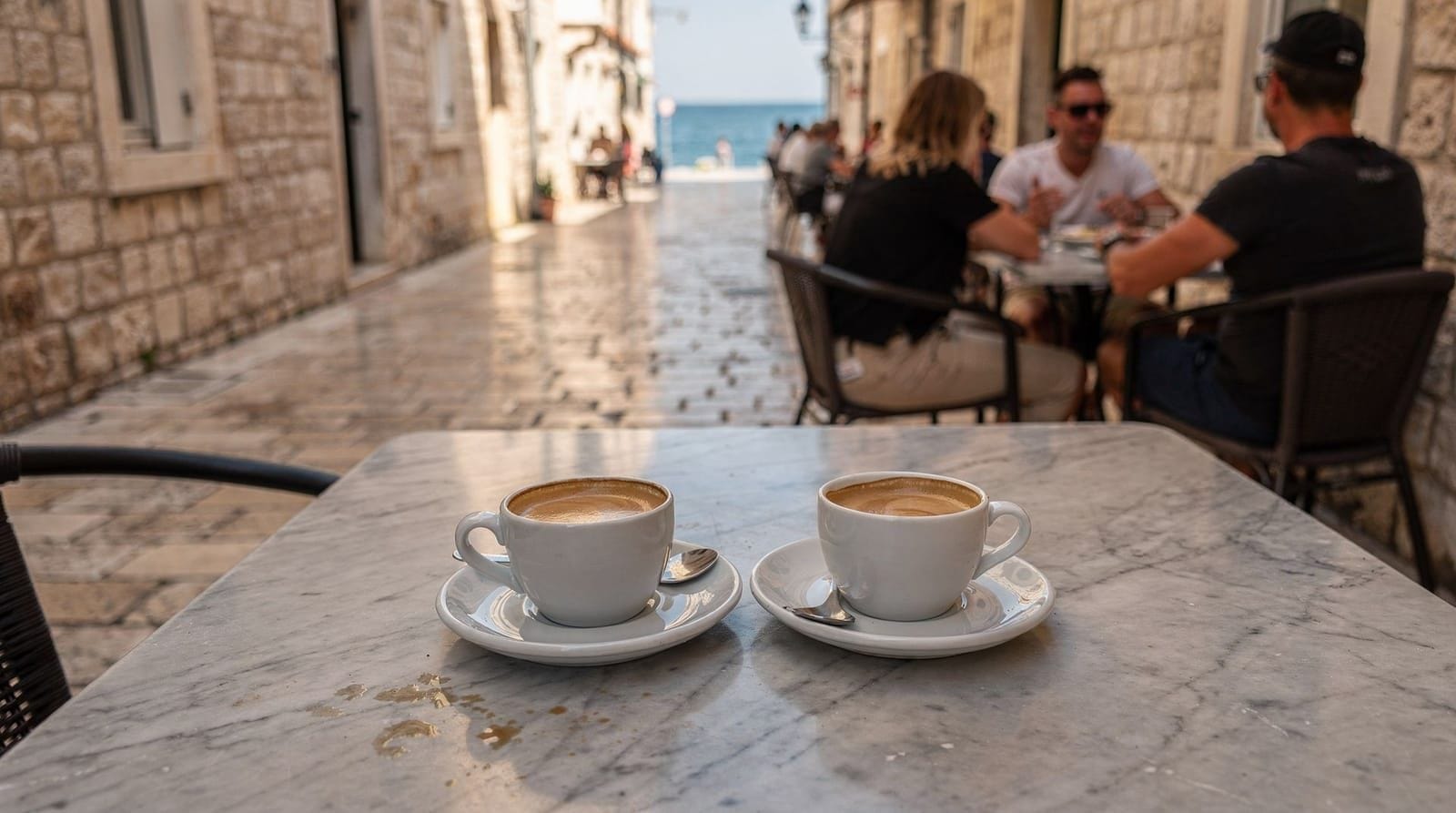
Coffee is central to Croatian social life, particularly on the coast. A morning kava (coffee) is not just a caffeine delivery mechanism — it is a social ritual. Sitting at a café for an hour over a single espresso is completely normal; being hurried along by a waiter is considered rude. The Croatian coffee break (pauza za kavu) during working hours is an institution. See our Croatian coffee culture guide.Is Croatia conservative or liberal?
Croatia occupies a moderate position by European standards, with strong regional variation. Zagreb is cosmopolitan and socially liberal; the Dalmatian coast is mixed; rural interiors and smaller towns are more socially conservative. The 2013 constitutional referendum defining marriage as exclusively between a man and a woman passed, but same-sex civil partnerships were recognised in 2014. Generational change is shifting attitudes, particularly in cities.
Top experiences
Bookable activities with verified prices and instant confirmation on GetYourGuide.
Top experiences
Best-rated activities across GetYourGuide and Viator.

From Zadar: Plitvice Lakes with Boat Ride & Zadar Old town tour
- Viator

3Hour ALL-INCLUSIVE Sunset Dolphin Watching from Medulin onSandra
- Viator

Dolphin Watching & Sunset Boat Tour With Drinks & optional Dinner
- Viator

Fantastic DOLPHIN & SUNSET TOUR with dinner ( Pula-NP BRIJUNI )
- Viator

Medulin :All-Inclusive Pirate Boat Dolphin Watching Sunset Cruise
- Viator

Zadar Highlights: Old Town, Sea Organ & Local Tastings
- Viator