Jadrolinija vs Krilo: Which Ferry Should You Choose?
Split: Blue cave and 5 islands tour
Should I take Jadrolinija or Krilo in Croatia?
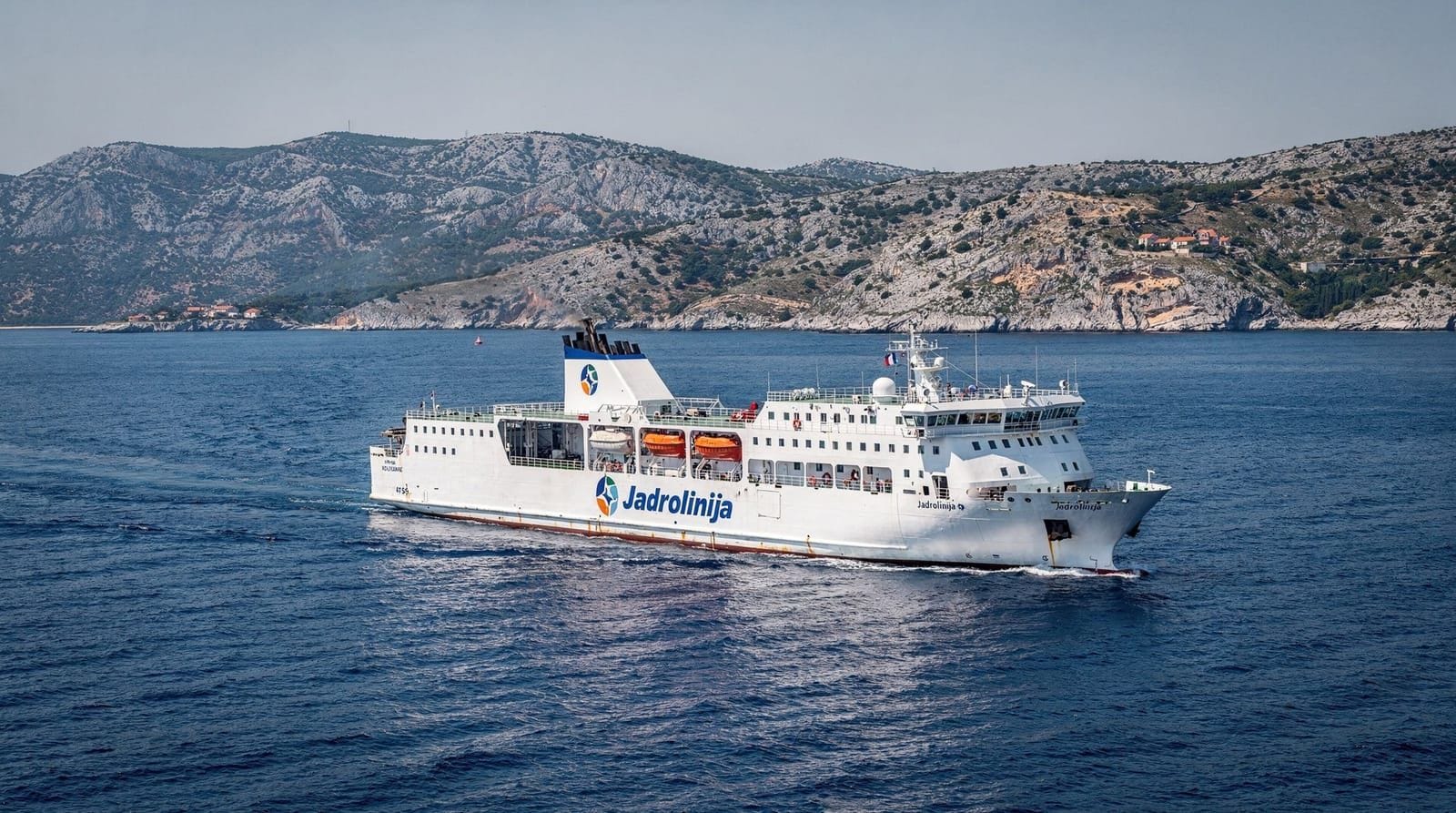
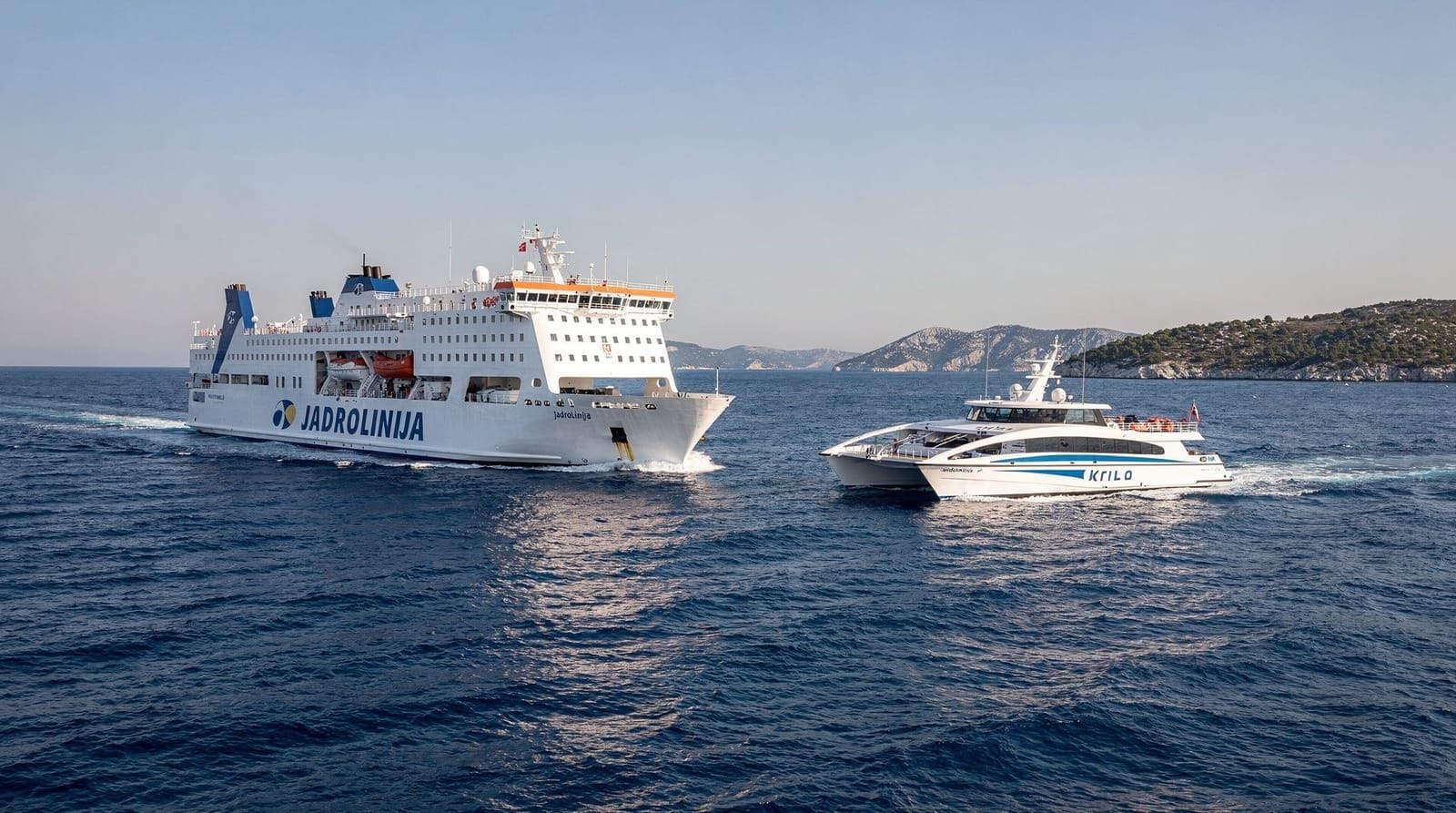
Jadrolinija is the national operator with the widest network, including car ferries and many catamarans. Krilo (also known as Kapetan Luka / KSC) runs fast passenger catamarans on key routes like Split–Hvar, Split–Korčula and Dubrovnik–Hvar. Both are reputable — choose based on timetable, departure port and whether you're travelling with a car.
For most visitors arriving in Split or Dubrovnik, choosing a ferry feels straightforward until the ticket-buying moment — suddenly there are two or three operators, different departure quays, different island stops and confusing timetable codes. This guide separates Jadrolinija and Krilo so you can make a clear, informed choice.
| Cars | Jadrolinija only (car ferries) |
| Foot passenger price | around €7–28 depending on route |
| Best for town-centre docking | Krilo (e.g. Hvar Town direct) |
| Winter service | Jadrolinija year-round; Krilo seasonal (May–Oct) |
| Booking | Days ahead in peak season; same-day off-peak |
Understanding the two operators
Jadrolinija is Croatia’s national maritime operator, founded in 1947 and majority state-owned. It runs the country’s broadest ferry network: car ferries, fast catamarans and the overnight coastal service. If you want to take a vehicle to the islands, Jadrolinija is your only option on most routes. The company is also the sole or main operator to smaller or less-visited islands. Think of it as the national rail equivalent — reliable, ubiquitous, occasionally dated in style.
Krilo (branded under the parent Kapetan Luka — KSC) is a private operator that entered the market to compete on the highest-demand catamaran corridors. Its vessels are modern, fast and foot-passenger only. Krilo has carved out a niche by serving Hvar Town directly (rather than the car-ferry port at Stari Grad, which is 20 km from Hvar Town by road) and by offering a Dubrovnik–Korčula–Hvar–Split service that competes head-to-head with Jadrolinija’s equivalent.
Route-by-route comparison
Split ↔ Hvar
This is the most important route to get right, because Hvar has two ports: Stari Grad (north coast, where car ferries dock) and Hvar Town (south coast, the lively harbour everyone wants to reach). They are connected by a 20-minute bus or a 35–40 minute drive.
| Jadrolinija car ferry | Jadrolinija catamaran | Krilo catamaran | |
|---|---|---|---|
| Destination port | Stari Grad | Hvar Town | Hvar Town |
| Journey time | ~1 h 40 min | ~50 min | ~50–60 min |
| Cars | Yes | No | No |
| Summer frequency | Up to 18/day | 3–4/day | 3–4/day |
| Foot-passenger price | ~€7 | ~€12 | ~€12 |
Verdict: If you have a car, take the Jadrolinija car ferry to Stari Grad. If you’re on foot and heading to Hvar Town, either Jadrolinija’s catamaran or Krilo drops you at the harbour — pick the best departure time.
Split ↔ Korčula
Jadrolinija runs fast catamarans from Split to Korčula Town (about 2.5–3 hours via Hvar). Krilo operates a competing catamaran on a broadly similar schedule. Both are foot-passenger only and priced comparably (around €22–€28).
Verdict: Check departure times on both and pick whichever fits your schedule. Krilo sometimes calls at fewer stops, making it marginally faster.
Dubrovnik ↔ Korčula / Hvar
Jadrolinija catamarans run northward from Dubrovnik to Korčula (~2 hours) and Hvar (~3.5 hours), continuing to Split. Krilo offers a competing service on the same corridor.
Verdict: If you’re doing the full Split to Dubrovnik journey by sea, compare both operators’ timetables for your travel date. Jadrolinija’s overnight car ferry is an additional option on this corridor.
Split ↔ Vis
Jadrolinija has the car-ferry monopoly. Fast catamarans from Jadrolinija also serve Vis. Krilo does not operate this route as of 2026.
Verdict: Jadrolinija, no contest.
Dubrovnik ↔ Elaphiti Islands
Jadrolinija only — short passenger ferries to Koločep, Lopud and Šipan from Dubrovnik’s Gruž port.
Comfort and experience
Both operators’ modern catamarans are air-conditioned, with indoor seating. Jadrolinija’s car ferries have more space, outdoor decks, and basic cafeterias. The experience aboard a Jadrolinija car ferry is more relaxed — you can walk around, watch the scenery from deck — while catamarans are faster but enclosed.
Older Jadrolinija catamarans can feel tired; newer Krilo vessels tend to have more comfortable seating. But the differences are minor for a 45–90 minute crossing.
When to book and how
Both operators sell tickets online. For Jadrolinija: use their official site or app. For Krilo: their website or Ferryhopper (which aggregates multiple operators). Car space reservations on Jadrolinija car ferries should be made days to a week ahead in July–August. Foot passengers can generally book a day or two before, or at the quayside in low season.
Top tip: If you’re travelling to Hvar Town specifically, always check whether the Jadrolinija or Krilo catamaran timetable works better — the car ferry to Stari Grad followed by a bus adds 45 minutes plus the waiting time for the bus.
What about TP-Line?
TP-Line (Trieste Passenger Line, not to be confused with the Italian company) operates a small number of catamaran routes in central Dalmatia, including Trogir–Hvar and some Split routes. It’s a smaller fleet with less frequency but worth checking on aggregator sites if you’re departing from Trogir or need an off-peak option.
The honest verdict
For most island-hopping itineraries in Dalmatia, you’ll use both operators — Jadrolinija for car transport and some catamarans, Krilo when its timing or port location suits better. There is no meaningful quality gap between the two for foot passengers; it comes down to departure time and destination port. The biggest mistake travellers make is not checking which port an operator uses — particularly on Hvar, where the car-ferry port and the catamaran port are on opposite sides of the island.
For an organised introduction to the central Dalmatian islands without managing individual ferry tickets, the Blue Cave and 5 Islands tour from Split visits multiple islands in a day with no ferry logistics to handle. This is also a useful option for anyone nervous about missing a scheduled crossing on their own — the tour boat waits for its own passengers rather than running to a fixed public timetable you have to chase.
Timetables in practice: how to read them
Croatian ferry timetables use a notation system worth understanding before you try to navigate them on a phone screen in a busy ferry terminal.
Jadrolinija timetable symbols:
- 1234567 below a time = which days the service operates (1=Monday through 7=Sunday)
- + = summer schedule only (typically June–September)
- B = bus connection available at destination
- H = high-season additional sailing
The key mistake is confusing which schedule period is active. Jadrolinija publishes separate winter and summer timetables; the switchover happens in late May/early June and mid-September. If you’re travelling in May or October, use the transitional timetable — not the peak summer one — or you’ll find services running on different frequencies.
Krilo publishes simpler timetables on their website, typically showing the season (summer/spring/autumn) with day-by-day schedules. Their routes change less frequently than Jadrolinija’s complex network.
Ferryhopper and third-party booking platforms
Several aggregator platforms bring Croatian ferry operators together:
Ferryhopper.com is the most useful — it covers Jadrolinija, Krilo, TP-Line and some smaller operators in a single search. The interface is clear, available in English, and lets you filter by date, operator and vessel type.
Direct operator sites are worth checking alongside Ferryhopper for price and availability accuracy, particularly close to the travel date when availability data may lag. Jadrolinija’s site is comprehensive; Krilo’s is clean and functional.
Note: Some aggregator sites resell tickets with a commission markup. Buying direct from the operator’s site is usually the same price or occasionally cheaper. Ferryhopper typically does not add a surcharge for most routes.
Accessibility aboard Croatian ferries
Jadrolinija’s newer car ferries have dedicated ramps and accessible toilets. The Kornat and Petar Hektorović class vessels (used on main routes like Split–Hvar) have wheelchair-accessible gangways and deck areas.
Catamarans from all operators are more challenging for wheelchair users — the boarding gangways are narrower, and interior spaces are tighter. Contact Jadrolinija’s accessibility service or Krilo directly before travel to confirm the specific vessel on your route.
What happens when the weather is bad?
Croatia’s Adriatic is generally calm, but the bura (a violent cold northeasterly wind) and jugo (a warm southerly) can make sea conditions difficult or dangerous. Wind strengths above Beaufort 7–8 typically see catamarans cancelled; conventional car ferries operate to higher wind speeds.
In practice, bura events that cancel services are most common from October to March. Summer storms are shorter but can briefly disrupt schedules. If your catamaran is cancelled, Jadrolinija will usually offer priority rebooking on the next available sailing or, where a car ferry runs the same route, a transfer to that vessel.
For travellers in a hurry: Build weather flexibility into your island-hopping schedule. A one-night buffer before a critical departure (flight, wedding, departure) is sound planning. The southern Adriatic in August is 90% fine but not 100%.
Group bookings and large parties
For groups of 10 or more, Jadrolinija accepts group reservations with a discount on passenger tickets (typically 10–15% for organised groups). Contact their group booking service in advance; peak-season availability for group reservations may still be tight. Krilo does not have a formal group booking programme as of 2026.
Private boat hire — from speedboats to traditional wooden boats (barkajoli) — is an alternative to scheduled ferries for groups who want flexibility and exclusivity. Private transfers between islands can often be arranged for comparable cost per person to the catamaran for groups of 6+. The private Hvar, five islands and Blue Cave tour from Split is one such option — a fully private vessel with flexible timing and stops.
The Jadrolinija loyalty programme
Jadrolinija operates a loyalty card (Jadrolinija Club) for frequent travellers — primarily used by islanders and Croatian residents. Tourist visitors on a 2-week holiday will not benefit significantly; the programme is structured for multiple annual crossings. Worth knowing it exists but not worth prioritising for a typical tourist visit.
Carrying luggage between ferries
One practical aspect of island hopping often overlooked: managing your bags on and off multiple ferries. There are no luggage storage facilities on most Croatian island ferry ports. In Split, luggage storage is available at the ferry terminal and at the bus station.
Best practice: pack a day bag with everything you need for the island visit, and leave your main luggage stored in Split (or at your mainland accommodation). This makes island hopping much easier — no lugging a 20 kg suitcase up Hvar Town’s cobblestones or through Korčula’s narrow gate.
Hidden costs
Vehicle height and length: Car ferry charges depend on vehicle category. A standard car (up to 4.9 m) pays one rate; longer vehicles pay more. Check your vehicle’s length before booking if you’re in a large family car, van or are towing a trailer.
Cabin supplements: On the overnight Split–Dubrovnik coastal ferry, a cabin significantly increases the cost (€30–€80 per cabin per night depending on class). A reclining-seat ticket is much cheaper but sleep quality is limited.
No-show policy: If you’ve booked a car space and don’t show up, you typically lose the ticket. Foot-passenger tickets are more flexible — some allow date changes for a fee.
Planning a multi-island catamaran itinerary
Using both Jadrolinija and Krilo strategically across a week of island hopping takes some planning but unlocks the best of each operator. Here is a practical example:
Day 1: Split → Hvar Town by Krilo catamaran (morning departure, drops you at the harbour) Day 2–3: Hvar — explore Pakleni Islands by water taxi, old town at night Day 4: Hvar → Korčula by Jadrolinija catamaran (mid-morning departure via island chain) Day 5–6: Korčula — wine villages of Postup on the Pelješac ferry, Marco Polo legend Day 7: Korčula → Dubrovnik by Jadrolinija coastal catamaran (morning departure, arrives Gruž afternoon)
In this itinerary, Krilo handles the Split–Hvar leg (best timing, town-centre drop), Jadrolinija handles the middle and final legs (only operator on these routes). Mix and match based on timetables for your travel dates. The same logic applies in reverse if you’re starting from Dubrovnik and heading north — check both operators’ schedules for each leg rather than committing to one company for the whole trip.
Seasonal differences in operator coverage
The comparison between Jadrolinija and Krilo changes significantly by season:
May and October (shoulder season): Krilo reduces or suspends most services. Jadrolinija continues on a reduced timetable — still daily on main routes, but less frequent. If travelling in shoulder season, Jadrolinija is your primary (often only) option on most routes.
June and September (early/late high season): Krilo begins operating again from June; timetables increase in frequency through the season. Both operators are active, giving you the best combination of timetable choice.
July and August (peak): Maximum frequency from both. Competition is most active; prices on Krilo and Jadrolinija catamarans are equivalent. The key differentiator becomes timetable fit and which port suits your start/end point.
November–March (winter): Krilo does not operate in winter. All passenger ferry traffic is Jadrolinija. Car ferries maintain essential services; fast catamarans are reduced to skeleton timetables. Island hopping in winter is possible but requires significant flexibility.
The digital tools for planning ferry travel
Jadrolinija app: Official app for timetable browsing and ticket purchase. Available on iOS and Android. Useful for checking schedules and buying tickets in advance; the QR code ticket works offline once downloaded.
Ferryhopper: Web platform comparing operators across Croatia, Greece, Italy and the Adriatic. Particularly useful for seeing all options on a route simultaneously rather than checking each operator’s site separately.
Google Maps: Partially useful — shows some ferry routes but not all operators or all departure times. Jadrolinija integration is incomplete. Use Google Maps for navigation in cities but operator websites or Ferryhopper for ferry timetables.
Offline screenshot: Download a screenshot of the week’s timetable for your specific route before arriving. Ferry terminals on smaller islands often have poor or expensive mobile data.
What about sailing and private boats?
Both Jadrolinija and Krilo operate scheduled services on fixed routes. But Croatia also has a thriving private sailing and charter boat market — particularly from Split and Dubrovnik — that provides a completely different way to reach the islands.
Private speedboat and wooden boat operators offer island-hopping trips from Split’s harbour for €50–€150 per person per day depending on group size and destinations. These are not licensed ferry services — they are tourist excursion boats operating under day-trip regulations. They reach coves and beaches inaccessible to catamarans, anchor in the Pakleni Islands lagoons for swimming, and generally provide a more immersive experience.
If your goal is to reach a specific inhabited island (Hvar, Korčula, Vis) and stay there, use the scheduled ferry or catamaran. If your goal is a day spent exploring the archipelago by sea with flexible stops, consider a private boat tour.
Safety aboard Croatian ferries and catamarans
Croatian maritime operators are regulated by the Ministry of Maritime Affairs, Transport and Infrastructure and the Croatian Register of Shipping. Life jackets are carried aboard all vessels; emergency procedures comply with EU and international maritime standards.
Sea sickness: The Adriatic inside the island chain is generally calm. Open-water sections (Split–Vis direct route, or the stretch south of Mljet approaching Dubrovnik) can be rougher in sustained southerly winds. Krilo’s catamarans, being lighter, feel the swell more than Jadrolinija’s heavier vessels. Sea-sickness medication (meclizine, dimenhydrinate) is available at Croatian pharmacies; take it 30 minutes before boarding if you’re prone to motion sickness.
Lifejackets for children: The ship’s crew will direct passengers to lifejacket storage locations at embarkation. Children’s lifejackets are stowed separately — ask a crew member if you cannot locate one.
Which operator for your itinerary
If you’re planning a specific route rather than researching the operators in the abstract, work backward from the itinerary. The island hopping in Croatia guide and the Croatia ferries guide both map out full week-long routes and note which legs favour Jadrolinija versus Krilo. For a bringing-a-car decision specifically, the ferry vs catamaran comparison covers the broader trade-off beyond just these two operators. And if your route includes Hvar, Brač or Korčula as a comparison rather than a fixed plan, the Hvar vs Brač vs Korčula guide helps decide how many nights each deserves before you start booking individual crossings.
Frequently asked questions about Jadrolinija vs Krilo
Does Krilo carry cars?
No. Krilo catamarans are foot-passenger only. If you need to take a car to the islands, use Jadrolinija's roll-on/roll-off car ferries.Is Krilo faster than Jadrolinija?
On routes where both operate catamarans, journey times are similar. Krilo sometimes docks closer to town centres (e.g. Hvar Town) while Jadrolinija car ferries go to the larger port at Stari Grad — this difference in destination port matters more than raw speed.Are Krilo tickets more expensive than Jadrolinija?
Prices are comparable on overlapping routes. Krilo's convenience (town-centre docking) can justify any small premium for foot passengers. Jadrolinija car spaces are the only option for vehicles.Can I book Krilo tickets online?
Yes, through Krilo's official website or aggregators like Ferryhopper. Book ahead in July–August especially from popular departure points.What is TP-Line?
TP-Line is another private catamaran operator running a handful of routes, particularly Trogir–Hvar and Split–Brač. Less well known than Krilo but worth checking as a third option on some itineraries.Which operator runs the Split–Dubrovnik coastal catamaran?
Jadrolinija operates the daytime coastal catamaran linking Split, Hvar, Korčula, Mljet and Dubrovnik. Krilo has a competing Dubrovnik–Split service via different island stops — check both timetables.Do both operators run year-round?
Jadrolinija runs most routes year-round (with winter reductions). Krilo operates a seasonal schedule concentrated on May through October.
Top experiences
Bookable activities with verified prices and instant confirmation on GetYourGuide.
Top experiences
Best-rated activities across GetYourGuide and Viator.

Mostar and Herzegovina Tour with Kravica Waterfall from Split & Trogir
- Viator

Mostar & Kravice waterfalls full-day guided tour from Split
- Viator

Split airport to Split Private transfer to 8 pax (Door to Door any location)
- Viator

Zagreb to Split Group Transfer with Plitvice Lakes guided Tour
- Viator

Zadar: Zrmanja River Kayaking, with optional transfer from Zadar
- Viator

Mostar and Kravica Waterfall Discovery Day Trip from Split or Trogir
- Viator