Istria Truffle Hunt: Private Experience vs Group Tour — Which to Book
Motovun: Truffle hunting private experience in Istria
What actually happens in an Istrian truffle forest
Istria produces some of the finest truffles in the world. The claim is not marketing copy — the white truffle found in the oak and hornbeam forests around Motovun belongs to the same species as the prized tartufo bianco of Alba, and in favourable conditions the local harvest matches it in quality. The difference is that Istria remains comparatively undiscovered as a truffle destination, which means the tours here are more intimate, the prices more reasonable, and the landscape far prettier to walk through.
| Where | Motovun forest, Mirna river valley, Istria |
| Cost | Around €80–200/person depending on format and season |
| Time needed | 3–5 hours; longer from Zagreb |
| Getting there | Best based in Rovinj, Pula or Poreč; car needed from elsewhere |
| Best time | October–November for white truffle peak season |
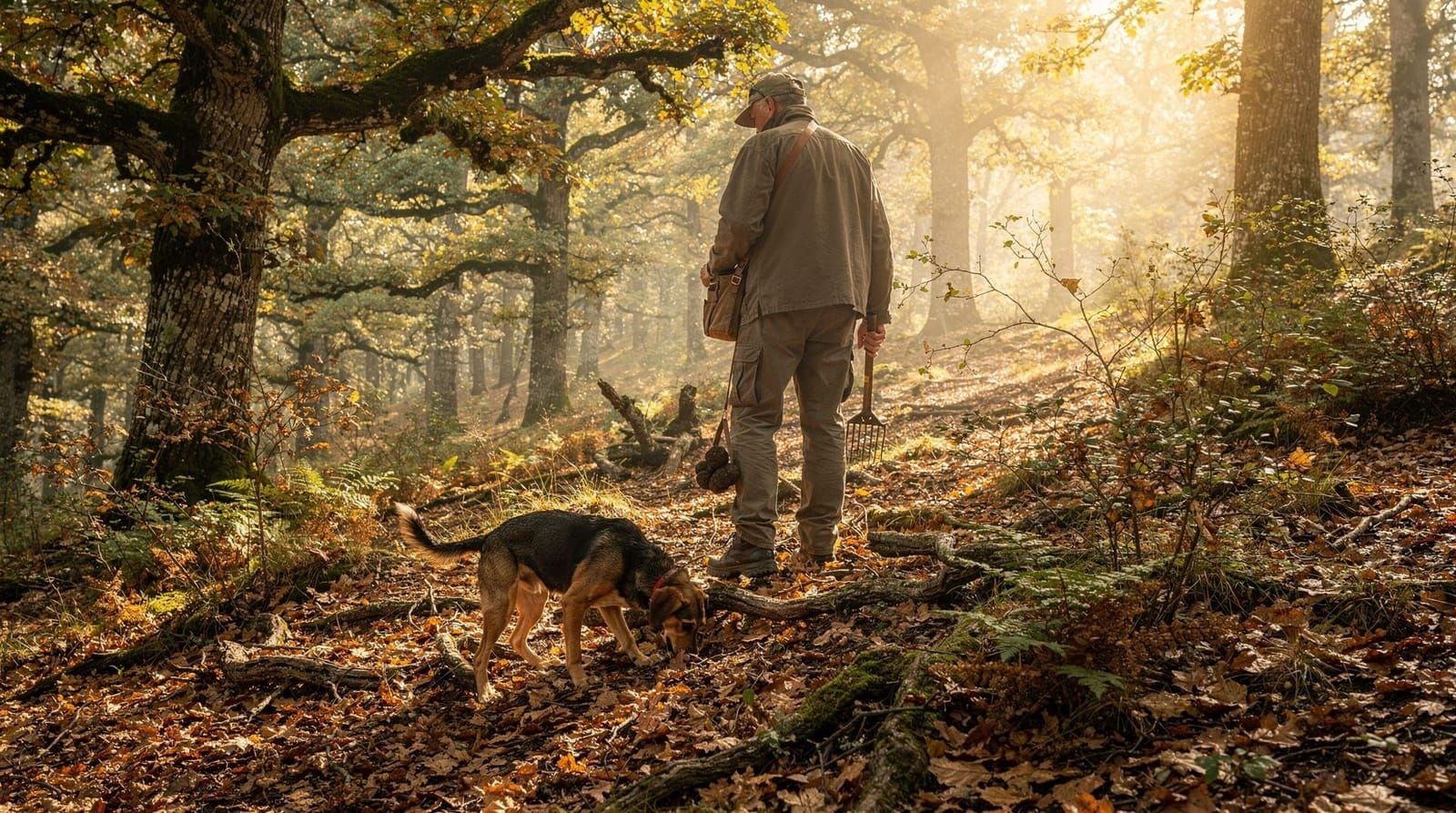
Truffle hunting in Istria is done entirely by dogs — specifically the Lagotto Romagnolo, a curly-haired Italian breed bred for this single purpose for centuries. Pigs were the traditional hunting partner across Europe, but dogs replaced them decades ago because they can be trained not to eat what they find. A well-trained Lagotto works its nose close to the ground, zigzagging through leaf litter and tree roots, and indicates a find by pawing at the soil. The hunter then takes over with a small pick, extracts the truffle carefully, and gives the dog a treat. The whole sequence takes seconds, and watching an experienced dog-hunter team work a familiar stretch of forest is one of those experiences that is genuinely difficult to replicate elsewhere.
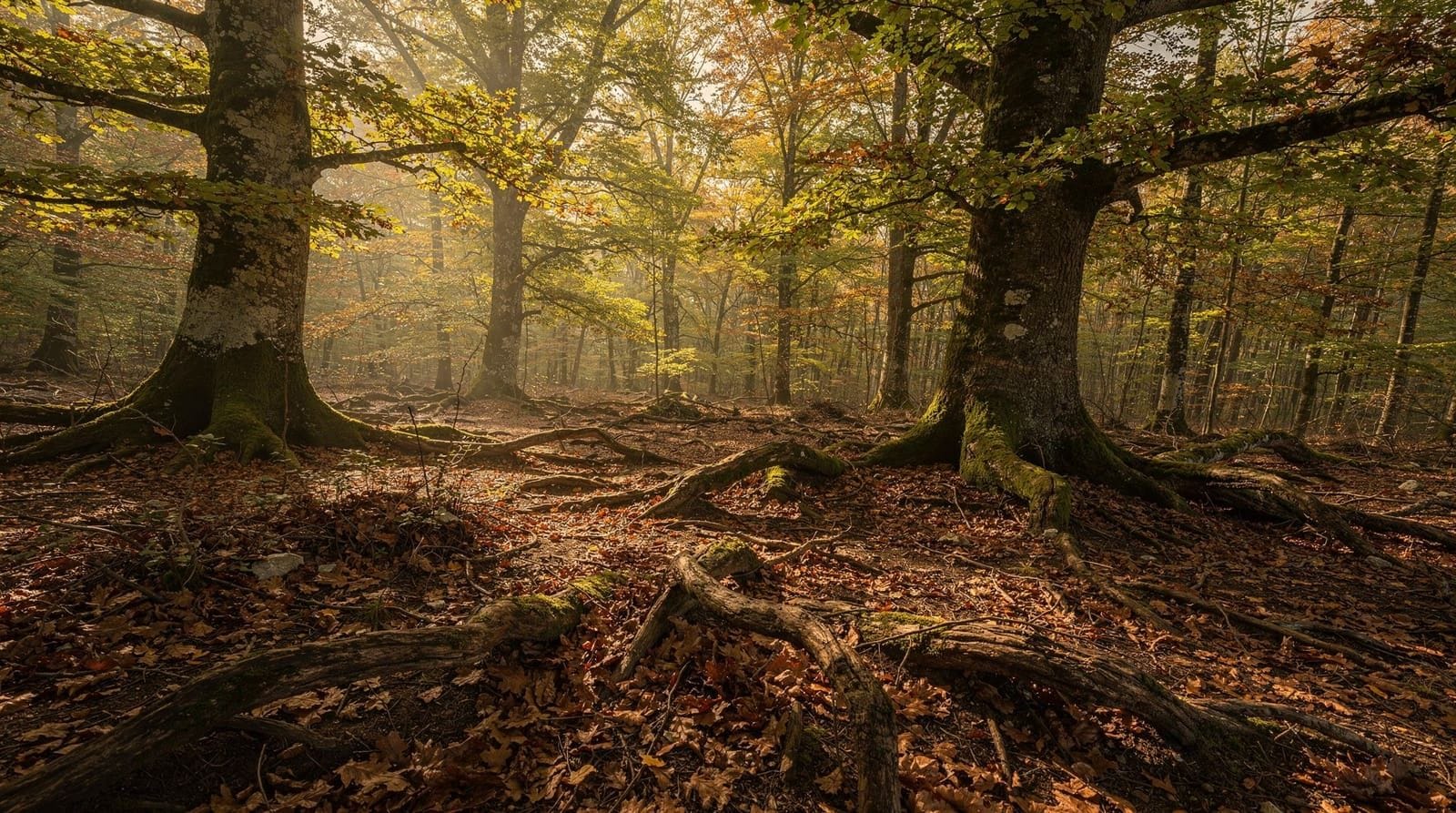
The Motovun forest — a stretch of lowland oak woodland along the Mirna river valley below the hilltop town — is the heartland of Istranian truffle hunting. It is protected, managed, and privately held in parcels by local families who have worked the same ground for generations. Access for visitors is granted through licensed operators, which is why booking an organised experience is the only realistic option unless you have local contacts.
For broader context on the region and how to structure your time around a hunt, the guide to Istrian truffles covers the culinary side in depth, and the truffle season in Istria post breaks down exactly what to expect month by month.
The two truffle species and why the calendar matters
Understanding the difference between white and black truffles is not just a matter of gastronomy — it determines which dates make sense to book.
White truffles (Tuber magnatum pico) are the rarer and more expensive of the two. In Istria, the season runs from late September through December, with the heart of it in October and November. These are the truffles that cost thousands of euros per kilogram, that perfume an entire room when cut open, and that are used raw — shaved directly onto pasta, eggs, or risotto. If white truffles are your specific goal, your booking window is clear. Come in October or November and the dogs will find them reliably. Come in July and you are hunting a different species entirely.
Black truffles (Tuber melanosporum and related varieties) are present year-round in Istria, with peaks in winter and early spring. They are aromatic, excellent in cooking, and significantly more accessible in price. A year-round truffle hunt centred on black truffles is still a genuine, worthwhile experience — just manage expectations accordingly if you were imagining the white variety.
Reputable operators are transparent about this. Any tour that promises “fresh white truffles” in August should be questioned. The best operators explain clearly what species is in season, describe likely yield honestly, and frame the experience around the forest, the dogs, and the tasting rather than guaranteeing a specific harvest weight.
Comparing the main tour formats
Private truffle hunting experience in Motovun
The private experience based around Motovun is the baseline for this comparison. A local truffle hunter — typically from a family that has worked the Mirna valley for generations — meets your group at a designated forest access point, introduces you to the dogs, and leads a one-to-three hour hunt through the woodland. Group sizes are kept small (typically two to eight people) and the entire session is structured around your pace and curiosity.
What this format delivers that group tours cannot: time. Time with the dogs, time to ask questions, time to watch the hunter work without a crowd, and time to simply be in a quiet forest in one of Europe’s most beautiful food regions. The tasting that follows — typically at the hunter’s farmhouse or a local agriturismo — involves fresh truffle preparations rather than pre-packaged products. If the hunt was productive, you may see a fresh white truffle shaved at the table in real time.
Book the private Motovun truffle experienceDuration is typically three to five hours total. Prices start around €120–160 per person and can reach €200+ in peak white truffle season. For two people, the cost is meaningful but not extravagant by comparison to similar experiences in Périgord or Umbria.
Group hunt with cooking class (Gazon Istria)
Gazon’s group truffle hunting and cooking class is the most structured option available, and for visitors who want an educational throughline — from forest to kitchen — it is a genuinely well-conceived format. The experience begins with a forest hunt using trained dogs, then transitions to a farmhouse kitchen where a local cook walks participants through preparing truffle-forward dishes: pasta, typically, and one or two other preparations depending on the day.
The group format means you will share the experience with other travellers — usually between six and twelve people — which changes the dynamic in the forest considerably. Dogs work effectively regardless of group size, but the intimacy of a private hunt is absent. The cooking class compensates by offering structured engagement and a sense of progression from harvest to table that a pure tasting cannot replicate.
Price point is lower than the private experience: roughly €80–120 per person depending on season. For solo travellers or couples on a tighter budget who still want genuine hands-on engagement, this is the most sensible option on the comparison list.
Hunt with 3-course tasting menu (Paladini)
The Paladini format is the most food-centric of the group. The truffle hunt itself is genuine — dogs, forest, proper extraction — but the centerpiece is a three-course meal that showcases truffle across multiple preparations. This is not a buffet of truffle products or a truffle-oil drizzle on mediocre pasta. Paladini has built a reputation for cooking that treats the truffle as an ingredient rather than a garnish, and the meal reflects that.
For visitors whose primary motivation is eating exceptionally well rather than learning the hunting craft, this is the strongest option. The hunt becomes context for the table rather than the point in itself. Duration is typically four to five hours including the meal. Prices sit around €100–150 per person, which represents reasonable value given the quality of the food.
See the Paladini truffle hunt and tasting menuGroup tour from Zagreb combining Pula and Motovun
This is a different category of tour altogether. Departing Zagreb, it combines a visit to Pula — specifically the Roman amphitheatre, one of the best-preserved in the world — with an afternoon truffle hunt near Motovun. On paper, it solves the problem of reaching Istria from Zagreb without a rental car. In practice, the logistics are demanding.
Zagreb to Istria is approximately 3.5 to 4 hours each way. A full day that includes Pula’s amphitheatre, a drive to the Motovun area, a truffle hunt, and a return to Zagreb is genuinely long — plan for 14 hours door to door. The truffle hunting component is compressed compared to a dedicated local tour. The driving is significant.
The calculus is straightforward: if you are already based in Istria — in Rovinj, Pula, or Poreč — there is no logical reason to take this tour. Book locally and gain several hours. If you are stuck in Zagreb with one day available and want to experience both Istria and truffles simultaneously, this tour makes that day possible.
Truffle season calendar at a glance
| Month | Species available | Harvest quality |
|---|---|---|
| January–March | Black (peak) | Good to excellent |
| April–June | Black (lower yield) | Modest |
| July–August | Black only | Low |
| September | Black + early white | Building |
| October–November | White (peak) + Black | Excellent |
| December | White (late season) + Black | Good |
The single most important booking decision you can make is timing. If you are travelling in October or November specifically to hunt white truffles, every tour format on this list will deliver. If you are visiting in July and expecting the same experience, adjust your expectations before arrival.
The Zigante benchmark and what to eat on your own
No guide to Istrian truffle hunting is complete without mentioning Zigante restaurant in Livade, a short drive below Motovun. It sits on the site where the largest white truffle ever recorded — 1.31 kilograms, found in 1999 — was unearthed by Giancarlo Zigante and his dog Diana. The restaurant built around that discovery is not a tourist trap: the pasta with fresh truffle, the truffle-cured prosciutto, and the truffle-laced cheese board are legitimate benchmarks for what the ingredient can do at its best.
Eating at Zigante before or after your tour is worth building into the day. It calibrates your palate for what quality truffle preparation actually tastes like, which makes the tasting component of whichever tour you choose considerably more meaningful.
For wine to accompany the experience, Istrian Malvazija is the local answer — a dry white with enough body and aromatic presence to hold up to truffle without competing with it. The Croatian food guide has a broader introduction to Istrian cuisine for anyone planning meals around the hunt.
Combining a truffle hunt with the rest of Istria
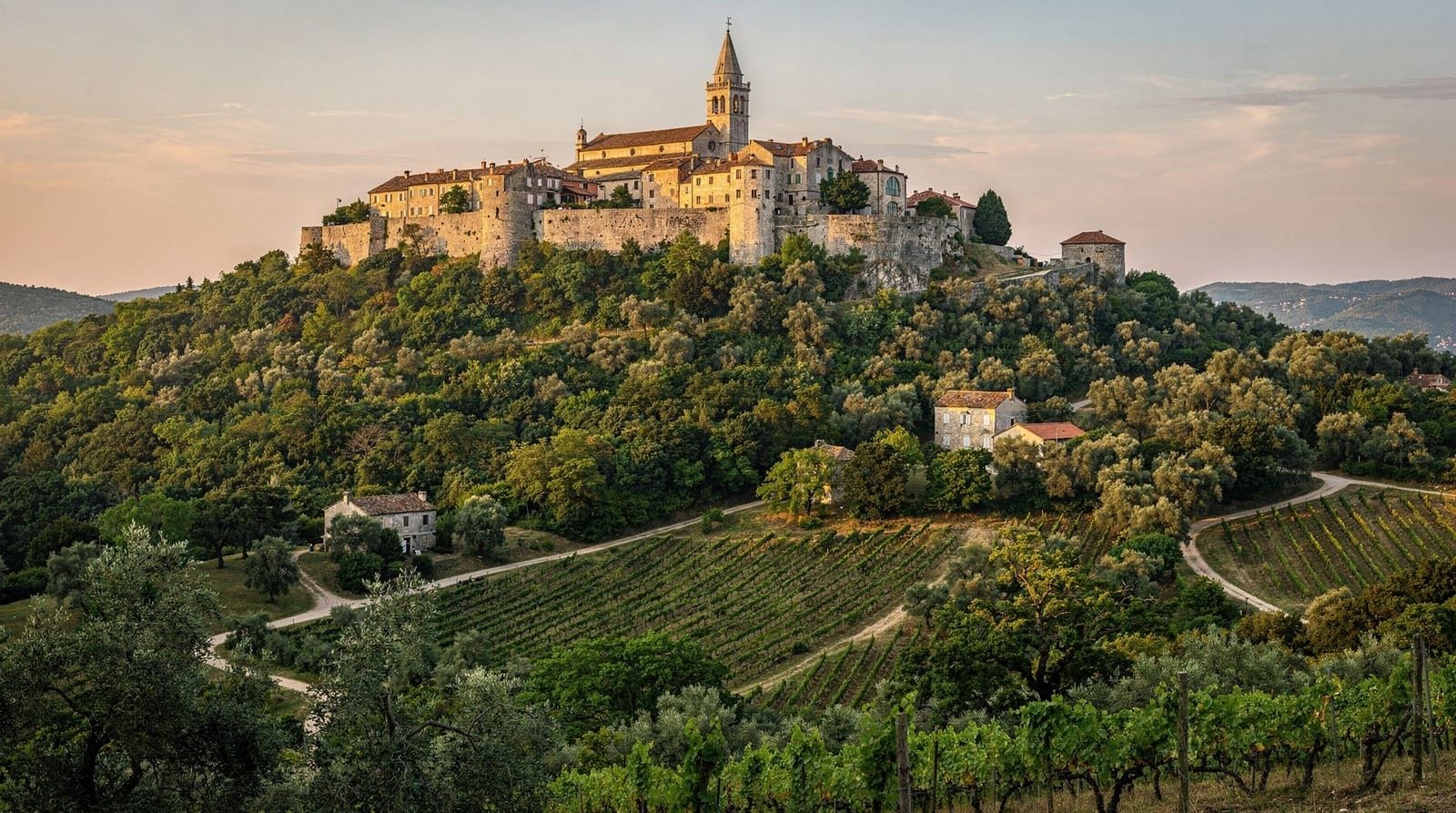
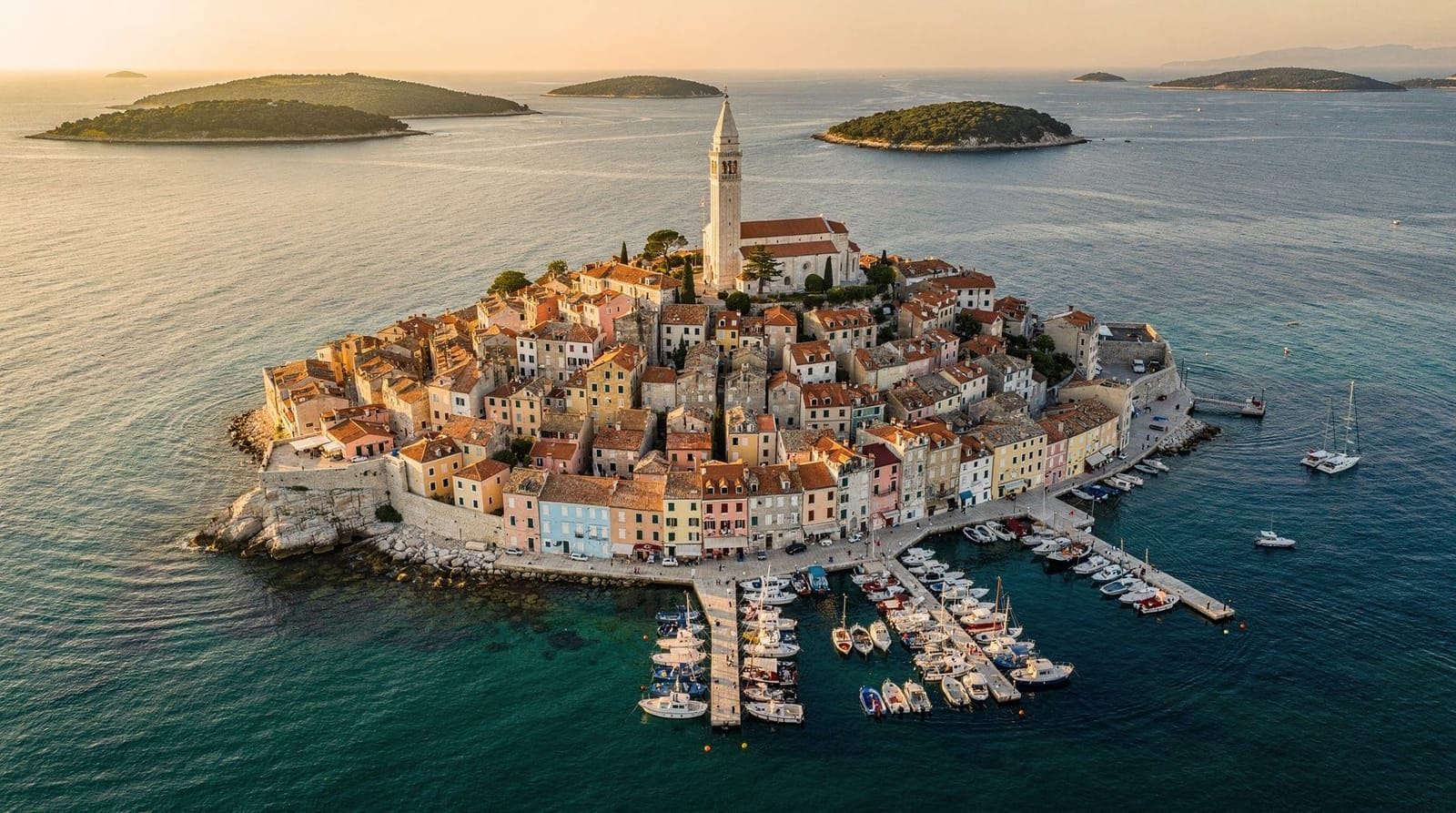
Truffle hunting works best as part of a two-to-three day Istrian stay rather than a standalone day trip from Split or Dubrovnik. The region rewards slower travel. Motovun itself — a walled medieval town on a steep hill, accessible by a road that climbs in tight switchbacks — deserves at least an afternoon. Rovinj, the most photogenic coastal town in Istria, is 45 minutes west and worth a full day. Pula’s amphitheatre is one of the few genuinely unmissable Roman monuments outside Italy.
The Istria, Zagreb and Slovenia circuit offers a structured multi-day template for anyone entering through Zagreb. For active travellers, cycling in Istria covers the inland routes that pass through truffle country on two wheels. The Istria vs Dalmatia comparison is useful context if you are still deciding where to base yourself.
For wine-oriented trips, the Croatia wine tasting guide places Istria’s Malvazija production within the broader national picture.
Book the Gazon truffle hunt and cooking classWhat to wear and bring
Truffle hunts happen in real forest terrain — leaf litter, tree roots, and often muddy patches, particularly in the wetter autumn and winter months when the best truffles are found. Sturdy closed shoes are essential; trainers work, but proper walking shoes or light hiking boots are better if the ground has had recent rain. Layer for temperature swings: October and November mornings in the Mirna valley can be cool, but a midday sun still has warmth. A light rain jacket is worth packing given how often autumn hunts coincide with damp forest conditions that are actually good for truffle growth.
Bring cash for any additional purchases at the farmhouse or agriturismo — many operators sell truffle products (oils, pastes, whole truffles by weight) directly after the tasting, and card acceptance in small rural operations is inconsistent. If you plan to bring fresh truffles home, ask the operator about vacuum sealing or short-term storage advice, since fresh truffles lose aroma within days.
Who should skip a truffle hunt
Travellers with limited mobility may find the forest terrain genuinely challenging — paths are uneven, sometimes muddy, and not accessible in the way a paved old-town walking tour is. Anyone with a dog allergy or discomfort around energetic dogs working closely nearby should also reconsider, since the Lagotto Romagnolo dogs work at close range and are enthusiastic about it. For travellers who want the flavour experience without the forest walk, several restaurants in Motovun and Livade — including Zigante — serve genuine seasonal truffle dishes without requiring a hunt booking at all.
How to book
All four tours book through the standard online process. Private experiences at Motovun require more lead time — the local hunters have limited capacity and dedicated slots fill fast in October and November. Book four to six weeks ahead for peak white truffle season. Group tours have more availability but still fill in autumn.
Key questions to ask before booking any tour: Is the hunt during white or black truffle season? What is the maximum group size? Is transport from the coast included, or do you need to drive to the meeting point? What happens if the hunt yields nothing that day?
Most reputable operators address these questions in their tour description. Those that do not are worth approaching with some scepticism.
Compare alternative tours
Frequently asked questions about Istria Truffle Hunt
When is the best time for truffle hunting in Istria?
White truffle season runs from late September through December, with October and November being the peak. Black truffles are found year-round but peak in winter and early spring. If you specifically want white truffles, book between October and December.Are the dogs safe to be around during the hunt?
Completely. Truffle dogs — typically Lagotto Romagnolo — are trained from puppyhood and are gentle, enthusiastic, and highly entertaining. Interacting with them is one of the genuine highlights of the experience for most visitors.Do I actually find truffles, or is it staged?
In season, the dogs reliably locate real truffles. Out of peak season, finds may be smaller or fewer. Reputable operators are transparent about this. The experience remains worthwhile even if the harvest is modest — the forest walk, the dogs and the tasting are the real draw.What do you eat on a truffle hunt tour?
Most tours include a tasting of truffle products: pasta with fresh truffle shavings, truffle oil, truffle cheese and cured meats. Full-day tours typically conclude with a proper meal. The 3-course tasting menu option at Paladini is a standout for food lovers.Can I combine a truffle hunt with visiting Rovinj or Pula?
Yes, if you have a car or book a tour that includes transfer. Motovun is about 35 minutes from Poreč and 45 minutes from Pula. Tours combining Pula's amphitheatre with an afternoon truffle hunt exist but are long days.Is the tour from Zagreb to Motovun worth it?
Only if you have no other way to reach Istria. The drive from Zagreb is around 3.5 to 4 hours each way, making for a very long day. If you're already in Istria — based in Rovinj, Pula or Poreč — book locally instead.How much do Istrian truffles cost to buy?
Fresh white Istrian truffles can cost €3,000-5,000 per kilogram in peak season, comparable to Périgord or Alba prices. Most visitors buy small quantities of truffle products — oils, pastes, dried truffle — which are far more affordable and easier to carry home.