Truffle Season in Istria: when to go, where to hunt and what to eat
| White truffle season | Mid-October to end of December (peak: November) |
| Black truffle season | November–March (melanosporum); year-round (aestivum) |
| Where | Mirna River valley, around Motovun and Buzet |
| Cost | White truffle: around 2,000–4,000 EUR/kg retail; hunts priced per experience |
| Booking | A few days ahead in peak November weekends |
Istria produces some of Europe’s finest truffles — a fact that has been quietly known by northern Italian and Slovenian chefs for decades and has become increasingly public over the past ten years as Istrian gastronomy has gained broader attention. The Motovun forest along the Mirna River valley is the primary white truffle territory; black truffles are found across a wider area of the Istrian interior.
The season, the logistics of booking a hunt, and the question of how to eat the results are all more accessible than the mystique around truffles would suggest.
The two seasons: white and black
Istrian truffles divide into two distinct species with non-overlapping seasons:
White truffle (Tuber magnatum Pico) — the expensive one, the one that appears in Italian luxury restaurant price lists and has sold for record sums at auction. The Istrian white truffle season runs from mid-October through the end of December, with peak activity in November when the soil temperature and moisture conditions are optimal. A good white truffle from the Mirna valley is indistinguishable in quality from the famous Piedmontese or Périgord specimens. The price reflects this: retail prices in Istria for white truffle run from 2,000 to 4,000 EUR per kilogram, though small quantities used in restaurants are priced per dish rather than per gram.
Black truffle (Tuber aestivum and melanosporum) — more widely available, less expensive, and found across a longer season extending from November through March for the melanosporum variety. The summer black truffle (aestivum) is available from late spring, which is why you will find truffle dishes on Istrian menus year-round. The black is perfectly good and used in everything from pasta to scrambled eggs to cream sauces; it simply lacks the intensely musky, penetrating aroma of the white.
Where truffles are found: the Mirna River valley
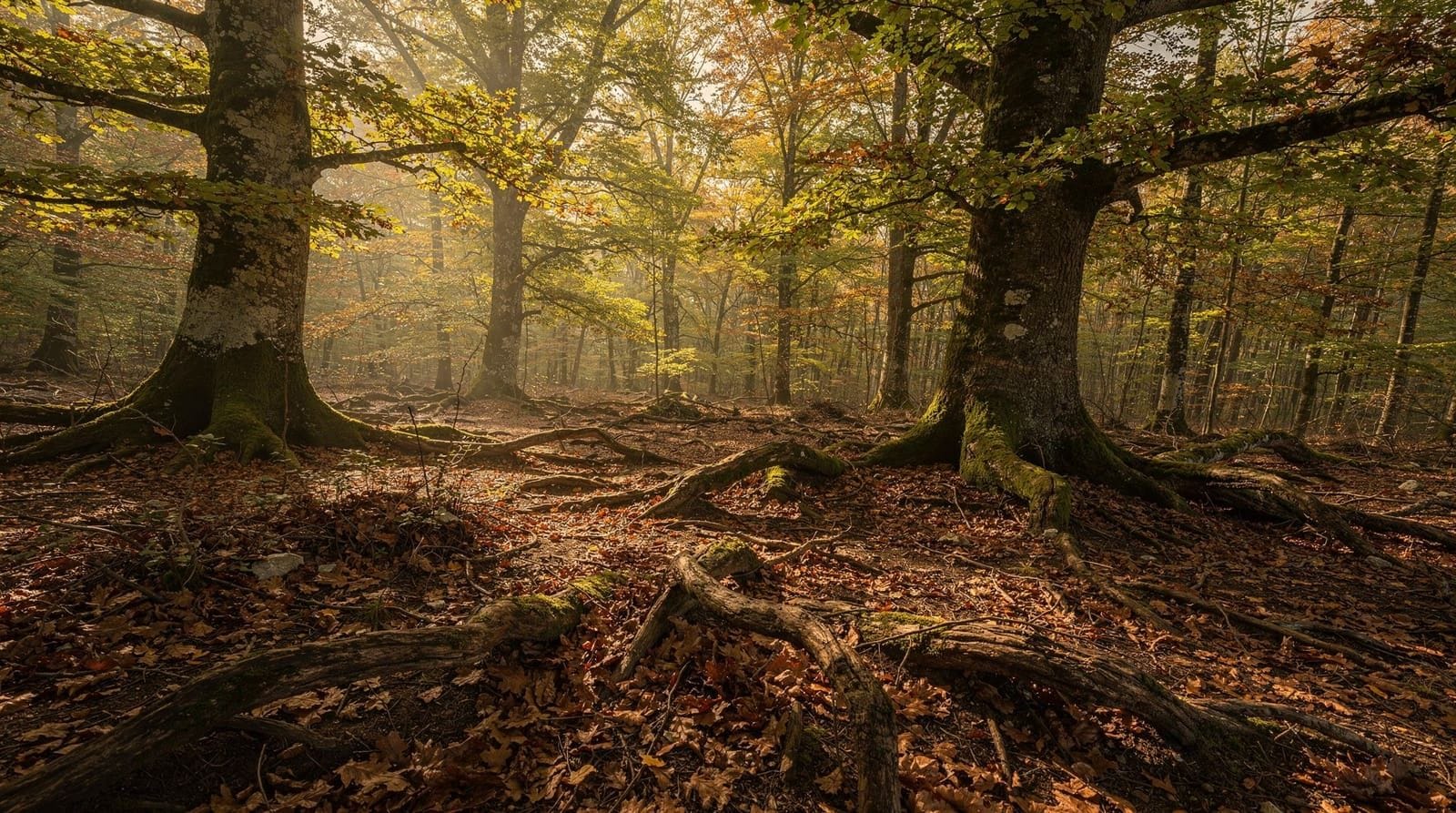
The concentration of truffle-finding activity in Istria is along the Mirna River, from the area around Buzet in the east to the forests below Motovun in the west. The river valley’s mix of oak and hazel woodland with specific soil chemistry (calcareous, moist but well-drained) creates optimal conditions for Tuber magnatum.
Motovun is the village most associated with truffle tourism. The hilltop town hosts the Motovun Film Festival in July, but its identity in October-November is entirely gastronomic. The drive from Motovun down into the Mirna valley on a November morning — mist in the river, the forest turning, the smell of leaf litter and fungus — is one of the more atmospheric experiences the Istrian interior offers.
Booking a truffle hunt
Organised truffle hunts in Istria range from day-long private experiences with licensed hunters and trained dogs to shorter group introductions. The essential elements are the same: a licensed truffle hunter, at least one trained dog (Istrian hounds or Italian Lagotto Romagnolo are the standard breeds), forest access and, typically, a meal at the end using the morning’s finds.
The private experience format allows more time in the forest, more interaction with the hunter, and a genuinely local meal prepared from fresh truffle. The group format is more affordable and still gives a clear sense of what the activity involves.
Truffle hunting in Istria — private half-day experience with mealWhat a good hunt involves: the dog ranges ahead, nose to the ground; the hunter reads the terrain and redirects the dog with hand signals and calls; the dog stops, paws at leaf litter, and is redirected before it can damage the truffle — which is then exposed carefully by hand, brushed clean and assessed. A good morning might find three to five white truffles; a bad morning might find one or none. That uncertainty is intrinsic to the activity and part of what makes it interesting.
Istria truffle hunting with cooking class and tastingThe cooking-and-tasting format adds a hands-on culinary component: a local home cook or chef uses the morning’s truffle to prepare a traditional lunch, typically including pasta or risotto with fresh truffle shaved over the top, eggs scrambled with truffle, and local Malvazija wine. This is the most complete version of the experience and, for food-focused visitors, the most satisfying.
What to eat: the truffle dishes of Istria
Truffle hunting would be interesting without the eating; with the eating, it becomes one of the better food travel experiences in Europe.
Fuži con tartufo: fuži are the traditional Istrian pasta — short, quill-shaped, made with eggs and dusted with flour. With fresh white truffle shaved generously over the top, fuži becomes the definitive Istrian dish. The truffle-to-pasta ratio matters: a genuine truffle dish uses enough truffle to perfume the room; a tourist truffle dish uses truffle-flavoured oil (not the same thing) and costs the same.
Jaja s tartufima (eggs with truffle): scrambled eggs with fresh truffle is the simplest and arguably most effective way to taste truffle, because the mild egg base allows the truffle’s aroma to be primary rather than competing with meat or sauce. It is a better test of truffle quality than pasta.
Prstaci i tartufi (clams with truffle): the combination of Istrian seafood with truffle appears on menus near the coast — Rovinj restaurants in particular make use of both the Adriatic catch and the forest fungus. The pairing is unconventional but works with white truffle.
Tartufata: truffle-infused products — oil, butter, cream, pasta sauce — are available across Istria and are a reasonable way to take the flavour home. Truffle salt is a better purchase than truffle oil for home cooking.
Where to eat truffle in Istria
Beyond the hunt, restaurants in the Motovun-Buzet-Grožnjan area offer the most concentrated truffle menus. Buzet is sometimes called the City of Truffles and its restaurants are particularly oriented toward the season. The Subotina festival in Buzet in October-November involves a ceremonial cooking of a giant truffle omelette — a genuinely local event rather than a tourist confection.
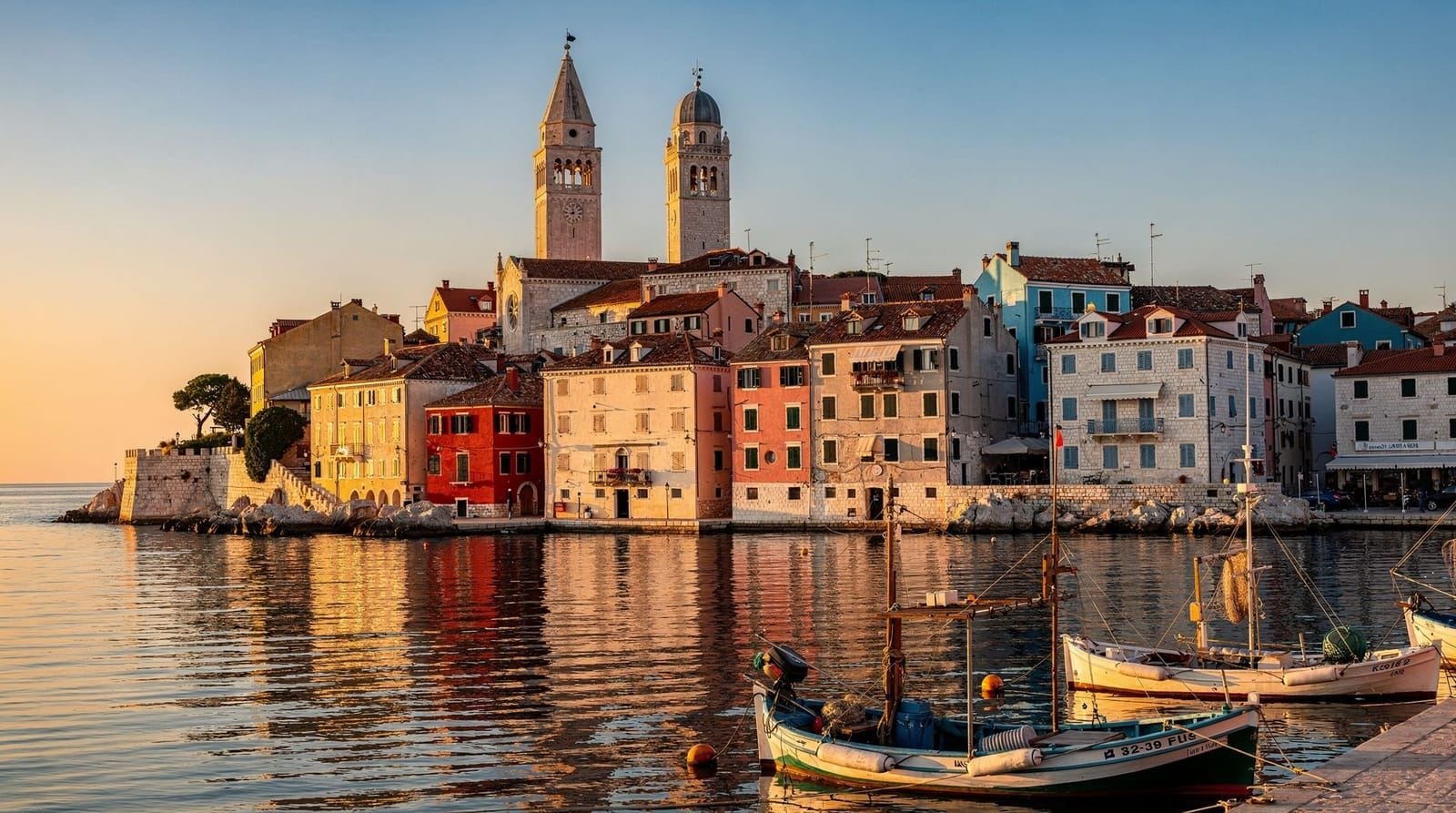
In Rovinj and Poreč, coastal restaurants incorporate truffle into seafood dishes and pasta menus throughout the season. The quality is generally good; the truffle provenance from Motovun is well-established.
Malvazija: the truffle wine
The pairing for truffle in Istria is Malvazija Istarska — the local white wine, made from an ancient variety that produces wines ranging from light and aromatic to richer, skin-contact styles. A good Malvazija has enough structure to hold its own alongside truffle without overwhelming the fungal aroma. The Istrian food guide covers the wine and food pairing in more detail.
Buying Truffles to Take Home
Beyond eating them on-site, buying fresh or preserved truffle to take home is straightforward but requires some care. Fresh white truffle has a shelf life of about a week if wrapped in paper towel and refrigerated in an airtight container, replacing the paper daily — it will not survive a two-week trip, so buy it toward the end of a stay in Istria, not the start. Fresh truffle should also not be brought across borders where agricultural import restrictions apply; check your destination country’s rules before assuming it travels freely.
Preserved products travel far more reliably: truffle-infused honey, truffle salt, and vacuum-sealed preserved truffle in oil or brine all keep for months and pack without special handling. Buy directly from a producer or a reputable Motovun-area shop rather than a roadside stall — the truffle-flavoured-oil products aimed at tourists (made with synthetic aroma compounds rather than actual truffle) are widespread and worth avoiding; read the ingredient label for “truffle aroma” as the giveaway.
Truffle Dogs and Why the Season Depends on Them
The entire Istrian truffle economy rests on trained dogs, not pigs — a specifically Istrian and broader Croatian preference that differs from some other truffle regions. Istrian truffle hunters typically train their own dogs from puppyhood, usually mixed breeds or the Lagotto Romagnolo, rewarding them for locating the scent rather than digging. A well-trained dog can distinguish ripe truffles from immature ones by scent alone, which matters because harvesting an unripe truffle destroys its value and the following season’s yield from that same underground network.
This training investment is part of why a private hunt costs what it does — you are not just paying for forest access, but for a hunter-dog partnership built over years. Group hunts spread this cost across more participants, which is the trade-off for a lower price.
Planning a truffle trip
The optimal window is a weekend in November. Fly into Pula (the main Istrian airport, with connections to most European cities), drive or take a taxi to the Motovun area (about 45 minutes), book a hunt for the morning, eat at the farmhouse or local restaurant at midday, spend the afternoon in Motovun old town, and return via Rovinj for a night on the coast.
The Istria-Zagreb-Slovenia circuit integrates a truffle detour into a broader week-long itinerary.
Truffle season in Istria is not widely marketed relative to summer tourism on the Croatian coast, which means it remains one of the more genuinely local experiences available to visitors in autumn. The season has a defined duration — late October through December for white truffle — which concentrates the experience and gives it a calendar logic that most food travel lacks.
Season at a glance
| Period | Truffle | What to expect |
|---|---|---|
| Late Sept–early Oct | White (early finds) | Sparse, not yet reliable |
| Mid Oct–Dec | White (peak: Nov) | Best hunting conditions, most menus dedicated |
| Nov–March | Black (melanosporum) | Widely available, cheaper, milder aroma |
| Year-round | Black (aestivum, summer) | Consistent supply, on menus even off-season |